Vietnam Mandates QR Traceability for High Vacuum Equipment from June 2026




Vietnam’s new traceability requirement for imported high vacuum equipment—effective 1 June 2026—marks a significant regulatory shift in Southeast Asia’s industrial import regime. The rule directly affects Chinese exporters, component suppliers, and logistics service providers engaged in the vacuum technology supply chain to Vietnam, reflecting broader national priorities around product safety, after-sales accountability, and digital customs integration.
Event Overview
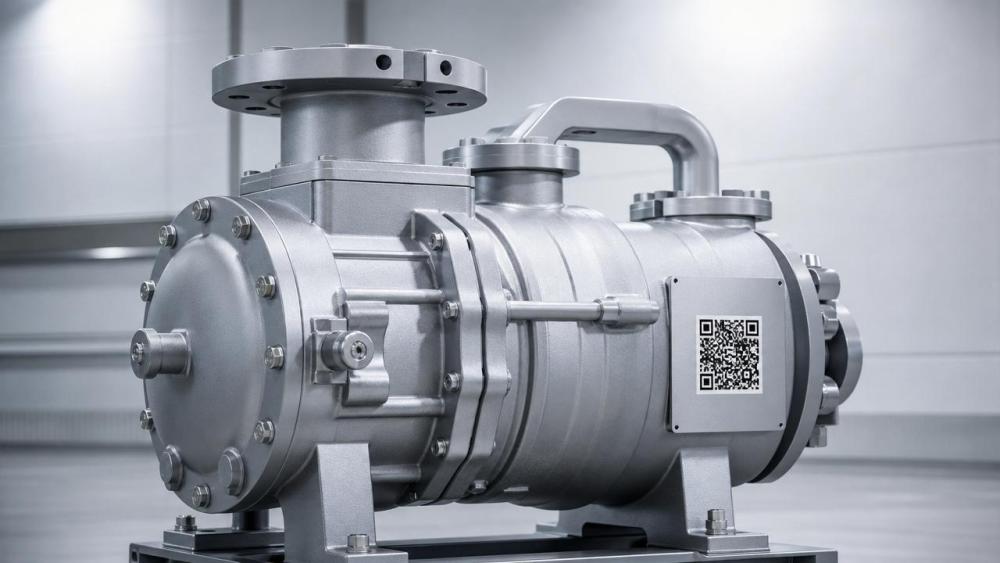
The Ministry of Industry and Trade of Vietnam (MOIT) issued Circular No. 28/2026/TT-BCT on 15 May 2026. It stipulates that, starting 1 June 2026, all imported high vacuum equipment—including liquid ring, rotary vane, and screw types—must bear a unique QR code adjacent to the nameplate. This QR code must link directly to the national traceability platform VNM-Trace. The linked record must include structured data: manufacturer details, origin of critical components, factory test reports, and post-sale maintenance logs. Chinese suppliers are required to register on VNM-Trace and upload compliant data packages prior to shipment.
Industries Affected
Direct Trading Enterprises
Exporters and trading companies handling high vacuum equipment shipments to Vietnam face immediate operational impact. Compliance is mandatory for customs clearance; non-compliant units risk shipment rejection or delays at Ho Chi Minh City or Hai Phong ports. Impact manifests in three areas: added pre-shipment administrative burden (system registration, data formatting, QR label design), potential lead-time extension (7–10 business days for first-time system validation), and liability exposure if downstream maintenance records are inaccurately reported.
Raw Material & Component Procurement Enterprises
Suppliers of core subassemblies—such as precision rotors, vacuum-grade seals, or oil-free bearings—must now provide auditable origin documentation (e.g., mill certificates, supplier declarations) to their equipment-manufacturing clients. This requirement cascades upstream because VNM-Trace mandates traceability down to critical components. Enterprises without documented sourcing chains may lose eligibility as tier-1 suppliers to export-oriented OEMs.
Manufacturing Enterprises
OEMs producing high vacuum equipment for export must redesign labeling workflows, integrate VNM-Trace data ingestion into their ERP or MES systems, and train quality assurance staff on standardized test-data formatting (e.g., ISO 21869-compliant pressure decay logs). Unlike voluntary certifications, this is a hard gate: no QR = no market access. Notably, the rule applies regardless of equipment value or end-use sector (e.g., food packaging, semiconductor support, pharmaceutical drying).
Supply Chain Service Providers
Certification consultants, labeling vendors, and freight forwarders with Vietnam expertise must now offer bundled compliance services—including MOIT registration support, QR label verification, and VNM-Trace data package validation. Demand is rising for bilingual (English–Vietnamese) technical coordinators who understand both vacuum engineering terminology and MOIT’s digital submission protocols. Providers lacking this capability risk marginalization in the China–Vietnam industrial corridor.
Key Focus Areas & Recommended Actions
Complete VNM-Trace Registration Before First Shipment
Registration is not automatic: applicants must submit corporate documents (business license, ISO certification), designate a local Vietnamese representative (if no local entity), and pass a basic data-schema validation. Allow minimum 12 working days for approval—MOIT does not accept provisional registrations.
Adopt Structured Data Packaging Early
VNM-Trace requires XML-based data packages conforming to MOIT’s Schema v2.1 (published 10 April 2026). Chinese manufacturers should avoid manual entry; instead, invest in lightweight middleware to auto-generate compliant files from existing test databases and BOM systems.
Validate QR Label Placement & Scan Reliability
The QR code must be permanently affixed beside the nameplate, legible under ambient light, and scannable at distances up to 1.5 m using standard smartphones. Labels printed on polyester film with UV-resistant ink are recommended; thermal paper labels have failed field scans during MOIT pilot audits.
Editorial Perspective / Industry Observation
Observably, this regulation is less about trade restriction and more about infrastructure alignment: VNM-Trace is being scaled to support Vietnam’s upcoming Product Safety Law (drafted for 2027 enactment) and its ASEAN Harmonized Standards roadmap. Analysis shows that similar QR mandates are already piloted for medical devices and lithium batteries—suggesting high vacuum equipment is part of a phased, sector-by-sector digital traceability rollout. From an industry perspective, the short-term friction is real, but medium-term winners will be firms that treat VNM-Trace not as a compliance cost, but as a baseline for building verifiable quality narratives with Vietnamese buyers.
Conclusion
This mandate signals Vietnam’s decisive move toward end-to-end digital product governance—not merely for consumer goods, but for capital equipment essential to industrial upgrading. For Chinese exporters, adapting is not optional; it is the new entry ticket. A rational reading suggests that early adopters who embed traceability into design and delivery workflows—not just labeling—will gain measurable advantage in responsiveness, audit readiness, and brand trust within Vietnam’s rapidly diversifying manufacturing ecosystem.
Source Attribution
Official source: Ministry of Industry and Trade of Vietnam (MOIT), Circular No. 28/2026/TT-BCT, issued 15 May 2026, effective 1 June 2026. Full text available at moit.gov.vn (Vietnamese language only). Note: VNM-Trace API documentation and schema specifications remain under revision—updates expected by 30 July 2026. Continued monitoring of MOIT’s Technical Compliance Portal is advised.
Ready when you are. Send us a message to get started.
Related News
- How does base pressure affect film purity in vacuum deposition?Author :Vacuum Process Fellow

- How to size vacuum process equipment for the required pump-down timeAuthor :Vacuum Process Fellow

- Which vacuum specification best protects semiconductor process yield?Author :Vacuum Process Fellow

- How Can Contamination Be Prevented in a Semiconductor Vacuum Chamber?Author :Vacuum Process Fellow

- Which Vacuum Pump Specifications Matter Most for Semiconductor Processes?Author :Vacuum Process Fellow

- How to find leaks in vacuum pump systems before pump performance dropsAuthor :Vacuum Process Fellow

- How to size a Roots blower for vacuum process equipmentAuthor :Vacuum Process Fellow

- How vacuum level affects vacuum process efficiencyAuthor :Vacuum Process Fellow

- China Imposes Temporary Helium Export BanAuthor :Vacuum Process Fellow

- Semiconductor Vacuum Systems Factory Checklist for Process Stability and Cleanroom UseAuthor :Vacuum Process Fellow

- Vacuum Process Optimization Services: Signs Your Line Needs a Performance ReviewAuthor :Vacuum Process Fellow

- Vacuum Chambers for Cleanroom Use: Key Design Points That Prevent ContaminationAuthor :Vacuum Process Fellow

- Vacuum Distillation Systems: Key Performance Metrics That Affect Product PurityAuthor :Vacuum Process Fellow

- Vietnam Halts High Vacuum Pump Import Licenses for 30 DaysAuthor :Vacuum Process Fellow

- Vacuum Technology Database: What to Check Before Using Technical DataAuthor :Vacuum Process Fellow

- Dry Pump Vacuum System Design Mistakes That Raise DowntimeAuthor :Vacuum Process Fellow

- When Vacuum Systems Lose Performance: Common Causes and FixesAuthor :Vacuum Process Fellow
![]()
- EU Tightens EN 13445-3 Weld Testing for Vacuum VesselsAuthor :Vacuum Process Fellow
![]()
- EPA Cuts R-1234ze(E) Quota 35%, Tightening Vacuum Cooling SupplyAuthor :Vacuum Process Fellow
 Quota 35%, Tightening Vacuum Cooling Supply")
- ICA Warns of Tight Copper Alloy Supply for Vacuum PumpsAuthor :Vacuum Process Fellow

- Vacuum System Leak Detection: Signs, Tests, and FixesAuthor :Vacuum Process Fellow

- How to Compare Vacuum Systems Factory Capabilities for Stable Process UptimeAuthor :Vacuum Process Fellow

- Vacuum Pump Lead Times Extend to 26 WeeksAuthor :Vacuum Process Fellow

- Semiconductor Vacuum Systems Explained for Stable Process YieldAuthor :Vacuum Process Fellow

- Vacuum Process Efficiency: 7 Hidden Causes of Energy LossAuthor :Vacuum Process Fellow

- Vacuum Technology Solutions for Stable Low-Pressure ProductionAuthor :Vacuum Process Fellow

- Vacuum Processes: Common Efficiency Losses and FixesAuthor :Vacuum Process Fellow

- Common Vacuum Processes Problems and How to Prevent DowntimeAuthor :Vacuum Process Fellow

- Tantalum Spike Extends Vacuum Crucible Lead TimesAuthor :Vacuum Process Fellow

- Vacuum Process Efficiency: 5 Hidden Losses to Check FirstAuthor :Vacuum Process Fellow

- How Heat Transfer Design Impacts Vacuum Process EfficiencyAuthor :Vacuum Process Fellow

- EN 13445-4:2026 Takes Effect for High-Vacuum ComponentsAuthor :Vacuum Process Fellow

- EU Vacuum Components Face New EN 13445-4:2026 Leak Test RuleAuthor :Vacuum Process Fellow

- UBS: Fed Cut View May Ease Vacuum Pump Lead TimesAuthor :Vacuum Process Fellow

- Vacuum Processes: Common Causes of Unstable PerformanceAuthor :Vacuum Process Fellow
![]()
- SiC Certification Signals New Entry Path for Vacuum and Compressor DrivesAuthor :Vacuum Process Fellow
![]()