How to Improve Vacuum Process Efficiency in High Vacuum Lines




Improving vacuum process efficiency in high vacuum lines is critical for stable production, lower operating cost, and cleaner process results.
In industrial cooling, compressed air, vacuum processing, and heat transfer systems, efficiency depends on more than pump size alone.
Leak control, conductance, materials, pump-down strategy, and monitoring all shape cycle time and final pressure.
This guide explains how to evaluate vacuum process efficiency in high vacuum lines with practical questions, answers, and comparison points.
What does vacuum process efficiency really mean in high vacuum lines?
Vacuum process efficiency means reaching the required pressure, cleanliness, and stability with the least time, energy, and maintenance burden.
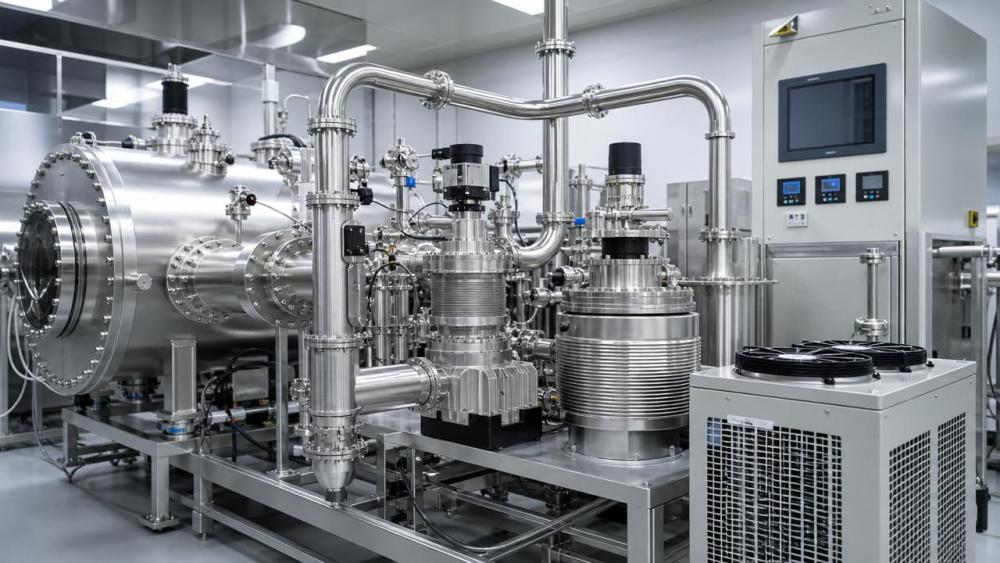
Many systems chase lower ultimate pressure, yet practical efficiency is broader than a single pressure reading.
A line may hit target pressure slowly, contaminate product surfaces, or consume excessive power during standby.
That line is not optimized, even if the gauge eventually looks acceptable.
In high vacuum environments, gas load often defines performance more strongly than nominal pump capacity.
Gas load includes real leaks, virtual leaks, permeation, process byproducts, and outgassing from internal surfaces.
Efficient design balances three outcomes:
- Fast pump-down to working pressure
- Low contamination and stable process conditions
- Reasonable energy, service, and uptime costs
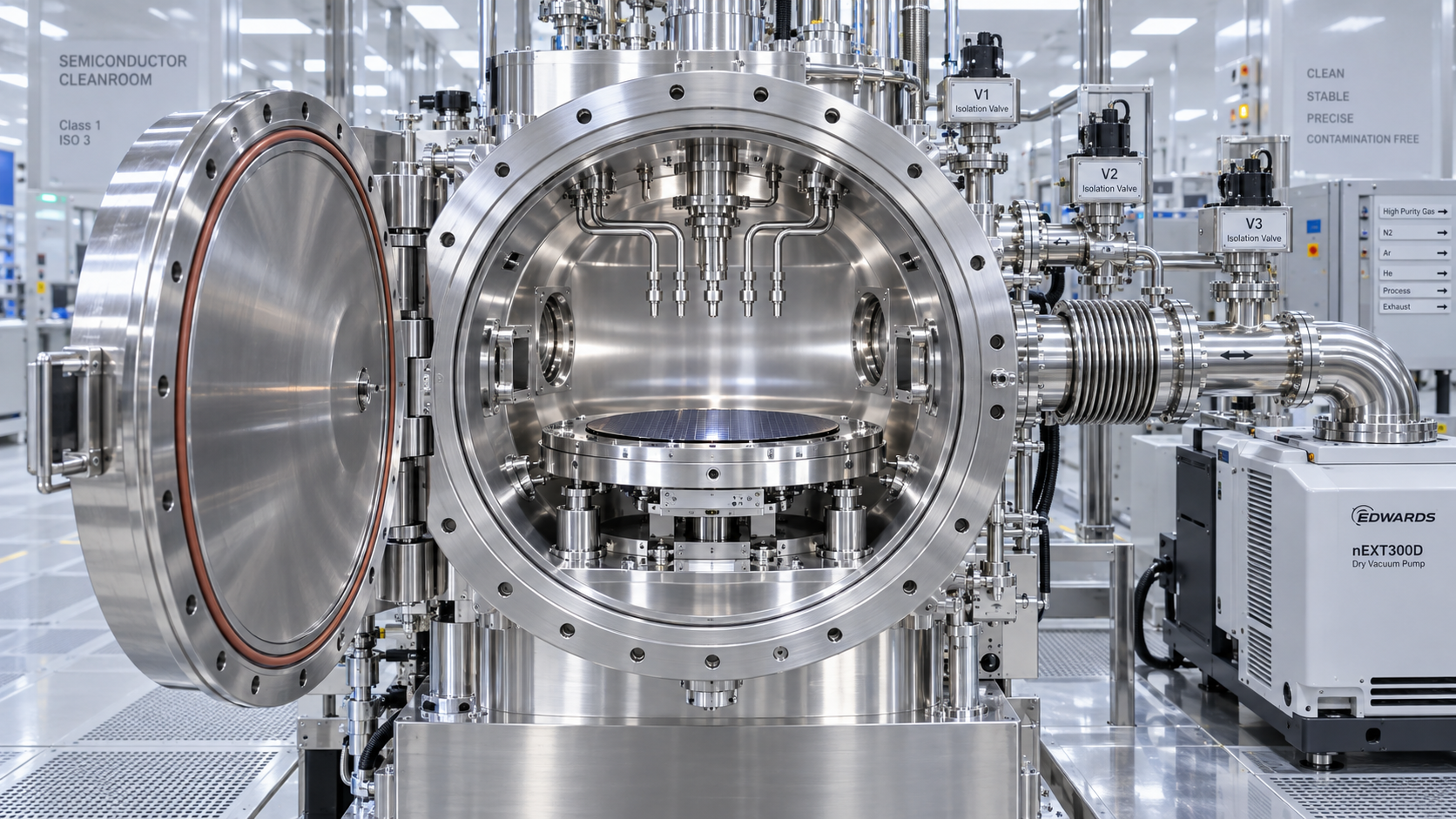
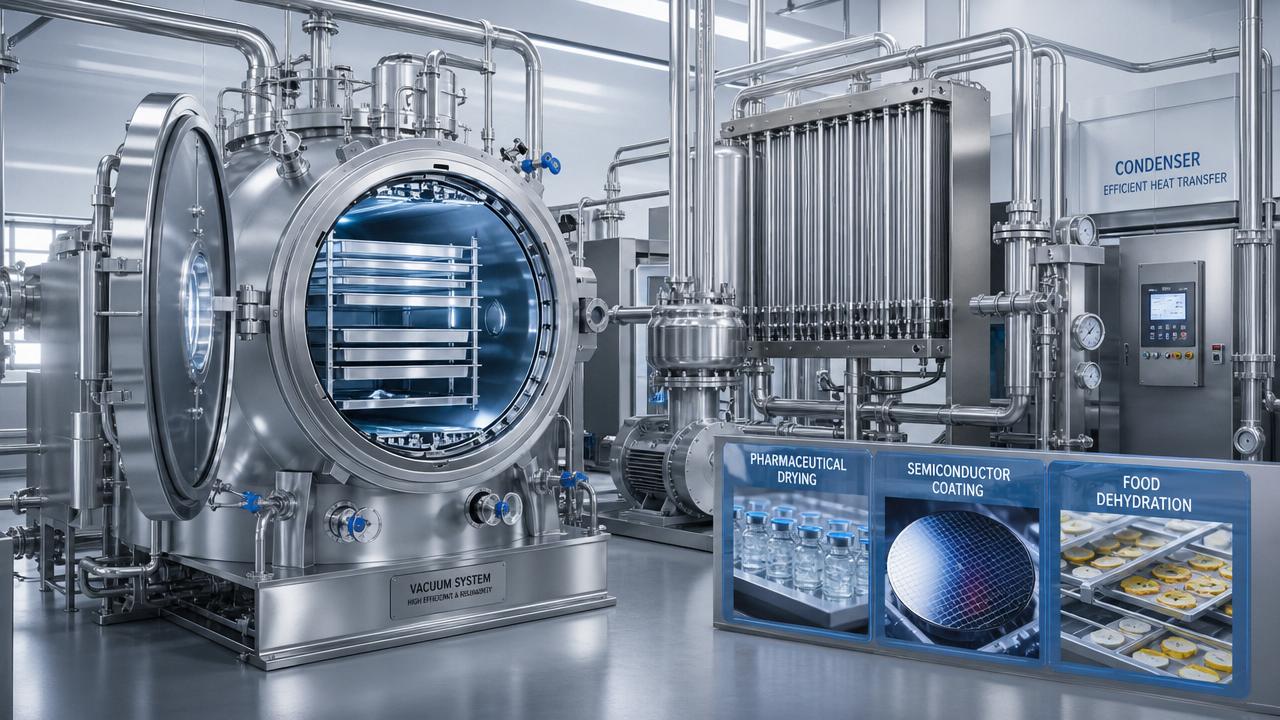
This definition matters across coating, semiconductor support processes, analytical chambers, freeze drying, and precision thermal systems.
For GTC-Matrix sectors, vacuum process efficiency also links directly to energy conversion efficiency and thermal management quality.
Which system factors most often limit vacuum process efficiency?
The biggest limits usually come from system architecture, not from one failed component.
A common mistake is replacing a pump before checking line conductance, valve restriction, or outgassing sources.
1. Conductance losses in pipes and fittings
Long, narrow, or sharply bent lines reduce effective pumping speed at the chamber.
In molecular flow, a small diameter change can cause a major drop in vacuum process efficiency.
Shorter paths, smoother transitions, and larger diameters often deliver more benefit than a larger downstream pump.
2. Hidden gas loads
Water vapor is the most frequent invisible problem in high vacuum lines.
Poor cleaning, elastomer-heavy designs, porous materials, and repeated chamber opening all increase outgassing.
Virtual leaks from trapped volumes behave like real leaks during pump-down and pressure hold periods.
3. Pump mismatch
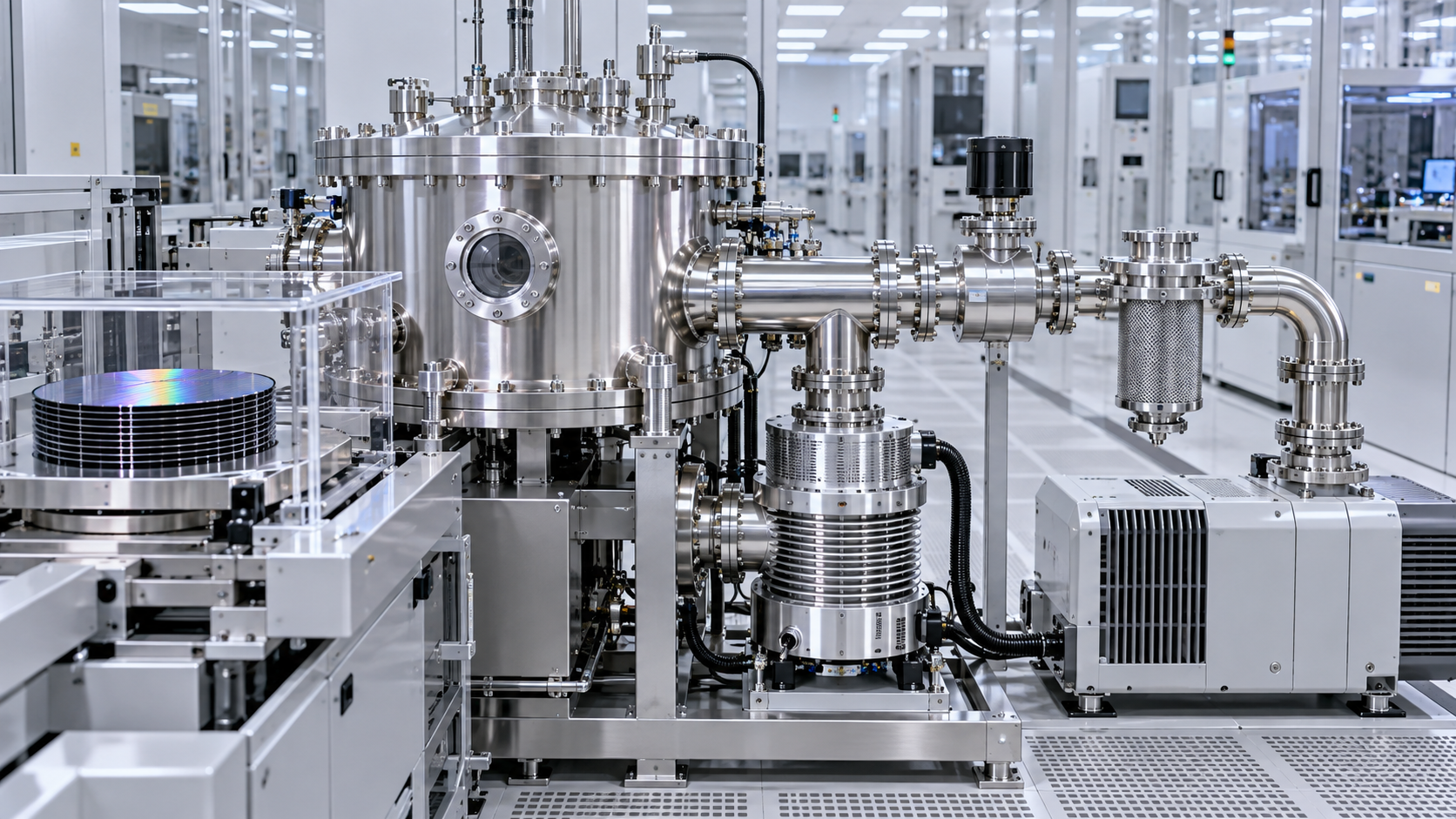
Backing pumps, turbomolecular pumps, cryopumps, and dry screw pumps each handle gas species differently.
Wrong pump pairing can slow crossover pressure, raise hydrocarbon risk, or create unstable operating windows.
4. Weak instrumentation
If gauges are misplaced or uncalibrated, teams may misread where the actual bottleneck exists.
Pressure near the pump can look healthy while the chamber remains gas-loaded and process stability suffers.
How should pump selection and line design be evaluated for better vacuum process efficiency?
Start from the process requirement, not from catalog speed alone.
Required base pressure, gas composition, moisture load, contamination sensitivity, and cycle frequency should drive selection.
Match the pump to the gas load profile
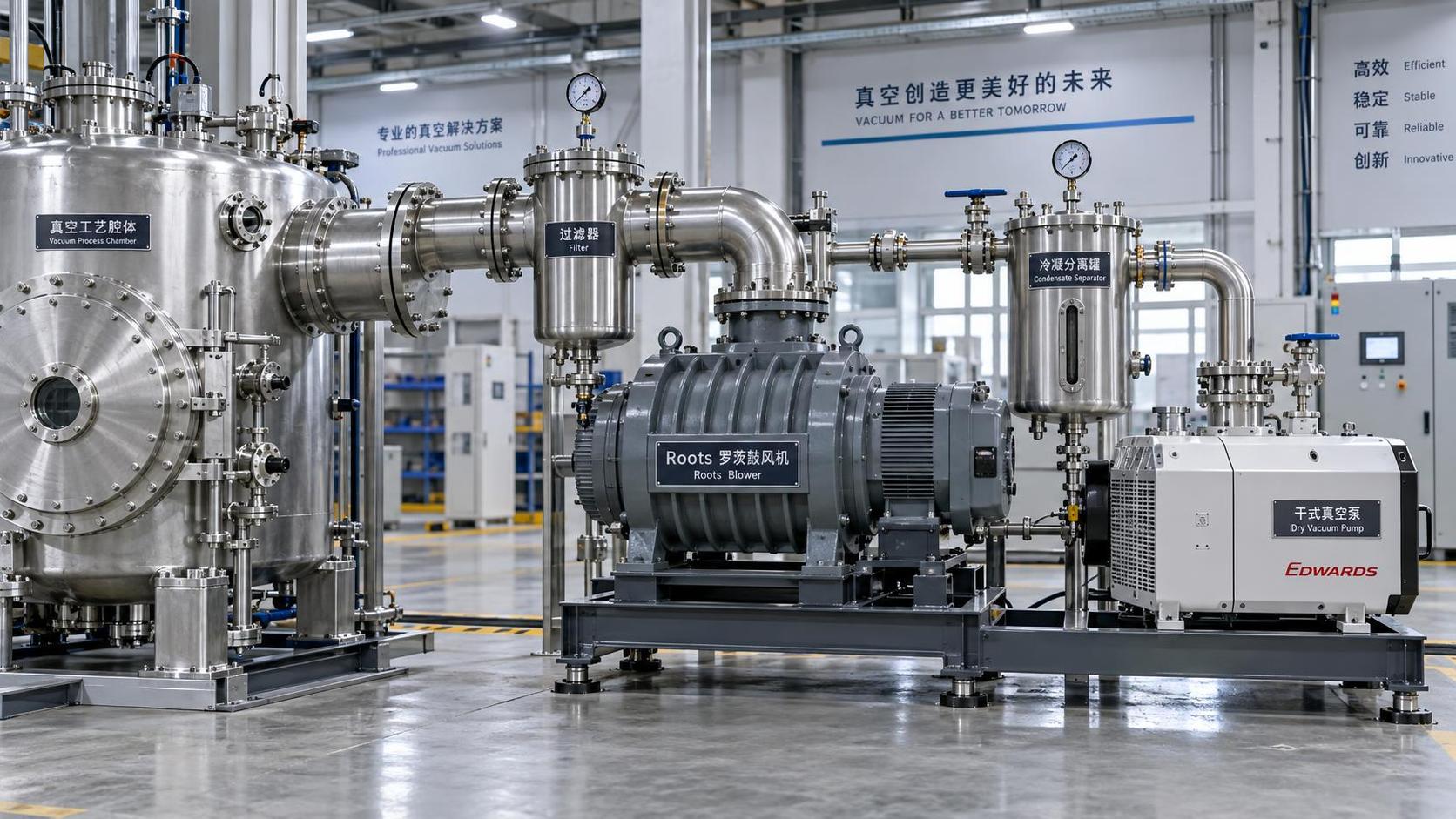
Processes with heavy vapor release may need robust roughing stages and effective purge strategies.
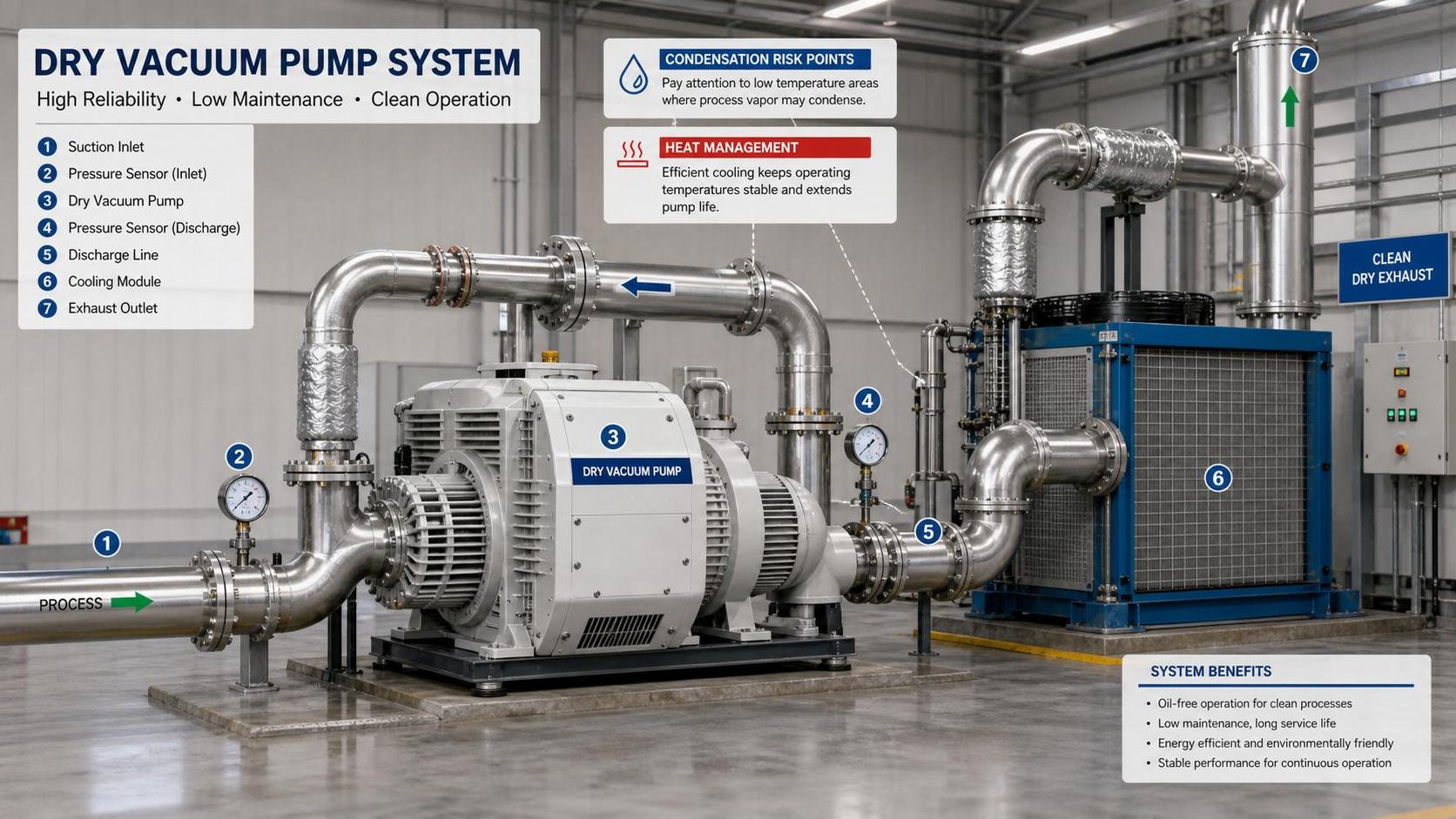
Clean, dry, high vacuum processes often prioritize oil-free pumping and low backstreaming risk.
Calculate effective pumping speed at the chamber
Nominal pump speed is not the same as delivered speed at the process point.
Use conductance calculations to estimate actual speed after valves, traps, bends, reducers, and flexible connectors.
This step often reveals low-cost upgrades with strong vacuum process efficiency gains.
Review materials and sealing strategy
Metal seals generally support cleaner high vacuum performance than many elastomer-rich assemblies.
Surface finish, weld quality, and dead-leg avoidance also improve pump-down behavior and contamination control.
Consider thermal effects
Temperature influences vapor pressure, desorption rates, and condensation behavior inside the vacuum line.
Heated lines, chamber bakeout, or controlled cooling may sharply improve vacuum process efficiency for moisture-sensitive systems.
What leak control and contamination practices have the greatest impact?
Leak management is one of the fastest ways to improve vacuum process efficiency.
However, efficient teams separate three issues: leaks, virtual leaks, and outgassing.
Leaks
Real leaks admit external gas continuously and usually worsen process repeatability.
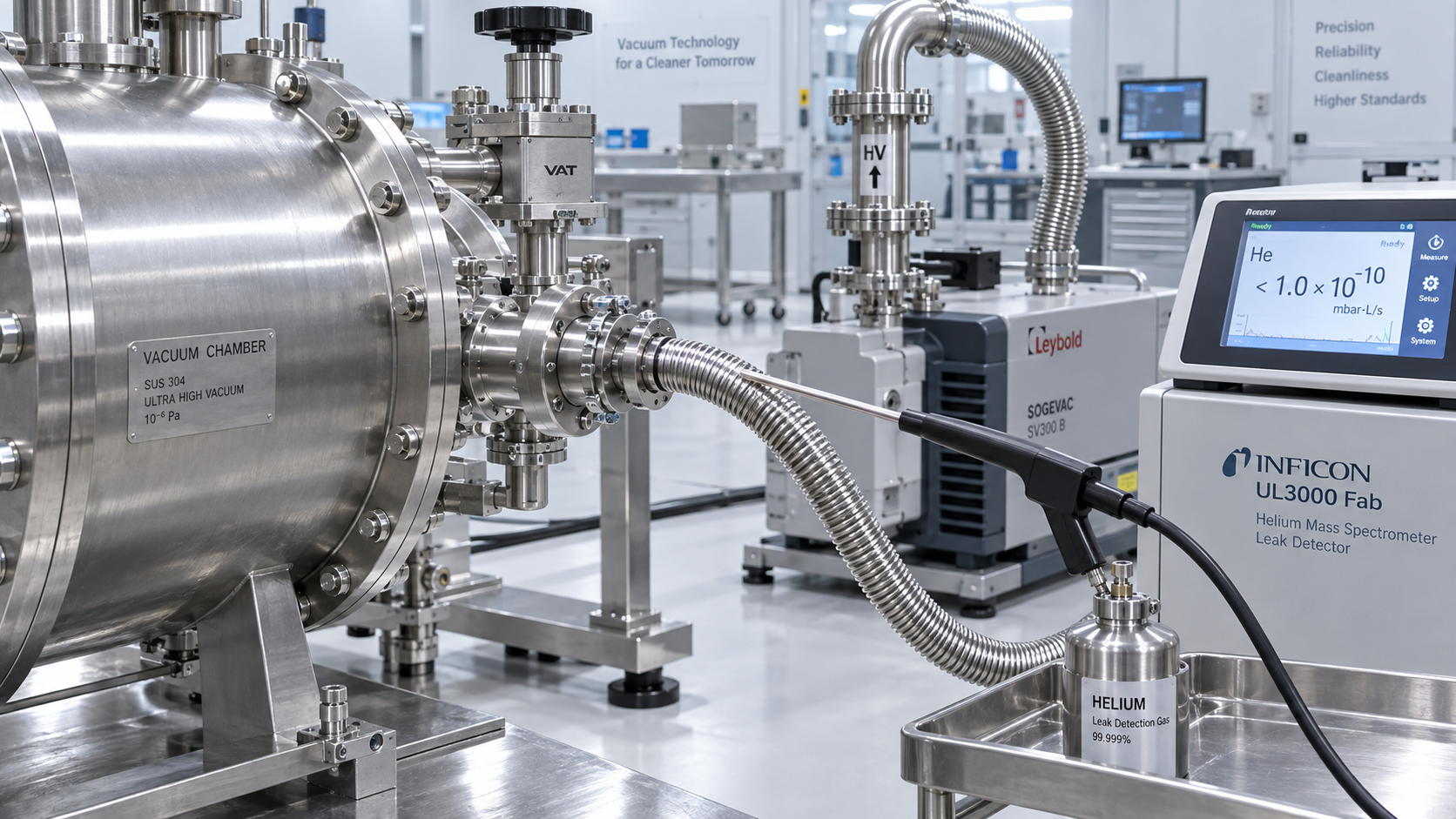
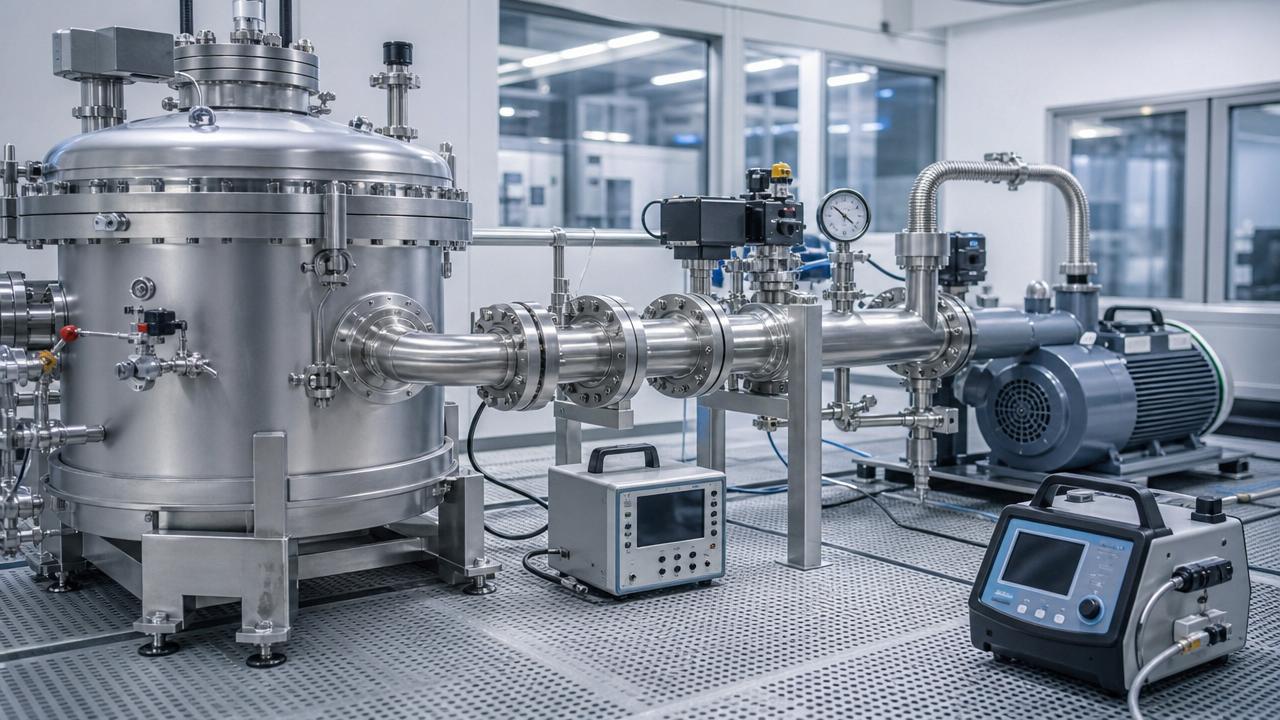
Helium leak detection remains the preferred method for critical high vacuum lines.
Virtual leaks
Trapped pockets behind screws, overlapping joints, or blind cavities release gas slowly over time.
Good mechanical design removes these pockets before commissioning.
Outgassing and contamination
Improper lubricants, fingerprints, cleaning residues, and polymers can dominate residual gas behavior.
Effective controls include:
- Material screening before installation
- Standardized cleaning and drying procedures
- Controlled assembly practices
- Scheduled bakeout when appropriate
- Residual gas analysis for recurring contamination events
These steps reduce pump-down time and support long-term vacuum process efficiency without major hardware replacement.
How can monitoring, data, and maintenance improve vacuum process efficiency over time?
Sustained improvement depends on trend visibility, not isolated troubleshooting.
A stable line today can drift slowly through seal aging, fouling, valve wear, and thermal cycling.
Track the right indicators
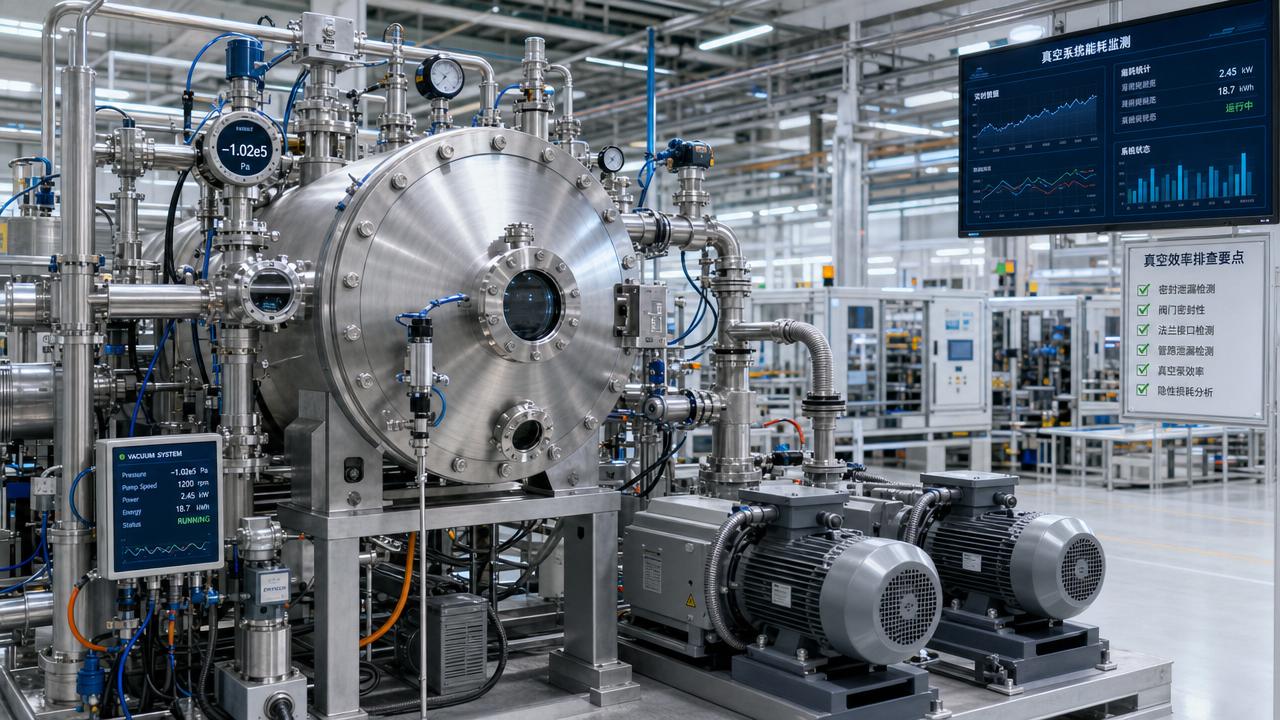
Useful metrics include pump-down curve shape, crossover pressure, base pressure, pressure recovery rate, and energy per cycle.
When possible, link these values to chamber temperature and process recipe data.
Build maintenance around condition, not only calendar dates
Filters, foreline traps, bearings, and seals should be serviced according to measured decline patterns.
This reduces unnecessary downtime while protecting vacuum process efficiency.
Use a structured review routine
What are the most common mistakes when trying to improve vacuum process efficiency?
Several recurring mistakes delay improvements and raise cost.
- Buying a larger pump without checking conductance
- Ignoring water vapor and cleanup discipline
- Using unsuitable materials inside the vacuum boundary
- Trusting one pressure point as the whole system truth
- Postponing leak checks until process defects appear
- Treating maintenance as fixed routine instead of data-based action
Another mistake is separating vacuum decisions from thermal and utility system decisions.
Cooling stability, purge gas quality, and compression system performance can directly affect vacuum process efficiency.
An integrated view often reveals better returns than isolated component changes.
How should the next improvement step be prioritized?
Begin with a baseline of current pump-down time, target pressure, energy use, and contamination events.
Then rank opportunities by impact, implementation effort, and process risk.
In many high vacuum lines, the best sequence is simple.
- Verify leaks and virtual leaks
- Reduce moisture and outgassing sources
- Review conductance and valve placement
- Confirm pump matching and backing performance
- Install trend-based monitoring
This approach improves vacuum process efficiency with measurable technical and economic value.
For industrial systems linked to cooling, compression, and heat exchange infrastructure, coordinated evaluation creates stronger long-term gains.
Use these questions as a working checklist, then compare actual line data against design intent before committing capital upgrades.
The most effective optimization is usually the one that removes the real bottleneck first.
Related News
- How Can Contamination Be Prevented in a Semiconductor Vacuum Chamber?Author :Vacuum Process Fellow

- Which Vacuum Pump Specifications Matter Most for Semiconductor Processes?Author :Vacuum Process Fellow

- How to find leaks in vacuum pump systems before pump performance dropsAuthor :Vacuum Process Fellow

- How to size a Roots blower for vacuum process equipmentAuthor :Vacuum Process Fellow

- How vacuum level affects vacuum process efficiencyAuthor :Vacuum Process Fellow

- China Imposes Temporary Helium Export BanAuthor :Vacuum Process Fellow

- Semiconductor Vacuum Systems Factory Checklist for Process Stability and Cleanroom UseAuthor :Vacuum Process Fellow

- Vacuum Process Optimization Services: Signs Your Line Needs a Performance ReviewAuthor :Vacuum Process Fellow

- Vacuum Chambers for Cleanroom Use: Key Design Points That Prevent ContaminationAuthor :Vacuum Process Fellow

- Vacuum Distillation Systems: Key Performance Metrics That Affect Product PurityAuthor :Vacuum Process Fellow

- Vietnam Halts High Vacuum Pump Import Licenses for 30 DaysAuthor :Vacuum Process Fellow

- Vacuum Technology Database: What to Check Before Using Technical DataAuthor :Vacuum Process Fellow

- Dry Pump Vacuum System Design Mistakes That Raise DowntimeAuthor :Vacuum Process Fellow

- When Vacuum Systems Lose Performance: Common Causes and FixesAuthor :Vacuum Process Fellow
![]()
- EU Tightens EN 13445-3 Weld Testing for Vacuum VesselsAuthor :Vacuum Process Fellow
![]()
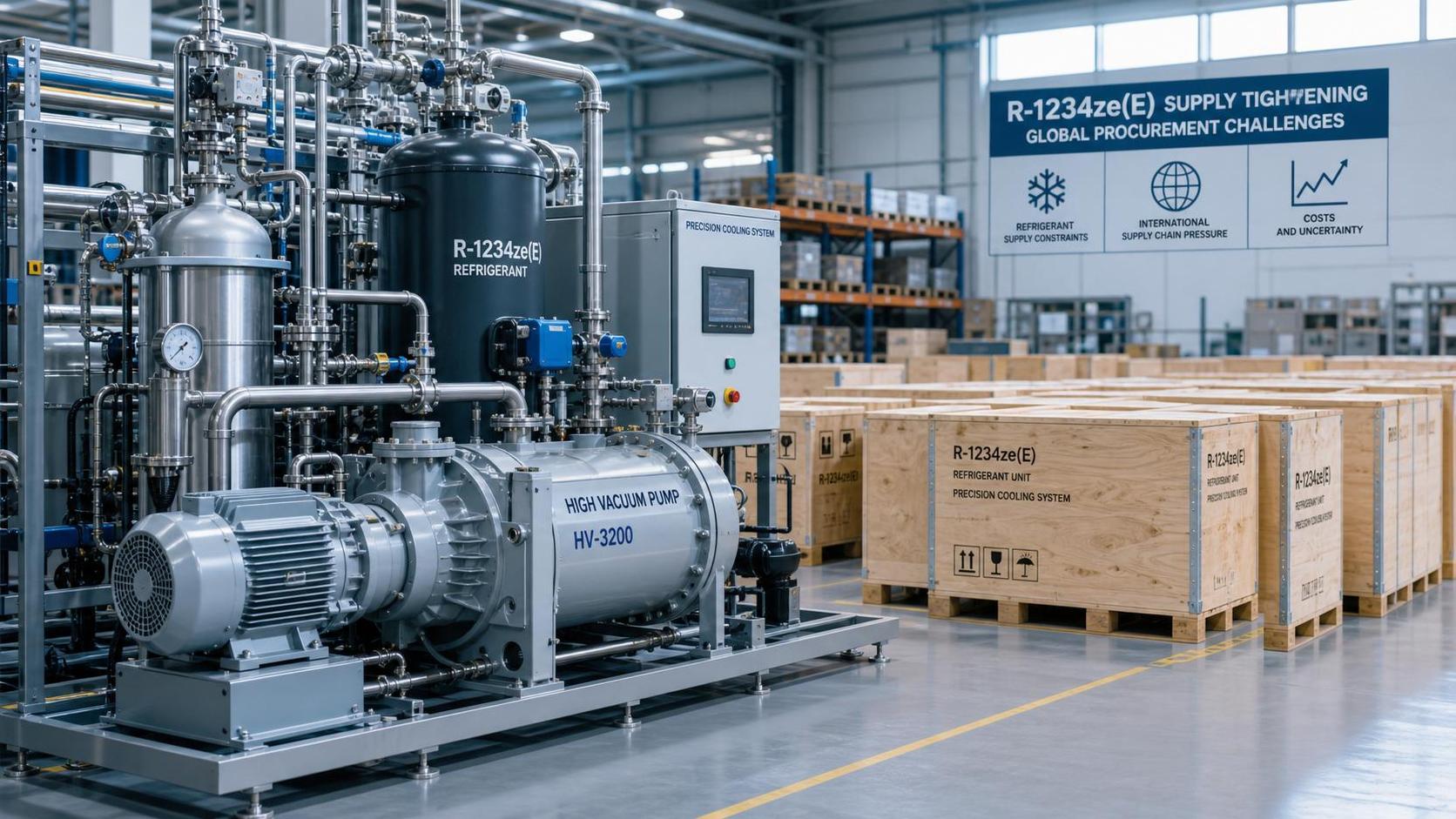
- EPA Cuts R-1234ze(E) Quota 35%, Tightening Vacuum Cooling SupplyAuthor :Vacuum Process Fellow
 Quota 35%, Tightening Vacuum Cooling Supply")
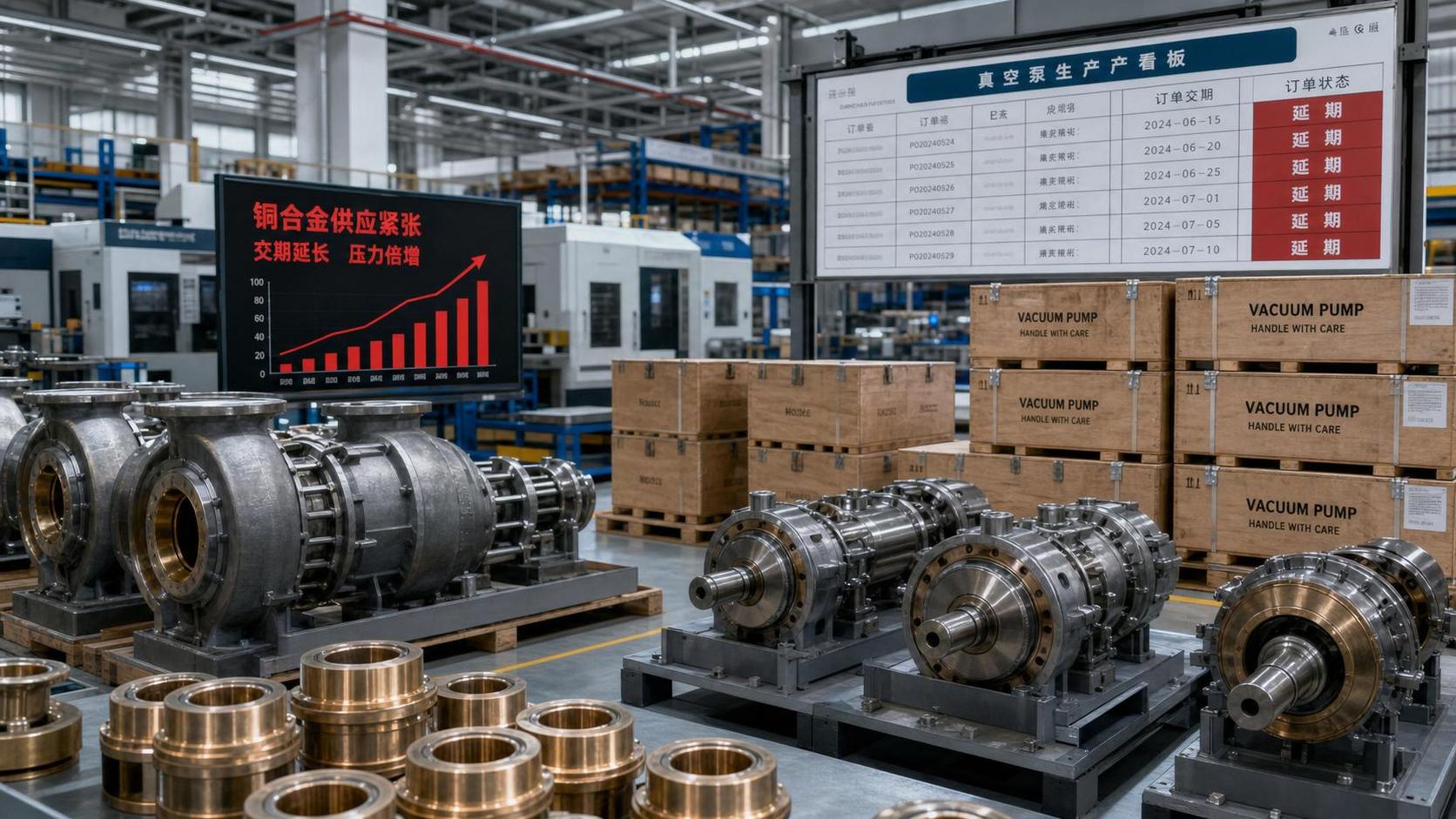
- ICA Warns of Tight Copper Alloy Supply for Vacuum PumpsAuthor :Vacuum Process Fellow

- Vacuum System Leak Detection: Signs, Tests, and FixesAuthor :Vacuum Process Fellow

- How to Compare Vacuum Systems Factory Capabilities for Stable Process UptimeAuthor :Vacuum Process Fellow

- Vacuum Pump Lead Times Extend to 26 WeeksAuthor :Vacuum Process Fellow

- Semiconductor Vacuum Systems Explained for Stable Process YieldAuthor :Vacuum Process Fellow

- Vacuum Process Efficiency: 7 Hidden Causes of Energy LossAuthor :Vacuum Process Fellow

- Vacuum Technology Solutions for Stable Low-Pressure ProductionAuthor :Vacuum Process Fellow

- Vacuum Processes: Common Efficiency Losses and FixesAuthor :Vacuum Process Fellow

- Common Vacuum Processes Problems and How to Prevent DowntimeAuthor :Vacuum Process Fellow

- Tantalum Spike Extends Vacuum Crucible Lead TimesAuthor :Vacuum Process Fellow

- Vacuum Process Efficiency: 5 Hidden Losses to Check FirstAuthor :Vacuum Process Fellow

- How Heat Transfer Design Impacts Vacuum Process EfficiencyAuthor :Vacuum Process Fellow

- EN 13445-4:2026 Takes Effect for High-Vacuum ComponentsAuthor :Vacuum Process Fellow

- EU Vacuum Components Face New EN 13445-4:2026 Leak Test RuleAuthor :Vacuum Process Fellow

- UBS: Fed Cut View May Ease Vacuum Pump Lead TimesAuthor :Vacuum Process Fellow

- Vacuum Processes: Common Causes of Unstable PerformanceAuthor :Vacuum Process Fellow
![]()
- SiC Certification Signals New Entry Path for Vacuum and Compressor DrivesAuthor :Vacuum Process Fellow
![]()
- How to Choose the Right Vacuum System for Process StabilityAuthor :Vacuum Process Fellow

- Vacuum Technology Selection: What Matters Most for Stable Process PerformanceAuthor :Vacuum Process Fellow

- Vacuum Processes: How to Reduce Contamination and Improve Cycle ConsistencyAuthor :Vacuum Process Fellow