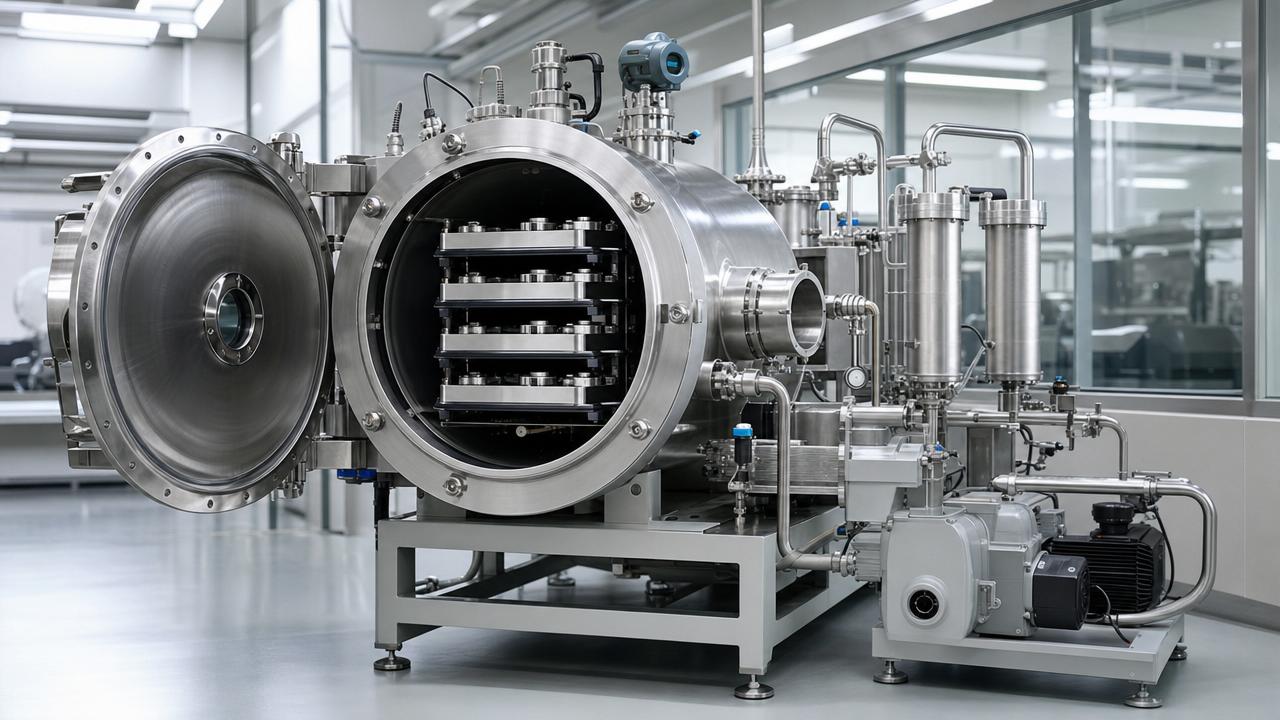
Germany's TÜV Launches New HV Magnetic Immunity Test




On May 13, 2026, Germany’s TÜV Rheinland officially implemented TR-EMC-HV-2026 — a revised EMC testing protocol for high-vacuum equipment. The update introduces a mandatory ±200 A/m pulsed magnetic field immunity test, simulating electromagnetic conditions near particle accelerators and MRI systems. With initial sampling revealing only 36.8% pass rates among Chinese-exported devices, the change signals immediate technical and commercial implications for vacuum technology supply chains serving medical, scientific, and semiconductor sectors.
Event Overview
TÜV Rheinland launched TR-EMC-HV-2026 on May 13, 2026. This revision adds ‘pulsed magnetic field immunity’ (±200 A/m) as a required test for high-vacuum equipment under its High Vacuum (HV) certification scheme. The test replicates transient magnetic fields encountered in accelerator facilities and high-field MRI environments. First-round sampling of exported Chinese HV equipment showed a pass rate of 36.8%. Primary failure causes identified were insufficient magnetic shielding in vacuum gauges and PLC control modules. TÜV has opened an expedited pre-testing service: fees increased by 40%, with turnaround reduced to five working days.
Industries Affected
Direct Exporters
Export-oriented manufacturers selling HV systems (e.g., vacuum coating units, analytical instrumentation, or accelerator beamline components) into EU markets face immediate compliance risk. Non-compliance blocks CE marking under the EU EMC Directive (2014/30/EU), halting market access. Re-testing delays may trigger contractual penalties or order cancellations, especially where delivery timelines are tied to facility commissioning schedules.
Raw Material Suppliers
Suppliers of magnetic-shielding alloys (e.g., Mu-metal, permalloy), low-permeability PCB substrates, and magnetically hardened connectors now see rising technical inquiry volumes. However, most lack IEC/EN 61000-4-9 traceable validation data — limiting their ability to support design-stage qualification. Demand is shifting from generic material specs toward application-specific shielding performance reports aligned with pulse waveform parameters in TR-EMC-HV-2026.
Contract Manufacturers & OEMs
Manufacturers assembling HV subsystems — particularly those integrating third-party vacuum gauges, motion controllers, or embedded PLCs — must re-evaluate board-level layout, cable routing, and enclosure gasketing. Failures observed were concentrated in signal integrity degradation during pulse onset, not steady-state operation. This points to grounding topology and common-mode choke placement as root causes — issues rarely caught in legacy 50/60 Hz immunity tests.
Compliance & Certification Service Providers
Domestic EMC labs offering pre-compliance screening face capacity strain. Few currently possess calibrated ±200 A/m pulsed field sources meeting IEC 61000-4-9 requirements. Third-party labs with TÜV-recognized HV test capability report >30% surge in booking requests since April 2026. Some are partnering with German or Swiss calibration institutes to validate pulse generators — a process requiring ≥12 weeks.
Key Considerations and Recommended Actions
Conduct Early Pre-Testing Using TÜV’s Expedited Channel
Given the 36.8% first-pass rate, delaying formal submission until full design freeze carries high risk. Use TÜV’s accelerated pre-test (5-day cycle, +40% fee) to identify marginal failures before committing to full certification. Prioritize units with analog vacuum gauge interfaces and Ethernet-connected PLCs — these accounted for 78% of failed samples.
Review Shielding at Subsystem Boundaries, Not Just Enclosures
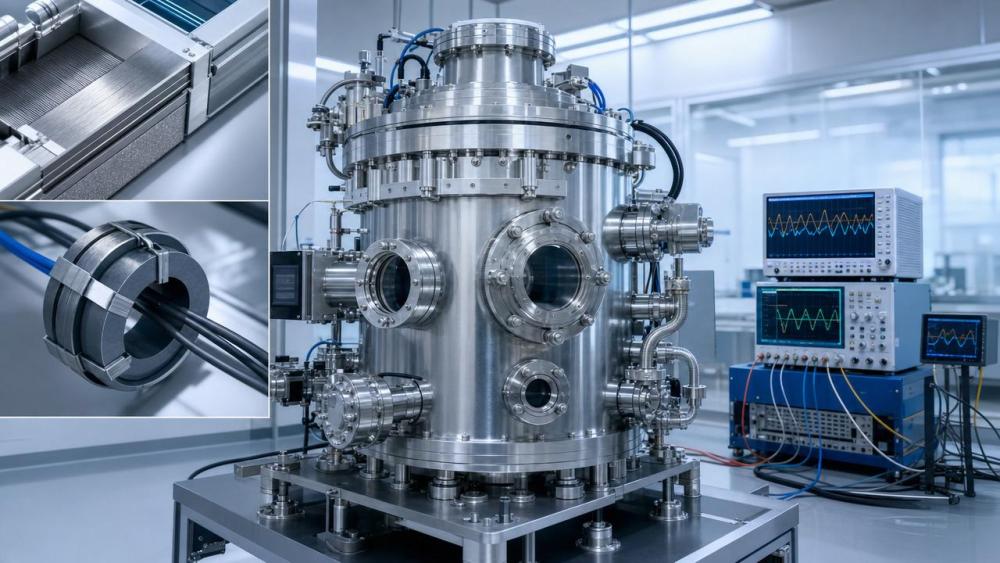
Failures originated primarily at interface points: feedthrough connectors, sensor cables entering shielded chambers, and unshielded ribbon cables between controller boards. Analysis shows that bulk metal enclosures alone are insufficient; localized magnetic shunting paths (e.g., nickel-iron ferrite clamps, toroidal chokes rated for 100 kHz–1 MHz dI/dt) are now essential at I/O boundaries.
Update Technical Documentation to Reflect Pulse-Specific Mitigations
TR-EMC-HV-2026 requires test evidence linking each mitigation (e.g., gasket type, choke model number, PCB ground plane thickness) to measured field attenuation at 100 kHz and 1 MHz. Generic ‘EMI compliant’ statements no longer suffice. Manufacturers must revise Declaration of Conformity annexes to include pulse waveform parameters and corresponding suppression margins.
Editorial Perspective / Industry Observation
Observably, this update marks a strategic pivot — not merely a technical tightening, but a shift toward mission-critical reliability standards previously reserved for aerospace and nuclear applications. From an industry perspective, the focus on pulsed magnetic immunity reflects growing integration of HV systems into high-energy physics infrastructure and next-generation medical imaging platforms. Current more critical concern lies less in component availability than in engineering bandwidth: few Chinese design teams possess hands-on experience with magnetic pulse coupling modeling (e.g., using CST Studio or ANSYS HFSS for transient magnetic field penetration analysis). This gap may widen unless targeted upskilling initiatives emerge within R&D departments.
Conclusion
This revision underscores a broader trend: global conformity frameworks are evolving beyond frequency-domain emissions limits toward time-domain resilience metrics. For vacuum equipment vendors, TR-EMC-HV-2026 is better understood not as a one-off hurdle, but as an early indicator of future requirements across adjacent domains — including fusion research infrastructure and quantum computing cryogenic systems. A rational interpretation is that regulatory convergence around pulsed field immunity will likely extend to other high-precision instrumentation sectors within 18–24 months.
Source Attribution
Official announcement: TÜV Rheinland Technical Bulletin TR-EMC-HV-2026 (issued May 13, 2026); internal sampling report referenced in TÜV’s HV Certification Webinar (May 20, 2026). Note: Pass-rate data applies solely to first-round voluntary submissions (n = 127 units, Q1 2026); official statistics pending publication in TÜV’s 2026 Mid-Year EMC Compliance Review — to be monitored for regional breakdowns and failure mode taxonomy updates.
Related News
- How Can Contamination Be Prevented in a Semiconductor Vacuum Chamber?Author :Vacuum Process Fellow

- Which Vacuum Pump Specifications Matter Most for Semiconductor Processes?Author :Vacuum Process Fellow

- How to find leaks in vacuum pump systems before pump performance dropsAuthor :Vacuum Process Fellow

- How to size a Roots blower for vacuum process equipmentAuthor :Vacuum Process Fellow

- How vacuum level affects vacuum process efficiencyAuthor :Vacuum Process Fellow

- China Imposes Temporary Helium Export BanAuthor :Vacuum Process Fellow

- Semiconductor Vacuum Systems Factory Checklist for Process Stability and Cleanroom UseAuthor :Vacuum Process Fellow

- Vacuum Process Optimization Services: Signs Your Line Needs a Performance ReviewAuthor :Vacuum Process Fellow

- Vacuum Chambers for Cleanroom Use: Key Design Points That Prevent ContaminationAuthor :Vacuum Process Fellow

- Vacuum Distillation Systems: Key Performance Metrics That Affect Product PurityAuthor :Vacuum Process Fellow

- Vietnam Halts High Vacuum Pump Import Licenses for 30 DaysAuthor :Vacuum Process Fellow

- Vacuum Technology Database: What to Check Before Using Technical DataAuthor :Vacuum Process Fellow

- Dry Pump Vacuum System Design Mistakes That Raise DowntimeAuthor :Vacuum Process Fellow

- When Vacuum Systems Lose Performance: Common Causes and FixesAuthor :Vacuum Process Fellow
![]()
- EU Tightens EN 13445-3 Weld Testing for Vacuum VesselsAuthor :Vacuum Process Fellow
![]()
- EPA Cuts R-1234ze(E) Quota 35%, Tightening Vacuum Cooling SupplyAuthor :Vacuum Process Fellow
 Quota 35%, Tightening Vacuum Cooling Supply")
- ICA Warns of Tight Copper Alloy Supply for Vacuum PumpsAuthor :Vacuum Process Fellow

- Vacuum System Leak Detection: Signs, Tests, and FixesAuthor :Vacuum Process Fellow

- How to Compare Vacuum Systems Factory Capabilities for Stable Process UptimeAuthor :Vacuum Process Fellow

- Vacuum Pump Lead Times Extend to 26 WeeksAuthor :Vacuum Process Fellow

- Semiconductor Vacuum Systems Explained for Stable Process YieldAuthor :Vacuum Process Fellow

- Vacuum Process Efficiency: 7 Hidden Causes of Energy LossAuthor :Vacuum Process Fellow

- Vacuum Technology Solutions for Stable Low-Pressure ProductionAuthor :Vacuum Process Fellow

- Vacuum Processes: Common Efficiency Losses and FixesAuthor :Vacuum Process Fellow

- Common Vacuum Processes Problems and How to Prevent DowntimeAuthor :Vacuum Process Fellow

- Tantalum Spike Extends Vacuum Crucible Lead TimesAuthor :Vacuum Process Fellow

- Vacuum Process Efficiency: 5 Hidden Losses to Check FirstAuthor :Vacuum Process Fellow

- How Heat Transfer Design Impacts Vacuum Process EfficiencyAuthor :Vacuum Process Fellow

- EN 13445-4:2026 Takes Effect for High-Vacuum ComponentsAuthor :Vacuum Process Fellow

- EU Vacuum Components Face New EN 13445-4:2026 Leak Test RuleAuthor :Vacuum Process Fellow

- UBS: Fed Cut View May Ease Vacuum Pump Lead TimesAuthor :Vacuum Process Fellow

- Vacuum Processes: Common Causes of Unstable PerformanceAuthor :Vacuum Process Fellow
![]()
- SiC Certification Signals New Entry Path for Vacuum and Compressor DrivesAuthor :Vacuum Process Fellow
![]()
- How to Choose the Right Vacuum System for Process StabilityAuthor :Vacuum Process Fellow

- Vacuum Technology Selection: What Matters Most for Stable Process PerformanceAuthor :Vacuum Process Fellow

- Vacuum Processes: How to Reduce Contamination and Improve Cycle ConsistencyAuthor :Vacuum Process Fellow