EU to Propose Full PFAS Ban in June, 90-Day Window for HV Seal Replacement




European Union regulators are preparing a sweeping regulatory move that will significantly impact global fluoropolymer supply chains. Though the exact timing of the formal announcement remains unconfirmed, internal documents from the European Chemicals Agency (ECHA) and a closed briefing by Germany’s Federal Environment Agency (UBA) on May 13 indicate that the European Commission is set to submit a comprehensive restriction proposal under REACH Annex XVII — targeting all per- and polyfluoroalkyl substances (PFAS), including fluorinated elastomers used in high-vacuum (HV) applications. The proposal is scheduled for formal submission in June 2026. This development places urgent pressure on manufacturers, exporters, and end-users reliant on conventional fluoroelastomer seals — particularly FKM (e.g., Viton®) — across semiconductor, pharmaceutical, and analytical instrumentation sectors.
Event Overview
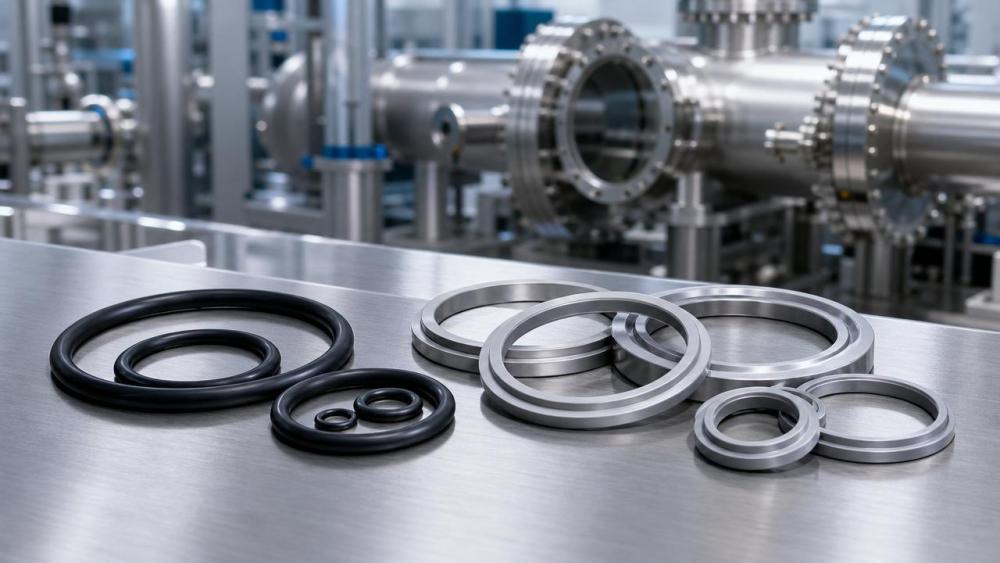
According to leaked ECHA internal documentation and UBA’s May 13 closed-door briefing, the European Commission will formally submit a REACH Annex XVII proposal in June 2026 to restrict all PFAS substances, including fluoropolymer processing aids and sealing materials. FKM/Viton-type fluoroelastomer seals — widely deployed in high-vacuum equipment — are explicitly named as priority substances under scrutiny. Exporters holding existing stock of such seals face an estimated 90-day window before the proposal triggers enforcement-related controls. Chinese suppliers are advised to transition to alternative materials — specifically perfluoroelastomers (FFKM) or hydrogenated nitrile rubber (HNBR) — and complete EN 15637 compatibility validation prior to EU market access.
Industries Affected
Direct Trading Enterprises
Export-oriented trading firms supplying FKM-based HV seals to EU customers face immediate inventory risk and customs clearance uncertainty. With no transitional grace period confirmed and the 90-day export window applying only to pre-existing stock, these enterprises may encounter sudden shipment holds, reclassification demands, or post-entry audits — especially if documentation fails to demonstrate material composition traceability or compliance with upcoming PFAS reporting thresholds.
Raw Material Procurement Entities
Procurement departments at equipment OEMs and system integrators must urgently reassess fluorocarbon elastomer sourcing strategies. Since FKM feedstock (e.g., vinylidene fluoride/hexafluoropropylene copolymers) falls under the proposed broad PFAS definition, even upstream monomer or polymer purchases could trigger supply chain due diligence obligations under forthcoming EU Corporate Sustainability Due Diligence Directive (CSDDD) alignment. Delays in qualifying FFKM or HNBR alternatives — particularly those meeting ultra-low outgassing and thermal stability requirements — may cascade into procurement bottlenecks.
Manufacturing Enterprises
OEMs producing high-vacuum chambers, mass spectrometers, or deposition tools rely on FKM seals for leak integrity and chemical resistance. Requalification of sealing systems using FFKM or HNBR requires full retesting against vacuum performance, compression set, and plasma resistance — not just material substitution. Manufacturers must also update technical files, revise declarations of conformity (DoC), and validate new part numbers under EN 15637 — a process typically requiring 8–12 weeks depending on test lab capacity.
Supply Chain Service Providers
Certification bodies, testing laboratories, and regulatory consultants supporting EU market access will see surging demand for PFAS composition screening (e.g., via TO-14A/TO-15 GC-MS), EN 15637 functional validation, and REACH SVHC communication support. However, current lab capacity for low-level PFAS quantification in elastomers remains limited — particularly for complex multi-layer seal geometries — creating potential service backlogs and pricing pressure.
Key Focus Areas and Recommended Actions
Validate Alternative Material Performance Against HV-Specific Requirements
FFKM offers superior PFAS resistance but carries higher cost and limited low-temperature flexibility; HNBR provides better mechanical resilience but lower plasma and solvent resistance. Companies must conduct application-specific testing — not generic datasheet comparisons — to confirm suitability for their operating pressure range (≤10⁻⁹ mbar), temperature cycling (-40°C to +200°C), and cleaning protocols (e.g., O₂ plasma, piranha solution).
Initiate EN 15637 Compatibility Verification Immediately
EN 15637 defines vacuum compatibility criteria for elastomeric seals, including outgassing rates, particle shedding, and thermal desorption profiles. As this standard is referenced in the UBA briefing as a compliance benchmark, delayed verification risks non-recognition of alternative seals during EU customs or notified body reviews. Pre-testing with accredited labs is strongly advised — especially given projected lab wait times exceeding 6 weeks.
Map and Document Full Material Composition Down to Polymer Additives
The proposed ban covers *all* PFAS — including processing aids, stabilizers, and curatives used in FKM compounding. Suppliers must obtain full bill-of-materials disclosure from compounders, verify absence of PFAS in mold release agents and packaging films, and retain analytical certificates (e.g., ISO/IEC 17025 reports) for each batch. Self-declarations without third-party verification are unlikely to satisfy EU enforcement expectations.
Editorial Perspective / Industry Observation
Observably, this proposal marks a structural shift — not merely a chemical restriction, but a de facto technology-forcing policy targeting legacy fluorocarbon infrastructure. While FKM has dominated HV sealing for over four decades, its inclusion signals that ‘essential use’ exemptions — previously assumed for critical vacuum applications — may no longer be granted automatically. Analysis shows that the 90-day window reflects administrative urgency rather than technical feasibility: most qualified FFKM replacements require minimum 12-week lead time for tooling, molding, and validation. From industry perspective, the timeline appears calibrated to accelerate consolidation among specialized elastomer compounders — favoring players with pre-qualified EN 15637 portfolios and vertically integrated PFAS-free production lines.
Conclusion
This development underscores how environmental regulation is increasingly shaping core engineering decisions — moving beyond emissions control into material architecture and system design. Rather than viewing the PFAS restriction as a compliance hurdle, forward-looking enterprises are treating it as a catalyst for next-generation vacuum interface innovation. A rational interpretation is that the 90-day window serves less as a deadline and more as a signal: the era of ‘fluoro-as-default’ in high-integrity vacuum systems has ended — and the race to qualify robust, verifiable, and economically scalable alternatives has already begun.
Source Attribution
Sources: European Chemicals Agency (ECHA) internal working document (leaked, reference ID: ECHA-2025-DOC-047); German Federal Environment Agency (UBA) closed briefing, May 13, 2025 (transcript summary circulated to national competent authorities). Note: The formal REACH Annex XVII proposal text, official impact assessment, and any potential essential-use derogations remain pending publication. These elements warrant continued monitoring through the EU’s Public Consultation Portal and ECHA’s PFAS Restriction Tracker.
Related News
- How Can Contamination Be Prevented in a Semiconductor Vacuum Chamber?Author :Vacuum Process Fellow

- Which Vacuum Pump Specifications Matter Most for Semiconductor Processes?Author :Vacuum Process Fellow

- How to find leaks in vacuum pump systems before pump performance dropsAuthor :Vacuum Process Fellow

- How to size a Roots blower for vacuum process equipmentAuthor :Vacuum Process Fellow

- How vacuum level affects vacuum process efficiencyAuthor :Vacuum Process Fellow

- China Imposes Temporary Helium Export BanAuthor :Vacuum Process Fellow

- Semiconductor Vacuum Systems Factory Checklist for Process Stability and Cleanroom UseAuthor :Vacuum Process Fellow

- Vacuum Process Optimization Services: Signs Your Line Needs a Performance ReviewAuthor :Vacuum Process Fellow

- Vacuum Chambers for Cleanroom Use: Key Design Points That Prevent ContaminationAuthor :Vacuum Process Fellow

- Vacuum Distillation Systems: Key Performance Metrics That Affect Product PurityAuthor :Vacuum Process Fellow

- Vietnam Halts High Vacuum Pump Import Licenses for 30 DaysAuthor :Vacuum Process Fellow

- Vacuum Technology Database: What to Check Before Using Technical DataAuthor :Vacuum Process Fellow

- Dry Pump Vacuum System Design Mistakes That Raise DowntimeAuthor :Vacuum Process Fellow

- When Vacuum Systems Lose Performance: Common Causes and FixesAuthor :Vacuum Process Fellow
![]()
- EU Tightens EN 13445-3 Weld Testing for Vacuum VesselsAuthor :Vacuum Process Fellow
![]()
- EPA Cuts R-1234ze(E) Quota 35%, Tightening Vacuum Cooling SupplyAuthor :Vacuum Process Fellow
 Quota 35%, Tightening Vacuum Cooling Supply")
- ICA Warns of Tight Copper Alloy Supply for Vacuum PumpsAuthor :Vacuum Process Fellow

- Vacuum System Leak Detection: Signs, Tests, and FixesAuthor :Vacuum Process Fellow

- How to Compare Vacuum Systems Factory Capabilities for Stable Process UptimeAuthor :Vacuum Process Fellow

- Vacuum Pump Lead Times Extend to 26 WeeksAuthor :Vacuum Process Fellow

- Semiconductor Vacuum Systems Explained for Stable Process YieldAuthor :Vacuum Process Fellow

- Vacuum Process Efficiency: 7 Hidden Causes of Energy LossAuthor :Vacuum Process Fellow

- Vacuum Technology Solutions for Stable Low-Pressure ProductionAuthor :Vacuum Process Fellow

- Vacuum Processes: Common Efficiency Losses and FixesAuthor :Vacuum Process Fellow

- Common Vacuum Processes Problems and How to Prevent DowntimeAuthor :Vacuum Process Fellow

- Tantalum Spike Extends Vacuum Crucible Lead TimesAuthor :Vacuum Process Fellow

- Vacuum Process Efficiency: 5 Hidden Losses to Check FirstAuthor :Vacuum Process Fellow

- How Heat Transfer Design Impacts Vacuum Process EfficiencyAuthor :Vacuum Process Fellow

- EN 13445-4:2026 Takes Effect for High-Vacuum ComponentsAuthor :Vacuum Process Fellow

- EU Vacuum Components Face New EN 13445-4:2026 Leak Test RuleAuthor :Vacuum Process Fellow

- UBS: Fed Cut View May Ease Vacuum Pump Lead TimesAuthor :Vacuum Process Fellow

- Vacuum Processes: Common Causes of Unstable PerformanceAuthor :Vacuum Process Fellow
![]()
- SiC Certification Signals New Entry Path for Vacuum and Compressor DrivesAuthor :Vacuum Process Fellow
![]()
- How to Choose the Right Vacuum System for Process StabilityAuthor :Vacuum Process Fellow

- Vacuum Technology Selection: What Matters Most for Stable Process PerformanceAuthor :Vacuum Process Fellow

- Vacuum Processes: How to Reduce Contamination and Improve Cycle ConsistencyAuthor :Vacuum Process Fellow