



EU PFAS Ban Proposal Narrows HV Seal Replacement Window to 90 Days




On June 1, 2026, the European Commission is set to formally submit a comprehensive restriction proposal on per- and polyfluoroalkyl substances (PFAS) across all supply chains — triggering urgent compliance actions for manufacturers of fluorinated elastomer seals used in high-vacuum (HV) equipment. The move directly impacts import eligibility, technical substitution timelines, and post-sale service continuity for EU-bound HV systems.
Event Overview
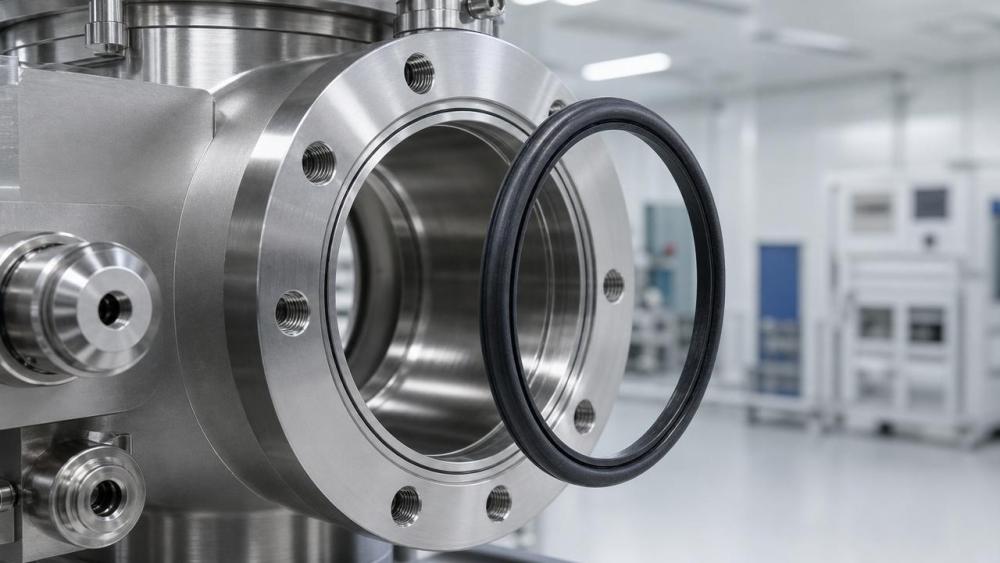
The European Commission will submit its full-chain PFAS restriction proposal on June 1, 2026. This proposal targets all PFAS substances, including those embedded in fluorocarbon rubber (FKM) sealing components widely deployed in high-vacuum applications. Under the draft regulation, imports of HV equipment containing non-compliant FKM seals will face customs rejection. High-vacuum equipment manufacturers must complete the transition from FKM to approved alternatives — primarily perfluoroelastomer (FFKM) or modified silicone — within 90 days of the proposal’s formal submission. Chinese leading suppliers of HV seals have initiated emergency certification efforts for FFKM and modified silicone variants; however, export delivery lead times are now extended by 3–4 weeks on average.
Industries Affected
Direct trade enterprises: Exporters shipping HV equipment or spare seals into the EU face immediate customs clearance risk if products contain legacy FKM compounds. Impact manifests as shipment delays, rework costs, and potential loss of contractual warranty coverage due to non-compliant components.
Raw material procurement enterprises: Buyers sourcing fluoroelastomers or silicone base polymers must verify substance-level PFAS content declarations from upstream chemical suppliers. Impact includes heightened due diligence burden, increased testing frequency, and exposure to supply volatility as certified FFKM grades become constrained.
Processing and manufacturing enterprises: HV system integrators and seal fabricators must revise material specifications, requalify production batches, and update technical documentation (e.g., EU Declaration of Conformity, REACH SVHC screening reports). Impact appears in engineering validation cycles, tooling adjustments for alternative elastomers, and recalibration of compression-set performance metrics.
Supply chain service enterprises: Customs brokers, conformity assessment bodies, and logistics providers handling EU-bound HV goods must upgrade compliance checklists and pre-clearance verification protocols. Impact includes expanded documentation requirements (e.g., substance-specific SDS annexes), longer pre-shipment review windows, and new liability clauses in service agreements.
Key Focus Areas and Recommended Actions
Verify current seal material composition against EU’s proposed PFAS definition
Confirm whether existing FKM formulations fall under the scope of ‘intentionally added PFAS’ per the draft Annex I criteria — especially regarding fluorine content thresholds and polymer backbone stability. Do not assume historical REACH compliance equals PFAS readiness.
Accelerate qualification of FFKM or modified silicone alternatives
Prioritize compatibility testing with existing HV chamber geometries, thermal cycling profiles, and outgassing limits (per ISO 15901-2). Note: Not all FFKM grades meet ultra-high vacuum (
Engage early with EU-authorized representatives and notified bodies
Assign an EU-based legal representative before June 2026 to manage technical file submissions. Initiate pre-assessment discussions with notified bodies accredited for Regulation (EU) 2019/1021 (POP Regulation) — not just REACH — given the cross-regulatory enforcement mechanism.
Update commercial terms and inventory planning
Revise Incoterms® to clarify PFAS compliance responsibility (e.g., shift from EXW to DAP with explicit material warranty clauses). Build buffer stock for legacy FKM seals only where legally grandfathered — do not rely on transitional provisions unless explicitly stated in final adopted text.
Editorial Perspective / Industry Observation
Analysis shows this proposal represents more than a materials substitution exercise: it signals a structural shift toward ‘substance-by-substance’ regulatory control over functional polymers in critical infrastructure. Observably, the 90-day window reflects political urgency rather than technical feasibility — most HV seal qualification cycles require ≥120 days for full vacuum performance validation. From an industry perspective, the real bottleneck lies not in FFKM availability, but in traceability infrastructure: fewer than 15% of Chinese elastomer compounders currently maintain auditable, batch-level PFAS declaration systems aligned with EU’s upcoming SCIP database requirements. Current more critical concern is not material cost, but the absence of harmonized analytical methods for detecting low-concentration PFAS degradation products in cured elastomers — a gap likely to trigger disputes during customs inspections.
Conclusion
This proposal marks a definitive inflection point for global HV equipment supply chains: compliance can no longer be treated as a downstream certification task. Rather, it demands upstream chemistry transparency, vertically integrated material governance, and proactive regulatory anticipation. A rational interpretation is that the policy accelerates consolidation among seal suppliers capable of end-to-end substance stewardship — while exposing operational fragility in firms relying on fragmented, unverified sourcing.
Source Attribution
European Commission Press Release IP/26/2187 (anticipated, June 1, 2026); Draft Annex I of the POP Regulation Amendment (Ref. SANTE/2025/00123, under stakeholder consultation until May 31, 2026); ECHA Guidance on PFAS Identification in Polymers (Version 3.1, March 2026). Note: Final scope, exemptions (e.g., for certain medical or aerospace applications), and enforcement timelines remain subject to trilogue negotiations and are under active observation.
Related News
- How Can Contamination Be Prevented in a Semiconductor Vacuum Chamber?Author :Vacuum Process Fellow

- Which Vacuum Pump Specifications Matter Most for Semiconductor Processes?Author :Vacuum Process Fellow

- How to find leaks in vacuum pump systems before pump performance dropsAuthor :Vacuum Process Fellow

- How to size a Roots blower for vacuum process equipmentAuthor :Vacuum Process Fellow

- How vacuum level affects vacuum process efficiencyAuthor :Vacuum Process Fellow

- China Imposes Temporary Helium Export BanAuthor :Vacuum Process Fellow

- Semiconductor Vacuum Systems Factory Checklist for Process Stability and Cleanroom UseAuthor :Vacuum Process Fellow

- Vacuum Process Optimization Services: Signs Your Line Needs a Performance ReviewAuthor :Vacuum Process Fellow

- Vacuum Chambers for Cleanroom Use: Key Design Points That Prevent ContaminationAuthor :Vacuum Process Fellow

- Vacuum Distillation Systems: Key Performance Metrics That Affect Product PurityAuthor :Vacuum Process Fellow

- Vietnam Halts High Vacuum Pump Import Licenses for 30 DaysAuthor :Vacuum Process Fellow

- Vacuum Technology Database: What to Check Before Using Technical DataAuthor :Vacuum Process Fellow

- Dry Pump Vacuum System Design Mistakes That Raise DowntimeAuthor :Vacuum Process Fellow

- When Vacuum Systems Lose Performance: Common Causes and FixesAuthor :Vacuum Process Fellow
![]()
- EU Tightens EN 13445-3 Weld Testing for Vacuum VesselsAuthor :Vacuum Process Fellow
![]()
- EPA Cuts R-1234ze(E) Quota 35%, Tightening Vacuum Cooling SupplyAuthor :Vacuum Process Fellow
 Quota 35%, Tightening Vacuum Cooling Supply")
- ICA Warns of Tight Copper Alloy Supply for Vacuum PumpsAuthor :Vacuum Process Fellow

- Vacuum System Leak Detection: Signs, Tests, and FixesAuthor :Vacuum Process Fellow

- How to Compare Vacuum Systems Factory Capabilities for Stable Process UptimeAuthor :Vacuum Process Fellow

- Vacuum Pump Lead Times Extend to 26 WeeksAuthor :Vacuum Process Fellow

- Semiconductor Vacuum Systems Explained for Stable Process YieldAuthor :Vacuum Process Fellow

- Vacuum Process Efficiency: 7 Hidden Causes of Energy LossAuthor :Vacuum Process Fellow

- Vacuum Technology Solutions for Stable Low-Pressure ProductionAuthor :Vacuum Process Fellow

- Vacuum Processes: Common Efficiency Losses and FixesAuthor :Vacuum Process Fellow

- Common Vacuum Processes Problems and How to Prevent DowntimeAuthor :Vacuum Process Fellow

- Tantalum Spike Extends Vacuum Crucible Lead TimesAuthor :Vacuum Process Fellow

- Vacuum Process Efficiency: 5 Hidden Losses to Check FirstAuthor :Vacuum Process Fellow

- How Heat Transfer Design Impacts Vacuum Process EfficiencyAuthor :Vacuum Process Fellow

- EN 13445-4:2026 Takes Effect for High-Vacuum ComponentsAuthor :Vacuum Process Fellow

- EU Vacuum Components Face New EN 13445-4:2026 Leak Test RuleAuthor :Vacuum Process Fellow

- UBS: Fed Cut View May Ease Vacuum Pump Lead TimesAuthor :Vacuum Process Fellow

- Vacuum Processes: Common Causes of Unstable PerformanceAuthor :Vacuum Process Fellow
![]()
- SiC Certification Signals New Entry Path for Vacuum and Compressor DrivesAuthor :Vacuum Process Fellow
![]()
- How to Choose the Right Vacuum System for Process StabilityAuthor :Vacuum Process Fellow

- Vacuum Technology Selection: What Matters Most for Stable Process PerformanceAuthor :Vacuum Process Fellow

- Vacuum Processes: How to Reduce Contamination and Improve Cycle ConsistencyAuthor :Vacuum Process Fellow