Vacuum Process Efficiency in High Vacuum Lines: 5 Causes of Throughput Loss




In high vacuum lines, small losses often hide inside routine operation. Vacuum process efficiency drops when flow paths, seals, surfaces, and control habits no longer match process demand.
For industrial cooling, compressed air, and thermal systems, this matters beyond vacuum itself. Lower throughput can delay cycles, increase energy intensity, and destabilize connected production steps.
This article reviews five practical causes of throughput loss. It also shows how different operating scenes change the diagnosis of vacuum process efficiency problems.
Why throughput loss looks different across high vacuum line scenarios
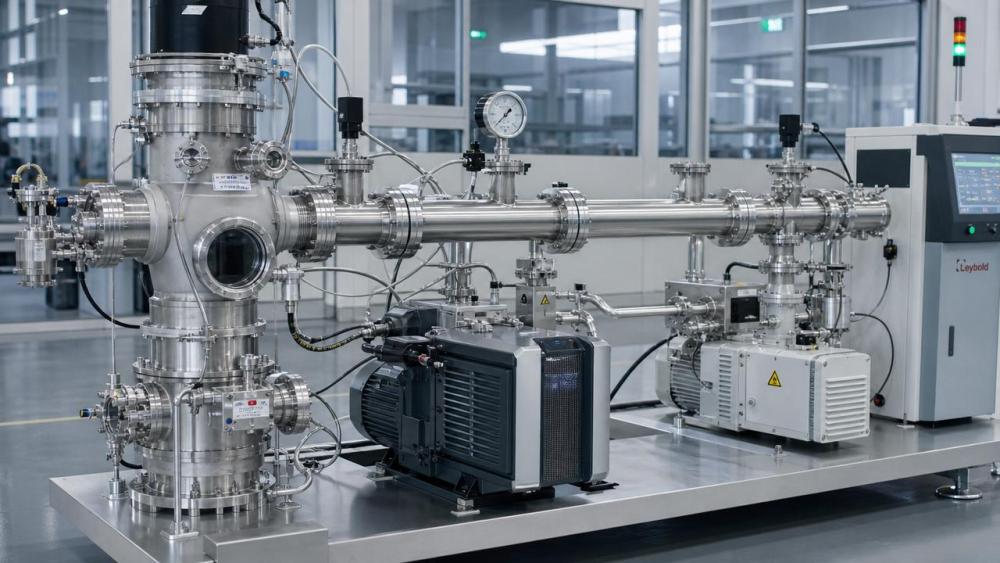
High vacuum lines do not fail in one universal way. A coating chamber, a degassing line, and an analytical system can show similar pressure symptoms but need different corrective actions.
That is why vacuum process efficiency should be judged by conductance, gas load, contamination risk, cycle timing, and control stability together. Pump nameplate capacity alone is rarely enough.
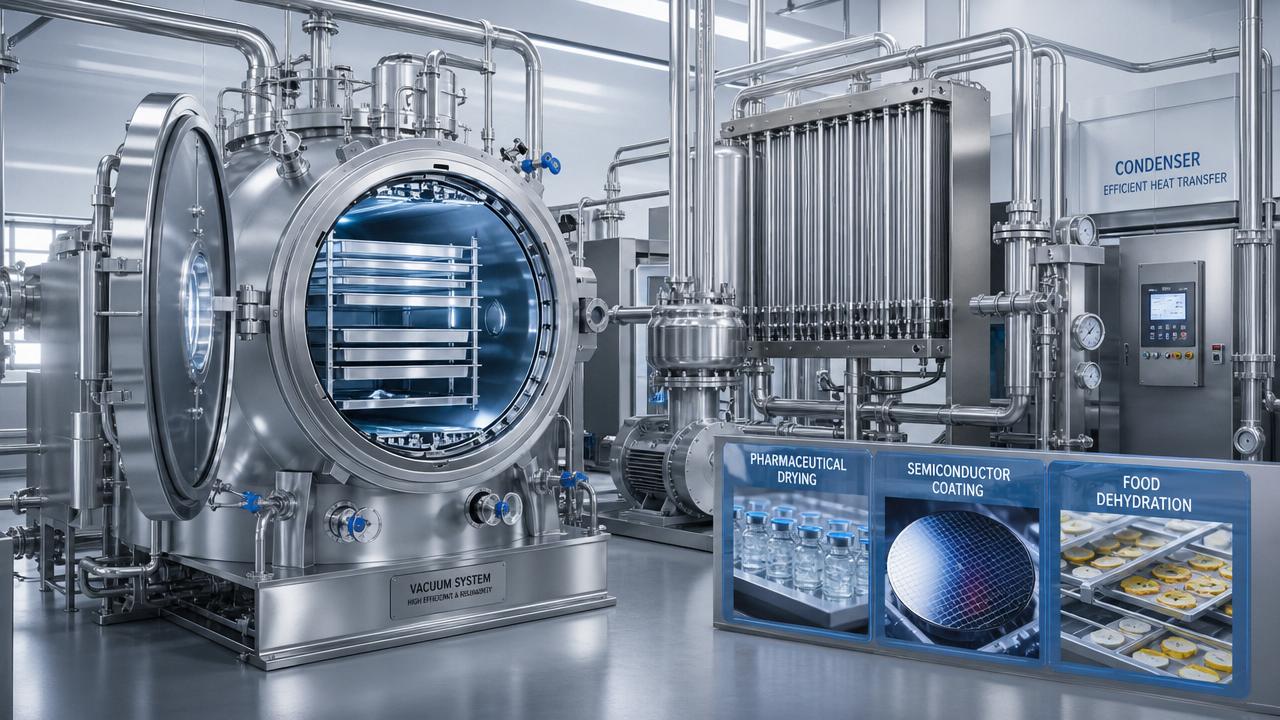
In broader industry, vacuum process efficiency supports drying, packaging, metallurgy, electronics, thermal treatment, and research systems. Each scene places different stress on line design and maintenance discipline.
Scene 1: Long pipe runs and restrictive fittings quietly reduce conductance
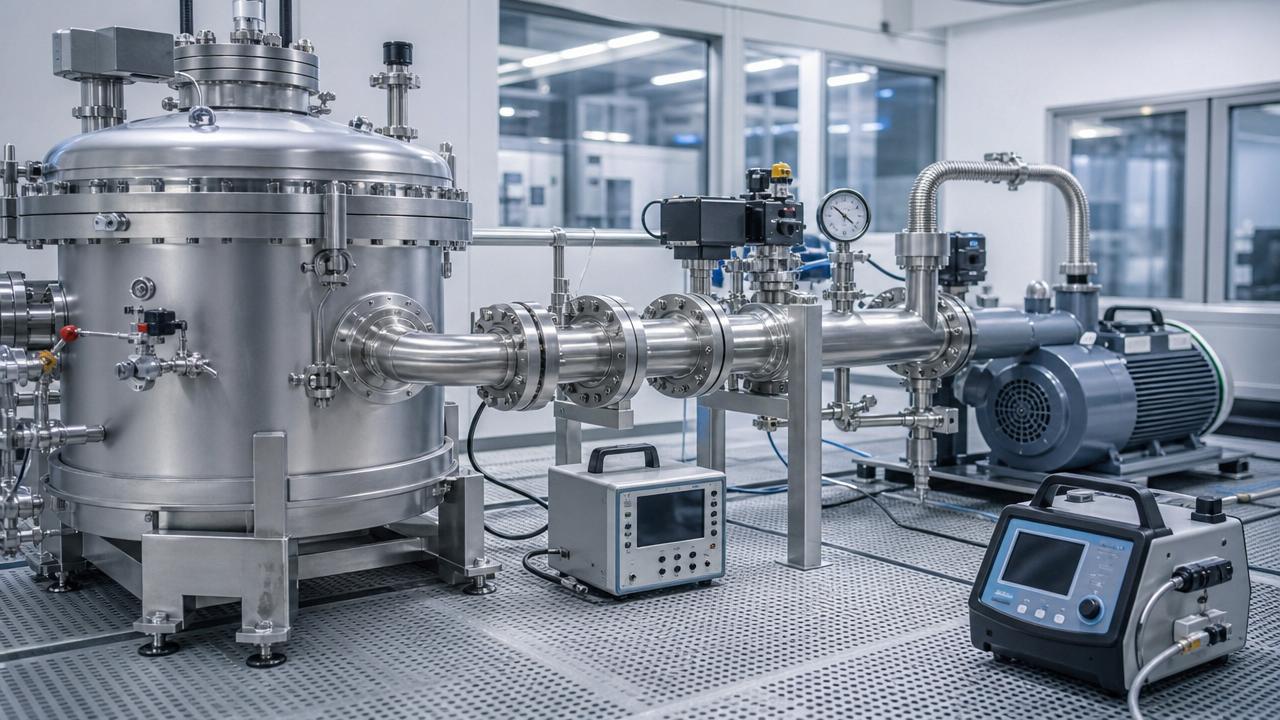
The first cause of throughput loss is poor line conductance. In high vacuum service, narrow pipes, sharp bends, long runs, and undersized valves sharply reduce effective pumping speed at the chamber.
This scene appears often in retrofit projects. A stronger pump gets installed, yet evacuation time barely improves because the line between chamber and pump becomes the real bottleneck.
Core judgment points
- Pump-down time rises after adding extra valves, traps, or flexible hoses.
- Pressure near the pump looks better than pressure inside the chamber.
- Cycle variation increases when multiple branches share one main line.
Improving vacuum process efficiency here means reducing restrictions first. Shorter runs, smoother routing, larger diameters, and better valve selection usually outperform simply increasing pump horsepower.
Scene 2: Small leaks and virtual leaks create slow, stubborn pressure tails
The second cause is leakage, including real leaks and virtual leaks. Real leaks admit external gas. Virtual leaks release trapped gas from blind holes, threads, cavities, porous materials, or poor assembly geometry.
This scene is common after maintenance, instrument replacement, or chamber modification. The line may pass a basic startup check, yet final pressure remains unstable or recovery becomes unusually slow.
Core judgment points
- Pressure plateaus above historical baseline without obvious pump faults.
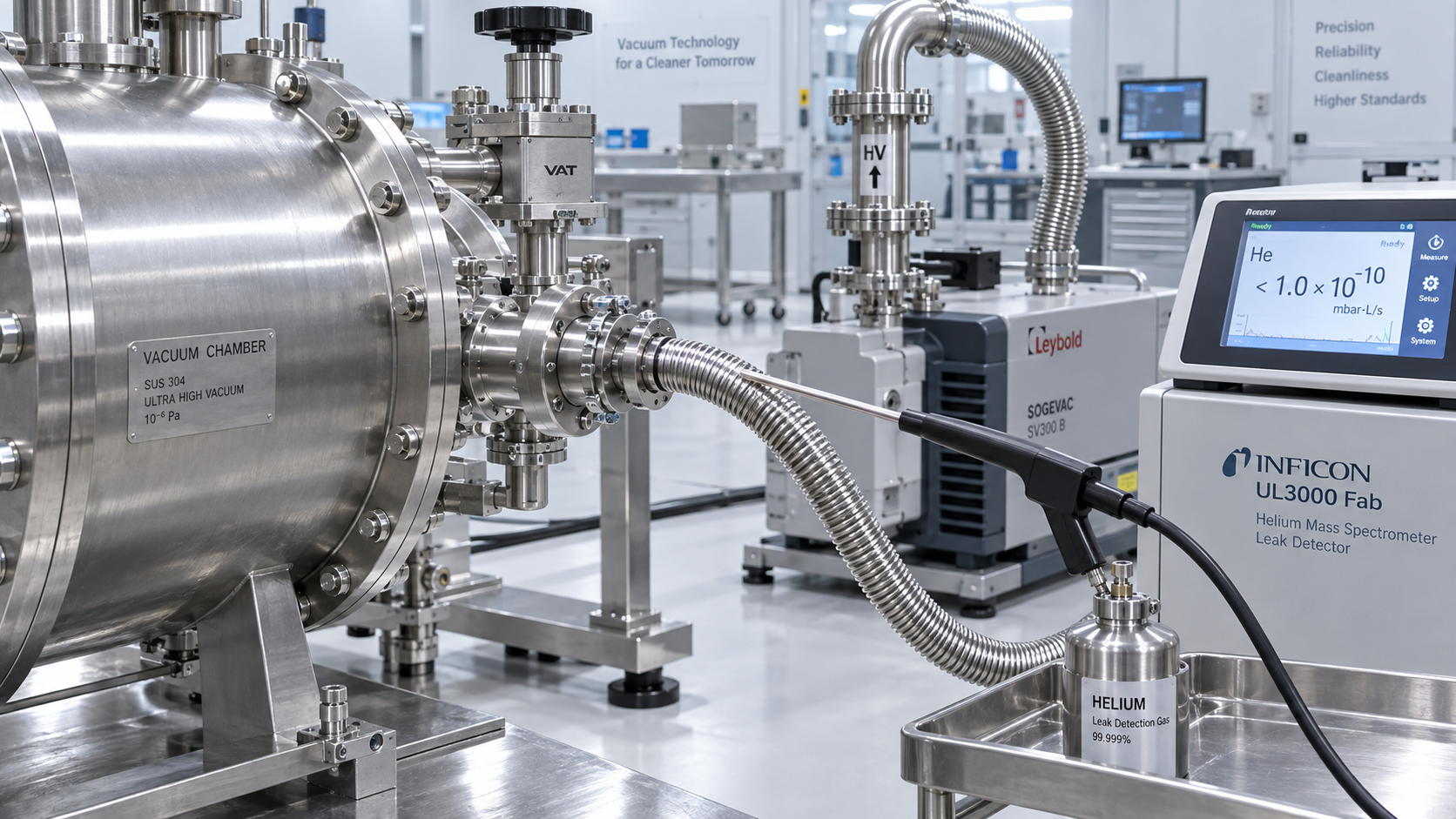
- Helium testing finds no major leak, but rate-of-rise remains elevated.
- Performance worsens after opening flanges, swapping gauges, or adding sensors.
Vacuum process efficiency improves when leak checks become routine and design details prevent trapped volumes. Proper gasket compression, clean sealing faces, and vented screw practices are especially important.
Scene 3: Outgassing and contamination overload the vacuum line over time
The third cause is internal gas load from outgassing and contamination. Water vapor, oils, solvents, elastomer emissions, and process residues keep feeding the system even when leaks are under control.
This scene affects lines connected to drying, coating, packaging, thermal processing, and materials handling. Throughput loss often appears gradually, making the root cause easy to miss.
Core judgment points
- Pump-down is much slower after exposure to atmosphere or wet product loads.
- Base pressure improves after bakeout, purge, or cleaning procedures.
- Cold surfaces, traps, and roughing stages show residue buildup or condensate.
Better vacuum process efficiency in this scenario depends on materials discipline, preconditioning, moisture control, and contamination management. Clean chambers and dry inputs reduce gas load before pumping even starts.
Scene 4: Pump selection and staging do not match the real gas load profile
The fourth cause is pump mismatch. Many high vacuum lines have acceptable ultimate pressure capability but poor throughput because roughing, boosting, and high vacuum stages are not balanced.
This scene often appears when process loads change. A system designed for clean, light gas service may struggle after adding moisture, heavier vapors, larger chamber volume, or shorter batch timing.
Core judgment points
- Roughing stage takes too long before crossover to high vacuum pumping.
- Pump temperatures, power draw, or oil condition worsen during peak cycles.
- Throughput drops when several chambers demand evacuation at the same time.
To restore vacuum process efficiency, evaluate the full evacuation curve, not only endpoint pressure. Staging, buffer capacity, pump technology, and isolation logic must reflect actual operating rhythm.
Scene 5: Instrument drift and inconsistent operating discipline distort performance
The fifth cause is poor measurement and control discipline. When gauges drift, setpoints shift, or valve timing changes, operators may chase false problems while real throughput losses continue.
This scene is common in mixed-use industrial systems. Multiple teams interact with the same line, and undocumented changes slowly erode repeatability, masking declining vacuum process efficiency.
Core judgment points
- Different gauges report inconsistent pressure trends during the same cycle.
- Manual venting, warmup, or isolation timing varies between shifts.
- Maintenance logs lack trend data for pressure, time, power, and temperature.
Vacuum process efficiency becomes easier to protect when calibration intervals, startup routines, alarm thresholds, and historical baselines are clearly standardized and reviewed.
How application scenes change the likely source of vacuum process efficiency loss
Practical adaptation steps for stronger vacuum process efficiency
- Map the evacuation path from chamber to exhaust and flag every restriction.
- Measure pump-down time by stage, not only final pressure.
- Separate leak suspicion from outgassing using rate-of-rise and recovery tests.
- Review materials, cleaning agents, seals, and trapped-volume details.
- Trend power, temperature, pressure, and cycle time together.
- Standardize valve timing, venting, warmup, and shutdown procedures.
These actions create a stronger diagnostic baseline. They also support energy efficiency goals that matter across cooling, compression, and heat-driven industrial systems.
Common misjudgments that hide throughput loss
One common mistake is assuming lower pressure always means better vacuum process efficiency. If cycle time remains poor, conductance or gas load may still be limiting usable throughput.
Another mistake is blaming the pump first. Many losses begin upstream in layout, contamination, leakage detail, or operating routine rather than in pump hardware.
A third mistake is treating all applications alike. Vacuum process efficiency in a clean analytical line differs greatly from efficiency in a moisture-heavy industrial batch process.
Next-step focus for more reliable vacuum process efficiency
A reliable improvement plan starts with scene-based diagnosis. Identify whether the dominant issue is conductance, leakage, contamination, pump mismatch, or control inconsistency.
Then compare current cycle data against a stable historical baseline. Small deviations in timing, gas load, and valve behavior often reveal the fastest path to better vacuum process efficiency.
For organizations tracking broader thermal and compression performance, vacuum process efficiency should be monitored as part of total energy conversion quality, not as an isolated utility metric.
Ready when you are. Send us a message to get started.
Related News
- How does base pressure affect film purity in vacuum deposition?Author :Vacuum Process Fellow

- How to size vacuum process equipment for the required pump-down timeAuthor :Vacuum Process Fellow

- Which vacuum specification best protects semiconductor process yield?Author :Vacuum Process Fellow

- How Can Contamination Be Prevented in a Semiconductor Vacuum Chamber?Author :Vacuum Process Fellow

- Which Vacuum Pump Specifications Matter Most for Semiconductor Processes?Author :Vacuum Process Fellow

- How to find leaks in vacuum pump systems before pump performance dropsAuthor :Vacuum Process Fellow

- How to size a Roots blower for vacuum process equipmentAuthor :Vacuum Process Fellow

- How vacuum level affects vacuum process efficiencyAuthor :Vacuum Process Fellow

- China Imposes Temporary Helium Export BanAuthor :Vacuum Process Fellow

- Semiconductor Vacuum Systems Factory Checklist for Process Stability and Cleanroom UseAuthor :Vacuum Process Fellow

- Vacuum Process Optimization Services: Signs Your Line Needs a Performance ReviewAuthor :Vacuum Process Fellow

- Vacuum Chambers for Cleanroom Use: Key Design Points That Prevent ContaminationAuthor :Vacuum Process Fellow

- Vacuum Distillation Systems: Key Performance Metrics That Affect Product PurityAuthor :Vacuum Process Fellow

- Vietnam Halts High Vacuum Pump Import Licenses for 30 DaysAuthor :Vacuum Process Fellow

- Vacuum Technology Database: What to Check Before Using Technical DataAuthor :Vacuum Process Fellow

- Dry Pump Vacuum System Design Mistakes That Raise DowntimeAuthor :Vacuum Process Fellow

- When Vacuum Systems Lose Performance: Common Causes and FixesAuthor :Vacuum Process Fellow
![]()
- EU Tightens EN 13445-3 Weld Testing for Vacuum VesselsAuthor :Vacuum Process Fellow
![]()
- EPA Cuts R-1234ze(E) Quota 35%, Tightening Vacuum Cooling SupplyAuthor :Vacuum Process Fellow
 Quota 35%, Tightening Vacuum Cooling Supply")
- ICA Warns of Tight Copper Alloy Supply for Vacuum PumpsAuthor :Vacuum Process Fellow

- Vacuum System Leak Detection: Signs, Tests, and FixesAuthor :Vacuum Process Fellow

- How to Compare Vacuum Systems Factory Capabilities for Stable Process UptimeAuthor :Vacuum Process Fellow

- Vacuum Pump Lead Times Extend to 26 WeeksAuthor :Vacuum Process Fellow

- Semiconductor Vacuum Systems Explained for Stable Process YieldAuthor :Vacuum Process Fellow

- Vacuum Process Efficiency: 7 Hidden Causes of Energy LossAuthor :Vacuum Process Fellow

- Vacuum Technology Solutions for Stable Low-Pressure ProductionAuthor :Vacuum Process Fellow

- Vacuum Processes: Common Efficiency Losses and FixesAuthor :Vacuum Process Fellow

- Common Vacuum Processes Problems and How to Prevent DowntimeAuthor :Vacuum Process Fellow

- Tantalum Spike Extends Vacuum Crucible Lead TimesAuthor :Vacuum Process Fellow

- Vacuum Process Efficiency: 5 Hidden Losses to Check FirstAuthor :Vacuum Process Fellow

- How Heat Transfer Design Impacts Vacuum Process EfficiencyAuthor :Vacuum Process Fellow

- EN 13445-4:2026 Takes Effect for High-Vacuum ComponentsAuthor :Vacuum Process Fellow

- EU Vacuum Components Face New EN 13445-4:2026 Leak Test RuleAuthor :Vacuum Process Fellow

- UBS: Fed Cut View May Ease Vacuum Pump Lead TimesAuthor :Vacuum Process Fellow

- Vacuum Processes: Common Causes of Unstable PerformanceAuthor :Vacuum Process Fellow
![]()
- SiC Certification Signals New Entry Path for Vacuum and Compressor DrivesAuthor :Vacuum Process Fellow
![]()