Vacuum Process Efficiency: 5 Losses You Can Measure




Vacuum process efficiency is often judged by end results alone, yet the most expensive losses usually develop earlier in the cycle. They appear as longer pump-down time, unstable pressure, excessive energy draw, or inconsistent product outcomes.
In broad industrial settings, measurable loss tracking creates a stronger foundation for maintenance planning, retrofit timing, and capital decisions. When vacuum process efficiency is monitored through clear metrics, hidden waste becomes visible and corrective action becomes easier to justify.
Why measurement context matters across industrial vacuum scenarios
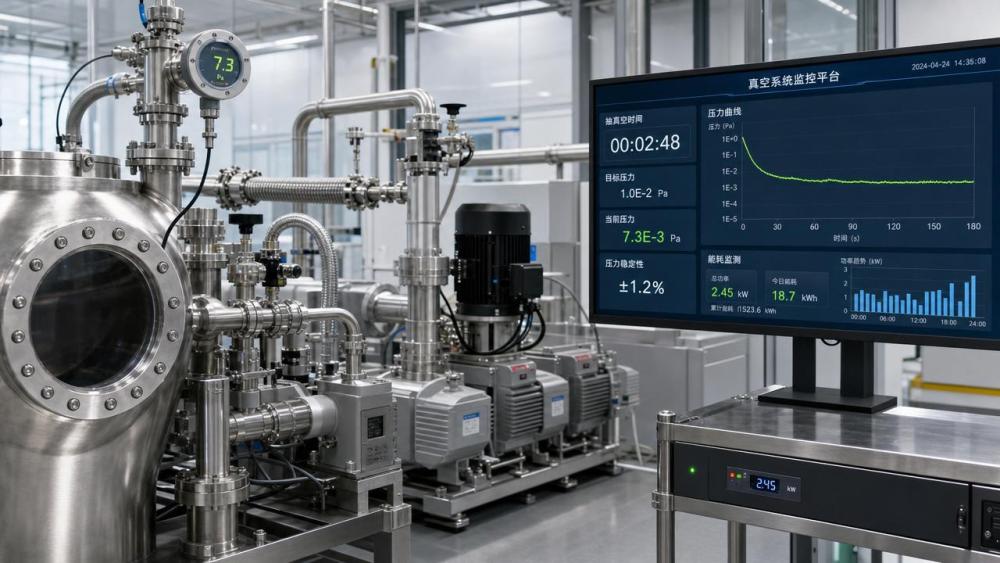
Vacuum process efficiency does not decline in the same way across every application. A packaging line, a coating chamber, and a drying system may use similar equipment, yet their loss patterns differ sharply.
Cycle frequency, contamination load, target vacuum level, and temperature profile all change the meaning of “good performance.” A useful evaluation starts by identifying the operating scenario before comparing numbers.
For example, a short-cycle material handling system may care most about response time. A vacuum furnace may value pressure stability and leak integrity. A pharmaceutical dryer may focus on moisture removal consistency and energy intensity.
This is why vacuum process efficiency should be measured through scenario-based losses, not generic nameplate assumptions. The five losses below can be quantified in nearly any industry.
Scenario 1: Pump-down delays reveal time loss in high-throughput operations
The first measurable loss is time loss during pump-down. It is common in packaging, pick-and-place, thermoforming, and automated batch systems where frequent cycling defines output capacity.
What to measure
- Time from atmosphere to target pressure
- Cycle-to-cycle variation in evacuation time
- Production delay caused by vacuum not reaching setpoint
- Energy consumed per evacuation cycle
A rising pump-down curve often signals restrictions, fouling, undersized conductance, or degraded pumping speed. Even small increases become significant when repeated hundreds of times daily.
Core judgment point
If throughput demand is high, time loss may matter more than ultimate vacuum performance. In this scenario, vacuum process efficiency depends on how quickly the useful pressure window is reached.
Scenario 2: Leakage loss dominates systems requiring stable vacuum holding
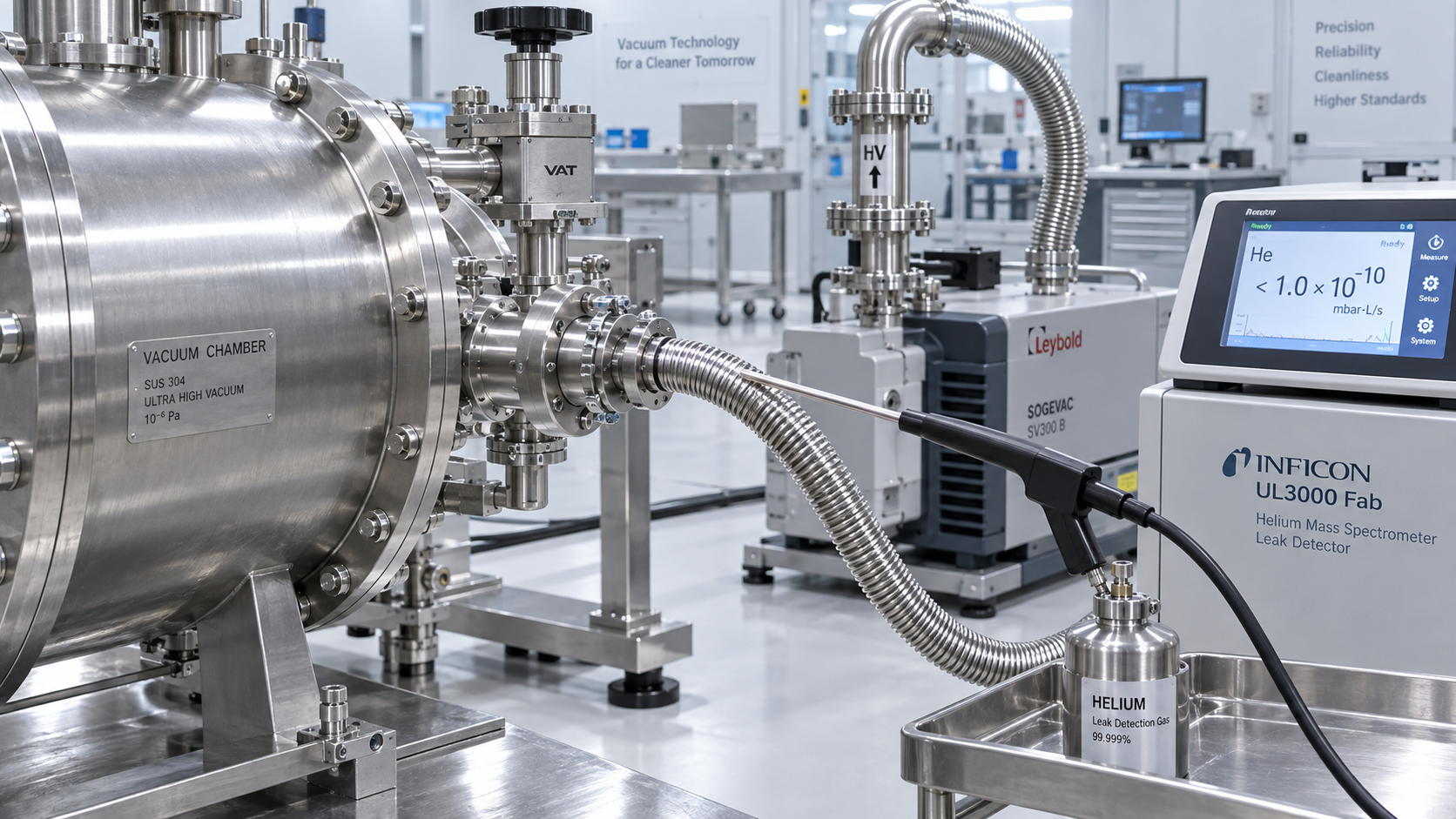
The second loss is leakage loss. It becomes critical in coating, freeze drying, vacuum forming, analytical chambers, and any batch process with a hold stage.
What to measure
- Pressure rise rate during isolation tests
- Pump duty during holding periods
- Seal replacement frequency
- Gas ballast or purge use linked to compensation
Leakage is not only a mechanical issue. It also distorts process repeatability, extends operating hours, and raises contamination risk when external gases enter sensitive environments.
In many facilities, leakage remains hidden because pumps are oversized enough to mask it. That masks symptoms, but it reduces vacuum process efficiency and inflates operating cost.
Core judgment point
If pressure drifts during idle or hold stages, leakage should be quantified before considering pump replacement. The fastest equipment upgrade often fails when leak integrity is poor.
Scenario 3: Conductance loss limits chamber performance in larger layouts
The third loss is conductance loss between the chamber and the pump. This is common in large chambers, retrofitted production lines, and systems with long pipe runs or excessive fittings.
What to measure
- Pressure difference between chamber and pump inlet
- Evacuation time before and after layout changes
- Performance shift after filter loading or valve wear
- Effective pumping speed at the process point
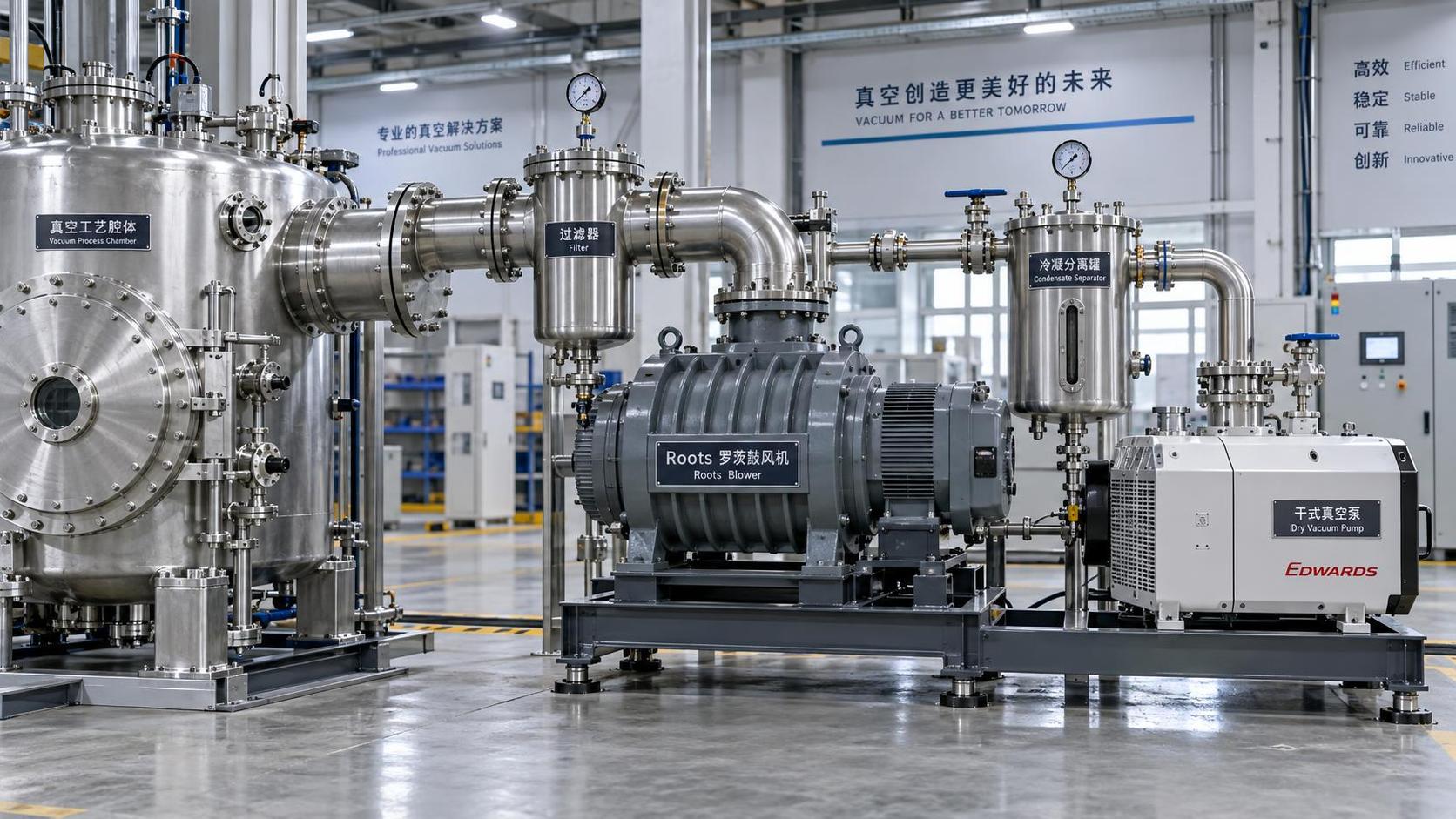
A powerful pump cannot deliver full benefit if line sizing, bends, valves, traps, or separators restrict gas flow. This makes vacuum process efficiency a system issue, not a pump-only issue.
Conductance loss is especially important when plants expand incrementally. New branches, utilities, and safety devices may improve operations but quietly reduce effective evacuation performance.
Core judgment point
If pump specifications look adequate but chamber response remains slow, evaluate conductance first. Local pressure readings often reveal where theoretical capacity is being lost.
Scenario 4: Contamination and thermal loading reduce efficiency in process-intensive environments
The fourth loss is contamination-driven performance loss. It appears in drying, chemical handling, food processing, resin degassing, and applications involving moisture, dust, oil mist, or condensable vapors.
What to measure
- Power increase under similar production load
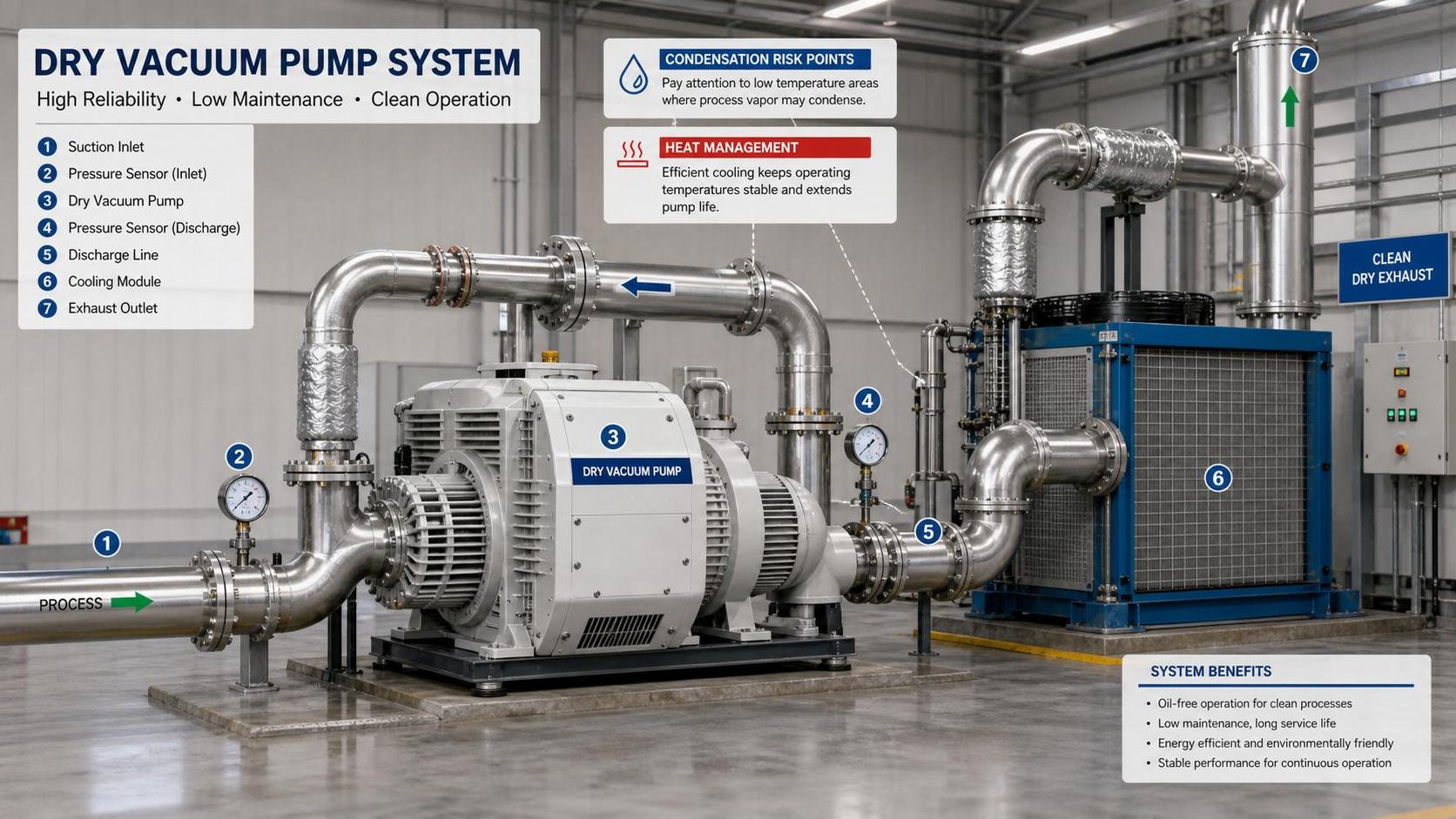
- Exhaust temperature trend and cooling demand
- Filter differential pressure
- Service interval shortening and oil quality changes
Contamination changes internal clearances, heat transfer, lubrication behavior, and compression stability. As thermal stress rises, vacuum process efficiency drops even before obvious failure occurs.
This loss can be mistaken for normal aging. However, trend data often shows that product mix, ambient conditions, or upstream separation weakness are the true causes.
Core judgment point
When service frequency increases without output gains, contamination and thermal loading should be reviewed together. Heat and fouling usually reinforce each other.
Scenario 5: Control mismatch creates hidden energy loss in variable-demand systems
The fifth loss is control-related energy loss. It is common in centralized vacuum networks, mixed-load production sites, and operations where demand varies by shift, recipe, or batch size.
What to measure
- kWh per useful operating hour
- Load versus unload time
- Setpoint band stability
- Number of starts, stops, or bypass events
Many systems maintain deeper vacuum than the process actually needs. Others cycle too aggressively, wasting energy and increasing wear. Both conditions reduce vacuum process efficiency.
Control mismatch is often the easiest loss to quantify because electrical data, pressure logs, and production records already exist in many facilities.
How different scenarios change the priority of vacuum process efficiency metrics
Practical adaptation steps for stronger vacuum process efficiency
- Define one critical metric for each process scenario.
- Log pressure, time, and power together rather than separately.
- Compare actual chamber performance with pump-side readings.
- Separate leakage, conductance, and contamination effects during diagnosis.
- Review setpoints against real process requirements quarterly.
- Link maintenance intervals to measured degradation, not calendar habit.
These actions improve vacuum process efficiency because they convert broad symptoms into isolated loss mechanisms. Better isolation leads to better retrofit decisions and fewer unnecessary equipment changes.
Common misjudgments that hide measurable vacuum losses
One common error is assuming lower pressure always means better performance. In many applications, deeper vacuum adds energy cost without improving output or quality.
Another mistake is blaming the pump first. Vacuum process efficiency can be lost in valves, piping, seals, separators, cooling conditions, or control logic before the pump becomes the real bottleneck.
A third oversight is using only maintenance records. Service history matters, but without pressure, time, and energy data, efficiency loss remains only partly visible.
Next-step actions for measurable performance improvement
Start with a simple baseline: pump-down time, pressure rise, chamber-to-pump pressure difference, motor power, and service interval trend. These five data points can expose most vacuum process efficiency losses quickly.
Then rank losses by operational value. A small leak may matter less than a recurring cycle delay. A filter issue may matter more than replacing a functioning pump. Prioritization is the real efficiency advantage.
For industrial intelligence tracking, GTC-Matrix supports deeper visibility into cooling, compression, vacuum, and thermal system evolution. Better decisions begin when measurable losses are connected to system design, energy trends, and process reality.
Ready when you are. Send us a message to get started.
Related News
- How does base pressure affect film purity in vacuum deposition?Author :Vacuum Process Fellow

- How to size vacuum process equipment for the required pump-down timeAuthor :Vacuum Process Fellow

- Which vacuum specification best protects semiconductor process yield?Author :Vacuum Process Fellow

- How Can Contamination Be Prevented in a Semiconductor Vacuum Chamber?Author :Vacuum Process Fellow

- Which Vacuum Pump Specifications Matter Most for Semiconductor Processes?Author :Vacuum Process Fellow

- How to find leaks in vacuum pump systems before pump performance dropsAuthor :Vacuum Process Fellow

- How to size a Roots blower for vacuum process equipmentAuthor :Vacuum Process Fellow

- How vacuum level affects vacuum process efficiencyAuthor :Vacuum Process Fellow

- China Imposes Temporary Helium Export BanAuthor :Vacuum Process Fellow

- Semiconductor Vacuum Systems Factory Checklist for Process Stability and Cleanroom UseAuthor :Vacuum Process Fellow

- Vacuum Process Optimization Services: Signs Your Line Needs a Performance ReviewAuthor :Vacuum Process Fellow

- Vacuum Chambers for Cleanroom Use: Key Design Points That Prevent ContaminationAuthor :Vacuum Process Fellow

- Vacuum Distillation Systems: Key Performance Metrics That Affect Product PurityAuthor :Vacuum Process Fellow

- Vietnam Halts High Vacuum Pump Import Licenses for 30 DaysAuthor :Vacuum Process Fellow

- Vacuum Technology Database: What to Check Before Using Technical DataAuthor :Vacuum Process Fellow

- Dry Pump Vacuum System Design Mistakes That Raise DowntimeAuthor :Vacuum Process Fellow

- When Vacuum Systems Lose Performance: Common Causes and FixesAuthor :Vacuum Process Fellow
![]()
- EU Tightens EN 13445-3 Weld Testing for Vacuum VesselsAuthor :Vacuum Process Fellow
![]()
- EPA Cuts R-1234ze(E) Quota 35%, Tightening Vacuum Cooling SupplyAuthor :Vacuum Process Fellow
 Quota 35%, Tightening Vacuum Cooling Supply")
- ICA Warns of Tight Copper Alloy Supply for Vacuum PumpsAuthor :Vacuum Process Fellow

- Vacuum System Leak Detection: Signs, Tests, and FixesAuthor :Vacuum Process Fellow

- How to Compare Vacuum Systems Factory Capabilities for Stable Process UptimeAuthor :Vacuum Process Fellow

- Vacuum Pump Lead Times Extend to 26 WeeksAuthor :Vacuum Process Fellow

- Semiconductor Vacuum Systems Explained for Stable Process YieldAuthor :Vacuum Process Fellow

- Vacuum Process Efficiency: 7 Hidden Causes of Energy LossAuthor :Vacuum Process Fellow

- Vacuum Technology Solutions for Stable Low-Pressure ProductionAuthor :Vacuum Process Fellow

- Vacuum Processes: Common Efficiency Losses and FixesAuthor :Vacuum Process Fellow

- Common Vacuum Processes Problems and How to Prevent DowntimeAuthor :Vacuum Process Fellow

- Tantalum Spike Extends Vacuum Crucible Lead TimesAuthor :Vacuum Process Fellow

- Vacuum Process Efficiency: 5 Hidden Losses to Check FirstAuthor :Vacuum Process Fellow

- How Heat Transfer Design Impacts Vacuum Process EfficiencyAuthor :Vacuum Process Fellow

- EN 13445-4:2026 Takes Effect for High-Vacuum ComponentsAuthor :Vacuum Process Fellow

- EU Vacuum Components Face New EN 13445-4:2026 Leak Test RuleAuthor :Vacuum Process Fellow

- UBS: Fed Cut View May Ease Vacuum Pump Lead TimesAuthor :Vacuum Process Fellow

- Vacuum Processes: Common Causes of Unstable PerformanceAuthor :Vacuum Process Fellow
![]()
- SiC Certification Signals New Entry Path for Vacuum and Compressor DrivesAuthor :Vacuum Process Fellow
![]()