Vietnam to Require QR Traceability for High Vacuum Imports from Jun 2026




On May 17, 2026, the Ministry of Industry and Trade of Vietnam (MOIT) issued Circular No. 12/2026/TT-BCT, mandating QR-code-based traceability for all imported high vacuum equipment — including vacuum pumps, vacuum chambers, and integrated vacuum systems — effective June 1, 2026. The policy reflects Vietnam’s broader push toward digital product governance and supply chain transparency, particularly in capital-intensive industrial equipment sectors where safety, compliance, and after-sales accountability are increasingly prioritized by regulators.
Event Overview
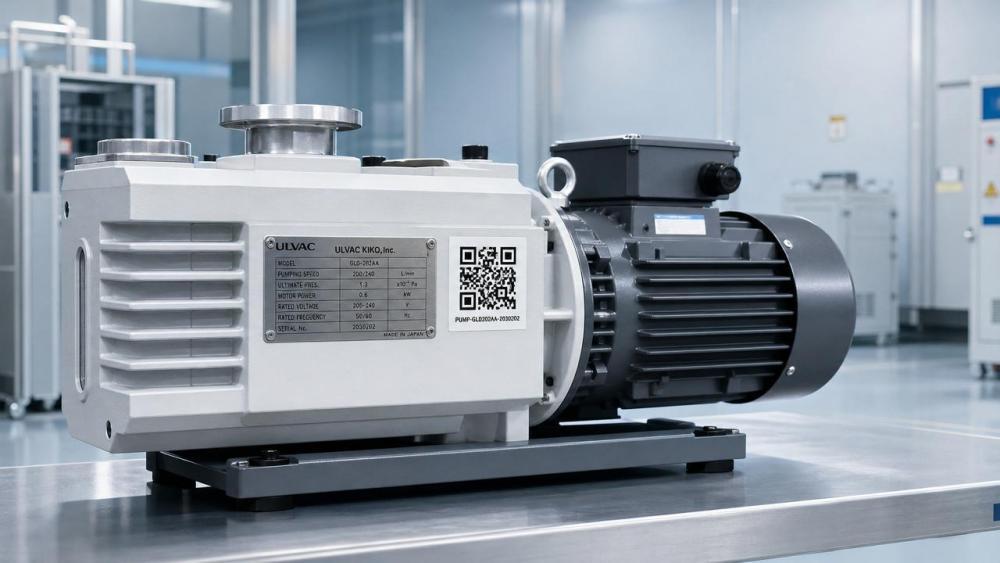
Under Circular No. 12/2026/TT-BCT, all high vacuum equipment imported into Vietnam must bear a QR code label affixed adjacent to the nameplate. The QR code must encode three mandatory data fields: manufacturer identity, production batch number, and inspection report reference number. Labels must be generated via Vietnam’s National Product Quality Traceability Platform (NPQTP), to which foreign suppliers — including those based in China — must register and obtain system access prior to shipment. No transitional grace period is stipulated; full compliance is required for customs clearance starting June 1, 2026.
Industries Affected
Direct Trading Enterprises
Export-oriented trading firms handling high vacuum equipment shipments to Vietnam face immediate operational impact. They must now assume responsibility for label generation, platform registration, and verification of upstream data accuracy — tasks previously outside typical trade intermediary scope. Delays in label issuance or mismatched batch-report linkage may trigger customs hold-ups or rejection at port, directly affecting cash flow and contractual delivery timelines.
Raw Material Procurement Enterprises
Companies sourcing core components (e.g., vacuum chamber housings, diffusion pump assemblies) for final integration into vacuum systems will need to ensure traceability continuity across tiers. While not directly subject to labeling, their procurement contracts with OEMs or system integrators will likely incorporate new data-sharing obligations — especially for batch-level documentation and inspection records — to enable downstream QR code generation.
Manufacturing & System Integration Enterprises
OEMs and system integrators exporting assembled high vacuum solutions must re-engineer internal quality documentation workflows. Production batch numbering must align precisely with inspection reports, and ERP or MES systems may require updates to export structured data compatible with NPQTP’s API schema. For companies using multi-source sub-assemblies, reconciling disparate batch identifiers across vendors becomes a critical pre-shipment checkpoint.
Supply Chain Service Providers
Freight forwarders, customs brokers, and compliance consultants serving Vietnam-bound equipment shipments will need to expand service offerings to include NPQTP onboarding support, label validation checks, and documentation reconciliation audits. Demand is expected to rise for bilingual (English–Vietnamese) technical compliance officers familiar with both vacuum equipment standards (e.g., ISO 2745, IEC 61000) and Vietnamese regulatory submission protocols.
Key Focus Areas and Recommended Actions
Register on NPQTP before first shipment
Chinese and other foreign exporters must complete MOIT’s official registration process — including submission of business license, product catalog, and authorized representative details — well ahead of June 2026. Platform access is not automatic; approval timelines remain unpublicized, and early registration mitigates risk of last-minute bottlenecks.
Standardize batch and inspection report referencing
Manufacturers should adopt a consistent, machine-readable format for batch codes (e.g., YYYYMMDD-XXXX) and ensure every inspection report issued for a given batch contains a unique, non-reused reference number. Cross-checking between physical labels and NPQTP entries must occur prior to container loading.
Verify label durability and scan reliability
The QR code must remain scannable throughout transport and installation. MOIT specifies minimum size (≥20 mm × 20 mm), contrast ratio (≥70%), and substrate compatibility (non-reflective, weather-resistant). Suppliers should conduct pre-shipment readability tests using standard smartphone cameras under varied lighting conditions.
Editorial Perspective / Industry Observation
Observably, this regulation is less about restricting market access and more about institutionalizing data discipline in Vietnam’s industrial import ecosystem. Analysis shows similar traceability mandates have preceded broader conformity assessment reforms in neighboring markets — e.g., Thailand’s TISI QR rollout for electrical equipment preceded its 2025 mandatory CB Scheme alignment. From an industry perspective, the requirement signals Vietnam’s intent to shift from reactive post-market surveillance to proactive lifecycle monitoring — especially for equipment used in semiconductor fabrication, pharmaceutical lyophilization, and aerospace testing, where vacuum integrity is mission-critical. Current evidence suggests enforcement capacity remains concentrated at major ports (Cai Mep, Hai Phong), meaning initial implementation may emphasize documentation completeness over real-time database cross-verification.
Conclusion
This policy marks a structural inflection point in Vietnam’s import governance framework — one that elevates data integrity to the same operational priority as physical certification. Rather than viewing QR labeling solely as a compliance cost, forward-looking enterprises may treat it as an opportunity to strengthen traceability infrastructure across global supply chains. A rational interpretation is that early adopters gain not only smoother market access but also enhanced credibility with local partners seeking reliable, auditable sourcing partners.
Source Attribution
Official source: Ministry of Industry and Trade of Vietnam (MOIT), Circular No. 12/2026/TT-BCT, dated May 17, 2026. Full text available at moit.gov.vn/en/circulars (pending publication). Note: NPQTP technical specifications, API documentation, and registration portal URL are scheduled for release by MOIT in Q3 2026 — these remain under observation.
Ready when you are. Send us a message to get started.
Related News
- How does base pressure affect film purity in vacuum deposition?Author :Vacuum Process Fellow

- How to size vacuum process equipment for the required pump-down timeAuthor :Vacuum Process Fellow

- Which vacuum specification best protects semiconductor process yield?Author :Vacuum Process Fellow

- How Can Contamination Be Prevented in a Semiconductor Vacuum Chamber?Author :Vacuum Process Fellow

- Which Vacuum Pump Specifications Matter Most for Semiconductor Processes?Author :Vacuum Process Fellow

- How to find leaks in vacuum pump systems before pump performance dropsAuthor :Vacuum Process Fellow

- How to size a Roots blower for vacuum process equipmentAuthor :Vacuum Process Fellow

- How vacuum level affects vacuum process efficiencyAuthor :Vacuum Process Fellow

- China Imposes Temporary Helium Export BanAuthor :Vacuum Process Fellow

- Semiconductor Vacuum Systems Factory Checklist for Process Stability and Cleanroom UseAuthor :Vacuum Process Fellow

- Vacuum Process Optimization Services: Signs Your Line Needs a Performance ReviewAuthor :Vacuum Process Fellow

- Vacuum Chambers for Cleanroom Use: Key Design Points That Prevent ContaminationAuthor :Vacuum Process Fellow

- Vacuum Distillation Systems: Key Performance Metrics That Affect Product PurityAuthor :Vacuum Process Fellow

- Vietnam Halts High Vacuum Pump Import Licenses for 30 DaysAuthor :Vacuum Process Fellow

- Vacuum Technology Database: What to Check Before Using Technical DataAuthor :Vacuum Process Fellow

- Dry Pump Vacuum System Design Mistakes That Raise DowntimeAuthor :Vacuum Process Fellow

- When Vacuum Systems Lose Performance: Common Causes and FixesAuthor :Vacuum Process Fellow
![]()
- EU Tightens EN 13445-3 Weld Testing for Vacuum VesselsAuthor :Vacuum Process Fellow
![]()
- EPA Cuts R-1234ze(E) Quota 35%, Tightening Vacuum Cooling SupplyAuthor :Vacuum Process Fellow
 Quota 35%, Tightening Vacuum Cooling Supply")
- ICA Warns of Tight Copper Alloy Supply for Vacuum PumpsAuthor :Vacuum Process Fellow

- Vacuum System Leak Detection: Signs, Tests, and FixesAuthor :Vacuum Process Fellow

- How to Compare Vacuum Systems Factory Capabilities for Stable Process UptimeAuthor :Vacuum Process Fellow

- Vacuum Pump Lead Times Extend to 26 WeeksAuthor :Vacuum Process Fellow

- Semiconductor Vacuum Systems Explained for Stable Process YieldAuthor :Vacuum Process Fellow

- Vacuum Process Efficiency: 7 Hidden Causes of Energy LossAuthor :Vacuum Process Fellow

- Vacuum Technology Solutions for Stable Low-Pressure ProductionAuthor :Vacuum Process Fellow

- Vacuum Processes: Common Efficiency Losses and FixesAuthor :Vacuum Process Fellow

- Common Vacuum Processes Problems and How to Prevent DowntimeAuthor :Vacuum Process Fellow

- Tantalum Spike Extends Vacuum Crucible Lead TimesAuthor :Vacuum Process Fellow

- Vacuum Process Efficiency: 5 Hidden Losses to Check FirstAuthor :Vacuum Process Fellow

- How Heat Transfer Design Impacts Vacuum Process EfficiencyAuthor :Vacuum Process Fellow

- EN 13445-4:2026 Takes Effect for High-Vacuum ComponentsAuthor :Vacuum Process Fellow

- EU Vacuum Components Face New EN 13445-4:2026 Leak Test RuleAuthor :Vacuum Process Fellow

- UBS: Fed Cut View May Ease Vacuum Pump Lead TimesAuthor :Vacuum Process Fellow

- Vacuum Processes: Common Causes of Unstable PerformanceAuthor :Vacuum Process Fellow
![]()
- SiC Certification Signals New Entry Path for Vacuum and Compressor DrivesAuthor :Vacuum Process Fellow
![]()