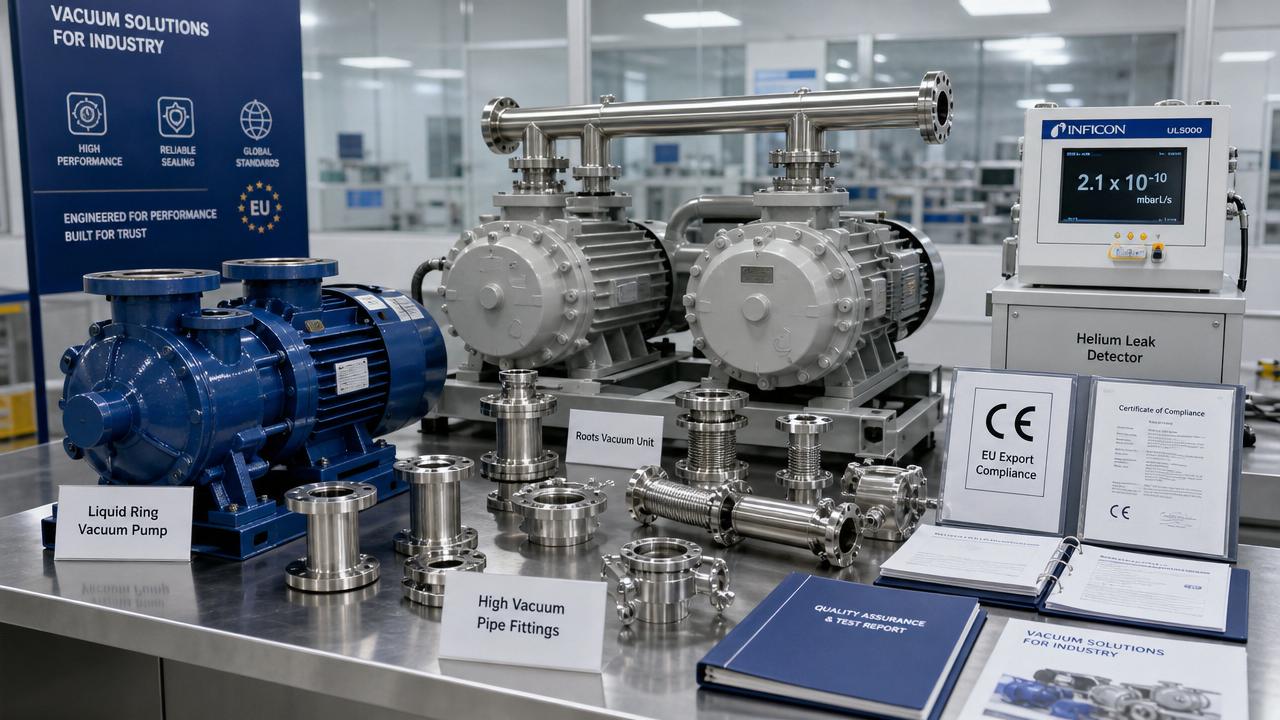
New Trade Guidelines Mandate IP & Data Sovereignty in High Vacuum Exports




On May 8, 2026, 17 national industry associations jointly issued the Domestic Trade Transaction Guidelines (Trial), introducing mandatory clauses on cross-border data flow compliance and embedded software intellectual property ownership—first-ever in equipment manufacturing contract templates. Though nominally domestic, the Guidelines have rapidly become de facto baseline requirements for multinational EPC contractors engaging Chinese suppliers of high-vacuum equipment, especially in semiconductor and photovoltaic thin-film deposition systems.
Event Overview
On May 8, 2026, 17 national-level industry associations and chambers of commerce jointly released the Domestic Trade Transaction Guidelines (Trial). The document includes dedicated clauses on ‘cross-border data flow compliance’ and ‘ownership of embedded software intellectual property’ within standardized contract annexes for equipment manufacturing. While the Guidelines are formally applicable only to domestic transactions, multiple global EPC firms—including those headquartered in Germany, Japan, and the U.S.—have adopted them as contractual benchmarks when procuring high-vacuum equipment from Chinese suppliers. In particular, contracts for vacuum coating units used in semiconductor fabrication and solar cell production now routinely require source code escrow and clearly defined local operational control rights.

Industries Affected
Direct Trading Enterprises
Export-oriented equipment exporters face revised contractual expectations from foreign buyers. Even where no export license or foreign regulation directly applies, clients now treat the Guidelines as non-negotiable commercial terms—especially in high-value, technology-intensive deals. Impact manifests in longer negotiation cycles, increased legal review costs, and new liability exposure related to software licensing and remote diagnostics data handling.
Raw Material Procurement Enterprises
Suppliers of critical components—such as ceramic insulators, magnetic shielding alloys, or ultra-high-purity gas manifolds—may encounter downstream demand for traceability documentation aligned with data sovereignty expectations. Buyers increasingly request evidence of firmware update protocols, supply chain software audit trails, and localization of configuration management tools—requirements that cascade from final equipment contracts back to component-level procurement agreements.
Manufacturing Enterprises
OEMs and system integrators building vacuum deposition platforms must revise internal development workflows. This includes segregating proprietary control algorithms from third-party middleware, implementing version-controlled source code repositories compliant with escrow standards, and documenting data residency boundaries for embedded telemetry. Manufacturing QA processes now need parallel verification of both hardware performance and software governance compliance.
Supply Chain Service Providers
Third-party maintenance providers, cloud platform operators supporting remote monitoring, and cybersecurity auditors face expanded scope. Contracts for after-sales support now commonly stipulate physical access restrictions to control systems, mandatory local hosting of diagnostic logs, and certification of personnel clearance for source code review. Service SLAs are being renegotiated to include data jurisdictional guarantees—not just uptime or response time metrics.
Key Considerations and Recommended Actions
Review and Localize Contract Templates
Companies should align their standard export contracts with the Guidelines’ IP and data clauses—even for non-EPC customers—given growing market adoption. Particular attention is needed for definitions of ‘embedded software’, ‘operational data’, and ‘remote access rights’ to avoid overcommitment or ambiguity.
Establish Source Code Escrow Protocols
Develop a formal, auditable process for source code deposit—including version tagging, build environment documentation, and access governance rules. Avoid ad-hoc arrangements; multinationals increasingly require ISO/IEC 27001-aligned escrow frameworks.
Map Data Flows Across Product Lifecycles
Conduct a granular inventory of all data generated, processed, or stored by vacuum equipment—from commissioning diagnostics to predictive maintenance logs. Classify each data type by residency requirement, retention period, and transfer consent mechanism to preempt compliance gaps during customer audits.
Editorial Perspective / Industry Observation
Observably, this development signals a structural shift: domestic regulatory guidance is increasingly shaping international commercial practice—not through extraterritorial enforcement, but via buyer-driven contractual convergence. Analysis shows that the Guidelines’ influence stems less from legal compulsion and more from risk-aversion among end users in highly regulated sectors (e.g., chip fabs subject to export controls). From an industry perspective, the move reflects growing recognition that vacuum equipment is no longer ‘dumb hardware’ but a data-generating, software-defined node in advanced manufacturing ecosystems. Current traction suggests that similar clauses may soon appear in national procurement policies for clean energy infrastructure.
Conclusion
This is not merely a documentation update—it marks an inflection point where trade norms begin embedding digital sovereignty as a core element of industrial equipment value. For Chinese high-vacuum suppliers, compliance is becoming a prerequisite for market access, not just a legal footnote. A rational reading suggests competitive advantage will accrue to firms that treat IP governance and data architecture as integral to product design—not as add-on legal constraints.
Source Attribution
Issued by: China Federation of Industrial Economics, China General Machinery Industry Association, China Photovoltaic Industry Association, and 14 other national associations (May 8, 2026). Official text published on www.china-cgmi.org/guidelines-2026. Note: Implementation status, enforcement mechanisms, and potential revisions remain under observation; no central government mandate has been announced as of May 2026.
Ready when you are. Send us a message to get started.
Related News
- How does base pressure affect film purity in vacuum deposition?Author :Vacuum Process Fellow

- How to size vacuum process equipment for the required pump-down timeAuthor :Vacuum Process Fellow

- Which vacuum specification best protects semiconductor process yield?Author :Vacuum Process Fellow

- How Can Contamination Be Prevented in a Semiconductor Vacuum Chamber?Author :Vacuum Process Fellow

- Which Vacuum Pump Specifications Matter Most for Semiconductor Processes?Author :Vacuum Process Fellow

- How to find leaks in vacuum pump systems before pump performance dropsAuthor :Vacuum Process Fellow

- How to size a Roots blower for vacuum process equipmentAuthor :Vacuum Process Fellow

- How vacuum level affects vacuum process efficiencyAuthor :Vacuum Process Fellow

- China Imposes Temporary Helium Export BanAuthor :Vacuum Process Fellow

- Semiconductor Vacuum Systems Factory Checklist for Process Stability and Cleanroom UseAuthor :Vacuum Process Fellow

- Vacuum Process Optimization Services: Signs Your Line Needs a Performance ReviewAuthor :Vacuum Process Fellow

- Vacuum Chambers for Cleanroom Use: Key Design Points That Prevent ContaminationAuthor :Vacuum Process Fellow

- Vacuum Distillation Systems: Key Performance Metrics That Affect Product PurityAuthor :Vacuum Process Fellow

- Vietnam Halts High Vacuum Pump Import Licenses for 30 DaysAuthor :Vacuum Process Fellow

- Vacuum Technology Database: What to Check Before Using Technical DataAuthor :Vacuum Process Fellow

- Dry Pump Vacuum System Design Mistakes That Raise DowntimeAuthor :Vacuum Process Fellow

- When Vacuum Systems Lose Performance: Common Causes and FixesAuthor :Vacuum Process Fellow
![]()
- EU Tightens EN 13445-3 Weld Testing for Vacuum VesselsAuthor :Vacuum Process Fellow
![]()
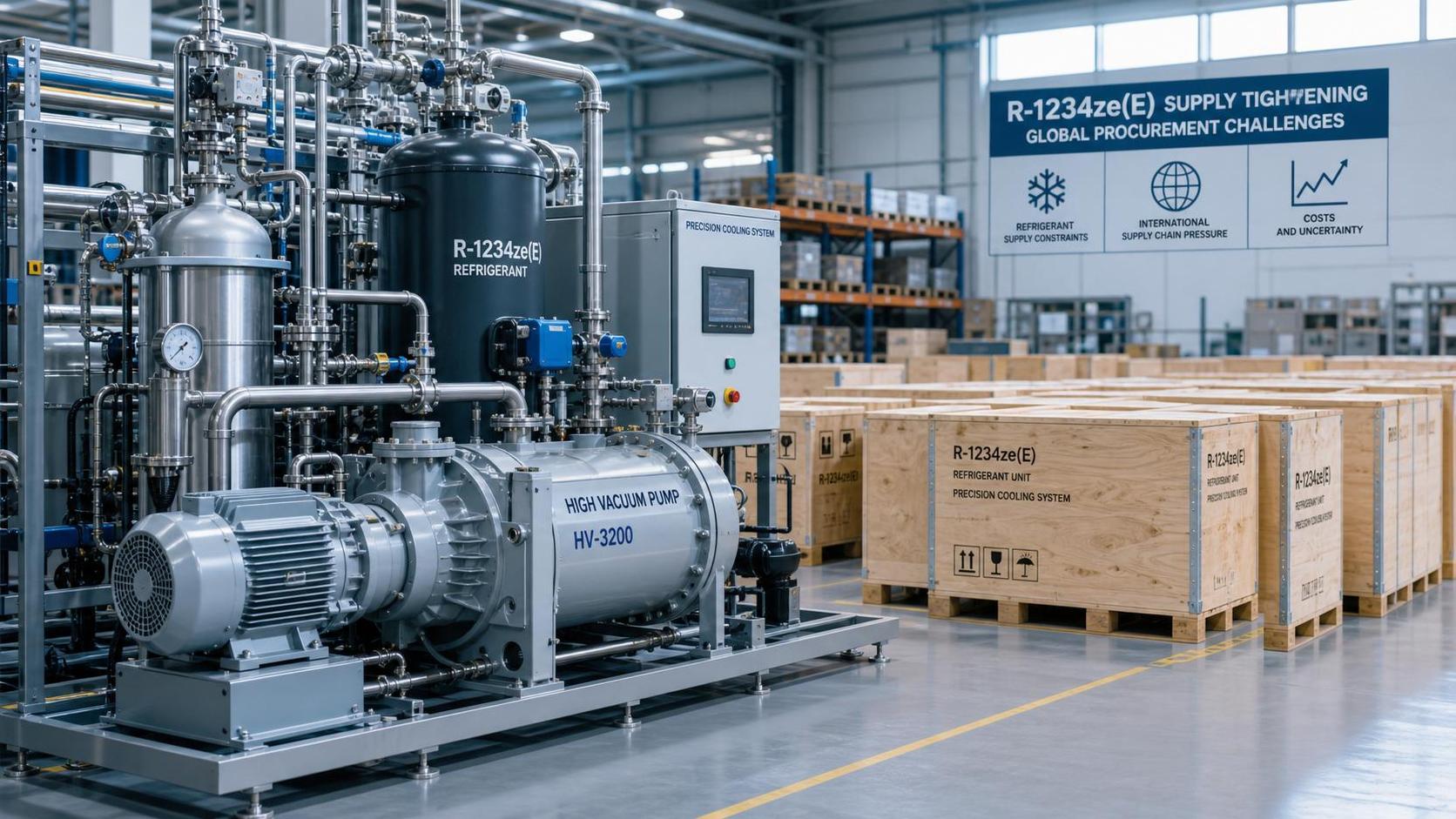
- EPA Cuts R-1234ze(E) Quota 35%, Tightening Vacuum Cooling SupplyAuthor :Vacuum Process Fellow
 Quota 35%, Tightening Vacuum Cooling Supply")
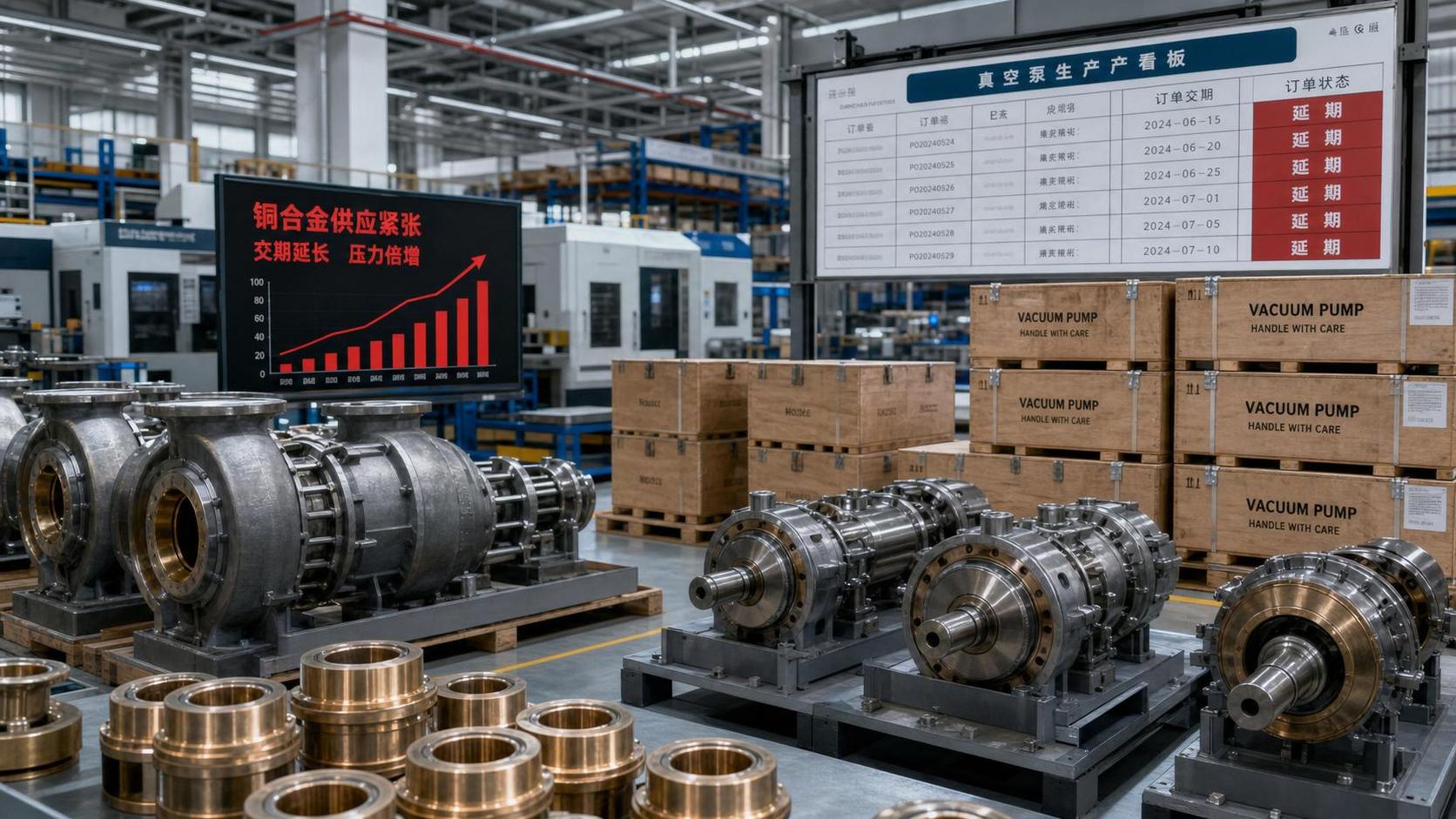
- ICA Warns of Tight Copper Alloy Supply for Vacuum PumpsAuthor :Vacuum Process Fellow

- Vacuum System Leak Detection: Signs, Tests, and FixesAuthor :Vacuum Process Fellow

- How to Compare Vacuum Systems Factory Capabilities for Stable Process UptimeAuthor :Vacuum Process Fellow

- Vacuum Pump Lead Times Extend to 26 WeeksAuthor :Vacuum Process Fellow

- Semiconductor Vacuum Systems Explained for Stable Process YieldAuthor :Vacuum Process Fellow

- Vacuum Process Efficiency: 7 Hidden Causes of Energy LossAuthor :Vacuum Process Fellow

- Vacuum Technology Solutions for Stable Low-Pressure ProductionAuthor :Vacuum Process Fellow

- Vacuum Processes: Common Efficiency Losses and FixesAuthor :Vacuum Process Fellow

- Common Vacuum Processes Problems and How to Prevent DowntimeAuthor :Vacuum Process Fellow

- Tantalum Spike Extends Vacuum Crucible Lead TimesAuthor :Vacuum Process Fellow

- Vacuum Process Efficiency: 5 Hidden Losses to Check FirstAuthor :Vacuum Process Fellow

- How Heat Transfer Design Impacts Vacuum Process EfficiencyAuthor :Vacuum Process Fellow

- EN 13445-4:2026 Takes Effect for High-Vacuum ComponentsAuthor :Vacuum Process Fellow

- EU Vacuum Components Face New EN 13445-4:2026 Leak Test RuleAuthor :Vacuum Process Fellow

- UBS: Fed Cut View May Ease Vacuum Pump Lead TimesAuthor :Vacuum Process Fellow

- Vacuum Processes: Common Causes of Unstable PerformanceAuthor :Vacuum Process Fellow
![]()
- SiC Certification Signals New Entry Path for Vacuum and Compressor DrivesAuthor :Vacuum Process Fellow
![]()