



How to Improve Heat Exchanger Efficiency Without Major Retrofits




How to Improve Heat Exchanger Efficiency Without Major Retrofits
Improving heat exchanger efficiency often starts with maintenance, not capital spending.
In many plants, performance drops slowly, then suddenly feels expensive.
Higher energy use, unstable outlet temperature, and rising pressure drop usually appear before failure.
That also means many efficiency losses can be recovered without major retrofits.
Small corrections in flow control, cleaning practice, and inspection routines can restore useful thermal performance.
For service teams, the goal is simple: improve heat exchanger efficiency with actions that fit normal shutdown windows.
This is especially relevant in industrial cooling, compressed air systems, process heating, and vacuum support utilities.
From the GTC-Matrix perspective, maintenance-led optimization remains one of the fastest paths to lower energy intensity.
Start with the Real Reasons Efficiency Falls
Before changing anything, identify why heat exchanger efficiency has dropped.
Most losses come from fouling, poor flow balance, air ingress, scaling, or control drift.
Sometimes the exchanger is healthy, but upstream conditions changed months ago.
Recent changes in water quality, compressor loading, or product mix can shift the thermal duty.
A useful first step is comparing current data with a known clean baseline.
- Check inlet and outlet temperatures on both sides.
- Measure pressure drop across the exchanger.
- Confirm actual flow against design assumptions.
- Review pump, fan, or valve position trends.
- Inspect utility quality, especially cooling water and condensate.
When these numbers are tracked together, heat exchanger efficiency becomes easier to diagnose and defend.
Clean Smarter, Not Just More Often
Cleaning is the most obvious way to improve heat exchanger efficiency, but routine alone is not enough.
The wrong cleaning interval wastes labor and can even damage surfaces.
The better approach is matching cleaning method to fouling type.
Know what is building up
Soft biofilm, hard mineral scale, oil residue, and process solids behave very differently.
A visual check, water test, and sample review usually reveal the real cause.
Choose the least aggressive effective method
- Use mechanical brushing for loose debris in accessible tubes.
- Use chemical cleaning for scale where metallurgy allows.
- Use backflushing where solids settle in low-velocity zones.
- Use controlled CIP procedures for plate units and hygienic lines.
This matters because overcleaning can roughen surfaces and accelerate future fouling.
In actual service work, a slightly better cleaning plan often delivers better heat exchanger efficiency than a larger budget.
Restore Flow Conditions That Support Heat Transfer
Even a clean exchanger underperforms when flow conditions drift away from design intent.
That is why hydraulic checks are often the fastest route to improve heat exchanger efficiency.
Look for hidden flow restrictions
Strainers, partially closed valves, worn pump impellers, and collapsed hoses can quietly reduce velocity.
Low velocity encourages deposition and weakens the heat transfer coefficient.
Correct bypass and maldistribution problems
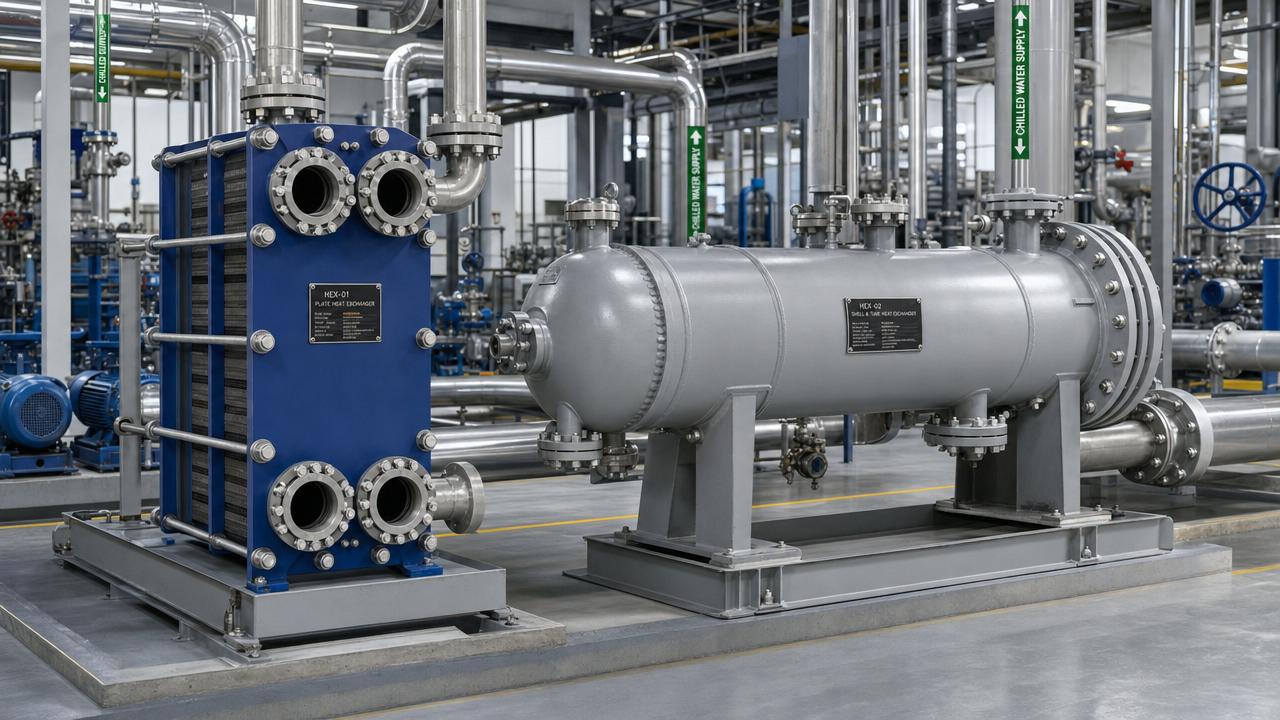
In plate and shell-and-tube units, internal bypass can cut effective area without obvious external signs.
Check gaskets, channel plates, pass partitions, and distribution zones during shutdown.
Verify counterflow where possible
Incorrect line-up after maintenance is more common than many teams expect.
A simple flow direction mistake can reduce heat exchanger efficiency immediately.
Tighten Monitoring Before Performance Slips
One clear signal from recent operating trends is this: stable exchangers are usually monitored, not guessed.
If data is sparse, efficiency losses stay hidden until energy costs or quality complaints rise.
Track a small set of useful indicators
- Approach temperature trend.
- Pressure drop change over time.
- Thermal duty versus expected load.
- Cleaning interval versus actual performance recovery.
- Water chemistry and contamination events.
These indicators help improve heat exchanger efficiency because they show early deviation, not just final failure.
Confirm sensor reliability
Bad temperature probes and drifting pressure transmitters often create false maintenance decisions.
Calibration checks are inexpensive compared with unnecessary shutdowns or chemical cleaning.
Fix the Utility Side, Not Just the Exchanger
In many cases, poor heat exchanger efficiency is a system problem.
Cooling towers, pumps, air coolers, compressors, and water treatment directly shape exchanger performance.
Review cooling water health
High hardness, suspended solids, and microbiological activity quickly undermine heat transfer surfaces.
Water treatment alignment often improves heat exchanger efficiency more than hardware intervention.
Reduce compressed air and process instability
Load swings, short cycling, and temperature spikes create thermal shock and uneven fouling.
Steadier utility operation supports steadier heat exchanger efficiency.
This broader view is central to GTC-Matrix analysis across industrial cooling and thermal systems.
Use a Practical Inspection Checklist During Service Windows
Short maintenance windows demand a clear sequence.
A repeatable checklist helps improve heat exchanger efficiency without missing simple defects.
- Record operating temperatures, flows, and pressure drop before isolation.
- Inspect for fouling pattern, corrosion, erosion, and gasket condition.
- Check nozzles, vents, drains, and strainers for blockage.
- Confirm pass arrangement and valve line-up before restart.
- Restart gradually and compare live data with baseline targets.
This kind of discipline turns routine service into measurable thermal recovery.
Know When Small Fixes Are No Longer Enough
Not every case can be solved through maintenance alone.
Still, better diagnosis prevents premature replacement and makes retrofit decisions more credible.
If the clean unit still cannot meet thermal duty, then design review may be justified.
Until that point, many plants still have room to improve heat exchanger efficiency through disciplined field action.
Turn Maintenance Actions into Lasting Efficiency Gains
The most reliable way to improve heat exchanger efficiency is not a single fix.
It is a pattern of better observation, smarter cleaning, tighter flow control, and faster correction.
In practical terms, start with baseline data, remove avoidable fouling, verify flow paths, and watch utility quality closely.
Those steps are low-risk, workable, and often enough to recover meaningful heat exchanger efficiency.
For organizations tracking decarbonization and energy productivity, these maintenance decisions also support wider operating goals.
Review one underperforming unit this week, compare it with its clean baseline, and build the next service plan from actual data.
Related News
- EU Rule Requires Digital Energy Monitoring for Shell & Tube Heat ExchangersAuthor :Thermodynamics Analyst

- DOE Raises Shell & Tube Efficiency Floor for 2027Author :Thermodynamics Analyst

- EU EN 13445-4:2026 Tightens Dual Certification for Heat ExchangersAuthor :Thermodynamics Analyst

- EN 13445-4:2026 Tightens EU Heat Exchanger ComplianceAuthor :Thermodynamics Analyst

- EN 13445-4:2026 Adds Digital Twin Fatigue ChecksAuthor :Thermodynamics Analyst

- How to Improve Heat Exchanger Efficiency Without Major System DowntimeAuthor :Thermodynamics Analyst

- EU Rule Takes Effect for Shell-and-Tube Heat ExchangersAuthor :Thermodynamics Analyst

- When Energy-Efficient Heat Exchange Systems Deliver Real PaybackAuthor :Thermodynamics Analyst

- DOE Cuts R449A Chiller Transition to 9 MonthsAuthor :Thermodynamics Analyst

- Rail Corridor Surge Cuts Shell & Tube Lead TimeAuthor :Thermodynamics Analyst

- Rail Corridor Hits 2,000 Trains as Heat Exchanger Lead Time FallsAuthor :Thermodynamics Analyst

- Rail Corridor Surge Cuts Shell & Tube Delivery to 28 DaysAuthor :Thermodynamics Analyst

- China-Europe Rail Corridor Tops 2,000 Trains as Heat Exchanger Export Delivery Falls to 28 DaysAuthor :Thermodynamics Analyst

- How to Improve Heat Exchanger Efficiency Without Major RetrofitsAuthor :Thermodynamics Analyst
![]()
- Rail Corridor Speeds Heat Exchanger ExportsAuthor :Thermodynamics Analyst
![]()
- China Names New Trade Parks for Heat Exchanger ExportsAuthor :Thermodynamics Analyst
![]()
- Rail Corridor Eases Lead Times for Shell-and-Tube ExportsAuthor :Thermodynamics Analyst

- Rail Freight Priority Cuts Shell & Tube Lead TimesAuthor :Thermodynamics Analyst

- Vietnam Cement WHR Rule Lifts Exchanger DemandAuthor :Thermodynamics Analyst

- EN 13445-4:2026 Effective for Shell & Tube Heat ExchangersAuthor :Thermodynamics Analyst
![]()
- SANY Excavators Capture >60% of Indonesia's Nickel Mine Equipment MarketAuthor :Thermodynamics Analyst

- APEC Trade Ministers Focus on Digital & Green Supply ChainsAuthor :Thermodynamics Analyst
![]()
- Pakistan PM Visit to China Spurs Shell & Tube, Centrifuge Tech LocalizationAuthor :Thermodynamics Analyst

- Putin's China Visit Resumes Shell & Tube Heat Exchanger Export PathAuthor :Thermodynamics Analyst

- EU Imposes Final Anti-Dumping Duties on Chinese Adipic AcidAuthor :Thermodynamics Analyst

- EN 13445-4:2026 Enters Force for Shell & Tube Heat ExchangersAuthor :Thermodynamics Analyst

- EU Updates EN 13445-4:2026 for Shell & Tube Heat ExchangersAuthor :Thermodynamics Analyst

- China's Petrochemical '15th Five-Year' Digitalization Guide ReleasedAuthor :Thermodynamics Analyst

- Heat Exchanger Technology: Plate vs Shell & Tube Selection GuideAuthor :Thermodynamics Analyst

- China to Upgrade Shell & Tube Heat Exchanger Standard to MandatoryAuthor :Thermodynamics Analyst

- Thermodynamics Analysis in Shell & Tube Selection: What Really MattersAuthor :Thermodynamics Analyst

- How to Compare Heat Exchanger Efficiency Across System DesignsAuthor :Thermodynamics Analyst