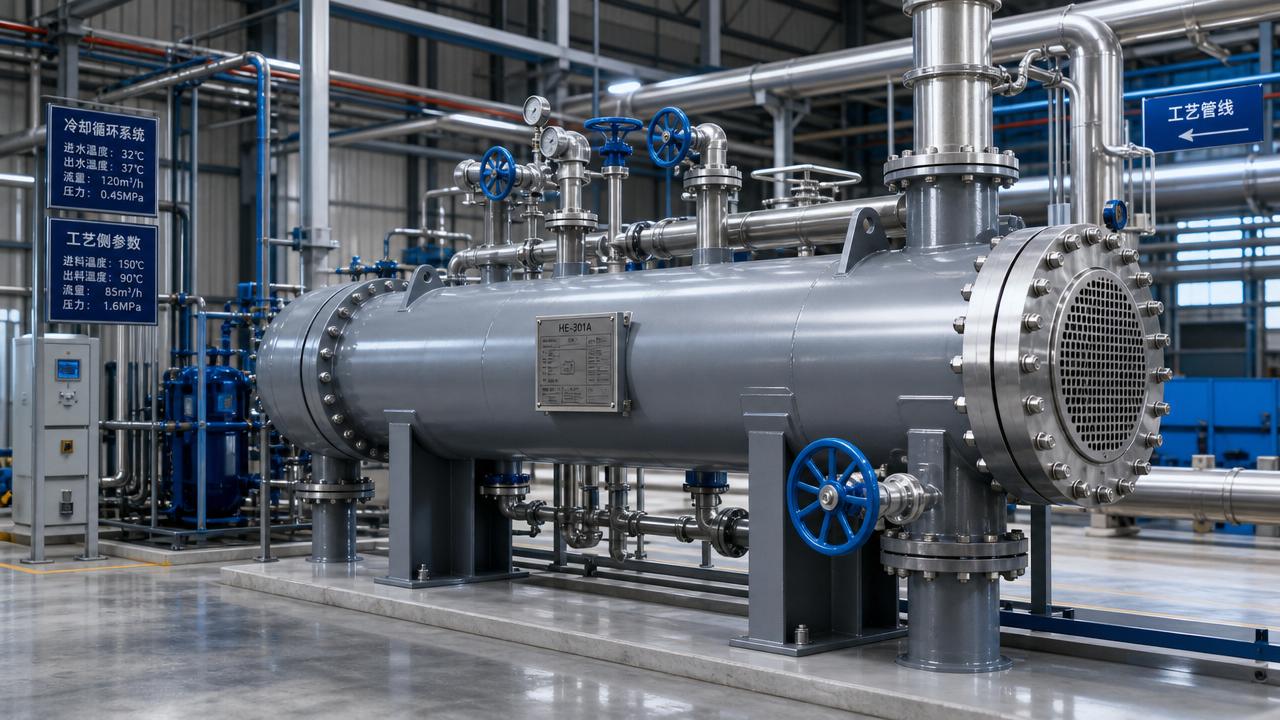




EN 13445-4:2026 Effective for Shell & Tube Heat Exchangers




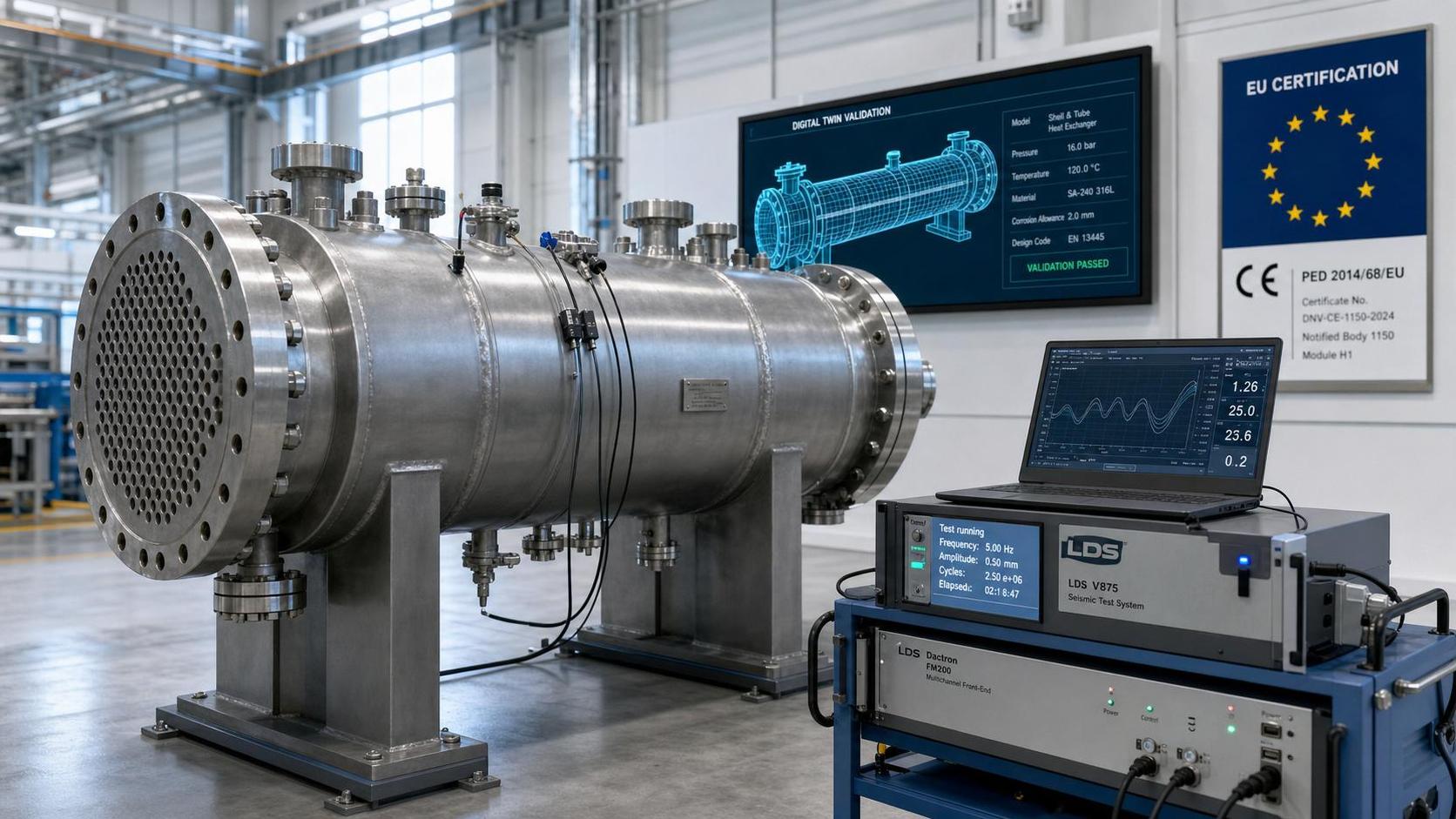
On 24 May 2026, the European Committee for Standardization (CEN) officially published EN 13445-4:2026, Unfired Pressure Vessels — Part 4: Fabrication and Inspection. This revision introduces mandatory certification requirements for phased array ultrasonic testing (PAUT) and digital radiography (DR) of welds in shell-and-tube heat exchangers exported to the EU. The standard becomes compulsory on 1 November 2026, but Notified Bodies authorized for CE marking have accepted type examination reports compliant with the new edition since its publication date. Exporters and manufacturers supplying such equipment to the EU market — particularly those based in China — must now assess readiness, as non-compliance may lead to delivery delays or rejection of shipments.
Event Overview
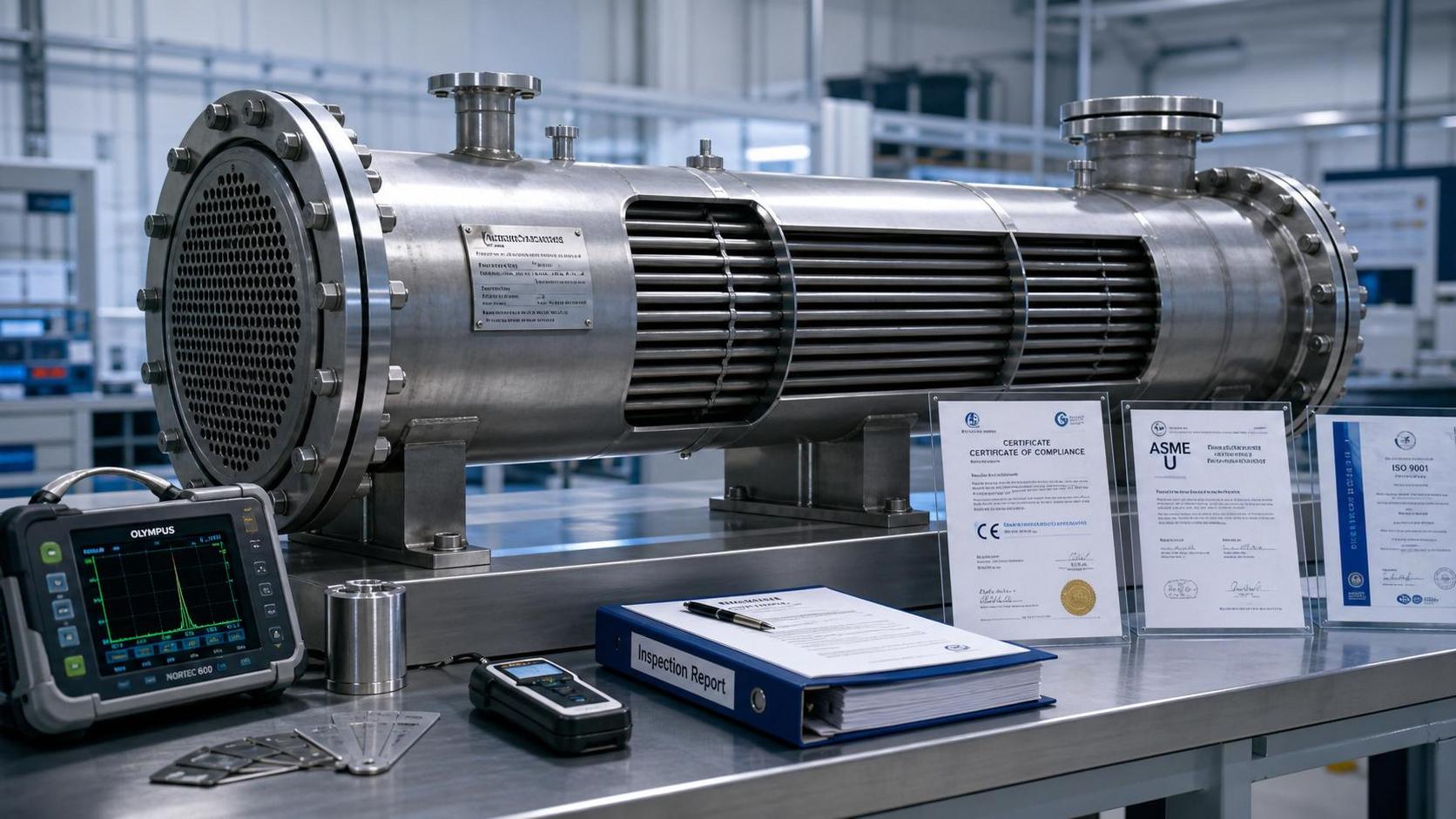
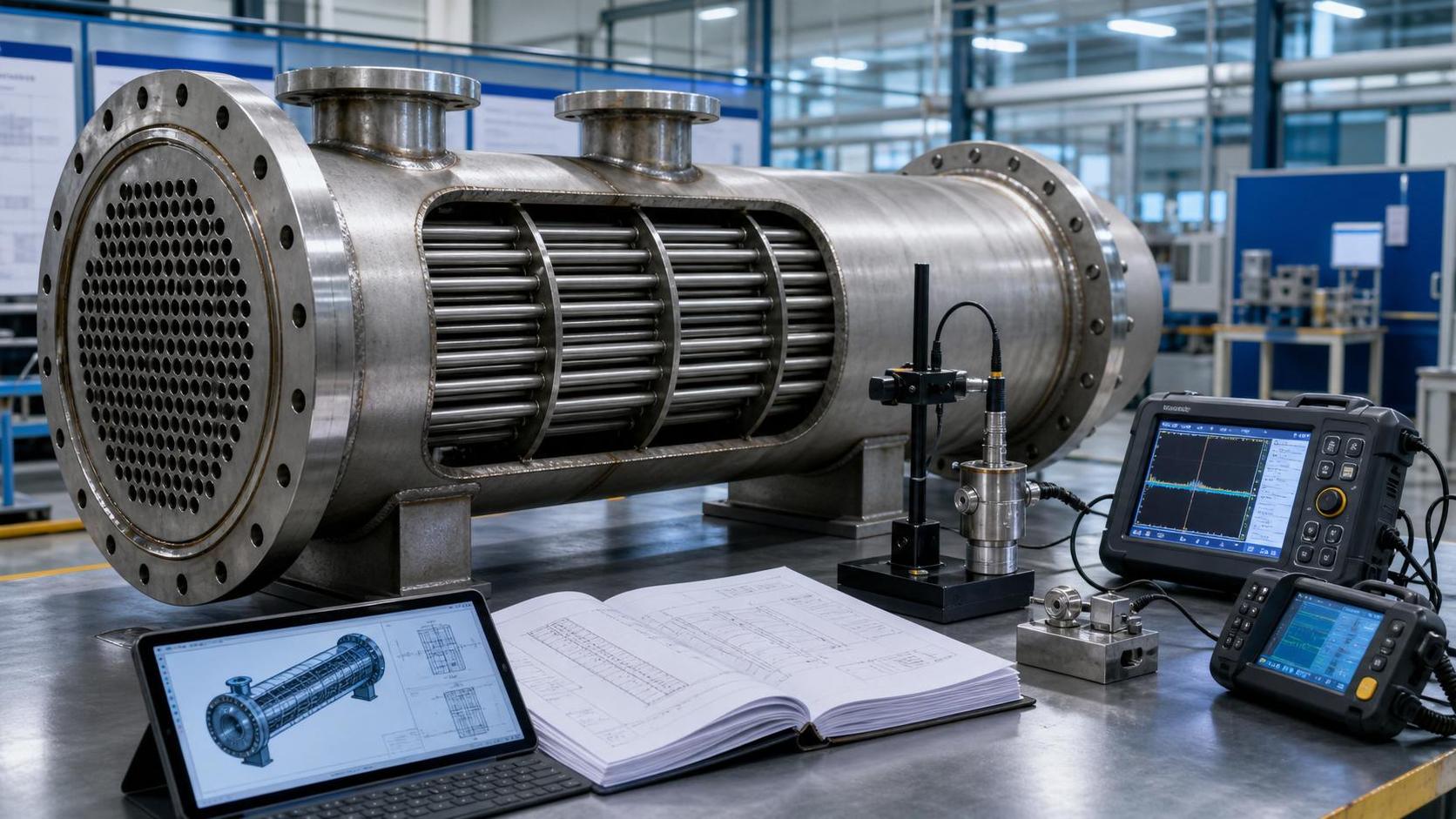
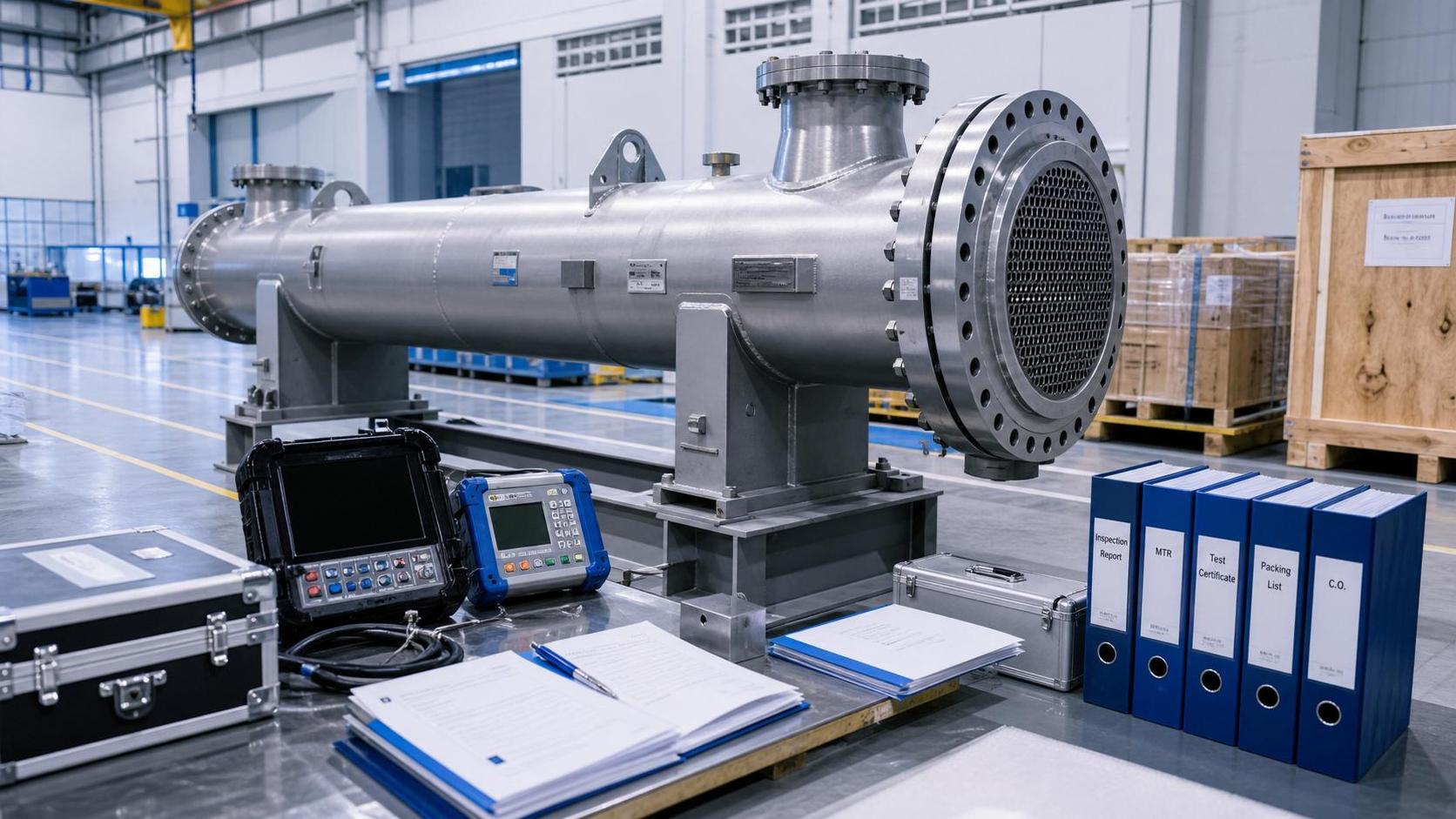
The European Committee for Standardization (CEN) published EN 13445-4:2026 on 24 May 2026. The standard revises Part 4 of EN 13445, specifying updated fabrication and inspection requirements for unfired pressure vessels. It explicitly adds PAUT and DR as approved non-destructive testing (NDT) methods for weld inspection, requiring formal personnel certification and equipment validation per EN ISO 9712 and EN ISO 17635. The revised standard applies to all shell-and-tube heat exchangers placed on the EU market. Its mandatory application date is 1 November 2026. CE conformity assessment bodies began accepting technical documentation and NDT reports aligned with EN 13445-4:2026 from 24 May 2026 onward.
Industries Affected
Manufacturers of Shell-and-Tube Heat Exchangers
These companies are directly subject to the new NDT method requirements. Their manufacturing process must now include PAUT or DR for critical weld inspections — not just as optional alternatives, but as certified, documented procedures. Impact includes potential requalification of NDT personnel, recalibration or procurement of compliant equipment, and revision of internal quality control protocols and welding procedure specifications (WPS).
Export-Oriented Pressure Equipment Suppliers
Firms supplying components or sub-assemblies (e.g., tube bundles, channel covers, or welded nozzles) to final heat exchanger assemblers face cascading compliance obligations. If their deliverables form part of a CE-marked pressure vessel, they must provide traceable, EN 13445-4:2026–compliant NDT reports. Failure to do so may prevent downstream CE certification or trigger re-inspection at the assembly stage.
Third-Party NDT Service Providers
Independent testing laboratories and NDT contractors serving heat exchanger manufacturers must demonstrate formal accreditation to perform PAUT and DR under EN 13445-4:2026. Their scope of accreditation, technician certification records, and report templates must align with the new requirements. Non-accredited providers risk having their reports rejected by EU Notified Bodies.
CE Certification Consultants and Notified Body Representatives
These professionals support clients through conformity assessment. They must update technical review checklists, verify that submitted NDT reports reference valid PAUT/DR certifications, and confirm alignment between inspection plans and the new clause requirements (e.g., coverage, sensitivity, and acceptance criteria). Misalignment may result in extended assessment timelines or formal non-conformities.
Key Considerations and Recommended Actions
Monitor official updates from CEN and EU Commission
While EN 13445-4:2026 is published, national transposition dates and any transitional provisions issued by individual EU Member States remain subject to official notification. Stakeholders should track national standards bodies’ announcements (e.g., DIN, AFNOR, BSI) for implementation guidance and potential clarifications on legacy report acceptability.
Review current NDT capability against EN 13445-4:2026 Annexes
Manufacturers and service providers should compare their existing PAUT/DR procedures, equipment calibration status, and personnel certification levels against Annex A (PAUT) and Annex B (DR) of the new standard. Any gaps — especially in probe selection, scanning strategy validation, or image evaluation criteria — require correction before submission to a Notified Body.
Distinguish between policy signal and operational enforcement
Although Notified Bodies accept submissions under EN 13445-4:2026 starting 24 May 2026, full enforcement depends on each body’s internal readiness and interpretation. Some may still accept EN 13445-4:2014–based reports until 1 November 2026; others may apply stricter scrutiny earlier. Companies should confirm expectations directly with their assigned Notified Body rather than assume uniform adoption.
Update procurement and supply chain documentation proactively
For ongoing projects targeting EU delivery after 1 November 2026, procurement contracts with NDT vendors and component suppliers should explicitly require EN 13445-4:2026–compliant reporting. Internal quality records, inspection plans, and CE technical files must reflect the new standard’s references — including correct edition year and applicable annexes — to avoid post-submission queries or rejection.
Editorial Perspective / Industry Observation
Observably, EN 13445-4:2026 represents a procedural tightening rather than a fundamental shift in safety philosophy. Its emphasis on PAUT and DR reflects broader industry trends toward higher-resolution, digitally archived NDT methods — but the mandatory nature signals a regulatory expectation of enhanced inspection reliability and traceability. Analysis shows this is less an immediate disruption and more a calibrated step toward harmonized digital inspection practices across the EU pressure equipment sector. From an industry perspective, the six-month window between publication and enforcement is intended to allow for capability development — yet early adopters gain advantage in project scheduling and audit confidence. Continued attention is warranted as national authorities issue interpretations and Notified Bodies refine their assessment practices.
This update underscores that regulatory compliance for pressure equipment is increasingly tied to verifiable digital inspection infrastructure — not just mechanical design or material traceability. For exporters, the shift reinforces that technical documentation must now reflect both methodological rigor and procedural accountability. It is better understood not as a one-time certification hurdle, but as a marker of evolving baseline expectations for manufacturing quality assurance in regulated markets.
Source: European Committee for Standardization (CEN), EN 13445-4:2026, published 24 May 2026.
Further observation required regarding national transposition timelines and Notified Body implementation guidance, which remain pending as of publication.
Related News
- EU Rule Requires Digital Energy Monitoring for Shell & Tube Heat ExchangersAuthor :Thermodynamics Analyst

- DOE Raises Shell & Tube Efficiency Floor for 2027Author :Thermodynamics Analyst

- EU EN 13445-4:2026 Tightens Dual Certification for Heat ExchangersAuthor :Thermodynamics Analyst

- EN 13445-4:2026 Tightens EU Heat Exchanger ComplianceAuthor :Thermodynamics Analyst

- EN 13445-4:2026 Adds Digital Twin Fatigue ChecksAuthor :Thermodynamics Analyst

- How to Improve Heat Exchanger Efficiency Without Major System DowntimeAuthor :Thermodynamics Analyst

- EU Rule Takes Effect for Shell-and-Tube Heat ExchangersAuthor :Thermodynamics Analyst

- When Energy-Efficient Heat Exchange Systems Deliver Real PaybackAuthor :Thermodynamics Analyst

- DOE Cuts R449A Chiller Transition to 9 MonthsAuthor :Thermodynamics Analyst

- Rail Corridor Surge Cuts Shell & Tube Lead TimeAuthor :Thermodynamics Analyst

- Rail Corridor Hits 2,000 Trains as Heat Exchanger Lead Time FallsAuthor :Thermodynamics Analyst

- Rail Corridor Surge Cuts Shell & Tube Delivery to 28 DaysAuthor :Thermodynamics Analyst

- China-Europe Rail Corridor Tops 2,000 Trains as Heat Exchanger Export Delivery Falls to 28 DaysAuthor :Thermodynamics Analyst

- How to Improve Heat Exchanger Efficiency Without Major RetrofitsAuthor :Thermodynamics Analyst
![]()
- Rail Corridor Speeds Heat Exchanger ExportsAuthor :Thermodynamics Analyst
![]()
- China Names New Trade Parks for Heat Exchanger ExportsAuthor :Thermodynamics Analyst
![]()
- Rail Corridor Eases Lead Times for Shell-and-Tube ExportsAuthor :Thermodynamics Analyst

- Rail Freight Priority Cuts Shell & Tube Lead TimesAuthor :Thermodynamics Analyst

- Vietnam Cement WHR Rule Lifts Exchanger DemandAuthor :Thermodynamics Analyst

- EN 13445-4:2026 Effective for Shell & Tube Heat ExchangersAuthor :Thermodynamics Analyst
![]()
- SANY Excavators Capture >60% of Indonesia's Nickel Mine Equipment MarketAuthor :Thermodynamics Analyst

- APEC Trade Ministers Focus on Digital & Green Supply ChainsAuthor :Thermodynamics Analyst
![]()
- Pakistan PM Visit to China Spurs Shell & Tube, Centrifuge Tech LocalizationAuthor :Thermodynamics Analyst

- Putin's China Visit Resumes Shell & Tube Heat Exchanger Export PathAuthor :Thermodynamics Analyst

- EU Imposes Final Anti-Dumping Duties on Chinese Adipic AcidAuthor :Thermodynamics Analyst

- EN 13445-4:2026 Enters Force for Shell & Tube Heat ExchangersAuthor :Thermodynamics Analyst

- EU Updates EN 13445-4:2026 for Shell & Tube Heat ExchangersAuthor :Thermodynamics Analyst

- China's Petrochemical '15th Five-Year' Digitalization Guide ReleasedAuthor :Thermodynamics Analyst

- Heat Exchanger Technology: Plate vs Shell & Tube Selection GuideAuthor :Thermodynamics Analyst

- China to Upgrade Shell & Tube Heat Exchanger Standard to MandatoryAuthor :Thermodynamics Analyst

- Thermodynamics Analysis in Shell & Tube Selection: What Really MattersAuthor :Thermodynamics Analyst

- How to Compare Heat Exchanger Efficiency Across System DesignsAuthor :Thermodynamics Analyst