How to Compare Heat Exchanger Efficiency Across System Designs




Comparing heat exchanger efficiency across system designs requires more than checking a single performance number. For technical evaluators, factors such as thermal duty, pressure drop, flow arrangement, fouling resistance, and lifecycle energy cost all shape the real efficiency outcome. This article outlines a practical framework to assess different designs with greater accuracy, helping you identify the most effective solution for industrial performance, reliability, and energy optimization.
How should technical evaluators define heat exchanger efficiency in real projects?
In industrial decision-making, heat exchanger efficiency is not a single universal metric. A design may show strong heat transfer on paper but still underperform once pumping power, fouling, temperature approach, or maintenance intervals are considered. For technical evaluators working across cooling, compressed air, vacuum, and process utility systems, the correct question is not simply “Which exchanger is most efficient?” but “Which exchanger delivers the best thermal result under the actual system constraints?”
A practical comparison framework usually combines thermal effectiveness, pressure loss, available footprint, material suitability, controllability, and total operating cost. This broader view is especially important in mixed industrial environments where energy prices fluctuate, environmental rules tighten, and uptime has direct commercial impact. GTC-Matrix supports this type of evaluation by connecting thermodynamic logic with sector intelligence, making technical comparison more useful for procurement and long-term energy planning.
- Thermal effectiveness: how closely the exchanger approaches the maximum possible heat transfer.
- Pressure drop: the hydraulic or airside penalty that increases fan or pump energy use.
- Fouling behavior: the rate at which performance degrades in real operating conditions.
- Lifecycle fit: how the design performs over maintenance cycles, load variation, and utility cost changes.
Which comparison metrics matter most across different system designs?
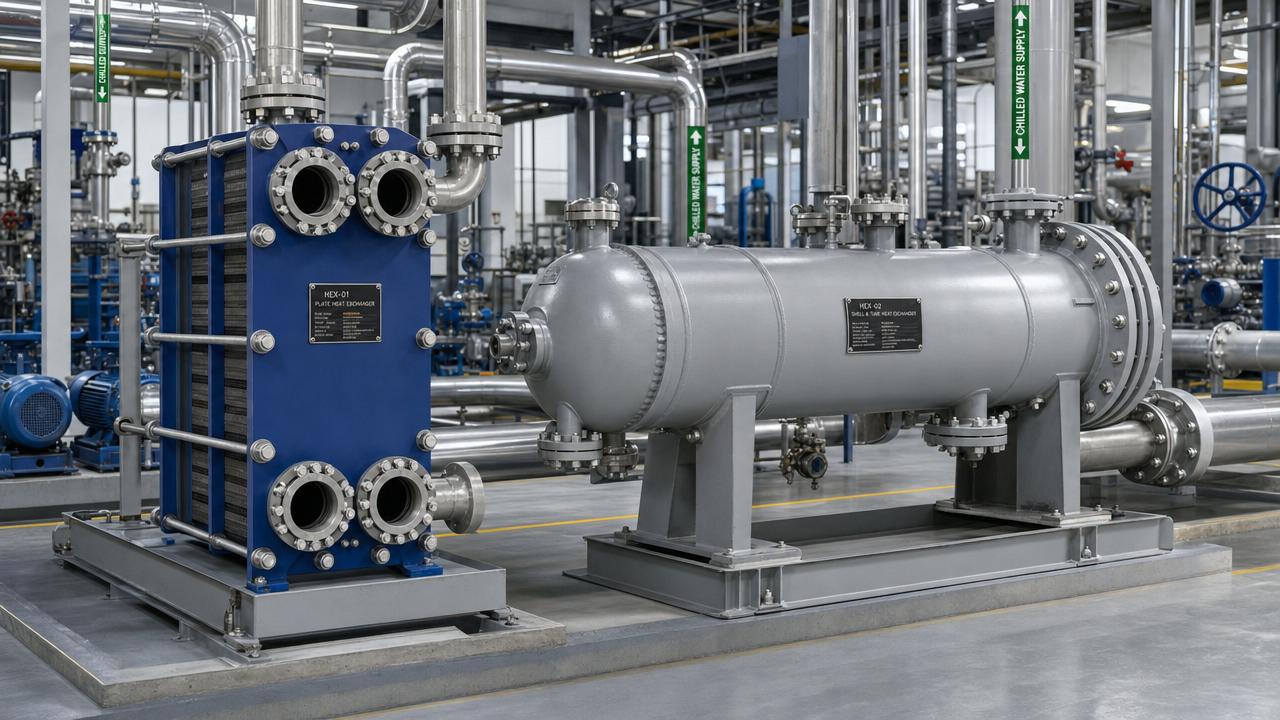
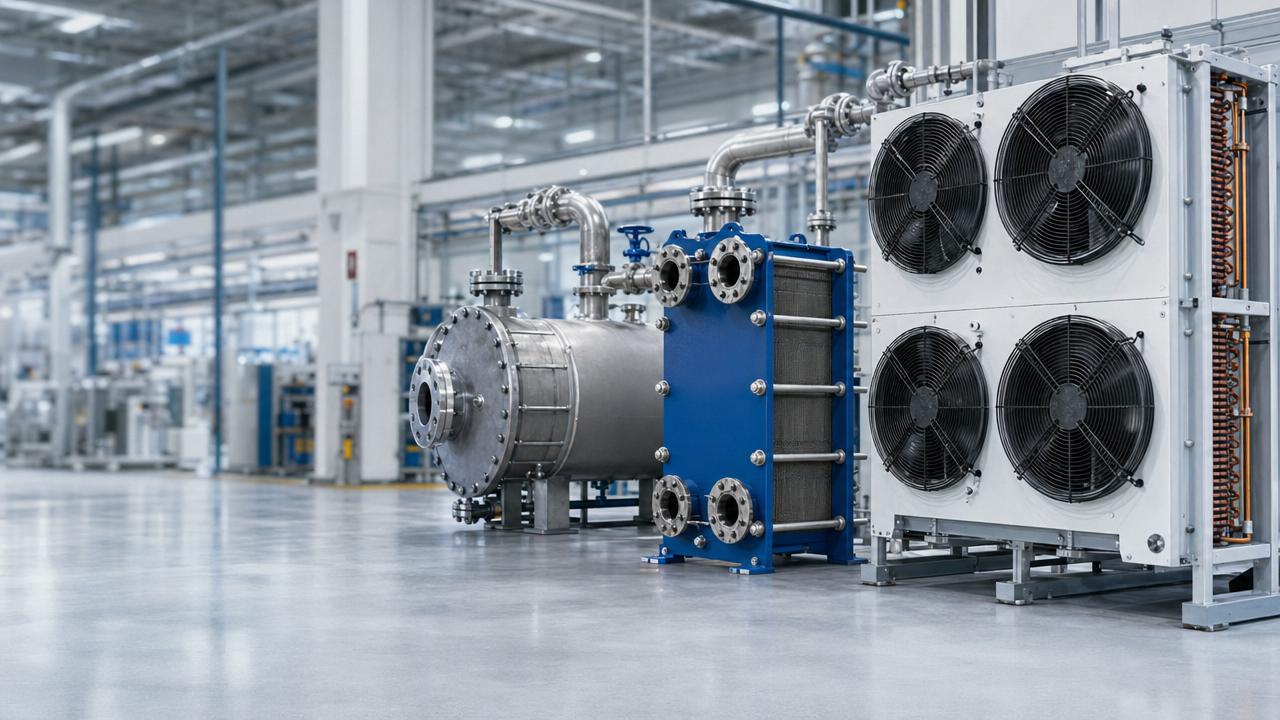
When comparing heat exchanger efficiency across shell-and-tube, plate, brazed plate, air-cooled, or microchannel designs, evaluators need a balanced scorecard instead of isolated vendor data. The table below summarizes the core parameters that should be reviewed before a short list is created.
This comparison shows why heat exchanger efficiency must be judged as a system outcome, not a catalog claim. In practice, the best-performing design is often the one that balances duty, pressure drop, and maintenance exposure under realistic operating patterns.
Why pressure drop is often underestimated
Technical teams frequently prioritize heat transfer coefficient and overlook the cost of moving the fluid. Yet in chilled water loops, compressed air aftercoolers, or vacuum support systems, extra pressure drop can force larger pumps, stronger fans, or higher compressor discharge work. That means lower net system efficiency even if the exchanger core itself looks thermally strong.
How do common heat exchanger designs compare in industrial use?
Different system designs are built around different trade-offs. The next table helps technical evaluators compare typical strengths and limitations when assessing heat exchanger efficiency across industrial applications.
No design is automatically superior. A plate exchanger may deliver excellent heat exchanger efficiency in a clean liquid loop, while a shell-and-tube unit may be the more efficient lifecycle choice in a fouling-prone plant because it preserves uptime and is easier to clean mechanically.
What should procurement and evaluation teams check before selecting a design?
Use a decision sequence, not a price-first shortcut
Many evaluation errors begin when teams compare only initial capital cost. In reality, the wrong heat exchanger may increase operating expense, cleaning frequency, process instability, or future retrofit cost. A structured selection sequence reduces that risk.
- Confirm the duty window: include design load, minimum load, upset conditions, and seasonal ambient variation.
- Define fluid properties clearly: viscosity, contamination level, corrosiveness, phase change behavior, and allowable pressure loss.
- Assess maintenance reality: available shutdown windows, cleaning method, spare parts accessibility, and operator skill level.
- Calculate lifecycle energy cost: include fan or pump power, expected fouling margin, and performance drift over time.
- Review compliance needs: pressure equipment rules, material traceability, refrigerant-related requirements, and plant safety standards.
This is where intelligence-driven support becomes valuable. GTC-Matrix helps technical evaluators connect equipment selection with broader market signals such as energy cost volatility, refrigerant policy changes, and the technology evolution of microchannel and oil-free systems. That wider context often changes which design is truly efficient over five to ten years.
Which common mistakes distort heat exchanger efficiency comparisons?
FAQ for technical evaluators
Is the highest heat transfer coefficient always the best choice?
No. A high coefficient may come with narrow passages, higher fouling risk, or unacceptable pressure drop. Net system efficiency matters more than an isolated thermal figure.
How should part-load performance be considered?
If your plant rarely runs at full design load, part-load stability may be more important than nameplate performance. Evaluate control response, bypass behavior, fan speed logic, and seasonal operating points.
When does fouling margin become a deciding factor?
It becomes critical when cooling water quality varies, oil carryover is possible, or process fluids contain solids. In these cases, apparent heat exchanger efficiency can collapse quickly without proper fouling allowance and cleaning strategy.
Should environmental and policy trends affect design selection?
Yes. Refrigerant transitions, energy pricing, and decarbonization targets increasingly shape total cost and equipment viability. A compact design with lower refrigerant charge or better energy recovery may align better with future compliance and operating strategy.
Why work with GTC-Matrix when evaluating heat exchanger efficiency?
For technical evaluators, the challenge is rarely a lack of product brochures. The real challenge is turning scattered performance data into a decision that fits process duty, energy economics, maintenance capacity, and regulatory direction. GTC-Matrix bridges that gap through industrial cooling, compressed air, vacuum, and heat exchange intelligence built around thermodynamic analysis and commercial insight.
You can consult GTC-Matrix for parameter confirmation, comparative design review, technology trend interpretation, application scenario judgment, and lifecycle-oriented selection support. If you are comparing exchanger types, validating pressure drop assumptions, discussing delivery timing, assessing customization paths, or checking certification-related requirements, our intelligence framework helps move the evaluation from general estimation to informed action.
Related News
- EN 13445-4:2026 Raises Pressure Vessel Welding RulesAuthor :Thermodynamics Analyst

- EN 13445-4:2026 Tightens EU NDT Rules for Pressure VesselsAuthor :Thermodynamics Analyst

- EU Rule Requires Digital Energy Monitoring for Shell & Tube Heat ExchangersAuthor :Thermodynamics Analyst

- DOE Raises Shell & Tube Efficiency Floor for 2027Author :Thermodynamics Analyst

- EU EN 13445-4:2026 Tightens Dual Certification for Heat ExchangersAuthor :Thermodynamics Analyst

- EN 13445-4:2026 Tightens EU Heat Exchanger ComplianceAuthor :Thermodynamics Analyst

- EN 13445-4:2026 Adds Digital Twin Fatigue ChecksAuthor :Thermodynamics Analyst

- How to Improve Heat Exchanger Efficiency Without Major System DowntimeAuthor :Thermodynamics Analyst

- EU Rule Takes Effect for Shell-and-Tube Heat ExchangersAuthor :Thermodynamics Analyst

- When Energy-Efficient Heat Exchange Systems Deliver Real PaybackAuthor :Thermodynamics Analyst

- DOE Cuts R449A Chiller Transition to 9 MonthsAuthor :Thermodynamics Analyst

- Rail Corridor Surge Cuts Shell & Tube Lead TimeAuthor :Thermodynamics Analyst

- Rail Corridor Hits 2,000 Trains as Heat Exchanger Lead Time FallsAuthor :Thermodynamics Analyst

- Rail Corridor Surge Cuts Shell & Tube Delivery to 28 DaysAuthor :Thermodynamics Analyst

- China-Europe Rail Corridor Tops 2,000 Trains as Heat Exchanger Export Delivery Falls to 28 DaysAuthor :Thermodynamics Analyst

- How to Improve Heat Exchanger Efficiency Without Major RetrofitsAuthor :Thermodynamics Analyst
![]()
- Rail Corridor Speeds Heat Exchanger ExportsAuthor :Thermodynamics Analyst
![]()
- China Names New Trade Parks for Heat Exchanger ExportsAuthor :Thermodynamics Analyst
![]()
- Rail Corridor Eases Lead Times for Shell-and-Tube ExportsAuthor :Thermodynamics Analyst

- Rail Freight Priority Cuts Shell & Tube Lead TimesAuthor :Thermodynamics Analyst

- Vietnam Cement WHR Rule Lifts Exchanger DemandAuthor :Thermodynamics Analyst

- EN 13445-4:2026 Effective for Shell & Tube Heat ExchangersAuthor :Thermodynamics Analyst
![]()
- SANY Excavators Capture >60% of Indonesia's Nickel Mine Equipment MarketAuthor :Thermodynamics Analyst

- APEC Trade Ministers Focus on Digital & Green Supply ChainsAuthor :Thermodynamics Analyst
![]()
- Pakistan PM Visit to China Spurs Shell & Tube, Centrifuge Tech LocalizationAuthor :Thermodynamics Analyst

- Putin's China Visit Resumes Shell & Tube Heat Exchanger Export PathAuthor :Thermodynamics Analyst

- EU Imposes Final Anti-Dumping Duties on Chinese Adipic AcidAuthor :Thermodynamics Analyst

- EN 13445-4:2026 Enters Force for Shell & Tube Heat ExchangersAuthor :Thermodynamics Analyst

- EU Updates EN 13445-4:2026 for Shell & Tube Heat ExchangersAuthor :Thermodynamics Analyst

- China's Petrochemical '15th Five-Year' Digitalization Guide ReleasedAuthor :Thermodynamics Analyst

- Heat Exchanger Technology: Plate vs Shell & Tube Selection GuideAuthor :Thermodynamics Analyst

- China to Upgrade Shell & Tube Heat Exchanger Standard to MandatoryAuthor :Thermodynamics Analyst

- Thermodynamics Analysis in Shell & Tube Selection: What Really MattersAuthor :Thermodynamics Analyst

- How to Compare Heat Exchanger Efficiency Across System DesignsAuthor :Thermodynamics Analyst