Asia's Major Economy Imported 528 Tons of Silver in March




In March 2026, Asia's major economy imported 528 tons of silver—the highest monthly volume in two decades—driven by solar thermal manufacturers accelerating procurement ahead of the April 1 export tax rebate adjustment. This development directly impacts suppliers of plate heat exchangers and refrigerants used in concentrated solar thermal (CSP) systems, warranting close attention from trade, manufacturing, and supply chain stakeholders in the renewable energy equipment sector.
Event Overview
On March 31, 2026, official data indicated that silver imports by Asia's major economy reached 528 tons in March 2026. This level represents a near twenty-year high. The surge is attributed to photovoltaic and solar thermal manufacturers front-loading purchases before the scheduled termination of export tax rebates effective April 1, 2026. Silver serves as a critical material in solar thermal energy conversion, particularly in receiver coatings and high-efficiency heat transfer components.
Industries Affected
Direct Trading Enterprises
Importers and commodity traders handling silver or silver-containing intermediates face heightened short-term demand volatility. The spike reflects policy-driven timing rather than sustained structural growth, implying compressed order cycles and tighter logistics coordination windows.
Raw Material Procurement Teams
Procurement units at solar thermal component manufacturers experienced accelerated lead-time pressure in late March. Silver’s role in selective absorber coatings and thermal interface materials means its availability directly affects production scheduling for key CSP subsystems—including those integrating plate heat exchangers and refrigerant-based cooling loops.
Manufacturers of Plate Heat Exchangers and Refrigerant Systems
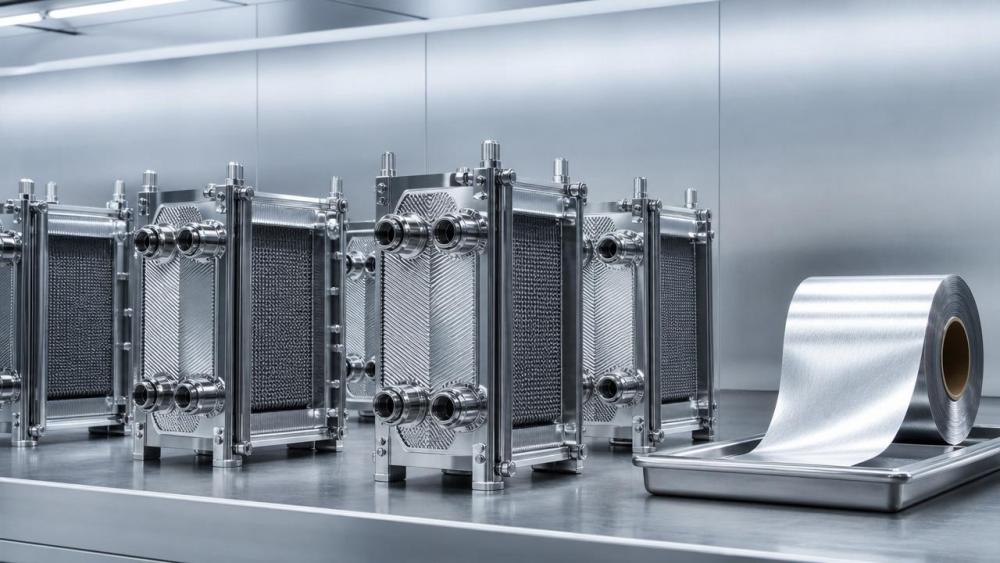
Producers of brazed plate heat exchangers (used in thermal oil circulation circuits) and specialized refrigerant blends (for high-temperature condensation in parabolic trough and tower systems) observed correlated demand uplift. Silver’s thermal conductivity and stability under concentrated flux influence design margins and material compatibility requirements in these components.
Supply Chain Service Providers
Logistics, customs brokerage, and inventory financing services supporting solar thermal equipment exports saw increased transaction volume in late March—particularly for shipments destined for integrated CSP EPC projects. Documentation accuracy and tariff classification verification for dual-use thermal management hardware gained urgency amid the policy transition window.
Key Focus Areas and Recommended Actions
Monitor Official Clarifications on Tax Policy Implementation
While the April 1 change was announced, confirm whether transitional arrangements, documentation deadlines, or retroactive adjustments apply. Regulatory updates may affect Q2 import declarations and working capital planning for silver-dependent components.
Track Demand Signals Beyond Silver—Focus on Thermal Management Hardware
Given silver’s function as an enabling material—not an end product—prioritize visibility into order patterns for plate heat exchangers and refrigerant systems supplied to top-tier solar thermal EPC contractors. These reflect actual deployment momentum more reliably than raw material flows alone.
Distinguish Between Policy Timing and Underlying Market Drivers
The March import surge is largely a timing effect. Analysis shows it does not yet indicate broad-based expansion in CSP project commissioning rates. Avoid conflating short-term procurement behavior with long-term capacity additions; verify downstream project milestones independently.
Prepare for Supply Chain Coordination Across Material and Component Layers
Manufacturers should align silver sourcing timelines with heat exchanger fabrication schedules and refrigerant charging specifications. Early engagement with EPC partners on bill-of-materials validation helps avoid bottlenecks during system integration phases.
Editorial Perspective / Industry Observation
Observably, this event functions primarily as a policy-timing signal—not yet evidence of accelerating CSP deployment. The silver import peak reflects anticipatory behavior around a known fiscal measure, not spontaneous market growth. From an industry perspective, it highlights how upstream material procurement can serve as an early proxy for near-term thermal equipment activity—but only when contextualized against EPC contracting data and project commissioning calendars. Current relevance lies less in the absolute silver volume and more in its correlation with thermal management hardware demand cycles. Continued tracking of export shipment data for plate exchangers and refrigerant-filled thermal modules will better indicate whether this signal translates into sustained supply chain activation.
This information underscores the need for integrated visibility across raw material policy, component manufacturing, and project-level execution—especially for firms aiming to embed within solar thermal system integration supply chains.
Conclusion
The March 2026 silver import surge is best understood as a time-bound response to an imminent fiscal policy shift—not as standalone evidence of expanded solar thermal infrastructure investment. Its significance resides in its linkage to thermal management hardware demand, offering a practical lens for supply chain participants to assess near-term operational priorities. For stakeholders, the priority remains verifying downstream project traction and aligning component readiness with verified EPC integration timelines—not extrapolating from raw material flows alone.
Source Attribution
Main source: Official trade statistics released on March 31, 2026, by national customs authority. Note: Ongoing observation is required regarding implementation details of the April 1 export tax rebate adjustment and subsequent monthly silver import volumes.
Ready when you are. Send us a message to get started.
Related News
- How corrugation angle affects heat transfer in plate heat exchangersAuthor :Thermodynamics Analyst

- When do plate heat exchangers suit Middle East seawater cooling?Author :Thermodynamics Analyst

- When does gasketed plate heat exchanger technology suit your process?Author :Thermodynamics Analyst

- When does heat recovery improve data center cooling efficiency?Author :Thermodynamics Analyst

- How Do I Verify Heat Transfer Calculations in a Supplier Quotation?Author :Thermodynamics Analyst

- How to evaluate a plate heat exchangers supplier before orderingAuthor :Thermodynamics Analyst

- EU Tightens Fatigue Checks for Plate Heat ExchangersAuthor :Thermodynamics Analyst

- EU PFAS Rule Adds New Export Filing for Cooling EquipmentAuthor :Thermodynamics Analyst

- EU EN 13445-4:2026 Adds Fatigue Report RequirementAuthor :Thermodynamics Analyst

- EU Updates EN 13445-4 for Plate ExchangersAuthor :Thermodynamics Analyst

- How to Compare Energy-Efficient Heat Exchange SolutionsAuthor :Thermodynamics Analyst

- Brazed Plate Exchanger Design: 7 Factors That Affect Heat TransferAuthor :Thermodynamics Analyst

- EU CBAM Pilot List Adds Plate ExchangersAuthor :Thermodynamics Analyst

- How Heat Exchange Systems Improve Temperature Control StabilityAuthor :Thermodynamics Analyst

- Japan to Require Efficiency Labels for Plate ExchangersAuthor :Thermodynamics Analyst

- EU REACH Adds PFAS Ban for Plate Heat ExchangersAuthor :Thermodynamics Analyst

- India Enforces BIS Rule for Plate Heat ExchangersAuthor :Thermodynamics Analyst

- DIN EN 13445-6:2026 Tightens Plate Exchanger CE RulesAuthor :Thermodynamics Analyst

- EU REACH Restricts PFAS Seals for Plate Heat ExchangersAuthor :Thermodynamics Analyst

- India Mandates BIS Certification for Imported Plate ExchangersAuthor :Thermodynamics Analyst

- Vietnam Requires QR Labels on Imported Plate Heat ExchangersAuthor :Thermodynamics Analyst

- EU EN 13445-4:2026 Tightens NDT Rules for Heat ExchangersAuthor :Thermodynamics Analyst

- EPA Clears R-1234ze(E) for Plate Exchanger SystemsAuthor :Thermodynamics Analyst
 for Plate Exchanger Systems")
- Heat Exchange Equipment Selection: Key Performance Checks Before You Compare ModelsAuthor :Thermodynamics Analyst

- ASHRAE 90.1-2026 Raises Plate Exchanger Efficiency ThresholdAuthor :Thermodynamics Analyst

- Heat Exchange Systems: How to Choose the Right SetupAuthor :Thermodynamics Analyst

- EPA SNAP 89 Takes Effect for Plate ExchangersAuthor :Thermodynamics Analyst

- How to Compare Heat Exchange Solutions for Lower Energy UseAuthor :Thermodynamics Analyst

- EPA SNAP 89 Expands Filing Rules for Plate Heat ExchangersAuthor :Thermodynamics Analyst

- EPA SNAP update adds filing rule for plate heat exchangersAuthor :Thermodynamics Analyst

- Industrial Heat Recovery: Where the Payback Is Fastest in 2026Author :Thermodynamics Analyst

- California EPR Deadline Nears for Cooling Equipment MakersAuthor :Thermodynamics Analyst

- Heat Exchanger Technology: Plate vs Shell and Tube for EfficiencyAuthor :Thermodynamics Analyst

- Industrial Heat Recovery Options for High-Temperature ProcessesAuthor :Thermodynamics Analyst

- Heat Transfer Problems in Process Lines: Causes and Practical FixesAuthor :Thermodynamics Analyst

- India Tightens Plate Exchanger Import Clearance RulesAuthor :Thermodynamics Analyst