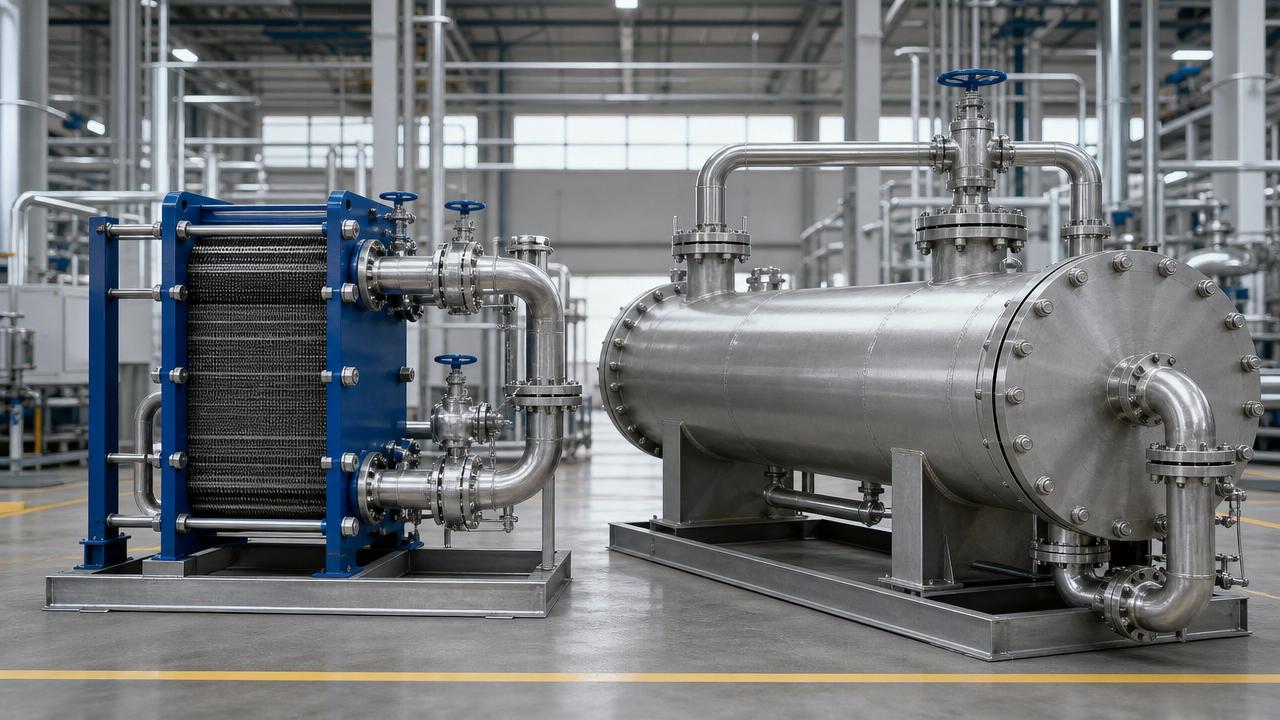
DOE Adopts ASHRAE 90.1-2025: Plate Exchanger Efficiency Thresholds Rise 18%




On May 10, 2026, the U.S. Department of Energy (DOE) officially adopted the updated ASHRAE Standard 90.1-2025, introducing stricter minimum efficiency requirements for plate heat exchangers used in commercial HVAC systems. The new standard takes effect on October 1, 2026, and directly impacts manufacturers, exporters, and certification bodies involved in the U.S.-bound commercial HVAC equipment supply chain — particularly those producing or supplying plate exchangers.
Event Overview
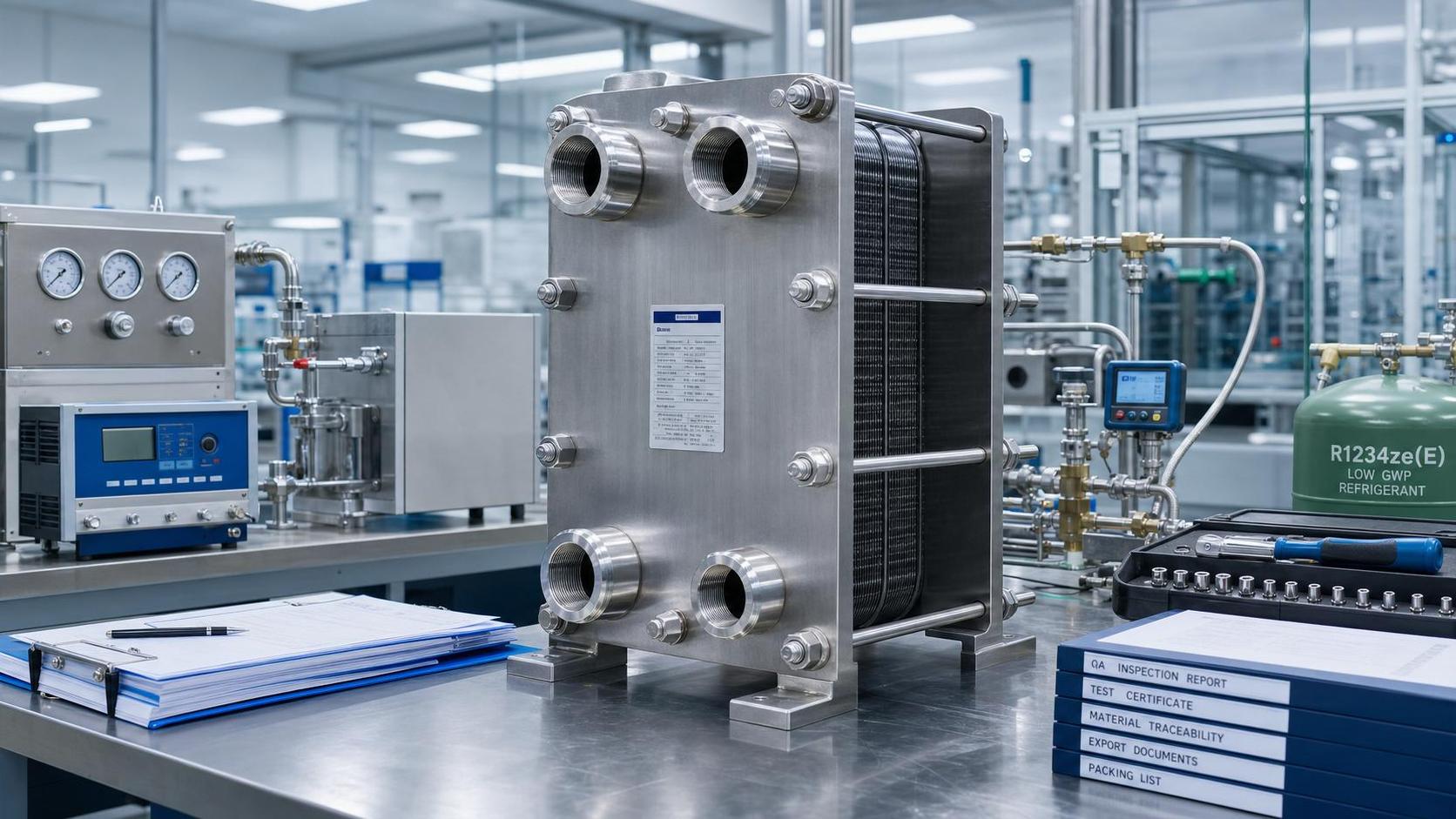
The U.S. Department of Energy announced on May 10, 2026, its adoption of ASHRAE Standard 90.1-2025. This update establishes dual mandatory performance criteria for plate heat exchangers: a minimum Number of Transfer Units (NTU) of ≥4.2 and a maximum pressure drop (ΔP) of ≤35 kPa. The standard applies to all plate exchangers sold in the U.S. as components of commercial HVAC systems, effective October 1, 2026. Exporters based in China are required to align their testing and certification protocols with these updated requirements.
Industries Affected by the Update
Direct Exporters of HVAC Components
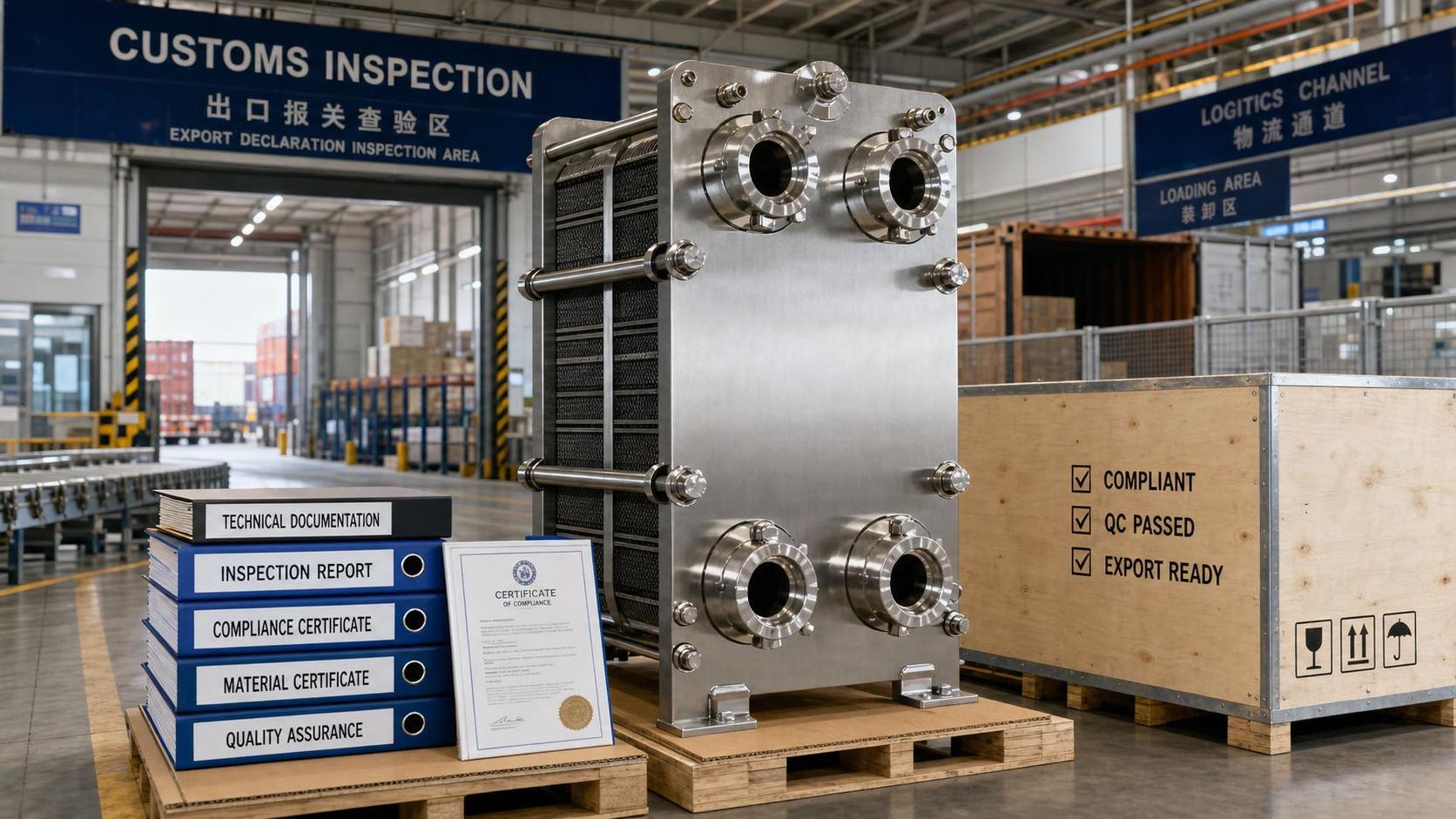
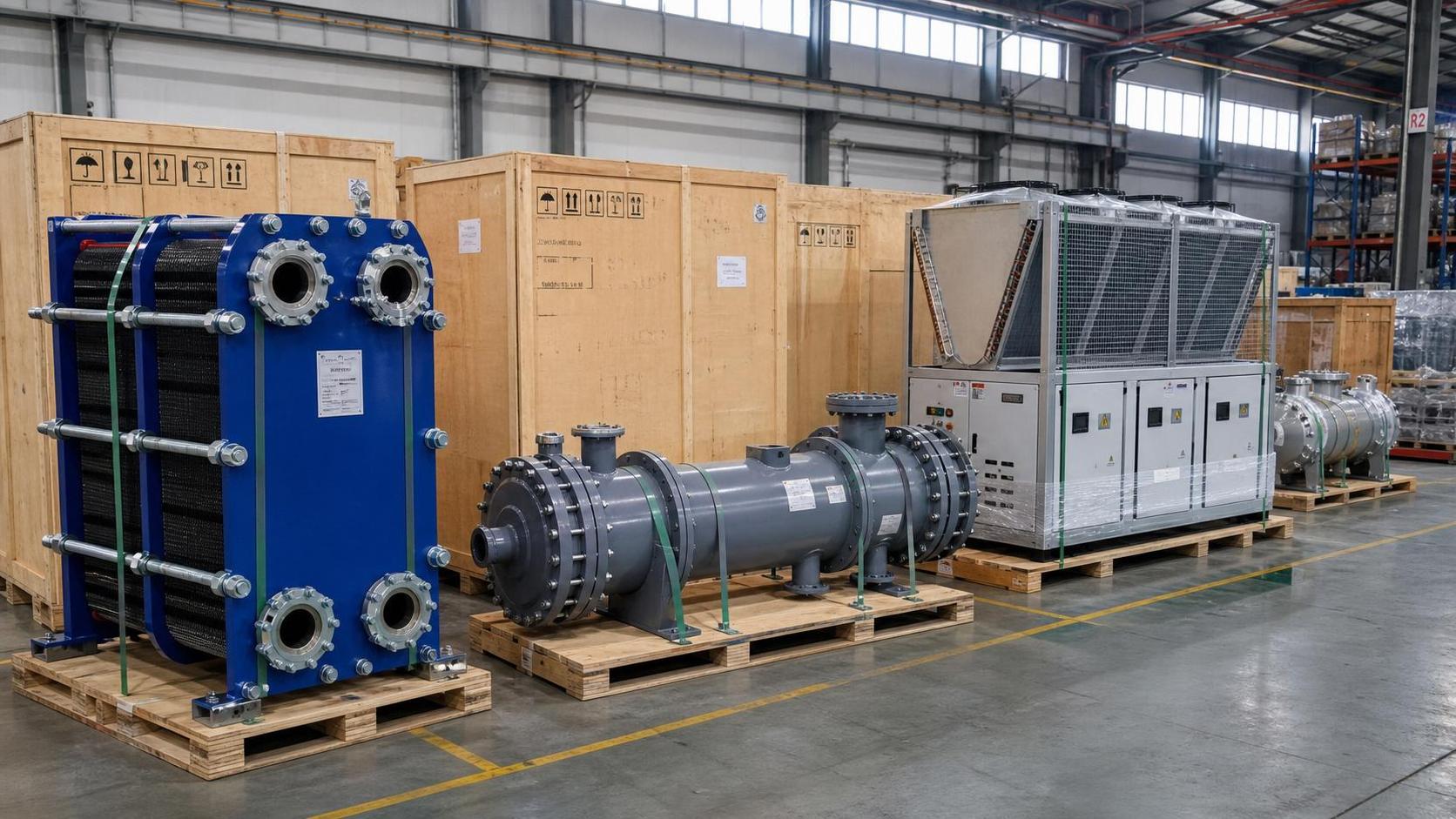
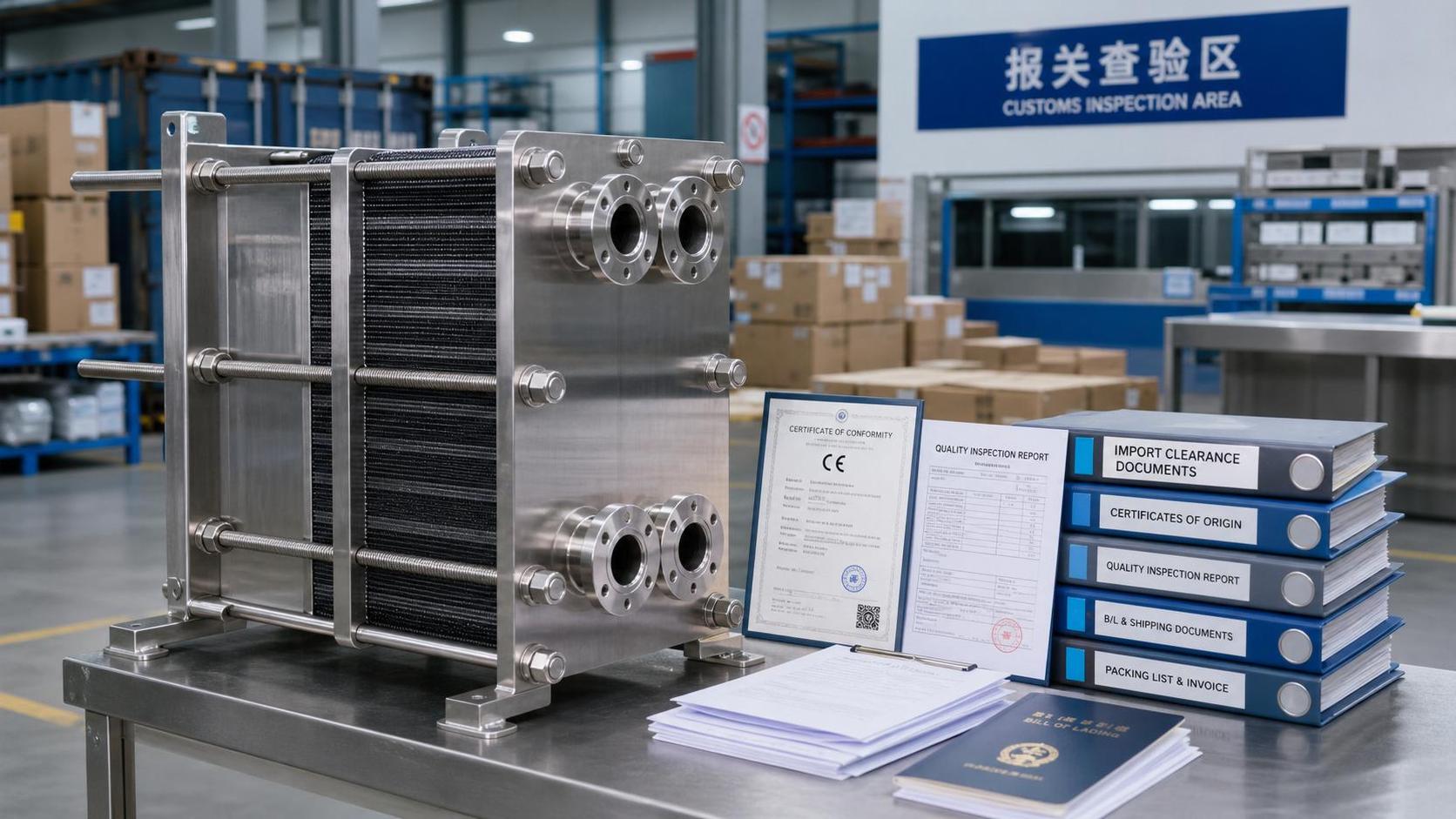
Exporters shipping plate exchangers to U.S. HVAC OEMs or distributors will face compliance obligations prior to shipment. Non-compliant units may be rejected at customs or excluded from specification lists by U.S. system integrators. Impact manifests primarily in product validation timelines, test lab capacity, and documentation readiness.
Manufacturers of Plate Heat Exchangers
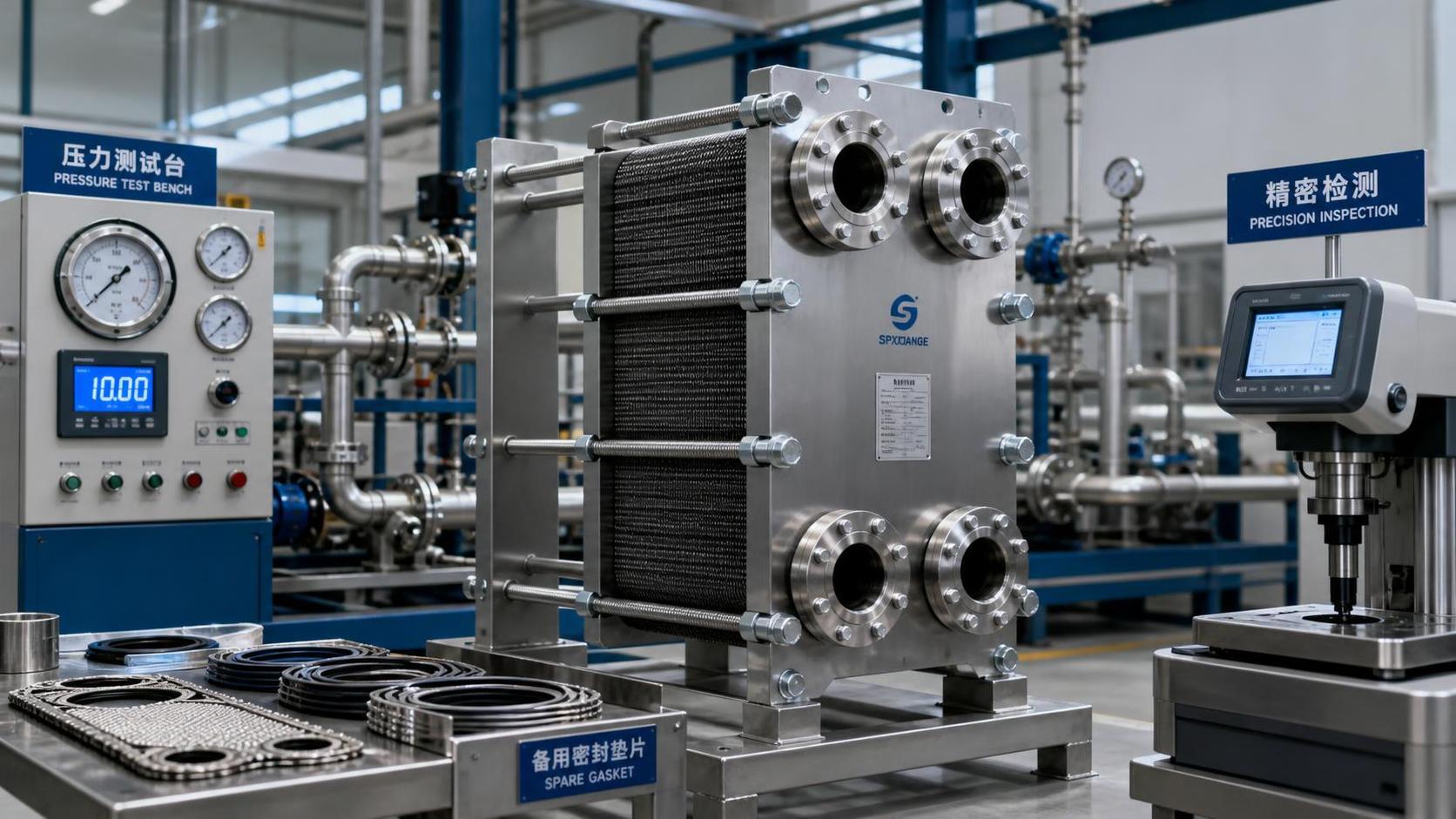
Producers must verify whether existing designs meet both NTU ≥4.2 and ΔP ≤35 kPa under standardized test conditions. Design revisions — such as plate geometry, gasket configuration, or channel spacing — may be necessary. Impact includes R&D lead time extension, prototype retesting, and potential material cost adjustments.
Certification and Testing Service Providers
Laboratories accredited for ASHRAE 90.1 compliance testing must validate their test procedures against the new NTU and ΔP metrics. Some legacy test setups may require recalibration or procedural updates to ensure traceable, repeatable results. Impact centers on accreditation scope updates, staff training, and reporting format alignment.
U.S.-Based HVAC System Integrators and Specifiers
These stakeholders will begin requiring third-party verification reports referencing ASHRAE 90.1-2025 compliance starting Q4 2026. Their procurement checklists and BIM library specifications will reflect the new thresholds. Impact appears in sourcing lead times, supplier qualification reviews, and submittal review cycles.
Key Focus Areas and Recommended Actions for Stakeholders
Monitor official DOE implementation guidance and state-level adoption status
The DOE’s final rule includes a 120-day transition window before enforcement begins. However, individual states may adopt the standard earlier or impose additional local interpretations. Stakeholders should track DOE’s Federal Register notices and state energy code updates — especially in jurisdictions with active building code revision cycles (e.g., California, Washington, New York).
Verify current product models against both NTU and ΔP thresholds under standardized test conditions
Compliance requires simultaneous satisfaction of two independent metrics — not just one. Manufacturers should avoid assuming that improving NTU automatically maintains acceptable ΔP, or vice versa. Testing must follow ASHRAE 90.1-2025 Annex G methodology, using reference fluids and flow rates defined therein.
Distinguish between regulatory signal and operational impact
While the standard becomes mandatory on October 1, 2026, many U.S. HVAC projects currently in design phase are already referencing draft language from ASHRAE 90.1-2025. Early engagement with U.S. engineering firms and contractors can clarify whether compliance is being treated as a near-term specification requirement — even ahead of formal enforcement.
Update internal testing workflows, supplier documentation templates, and export compliance checklists
Exporters should revise technical data sheets to explicitly declare NTU and ΔP values per ASHRAE 90.1-2025 Annex G. Internal QA checklists must include verification steps for test report traceability to recognized labs (e.g., AHRI-accredited or NVLAP-recognized facilities). Supply chain communications should confirm downstream partners’ awareness of the October 1 deadline.
Editorial Perspective / Industry Observation
Observably, this update signals a shift toward performance-based, rather than prescriptive, regulation for heat transfer components in commercial buildings. Analysis shows the 18% effective efficiency threshold increase reflects DOE’s emphasis on reducing HVAC-related energy consumption across the building stock — particularly in climate zones where cooling dominates annual load profiles. From an industry perspective, the dual metric (NTU + ΔP) requirement indicates growing attention to system-level efficiency trade-offs: higher NTU alone may raise pumping energy if ΔP increases disproportionately. Current more appropriate interpretation is that this is a binding regulatory milestone — not merely a technical recommendation — given its codification into federal energy policy and direct linkage to equipment eligibility for U.S. federal procurement and incentive programs.
This development underscores how international energy standards increasingly shape upstream manufacturing decisions far beyond national borders. It also highlights the growing importance of harmonized test methodologies across global supply chains — especially for component-level parts integrated into larger systems governed by national codes.
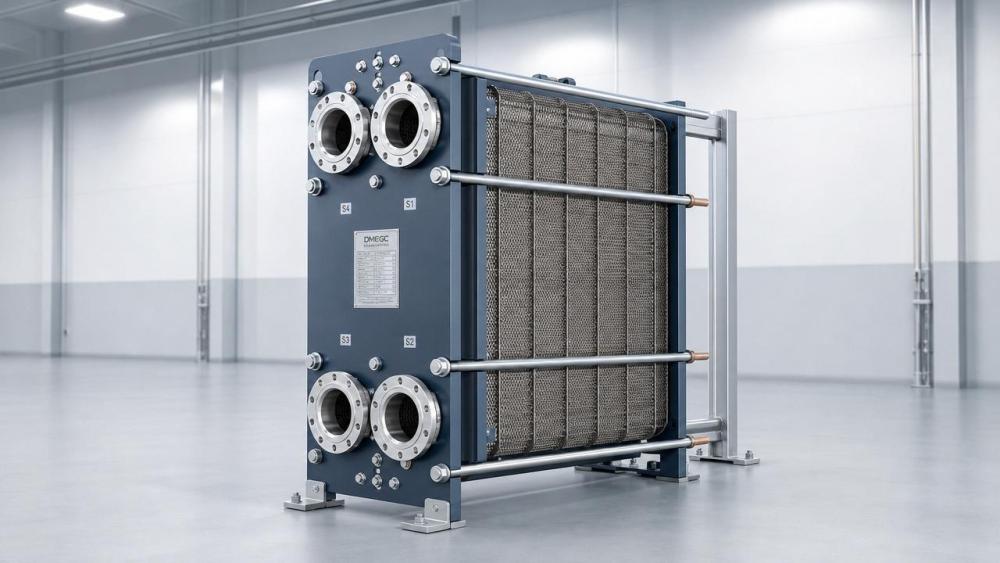
Conclusion: The adoption of ASHRAE 90.1-2025 represents a concrete regulatory inflection point for plate heat exchanger suppliers targeting the U.S. commercial HVAC market. Its significance lies less in novelty and more in enforceability: it transforms a widely referenced consensus standard into a mandatory benchmark with clear compliance deadlines and measurable parameters. For affected stakeholders, this is best understood not as a distant policy change, but as an operational deadline requiring coordinated action across engineering, testing, certification, and export documentation functions.
Source: U.S. Department of Energy (DOE) Final Rule Notice, published May 10, 2026, in the Federal Register; ASHRAE Standard 90.1-2025 (approved December 2025).
Note: State-level adoption timelines and enforcement interpretations remain subject to ongoing observation.
Related News
- When does heat recovery improve data center cooling efficiency?Author :Thermodynamics Analyst

- How Do I Verify Heat Transfer Calculations in a Supplier Quotation?Author :Thermodynamics Analyst

- How to evaluate a plate heat exchangers supplier before orderingAuthor :Thermodynamics Analyst

- EU Tightens Fatigue Checks for Plate Heat ExchangersAuthor :Thermodynamics Analyst

- EU PFAS Rule Adds New Export Filing for Cooling EquipmentAuthor :Thermodynamics Analyst

- EU EN 13445-4:2026 Adds Fatigue Report RequirementAuthor :Thermodynamics Analyst

- EU Updates EN 13445-4 for Plate ExchangersAuthor :Thermodynamics Analyst

- How to Compare Energy-Efficient Heat Exchange SolutionsAuthor :Thermodynamics Analyst

- Brazed Plate Exchanger Design: 7 Factors That Affect Heat TransferAuthor :Thermodynamics Analyst

- EU CBAM Pilot List Adds Plate ExchangersAuthor :Thermodynamics Analyst

- How Heat Exchange Systems Improve Temperature Control StabilityAuthor :Thermodynamics Analyst

- Japan to Require Efficiency Labels for Plate ExchangersAuthor :Thermodynamics Analyst

- EU REACH Adds PFAS Ban for Plate Heat ExchangersAuthor :Thermodynamics Analyst

- India Enforces BIS Rule for Plate Heat ExchangersAuthor :Thermodynamics Analyst

- DIN EN 13445-6:2026 Tightens Plate Exchanger CE RulesAuthor :Thermodynamics Analyst

- EU REACH Restricts PFAS Seals for Plate Heat ExchangersAuthor :Thermodynamics Analyst

- India Mandates BIS Certification for Imported Plate ExchangersAuthor :Thermodynamics Analyst

- Vietnam Requires QR Labels on Imported Plate Heat ExchangersAuthor :Thermodynamics Analyst

- EU EN 13445-4:2026 Tightens NDT Rules for Heat ExchangersAuthor :Thermodynamics Analyst

- EPA Clears R-1234ze(E) for Plate Exchanger SystemsAuthor :Thermodynamics Analyst
 for Plate Exchanger Systems")
- Heat Exchange Equipment Selection: Key Performance Checks Before You Compare ModelsAuthor :Thermodynamics Analyst

- ASHRAE 90.1-2026 Raises Plate Exchanger Efficiency ThresholdAuthor :Thermodynamics Analyst

- Heat Exchange Systems: How to Choose the Right SetupAuthor :Thermodynamics Analyst

- EPA SNAP 89 Takes Effect for Plate ExchangersAuthor :Thermodynamics Analyst

- How to Compare Heat Exchange Solutions for Lower Energy UseAuthor :Thermodynamics Analyst

- EPA SNAP 89 Expands Filing Rules for Plate Heat ExchangersAuthor :Thermodynamics Analyst

- EPA SNAP update adds filing rule for plate heat exchangersAuthor :Thermodynamics Analyst

- Industrial Heat Recovery: Where the Payback Is Fastest in 2026Author :Thermodynamics Analyst

- California EPR Deadline Nears for Cooling Equipment MakersAuthor :Thermodynamics Analyst

- Heat Exchanger Technology: Plate vs Shell and Tube for EfficiencyAuthor :Thermodynamics Analyst

- Industrial Heat Recovery Options for High-Temperature ProcessesAuthor :Thermodynamics Analyst

- Heat Transfer Problems in Process Lines: Causes and Practical FixesAuthor :Thermodynamics Analyst

- India Tightens Plate Exchanger Import Clearance RulesAuthor :Thermodynamics Analyst

- SABIC Methanol Force Majeure Extended to Q4 2026Author :Thermodynamics Analyst

- How to Improve Heat Exchanger Efficiency Without Major RetrofitAuthor :Thermodynamics Analyst

- Plate Heat Exchange vs Shell & Tube: Which Fits Your Process Better?Author :Thermodynamics Analyst