Global Copper Prices Stabilize After 9.3% Weekly Surge




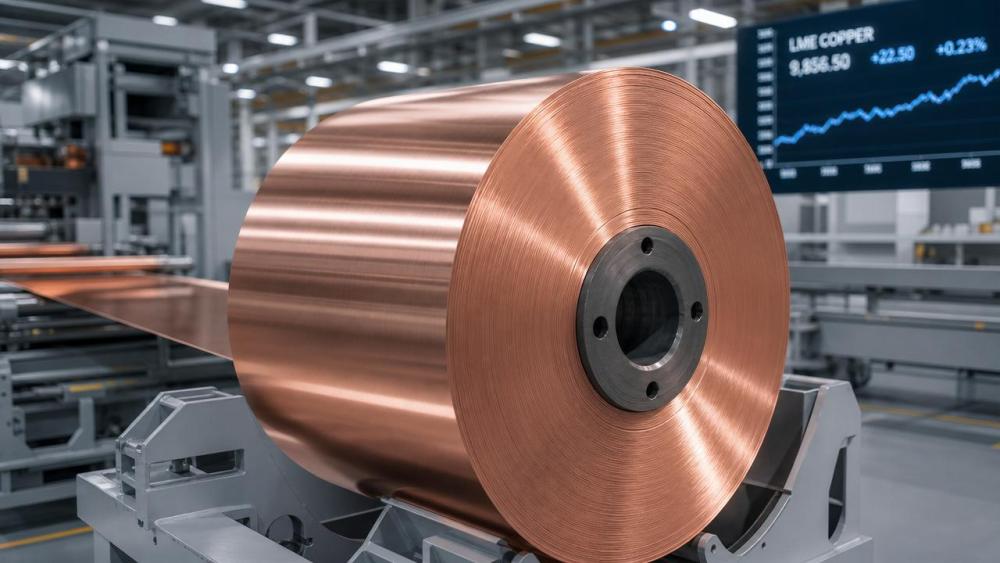
Global copper prices surged 9.3% week-on-week before stabilizing on May 20, easing short-term cost-pass-through pressure for plate heat exchanger manufacturers. However, upstream copper rolling capacity constraints continue to impact delivery timelines — particularly for microchannel plate heat exchangers — making this development highly relevant for HVAC&R equipment makers, industrial heat transfer component suppliers, and international procurement teams managing Q3 delivery commitments.
Event Overview
LME copper prices rose sharply in the preceding week, then stabilized on May 20. This stabilization has alleviated immediate cost-pressures on plate heat exchanger (PHE) exporters. Separately, domestic copper rolling mills in China report full production schedules through July, resulting in extended lead times of 12–14 weeks for key base materials used in microchannel plate heat exchangers. Overseas buyers requiring Q3 delivery are advised to issue purchase orders (POs) by early June and confirm copper price-lock clauses to mitigate risk of secondary price adjustments.
Industries Affected
Direct Exporters of Plate Heat Exchangers
These manufacturers face reduced near-term margin pressure due to copper price stabilization, but remain constrained by material availability. The delay in core substrate delivery directly limits their ability to meet committed shipment windows — especially for OEM contracts with fixed delivery dates.
Copper Material Procurement Teams (OEMs & Tier-1 Suppliers)
Procurement functions supporting HVAC&R or industrial thermal systems are impacted by both pricing volatility and physical supply tightness. While the May 20 stabilization eases budgeting uncertainty, the 12–14-week lead time for rolled copper substrates introduces scheduling inflexibility and increases exposure to late-delivery penalties.
Microchannel Heat Exchanger Fabricators
Fabricators relying on imported or domestically sourced copper strip for microchannel plates face dual constraints: rising input cost expectations ahead of potential next-cycle price moves, and inability to accelerate production due to upstream mill backlogs. This affects capacity planning and order acceptance policies for Q3 programs.
Global Supply Chain Coordinators & Sourcing Agents
Third-party sourcing entities managing cross-border PHE procurement must now reconcile stabilized LME pricing with persistent physical bottlenecks. Their role shifts toward proactive material lock-in coordination — not just price negotiation — to secure Q3 delivery assurance.
Key Considerations and Recommended Actions
Confirm copper price-lock terms before PO issuance
Given that copper price stabilization is recent and upstream capacity remains fully booked, buyers placing orders for Q3 delivery should explicitly negotiate and document copper price-lock clauses — ideally referencing LME settlement rates as of PO date — to prevent post-order upward revisions.
Prioritize PO timing over final specification sign-off
For projects with flexible engineering timelines, issuing a preliminary PO by early June — even with minor pending technical approvals — may preserve earlier position in rolling mill queues and avoid further extension beyond 14 weeks.
Map alternative material sources for non-critical applications
Where design permits, assess feasibility of copper-alloy substitutes or alternate fin configurations that reduce reliance on high-purity, thin-gauge rolled copper strip — though microchannel performance requirements often limit substitution options.
Monitor LME copper inventory levels and mill utilization reports
While May 20 marked a stabilization point, sustained low exchange inventories or unexpected mill outages could reignite volatility. Track official LME warehouse data and industry-reported rolling mill capacity utilization as leading indicators for potential renewed pressure.
Editorial Observation / Industry Perspective
This development is best understood as a temporary operational reprieve — not a structural resolution. Analysis shows the stabilization reflects short-term market rebalancing rather than improved upstream capacity. Observably, the 12–14-week delivery timeline signals that copper rolling remains the critical path bottleneck, independent of spot price movement. From an industry perspective, the event functions more as a timing signal than a pricing inflection point: it underscores that procurement agility — not just cost sensitivity — now defines competitive advantage in thermal component supply chains. Continued attention is warranted because mill lead times have not eased, and any further copper price rebound would compound existing delivery risk without additional buffer.
Conclusion
The May 20 copper price stabilization offers short-term relief for plate heat exchanger exporters and buyers, but does not resolve underlying constraints in copper rolling capacity. It is more accurately interpreted as a narrow window for proactive procurement action — rather than evidence of broader supply chain normalization. For stakeholders, the priority remains securing material allocation and contractual price protection ahead of anticipated Q3 demand peaks.
Source Attribution
Main source: Market update referencing LME copper price action on May 20 and domestic Chinese copper rolling mill lead time data. Note: Mill capacity utilization figures and future LME price trajectories remain subject to ongoing observation and are not confirmed beyond current reporting.
Ready when you are. Send us a message to get started.
Related News
- How corrugation angle affects heat transfer in plate heat exchangersAuthor :Thermodynamics Analyst

- When do plate heat exchangers suit Middle East seawater cooling?Author :Thermodynamics Analyst

- When does gasketed plate heat exchanger technology suit your process?Author :Thermodynamics Analyst

- When does heat recovery improve data center cooling efficiency?Author :Thermodynamics Analyst

- How Do I Verify Heat Transfer Calculations in a Supplier Quotation?Author :Thermodynamics Analyst

- How to evaluate a plate heat exchangers supplier before orderingAuthor :Thermodynamics Analyst

- EU Tightens Fatigue Checks for Plate Heat ExchangersAuthor :Thermodynamics Analyst

- EU PFAS Rule Adds New Export Filing for Cooling EquipmentAuthor :Thermodynamics Analyst

- EU EN 13445-4:2026 Adds Fatigue Report RequirementAuthor :Thermodynamics Analyst

- EU Updates EN 13445-4 for Plate ExchangersAuthor :Thermodynamics Analyst

- How to Compare Energy-Efficient Heat Exchange SolutionsAuthor :Thermodynamics Analyst

- Brazed Plate Exchanger Design: 7 Factors That Affect Heat TransferAuthor :Thermodynamics Analyst

- EU CBAM Pilot List Adds Plate ExchangersAuthor :Thermodynamics Analyst

- How Heat Exchange Systems Improve Temperature Control StabilityAuthor :Thermodynamics Analyst

- Japan to Require Efficiency Labels for Plate ExchangersAuthor :Thermodynamics Analyst

- EU REACH Adds PFAS Ban for Plate Heat ExchangersAuthor :Thermodynamics Analyst

- India Enforces BIS Rule for Plate Heat ExchangersAuthor :Thermodynamics Analyst

- DIN EN 13445-6:2026 Tightens Plate Exchanger CE RulesAuthor :Thermodynamics Analyst

- EU REACH Restricts PFAS Seals for Plate Heat ExchangersAuthor :Thermodynamics Analyst

- India Mandates BIS Certification for Imported Plate ExchangersAuthor :Thermodynamics Analyst

- Vietnam Requires QR Labels on Imported Plate Heat ExchangersAuthor :Thermodynamics Analyst

- EU EN 13445-4:2026 Tightens NDT Rules for Heat ExchangersAuthor :Thermodynamics Analyst

- EPA Clears R-1234ze(E) for Plate Exchanger SystemsAuthor :Thermodynamics Analyst
 for Plate Exchanger Systems")
- Heat Exchange Equipment Selection: Key Performance Checks Before You Compare ModelsAuthor :Thermodynamics Analyst

- ASHRAE 90.1-2026 Raises Plate Exchanger Efficiency ThresholdAuthor :Thermodynamics Analyst

- Heat Exchange Systems: How to Choose the Right SetupAuthor :Thermodynamics Analyst

- EPA SNAP 89 Takes Effect for Plate ExchangersAuthor :Thermodynamics Analyst

- How to Compare Heat Exchange Solutions for Lower Energy UseAuthor :Thermodynamics Analyst

- EPA SNAP 89 Expands Filing Rules for Plate Heat ExchangersAuthor :Thermodynamics Analyst

- EPA SNAP update adds filing rule for plate heat exchangersAuthor :Thermodynamics Analyst

- Industrial Heat Recovery: Where the Payback Is Fastest in 2026Author :Thermodynamics Analyst

- California EPR Deadline Nears for Cooling Equipment MakersAuthor :Thermodynamics Analyst

- Heat Exchanger Technology: Plate vs Shell and Tube for EfficiencyAuthor :Thermodynamics Analyst

- Industrial Heat Recovery Options for High-Temperature ProcessesAuthor :Thermodynamics Analyst

- Heat Transfer Problems in Process Lines: Causes and Practical FixesAuthor :Thermodynamics Analyst

- India Tightens Plate Exchanger Import Clearance RulesAuthor :Thermodynamics Analyst