ASHRAE 90.1-2025 Enforces Transient Thermal Testing for Plate Exchangers




On May 13, 2026, the American Society of Heating, Refrigerating and Air-Conditioning Engineers (ASHRAE) officially implemented the updated ASHRAE Standard 90.1-2025. This revision marks the first time plate exchangers are explicitly included in mandatory building energy modeling verification for HVACR systems in the U.S. and Canada—and introduces a new performance threshold: transient thermal response time ≤45 seconds. The change directly affects export compliance pathways for Chinese manufacturers supplying North American commercial building projects, particularly those targeting LEED-certified developments or U.S. federal procurement contracts.
Event Overview
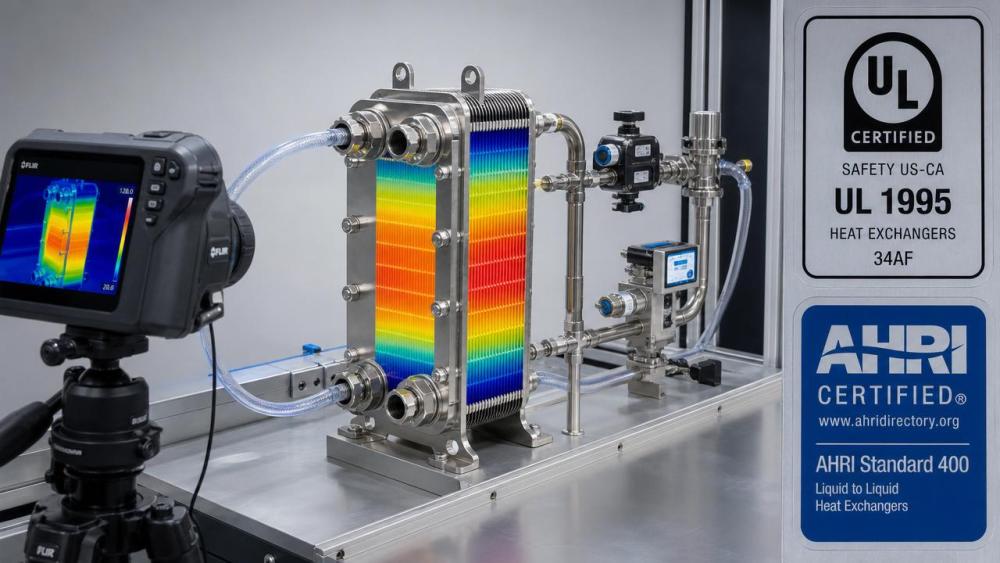
ASHRAE formally enacted Standard 90.1-2025 on May 13, 2026. Under this version, plate exchangers used in HVACR applications must now be modeled and verified within whole-building energy simulations per Appendix G. A newly codified requirement mandates that certified models demonstrate transient thermal response time of no more than 45 seconds under defined test conditions per UL 1995 (for controls-integrated units) or AHRI 400 (for standalone heat transfer devices). Units lacking certification to either standard—under the revised test protocols—are excluded from eligibility for LEED v4.1/v5 energy modeling credits and from inclusion in the U.S. General Services Administration’s (GSA) Qualified Products List (QPL).
Industries Affected
Direct Exporters
Export-oriented HVACR component suppliers—especially those shipping plate exchangers to U.S. and Canadian distributors or OEMs—now face immediate requalification timelines. Non-compliant models cannot be submitted for LEED documentation or listed in federal e-Buy portals. Impact manifests in delayed order fulfillment, contract renegotiation pressure, and potential loss of tier-1 project bids where energy modeling alignment is contractually binding.
Raw Material Suppliers
Suppliers of stainless steel grades (e.g., AISI 316), gasket elastomers (EPDM, NBR), and brazing alloys must adapt to tighter material consistency requirements. Analysis shows that achieving sub-45-second thermal response depends heavily on plate surface finish uniformity, gasket compression repeatability, and thermal mass distribution—all influenced by incoming material tolerances. Slight deviations in sheet thickness or alloy thermal diffusivity may now trigger batch-level retesting.
Manufacturing Facilities
Production lines must integrate new validation steps: real-time infrared thermography during dynamic load cycling, data logging synchronized with flow/temperature transients, and post-test correlation against ASHRAE-specified boundary conditions. Observation indicates that facilities without existing UL or AHRI-accredited test labs will require third-party lab partnerships—adding lead time and cost per SKU, especially for multi-plate configurations.
Supply Chain Service Providers
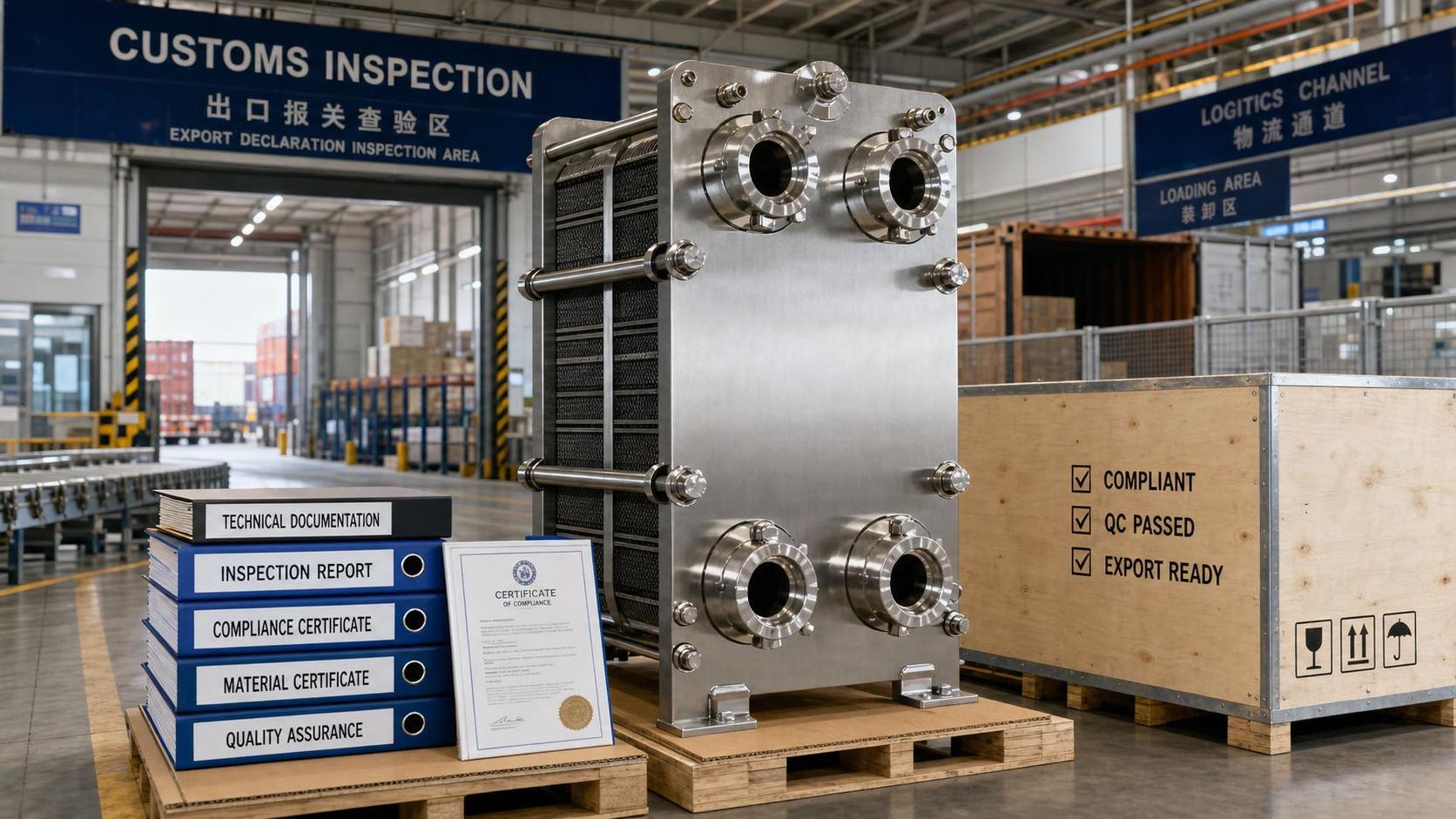
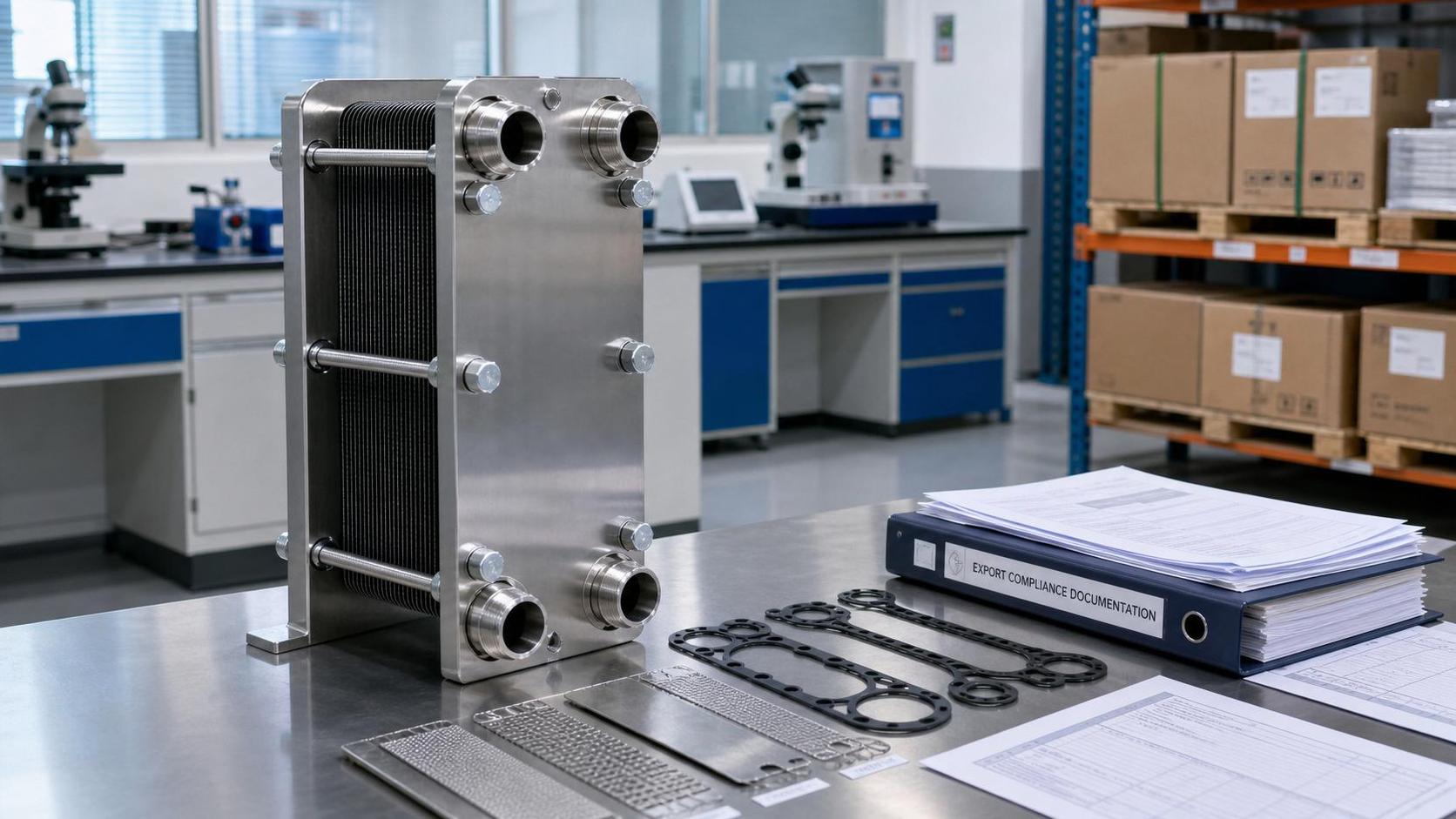
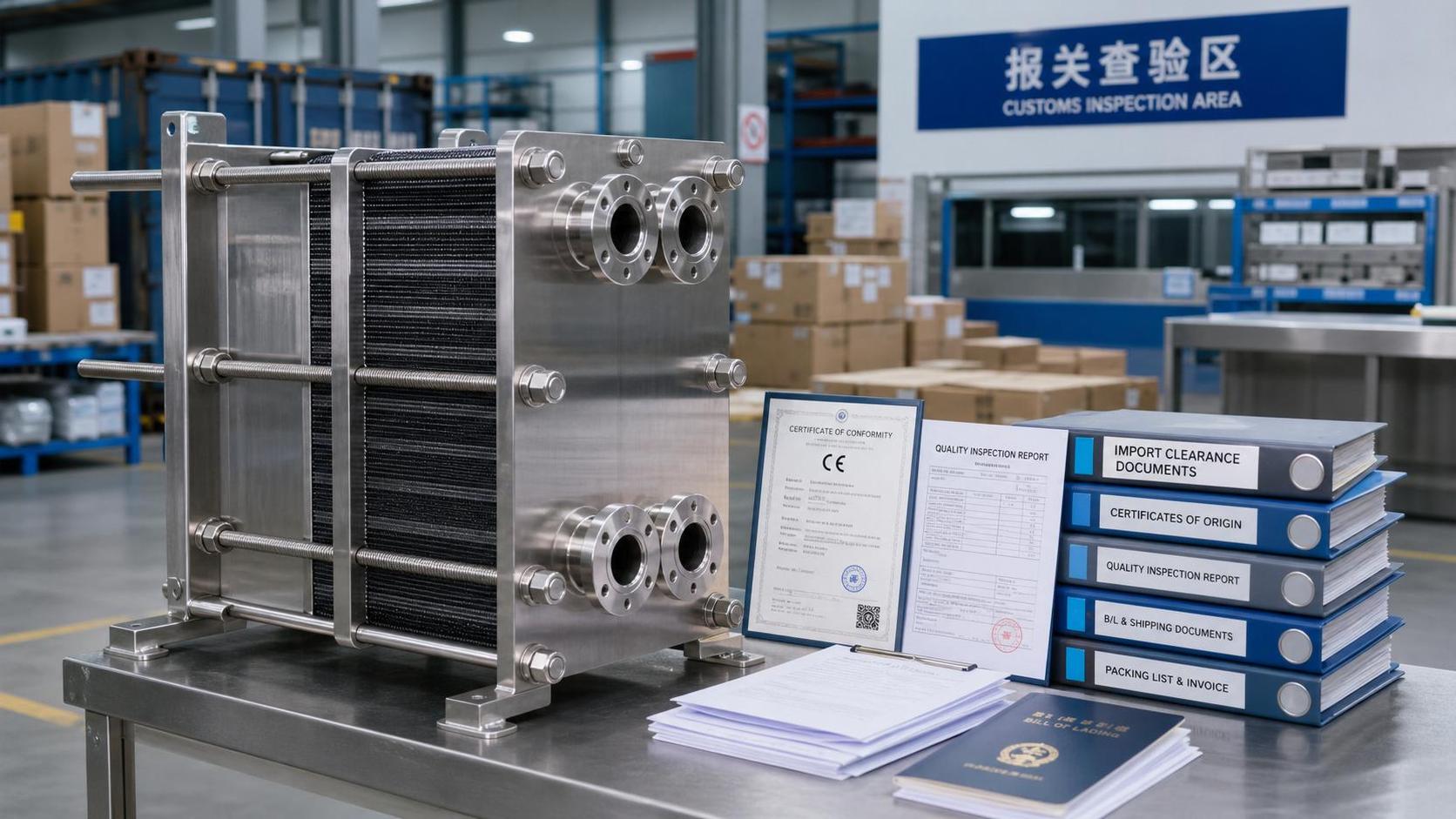
Certification consultants, testing laboratories, and customs compliance platforms must update technical documentation templates, harmonize tariff codes (HTS 8419.89.00 for non-electric heat exchangers), and revise pre-shipment audit checklists to include transient response verification reports. Current gaps exist in standardized interpretation of ‘transient start-up condition’—a point noted across multiple accredited labs during inter-lab comparison trials.
Key Actions for Stakeholders
Verify Existing Model Certification Scope
Confirm whether current UL 1995 or AHRI 400 certifications cover the *revised* transient thermal response protocol—not just steady-state efficiency. Many legacy certificates reference earlier editions and exclude dynamic testing clauses introduced in 2025.
Engage Early with Accredited Labs
Priority access to UL, Intertek, or CSA labs reporting capacity constraints for transient thermal testing. Lead times for AHRI 400 add-on testing now average 8–12 weeks; scheduling before Q3 2026 is advised to avoid backlog delays ahead of peak LEED submission cycles.
Update Technical Documentation for North America
Revise product datasheets to explicitly state measured transient response time (in seconds), test standard edition (e.g., AHRI 400-2025), and simulation-ready model parameters (e.g., CFD-derived capacitance matrix for EnergyPlus input). Omission risks rejection during LEED reviewer technical queries.
Assess Internal Modeling Capability
Evaluate engineering team capacity to generate ASHRAE Appendix G-compliant energy model inputs—including time-step resolution, control logic integration, and boundary condition mapping. External modeling support may be needed for complex multi-circuit plate exchanger configurations.
Editorial Perspective / Industry Observation
This update is better understood as a systemic signal—not just a compliance hurdle. Observably, ASHRAE is shifting focus from static efficiency metrics toward dynamic system interoperability, reflecting broader trends in grid-responsive buildings and demand-flexible HVAC. From an industry perspective, the 45-second threshold appears calibrated to align with typical chiller plant ramp rates and VFD-driven pump response windows—not arbitrary. That said, the absence of harmonized test setup guidance across labs suggests early-stage implementation friction remains likely through mid-2027.
Conclusion
The 90.1-2025 enforcement represents a structural inflection point: plate exchangers have transitioned from passive components to active, modelable system elements in North American energy policy frameworks. For exporters, this demands deeper engineering engagement—not just certification chasing. A rational conclusion is that competitive advantage will increasingly accrue to firms embedding transient performance validation into R&D workflows, rather than treating it as a final gate.
Source Attribution
Primary source: ASHRAE Standard 90.1-2025, published November 2025; effective May 13, 2026 (Section 6.4.3.5, Appendix G Table G3.1.2.2, Annex L). Additional references: UL 1995-2025 Edition 4, AHRI Standard 400-2025. Note: AHRI is expected to release official interpretation guidance on transient test boundary definitions in Q2 2026—this remains under observation.
Related News
- When does heat recovery improve data center cooling efficiency?Author :Thermodynamics Analyst

- How Do I Verify Heat Transfer Calculations in a Supplier Quotation?Author :Thermodynamics Analyst

- How to evaluate a plate heat exchangers supplier before orderingAuthor :Thermodynamics Analyst

- EU Tightens Fatigue Checks for Plate Heat ExchangersAuthor :Thermodynamics Analyst

- EU PFAS Rule Adds New Export Filing for Cooling EquipmentAuthor :Thermodynamics Analyst

- EU EN 13445-4:2026 Adds Fatigue Report RequirementAuthor :Thermodynamics Analyst

- EU Updates EN 13445-4 for Plate ExchangersAuthor :Thermodynamics Analyst

- How to Compare Energy-Efficient Heat Exchange SolutionsAuthor :Thermodynamics Analyst

- Brazed Plate Exchanger Design: 7 Factors That Affect Heat TransferAuthor :Thermodynamics Analyst

- EU CBAM Pilot List Adds Plate ExchangersAuthor :Thermodynamics Analyst

- How Heat Exchange Systems Improve Temperature Control StabilityAuthor :Thermodynamics Analyst

- Japan to Require Efficiency Labels for Plate ExchangersAuthor :Thermodynamics Analyst

- EU REACH Adds PFAS Ban for Plate Heat ExchangersAuthor :Thermodynamics Analyst

- India Enforces BIS Rule for Plate Heat ExchangersAuthor :Thermodynamics Analyst

- DIN EN 13445-6:2026 Tightens Plate Exchanger CE RulesAuthor :Thermodynamics Analyst

- EU REACH Restricts PFAS Seals for Plate Heat ExchangersAuthor :Thermodynamics Analyst

- India Mandates BIS Certification for Imported Plate ExchangersAuthor :Thermodynamics Analyst

- Vietnam Requires QR Labels on Imported Plate Heat ExchangersAuthor :Thermodynamics Analyst

- EU EN 13445-4:2026 Tightens NDT Rules for Heat ExchangersAuthor :Thermodynamics Analyst

- EPA Clears R-1234ze(E) for Plate Exchanger SystemsAuthor :Thermodynamics Analyst
 for Plate Exchanger Systems")
- Heat Exchange Equipment Selection: Key Performance Checks Before You Compare ModelsAuthor :Thermodynamics Analyst

- ASHRAE 90.1-2026 Raises Plate Exchanger Efficiency ThresholdAuthor :Thermodynamics Analyst

- Heat Exchange Systems: How to Choose the Right SetupAuthor :Thermodynamics Analyst

- EPA SNAP 89 Takes Effect for Plate ExchangersAuthor :Thermodynamics Analyst

- How to Compare Heat Exchange Solutions for Lower Energy UseAuthor :Thermodynamics Analyst

- EPA SNAP 89 Expands Filing Rules for Plate Heat ExchangersAuthor :Thermodynamics Analyst

- EPA SNAP update adds filing rule for plate heat exchangersAuthor :Thermodynamics Analyst

- Industrial Heat Recovery: Where the Payback Is Fastest in 2026Author :Thermodynamics Analyst

- California EPR Deadline Nears for Cooling Equipment MakersAuthor :Thermodynamics Analyst

- Heat Exchanger Technology: Plate vs Shell and Tube for EfficiencyAuthor :Thermodynamics Analyst

- Industrial Heat Recovery Options for High-Temperature ProcessesAuthor :Thermodynamics Analyst

- Heat Transfer Problems in Process Lines: Causes and Practical FixesAuthor :Thermodynamics Analyst

- India Tightens Plate Exchanger Import Clearance RulesAuthor :Thermodynamics Analyst

- SABIC Methanol Force Majeure Extended to Q4 2026Author :Thermodynamics Analyst

- How to Improve Heat Exchanger Efficiency Without Major RetrofitAuthor :Thermodynamics Analyst

- Plate Heat Exchange vs Shell & Tube: Which Fits Your Process Better?Author :Thermodynamics Analyst