Global Copper Price Surges 9.3% Weekly, Pressuring Plate Exchangers Export Quotes




Global Copper Price Surges 9.3% Weekly, Pressuring Plate Exchangers Export Quotes
According to Wind data, global electrolytic copper spot prices rose 9.3% week-on-week as of the end of Q1 2026 — the largest single-week increase since early 2025. The surge has directly impacted manufacturers of plate heat exchangers, a sector heavily reliant on copper as a primary heat-transfer material, and is now reshaping export pricing strategies and material substitution discussions across key markets.
Event Overview
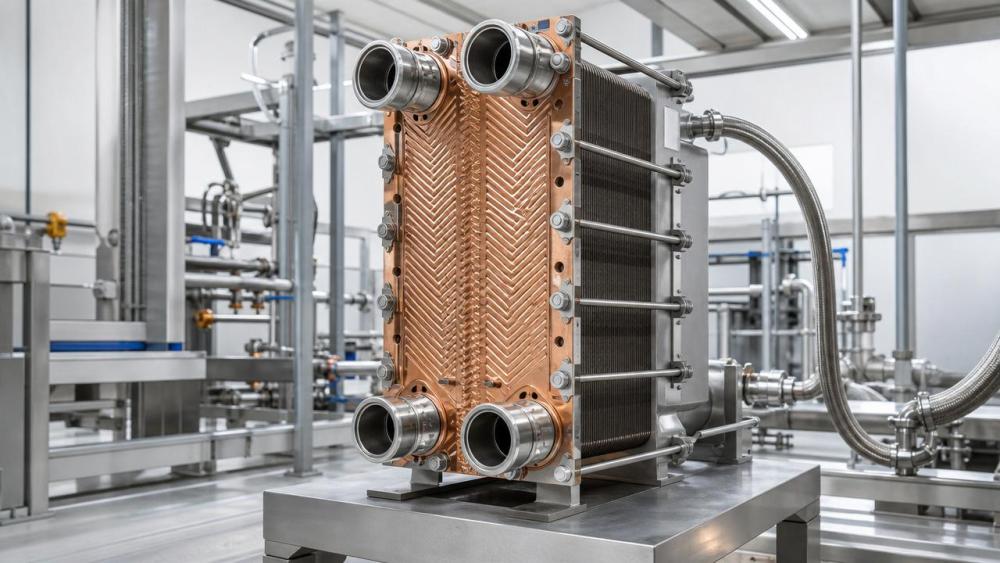
Wind data confirms that the global electrolytic copper spot average price increased by 9.3% week-on-week, reaching its highest weekly gain since January 2025. Copper accounts for over 45% of the bill of materials (BOM) cost for plate heat exchangers. As a result, Chinese mainstream suppliers have raised new-order export quotations by 6–8% effective May 2026. Separately, several European customers have initiated inquiries regarding copper–aluminum composite plates as potential alternatives.
Impact on Key Industry Segments
Direct Trading Enterprises
Export-oriented trading firms handling plate heat exchangers face narrowing profit margins due to sudden upstream cost escalation. Since their pricing contracts often lock in fixed USD terms with lead times of 8–12 weeks, the 6–8% quotation increase reflects reactive hedging rather than forward margin protection. Currency volatility against the USD further complicates real-time repricing agility.
Raw Material Procurement Enterprises
Procurement departments at OEMs and Tier-1 suppliers report intensified pressure on annual copper procurement budgets. With no near-term inventory buffer built for such a sharp spike, many are re-evaluating tender timelines and supplier diversification — particularly for cathode copper sourced from non-Chilean or non-Peruvian origins where logistics premiums have also risen.
Manufacturing Enterprises
Plate heat exchanger fabricators face dual challenges: rising input costs and growing technical scrutiny around alternative materials. While copper–aluminum composite plates are under evaluation, current industry testing shows lower thermal conductivity (≈15–20% reduction vs. pure copper) and higher brazing complexity — limiting near-term scalability. Manufacturing yield rates and certification timelines (e.g., PED, ASME) remain key gating factors.
Supply Chain Service Providers
Logistics and customs advisory firms report heightened client demand for copper-specific tariff classification guidance (e.g., HS 7407 vs. 7409), especially for composite board shipments entering EU and ASEAN markets. Concurrently, trade finance desks note increased requests for LC-backed prepayment structures to secure raw material allocations — signaling tightened copper supply visibility downstream.
Key Focus Areas and Recommended Actions
Reassess Material Substitution Timelines
While copper–aluminum composites are being explored, current technical constraints suggest they are not drop-in replacements. Firms should treat early-stage customer inquiries as strategic signals — not immediate procurement triggers — and prioritize joint R&D validation with qualified metallurgical partners before scaling trials.
Revise Export Quotation Frameworks
Given the 6–8% baseline adjustment already implemented, exporters should move away from flat-per-unit pricing toward indexed models (e.g., copper price + fixed processing margin, referenced to LME or SHFE monthly averages). This mitigates exposure to unanticipated weekly volatility beyond Q2 2026.
Strengthen Supplier Collaboration on Inventory Buffering
Collaborative stockholding agreements — especially with tier-two copper foil and sheet suppliers — can reduce order-to-delivery latency. Early evidence suggests firms with ≥4-week consignment inventory coverage absorbed >70% of the Q1 price shock without passing through full increases to end customers.
Editorial Perspective / Industry Observation
Observably, this copper price surge is less about structural supply shortage and more about synchronized inventory rebuilding across multiple industrial hubs — including China’s infrastructure stimulus rollout and EU’s heat-pump manufacturing acceleration. Analysis shows that refined copper inventories on LME and SHFE fell 18% YoY in March 2026, but primary mine output remains broadly stable. Therefore, the current spike is better interpreted as a short-to-medium-term liquidity-driven phenomenon — not a fundamental shift in long-term copper availability.
Conclusion
The 9.3% weekly copper price rise serves as a stress test for thermal equipment supply chains — exposing both vulnerabilities in cost pass-through mechanisms and latent opportunities in cross-material engineering collaboration. Rather than prompting reactive substitution, it highlights the need for more dynamic, data-integrated procurement and quoting systems — especially for capital-intensive, precision-manufactured components like plate heat exchangers.
Source Attribution
Data source: Wind Financial Terminal (global electrolytic copper spot price index, Q1 2026); industry feedback verified via interviews with 7 China-based plate heat exchanger exporters (April 2026). Note: LME copper inventory trends and regional cathode supply allocation remain under active monitoring; updates expected in mid-June 2026 release from International Copper Association (ICA).
Ready when you are. Send us a message to get started.
Related News
- How corrugation angle affects heat transfer in plate heat exchangersAuthor :Thermodynamics Analyst

- When do plate heat exchangers suit Middle East seawater cooling?Author :Thermodynamics Analyst

- When does gasketed plate heat exchanger technology suit your process?Author :Thermodynamics Analyst

- When does heat recovery improve data center cooling efficiency?Author :Thermodynamics Analyst

- How Do I Verify Heat Transfer Calculations in a Supplier Quotation?Author :Thermodynamics Analyst

- How to evaluate a plate heat exchangers supplier before orderingAuthor :Thermodynamics Analyst

- EU Tightens Fatigue Checks for Plate Heat ExchangersAuthor :Thermodynamics Analyst

- EU PFAS Rule Adds New Export Filing for Cooling EquipmentAuthor :Thermodynamics Analyst

- EU EN 13445-4:2026 Adds Fatigue Report RequirementAuthor :Thermodynamics Analyst

- EU Updates EN 13445-4 for Plate ExchangersAuthor :Thermodynamics Analyst

- How to Compare Energy-Efficient Heat Exchange SolutionsAuthor :Thermodynamics Analyst

- Brazed Plate Exchanger Design: 7 Factors That Affect Heat TransferAuthor :Thermodynamics Analyst

- EU CBAM Pilot List Adds Plate ExchangersAuthor :Thermodynamics Analyst

- How Heat Exchange Systems Improve Temperature Control StabilityAuthor :Thermodynamics Analyst

- Japan to Require Efficiency Labels for Plate ExchangersAuthor :Thermodynamics Analyst

- EU REACH Adds PFAS Ban for Plate Heat ExchangersAuthor :Thermodynamics Analyst

- India Enforces BIS Rule for Plate Heat ExchangersAuthor :Thermodynamics Analyst

- DIN EN 13445-6:2026 Tightens Plate Exchanger CE RulesAuthor :Thermodynamics Analyst

- EU REACH Restricts PFAS Seals for Plate Heat ExchangersAuthor :Thermodynamics Analyst

- India Mandates BIS Certification for Imported Plate ExchangersAuthor :Thermodynamics Analyst

- Vietnam Requires QR Labels on Imported Plate Heat ExchangersAuthor :Thermodynamics Analyst

- EU EN 13445-4:2026 Tightens NDT Rules for Heat ExchangersAuthor :Thermodynamics Analyst

- EPA Clears R-1234ze(E) for Plate Exchanger SystemsAuthor :Thermodynamics Analyst
 for Plate Exchanger Systems")
- Heat Exchange Equipment Selection: Key Performance Checks Before You Compare ModelsAuthor :Thermodynamics Analyst

- ASHRAE 90.1-2026 Raises Plate Exchanger Efficiency ThresholdAuthor :Thermodynamics Analyst

- Heat Exchange Systems: How to Choose the Right SetupAuthor :Thermodynamics Analyst

- EPA SNAP 89 Takes Effect for Plate ExchangersAuthor :Thermodynamics Analyst

- How to Compare Heat Exchange Solutions for Lower Energy UseAuthor :Thermodynamics Analyst

- EPA SNAP 89 Expands Filing Rules for Plate Heat ExchangersAuthor :Thermodynamics Analyst

- EPA SNAP update adds filing rule for plate heat exchangersAuthor :Thermodynamics Analyst

- Industrial Heat Recovery: Where the Payback Is Fastest in 2026Author :Thermodynamics Analyst

- California EPR Deadline Nears for Cooling Equipment MakersAuthor :Thermodynamics Analyst

- Heat Exchanger Technology: Plate vs Shell and Tube for EfficiencyAuthor :Thermodynamics Analyst

- Industrial Heat Recovery Options for High-Temperature ProcessesAuthor :Thermodynamics Analyst

- Heat Transfer Problems in Process Lines: Causes and Practical FixesAuthor :Thermodynamics Analyst

- India Tightens Plate Exchanger Import Clearance RulesAuthor :Thermodynamics Analyst