Railway Investment Surges; Plate Exchangers See Accelerated Domestic Adoption




China’s railway infrastructure push in early 2026 has triggered a notable shift in procurement dynamics for thermal management components—particularly plate heat exchangers—amid expanding cold-chain logistics capacity. The policy-driven capital deployment, confirmed on 2026-05-15, directly impacts equipment manufacturers, logistics integrators, and export-oriented engineering contractors operating across the rail-cold-chain nexus.
Event Overview
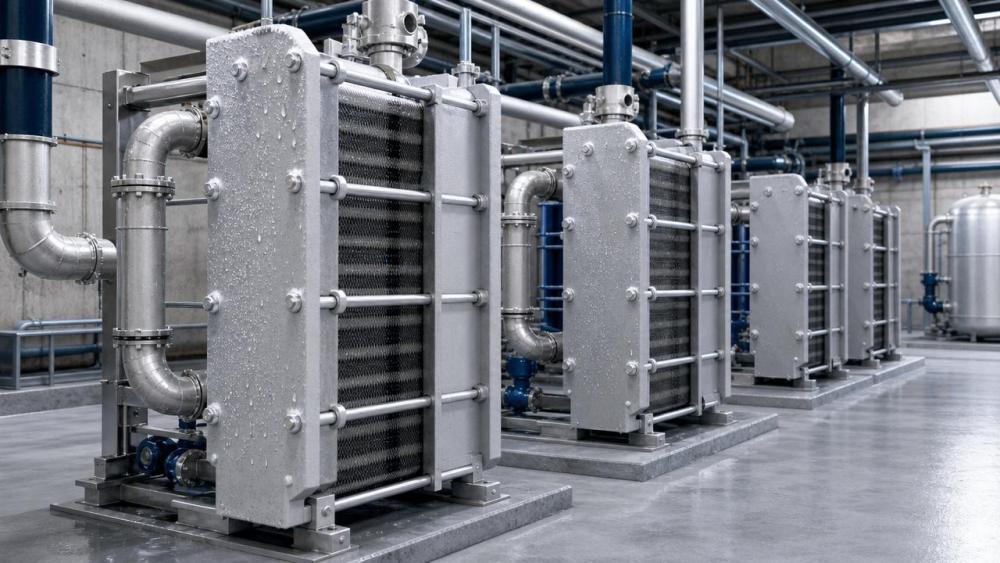
In January–April 2026, national railway fixed-asset investment totaled RMB 200.8 billion, up 3.2% year-on-year. Eight regional cold-chain hub bases—in Zhengzhou, Chengdu, Xi’an, and five other cities—commenced full-scale construction. These hubs integrate low-temperature logistics centers, driving concentrated procurement of plate heat exchangers. Domestically developed wide-channel, freeze-resistant plate exchangers achieved a winning bid rate exceeding 68% in associated tenders. This trend signals growing technical readiness and scalable delivery capability for overseas rail-linked cold-chain projects—including the China–Laos–Thailand cold-chain corridor.
Industries Affected
Direct Trading Enterprises
Import/export trading firms specializing in HVACR (heating, ventilation, air conditioning, and refrigeration) equipment face recalibrated demand signals: domestic tender volumes now prioritize performance under sub-zero operational conditions and rapid installation compatibility with modular cold-chain facilities. This shifts pricing power toward suppliers with certified cold-weather validation—not just CE or ASME marks—and compresses lead-time expectations.
Raw Material Procurement Enterprises
Suppliers of titanium alloys, stainless steel grades (e.g., AISI 316L), and specialized gasket elastomers (e.g., EPDM variants rated to −40°C) are seeing revised order profiles. Demand is no longer driven solely by volume but by traceability requirements tied to rail infrastructure certification standards (e.g., TB/T 3479–2025). Shorter batch cycles and stricter mill-test report mandates are emerging as operational constraints.
Manufacturing Enterprises
Plate exchanger OEMs must now align production planning with two parallel tracks: (1) domestic hub projects requiring rapid deployment and field-serviceable designs, and (2) export-bound units needing dual compliance—both Chinese railway cold-chain specifications and international interoperability protocols (e.g., UIC 564-2 for rolling stock thermal systems). Capacity allocation and QA protocol harmonization have become strategic bottlenecks.
Supply Chain Service Providers
Third-party logistics and commissioning service providers supporting cold-chain hub rollout report increased requests for integrated thermal system commissioning—including pressure decay testing, glycol loop balancing, and frost-cycle endurance verification. Their scope now extends beyond equipment delivery into performance handover under real ambient conditions—a shift requiring certified cold-chain commissioning personnel and calibrated mobile test rigs.
Key Considerations and Recommended Actions
Monitor Tender Clauses for Cold-Weather Validation Requirements
Recent hub-related tenders explicitly reference test protocols under sustained −25°C ambient and cyclic defrost conditions. Firms should audit existing product certifications against these newly emphasized benchmarks—not just nominal temperature ratings.
Assess Supply Chain Resilience for Dual-Certification Components
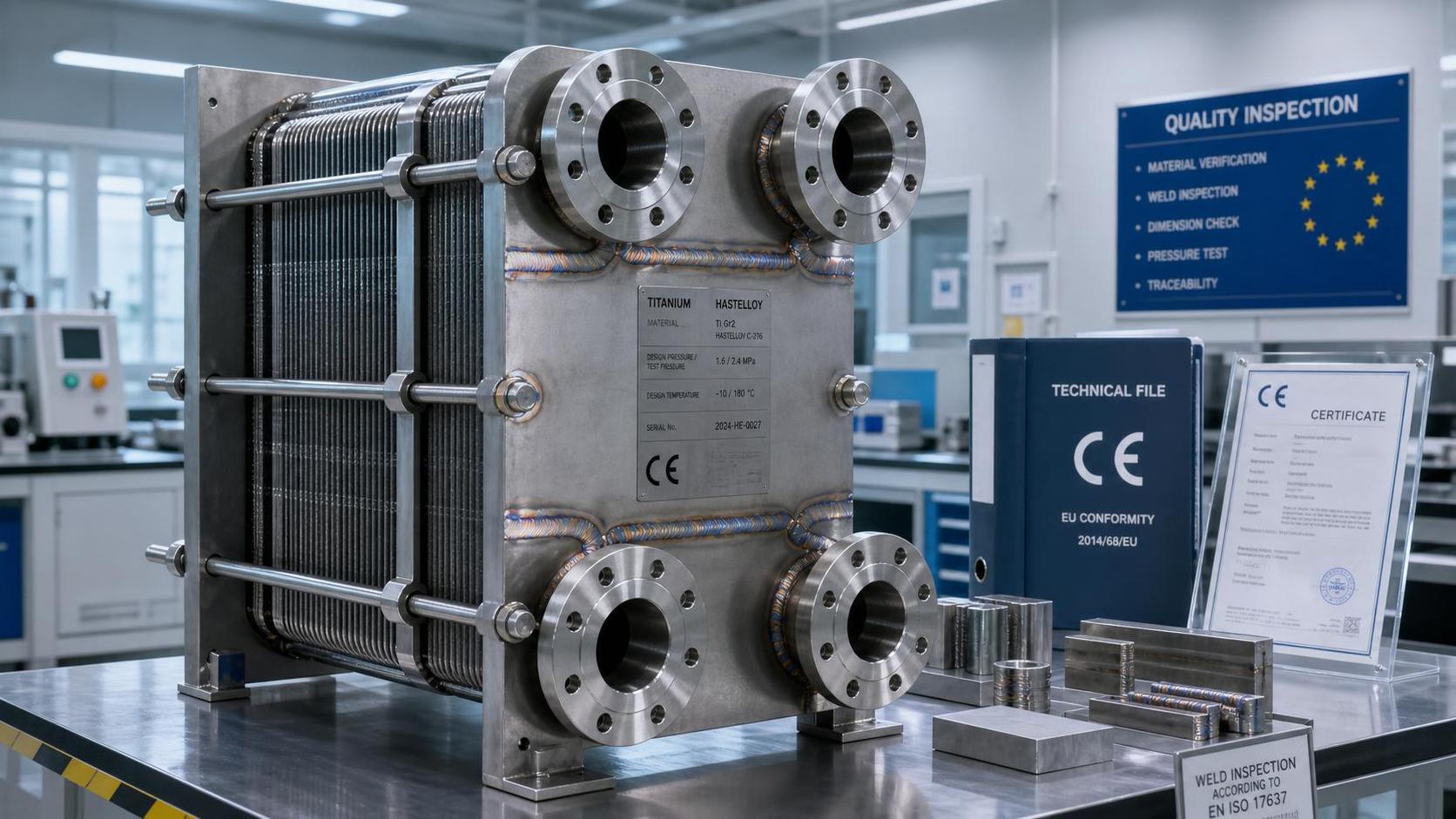
Export-ready plate exchangers increasingly require concurrent compliance with both GB/T 16409 (Chinese plate exchanger standard) and EN 13349 (European heat exchanger safety). Manufacturers should map material sourcing, weld procedure qualifications, and documentation workflows to avoid certification delays.
Evaluate Commissioning Partnership Models
With rail-cold-chain projects demanding verified on-site thermal performance—not just factory acceptance tests—OEMs and integrators should formalize partnerships with accredited commissioning specialists capable of delivering UIC-aligned cold-loop validation reports.
Editorial Perspective / Industry Observation
Observably, the 2026 railway investment surge is not merely about track mileage—it functions as a de facto technology accelerator for mission-critical cold-chain subsystems. Analysis shows that the >68% domestic win rate for advanced plate exchangers reflects less a price advantage and more a convergence of localized R&D responsiveness, regulatory familiarity, and faster iteration cycles. From an industry perspective, this signals a maturing domestic ecosystem where component-level innovation is now tightly coupled with infrastructure program timelines—rather than trailing them. Current evidence does not support broad substitution across all rail thermal applications, but it does indicate a structural inflection point for cold-chain-specific heat transfer solutions.
Conclusion
This development is best understood not as a temporary procurement spike, but as an institutional signal: China’s rail cold-chain expansion is establishing new performance baselines for thermal equipment in extreme-condition logistics. For global suppliers, it underscores the growing weight of localized application experience—especially in freeze-prone environments—as a non-negotiable competitive differentiator.
Source Attribution
Data sourced from the National Railway Administration of China (2026 Q1 Infrastructure Investment Bulletin) and China State Railway Group Co., Ltd. Tender Portal (Hub Base Package #CCHB-2026-01 through #CCHB-2026-08). Note: Tender award details and bid-rate statistics remain subject to official audit release; ongoing monitoring of follow-up contracts for Phase II hub integration (scheduled Q3 2026) is recommended.
Ready when you are. Send us a message to get started.
Related News
- How corrugation angle affects heat transfer in plate heat exchangersAuthor :Thermodynamics Analyst

- When do plate heat exchangers suit Middle East seawater cooling?Author :Thermodynamics Analyst

- When does gasketed plate heat exchanger technology suit your process?Author :Thermodynamics Analyst

- When does heat recovery improve data center cooling efficiency?Author :Thermodynamics Analyst

- How Do I Verify Heat Transfer Calculations in a Supplier Quotation?Author :Thermodynamics Analyst

- How to evaluate a plate heat exchangers supplier before orderingAuthor :Thermodynamics Analyst

- EU Tightens Fatigue Checks for Plate Heat ExchangersAuthor :Thermodynamics Analyst

- EU PFAS Rule Adds New Export Filing for Cooling EquipmentAuthor :Thermodynamics Analyst

- EU EN 13445-4:2026 Adds Fatigue Report RequirementAuthor :Thermodynamics Analyst

- EU Updates EN 13445-4 for Plate ExchangersAuthor :Thermodynamics Analyst

- How to Compare Energy-Efficient Heat Exchange SolutionsAuthor :Thermodynamics Analyst

- Brazed Plate Exchanger Design: 7 Factors That Affect Heat TransferAuthor :Thermodynamics Analyst

- EU CBAM Pilot List Adds Plate ExchangersAuthor :Thermodynamics Analyst

- How Heat Exchange Systems Improve Temperature Control StabilityAuthor :Thermodynamics Analyst

- Japan to Require Efficiency Labels for Plate ExchangersAuthor :Thermodynamics Analyst

- EU REACH Adds PFAS Ban for Plate Heat ExchangersAuthor :Thermodynamics Analyst

- India Enforces BIS Rule for Plate Heat ExchangersAuthor :Thermodynamics Analyst

- DIN EN 13445-6:2026 Tightens Plate Exchanger CE RulesAuthor :Thermodynamics Analyst

- EU REACH Restricts PFAS Seals for Plate Heat ExchangersAuthor :Thermodynamics Analyst

- India Mandates BIS Certification for Imported Plate ExchangersAuthor :Thermodynamics Analyst

- Vietnam Requires QR Labels on Imported Plate Heat ExchangersAuthor :Thermodynamics Analyst

- EU EN 13445-4:2026 Tightens NDT Rules for Heat ExchangersAuthor :Thermodynamics Analyst

- EPA Clears R-1234ze(E) for Plate Exchanger SystemsAuthor :Thermodynamics Analyst
 for Plate Exchanger Systems")
- Heat Exchange Equipment Selection: Key Performance Checks Before You Compare ModelsAuthor :Thermodynamics Analyst

- ASHRAE 90.1-2026 Raises Plate Exchanger Efficiency ThresholdAuthor :Thermodynamics Analyst

- Heat Exchange Systems: How to Choose the Right SetupAuthor :Thermodynamics Analyst

- EPA SNAP 89 Takes Effect for Plate ExchangersAuthor :Thermodynamics Analyst

- How to Compare Heat Exchange Solutions for Lower Energy UseAuthor :Thermodynamics Analyst

- EPA SNAP 89 Expands Filing Rules for Plate Heat ExchangersAuthor :Thermodynamics Analyst

- EPA SNAP update adds filing rule for plate heat exchangersAuthor :Thermodynamics Analyst

- Industrial Heat Recovery: Where the Payback Is Fastest in 2026Author :Thermodynamics Analyst

- California EPR Deadline Nears for Cooling Equipment MakersAuthor :Thermodynamics Analyst

- Heat Exchanger Technology: Plate vs Shell and Tube for EfficiencyAuthor :Thermodynamics Analyst

- Industrial Heat Recovery Options for High-Temperature ProcessesAuthor :Thermodynamics Analyst

- Heat Transfer Problems in Process Lines: Causes and Practical FixesAuthor :Thermodynamics Analyst

- India Tightens Plate Exchanger Import Clearance RulesAuthor :Thermodynamics Analyst