



ASHRAE 90.1-2025 Enforces Transient Thermal Response Test for Plate Exchangers




ASHRAE Standard 90.1-2025 entered into mandatory effect on May 15, 2026, introducing a new transient thermal response requirement (≤120 seconds) for plate heat exchangers under ANSI/ASHRAE Standard 135-2025 Annex D. This change directly affects manufacturers and exporters of plate heat exchangers targeting the U.S. federal procurement market and Canada’s NRCan energy efficiency registration program — collectively representing approximately 37% of China’s plate exchanger export volume.
Event Overview
The American Society of Heating, Refrigerating and Air-Conditioning Engineers (ASHRAE) confirmed that ASHRAE Standard 90.1-2025 became enforceable on May 15, 2026. A newly added requirement in Annex D of ANSI/ASHRAE Standard 135-2025 mandates that plate heat exchangers must demonstrate a transient thermal response time of no more than 120 seconds. Non-compliant units are excluded from the U.S. General Services Administration (GSA) Federal Supply Schedule and Canada’s Natural Resources Canada (NRCan) Energy Efficiency Registration Directory.
Industries Affected
Direct Exporters and Trade Enterprises
These enterprises face immediate eligibility barriers: products without verified compliance cannot be listed in U.S. federal procurement channels or registered with NRCan. Since ~37% of China’s plate exchanger exports target these regulated markets, shipment delays, contract renegotiations, or loss of tender qualification may occur for non-tested units.
Manufacturers and OEMs
Manufacturers must now integrate transient thermal response testing into their product validation workflow. The requirement applies to all new submittals after May 15, 2026; legacy certifications under earlier versions of ASHRAE 90.1 do not grandfather this test. Production lines, control logic, and sensor calibration may require verification or adjustment to meet the ≤120-second threshold.
Testing and Certification Service Providers
Laboratories accredited to perform ANSI/ASHRAE 135-2025 Annex D testing are now essential partners. Demand for capacity in transient thermal performance evaluation is expected to rise, particularly among labs recognized by both U.S. Department of Energy (DOE) and NRCan. Lead times for third-party validation may extend as adoption scales.
Supply Chain and Component Suppliers
Suppliers of gaskets, plates, flow distributors, and control valves may see revised technical specifications from OEMs — especially where dynamic response depends on material thermal inertia, sealing integrity under rapid load shifts, or actuator speed. No new material standard is mandated, but functional compatibility with transient testing conditions is now a de facto design constraint.
Key Considerations and Recommended Actions
Monitor official implementation guidance from GSA and NRCan
While ASHRAE 90.1-2025 is effective, federal agencies and Canadian regulators may issue supplemental enforcement bulletins, acceptable test protocols, or transitional allowances. Direct exporters should subscribe to GSA’s Federal Acquisition Regulation (FAR) updates and NRCan’s Energy Efficiency Regulations notices.
Prioritize testing for high-volume or federally specified models
Not all plate exchanger SKUs require immediate retesting. Focus first on models already listed in GSA Advantage! or previously submitted to NRCan. Units sold exclusively into unregulated commercial sectors (e.g., non-federal industrial plants in the U.S.) are not subject to this requirement — differentiation by application segment is operationally critical.
Distinguish between policy signal and operational impact
The requirement applies only to new submissions and contracts issued on or after May 15, 2026. Existing contracts awarded under prior standards remain valid. However, renewal bids or follow-on orders may trigger revalidation — procurement teams should review contract clauses related to specification currency and compliance recertification triggers.
Prepare documentation and lab coordination in advance
ANSI/ASHRAE 135-2025 Annex D requires specific instrumentation, boundary conditions, and data logging intervals. Manufacturers should confirm lab readiness, secure test slots early, and align internal engineering documentation (e.g., control logic schematics, thermal mass calculations) to support test interpretation and auditability.
Editorial Perspective / Industry Observation
Observably, this update signals a shift toward dynamic performance criteria — moving beyond steady-state efficiency metrics to include system responsiveness under real-world load fluctuations. Analysis shows it reflects growing emphasis on grid-interactive building systems and demand-flexible HVAC equipment in U.S. and Canadian decarbonization roadmaps. From an industry perspective, this is less a one-time compliance hurdle and more an indicator of broader regulatory trajectory: future revisions may extend transient requirements to other heat transfer equipment categories. Current enforcement remains narrowly scoped to plate exchangers under federal and NRCan-regulated procurement — but the precedent is now formally established.
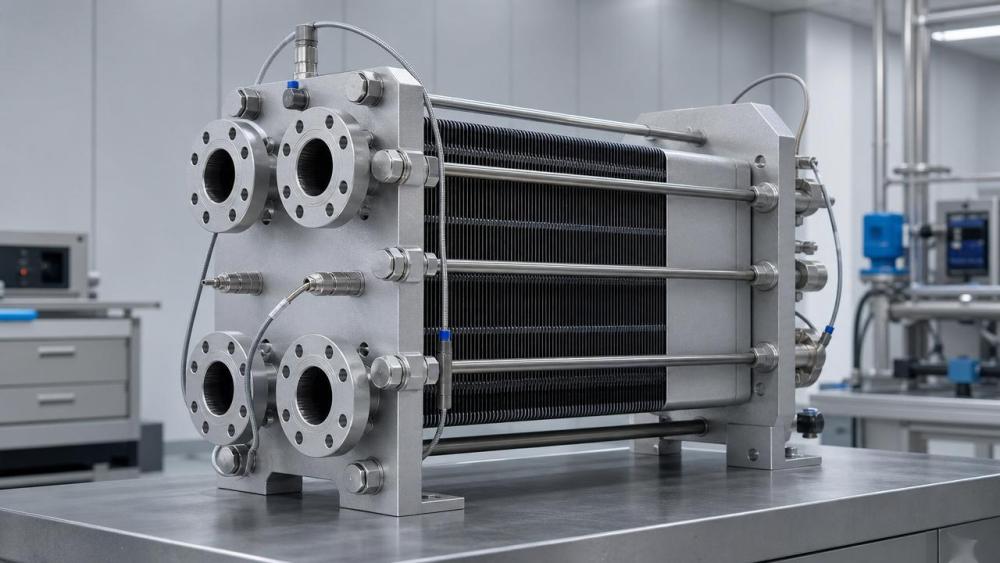
Conclusion: The enforcement of ASHRAE 90.1-2025’s transient thermal response requirement marks a targeted, enforceable milestone in North American energy code evolution — not a broad-based market disruption. It is best understood as a conditional access gate for two specific, high-value regulatory channels, rather than a universal product standard. Affected stakeholders should treat it as a defined technical compliance obligation — verifiable, testable, and actionable — rather than an ambiguous policy trend.
Source: American Society of Heating, Refrigerating and Air-Conditioning Engineers (ASHRAE); ANSI/ASHRAE Standard 135-2025 Annex D; U.S. General Services Administration (GSA) procurement guidelines; Natural Resources Canada (NRCan) Energy Efficiency Regulations. Note: Ongoing observation is recommended for any NRCan or DOE guidance documents clarifying test method equivalency or transitional provisions.
Related News
- When does heat recovery improve data center cooling efficiency?Author :Thermodynamics Analyst

- How Do I Verify Heat Transfer Calculations in a Supplier Quotation?Author :Thermodynamics Analyst

- How to evaluate a plate heat exchangers supplier before orderingAuthor :Thermodynamics Analyst

- EU Tightens Fatigue Checks for Plate Heat ExchangersAuthor :Thermodynamics Analyst

- EU PFAS Rule Adds New Export Filing for Cooling EquipmentAuthor :Thermodynamics Analyst

- EU EN 13445-4:2026 Adds Fatigue Report RequirementAuthor :Thermodynamics Analyst

- EU Updates EN 13445-4 for Plate ExchangersAuthor :Thermodynamics Analyst

- How to Compare Energy-Efficient Heat Exchange SolutionsAuthor :Thermodynamics Analyst

- Brazed Plate Exchanger Design: 7 Factors That Affect Heat TransferAuthor :Thermodynamics Analyst

- EU CBAM Pilot List Adds Plate ExchangersAuthor :Thermodynamics Analyst

- How Heat Exchange Systems Improve Temperature Control StabilityAuthor :Thermodynamics Analyst

- Japan to Require Efficiency Labels for Plate ExchangersAuthor :Thermodynamics Analyst

- EU REACH Adds PFAS Ban for Plate Heat ExchangersAuthor :Thermodynamics Analyst

- India Enforces BIS Rule for Plate Heat ExchangersAuthor :Thermodynamics Analyst

- DIN EN 13445-6:2026 Tightens Plate Exchanger CE RulesAuthor :Thermodynamics Analyst

- EU REACH Restricts PFAS Seals for Plate Heat ExchangersAuthor :Thermodynamics Analyst

- India Mandates BIS Certification for Imported Plate ExchangersAuthor :Thermodynamics Analyst

- Vietnam Requires QR Labels on Imported Plate Heat ExchangersAuthor :Thermodynamics Analyst

- EU EN 13445-4:2026 Tightens NDT Rules for Heat ExchangersAuthor :Thermodynamics Analyst

- EPA Clears R-1234ze(E) for Plate Exchanger SystemsAuthor :Thermodynamics Analyst
 for Plate Exchanger Systems")
- Heat Exchange Equipment Selection: Key Performance Checks Before You Compare ModelsAuthor :Thermodynamics Analyst

- ASHRAE 90.1-2026 Raises Plate Exchanger Efficiency ThresholdAuthor :Thermodynamics Analyst

- Heat Exchange Systems: How to Choose the Right SetupAuthor :Thermodynamics Analyst

- EPA SNAP 89 Takes Effect for Plate ExchangersAuthor :Thermodynamics Analyst

- How to Compare Heat Exchange Solutions for Lower Energy UseAuthor :Thermodynamics Analyst

- EPA SNAP 89 Expands Filing Rules for Plate Heat ExchangersAuthor :Thermodynamics Analyst

- EPA SNAP update adds filing rule for plate heat exchangersAuthor :Thermodynamics Analyst

- Industrial Heat Recovery: Where the Payback Is Fastest in 2026Author :Thermodynamics Analyst

- California EPR Deadline Nears for Cooling Equipment MakersAuthor :Thermodynamics Analyst

- Heat Exchanger Technology: Plate vs Shell and Tube for EfficiencyAuthor :Thermodynamics Analyst

- Industrial Heat Recovery Options for High-Temperature ProcessesAuthor :Thermodynamics Analyst

- Heat Transfer Problems in Process Lines: Causes and Practical FixesAuthor :Thermodynamics Analyst

- India Tightens Plate Exchanger Import Clearance RulesAuthor :Thermodynamics Analyst

- SABIC Methanol Force Majeure Extended to Q4 2026Author :Thermodynamics Analyst

- How to Improve Heat Exchanger Efficiency Without Major RetrofitAuthor :Thermodynamics Analyst

- Plate Heat Exchange vs Shell & Tube: Which Fits Your Process Better?Author :Thermodynamics Analyst