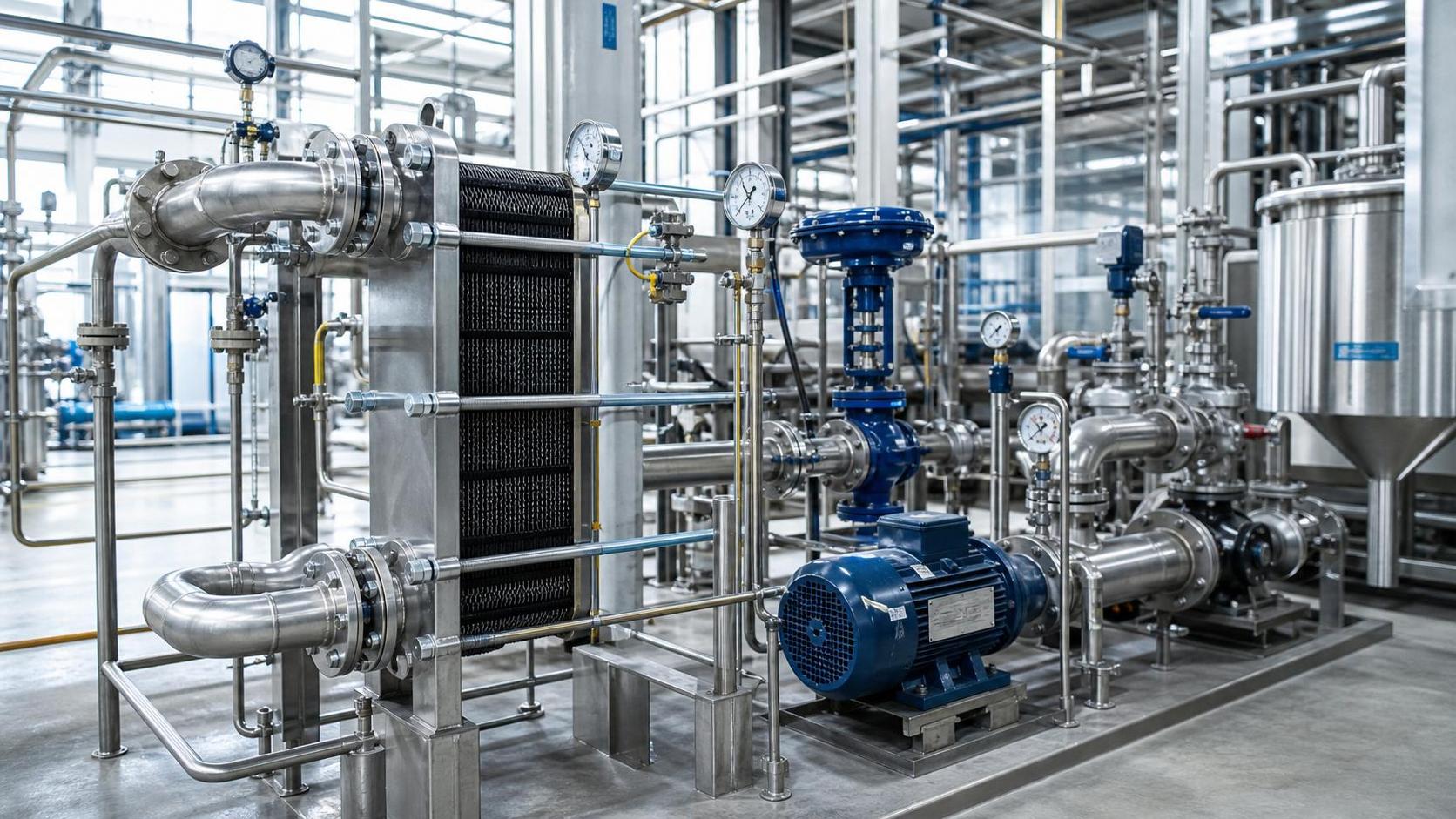
High-Precision Temperature Control in Plate Exchangers: Common Setup Mistakes




In plate exchanger systems, high-precision temperature control often depends less on component quality than on correct setup. For after-sales maintenance teams, small installation or calibration mistakes can quickly lead to unstable performance, energy loss, and repeated service calls. This article highlights the most common setup errors and explains how to prevent them for more reliable thermal operation.
Why does high-precision temperature control fail even when the plate exchanger is new?
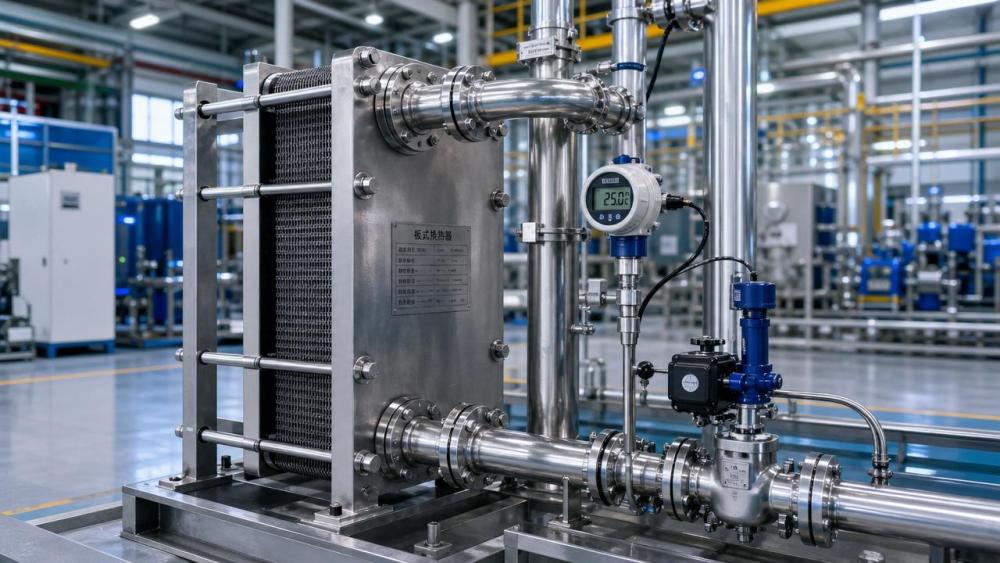
Many service teams assume that unstable outlet temperature comes from plate fouling, poor gasket sealing, or an undersized control valve. In practice, high-precision temperature control problems often begin during setup. A plate heat exchanger can be mechanically sound and still perform badly if sensor positions, flow balancing, valve authority, and controller logic are not aligned.
This matters across general industry because plate exchangers serve very different loads: process cooling, CIP loops, compressor aftercooling, food temperature holding, clean utility systems, and thermal recovery units. Each application has its own response speed, allowable deviation, contamination risk, and utility fluctuation profile. After-sales maintenance personnel are usually called only after the customer reports unstable operation. By then, setup mistakes have already become a cost problem.
At GTC-Matrix, the analysis approach starts with thermodynamic logic, not guesswork. That means checking heat duty, temperature approach, pressure drop, control response, and real site variability together. For maintenance teams, this is more useful than replacing parts one by one. It shortens troubleshooting time and reduces repeat visits.
- A stable exchanger can still deliver poor temperature accuracy if the sensor reads mixed or delayed fluid instead of true process temperature.
- A high-quality control valve can hunt continuously when oversized, even with a good actuator and controller.
- A correct design duty can fail in operation if startup bypasses, pump curves, or utility fluctuations were ignored during commissioning.
The setup mistakes that most often damage plate exchanger temperature stability
For after-sales maintenance personnel, the fastest path to better high-precision temperature control is knowing which errors create the biggest deviation. The table below summarizes common setup mistakes, what they look like in the field, and what to check first during diagnosis.
The pattern is clear: most failures of high-precision temperature control are not random. They come from measurable mismatches between thermal behavior and control setup. A maintenance team that checks these five points first can usually rule out many unnecessary component replacements.
Mistake 1: treating sensor placement as a piping detail
Sensor location has a direct effect on control accuracy. When the probe is mounted too far downstream, the controller sees the effect of the valve too late. When it is mounted after a bypass or recirculation tee, it may read a blended temperature that does not represent the process load. The result is predictable: the controller keeps correcting a signal that is delayed or distorted.
For plate exchangers, outlet temperature sensors should normally be positioned where the thermal response is fast and representative, while avoiding areas of mixing turbulence that create unstable readings. After-sales teams should also check insertion depth, thermowell condition, and transmitter scaling. A wrong range setting can look like a process problem.
Mistake 2: ignoring valve authority and controllable range
A common field error is selecting a valve based on maximum capacity only. That may look safe on paper, but it often damages high-precision temperature control at normal load. When a valve operates nearly closed most of the time, tiny stem movement causes large thermal changes. The loop becomes sensitive, noisy, and difficult to tune.
Maintenance teams should compare actual operating load bands with valve size, pressure drop, and actuator behavior. If the customer complains that temperature is stable only at one production rate, poor valve authority is a strong suspect. This is especially important in variable-load systems tied to compressors, batch production, or intermittent utility demand.
Mistake 3: commissioning without stable hydraulic conditions
Temperature control cannot be precise when flow is unstable. Air pockets, pump cavitation, partially closed strainers, or rapidly changing utility pressure will all distort exchanger performance. Yet many loops are tuned before these hydraulic conditions are normalized. The control engineer adjusts PID values, but the true issue is uneven heat transfer caused by poor circulation.
In service work, always separate thermal instability from hydraulic instability. A plate exchanger responds quickly by design. If the response appears erratic rather than simply slow, investigate flow behavior first. This discipline prevents a very common mistake: blaming the controller for what the piping system is creating.
How should after-sales teams check a system before changing parts?
A structured diagnostic sequence saves time, protects service margins, and improves customer confidence. In high-precision temperature control work, replacing sensors, valves, or plates too early often hides the original cause. The better approach is to verify the loop in layers, from process conditions to instrumentation and then to hardware condition.
- Confirm actual operating duty: inlet temperatures, outlet target, flow rates, and load variability across shifts.
- Check whether the exchanger is installed in the intended counterflow configuration and whether bypasses are truly closed or controlled.
- Verify sensor location, transmitter calibration, signal wiring, and controller scaling against the current process requirement.
- Review valve sizing, actuator stroke, feedback signal, and real operating opening range during steady and changing loads.
- Inspect hydraulic stability: venting, pump condition, strainers, pressure fluctuation, and possible fouling or blockage.
- Tune PID only after the above conditions are confirmed. Otherwise, tuning results will not hold.
This sequence reflects the kind of cross-disciplinary troubleshooting promoted by GTC-Matrix. Heat exchange performance cannot be isolated from compressed utility behavior, upstream process changes, or energy efficiency targets. After-sales teams that understand this broader thermal system view solve problems faster and with fewer callbacks.
Which setup choices matter most for different industrial scenarios?
Not every plate exchanger application needs the same level of control sharpness. However, high-precision temperature control becomes critical when the process has tight quality windows, thermal sensitivity, or utility cost pressure. The following comparison helps maintenance personnel prioritize what to inspect by scenario rather than using one generic checklist for every site.
The key lesson is that the same symptom can come from different root causes depending on the application. A valve issue in compressor cooling may present similarly to a sensor issue in a hygienic process loop. Scenario-based diagnosis is therefore essential for high-precision temperature control.
What parameters should be confirmed during setup and handover?
Many service disputes happen because commissioning records are incomplete. When the site later reports poor high-precision temperature control, nobody can tell whether the original setup matched the design intent. A practical handover sheet should focus on a manageable set of thermal and control parameters, not on paperwork volume.
Minimum parameter checklist
- Primary and secondary side design flow rates, plus measured flow during commissioning.
- Inlet and outlet temperatures at minimum, normal, and peak operating load.
- Control valve tag, size, fail position, actuator type, and normal operating opening range.
- Sensor model, installation point, calibration date, signal range, and controller mapping.
- Pressure drop across the exchanger and cleanliness baseline after startup.
- Documented PID values and any interlock or cascade logic affecting the loop.
These records matter because future maintenance rarely happens under ideal conditions. Shift changes, utility variations, and seasonal changes alter the thermal environment. Without a reliable setup baseline, after-sales teams lose time proving what has changed.
Common misconceptions that lead to repeat service calls
“If temperature oscillates, the controller is badly tuned.”
Sometimes yes, but often not. Oscillation can come from oversized valves, variable flow, air entrapment, or poor sensor location. Tuning a loop that has physical instability may reduce the visible symptom for a short time, but the root cause remains.
“A larger exchanger always improves control accuracy.”
Not automatically. Oversizing can lower pressure drop and increase thermal reserve, but it can also change control sensitivity, especially when paired with an oversized valve or low-load operation. High-precision temperature control depends on dynamic balance, not just heat transfer area.
“If the exchanger worked during factory testing, site setup cannot be the issue.”
Factory conditions are usually cleaner and more stable than real installations. Site piping, utility disturbances, mixed loads, and commissioning shortcuts can all create behavior that never appears on the test stand. This is why field verification is indispensable.
FAQ: practical questions from maintenance teams
How do I know whether the problem is fouling or setup?
Start with trend behavior. Fouling usually shifts performance gradually: approach temperature widens, pressure drop changes, and heat duty declines over time. Setup problems often show up as poor repeatability, sudden oscillation after maintenance, or unstable behavior at certain loads only. Confirm differential pressure, inspect recent service history, and compare with commissioning baselines before opening the exchanger.
What is the most overlooked factor in high-precision temperature control?
Sensor placement is usually the most overlooked. Teams focus on valve and controller settings because those are easier to adjust. But if the measurement point is wrong, every adjustment is based on a misleading process signal. Correct measurement quality comes before control optimization.
When should a valve be reselected instead of retuned?
If the valve spends most of its time at very low opening, responds too aggressively near the seat, or cannot stabilize at partial load despite stable flow and correct sensing, reselection should be considered. Review actual load profile, not just design maximum. In many industrial loops, minimum and normal load matter more than peak capacity.
Are there relevant standards or compliance points to keep in mind?
Requirements vary by sector, but maintenance teams should generally respect applicable pressure equipment rules, plant safety procedures, calibration practices, and hygienic or clean-process requirements where relevant. In regulated sectors, traceable temperature measurement and documented intervention records are often as important as the mechanical fix itself.
Why choose us when setup issues are reducing exchanger performance?
GTC-Matrix supports after-sales decision-making with a broader industrial lens than a simple parts list. Because our intelligence focus spans cooling, compressed air, vacuum processes, and heat exchange technologies, we help maintenance teams connect temperature instability to the wider energy and process context. That is especially valuable when plate exchanger performance is affected by fluctuating utilities, changing production loads, or decarbonization-driven operating changes.
You can consult us on practical topics that matter in the field:
- Parameter confirmation for high-precision temperature control, including flow, temperature approach, and control response assumptions.
- Selection review for valves, sensor layout, and exchanger control architecture under variable industrial loads.
- Delivery planning and service scope discussions when customers need urgent stabilization rather than trial-and-error maintenance.
- Customized solution comparison for pharmaceutical, semiconductor, food, compressor, or heat recovery applications.
- Compliance-oriented guidance where calibration discipline, hygienic considerations, or documented service logic are critical.
- Quotation communication support for troubleshooting frameworks, technical evaluation priorities, and staged upgrade planning.
If your team is dealing with unstable outlet temperature, recurring customer complaints, or uncertainty about whether the issue is setup, sizing, or operation, a structured review can prevent repeated service costs. In plate exchanger systems, high-precision temperature control is rarely improved by guesswork. It improves when thermal logic, field data, and control setup are checked together.
Related News
- How to evaluate a plate heat exchangers supplier before orderingAuthor :Thermodynamics Analyst

- EU Tightens Fatigue Checks for Plate Heat ExchangersAuthor :Thermodynamics Analyst

- EU PFAS Rule Adds New Export Filing for Cooling EquipmentAuthor :Thermodynamics Analyst

- EU EN 13445-4:2026 Adds Fatigue Report RequirementAuthor :Thermodynamics Analyst

- EU Updates EN 13445-4 for Plate ExchangersAuthor :Thermodynamics Analyst

- How to Compare Energy-Efficient Heat Exchange SolutionsAuthor :Thermodynamics Analyst

- Brazed Plate Exchanger Design: 7 Factors That Affect Heat TransferAuthor :Thermodynamics Analyst

- EU CBAM Pilot List Adds Plate ExchangersAuthor :Thermodynamics Analyst

- How Heat Exchange Systems Improve Temperature Control StabilityAuthor :Thermodynamics Analyst

- Japan to Require Efficiency Labels for Plate ExchangersAuthor :Thermodynamics Analyst

- EU REACH Adds PFAS Ban for Plate Heat ExchangersAuthor :Thermodynamics Analyst

- India Enforces BIS Rule for Plate Heat ExchangersAuthor :Thermodynamics Analyst

- DIN EN 13445-6:2026 Tightens Plate Exchanger CE RulesAuthor :Thermodynamics Analyst

- EU REACH Restricts PFAS Seals for Plate Heat ExchangersAuthor :Thermodynamics Analyst

- India Mandates BIS Certification for Imported Plate ExchangersAuthor :Thermodynamics Analyst

- Vietnam Requires QR Labels on Imported Plate Heat ExchangersAuthor :Thermodynamics Analyst

- EU EN 13445-4:2026 Tightens NDT Rules for Heat ExchangersAuthor :Thermodynamics Analyst

- EPA Clears R-1234ze(E) for Plate Exchanger SystemsAuthor :Thermodynamics Analyst
 for Plate Exchanger Systems")
- Heat Exchange Equipment Selection: Key Performance Checks Before You Compare ModelsAuthor :Thermodynamics Analyst

- ASHRAE 90.1-2026 Raises Plate Exchanger Efficiency ThresholdAuthor :Thermodynamics Analyst

- Heat Exchange Systems: How to Choose the Right SetupAuthor :Thermodynamics Analyst

- EPA SNAP 89 Takes Effect for Plate ExchangersAuthor :Thermodynamics Analyst

- How to Compare Heat Exchange Solutions for Lower Energy UseAuthor :Thermodynamics Analyst

- EPA SNAP 89 Expands Filing Rules for Plate Heat ExchangersAuthor :Thermodynamics Analyst

- EPA SNAP update adds filing rule for plate heat exchangersAuthor :Thermodynamics Analyst

- Industrial Heat Recovery: Where the Payback Is Fastest in 2026Author :Thermodynamics Analyst

- California EPR Deadline Nears for Cooling Equipment MakersAuthor :Thermodynamics Analyst

- Heat Exchanger Technology: Plate vs Shell and Tube for EfficiencyAuthor :Thermodynamics Analyst

- Industrial Heat Recovery Options for High-Temperature ProcessesAuthor :Thermodynamics Analyst

- Heat Transfer Problems in Process Lines: Causes and Practical FixesAuthor :Thermodynamics Analyst

- India Tightens Plate Exchanger Import Clearance RulesAuthor :Thermodynamics Analyst

- SABIC Methanol Force Majeure Extended to Q4 2026Author :Thermodynamics Analyst

- How to Improve Heat Exchanger Efficiency Without Major RetrofitAuthor :Thermodynamics Analyst

- Plate Heat Exchange vs Shell & Tube: Which Fits Your Process Better?Author :Thermodynamics Analyst

- Heat Transfer Basics: What Affects Efficiency Most?Author :Thermodynamics Analyst
![]()
- Microchannel Heat Exchangers vs Plate Exchangers: Key Trade-OffsAuthor :Thermodynamics Analyst