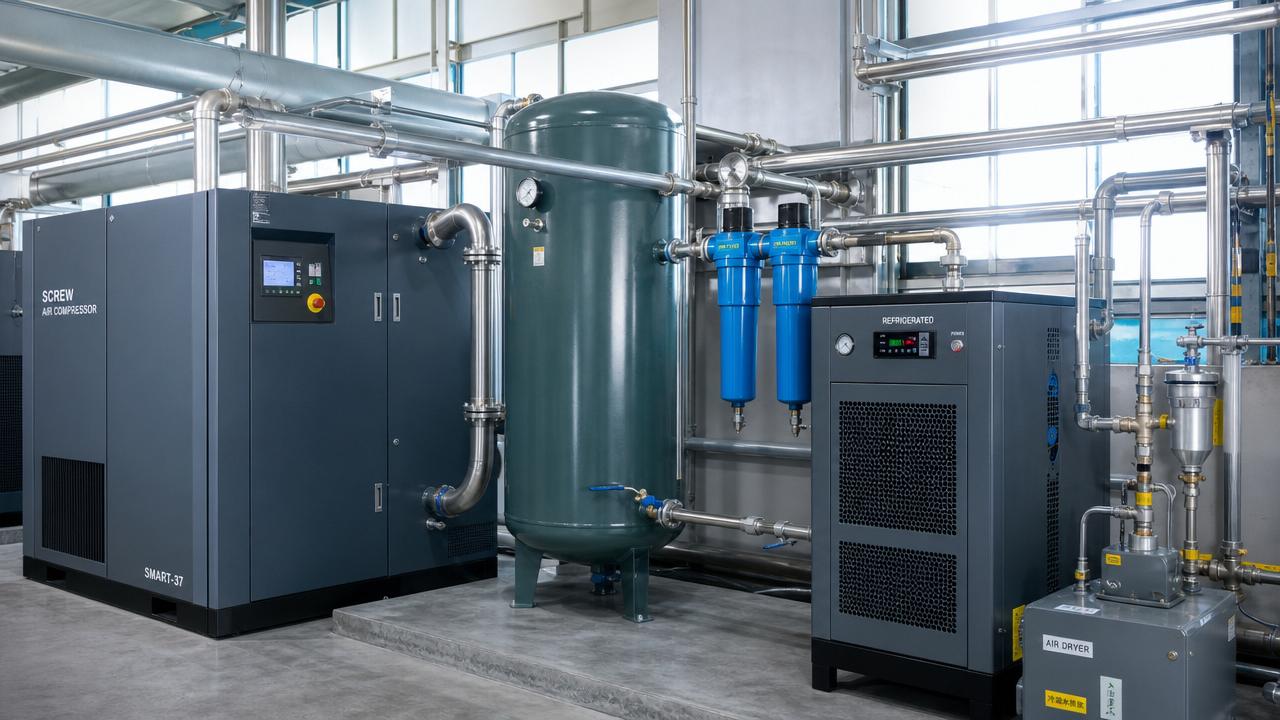
Compressed Air Efficiency: 7 Hidden Losses That Raise Operating Costs




Compressed air efficiency often fails in ordinary operating conditions
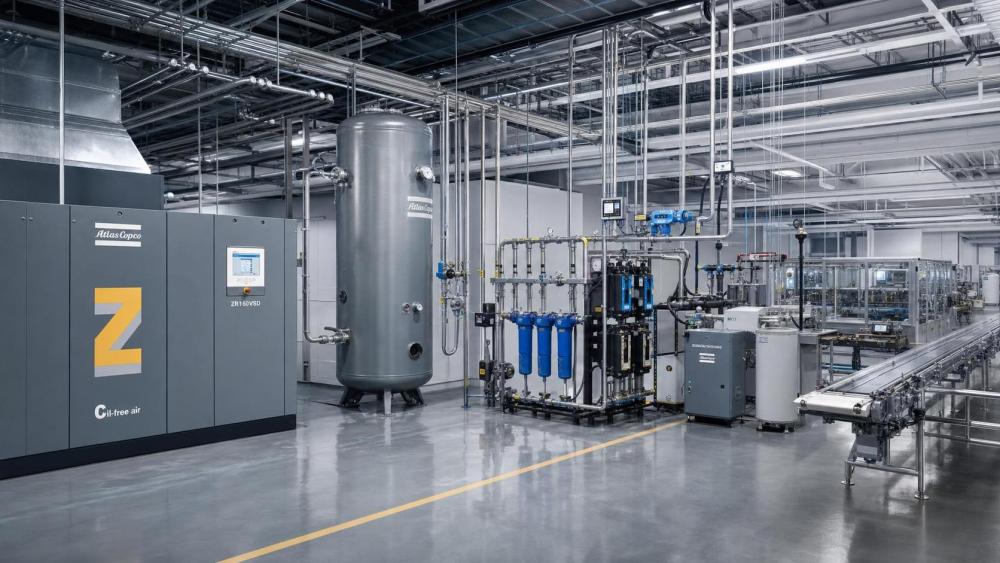
Compressed air efficiency rarely collapses because of one dramatic fault.
More often, costs rise through small losses that stay invisible inside daily production.
A system may look stable on gauges, yet still consume far more power than necessary.
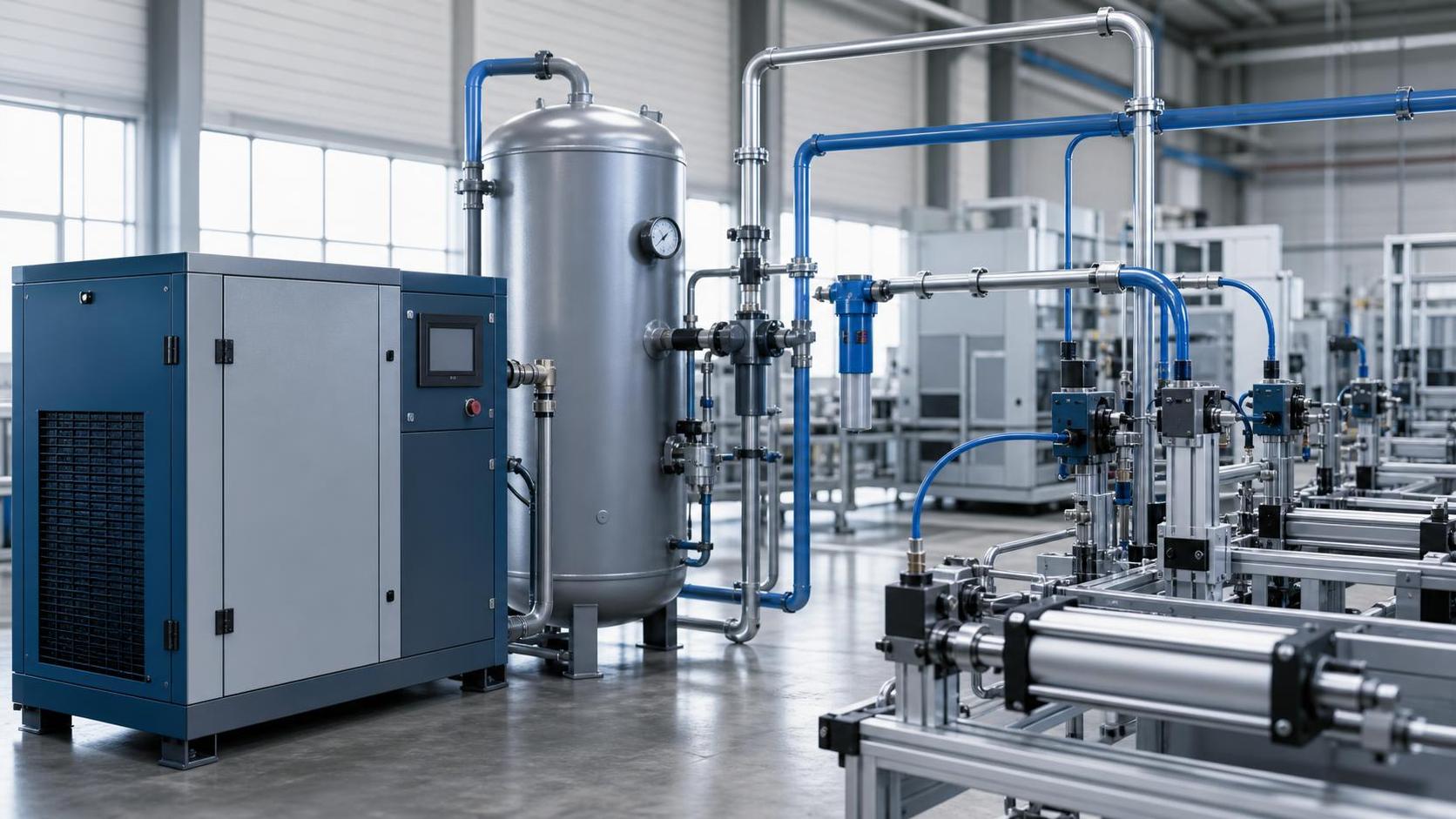
That gap matters across general industry, where compressed air supports packaging, conveying, cooling support, automation, cleaning, and process stability.
In practical terms, compressed air efficiency is not only about compressor design.
It depends on pipe layout, control strategy, air treatment, demand profile, and maintenance discipline.
This is why similar plants can report very different operating costs with nearly identical installed capacity.
GTC-Matrix follows this issue closely because energy conversion efficiency now sits at the center of industrial competitiveness.
When energy prices, carbon targets, and uptime requirements move together, compressed air efficiency becomes a management issue, not only a utility issue.
Why the same system behaves differently from one site to another
Different facilities lose air for different reasons because demand patterns are rarely the same.
A steady process line usually struggles with pressure drop and treatment losses.
A batch operation more often suffers from cycling, oversized compressors, and unstable setpoints.
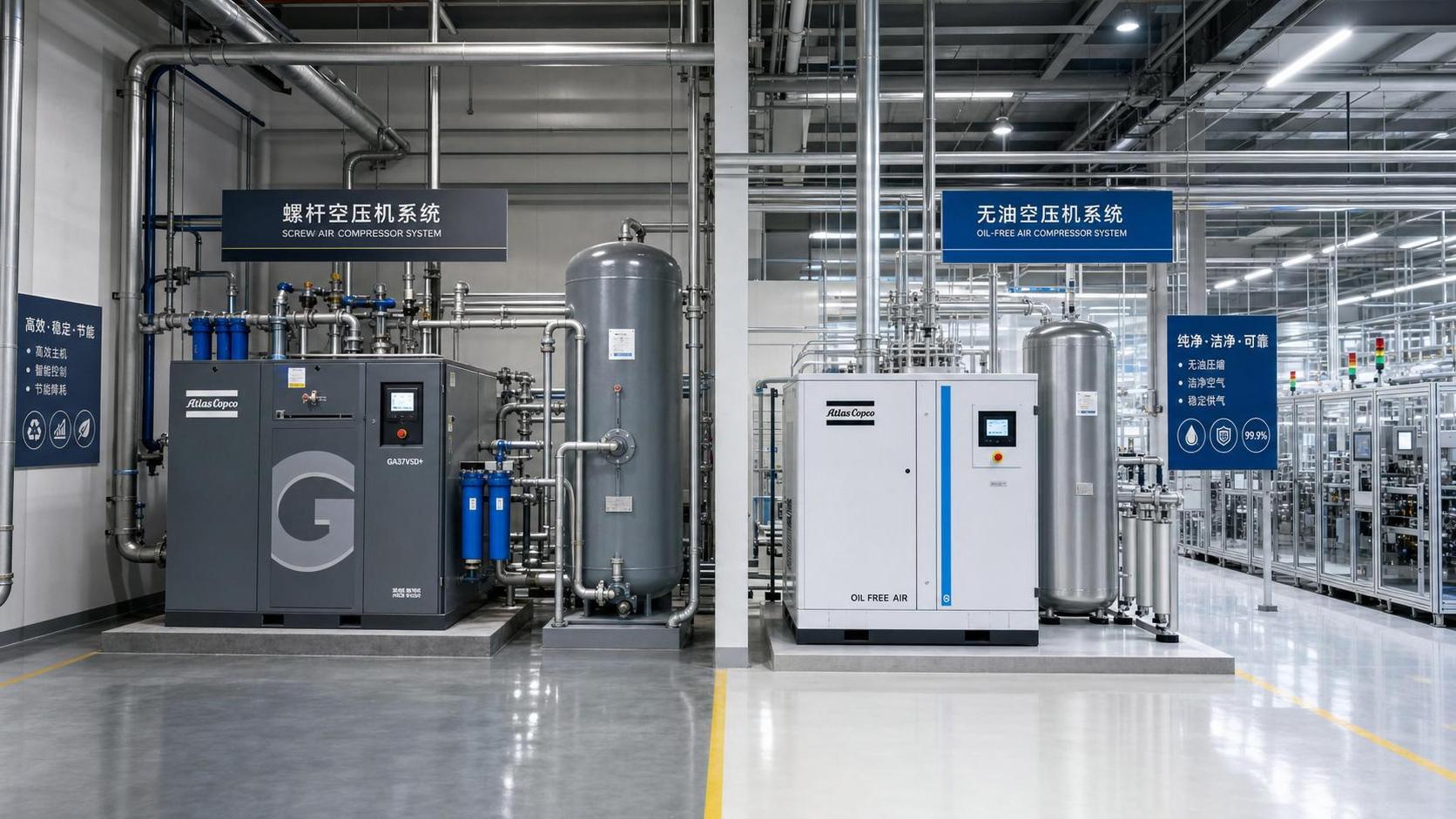
Clean applications may prioritize dry, oil-free air, yet the added filtration can increase differential pressure.
Heavy-duty workshops may accept wider air quality ranges, but hidden leaks often multiply around flexible tools and older connections.
The useful judgment is to track where energy is converted, where pressure is lost, and where demand is artificially inflated.
That approach fits the GTC-Matrix view of linking thermodynamic logic with real operating decisions.
In continuous production, leaks and pressure drop usually come first
In continuous lines, compressed air efficiency often looks acceptable because machines never stop.
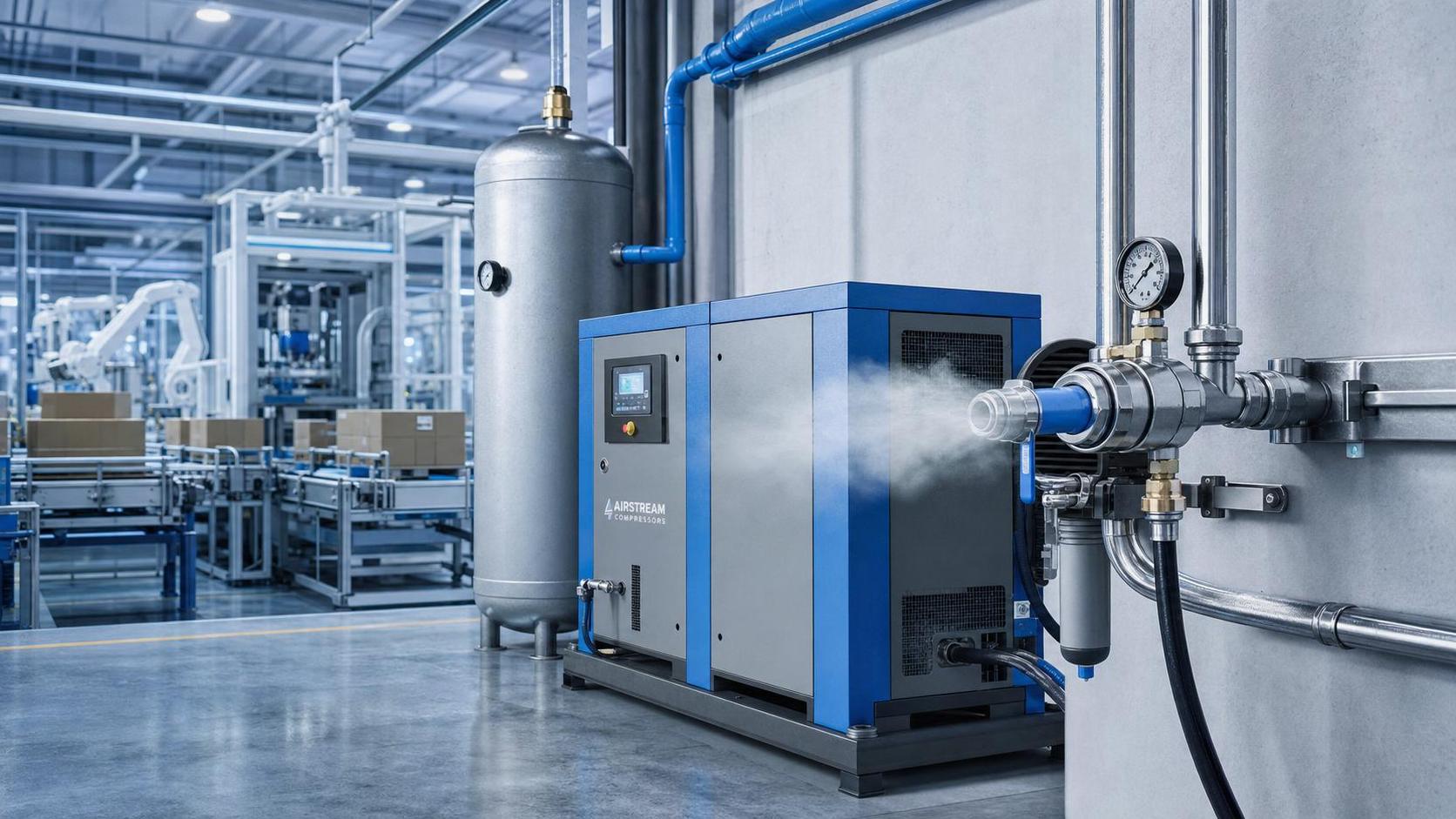
Yet this is exactly where unnoticed leaks become expensive.
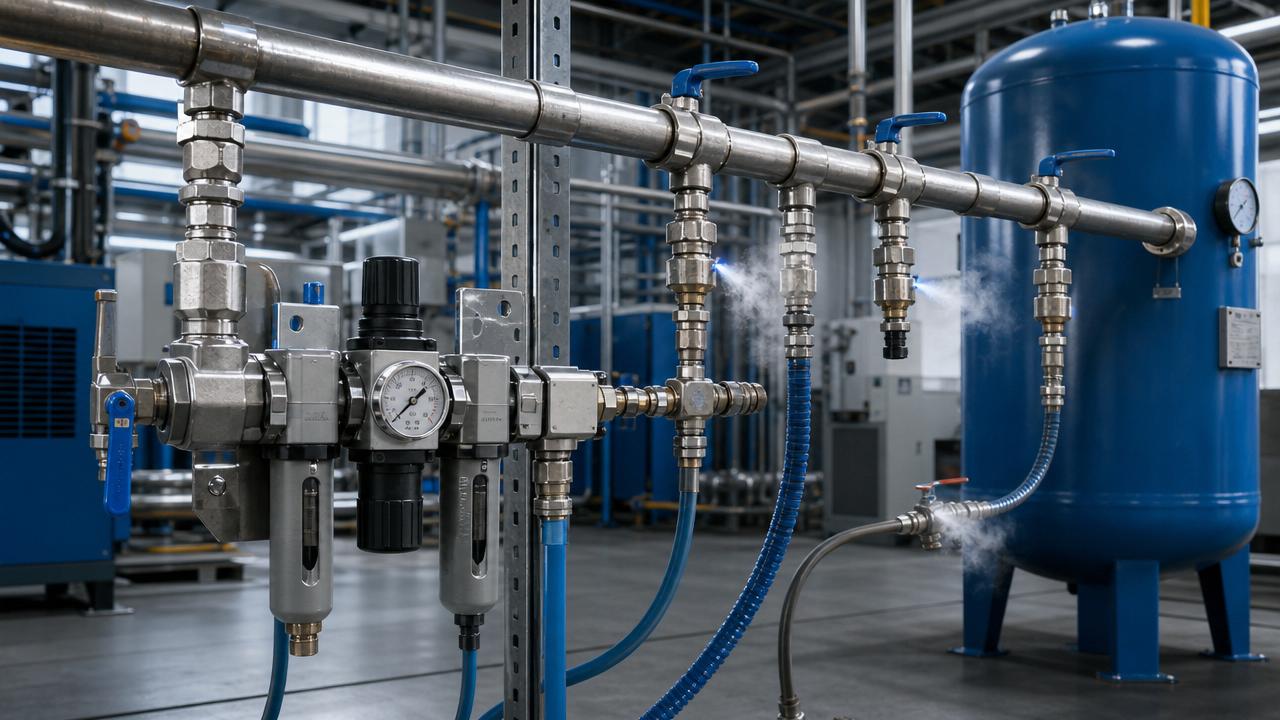
A small leak on one branch seems harmless.
Across a full year, several small leaks can equal the load of an additional compressor.
The second hidden loss is pressure drop across long piping, clogged filters, wet separators, and poorly sized couplings.
When end users need stable pressure, operators often raise header pressure to compensate.
That fixes the symptom, not the cause, and compressed air efficiency declines immediately.
A better method is to map pressure at the compressor room, main header, and farthest use points.
If the gap widens during peak shifts, the restriction is usually local rather than system-wide.
Three losses that hide inside the compressor room
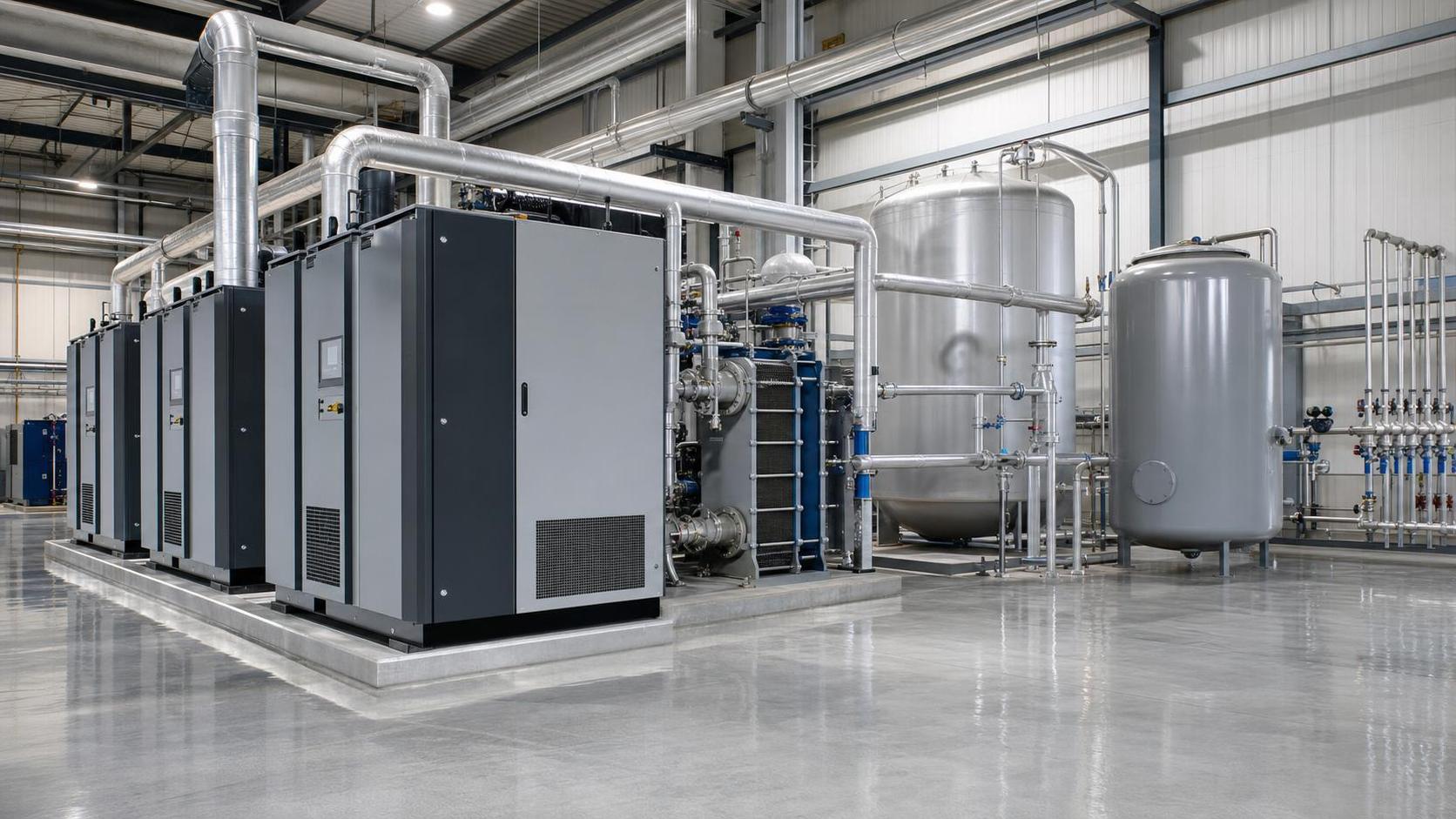
The third loss is inappropriate sequencing between multiple compressors.
Two machines may run partially loaded when one machine at better load would use less power.
The fourth loss is excessive unloaded running.
This is common where demand falls between shifts but controls do not respond quickly enough.
The fifth loss is poor intake and cooling conditions.
Warm intake air, fouled coolers, or inadequate ventilation raise specific energy consumption.
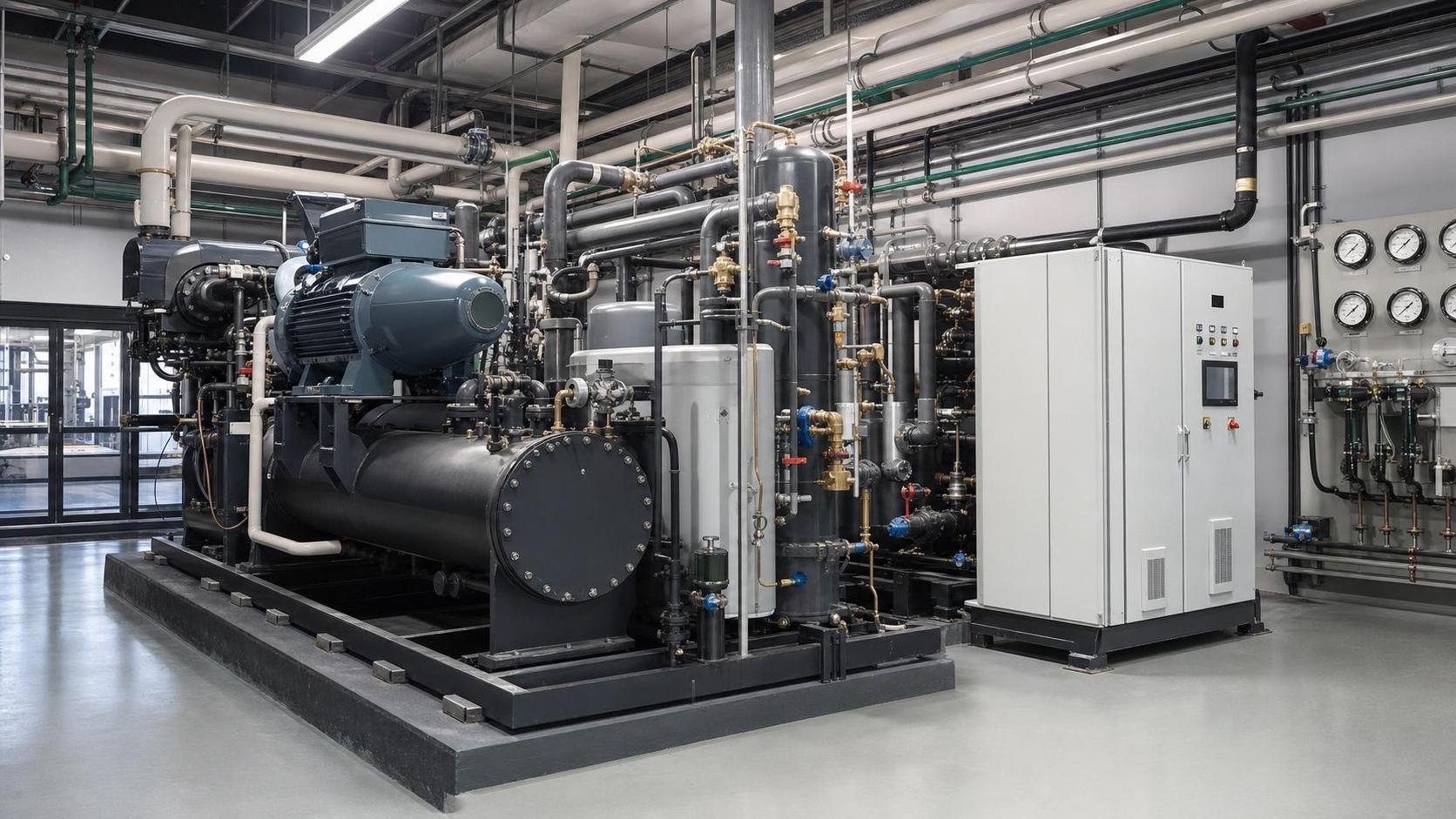
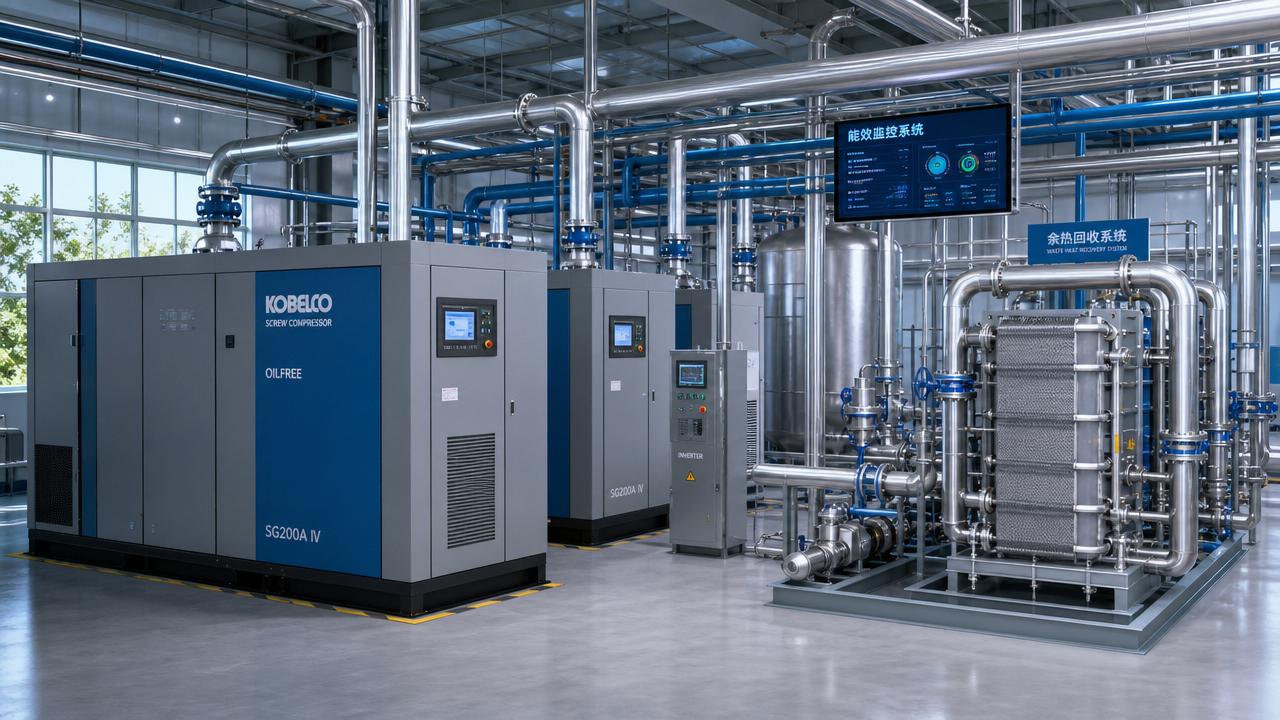
In facilities already managing thermal loads, this link between heat and power is often underestimated.
That is one reason intelligence platforms tracking cooling and compression together offer more useful insight than isolated equipment data.
Batch production and variable demand create a different efficiency trap
In variable-demand operations, the main issue is not always leakage.
The bigger problem can be mismatch between supply response and actual air use.
The sixth hidden loss appears when storage is insufficient for short, sharp demand peaks.
Without enough receiver capacity, compressors chase every fluctuation.
Pressure swings increase, cycling becomes frequent, and compressed air efficiency falls even if average consumption seems normal.
The seventh loss is artificial demand.
Blow-off cleaning, open tubes, and unregulated end uses consume air because it is available, not because the process truly requires it.
This shows up often in mixed-use facilities where compressed air serves both critical equipment and informal utility tasks.
In those settings, compressed air efficiency improves fastest when demand is classified by necessity, pressure requirement, and time pattern.
Different industrial settings do not reward the same fix
The same correction does not deliver equal value everywhere.
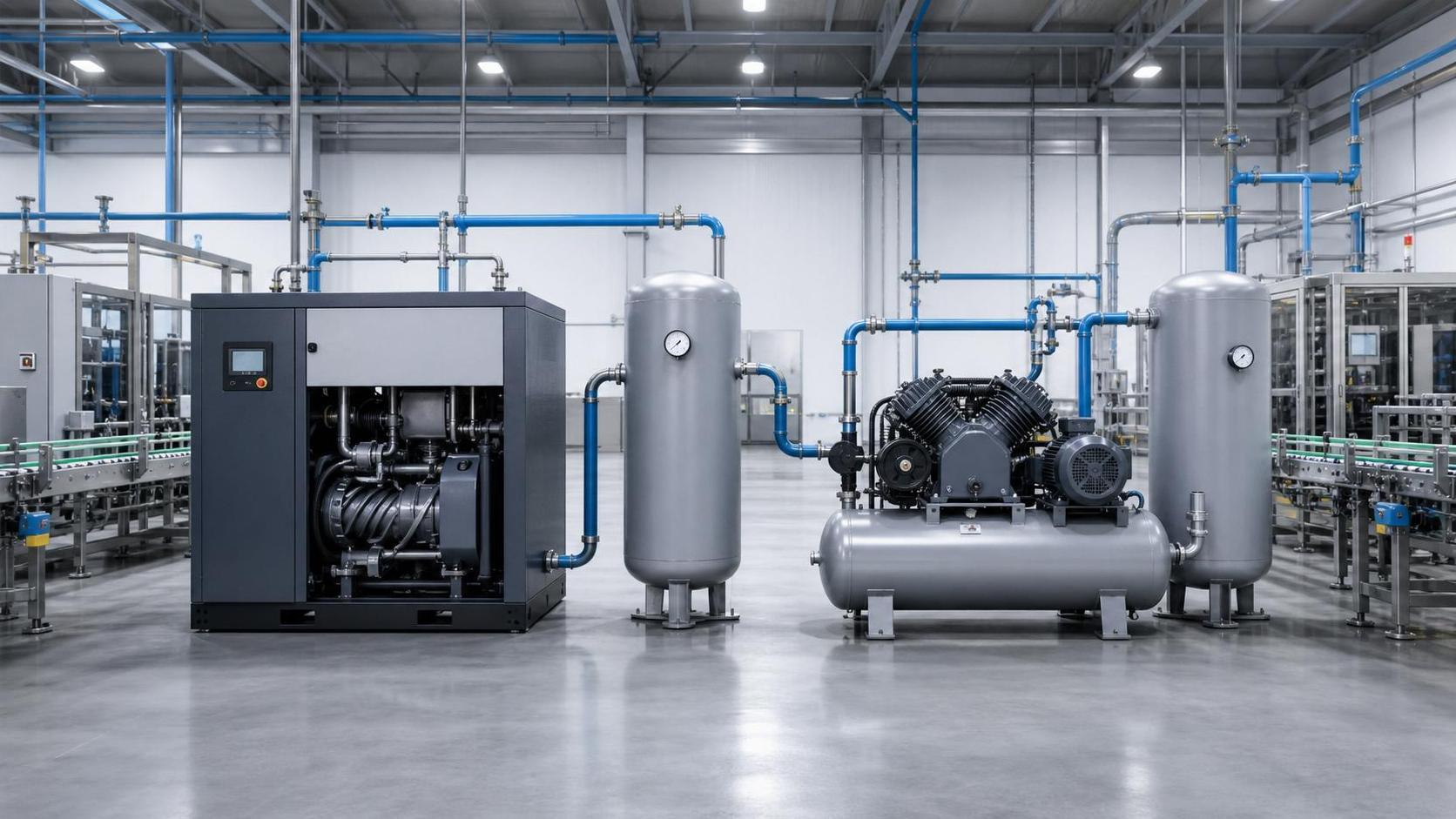
A simple comparison helps separate the right priorities.
This is where many audits go wrong.
They focus on compressor nameplate efficiency while ignoring how the system is actually used.
Where misjudgment usually starts
One frequent mistake is treating all pressure problems as supply shortages.
In many cases, local restrictions or poor controls are the real cause.
Another mistake is chasing low capital cost while ignoring power, maintenance, and condensate management over time.
Compressed air efficiency is especially vulnerable to this short-term view because energy losses stay dispersed across many components.
There is also a tendency to copy one site standard into another site with different temperature, layout, duty cycle, or air purity requirements.
That often leads to over-filtering, over-pressurizing, or poor control logic.
- Do not assume stable header pressure means good compressed air efficiency.
- Do not treat leak repair as a one-time campaign.
- Do not size storage only from installed compressor capacity.
- Do not specify air quality beyond real process need.
A more useful path is to match actions to operating reality
In actual applications, the best gains come from a layered approach.
Start with measurement, then isolate the highest-cost loss, then adjust controls and maintenance around that result.
For steady plants, leak surveys during non-production hours often reveal the fastest savings.
For variable operations, trend logs usually expose unstable sequencing and poor storage balance.
For quality-sensitive environments, filter differential pressure and dryer performance should be reviewed together, not separately.
A practical decision sequence can stay simple:
- Measure base load, peak load, and off-shift load.
- Compare compressor discharge pressure with end-use pressure.
- Identify air uses that could shift to blowers or electric tools.
- Review control settings after any piping or production change.
- Track efficiency trends, not only monthly energy totals.
This kind of evidence-based review reflects the broader GTC-Matrix approach.
Compressed air efficiency improves most when thermal conditions, process behavior, and power data are read as one operating story.
The next step is to build a site-specific compressed air efficiency standard
The seven hidden losses are common, but their weight changes by site.
That is why generic fixes rarely deliver their promised savings.
A stronger next step is to define a site standard for acceptable leakage, pressure drop, storage response, air quality penalty, and unloaded running time.
From there, compressed air efficiency becomes measurable, comparable, and easier to improve.
It also becomes easier to judge whether a problem belongs to the compressor, the network, the process, or the thermal environment around it.
That level of clarity is increasingly important in industries balancing energy cost volatility, decarbonization pressure, and tighter reliability targets.
Review the real demand pattern, verify the hidden losses, and align corrective actions with operating conditions before making major upgrades.
That is usually where lasting compressed air efficiency begins.
Related News
- China Expands Cross-Border RMB and FX Cash Pooling NationwideAuthor :Pneumatic Power Engineer

- How to Size Air Compressor Systems for Pneumatics by Flow and Pressure DemandAuthor :Pneumatic Power Engineer

- How Energy Recovery Systems for Compressors Cut Power CostsAuthor :Pneumatic Power Engineer

- How to Evaluate Screw Compressors in Industrial Refrigeration EquipmentAuthor :Pneumatic Power Engineer

- India Makes BIS Certification Mandatory for Screw CompressorsAuthor :Pneumatic Power Engineer

- China Tightens Export Filing for Screw CompressorsAuthor :Pneumatic Power Engineer

- SABIC Sets IoT Interface Rule for Screw CompressorsAuthor :Pneumatic Power Engineer

- Industrial Heat Recovery Systems for Compressors: When Do Energy Savings Pay Back?Author :Pneumatic Power Engineer

- EU Tightens REACH Limit for Screw Compressor LubricantsAuthor :Pneumatic Power Engineer

- EU Opens China Screw Compressor Review With Carbon RuleAuthor :Pneumatic Power Engineer

- DOE Mandates AHRI 1000-2026 for Screw CompressorsAuthor :Pneumatic Power Engineer

- VDMA Filing Signals EU Risk for Chinese Oil Screw CompressorsAuthor :Pneumatic Power Engineer
![]()
- Screw vs Piston Air Compressors for Stable Plant OutputAuthor :Pneumatic Power Engineer

- Saudi SASO Tightens Refrigerant Limits in IEC 60335-2-40:2026Author :Pneumatic Power Engineer

- IIR Warns of 18-Week Lead Times for Screw CompressorsAuthor :Pneumatic Power Engineer

- Welded Compressed Air Manifold Selection Guide for Pressure Stability and LeaksAuthor :Pneumatic Power Engineer

- India BIS Rule Adds IS 16830 Requirement for Imported Screw CompressorsAuthor :Pneumatic Power Engineer

- What to Check Before Choosing a Compressed Air FactoryAuthor :Pneumatic Power Engineer

- China Tightens Export Checks on Screw CompressorsAuthor :Pneumatic Power Engineer

- Screw Compressor Lead Times Reach 22 WeeksAuthor :Pneumatic Power Engineer

- Vietnam Requires QR Labels on Imported Screw CompressorsAuthor :Pneumatic Power Engineer

- Compressed Air Technologies Filtration: How to Reduce Pressure Drop and Energy LossAuthor :Pneumatic Power Engineer

- STSPIN830 Lead Time Tops 32 Weeks in Screw CompressorsAuthor :Pneumatic Power Engineer

- IGBT Shortage Extends Screw Compressor Lead TimesAuthor :Pneumatic Power Engineer

- Compressed Air Systems: 7 Hidden Costs That Raise Total Operating ExpenseAuthor :Pneumatic Power Engineer

- Compressed Air Efficiency: 7 Hidden Losses That Raise Operating CostsAuthor :Pneumatic Power Engineer

- How to Compare Screw vs Oil-Free Air Compression SystemsAuthor :Pneumatic Power Engineer

- Compressed Air Leaks: What They Really Cost in Daily OperationsAuthor :Pneumatic Power Engineer

- DOE Moves Up R449A Chiller Deadline to March 2027Author :Pneumatic Power Engineer

- How Compression Technology Cuts Energy Use in Modern PlantsAuthor :Pneumatic Power Engineer

- EU Adds GB 18613-2025 to Import Energy ChecksAuthor :Pneumatic Power Engineer

- EU CE Rule Adds SRA for R290 Compressor ImportsAuthor :Pneumatic Power Engineer

- Compressed Air Leaks: Hidden Costs and Practical Ways to Reduce LossesAuthor :Pneumatic Power Engineer

- Kunming Sourcing Festival Adds Thermal & Compression HubAuthor :Pneumatic Power Engineer

- Compressed Air Efficiency: Where Energy Losses Usually StartAuthor :Pneumatic Power Engineer

- US 3-Year Treasury Yield Rise Pressures Compressor Export QuotesAuthor :Pneumatic Power Engineer