Vietnam Requires QR Labels on Imported Screw Compressors




On June 29, 2026, Vietnam’s Ministry of Industry and Trade (MOIT) issued Circular 18/2026/TT-BCT, introducing a new traceability requirement for imported screw compressors. From October 1, 2026, both complete units and core modules will need a unique QR code placed next to the nameplate and connected to the national VMEP-Trace platform. The measure deserves close attention from exporters, importers, distributors, service networks, and procurement teams because it directly affects customs preparation, product data management, and after-sales information readiness before shipment enters the Vietnamese market.
What the new rule requires
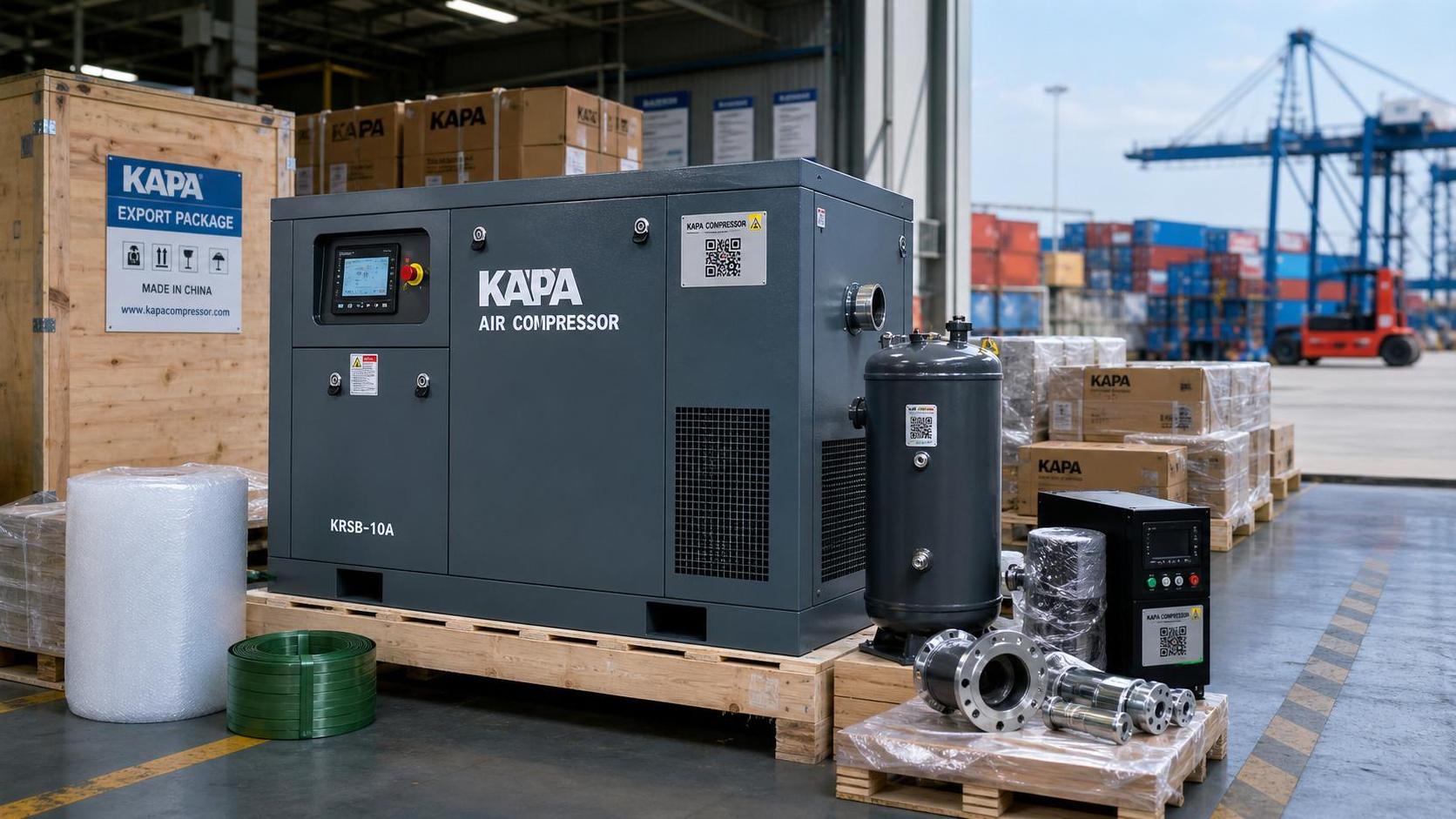
According to the provided information, Circular 18/2026/TT-BCT was signed by MOIT on June 29, 2026. The rule will take effect on October 1, 2026, and applies to all imported screw compressors, including complete machines and core modules. Each covered product must carry a unique QR code next to its nameplate.
The QR code must link to Vietnam’s national traceability platform for electromechanical products, VMEP-Trace. The required uploaded information includes production batch, energy efficiency grade, lubricant compatibility, and after-sales service point details.
The provided information also states that Chinese exporters must complete online registration 72 hours before shipment. If that filing is not completed on time, the goods may face detention at the port of entry.
Where the operational impact is likely to appear
Export-side shipment preparation becomes more document-sensitive
From an industry perspective, exporters of screw compressors and core modules are likely to feel the impact first at the pre-shipment stage. The reason is straightforward: the requirement is tied not only to product labeling, but also to advance online registration. This means product identification, filing timing, and shipment release planning may become more tightly linked than before.
What deserves closer attention is whether internal export workflows can align nameplate labeling, QR code generation, and VMEP-Trace data submission within the required timetable. Any mismatch between physical labeling and platform filing could become a practical disruption point.
Importers and distributors may need tighter coordination with suppliers
For importers and local distribution businesses, the likely effect is on receiving compliance-ready products rather than correcting issues after arrival. Because the rule requires a unique QR code next to the nameplate and links that code to specific product data, importers may need to verify upstream readiness earlier in the order cycle.
Analysis shows that the main pressure point here is coordination: importers may need clearer confirmation from suppliers on whether the QR label, uploaded product details, and filing deadline have all been completed before cargo moves.
Service and aftermarket channels are now part of the visible compliance record
The inclusion of after-sales service point information is notable. Observably, this requirement brings service coverage into the traceability record, not just technical manufacturing data. That may affect service providers, authorized repair networks, and businesses that support installed equipment after delivery.
The practical issue is not only whether service support exists, but whether the information associated with that support is ready to be uploaded in the required format before shipment proceeds.
Procurement teams may need to review supplier readiness, not only product specs
For buyers and procurement teams sourcing screw compressors for the Vietnamese market, the rule may influence supplier evaluation. In addition to checking model suitability and delivery schedules, buyers may now need to confirm whether suppliers can provide the required traceability inputs and complete filing within the stated window.
From a business-process standpoint, this can affect order confirmation, delivery commitments, and communication between purchasing, logistics, and compliance functions.
What companies should focus on now
Watch the execution details behind the headline rule
The confirmed facts establish the requirement, the implementation date, the data fields, and the 72-hour online filing condition for Chinese exporters. What companies should watch next is how these requirements are expressed in operational detail during implementation. Analysis shows that the difference between a formal obligation and a smooth customs process often lies in the execution standard rather than the headline announcement alone.
Map affected product scope carefully
The rule applies to imported screw compressors and also to core modules. That makes product classification and shipment scope an immediate practical issue. Businesses should pay close attention to which exported items fall within the covered category, especially where shipments include both complete equipment and major components.
Prepare traceability data before cargo cut-off
The required data is specific: production batch, energy efficiency grade, lubricant compatibility, and after-sales service point information. What deserves closer attention is whether these data fields are already organized internally, validated across teams, and ready for upload before the 72-hour filing deadline. Delays at this stage could affect dispatch planning and customs timing.
Align customer communication with compliance timing
Because the provided information mentions possible port detention for missed filing, companies involved in cross-border delivery may need to reflect this timing requirement in customer communication, shipping schedules, and contingency planning. This is less about broad strategy and more about reducing avoidable friction in order execution.
Why this looks like more than a short-term paperwork change
Analysis shows that this update should not be read only as an added label requirement. The combination of a unique QR code, a national traceability platform, product-level technical data, and service-point disclosure suggests a more structured compliance approach around imported electromechanical goods entering Vietnam.
At the same time, it is more appropriate to understand this as an implemented regulatory signal rather than a fully measurable market outcome. The rule itself is clear in the provided information, but its actual commercial effect will depend on how consistently it is enforced and how quickly supply-chain participants adjust their workflows.
How the industry should read this development
In practical terms, this development signals that market access for imported screw compressors in Vietnam is becoming more closely tied to digital traceability and pre-arrival data readiness. The immediate issue is compliance execution before October 1, 2026. The broader significance, based on observation rather than confirmed expansion, is that product identification, technical disclosure, and after-sales visibility may carry more weight in cross-border equipment trade going forward.
For now, it is more appropriate to understand the news as a concrete near-term compliance change with possible longer-term regulatory implications, rather than as a settled shift in market outcomes.
Basis of this article and points still to verify
This article is based on the user-provided news title, event date, and event summary. The confirmed information used here includes the issuance date of Circular 18/2026/TT-BCT, the October 1, 2026 implementation date, the QR-code traceability requirement for imported screw compressors and core modules, the VMEP-Trace linkage, the listed data fields, and the 72-hour online registration requirement for Chinese exporters.
For this type of industry update, relevant source categories typically include official government notices, company disclosures, industry association updates, authoritative media coverage, and standard or regulatory documents. A specific official source link was not provided in the input, so that point still requires ongoing verification. Continued attention should also be paid to any further official clarification on implementation procedures, filing practice, and enforcement at the port level.
Related News
- How Should Energy Management Systems Handle Compressor Load Changes?Author :Pneumatic Power Engineer

- Which Maintenance Issues Reduce Air Compressor Efficiency?Author :Pneumatic Power Engineer

- How Much Energy Can Variable-Speed Screw Compressors Save?Author :Pneumatic Power Engineer

- China Expands Cross-Border RMB and FX Cash Pooling NationwideAuthor :Pneumatic Power Engineer

- How to Size Air Compressor Systems for Pneumatics by Flow and Pressure DemandAuthor :Pneumatic Power Engineer

- How Energy Recovery Systems for Compressors Cut Power CostsAuthor :Pneumatic Power Engineer

- How to Evaluate Screw Compressors in Industrial Refrigeration EquipmentAuthor :Pneumatic Power Engineer

- India Makes BIS Certification Mandatory for Screw CompressorsAuthor :Pneumatic Power Engineer

- China Tightens Export Filing for Screw CompressorsAuthor :Pneumatic Power Engineer

- SABIC Sets IoT Interface Rule for Screw CompressorsAuthor :Pneumatic Power Engineer

- Industrial Heat Recovery Systems for Compressors: When Do Energy Savings Pay Back?Author :Pneumatic Power Engineer

- EU Tightens REACH Limit for Screw Compressor LubricantsAuthor :Pneumatic Power Engineer

- EU Opens China Screw Compressor Review With Carbon RuleAuthor :Pneumatic Power Engineer

- DOE Mandates AHRI 1000-2026 for Screw CompressorsAuthor :Pneumatic Power Engineer

- VDMA Filing Signals EU Risk for Chinese Oil Screw CompressorsAuthor :Pneumatic Power Engineer
![]()
- Screw vs Piston Air Compressors for Stable Plant OutputAuthor :Pneumatic Power Engineer

- Saudi SASO Tightens Refrigerant Limits in IEC 60335-2-40:2026Author :Pneumatic Power Engineer

- IIR Warns of 18-Week Lead Times for Screw CompressorsAuthor :Pneumatic Power Engineer

- Welded Compressed Air Manifold Selection Guide for Pressure Stability and LeaksAuthor :Pneumatic Power Engineer

- India BIS Rule Adds IS 16830 Requirement for Imported Screw CompressorsAuthor :Pneumatic Power Engineer

- What to Check Before Choosing a Compressed Air FactoryAuthor :Pneumatic Power Engineer

- China Tightens Export Checks on Screw CompressorsAuthor :Pneumatic Power Engineer

- Screw Compressor Lead Times Reach 22 WeeksAuthor :Pneumatic Power Engineer

- Vietnam Requires QR Labels on Imported Screw CompressorsAuthor :Pneumatic Power Engineer

- Compressed Air Technologies Filtration: How to Reduce Pressure Drop and Energy LossAuthor :Pneumatic Power Engineer

- STSPIN830 Lead Time Tops 32 Weeks in Screw CompressorsAuthor :Pneumatic Power Engineer

- IGBT Shortage Extends Screw Compressor Lead TimesAuthor :Pneumatic Power Engineer

- Compressed Air Systems: 7 Hidden Costs That Raise Total Operating ExpenseAuthor :Pneumatic Power Engineer

- Compressed Air Efficiency: 7 Hidden Losses That Raise Operating CostsAuthor :Pneumatic Power Engineer

- How to Compare Screw vs Oil-Free Air Compression SystemsAuthor :Pneumatic Power Engineer

- Compressed Air Leaks: What They Really Cost in Daily OperationsAuthor :Pneumatic Power Engineer

- DOE Moves Up R449A Chiller Deadline to March 2027Author :Pneumatic Power Engineer

- How Compression Technology Cuts Energy Use in Modern PlantsAuthor :Pneumatic Power Engineer

- EU Adds GB 18613-2025 to Import Energy ChecksAuthor :Pneumatic Power Engineer

- EU CE Rule Adds SRA for R290 Compressor ImportsAuthor :Pneumatic Power Engineer

- Compressed Air Leaks: Hidden Costs and Practical Ways to Reduce LossesAuthor :Pneumatic Power Engineer