Thermodynamics Analysis for Smarter Compressor Sizing




For technical evaluators, thermodynamics analysis is the foundation of smarter compressor sizing, balancing capacity, efficiency, pressure stability, and lifecycle cost. In complex industrial systems, accurate assessment of heat loads, flow behavior, and operating conditions helps prevent oversizing or underperformance. This article explores how data-driven thermodynamic insight supports more reliable compressor selection and stronger energy efficiency decisions.
Why does thermodynamics analysis matter before compressor sizing?
Many compressor projects fail at the evaluation stage not because the machine is poor, but because the load profile was misunderstood. Thermodynamics analysis turns scattered operating data into a sizing logic that technical evaluators can defend internally.
In industrial cooling, compressed air, vacuum, and heat exchange systems, the compressor is rarely an isolated asset. It interacts with inlet temperature, ambient conditions, downstream pressure demand, moisture control, and heat rejection capacity.
If one of those variables is estimated too loosely, the selected unit may cycle too often, lose efficiency at part load, or create unstable process conditions. This is why thermodynamics analysis should come before capacity confirmation, not after.
- It identifies the real operating envelope instead of relying on nameplate demand or peak assumptions.
- It connects pressure, temperature, flow, and compression ratio to energy use and reliability.
- It helps evaluators compare fixed-speed, variable-speed, oil-free, and staged system options using the same technical basis.
- It reduces the risk of paying for excess installed power that never translates into useful process output.
For organizations managing decarbonization targets or stricter utility budgets, thermodynamics analysis also supports a clearer link between equipment sizing and energy conversion efficiency. That is especially important when projects involve future expansion, refrigerant changes, or stricter process purity requirements.
What should technical evaluators measure first?
A strong evaluation starts with the right data set. Technical teams often have pressure readings and installed motor power, yet still lack the variables needed for accurate thermodynamics analysis. The missing values usually explain why supplier proposals differ so widely.
Before comparing compressor models, evaluators should establish a measurable operating picture. The table below summarizes the parameters that most directly influence compressor sizing decisions across mixed industrial applications.
This data framework helps evaluators avoid a common mistake: selecting capacity from a single peak number. Thermodynamics analysis is more useful when the load is mapped by hour, temperature band, and process state, including startup and standby modes.
Minimum data checklist for a defensible sizing review
- Collect at least several weeks of operating pressure and flow variation if the process is not constant.
- Separate base load from transient peaks so the compressor is not sized around rare events.
- Confirm cooling water or air-cooling conditions because heat rejection limits can affect usable output.
- Record future expansion assumptions explicitly instead of adding arbitrary spare margin.
How do operating scenarios change the right compressor size?
The same installed flow can behave very differently in different industries. Thermodynamics analysis becomes most valuable when the evaluator moves from generic capacity numbers to actual process scenarios.
Continuous manufacturing lines
Plants with stable 24-hour production often benefit from a tighter base-load design. In these settings, oversizing wastes electricity year-round because the compressor spends too much time unloaded or in inefficient part-load zones.
Batch production and variable utility demand
Food processing, specialty chemicals, packaging, and mixed workshops often have shifting air or vacuum demand. Here, thermodynamics analysis should focus on load ramps, short peaks, and the interaction between storage volume and control speed.
High-purity or temperature-sensitive environments
Pharmaceutical and semiconductor facilities usually care about more than flow and pressure. They need stable thermodynamic conditions, low contamination risk, predictable dew point management, and often stricter backup logic.
The scenario matrix below shows how thermodynamics analysis changes the sizing approach rather than just the final equipment model.
For technical evaluators, this comparison prevents one of the costliest errors in procurement: treating all demand profiles as if they have the same thermodynamic behavior. They do not, and the compressor should not be sized as if they do.
What causes oversizing and underperformance in real projects?
Oversizing often looks safe on paper. In practice, it can increase energy use, raise maintenance frequency, and reduce controllability. Underperformance creates a different problem: pressure instability, process interruptions, and emergency retrofits.
- Using installed equipment totals instead of simultaneous operating demand.
- Applying a large safety factor without separating future expansion from current operating need.
- Ignoring pressure losses across filters, dryers, piping, and heat exchangers.
- Selecting on motor power alone rather than corrected delivered flow under site conditions.
- Failing to model ambient temperature swings that reduce effective compressor performance.
Thermodynamics analysis reduces these risks by focusing on useful output at real operating conditions. That means corrected flow, stable pressure at the point of use, acceptable discharge temperature, and manageable energy intensity over the actual duty cycle.
A practical decision rule
If a proposal cannot clearly explain its performance at part load, summer ambient conditions, and downstream treatment losses, the sizing basis is incomplete. Technical evaluators should ask for those assumptions before moving to commercial comparison.
How should evaluators compare compressor options more intelligently?
A better procurement review compares options by thermodynamic fit, not by purchase price alone. GTC-Matrix follows this logic by connecting sector intelligence, technology evolution, and industrial economics into one decision frame.
That matters when evaluating oil-free systems, variable-speed units, staged compressor rooms, or equipment paired with advanced heat exchange and recovery concepts. The lowest initial quote may become the most expensive option if its operating profile is mismatched.
This comparison method is especially useful in cross-industry projects where technical evaluators must justify the decision to engineering, finance, operations, and sustainability teams at the same time.
Which standards, compliance points, and documentation should be checked?
Thermodynamics analysis should not stop at performance modeling. Real procurement also requires a compliance review. Depending on the project, evaluators may need to consider pressure equipment rules, electrical conformity, safety documentation, energy reporting, or clean process requirements.
- Ask for test conditions behind published performance values so they can be compared fairly.
- Check whether auxiliary equipment such as dryers, separators, and filters changes the effective delivered pressure.
- Review process-specific cleanliness, refrigerant, or emission considerations if the compressor is part of a broader thermal system.
- Confirm documentation needed for commissioning, maintenance planning, and future audits.
GTC-Matrix is particularly valuable here because technical evaluators often need more than product literature. They need intelligence on global energy cost movement, refrigerant policy direction, technology transition paths, and industry demand shifts that affect medium-term equipment suitability.
FAQ: common questions about thermodynamics analysis for compressor sizing
How much safety margin is reasonable in compressor sizing?
A margin may be necessary, but it should come from documented uncertainty or planned growth, not habit. Thermodynamics analysis helps separate real future demand from vague caution. In many projects, staged capacity or modular expansion is more economical than one large oversized machine.
Can a variable-speed compressor solve all demand fluctuation issues?
Not always. Variable-speed technology can improve part-load efficiency, but it still needs the right pressure band, storage design, cooling conditions, and control logic. If the thermodynamic profile is misunderstood, the expected savings may not materialize.
Why do catalog ratings differ from real site performance?
Because ratings are usually based on stated test conditions. Higher ambient temperature, altitude, inlet restrictions, and downstream treatment losses can all reduce useful output. Technical evaluators should request corrected performance data for the actual installation environment.
When should heat recovery be included in the analysis?
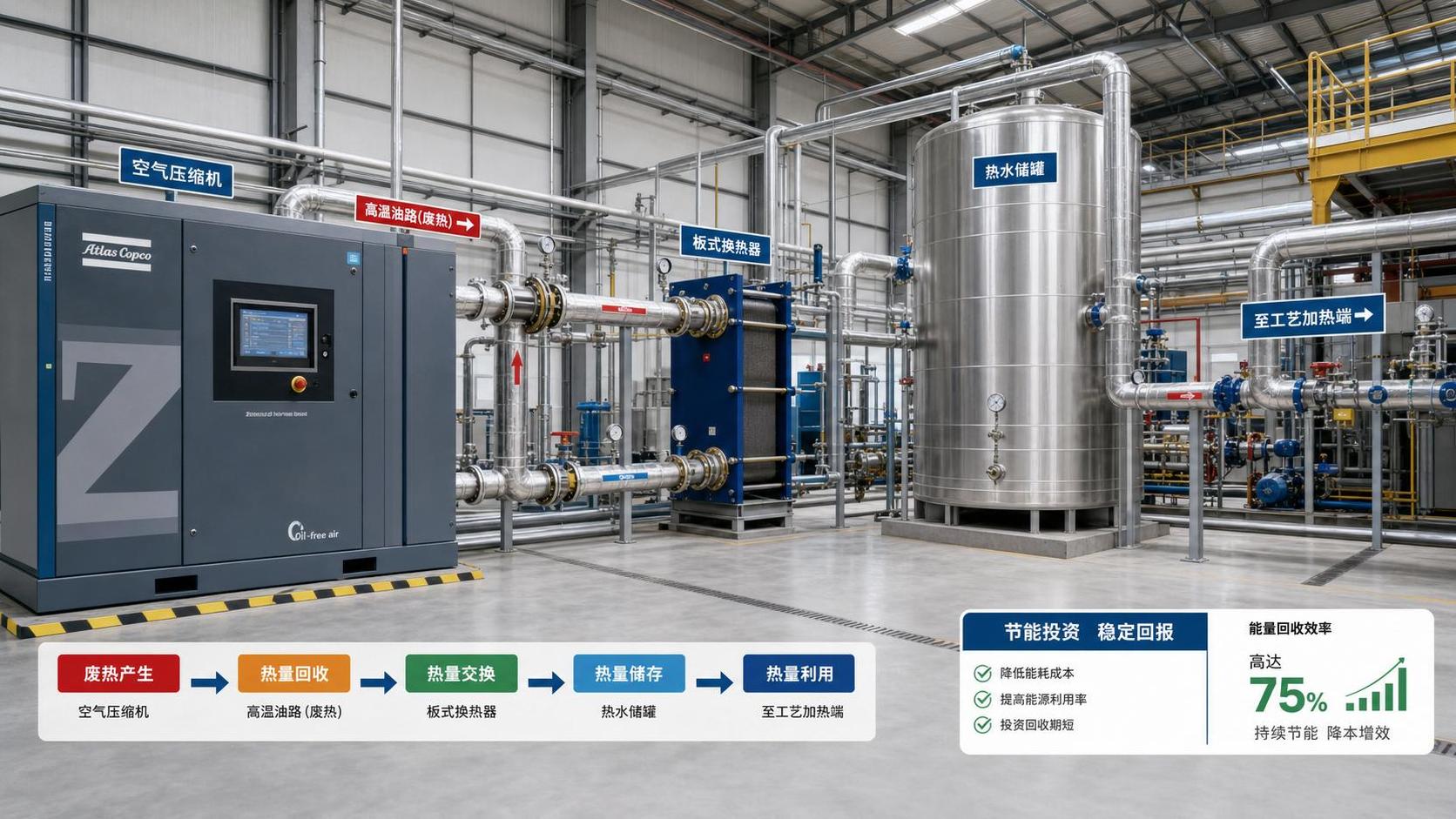
As early as possible. Compression generates significant heat, and in some facilities that energy can support water heating or process thermal loads. Thermodynamics analysis is the right stage to test whether heat recovery improves the business case without compromising core performance.
Why choose us for compressor intelligence and next-step evaluation?
GTC-Matrix supports technical evaluators who need more than a sales proposal. Our value lies in connecting thermodynamics analysis with industrial cooling, compressed air, vacuum processes, and heat exchange intelligence so decisions are grounded in both engineering and market reality.
Through our Strategic Intelligence Center, we help teams review sizing assumptions, technology direction, operating cost exposure, and sector-specific demand trends. That is useful when projects involve oil-free compression, microchannel heat exchangers, low-emission thermal systems, or clean manufacturing environments.
- Consult us for parameter confirmation when site data is incomplete or conflicting.
- Discuss product selection logic if you are comparing multiple compressor concepts or control strategies.
- Ask about delivery planning, phased expansion, or customized thermal integration requirements.
- Review certification and documentation expectations before final supplier shortlisting.
- Request support for quotation comparison so lifecycle cost, not just upfront price, drives the decision.
If your team is evaluating a new compressor room, replacing aging assets, or aligning energy efficiency targets with process stability, a structured thermodynamics analysis can prevent expensive rework later. GTC-Matrix is ready to support the next conversation with clearer inputs, sharper comparisons, and stronger technical confidence.
Ready when you are. Send us a message to get started.
Related News
- How to compare compressor flow ratings using free air deliveryAuthor :Pneumatic Power Engineer

- When does variable gas flow justify a custom screw compressor system?Author :Pneumatic Power Engineer

- How to size compressed air equipment for pneumatic toolsAuthor :Pneumatic Power Engineer

- How Should Energy Management Systems Handle Compressor Load Changes?Author :Pneumatic Power Engineer

- Which Maintenance Issues Reduce Air Compressor Efficiency?Author :Pneumatic Power Engineer

- How Much Energy Can Variable-Speed Screw Compressors Save?Author :Pneumatic Power Engineer

- Industrial Compressor Selection: Matching Flow, Pressure, and Duty CycleAuthor :Pneumatic Power Engineer

- China Expands Cross-Border RMB and FX Cash Pooling NationwideAuthor :Pneumatic Power Engineer

- How to Size Air Compressor Systems for Pneumatics by Flow and Pressure DemandAuthor :Pneumatic Power Engineer

- How Energy Recovery Systems for Compressors Cut Power CostsAuthor :Pneumatic Power Engineer

- How to Evaluate Screw Compressors in Industrial Refrigeration EquipmentAuthor :Pneumatic Power Engineer

- India Makes BIS Certification Mandatory for Screw CompressorsAuthor :Pneumatic Power Engineer

- China Tightens Export Filing for Screw CompressorsAuthor :Pneumatic Power Engineer

- SABIC Sets IoT Interface Rule for Screw CompressorsAuthor :Pneumatic Power Engineer

- Industrial Heat Recovery Systems for Compressors: When Do Energy Savings Pay Back?Author :Pneumatic Power Engineer

- EU Tightens REACH Limit for Screw Compressor LubricantsAuthor :Pneumatic Power Engineer

- EU Opens China Screw Compressor Review With Carbon RuleAuthor :Pneumatic Power Engineer

- DOE Mandates AHRI 1000-2026 for Screw CompressorsAuthor :Pneumatic Power Engineer

- VDMA Filing Signals EU Risk for Chinese Oil Screw CompressorsAuthor :Pneumatic Power Engineer
![]()
- Screw vs Piston Air Compressors for Stable Plant OutputAuthor :Pneumatic Power Engineer

- Saudi SASO Tightens Refrigerant Limits in IEC 60335-2-40:2026Author :Pneumatic Power Engineer

- IIR Warns of 18-Week Lead Times for Screw CompressorsAuthor :Pneumatic Power Engineer

- Welded Compressed Air Manifold Selection Guide for Pressure Stability and LeaksAuthor :Pneumatic Power Engineer

- India BIS Rule Adds IS 16830 Requirement for Imported Screw CompressorsAuthor :Pneumatic Power Engineer

- What to Check Before Choosing a Compressed Air FactoryAuthor :Pneumatic Power Engineer

- China Tightens Export Checks on Screw CompressorsAuthor :Pneumatic Power Engineer

- Screw Compressor Lead Times Reach 22 WeeksAuthor :Pneumatic Power Engineer

- Vietnam Requires QR Labels on Imported Screw CompressorsAuthor :Pneumatic Power Engineer

- Compressed Air Technologies Filtration: How to Reduce Pressure Drop and Energy LossAuthor :Pneumatic Power Engineer

- STSPIN830 Lead Time Tops 32 Weeks in Screw CompressorsAuthor :Pneumatic Power Engineer

- IGBT Shortage Extends Screw Compressor Lead TimesAuthor :Pneumatic Power Engineer

- Compressed Air Systems: 7 Hidden Costs That Raise Total Operating ExpenseAuthor :Pneumatic Power Engineer

- Compressed Air Efficiency: 7 Hidden Losses That Raise Operating CostsAuthor :Pneumatic Power Engineer

- How to Compare Screw vs Oil-Free Air Compression SystemsAuthor :Pneumatic Power Engineer

- Compressed Air Leaks: What They Really Cost in Daily OperationsAuthor :Pneumatic Power Engineer

- DOE Moves Up R449A Chiller Deadline to March 2027Author :Pneumatic Power Engineer