What to Check Before Choosing a Compressed Air Factory




What to Check Before Choosing a Compressed Air Factory
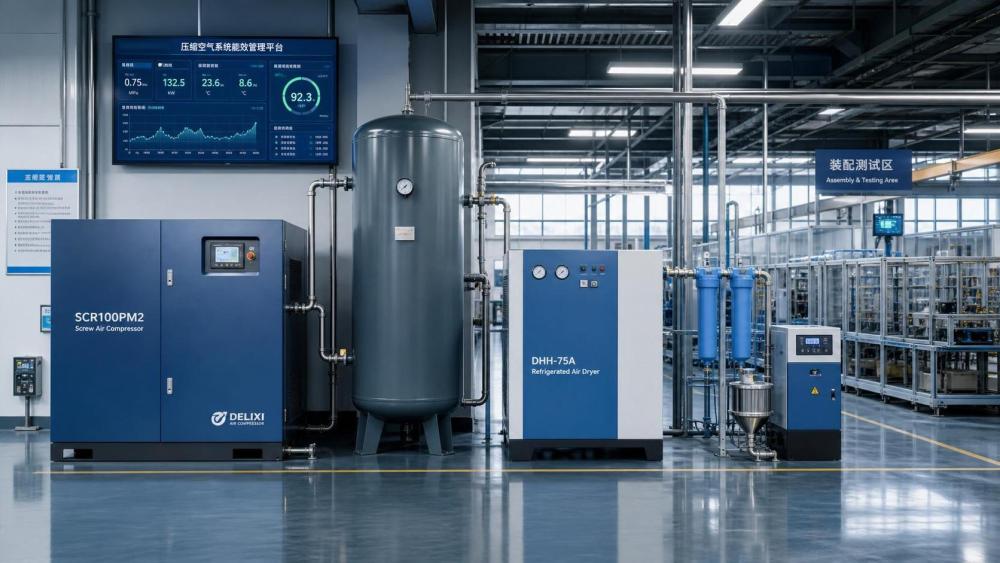
Choosing a compressed air factory is not a basic sourcing task.
It is a decision that affects uptime, energy cost, compliance, and long-term production stability.
Many suppliers look similar in brochures.
The real differences appear in engineering discipline, process control, and after-sales execution.
In actual business reviews, the safest approach is to evaluate the factory as a system.
That means checking product performance, manufacturing consistency, delivery reliability, and service readiness together.
A strong compressed air factory should prove more than output volume.
It should show that its compressors can support demanding applications with stable pressure, clean air, and efficient power use.
This also means looking past the unit price.
A lower purchase cost can quickly disappear through maintenance problems, poor spare parts access, or excessive energy consumption.
Start With Technical Fit, Not Just Catalog Claims
The first test is whether the compressed air factory understands your operating conditions.
A supplier that only shares standard models may not handle your real pressure profile or duty cycle.
Ask how the factory sizes systems for peak demand, variable load, and future expansion.
This is especially important for pharmaceutical, electronics, food, and precision manufacturing environments.
Check whether the recommended design covers these points:
- Required pressure range and flow stability
- Oil-free or oil-injected compressor suitability
- Air quality level and filtration arrangement
- Ambient temperature and ventilation demands
- Noise limits and site installation constraints
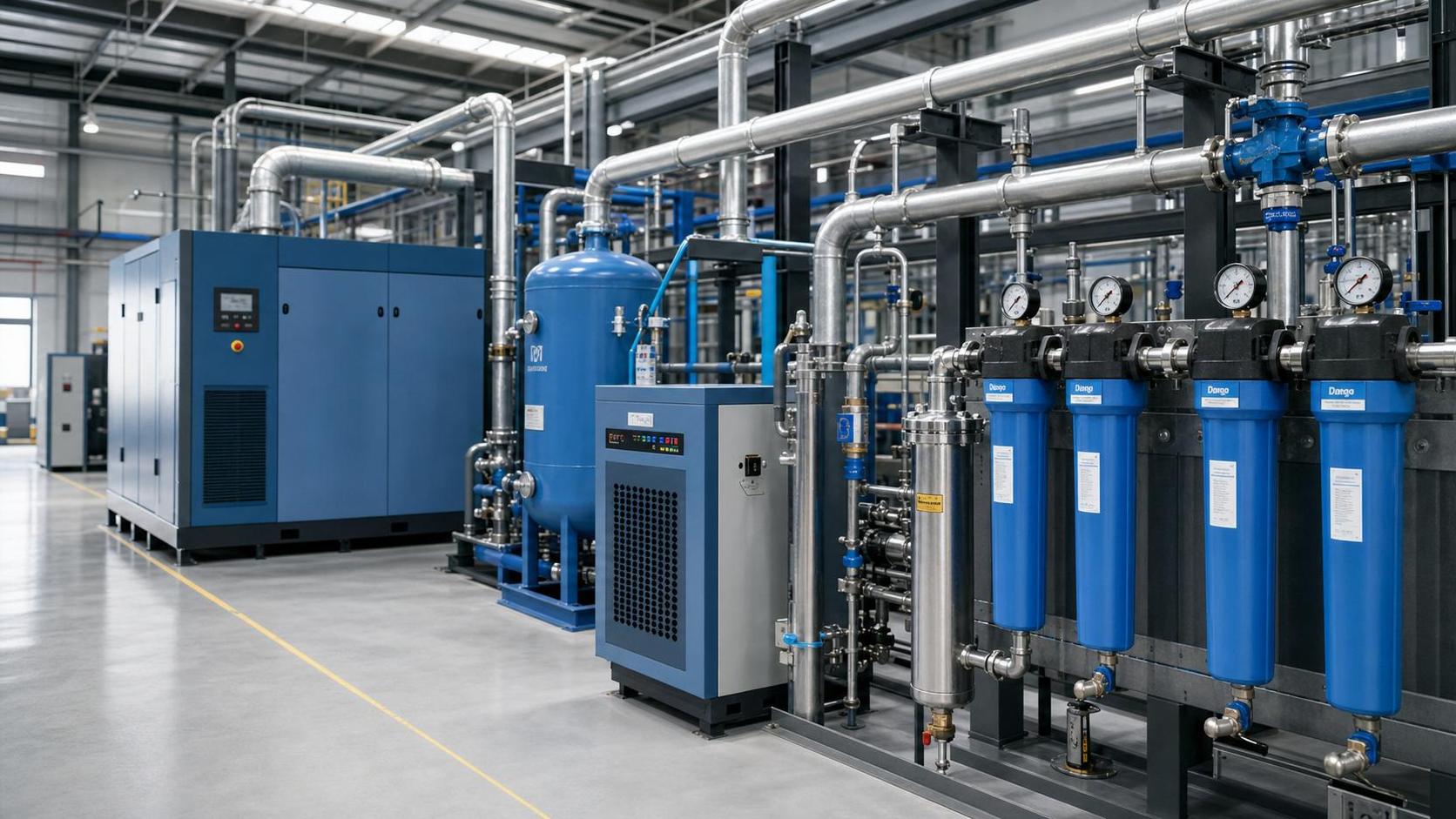
- Integration with dryers, tanks, and controls
A capable compressed air factory should explain why a configuration fits your process.
It should not rely on generic model comparisons alone.
Verify Energy Efficiency With Data You Can Audit
Energy cost often outweighs the initial equipment price over the system life.
That is why energy performance should be central when comparing any compressed air factory.
Recent market shifts make this even more relevant.
Power prices remain volatile, and efficiency targets are becoming stricter across many regions.
Ask for measured performance, not marketing language.
The factory should provide clear test data for specific power, full-load performance, and part-load behavior.
It is also useful to ask whether variable speed control is genuinely beneficial for your load pattern.
In some plants, poor control logic cancels out the expected savings.
A dependable compressed air factory should help estimate total cost of ownership using realistic assumptions.
That includes power use, maintenance intervals, consumables, and downtime exposure.
Check Quality Control Inside the Compressed Air Factory
A compressed air factory should have visible, repeatable quality systems.
This is where business risk becomes easier to judge.
Do not stop at certificates on a slide deck.
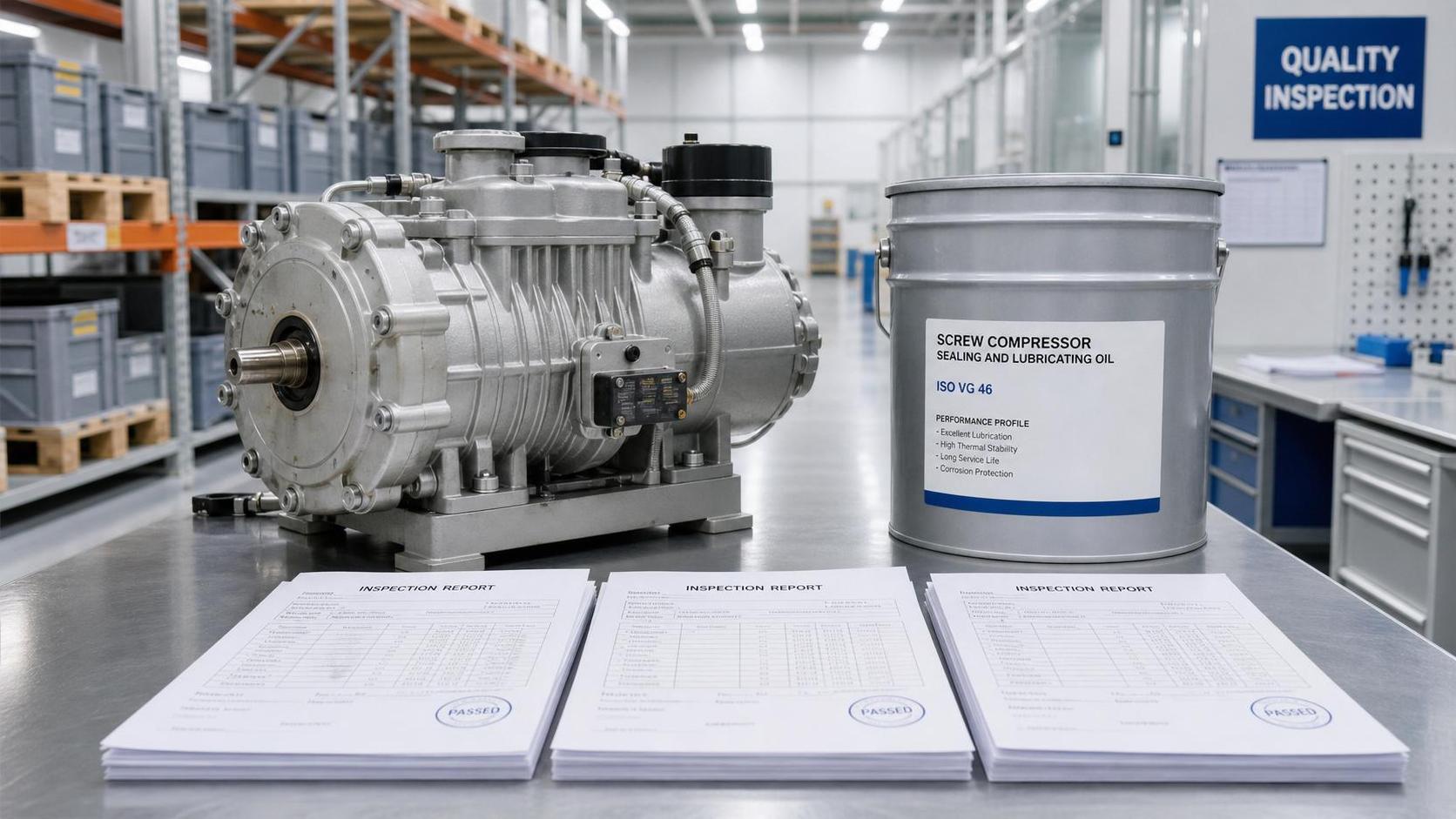
Ask how incoming materials are inspected, how assembly is controlled, and how final testing is documented.
A stronger signal is traceability.
The factory should be able to track major components, test records, and corrective actions by serial number.
That becomes critical if a field failure appears later.
Practical review points include:
- Factory test procedures for pressure, temperature, vibration, and leakage
- Calibration control for instruments and test benches
- Nonconformance handling and documented rework rules
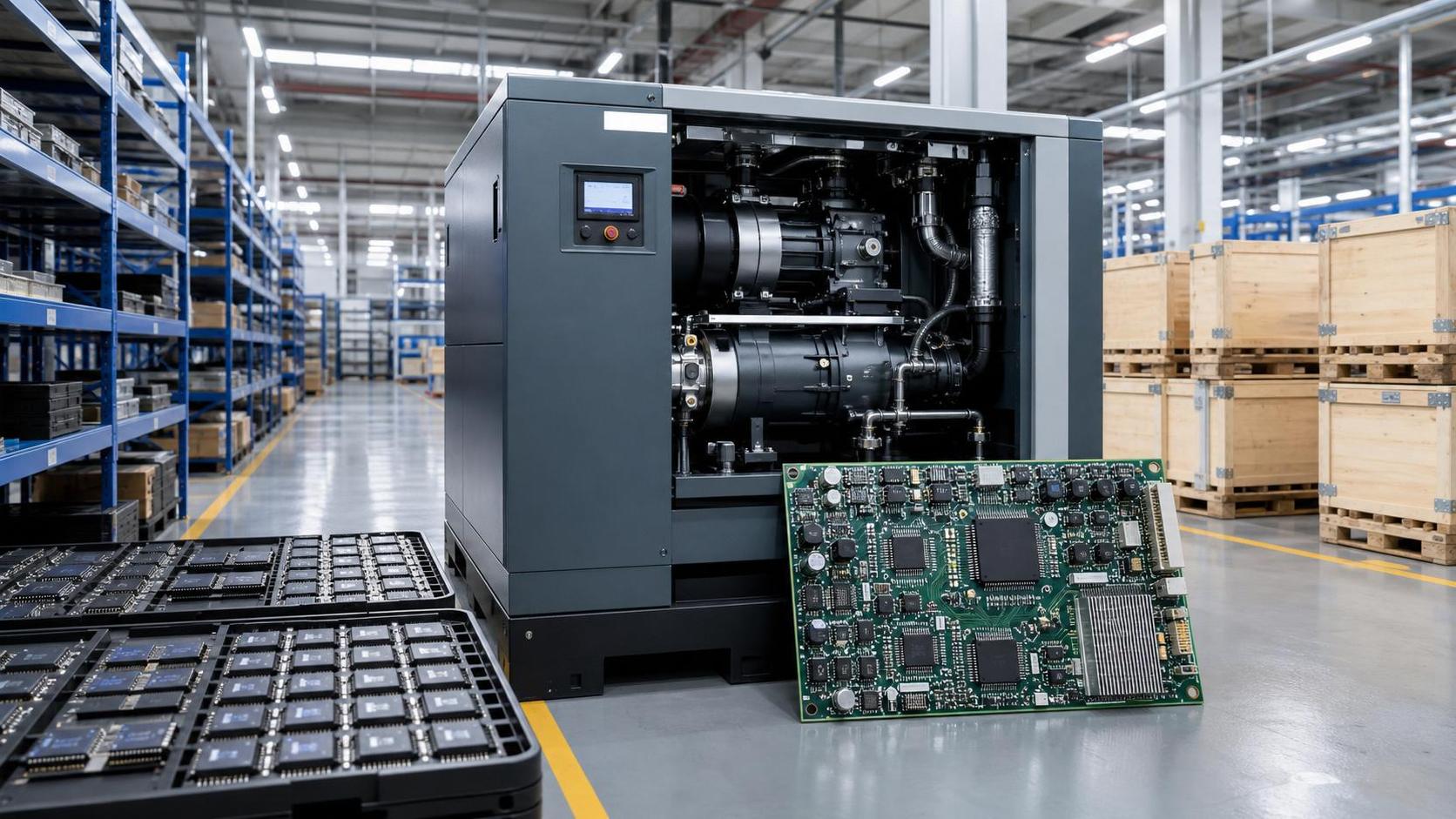
- Supplier management for motors, valves, airends, and electronics
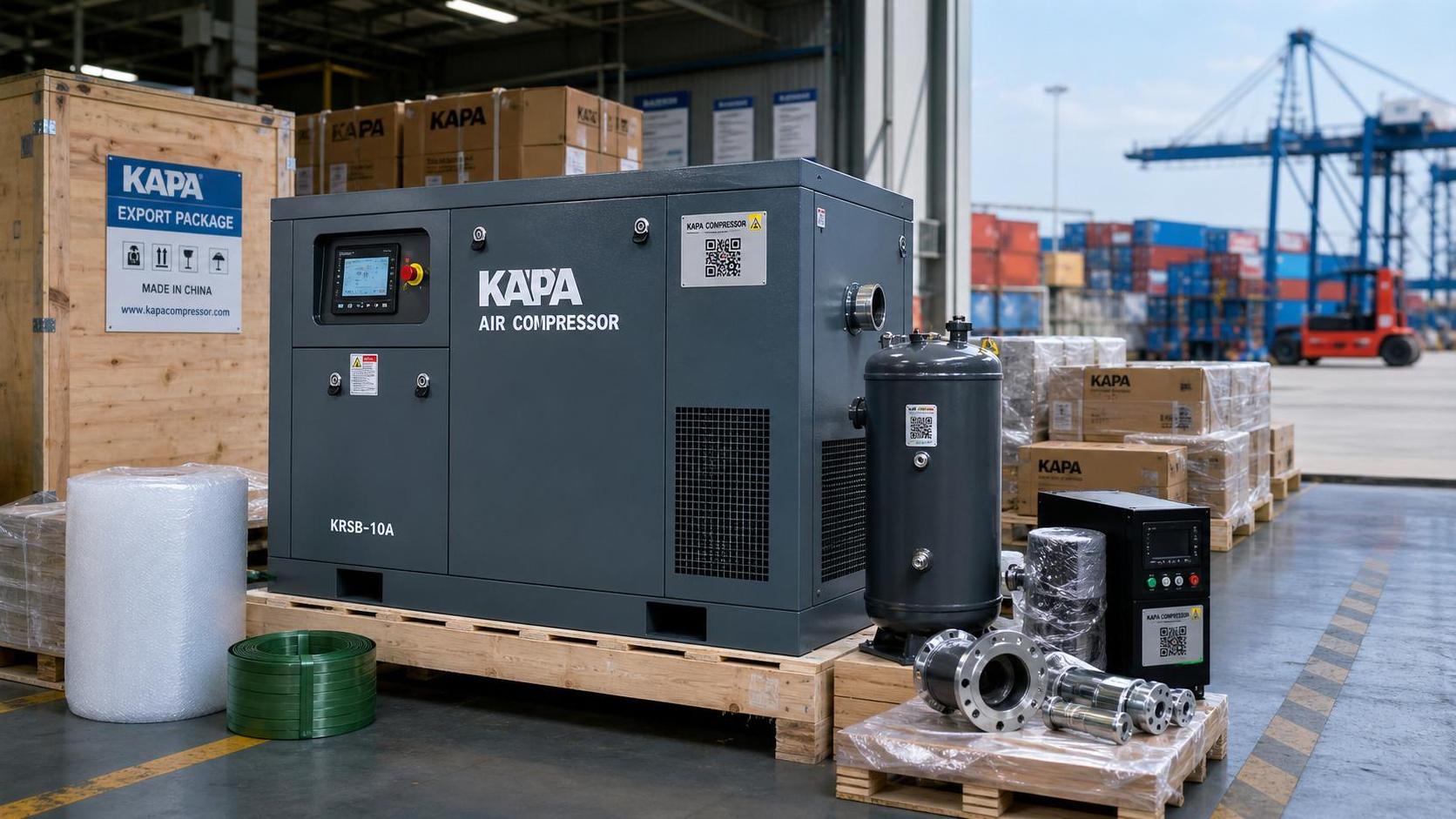
- Packaging standards for export and long-distance shipment
If possible, request a live or recorded factory audit.
A confident compressed air factory usually has no issue showing its testing workflow.
Assess Delivery Reliability and Supply Chain Stability
A technically good product can still become a poor choice if delivery is unstable.
More buyers are now checking supply chain resilience before approving a compressed air factory.
That change makes sense.
Component shortages, freight delays, and policy shifts can disrupt projects quickly.
Ask the supplier where key components come from and how many approved sources exist.
It also helps to understand standard lead times, peak season capacity, and buffer stock strategy.
A reliable compressed air factory should explain what happens when schedules change.
Can it replan quickly, communicate exceptions early, and protect priority orders?
These details matter more than polished presentations.
Review Service Capability Before You Sign
Service quality often decides whether the supplier relationship works after installation.
This is where many compressed air factory evaluations remain too shallow.
Check the service network, spare parts availability, and response commitment in your operating region.
A long warranty sounds good, but execution matters more than duration.
Ask direct questions about failure escalation, remote support, technician training, and preventive maintenance plans.
For critical plants, ask whether the compressed air factory can support condition monitoring or performance diagnostics.
That capability reduces surprises and improves lifecycle planning.
Reference checks also help here.
Speak with users in similar industries and ask how the factory performs after the sale, not just before it.
Use a Practical Decision Framework
A structured comparison usually leads to better supplier selection.
When choosing a compressed air factory, score each candidate across the same criteria.
Keep the framework simple enough to use, but detailed enough to expose risk.
- Technical suitability for the target process
- Verified efficiency and total cost of ownership
- Factory quality control and traceability
- Lead time reliability and sourcing resilience
- Service response, spare parts, and local support
- Commercial clarity, contract terms, and warranty detail
This method helps separate a low-risk compressed air factory from a merely low-cost option.
It also makes internal approval easier because the decision logic is visible and defensible.
Final Check Before Approval
Before choosing a compressed air factory, confirm that performance claims have evidence behind them.
Make sure the supplier fits your application, not just your budget target.
The stronger factory is usually the one that answers hard questions clearly.
It should show stable engineering, transparent testing, realistic timelines, and dependable support.
That combination protects operational continuity and investment value.
In a tighter energy and manufacturing environment, that is the standard worth applying to every compressed air factory review.
Ready when you are. Send us a message to get started.
Related News
- When does variable gas flow justify a custom screw compressor system?Author :Pneumatic Power Engineer

- How to size compressed air equipment for pneumatic toolsAuthor :Pneumatic Power Engineer

- How Should Energy Management Systems Handle Compressor Load Changes?Author :Pneumatic Power Engineer

- Which Maintenance Issues Reduce Air Compressor Efficiency?Author :Pneumatic Power Engineer

- How Much Energy Can Variable-Speed Screw Compressors Save?Author :Pneumatic Power Engineer

- Industrial Compressor Selection: Matching Flow, Pressure, and Duty CycleAuthor :Pneumatic Power Engineer

- China Expands Cross-Border RMB and FX Cash Pooling NationwideAuthor :Pneumatic Power Engineer

- How to Size Air Compressor Systems for Pneumatics by Flow and Pressure DemandAuthor :Pneumatic Power Engineer

- How Energy Recovery Systems for Compressors Cut Power CostsAuthor :Pneumatic Power Engineer

- How to Evaluate Screw Compressors in Industrial Refrigeration EquipmentAuthor :Pneumatic Power Engineer

- India Makes BIS Certification Mandatory for Screw CompressorsAuthor :Pneumatic Power Engineer

- China Tightens Export Filing for Screw CompressorsAuthor :Pneumatic Power Engineer

- SABIC Sets IoT Interface Rule for Screw CompressorsAuthor :Pneumatic Power Engineer

- Industrial Heat Recovery Systems for Compressors: When Do Energy Savings Pay Back?Author :Pneumatic Power Engineer

- EU Tightens REACH Limit for Screw Compressor LubricantsAuthor :Pneumatic Power Engineer

- EU Opens China Screw Compressor Review With Carbon RuleAuthor :Pneumatic Power Engineer

- DOE Mandates AHRI 1000-2026 for Screw CompressorsAuthor :Pneumatic Power Engineer

- VDMA Filing Signals EU Risk for Chinese Oil Screw CompressorsAuthor :Pneumatic Power Engineer
![]()
- Screw vs Piston Air Compressors for Stable Plant OutputAuthor :Pneumatic Power Engineer

- Saudi SASO Tightens Refrigerant Limits in IEC 60335-2-40:2026Author :Pneumatic Power Engineer

- IIR Warns of 18-Week Lead Times for Screw CompressorsAuthor :Pneumatic Power Engineer

- Welded Compressed Air Manifold Selection Guide for Pressure Stability and LeaksAuthor :Pneumatic Power Engineer

- India BIS Rule Adds IS 16830 Requirement for Imported Screw CompressorsAuthor :Pneumatic Power Engineer

- What to Check Before Choosing a Compressed Air FactoryAuthor :Pneumatic Power Engineer

- China Tightens Export Checks on Screw CompressorsAuthor :Pneumatic Power Engineer

- Screw Compressor Lead Times Reach 22 WeeksAuthor :Pneumatic Power Engineer

- Vietnam Requires QR Labels on Imported Screw CompressorsAuthor :Pneumatic Power Engineer

- Compressed Air Technologies Filtration: How to Reduce Pressure Drop and Energy LossAuthor :Pneumatic Power Engineer

- STSPIN830 Lead Time Tops 32 Weeks in Screw CompressorsAuthor :Pneumatic Power Engineer

- IGBT Shortage Extends Screw Compressor Lead TimesAuthor :Pneumatic Power Engineer

- Compressed Air Systems: 7 Hidden Costs That Raise Total Operating ExpenseAuthor :Pneumatic Power Engineer

- Compressed Air Efficiency: 7 Hidden Losses That Raise Operating CostsAuthor :Pneumatic Power Engineer

- How to Compare Screw vs Oil-Free Air Compression SystemsAuthor :Pneumatic Power Engineer

- Compressed Air Leaks: What They Really Cost in Daily OperationsAuthor :Pneumatic Power Engineer

- DOE Moves Up R449A Chiller Deadline to March 2027Author :Pneumatic Power Engineer

- How Compression Technology Cuts Energy Use in Modern PlantsAuthor :Pneumatic Power Engineer