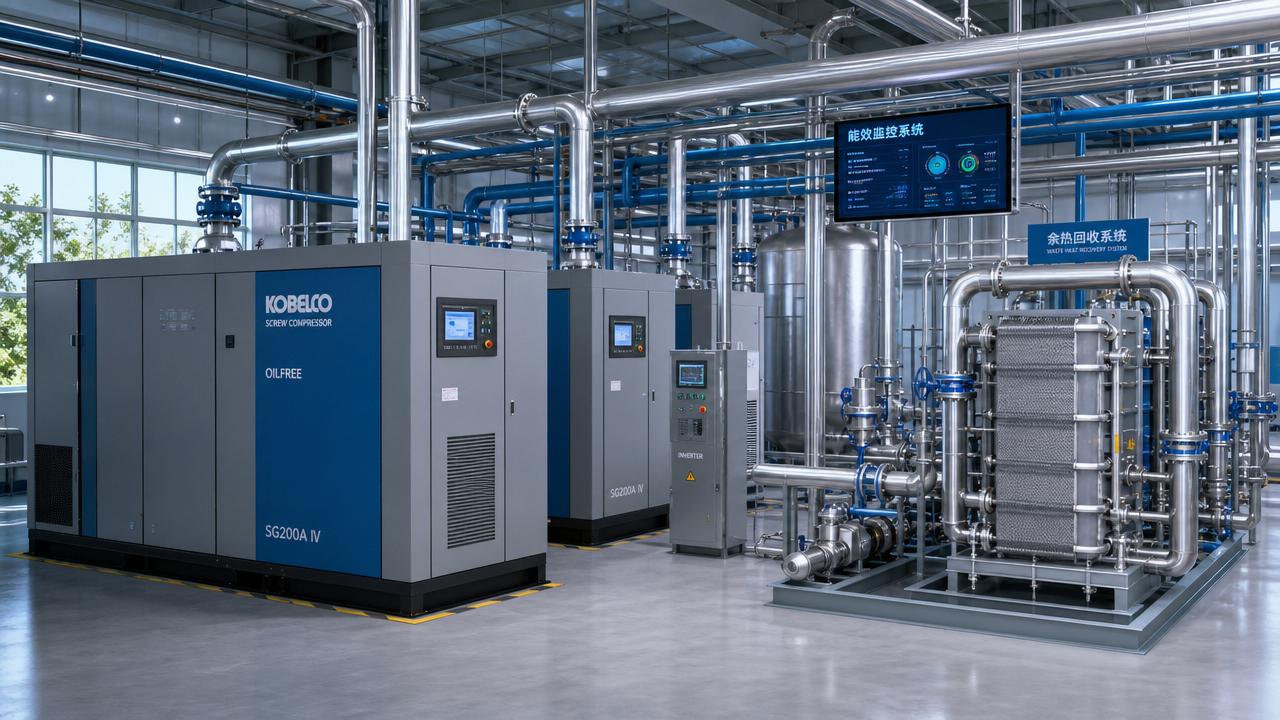
Compressed Air Leaks: Hidden Costs and Practical Ways to Reduce Losses




Compressed air leaks: why do small losses become expensive so quickly?
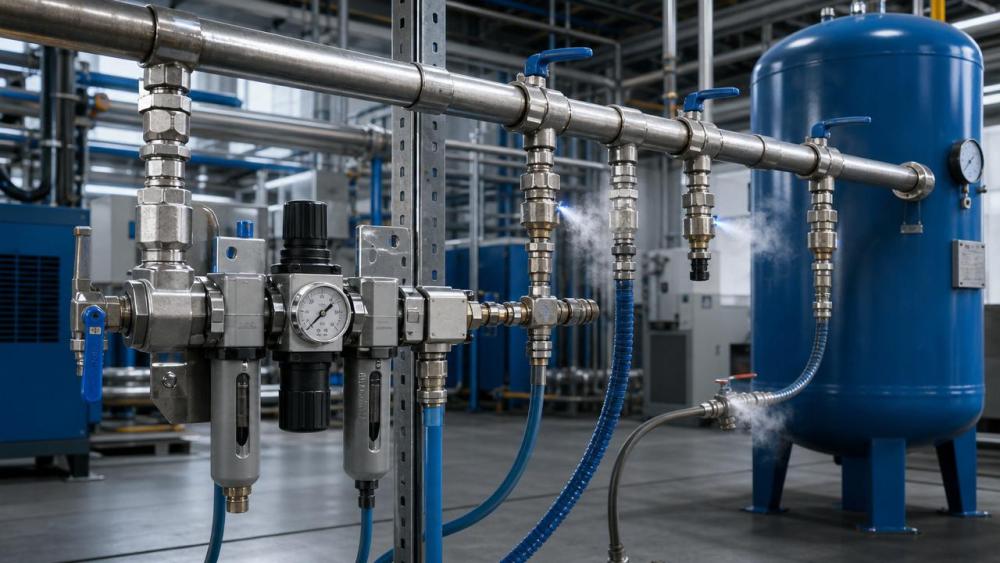
Compressed air usually feels invisible until performance slips or utility costs rise without a clear reason.
That is why compressed air leaks are often underestimated in mixed industrial environments, from packaging and machining to food processing and electronics support systems.
A leak does not only waste air. It forces compressors to run longer, increases load cycling, and pushes downstream equipment into less stable operating conditions.
In practical service work, the real problem is cumulative loss. One loose fitting may seem minor, but dozens of small leaks can quietly reshape the whole energy profile.
Across industrial utilities, compressed air is one of the most expensive forms of energy. When leaks persist, the hidden cost shows up in power consumption, wear, noise, and avoidable service calls.
GTC-Matrix regularly tracks energy efficiency signals across cooling, vacuum, and compressed air systems. A consistent pattern appears: leak control delivers some of the fastest operational savings when done methodically.
So the key question is not whether leaks matter. It is how to spot their impact early and reduce losses without disrupting production support.
What counts as a compressed air leak, and where do they usually hide?
A compressed air leak is any unintended escape of pressurized air between generation, treatment, storage, and point-of-use equipment.
That definition sounds simple, but the difficult part is location. Leaks rarely gather in one obvious place.
More common trouble points include quick couplings, threaded joints, hoses, drain valves, filter housings, pressure regulators, solenoid valves, and flexible connections near vibrating machines.
Older plants often have another issue. Distribution lines were expanded over time, leaving dead legs, temporary bypasses, and aging branch connections that no one fully maps anymore.
Some leaks are audible. Others are masked by fan noise, process motion, or enclosure design. In clean production areas, a very small leak may still be expensive because systems run continuously.
Needle-like leaks around instrumentation can also distort local pressure stability. This matters where repeatability is more important than raw volume.
- Leaks near compressors raise runtime and loaded hours.
- Leaks in distribution reduce pressure before the application point.
- Leaks at end-use devices trigger false demand and unstable actuation.
This is why leak detection should follow the full compressed air path, not just the compressor room.
Why do compressed air leaks hurt more than the electric bill suggests?
The direct energy waste is only the first layer. The wider cost comes from how the system compensates for that waste every hour.
When compressors must maintain target pressure despite leaks, they often operate at higher average load or cycle more frequently than intended.
That can increase motor stress, shorten separator and filter life, and raise condensate handling demands. In some systems, artificial demand becomes a second penalty.
Artificial demand happens when pressure is set higher than necessary. The extra pressure then drives even more flow through open leaks.
There is also an operational side. Low pressure at a remote machine may lead to actuator delays, rejected parts, or repeated troubleshooting that never addresses the root cause.
The table below helps separate common signs from likely interpretations.
In sectors sensitive to purity, temperature control, or precision motion, such as pharmaceuticals or semiconductors, the hidden process risk may outweigh the energy cost alone.
How can you tell whether leak losses are already serious?
A useful starting point is off-shift behavior. If the compressed air system remains heavily loaded when production demand is low, leakage is a likely contributor.
Another clue is a pressure complaint that moves around. One day it affects packaging, another day it affects instruments or pneumatic tools.
That pattern often means system losses are dynamic, not tied to one failed machine.
In actual maintenance routines, a combination of methods works best:
- Listen for hissing during quiet periods.
- Use ultrasonic detection around fittings and valves.
- Review compressor runtime, load ratio, and pressure trends.
- Isolate plant sections to compare pressure decay rates.
- Check whether pressure setpoints have drifted upward over time.
The more reliable judgment method is not one dramatic test. It is a repeatable baseline that shows what normal leakage should look like for that site.
This is where intelligence matters. Platforms such as GTC-Matrix help connect leak findings with broader efficiency benchmarks, control strategies, and equipment evolution trends.
That broader context is useful when deciding whether the issue is isolated repair work or part of a larger compressed air optimization project.
Which leak reduction actions usually work fastest in the field?
The quickest wins usually come from fixing repeated failure points, not from chasing every tiny leak in random order.
Start with connections exposed to vibration, frequent hose changes, washdown conditions, or poor assembly access. These areas produce recurring losses.
Then review components that waste air by design, including open blowing, oversized nozzles, or neglected drains that bleed continuously.
A practical correction plan often includes both repair and system discipline:
- Replace damaged hoses and brittle seals instead of retightening repeatedly.
- Standardize fitting types to reduce mismatch and assembly errors.
- Tag and document leak points for follow-up verification.
- Shut off isolated branches when equipment is not in service.
- Adjust pressure only after confirming the real flow requirement.
In many plants, the biggest improvement comes from combining leak repair with pressure optimization. Repair alone saves air, but better control prevents losses from returning so quickly.
If the system includes oil-free compression or high-purity applications, repair materials and installation practices should also match contamination control needs.
What mistakes keep compressed air leak programs from lasting?
The first mistake is treating leak repair as a one-time campaign. Compressed air systems change constantly, so new losses appear after line modifications, machine moves, and routine servicing.
Another common mistake is measuring success only by the number of leaks fixed. That sounds useful, but it ignores leak size, recurrence, and the actual impact on compressor behavior.
Some sites also focus only on the compressor room. In reality, end-use devices and neglected branches often carry the most persistent compressed air waste.
A more durable approach is to build a simple routine around inspection, tagging, repair priority, and post-repair verification.
Need to decide where to start? This checklist is usually enough:
- Identify off-shift baseline demand.
- Rank leaks by estimated flow loss and process risk.
- Repair the highest-value points first.
- Confirm pressure stability after each repair round.
- Review trends quarterly, especially after system changes.
When this routine is tied to energy monitoring and service records, compressed air management becomes more predictable and easier to justify internally.
So what is the practical next step if losses keep returning?
If compressed air leaks keep reappearing, the issue is usually larger than a few bad fittings. The system may need a structured review of pressure logic, distribution layout, component standardization, and maintenance timing.
A sensible next step is to compare three things together: baseline air demand, leak location patterns, and compressor operating data.
That comparison helps separate isolated repair needs from broader design or control weaknesses.
For organizations following energy efficiency and decarbonization targets, compressed air leak reduction is not a minor housekeeping task. It directly supports lower power use and more stable utility performance.
GTC-Matrix frames this well through its wider view of thermodynamics, compression efficiency, and industrial heat and power systems. Better decisions come from seeing leaks as part of the whole energy chain.
The most practical move now is to map recurrent leak zones, verify actual pressure needs, and create a repeatable inspection standard. That is usually where meaningful compressed air savings begin to hold.
Ready when you are. Send us a message to get started.
Related News
- When does variable gas flow justify a custom screw compressor system?Author :Pneumatic Power Engineer

- How to size compressed air equipment for pneumatic toolsAuthor :Pneumatic Power Engineer

- How Should Energy Management Systems Handle Compressor Load Changes?Author :Pneumatic Power Engineer

- Which Maintenance Issues Reduce Air Compressor Efficiency?Author :Pneumatic Power Engineer

- How Much Energy Can Variable-Speed Screw Compressors Save?Author :Pneumatic Power Engineer

- Industrial Compressor Selection: Matching Flow, Pressure, and Duty CycleAuthor :Pneumatic Power Engineer

- China Expands Cross-Border RMB and FX Cash Pooling NationwideAuthor :Pneumatic Power Engineer

- How to Size Air Compressor Systems for Pneumatics by Flow and Pressure DemandAuthor :Pneumatic Power Engineer

- How Energy Recovery Systems for Compressors Cut Power CostsAuthor :Pneumatic Power Engineer

- How to Evaluate Screw Compressors in Industrial Refrigeration EquipmentAuthor :Pneumatic Power Engineer

- India Makes BIS Certification Mandatory for Screw CompressorsAuthor :Pneumatic Power Engineer

- China Tightens Export Filing for Screw CompressorsAuthor :Pneumatic Power Engineer

- SABIC Sets IoT Interface Rule for Screw CompressorsAuthor :Pneumatic Power Engineer

- Industrial Heat Recovery Systems for Compressors: When Do Energy Savings Pay Back?Author :Pneumatic Power Engineer

- EU Tightens REACH Limit for Screw Compressor LubricantsAuthor :Pneumatic Power Engineer

- EU Opens China Screw Compressor Review With Carbon RuleAuthor :Pneumatic Power Engineer

- DOE Mandates AHRI 1000-2026 for Screw CompressorsAuthor :Pneumatic Power Engineer

- VDMA Filing Signals EU Risk for Chinese Oil Screw CompressorsAuthor :Pneumatic Power Engineer
![]()
- Screw vs Piston Air Compressors for Stable Plant OutputAuthor :Pneumatic Power Engineer

- Saudi SASO Tightens Refrigerant Limits in IEC 60335-2-40:2026Author :Pneumatic Power Engineer

- IIR Warns of 18-Week Lead Times for Screw CompressorsAuthor :Pneumatic Power Engineer

- Welded Compressed Air Manifold Selection Guide for Pressure Stability and LeaksAuthor :Pneumatic Power Engineer

- India BIS Rule Adds IS 16830 Requirement for Imported Screw CompressorsAuthor :Pneumatic Power Engineer

- What to Check Before Choosing a Compressed Air FactoryAuthor :Pneumatic Power Engineer

- China Tightens Export Checks on Screw CompressorsAuthor :Pneumatic Power Engineer

- Screw Compressor Lead Times Reach 22 WeeksAuthor :Pneumatic Power Engineer

- Vietnam Requires QR Labels on Imported Screw CompressorsAuthor :Pneumatic Power Engineer

- Compressed Air Technologies Filtration: How to Reduce Pressure Drop and Energy LossAuthor :Pneumatic Power Engineer

- STSPIN830 Lead Time Tops 32 Weeks in Screw CompressorsAuthor :Pneumatic Power Engineer

- IGBT Shortage Extends Screw Compressor Lead TimesAuthor :Pneumatic Power Engineer

- Compressed Air Systems: 7 Hidden Costs That Raise Total Operating ExpenseAuthor :Pneumatic Power Engineer

- Compressed Air Efficiency: 7 Hidden Losses That Raise Operating CostsAuthor :Pneumatic Power Engineer

- How to Compare Screw vs Oil-Free Air Compression SystemsAuthor :Pneumatic Power Engineer

- Compressed Air Leaks: What They Really Cost in Daily OperationsAuthor :Pneumatic Power Engineer

- DOE Moves Up R449A Chiller Deadline to March 2027Author :Pneumatic Power Engineer

- How Compression Technology Cuts Energy Use in Modern PlantsAuthor :Pneumatic Power Engineer