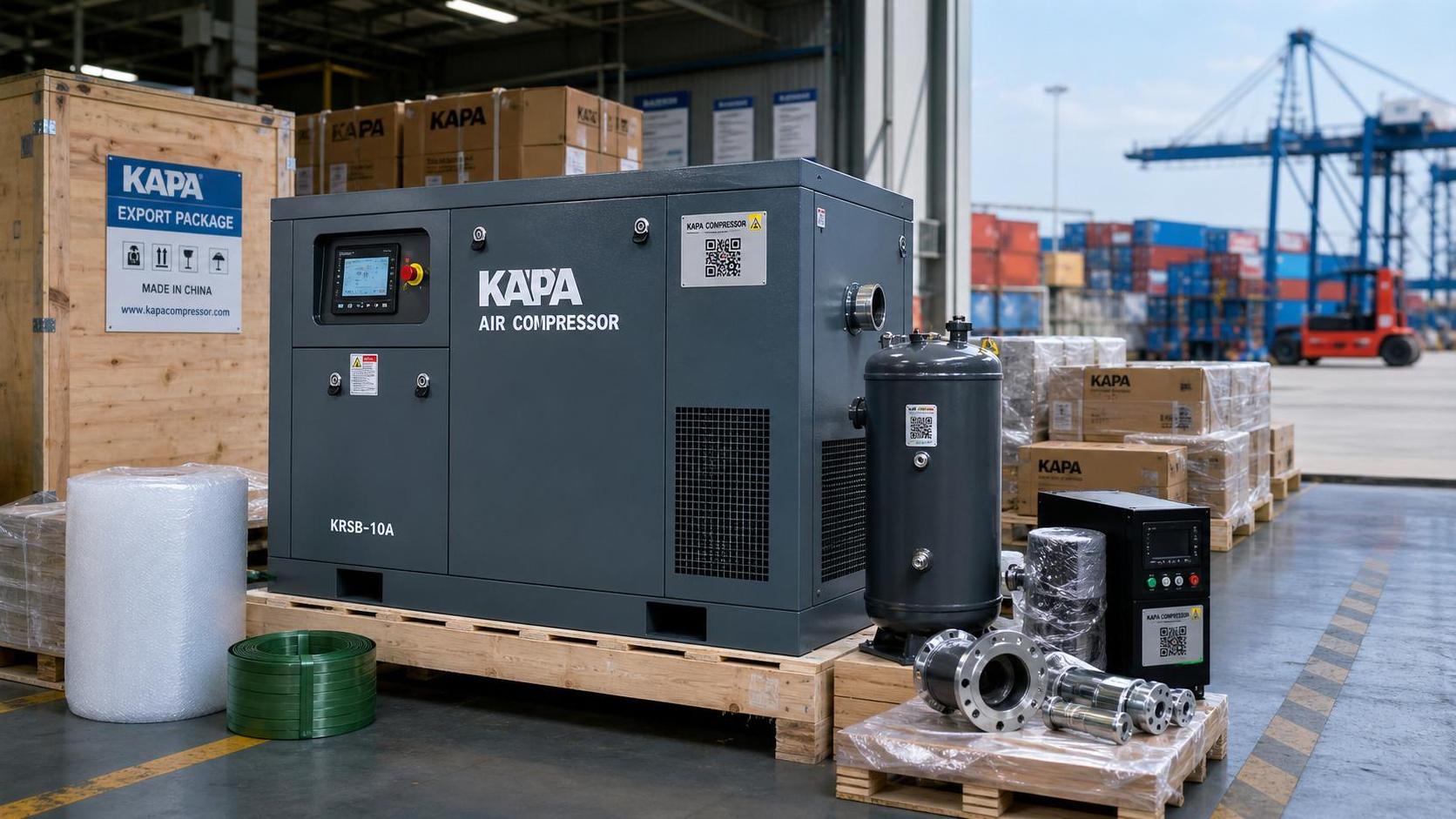
China Tightens Export Filing for Screw Compressors




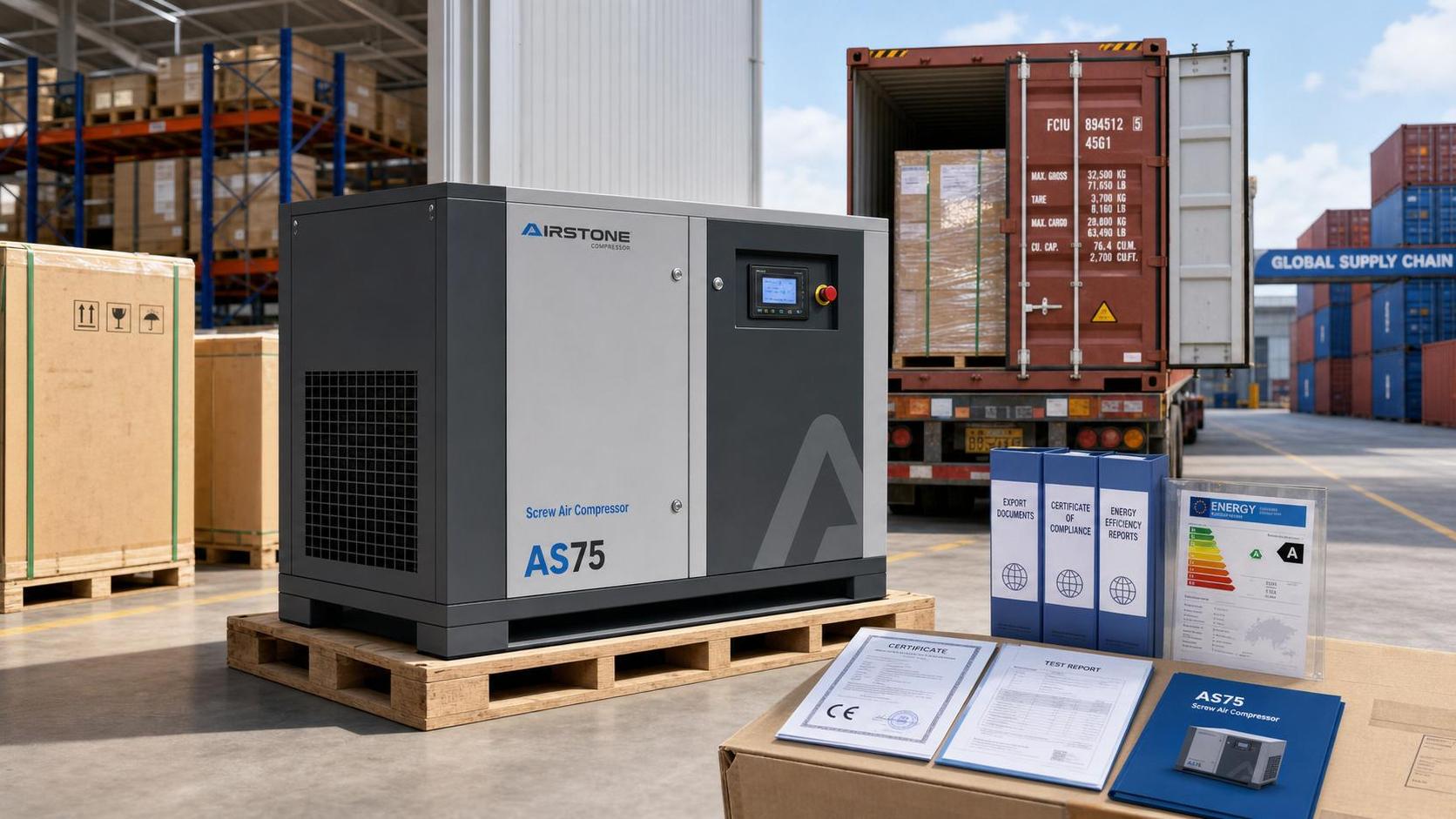
China’s customs authority has moved quickly to change how screw compressor exports must be declared, with the adjustment taking effect on July 15, 2026. For exporters, overseas buyers, customs teams, and supply chain service providers, the immediate issue is not only the new HS classification but also the added documentation tied to energy efficiency label filing and pre-export type test reports, both of which may affect order confirmation and clearance timing.
What the notice confirms from July 15
According to the information provided, the General Administration of Customs of China issued a notice on July 13, 2026, titled Notice on Adjusting the Classification and Regulatory Requirements for Certain Compressor Products (Shu Shui Fa [2026] No. 89). The notice states that screw compressors exported from China must be declared under the new HS code 84148090.11.
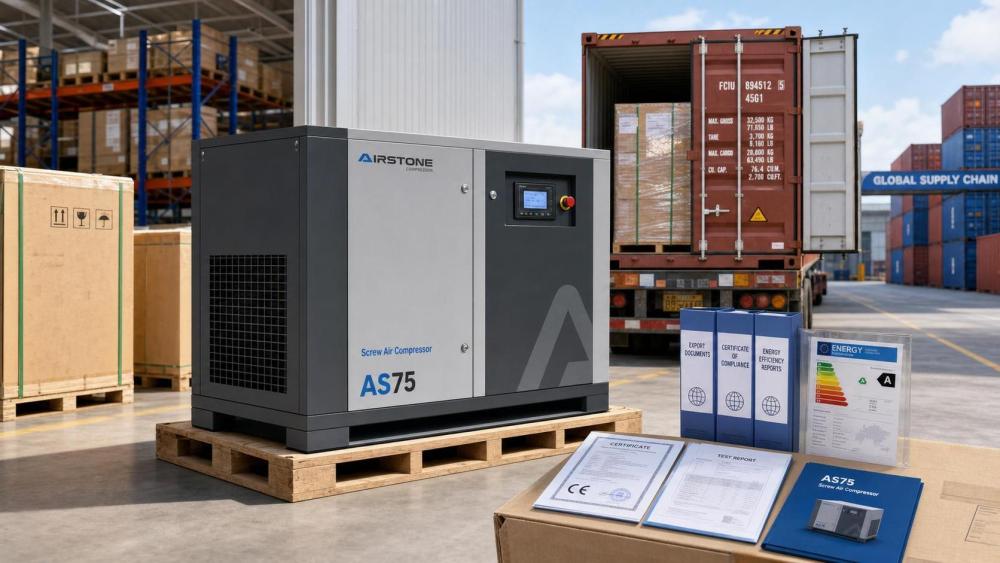
The same notice also adds two compliance requirements: energy efficiency label filing and a pre-export type test report. The new rules are scheduled to take effect from 00:00 on July 15, 2026. The provided summary further indicates that the change is expected to affect order confirmation by global buyers and customs clearance efficiency.
Where the immediate pressure may appear in business operations
Export declaration work now faces a narrower filing standard
From an industry perspective, companies directly responsible for export declarations may feel the first operational impact. The reason is straightforward: the applicable HS code for screw compressors has been explicitly adjusted, which means declaration practices, internal product mapping, and supporting documentation checks may need to align immediately. What deserves closer attention is whether ongoing shipments, draft declarations, and recently confirmed orders are already prepared under the new code and document requirements.
Overseas buyers may reassess order timing and shipment readiness
Analysis shows that global buyers are likely to focus on whether suppliers can still confirm shipment schedules without interruption. The supplied information already points to possible effects on order confirmation and clearance timing. In practice, this places attention on contract execution, dispatch planning, and the readiness of compliance documents tied to export release.
Customs and logistics coordination could become more time-sensitive
Supply chain service providers, including customs brokers and logistics coordinators, may be affected because the rule change combines tariff classification adjustment with added regulatory paperwork. Observably, this is not only a coding issue; it also touches document completeness before export. The key business link to watch is the handoff between exporter, broker, and shipping arrangement, especially where goods are close to filing or departure.
Manufacturing and documentation teams may need closer alignment
For manufacturers of screw compressors, the impact may show up in internal coordination rather than in production itself. Analysis shows that when export rules add filing and report requirements, document owners, compliance personnel, and sales teams need to work from the same product scope and shipment schedule. The immediate concern is whether the necessary filing and type test materials can match the goods being exported under the revised classification.
What companies should check right now
Review product-to-code mapping without delay
Companies involved in screw compressor exports should first verify how relevant products are currently classified in internal systems and export paperwork. Because the notice explicitly requires declaration under HS code 84148090.11, the practical issue is whether existing templates, ERP entries, broker instructions, and pending shipment files still reflect an older approach.
Confirm whether supporting compliance documents are export-ready
The added requirement for energy efficiency label filing and a pre-export type test report makes document readiness a core operational issue. What deserves closer attention is not only whether these materials exist, but whether they are available in time for shipment filing and can be consistently linked to the exported product.
Recheck orders that sit close to the implementation date
Because the rule takes effect from 00:00 on July 15, 2026, businesses should pay particular attention to orders being confirmed, packed, or prepared for declaration around that date. Analysis shows that the transition window is short, so the difference between a smooth filing and a delayed one may depend on whether shipment timing and supporting paperwork have already been reconciled with the new rule.
Keep customer and broker communication tightly aligned
For sales teams, exporters, and service providers, the near-term priority is communication discipline. The supplied information already indicates possible effects on buyer confirmation and customs timing. In that context, companies should closely track how they explain shipment status, documentary readiness, and any filing-related timing changes to overseas customers and customs intermediaries.
Why this should be read as both an immediate rule change and a compliance signal
Observably, this development should first be understood as an immediate operational change, because it sets a specific new HS code and introduces additional export-facing requirements with a near-term effective date. At the same time, Analysis shows that the combination of classification adjustment and added documentation is also a compliance signal worth watching beyond the first week of implementation.
It is more appropriate to understand this as a confirmed short-term rule change with potential longer-term implications that still require observation. The confirmed result is the new filing requirement from July 15. The part that still needs continued attention is how consistently the new documentation requirements are applied in actual export workflows and how strongly they influence transaction timing across different shipments.
How the market may best interpret this update for now
At this stage, the industry significance lies less in broad market prediction and more in execution risk at the shipment level. The confirmed facts already show that screw compressor exporters face a new declaration code and added compliance materials from July 15, 2026. A neutral reading is that the update matters most as a near-term operational checkpoint for exporters, buyers, brokers, and logistics teams, while its broader impact on trade rhythm should continue to be observed rather than assumed.
Basis of this article and what still needs verification
This article is based on the user-provided news title, event date, and summary describing the July 13, 2026 notice issued by the General Administration of Customs of China and its July 15, 2026 implementation timeline. For this type of industry update, commonly relevant source categories may include official notices, company disclosures, industry association information, authoritative media reports, and standard-setting documents.
A specific official source link was not provided in the input, so the underlying notice text and any later interpretive guidance still need ongoing verification. Follow-up attention should remain on any additional official wording, implementation clarifications, or related compliance instructions connected to export declaration, energy efficiency label filing, and pre-export type test reporting for screw compressors.
Ready when you are. Send us a message to get started.
Related News
- When does variable gas flow justify a custom screw compressor system?Author :Pneumatic Power Engineer

- How to size compressed air equipment for pneumatic toolsAuthor :Pneumatic Power Engineer

- How Should Energy Management Systems Handle Compressor Load Changes?Author :Pneumatic Power Engineer

- Which Maintenance Issues Reduce Air Compressor Efficiency?Author :Pneumatic Power Engineer

- How Much Energy Can Variable-Speed Screw Compressors Save?Author :Pneumatic Power Engineer

- Industrial Compressor Selection: Matching Flow, Pressure, and Duty CycleAuthor :Pneumatic Power Engineer

- China Expands Cross-Border RMB and FX Cash Pooling NationwideAuthor :Pneumatic Power Engineer

- How to Size Air Compressor Systems for Pneumatics by Flow and Pressure DemandAuthor :Pneumatic Power Engineer

- How Energy Recovery Systems for Compressors Cut Power CostsAuthor :Pneumatic Power Engineer

- How to Evaluate Screw Compressors in Industrial Refrigeration EquipmentAuthor :Pneumatic Power Engineer

- India Makes BIS Certification Mandatory for Screw CompressorsAuthor :Pneumatic Power Engineer

- China Tightens Export Filing for Screw CompressorsAuthor :Pneumatic Power Engineer

- SABIC Sets IoT Interface Rule for Screw CompressorsAuthor :Pneumatic Power Engineer

- Industrial Heat Recovery Systems for Compressors: When Do Energy Savings Pay Back?Author :Pneumatic Power Engineer

- EU Tightens REACH Limit for Screw Compressor LubricantsAuthor :Pneumatic Power Engineer

- EU Opens China Screw Compressor Review With Carbon RuleAuthor :Pneumatic Power Engineer

- DOE Mandates AHRI 1000-2026 for Screw CompressorsAuthor :Pneumatic Power Engineer

- VDMA Filing Signals EU Risk for Chinese Oil Screw CompressorsAuthor :Pneumatic Power Engineer
![]()
- Screw vs Piston Air Compressors for Stable Plant OutputAuthor :Pneumatic Power Engineer

- Saudi SASO Tightens Refrigerant Limits in IEC 60335-2-40:2026Author :Pneumatic Power Engineer

- IIR Warns of 18-Week Lead Times for Screw CompressorsAuthor :Pneumatic Power Engineer

- Welded Compressed Air Manifold Selection Guide for Pressure Stability and LeaksAuthor :Pneumatic Power Engineer

- India BIS Rule Adds IS 16830 Requirement for Imported Screw CompressorsAuthor :Pneumatic Power Engineer

- What to Check Before Choosing a Compressed Air FactoryAuthor :Pneumatic Power Engineer

- China Tightens Export Checks on Screw CompressorsAuthor :Pneumatic Power Engineer

- Screw Compressor Lead Times Reach 22 WeeksAuthor :Pneumatic Power Engineer

- Vietnam Requires QR Labels on Imported Screw CompressorsAuthor :Pneumatic Power Engineer

- Compressed Air Technologies Filtration: How to Reduce Pressure Drop and Energy LossAuthor :Pneumatic Power Engineer

- STSPIN830 Lead Time Tops 32 Weeks in Screw CompressorsAuthor :Pneumatic Power Engineer

- IGBT Shortage Extends Screw Compressor Lead TimesAuthor :Pneumatic Power Engineer

- Compressed Air Systems: 7 Hidden Costs That Raise Total Operating ExpenseAuthor :Pneumatic Power Engineer

- Compressed Air Efficiency: 7 Hidden Losses That Raise Operating CostsAuthor :Pneumatic Power Engineer

- How to Compare Screw vs Oil-Free Air Compression SystemsAuthor :Pneumatic Power Engineer

- Compressed Air Leaks: What They Really Cost in Daily OperationsAuthor :Pneumatic Power Engineer

- DOE Moves Up R449A Chiller Deadline to March 2027Author :Pneumatic Power Engineer

- How Compression Technology Cuts Energy Use in Modern PlantsAuthor :Pneumatic Power Engineer