How to Compare Screw vs Oil-Free Air Compression Systems




Why this comparison matters now
Choosing between screw and oil-free air compression systems is rarely a simple equipment decision.
The right choice affects product quality, plant uptime, compliance exposure, and long-term operating cost.
In many facilities, air compression supports more than tools.
It also feeds packaging lines, process valves, instrumentation, clean production steps, and thermal control systems.
That wider role explains why the screw versus oil-free discussion has become more strategic.
Energy prices remain volatile, purity standards are tighter, and unplanned shutdowns are harder to absorb.
From the perspective of GTC-Matrix, this is part of a broader industrial shift.
Compressed air is no longer viewed only as utility infrastructure.
It is increasingly assessed as a thermodynamic asset linked to efficiency, decarbonization, and process stability.
A useful comparison starts with real operating conditions, not brochure claims.
Purity requirements, duty cycle, ambient conditions, redundancy strategy, and lifecycle economics all matter.
Understanding the two system paths
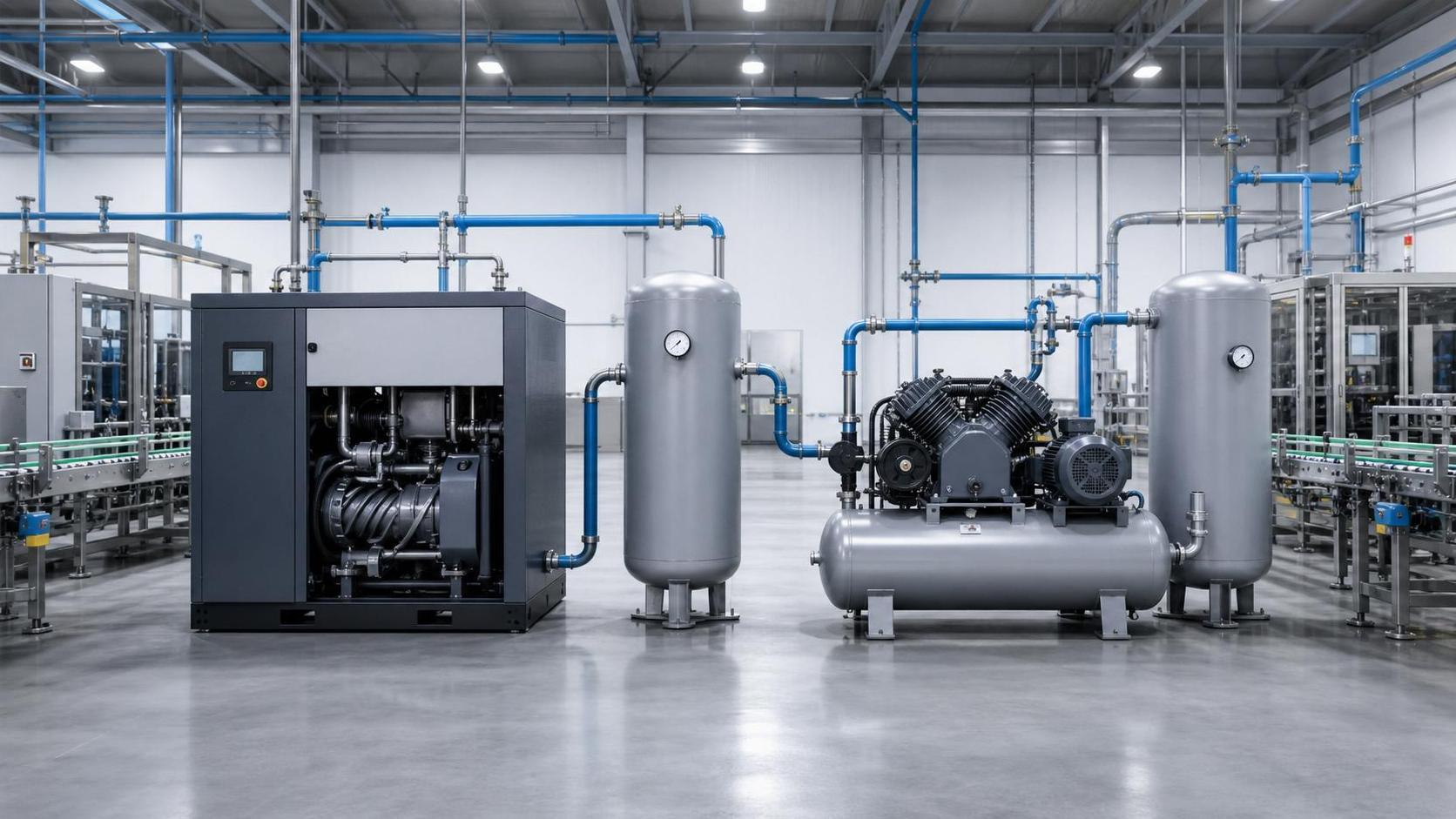
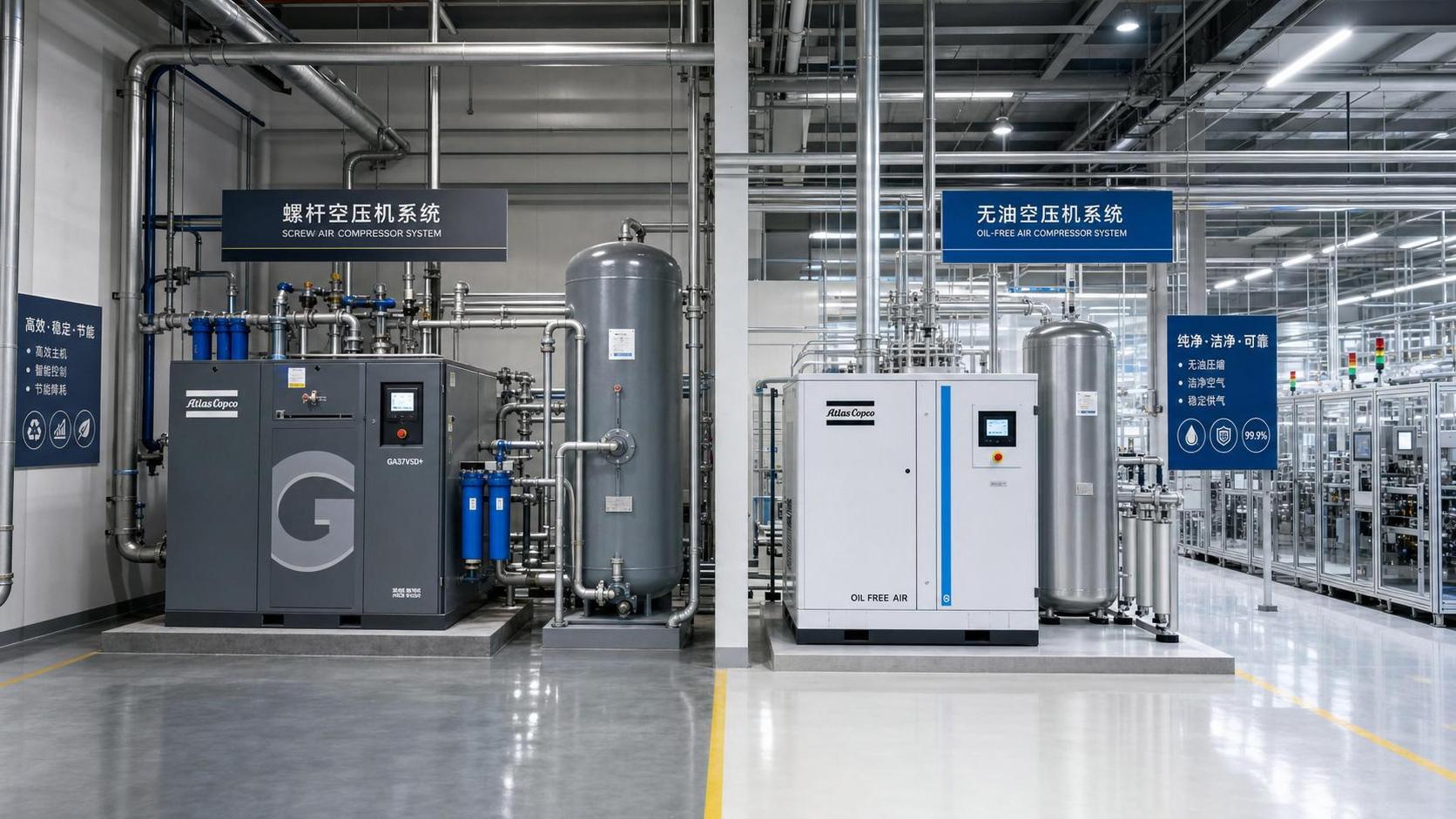
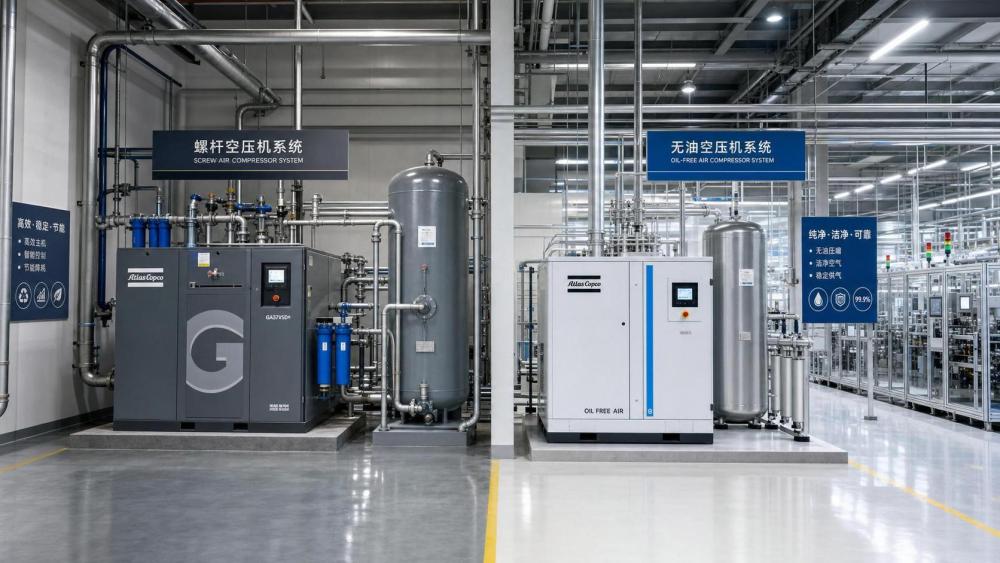
A rotary screw system usually compresses air through meshing rotors.
In many standard designs, oil is introduced for sealing, cooling, and lubrication.
That makes screw-based air compression widely used in general manufacturing and utility applications.
An oil-free system is designed to deliver compressed air without oil contact in the compression chamber.
This approach reduces contamination risk where air purity directly affects the final product or critical process.
The key point is that these are not simply premium and standard versions of the same machine.
They reflect different risk assumptions.
One favors broad industrial practicality and strong cost control.
The other prioritizes purity assurance and process protection.
What technical reviews should focus on
A meaningful air compression comparison should move through five filters.
1. Purity and contamination consequences
Start with the cost of contamination, not the cost of the machine.
If compressed air touches product, packaging interior, fermentation, electronics, or sterile zones, oil risk changes the equation.
In those conditions, oil-free air compression often becomes a process safeguard rather than a premium option.
2. Energy performance under real load
Rated efficiency is useful, but part-load behavior matters more in many plants.
Pressure band control, turndown range, heat rejection, and variable speed operation can materially change energy use.
This is where GTC-Matrix analysis often adds context beyond a catalog comparison.
Energy cost trends and thermal integration opportunities can change system value over the asset life.
3. Maintenance burden and failure modes
Traditional screw air compression may be familiar and easier to support in many regions.
Still, oil management introduces ongoing service tasks and contamination control points.
Oil-free systems remove one risk, but they may bring tighter tolerances and specialized overhaul requirements.
4. Compliance and audit readiness
Food, pharmaceutical, semiconductor, and medical environments often need stronger documentation around compressed air quality.
Where audits are frequent, proof requirements can be as important as performance itself.
5. Lifecycle cost, not purchase price
Initial cost can distort the decision if downstream losses are ignored.
Rejected batches, air treatment upgrades, energy use, service intervals, and downtime exposure all belong in the model.
Where each system usually makes more sense
Not every plant needs the same air compression strategy.
The more useful question is where the compressed air goes and what failure would cost.
- General assembly, pneumatic tools, and utility air often align well with screw systems.
- Food contact zones, clean packaging, and fermentation lines often favor oil-free air compression.
- Semiconductor and electronics processes usually place a premium on contamination control and stable dew point performance.
- Healthcare and laboratory environments typically require a stricter view of risk, traceability, and air quality assurance.
- Mixed-use plants sometimes benefit from split architectures rather than one compressor type for every load.
That last point is often overlooked.
A facility may use screw air compression for utility demand and reserve oil-free capacity for sensitive lines.
This can balance capital discipline with purity protection.
Signals shaping the decision
The comparison is also being influenced by broader industrial trends.
Energy conversion efficiency is under greater scrutiny across thermal and power systems.
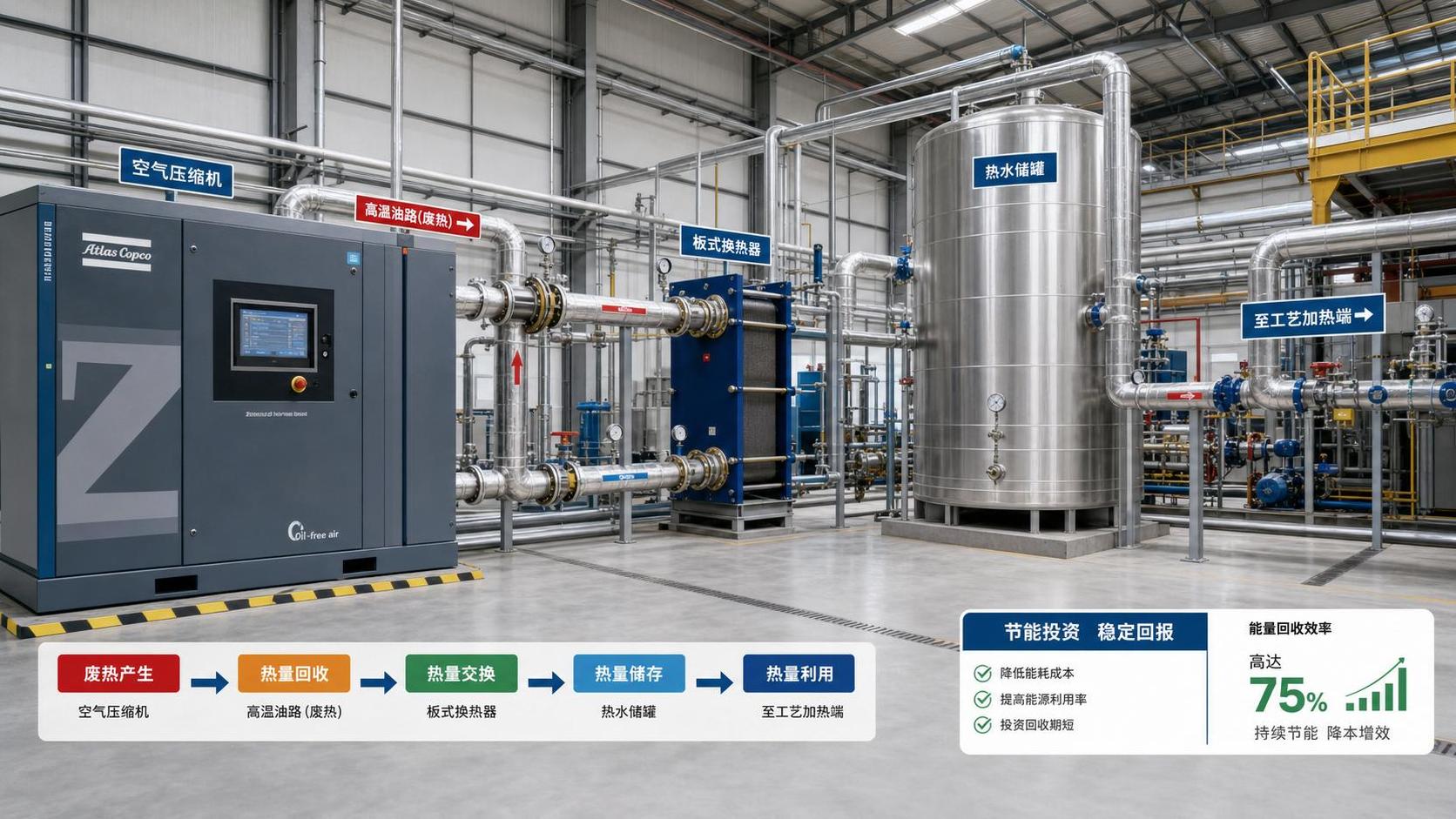
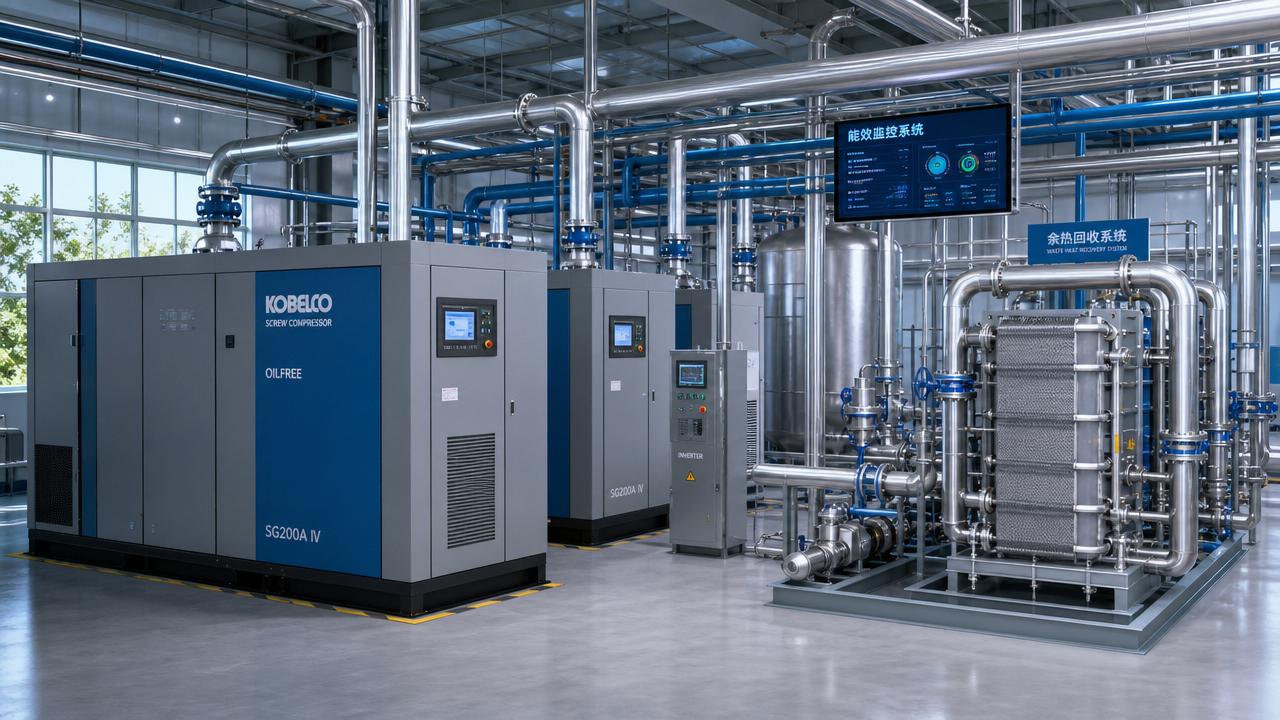
Air compression is increasingly evaluated alongside cooling loads, heat recovery potential, and carbon reporting.
At the same time, clean manufacturing has expanded beyond traditional pharmaceutical environments.
Food processing, precision electronics, specialty chemicals, and advanced packaging all face tighter quality expectations.
This is why market intelligence matters.
GTC-Matrix tracks how energy costs, low-emission policy, refrigerant regulation, and oil-free technology evolution affect equipment priorities.
A compressor choice made today should still make sense when utility rates, audit standards, and output requirements shift.
A practical evaluation framework
A short comparison sheet is rarely enough for a high-value air compression decision.
A stronger review usually includes the following checks.
This framework helps avoid a common mistake.
Many air compression decisions are optimized for installation day, not for five years of operation.
Making the next decision clearer
Comparing screw and oil-free systems works best when the decision is tied to process consequence.
If contamination risk is low and utility economics dominate, screw air compression may remain the stronger fit.
If purity, audit readiness, and product protection define the application, oil-free air compression usually gains a clearer advantage.
The next step is not simply requesting another quotation.
It is worth mapping air use points, ranking contamination consequences, and modeling lifecycle energy and service cost.
When those factors are visible, the comparison becomes less about labels and more about operational logic.
That is usually where a more reliable air compression decision begins.
Related News
- China Expands Cross-Border RMB and FX Cash Pooling NationwideAuthor :Pneumatic Power Engineer

- How to Size Air Compressor Systems for Pneumatics by Flow and Pressure DemandAuthor :Pneumatic Power Engineer

- How Energy Recovery Systems for Compressors Cut Power CostsAuthor :Pneumatic Power Engineer

- How to Evaluate Screw Compressors in Industrial Refrigeration EquipmentAuthor :Pneumatic Power Engineer

- India Makes BIS Certification Mandatory for Screw CompressorsAuthor :Pneumatic Power Engineer

- China Tightens Export Filing for Screw CompressorsAuthor :Pneumatic Power Engineer

- SABIC Sets IoT Interface Rule for Screw CompressorsAuthor :Pneumatic Power Engineer

- Industrial Heat Recovery Systems for Compressors: When Do Energy Savings Pay Back?Author :Pneumatic Power Engineer

- EU Tightens REACH Limit for Screw Compressor LubricantsAuthor :Pneumatic Power Engineer

- EU Opens China Screw Compressor Review With Carbon RuleAuthor :Pneumatic Power Engineer

- DOE Mandates AHRI 1000-2026 for Screw CompressorsAuthor :Pneumatic Power Engineer

- VDMA Filing Signals EU Risk for Chinese Oil Screw CompressorsAuthor :Pneumatic Power Engineer
![]()
- Screw vs Piston Air Compressors for Stable Plant OutputAuthor :Pneumatic Power Engineer

- Saudi SASO Tightens Refrigerant Limits in IEC 60335-2-40:2026Author :Pneumatic Power Engineer

- IIR Warns of 18-Week Lead Times for Screw CompressorsAuthor :Pneumatic Power Engineer

- Welded Compressed Air Manifold Selection Guide for Pressure Stability and LeaksAuthor :Pneumatic Power Engineer

- India BIS Rule Adds IS 16830 Requirement for Imported Screw CompressorsAuthor :Pneumatic Power Engineer

- What to Check Before Choosing a Compressed Air FactoryAuthor :Pneumatic Power Engineer

- China Tightens Export Checks on Screw CompressorsAuthor :Pneumatic Power Engineer

- Screw Compressor Lead Times Reach 22 WeeksAuthor :Pneumatic Power Engineer

- Vietnam Requires QR Labels on Imported Screw CompressorsAuthor :Pneumatic Power Engineer

- Compressed Air Technologies Filtration: How to Reduce Pressure Drop and Energy LossAuthor :Pneumatic Power Engineer

- STSPIN830 Lead Time Tops 32 Weeks in Screw CompressorsAuthor :Pneumatic Power Engineer

- IGBT Shortage Extends Screw Compressor Lead TimesAuthor :Pneumatic Power Engineer

- Compressed Air Systems: 7 Hidden Costs That Raise Total Operating ExpenseAuthor :Pneumatic Power Engineer

- Compressed Air Efficiency: 7 Hidden Losses That Raise Operating CostsAuthor :Pneumatic Power Engineer

- How to Compare Screw vs Oil-Free Air Compression SystemsAuthor :Pneumatic Power Engineer

- Compressed Air Leaks: What They Really Cost in Daily OperationsAuthor :Pneumatic Power Engineer

- DOE Moves Up R449A Chiller Deadline to March 2027Author :Pneumatic Power Engineer

- How Compression Technology Cuts Energy Use in Modern PlantsAuthor :Pneumatic Power Engineer

- EU Adds GB 18613-2025 to Import Energy ChecksAuthor :Pneumatic Power Engineer

- EU CE Rule Adds SRA for R290 Compressor ImportsAuthor :Pneumatic Power Engineer

- Compressed Air Leaks: Hidden Costs and Practical Ways to Reduce LossesAuthor :Pneumatic Power Engineer

- Kunming Sourcing Festival Adds Thermal & Compression HubAuthor :Pneumatic Power Engineer

- Compressed Air Efficiency: Where Energy Losses Usually StartAuthor :Pneumatic Power Engineer

- US 3-Year Treasury Yield Rise Pressures Compressor Export QuotesAuthor :Pneumatic Power Engineer