Semiconductor Thermal Management: Low Vibration Design Priorities




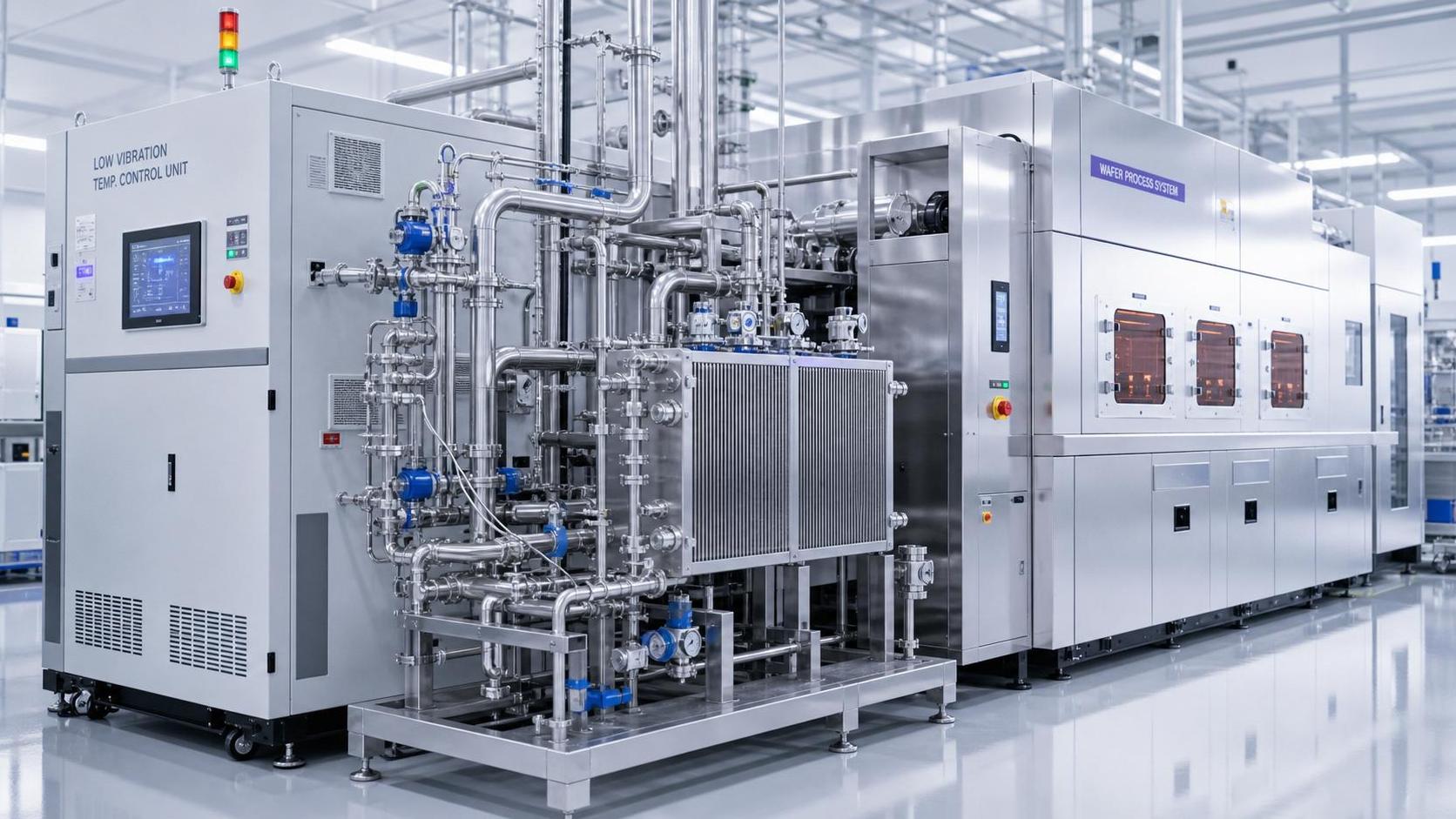
In semiconductor fabrication, temperature control is never only about heat removal. Mechanical quietness matters just as much. When cooling hardware introduces micro-vibration, process stability, metrology accuracy, and equipment life can all move in the wrong direction. That is why semiconductor thermal management low vibration design has become a practical priority across advanced manufacturing lines, especially where tighter nodes, cleaner utilities, and higher throughput must coexist.
Why low vibration now sits beside thermal performance
Semiconductor tools operate within narrow thermal and positional tolerances. A cooling loop that performs well on paper may still create hidden instability if it transfers pulsation, resonance, or structural movement into the process environment.
This is especially relevant in lithography, inspection, etch, deposition, and precision vacuum handling. In those settings, small mechanical disturbances can change alignment quality, wafer handling repeatability, or chamber behavior over time.
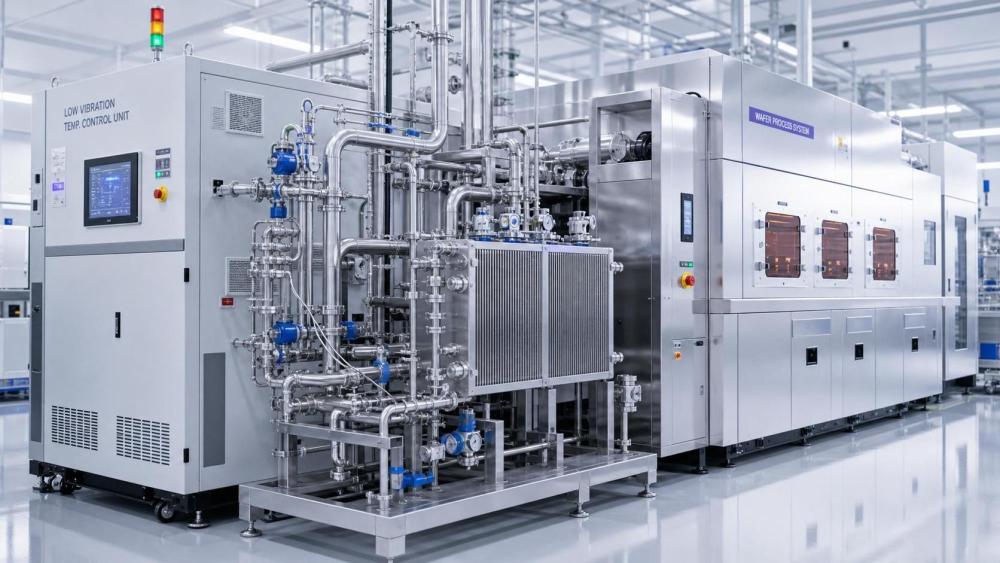
The issue is not limited to one component. Semiconductor thermal management low vibration performance depends on the full chain, including compressors, pumps, fans, piping, heat exchangers, supports, and control logic.
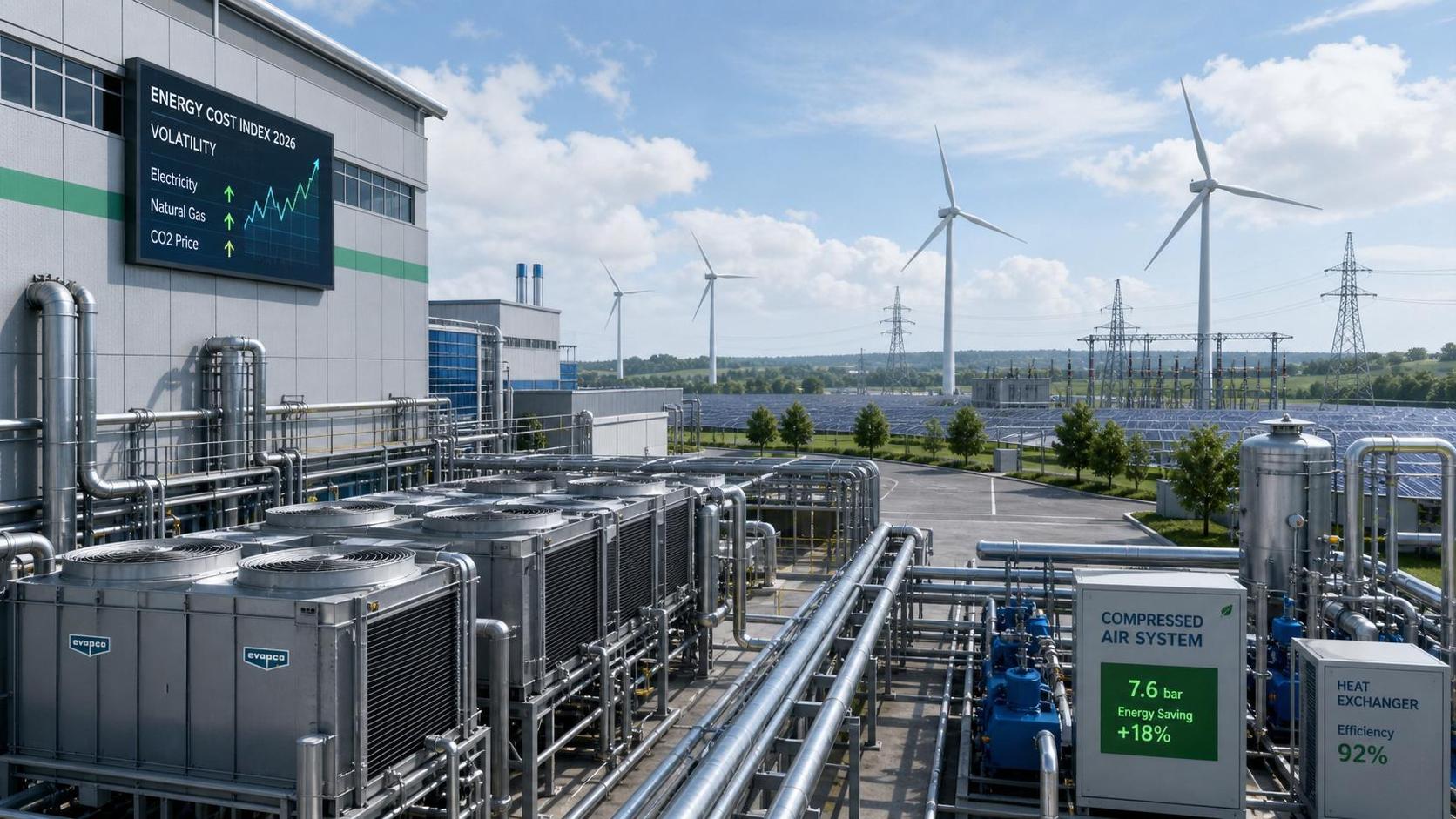
From a broader industrial perspective, this topic also reflects a larger shift. Energy efficiency, decarbonization targets, refrigerant policy, and clean utility design are pushing facilities to reevaluate cooling architecture rather than simply add capacity.
What semiconductor thermal management low vibration really means
At its core, the concept combines two requirements. The first is stable heat transfer under changing loads. The second is suppression of vibration sources that can interfere with sensitive process equipment.
A common mistake is to treat vibration as an afterthought. In practice, thermal design choices often create the mechanical problem. Higher flow velocity, aggressive fan curves, fast valve actuation, or poorly isolated compressors can all raise vibration risk.
Low vibration does not always mean low power. It means selecting and arranging equipment so thermal capacity, dynamic stability, and structural behavior remain compatible during real operation, not only during factory acceptance tests.
The main vibration sources inside cooling architectures
Technical evaluation improves when vibration is traced to specific mechanisms rather than discussed as a generic nuisance. Most issues fall into a few recurring categories.
Rotating equipment and pulsation
Compressors, blowers, and circulation pumps introduce cyclic forces. Even efficient units can produce pressure ripple, shaft imbalance, or bearing-related vibration that propagates into pipework and tool frames.
Flow-induced noise and structural resonance
High flow rates through narrow passages can generate turbulence and acoustic excitation. If piping spans, panel structures, or skid frames share similar natural frequencies, amplification becomes much more likely.
Control instability
Poorly tuned variable-speed drives and fast cycling control valves can create repeated oscillation. The result may look like a thermal issue, but the root cause is often unstable dynamic response.
Installation-related transmission paths
A well-designed chiller or heat exchanger can still perform badly when mounted on rigid supports, connected with unsuitable hoses, or installed near vibration-sensitive tools without proper isolation planning.
Design priorities that deserve closer scrutiny
Not every specification carries equal decision value. For semiconductor thermal management low vibration projects, several design priorities tend to predict long-term results better than headline cooling capacity alone.
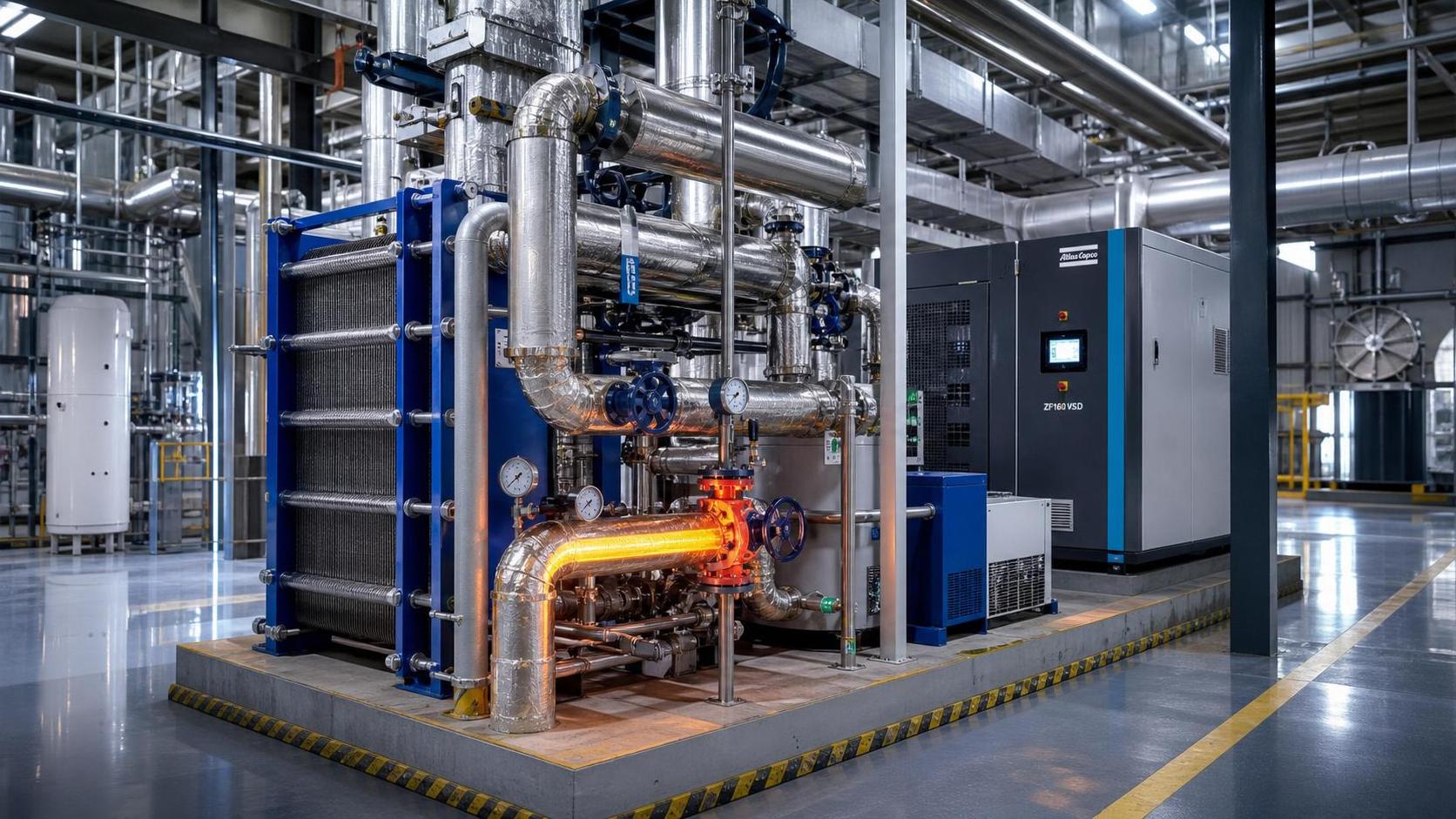
Microchannel heat exchangers, oil-free compression systems, and refined control platforms are often relevant here. Their value, however, depends on how well they fit the vibration sensitivity of the application.
Where the tradeoffs usually appear
Higher cooling intensity can conflict with lower vibration. A faster pump may improve heat transfer while raising turbulence and pipe excitation. A compact skid may save space while increasing structural coupling.
Noise reduction is not identical to vibration reduction either. Acoustic treatment can lower audible sound but leave low-frequency mechanical transmission largely unchanged. That distinction matters in fabs.
There is also a lifecycle tradeoff. Very soft isolation can reduce transmission initially, yet create maintenance complexity, alignment drift, or hose fatigue if the broader structure is not designed accordingly.
This is where cross-disciplinary intelligence becomes useful. Platforms such as GTC-Matrix frame thermal systems not as isolated components, but as linked energy, compression, vacuum, and heat exchange decisions.
Typical evaluation scenarios across the semiconductor chain
Semiconductor thermal management low vibration priorities vary by location in the process environment. The same specification does not carry the same weight everywhere.
- Front-end process tools often prioritize temperature uniformity and extremely low disturbance near precision stages and vacuum subsystems.
- Metrology and inspection spaces usually place greater emphasis on background vibration control than on peak cooling output.
- Facility utility rooms may tolerate more mechanical activity, but poor isolation there can still transmit into adjacent process areas.
- Packaging and test environments often balance throughput, uptime, and cost, making controllable part-load behavior especially important.
In actual use, site layout often decides whether a design succeeds. Pipe routing, floor stiffness, shared supports, and utility segregation can matter as much as equipment selection.
How to judge solutions more effectively
A stronger evaluation process starts by asking for evidence beyond nominal performance ratings. Vendors may provide cooling capacity and COP data, but low-vibration suitability needs additional proof.
Look for operating-condition data
Performance should be reviewed across load ranges, ambient shifts, and startup conditions. Semiconductor thermal management low vibration risk often appears during transitions, not steady-state operation.
Check the transmission path, not only the source
Measured vibration at the compressor or pump tells only part of the story. More useful data tracks what reaches the connected piping, support frame, and nearby tool interface.
Review controls as part of mechanical behavior
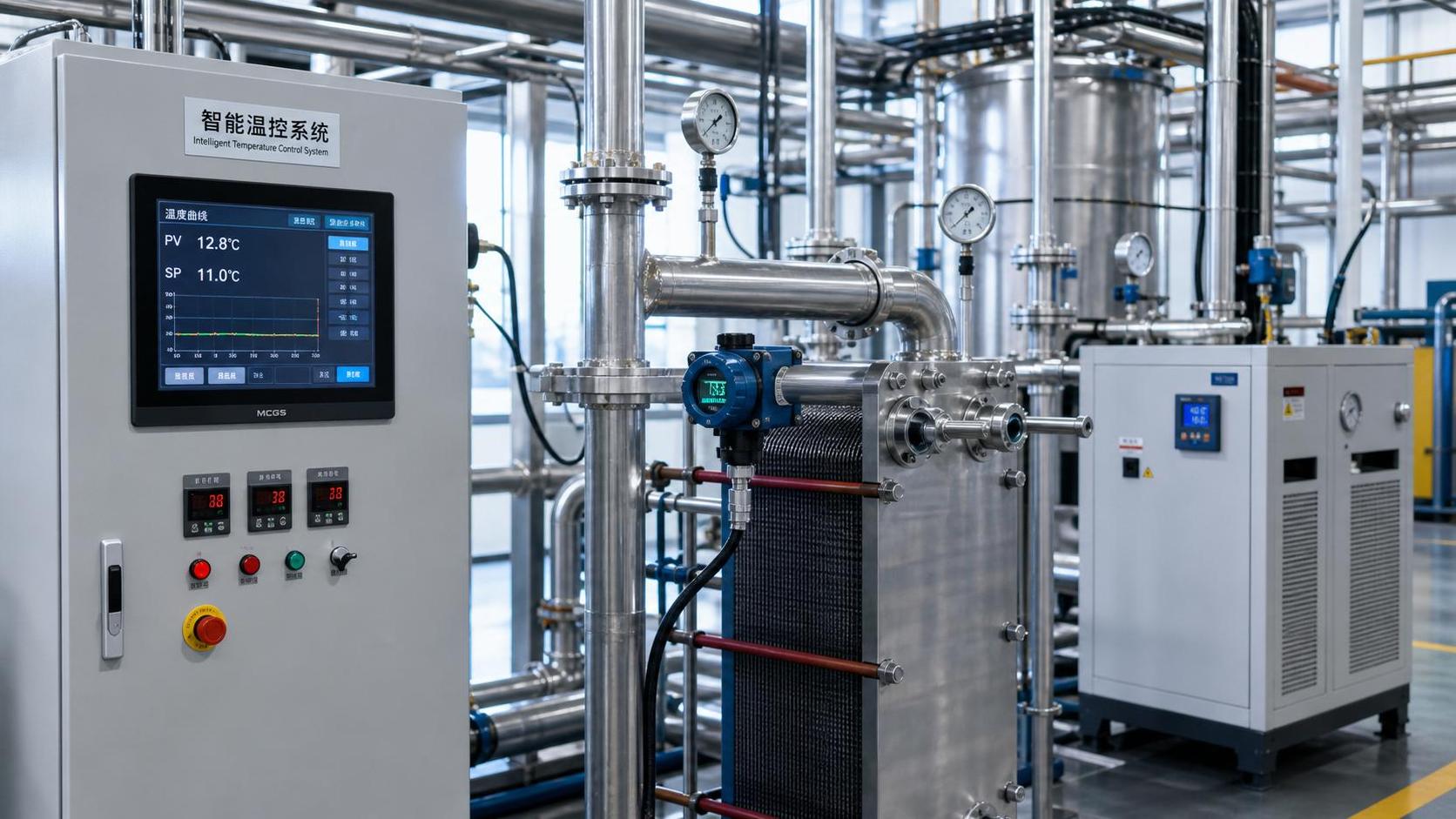
Control stability should be treated as a vibration topic. Variable-speed equipment, staged compressors, and valve logic need coordinated tuning to avoid self-induced oscillation.
Connect technical choices to energy and policy signals
Energy pricing, refrigerant quota changes, and decarbonization goals increasingly shape cooling system decisions. A technically quiet design that becomes inefficient or noncompliant too quickly is not a durable choice.
Practical signals of a mature low vibration approach
Several characteristics usually indicate a better-designed solution:
- Clear separation between thermal load management and structural isolation strategy.
- Documented behavior under partial load and rapid process changes.
- Oil-free or contamination-conscious utility design where purity is critical.
- Heat exchanger selection based on both efficiency and pressure fluctuation control.
- Installation guidance that covers supports, connectors, floor interaction, and commissioning checks.
- Monitoring points for temperature stability, pressure ripple, and vibration trend analysis.
These signals align with the wider intelligence focus of GTC-Matrix. The most useful industry insight links thermodynamic performance, compression technology, and operational economics in one decision framework.
A sensible next step for evaluation
The most productive next move is to build a short assessment matrix before comparing suppliers or retrofit paths. Include thermal stability, vibration transmission, utility cleanliness, part-load efficiency, controls, installation risk, and policy exposure.
That approach turns semiconductor thermal management low vibration from a vague requirement into a measurable decision standard. It also helps separate solutions that look efficient in specification sheets from those that remain stable inside real semiconductor operations.
When the thermal center and the mechanical environment are evaluated together, cooling design becomes easier to judge, easier to benchmark, and much more likely to support reliable yield over time.
- heat exchange
- oil-free compression
- microchannel heat exchangers
- decarbonization
- thermal management
- compression technology
- heat transfer
- energy efficiency
- thermal systems
- oil-free compression systems
- heat exchangers
- semiconductor thermal management
- heat exchanger design
- heat exchanger selection
- semiconductor thermal management low vibration
Ready when you are. Send us a message to get started.
Related News
- Carrier Plans $600 Million Manufacturing and Engineering Center in Fort WorthAuthor :

- Semiconductor Thermal Management: Low Vibration Design PrioritiesAuthor :

- Thermal Interface Materials: What Drives Real Thermal OptimizationAuthor :
![]()
- Global Energy Costs in Europe: What Changed in 2026Author :

- Smart Device Thermal Management: Common Failures and FixesAuthor :

- Thermal Efficiency Optimization: 5 Signs Your System Is Losing HeatAuthor :

- How Precision Temperature Control Systems Improve Process StabilityAuthor :

- How Intellectualization Improves Process Visibility in Modern PlantsAuthor :

- Global Energy Costs in 2026: What Rising Prices Mean for Plant PlanningAuthor :

- Carbon Neutrality Roadmaps: Common Gaps in Industrial PlanningAuthor :

- Heat Transfer Basics: What Affects Efficiency in Industrial EquipmentAuthor :

- Industrial Thermal Systems: Common Failure Risks in Continuous OperationAuthor :

- Global Energy Costs: 2026 Risk Signals to WatchAuthor :

- Pneumatic Power Systems: Common Sizing Mistakes to AvoidAuthor :

- How Thermal Power Systems Cut Downtime in 2026Author :

- Clean Energy Technology Trends Reshaping Industry in 2026Author :

- Pneumatic Power Systems: Key Checks Before Equipment SelectionAuthor :

- Compression Technology Mistakes That Raise Maintenance RiskAuthor :

- Clean Energy Technology Risks to Watch in 2026 ProjectsAuthor :

- Smart Thermal Systems: 5 Signals Your Controls Are Wasting HeatAuthor :

- How to Size Pneumatic Power Systems for Stable OutputAuthor :

- Pneumatic Power Systems: Key Safety Risks in Daily OperationAuthor :

- Clean Energy Technology Shifts Reshaping Industrial InvestmentAuthor :

- Intellectualization in Industry: What Delivers Measurable Value?Author :

- Thermal Management Mistakes That Shorten Equipment LifeAuthor :

- Clean Energy Technology Options That Fit Real Manufacturing UpgradesAuthor :

- Energy-Saving Technologies Worth Tracking in 2026Author :