How Precision Temperature Control Systems Improve Process Stability




How Precision Temperature Control Systems Improve Process Stability
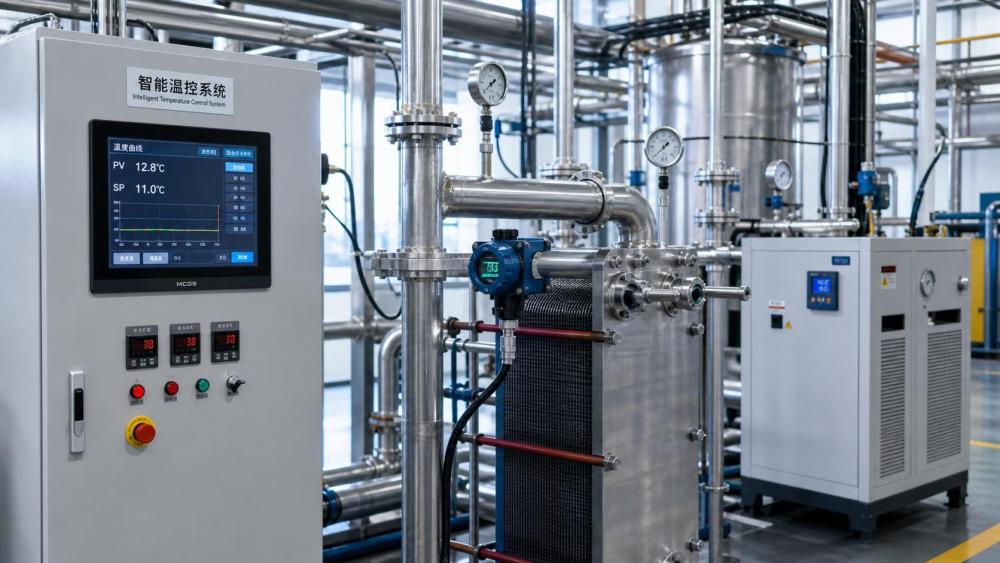
Process stability often looks simple from the outside. In practice, it depends on controlling small variables before they become large operational problems.
Temperature is one of the most sensitive variables in modern production. A slight thermal drift can change viscosity, pressure, reaction rate, drying speed, or dimensional accuracy.
That is why precision temperature control systems matter. They help maintain repeatable conditions, reduce process variation, and support more predictable output quality.
In sectors linked to cooling, compressed air, vacuum, and heat exchange, thermal accuracy affects both product performance and energy efficiency.
From a technical review perspective, the value of precision temperature control systems is not only tighter control. It is the ability to protect the whole process window.
This becomes especially important in pharmaceutical filling, semiconductor tools, food processing lines, plastics, batteries, and laboratory-scale manufacturing.
Why process stability depends on thermal precision
Every process has an acceptable operating band. The narrower that band is, the higher the need for precision temperature control systems.
When temperature fluctuates, other variables usually follow. Pressure may shift, moisture behavior may change, and cycle times may become inconsistent.
This chain reaction is common in heat-sensitive operations. It is also common in systems where compressed air or chilled water supports production equipment.
Precision temperature control systems reduce that instability by holding the target temperature close to the required setpoint under changing loads.
More importantly, they react fast enough to correct disturbances before product quality is affected.
In real operating environments, disturbances come from many directions:
- Ambient temperature swings across shifts or seasons
- Variable process loads and changing throughput
- Heat gain from motors, pumps, compressors, or drives
- Fouling in heat exchangers or cooling loops
- Control lag from poorly placed sensors
- Inconsistent utility supply conditions
A stable system absorbs these changes without pushing the process outside its qualified thermal range. That is the core contribution of precision temperature control systems.
How precision temperature control systems work in industrial settings
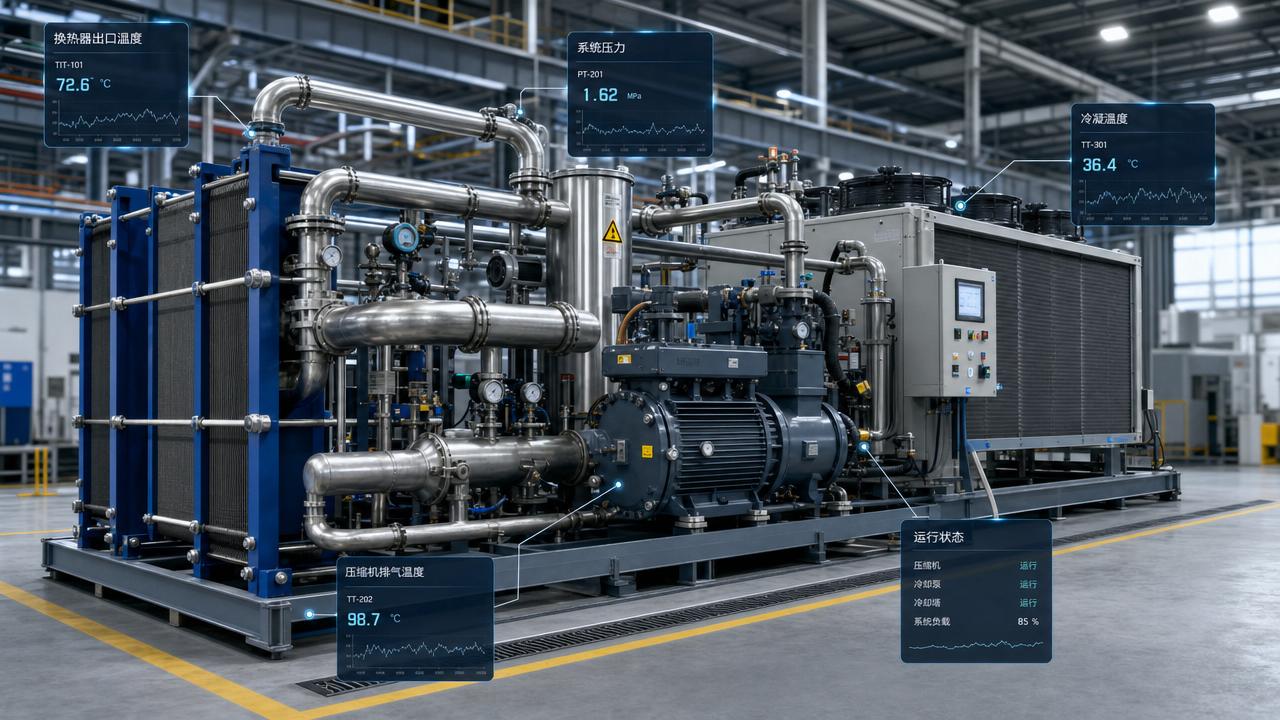
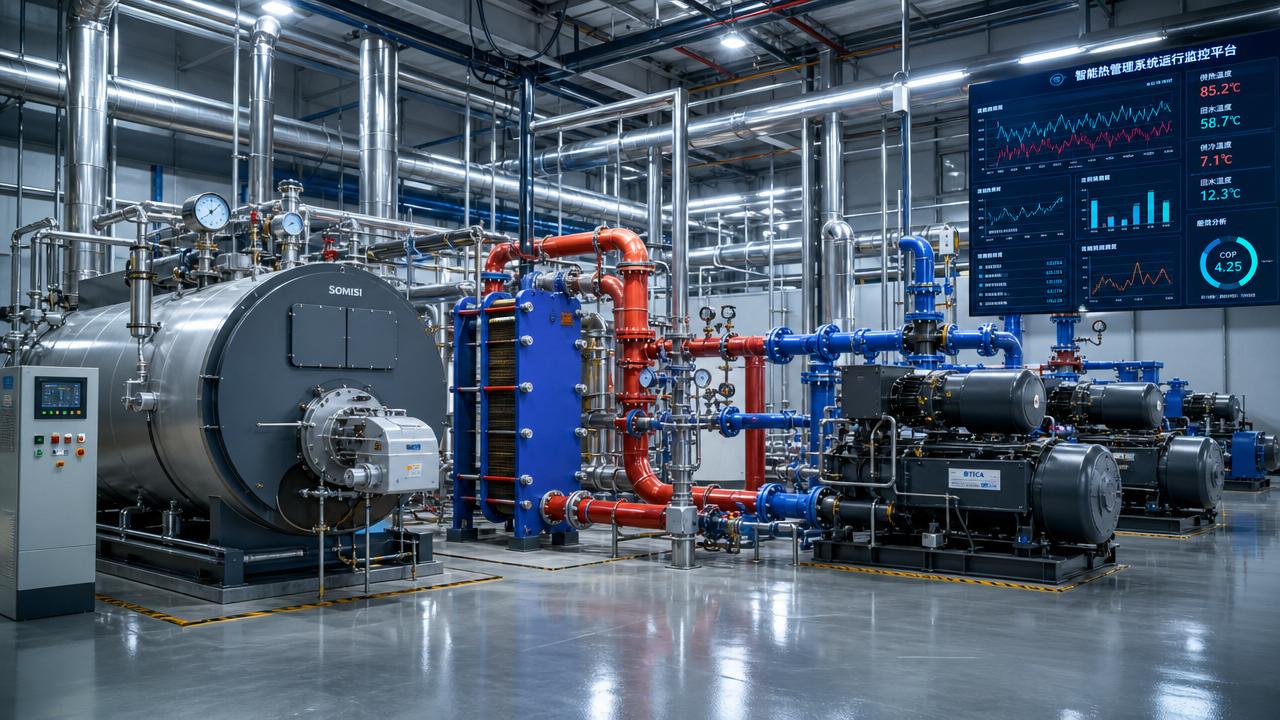
Most precision temperature control systems combine sensing, control logic, thermal exchange, and responsive actuation.
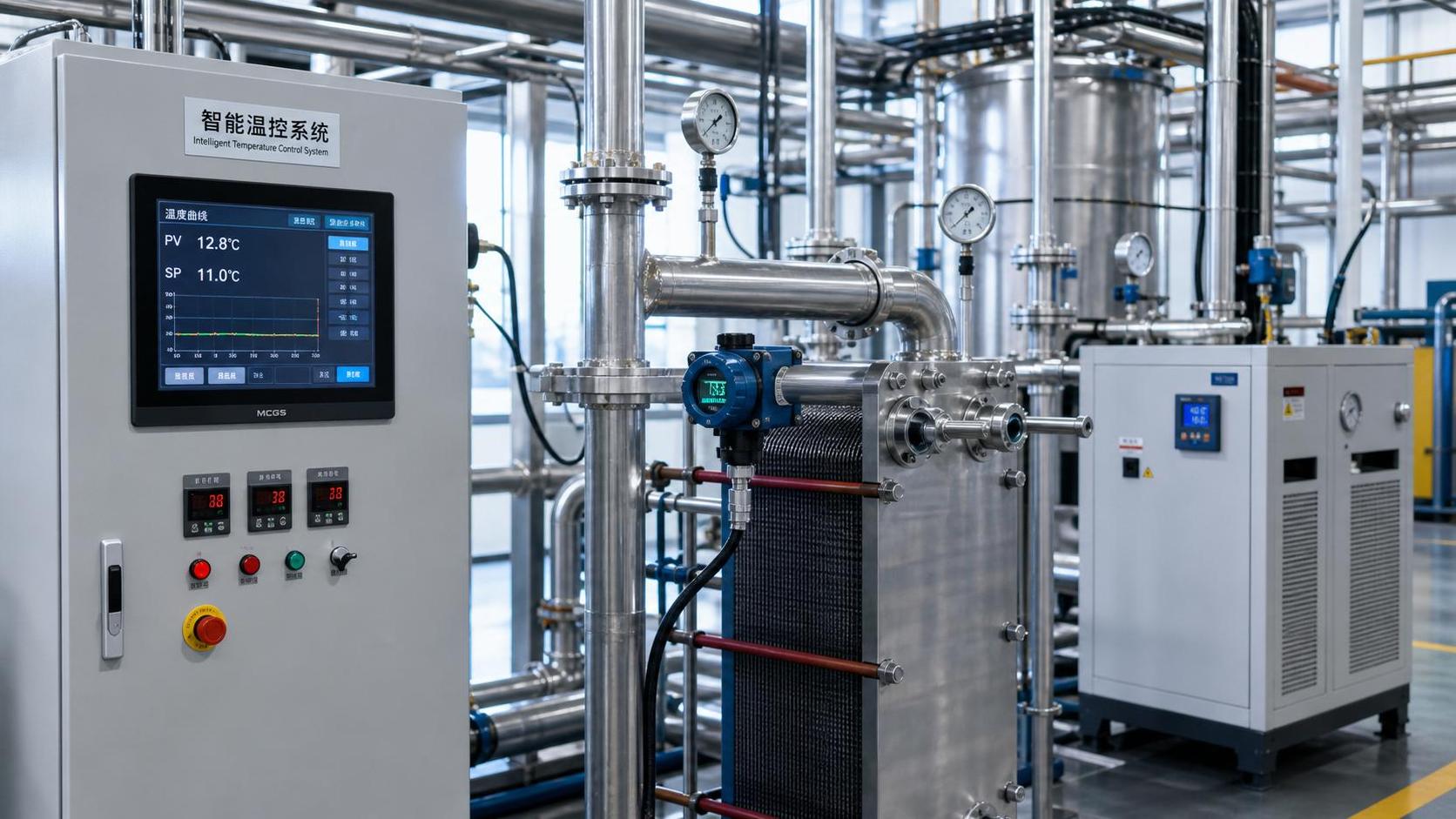
The sensor layer reads actual process temperature. The controller compares that value with the setpoint and calculates the required correction.
The correction may involve heating, cooling, flow regulation, valve positioning, compressor staging, or pump speed adjustment.
The better systems do more than hold a number on a screen. They manage transient behavior, reduce overshoot, and limit oscillation.
This matters because many quality failures happen during ramp-up, changeover, or partial-load operation rather than steady-state production.
In chilled circuits and heat exchange applications, response speed is shaped by system design. Fluid volume, piping layout, insulation, and control tuning all matter.
So when evaluating precision temperature control systems, the architecture is just as important as the advertised accuracy band.
Key control elements to review
- Sensor accuracy, resolution, and response time
- PID or advanced control strategy quality
- Heat exchanger performance under partial load
- Compressor or pump modulation capability
- Integration with PLC, SCADA, or MES
- Alarm handling and data logging depth
What process stability improvements usually look like
The impact of precision temperature control systems can be measured in several practical ways.
First, thermal consistency reduces scrap, rework, and batch-to-batch deviation. This is often the fastest visible gain.
Second, tighter control improves equipment uptime. Fewer thermal alarms mean fewer interruptions, manual resets, and quality investigations.
Third, stable temperature conditions help protect downstream operations. One well-controlled upstream stage can prevent multiple downstream losses.
There is also an energy angle. Precision temperature control systems often lower energy waste by avoiding overcooling, overheating, and unnecessary cycling.
That does not mean every precise system is automatically efficient. It means good control creates the conditions for better energy performance.
A practical comparison is useful here:
Application areas where thermal control tolerance is critical
Some industries can absorb minor thermal movement. Others cannot. That difference shapes how precision temperature control systems should be specified.
In pharmaceutical processing, thermal consistency supports reaction control, storage conditions, and clean production stability.
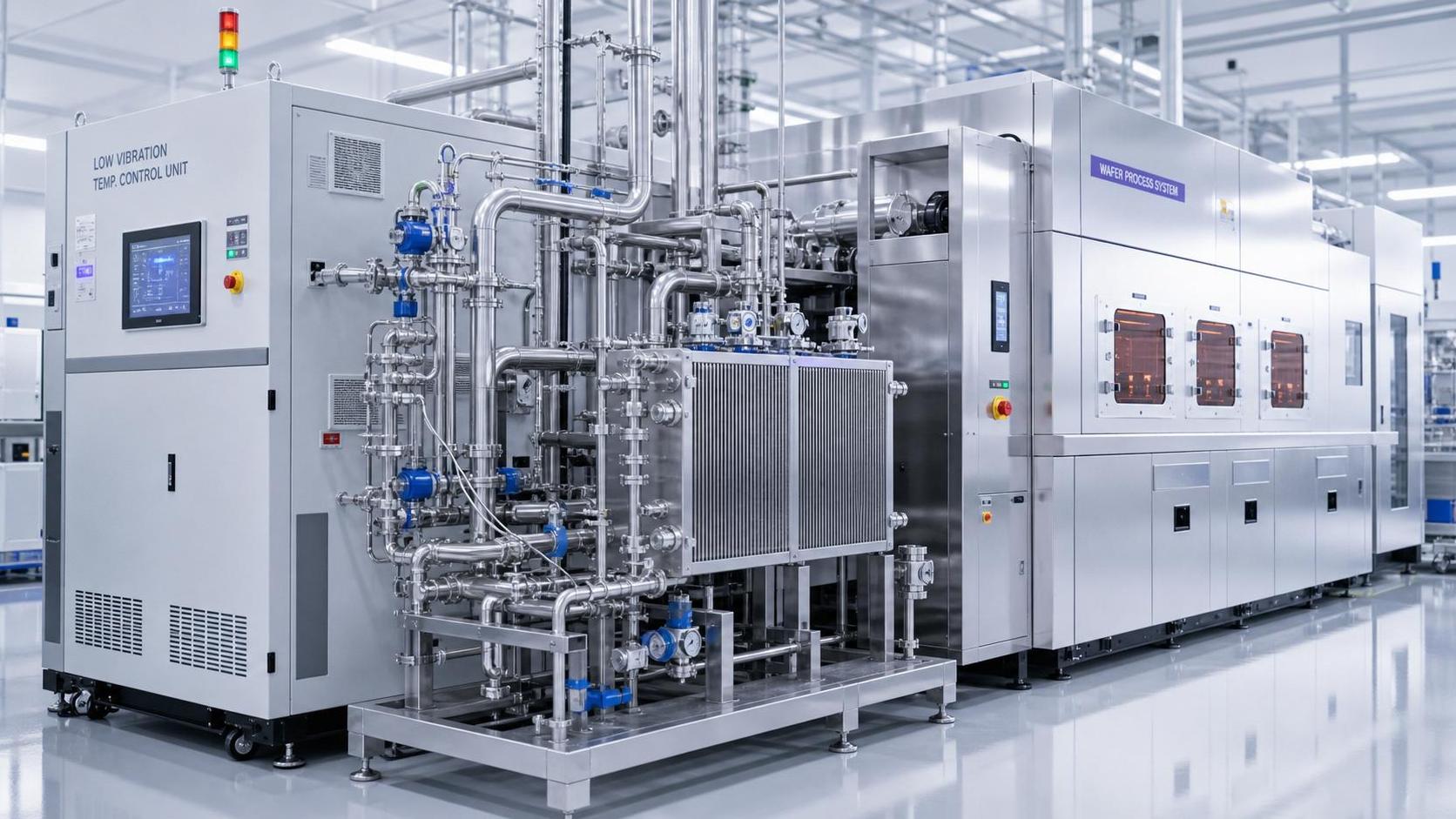
In semiconductor manufacturing, tiny temperature deviations can affect wafer handling, etching uniformity, and chamber repeatability.
In food and beverage lines, temperature influences safety, texture, shelf life, and filling consistency.
In plastics and die casting, mold temperature control changes dimensional stability and surface quality.
Battery and electronics production adds another layer. Thermal uniformity affects material behavior, drying, bonding, and long-term reliability.
Across all these settings, precision temperature control systems support a narrower and more defensible operating window.
Signals that a process needs tighter control
- Product quality shifts between shifts or seasons
- Cycle time changes without obvious mechanical faults
- Frequent manual temperature adjustment by operators
- Energy consumption rising during partial load
- High alarm frequency around process temperature limits
How to evaluate precision temperature control systems for technical fit
A strong evaluation starts with the process, not the brochure.
Many suppliers highlight nominal accuracy. That number matters, but it does not reveal full real-world performance.
A better approach is to test whether precision temperature control systems can maintain control under actual disturbances and load changes.
Look closely at sensor placement, control loop tuning, turn-down capability, thermal inertia, redundancy options, and maintenance access.
It is also smart to ask how the system behaves during start-up, shutdown, utility interruption, and production recipe change.
From a standards and operational perspective, traceable data is increasingly important. Logged temperature stability supports validation, auditability, and performance review.
A practical review checklist should include:
- Define the real acceptable temperature band for the process
- Measure current drift, overshoot, and recovery time
- Identify disturbance sources across normal production cycles
- Compare precision temperature control systems at full and partial load
- Review data integration, alarms, and maintenance strategy
- Estimate lifecycle value, not only purchase cost
Common risks when thermal control is specified too loosely
Loose specifications often create hidden risk. The equipment may run, yet the process remains unstable.
One common issue is buying a system based on nominal capacity alone. Capacity does not guarantee control quality.
Another issue is ignoring dynamic conditions. Precision temperature control systems must be judged by recovery behavior, not only steady-state numbers.
There is also the integration risk. A good standalone controller can still underperform if it is poorly matched with plant utilities or legacy automation.
Maintenance risk should not be overlooked either. Sensor drift, fouled exchangers, and valve wear can slowly erase the benefits of precise thermal control.
This is why long-term process stability depends on both design quality and disciplined operating support.
A practical path to stronger process stability
Precision temperature control systems improve process stability because they control more than temperature. They stabilize the behavior of the entire process.
That makes them valuable in any operation where thermal drift creates quality loss, energy waste, or unpredictable throughput.
The most reliable results come from matching control precision with real process demands, disturbance patterns, and integration requirements.
For organizations tracking cooling, heat exchange, compression, and vacuum technologies, this is becoming a strategic decision rather than a narrow equipment choice.
In practical terms, the next step is clear. Map the thermal tolerance of the process, identify instability points, and compare precision temperature control systems against real operating scenarios.
That approach leads to better technical decisions, stronger process control, and a more stable path to efficient industrial performance.
Related News
- Semiconductor Thermal Management: Low Vibration Design PrioritiesAuthor :

- Thermal Interface Materials: What Drives Real Thermal OptimizationAuthor :
![]()
- Global Energy Costs in Europe: What Changed in 2026Author :

- Smart Device Thermal Management: Common Failures and FixesAuthor :

- Thermal Efficiency Optimization: 5 Signs Your System Is Losing HeatAuthor :

- How Precision Temperature Control Systems Improve Process StabilityAuthor :

- How Intellectualization Improves Process Visibility in Modern PlantsAuthor :

- Global Energy Costs in 2026: What Rising Prices Mean for Plant PlanningAuthor :

- Carbon Neutrality Roadmaps: Common Gaps in Industrial PlanningAuthor :

- Heat Transfer Basics: What Affects Efficiency in Industrial EquipmentAuthor :

- Industrial Thermal Systems: Common Failure Risks in Continuous OperationAuthor :

- Global Energy Costs: 2026 Risk Signals to WatchAuthor :

- Pneumatic Power Systems: Common Sizing Mistakes to AvoidAuthor :

- How Thermal Power Systems Cut Downtime in 2026Author :

- Clean Energy Technology Trends Reshaping Industry in 2026Author :

- Pneumatic Power Systems: Key Checks Before Equipment SelectionAuthor :

- Compression Technology Mistakes That Raise Maintenance RiskAuthor :

- Clean Energy Technology Risks to Watch in 2026 ProjectsAuthor :

- Smart Thermal Systems: 5 Signals Your Controls Are Wasting HeatAuthor :

- How to Size Pneumatic Power Systems for Stable OutputAuthor :

- Pneumatic Power Systems: Key Safety Risks in Daily OperationAuthor :

- Clean Energy Technology Shifts Reshaping Industrial InvestmentAuthor :

- Intellectualization in Industry: What Delivers Measurable Value?Author :

- Thermal Management Mistakes That Shorten Equipment LifeAuthor :

- Clean Energy Technology Options That Fit Real Manufacturing UpgradesAuthor :

- Energy-Saving Technologies Worth Tracking in 2026Author :