Thermal Management Mistakes That Shorten Equipment Life




Thermal management mistakes often begin with small oversights, yet they can quietly accelerate wear, trigger unplanned downtime, and shorten equipment life. For after-sales maintenance teams, understanding where cooling, airflow, and heat exchange go wrong is essential to protecting system reliability and energy efficiency. This article highlights the most common thermal management errors and the practical steps needed to prevent costly failures.
In industrial cooling, compressed air, vacuum systems, and heat exchange applications, heat is rarely an isolated issue. A temperature rise of 5°C to 10°C above normal operating range can increase lubricant breakdown, deform seals, reduce motor efficiency, and raise failure frequency across connected components. For after-sales maintenance personnel, effective thermal management is not only a technical task but also a reliability strategy that affects service cost, spare parts consumption, and customer retention.
Across multi-industry environments such as pharmaceuticals, semiconductors, food processing, general manufacturing, and utilities, thermal management failures usually stem from repeated patterns: poor airflow planning, delayed cleaning, incorrect setpoints, oversized or undersized heat rejection equipment, and weak monitoring routines. The good news is that most of these issues can be identified early through structured inspection and corrected without major redesign.
Where Thermal Management Fails First in Industrial Equipment
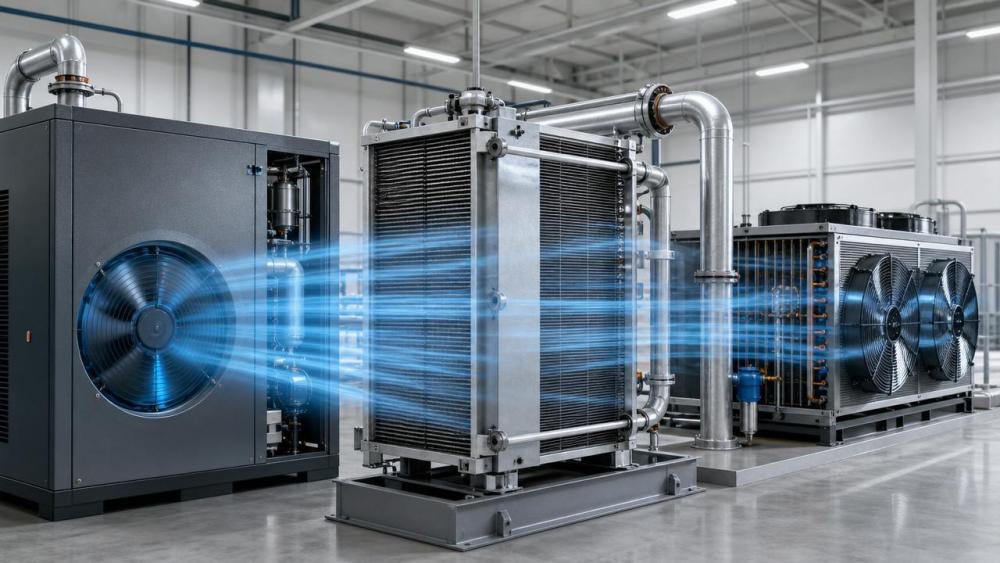
The first stage of thermal management failure is often invisible. Surface temperatures may still appear acceptable while internal hotspots begin to stress bearings, electronic drives, compressor stages, or heat exchanger surfaces. In many industrial systems, thermal imbalance builds gradually over 2 to 12 weeks before it becomes a shutdown event.
1. Blocked airflow paths and dirty heat transfer surfaces
Dust accumulation on condenser fins, oil contamination on coolers, and clogged filters can cut effective heat transfer area much faster than many maintenance teams expect. In air-cooled units, even a 15% to 20% reduction in airflow can push discharge temperatures beyond the preferred band, especially during summer peaks or in poorly ventilated plant rooms.
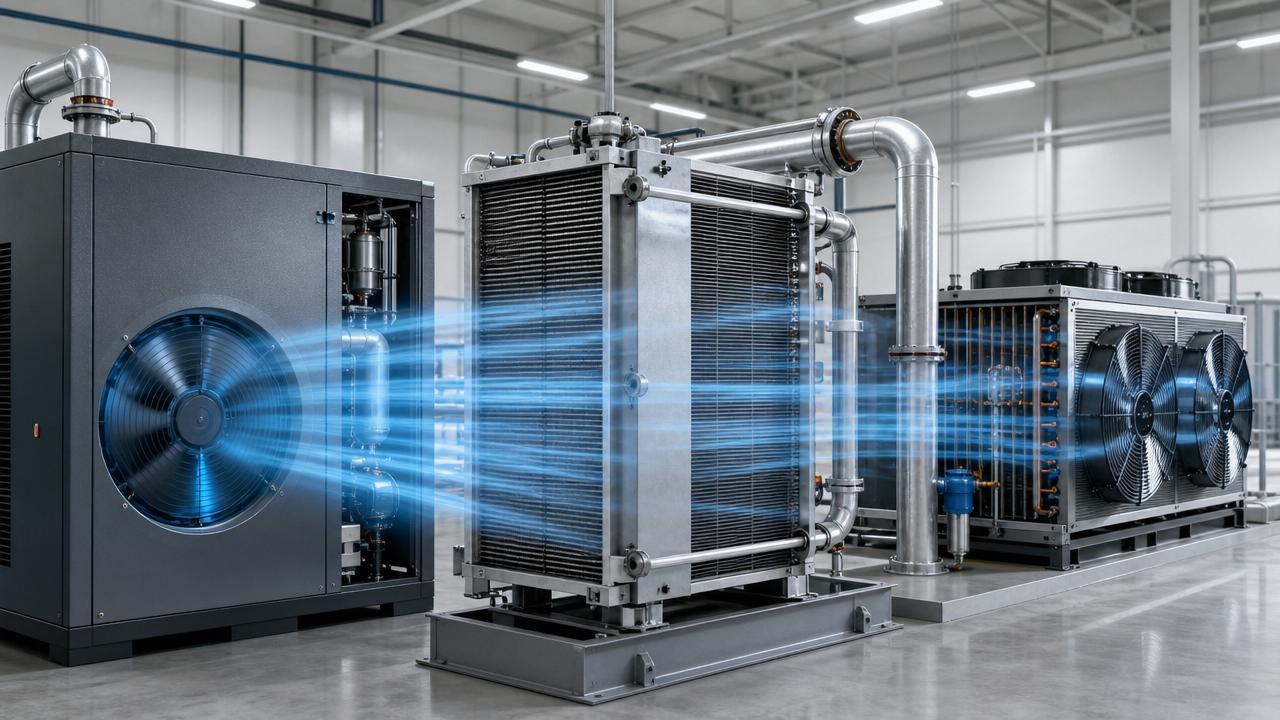
This problem is common in compressor packages, control cabinets, vacuum pumps, and process chillers. When fan intakes are partially obstructed or duct routing creates recirculation, hot exhaust air returns to the inlet side. The result is a repeated heat loop that makes the machine work harder without increasing useful output.
Typical signs maintenance teams should not ignore
- Outlet air temperature consistently 8°C or more above historical baseline
- Fan motors running at high speed for longer than normal duty cycles
- Cabinet or enclosure hotspots near VFDs, relays, or power supplies
- Repeated high-temperature alarms during peak production shifts
The table below outlines common airflow and surface-related mistakes, how they affect equipment, and what maintenance teams can do during routine service windows.
The key takeaway is that thermal management begins with clean, predictable flow paths. Teams that build airflow inspection into every scheduled visit often catch early degradation before it affects bearings, motors, or control electronics.
2. Wrong operating setpoints and unstable control logic
Another frequent error is assuming that lower temperature setpoints always improve protection. In reality, aggressive cooling targets can create short cycling, excessive valve movement, unstable fan staging, and unnecessary compressor loading. This is especially relevant in process cooling loops and precision temperature control systems.
A chilled water setpoint that is lowered by only 2°C to 3°C without reviewing actual process demand can increase load on the refrigeration side while producing little benefit on the process side. In compressed air aftercooling or vacuum applications, control bands that are too narrow can also create repetitive start-stop behavior that accelerates wear.
Common control-related mistakes
- Changing temperature thresholds without trend review
- Ignoring ambient seasonal variation between winter and summer
- Running fans continuously when staged response would be more stable
- Using one sensor reading to represent multiple thermal zones
For after-sales teams, the best response is not simply resetting alarms. It is validating whether the control sequence still matches current production load, ambient conditions, and equipment age. A thermal management review every 6 months can reduce repeat service calls and improve operating consistency.
The Most Costly Maintenance Mistakes in Cooling and Heat Exchange Systems
Many failures that appear to be “mechanical” are actually thermal management problems in disguise. A failed bearing may be traced to overheated lubricant. A damaged motor winding may follow sustained enclosure heat. A leaking seal may result from chronic temperature cycling. Maintenance teams that connect these patterns usually improve diagnosis speed and reduce unnecessary part replacement.
1. Delayed cleaning intervals and generic service schedules
Not all sites should use the same cleaning cycle. A food plant, packaging line, and electronics facility can have completely different contamination profiles. Yet many service plans still rely on fixed intervals such as quarterly cleaning for every unit. That approach often misses thermal risk in high-dust or high-oil environments.
A better thermal management practice is condition-based frequency. If pressure drop rises, fan current increases, or discharge temperature trend shifts by more than 7%, cleaning should be advanced. Maintenance teams can save both labor and downtime by matching service frequency to contamination intensity rather than calendar habits alone.
2. Using unsuitable replacement parts in thermal paths
Low-cost replacements can create long-term thermal penalties. Examples include filters with higher restriction, fans with lower static pressure, non-equivalent thermal pads, or lubricants outside the intended viscosity range. These substitutions may appear acceptable during restart, but performance often drifts after 100 to 300 operating hours.
This is where after-sales maintenance has a direct impact on equipment life. Parts selection should consider airflow, heat rejection capacity, temperature class, and duty cycle. When maintenance records show repeated temperature alarms after component replacement, the thermal path should be reviewed before larger assemblies are blamed.
The comparison table below can help service teams assess whether maintenance decisions are improving or weakening thermal management performance.
For industrial equipment with high utilization, the thermal effect of a spare part is often more important than the part price alone. Maintenance teams that document temperature behavior before and after replacement create a stronger basis for future procurement decisions.
3. Ignoring ambient and layout conditions around the equipment
Even well-maintained equipment can struggle if installed in a poor thermal environment. Units placed too close to walls, steam lines, ovens, or other heat-generating assets face a higher inlet temperature from the start. In many industrial rooms, improving clearance by 300 to 600 mm can noticeably reduce recirculation risk.
Maintenance teams should also verify whether room ventilation has changed over time. New partitions, temporary storage racks, or added process lines can alter air movement around equipment. Thermal management should therefore be treated as a system issue, not just a machine issue.
How After-Sales Teams Can Build a Stronger Thermal Management Routine
A durable thermal management program does not need to be complex, but it does need to be repeatable. The most effective teams use a standard inspection structure, compare readings against trend history, and escalate anomalies before failure thresholds are reached. In many facilities, this can be integrated into existing service visits without adding major labor hours.
A 5-step field inspection process
- Measure inlet, outlet, and ambient temperature at the same load condition.
- Check filters, fins, ducts, louvers, and fan rotation for physical restriction.
- Review alarms, runtime trends, and temperature deviation over the past 30 to 90 days.
- Confirm setpoints, deadbands, and sensor placement against actual process need.
- Record corrective action and schedule follow-up validation within 7 to 14 days.
This process is useful across chillers, compressed air systems, vacuum packages, heat exchangers, and thermal control enclosures. It gives maintenance teams a consistent method to identify whether the issue is fouling, airflow, controls, ambient load, or component mismatch.
Recommended field checkpoints for different equipment types
The checklist below helps maintenance personnel adapt thermal management inspection priorities to common industrial equipment categories.
When these checkpoints are documented consistently, service teams gain a baseline that improves troubleshooting accuracy. Over time, this reduces guesswork and makes thermal management part of preventive maintenance instead of emergency response.
When to recommend upgrade, redesign, or customer consultation
Some sites do not have a maintenance problem alone; they have a capacity or application mismatch. If the same equipment reaches high-temperature alarms despite cleaning, correct parts, and stable controls, the root cause may be undersized cooling capacity, increased process load, or changed ambient conditions.
After-sales teams should escalate the case when any of these conditions appear: repeated thermal alarm events more than 3 times in 30 days, stable load but rising outlet temperature over 10%, or room ambient regularly above the original design assumption. In such cases, customer consultation should include airflow redesign, heat exchanger review, ventilation improvement, or cooling capacity reassessment.
Practical Risk Reduction Advice for Service and Procurement Decisions
Thermal management does not end with maintenance actions. Procurement, spare strategy, and service planning also shape equipment life. When customers evaluate maintenance contracts or replacement parts, they should ask how the proposal protects thermal stability, not only how fast the repair can be completed.
Questions worth asking before approving service or parts
- Will the replacement part maintain original airflow or heat transfer performance?
- Does the service scope include temperature trend verification after restart?
- Are cleaning intervals based on actual site contamination or fixed by calendar only?
- Has ambient room condition been reviewed within the last 12 months?
- Is there a defined threshold for escalation before failure becomes critical?
For B2B users managing multi-site assets, these questions improve decision quality and reduce repeat callouts. They are especially valuable where uptime targets are tight and thermal drift can interrupt regulated or high-value production processes.
Why thermal intelligence matters in modern industry
As industrial systems become more energy-sensitive and process-specific, maintenance teams need more than reactive repair. They need reliable thermal intelligence that connects cooling performance, compressed air behavior, heat exchange efficiency, and operational economics. This is especially relevant in sectors where temperature precision, clean utilities, and energy cost control directly affect product quality and competitiveness.
Platforms focused on industrial cooling, compression, vacuum processes, and heat exchange help maintenance teams move from symptom-based troubleshooting to informed decision-making. Better insight into component behavior, service intervals, and thermal risk patterns supports longer equipment life and more stable plant performance.
Reducing thermal management mistakes is one of the most practical ways to extend equipment life, lower unplanned downtime, and protect energy efficiency across industrial systems. For after-sales maintenance teams, the priority is clear: keep airflow open, verify setpoints, match spare parts correctly, inspect trends regularly, and treat thermal performance as a full-system responsibility. If you want deeper insight into industrial cooling, compressed air, vacuum, and heat exchange applications, contact us today to discuss your maintenance challenges, request a tailored solution, or learn more about practical thermal management strategies for your equipment portfolio.
Related News
- Semiconductor Thermal Management: Low Vibration Design PrioritiesAuthor :

- Thermal Interface Materials: What Drives Real Thermal OptimizationAuthor :
![]()
- Global Energy Costs in Europe: What Changed in 2026Author :

- Smart Device Thermal Management: Common Failures and FixesAuthor :

- Thermal Efficiency Optimization: 5 Signs Your System Is Losing HeatAuthor :

- How Precision Temperature Control Systems Improve Process StabilityAuthor :

- How Intellectualization Improves Process Visibility in Modern PlantsAuthor :

- Global Energy Costs in 2026: What Rising Prices Mean for Plant PlanningAuthor :

- Carbon Neutrality Roadmaps: Common Gaps in Industrial PlanningAuthor :

- Heat Transfer Basics: What Affects Efficiency in Industrial EquipmentAuthor :

- Industrial Thermal Systems: Common Failure Risks in Continuous OperationAuthor :

- Global Energy Costs: 2026 Risk Signals to WatchAuthor :

- Pneumatic Power Systems: Common Sizing Mistakes to AvoidAuthor :

- How Thermal Power Systems Cut Downtime in 2026Author :

- Clean Energy Technology Trends Reshaping Industry in 2026Author :

- Pneumatic Power Systems: Key Checks Before Equipment SelectionAuthor :

- Compression Technology Mistakes That Raise Maintenance RiskAuthor :

- Clean Energy Technology Risks to Watch in 2026 ProjectsAuthor :

- Smart Thermal Systems: 5 Signals Your Controls Are Wasting HeatAuthor :

- How to Size Pneumatic Power Systems for Stable OutputAuthor :

- Pneumatic Power Systems: Key Safety Risks in Daily OperationAuthor :

- Clean Energy Technology Shifts Reshaping Industrial InvestmentAuthor :

- Intellectualization in Industry: What Delivers Measurable Value?Author :

- Thermal Management Mistakes That Shorten Equipment LifeAuthor :

- Clean Energy Technology Options That Fit Real Manufacturing UpgradesAuthor :

- Energy-Saving Technologies Worth Tracking in 2026Author :