How to Size Pneumatic Power Systems for Stable Output




Sizing pneumatic power systems for stable output requires more than matching pressure and flow on paper. For technical evaluators, the real challenge is balancing load variation, air quality, control response, and energy efficiency across the full operating cycle. This guide outlines the key sizing logic, practical evaluation factors, and common design risks to help ensure reliable performance, lower instability, and better system-level decisions.
What technical evaluators really need to confirm first
The core search intent behind pneumatic power systems sizing is practical, not theoretical. Readers want a reliable way to select capacity that delivers stable output under real operating conditions.
For technical evaluators, the main concern is usually not peak pressure alone. It is whether the system can hold pressure, maintain flow, and avoid instability during fluctuating demand.
That means the first judgment is simple: a pneumatic system should be sized for the full duty profile, not just a nominal operating point from equipment brochures.
If sizing is based only on compressor nameplate data or actuator average consumption, the result often looks acceptable in design review but fails under startup, cycling, or multi-point use.
A stable system therefore depends on four linked factors: actual demand pattern, allowable pressure drop, storage buffering, and control strategy. Everything else supports these decisions.
Start with the load profile, not the compressor catalog
The most common sizing error is beginning with available compressor models instead of mapping the air demand profile. Stable output starts with understanding how air is consumed over time.
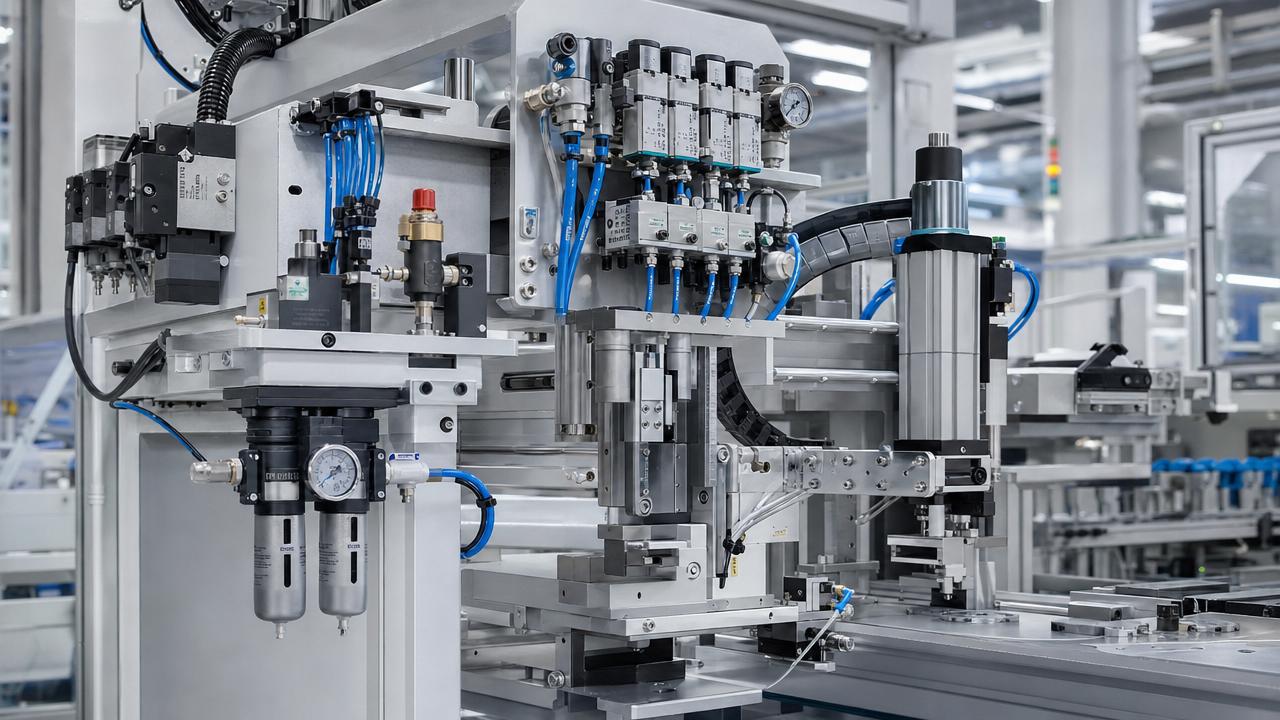
Technical evaluators should collect demand data for every significant user: cylinders, valves, blow-off points, air knives, grippers, vacuum generators, and intermittent process tools.
It is important to separate average flow from instantaneous flow. Many pneumatic power systems appear adequate on average but collapse briefly when several high-demand events occur together.
A useful review method is to classify loads into continuous, intermittent, pulsed, and critical-stability loads. This quickly shows where pressure dips will create process risk or quality variation.
Cycle time also matters. A short, repeated stroke at high frequency may create a very different demand signature than a larger actuator operating only a few times each hour.
In technical evaluation, the question should be: what is the worst credible demand combination during normal operation, and how long must the system sustain it without pressure instability?
Define stable output in measurable engineering terms
Stable output should not remain a vague requirement. It must be translated into measurable limits that can be verified during design review and commissioning.
In most pneumatic power systems, stability can be defined through pressure band, flow sufficiency, actuator response consistency, and acceptable recovery time after a demand spike.
For example, a packaging line may tolerate minor pressure fluctuation but not delayed cylinder extension. A semiconductor utility line may require tighter air quality and more stable pressure behavior.
Technical evaluators should ask for a target pressure at the point of use, not just at the compressor discharge or receiver outlet. That is where process performance is determined.
It is equally important to define acceptable transient behavior. Some systems fail not because pressure eventually reaches target, but because it drops too far during short demand surges.
Without these criteria, system suppliers may optimize for installed capacity alone, while the real plant requirement is control stability across a changing production cycle.
Calculate demand at the point of use, then work backward
A robust sizing method begins at the end-use device. Determine required pressure and consumption for each tool or actuator at the actual operating condition.
Then add distribution losses, filtration losses, dryer losses, regulator losses, and any expected future degradation margin. This creates a more realistic system requirement.
Many evaluations underestimate pressure drop across treatment components. Filters, dryers, and separators may be acceptable when clean, yet become major stability constraints as they load over time.
When pressure is specified only at the compressor room, end users often experience unstable performance despite apparently sufficient installed compressor power and nominal flow capacity.
Working backward from the point of use helps evaluators distinguish between compressor undersizing and network design limitations. These are different problems and need different capital decisions.
This approach also improves communication between process engineers, utilities teams, and equipment vendors because all parties are sizing against the same operating endpoint.
Why storage volume matters as much as compressor capacity
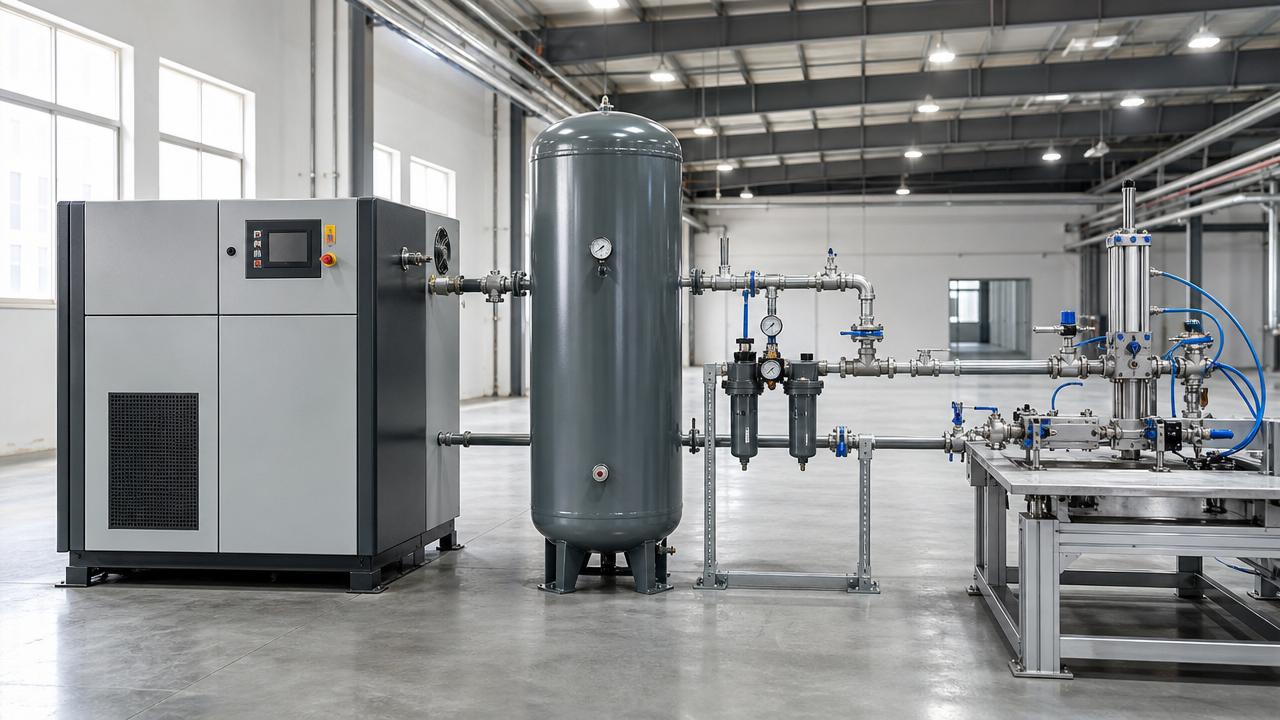
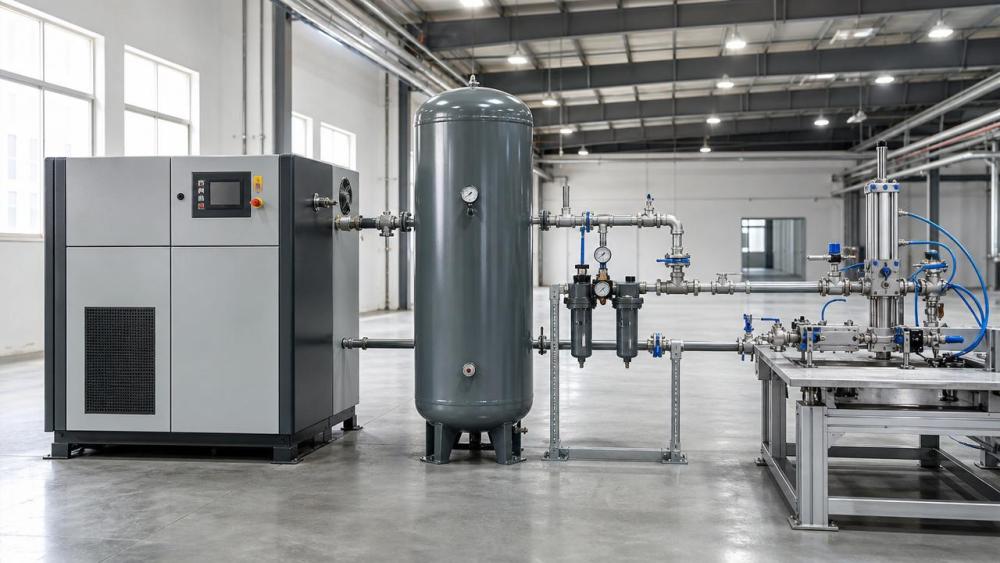
Receiver sizing is often treated as a secondary decision, but it is central to stable output. Storage smooths demand spikes that compressors and controls cannot react to instantly.
In many pneumatic power systems, instability comes from insufficient buffer volume rather than insufficient total compressor capacity. The plant has enough air overall, but not enough at the right moment.
A well-sized receiver reduces pressure swing, decreases compressor cycling, and supports short-duration peak events without forcing the whole system to be oversized for rare conditions.
Evaluators should consider both central and local storage. A main receiver supports network stability, while point-of-use or zone receivers can protect critical equipment from nearby demand fluctuations.
Local buffering is especially useful where long pipe runs, rapid actuator motion, or pulsed blow-off events create temporary pressure collapse in one section of the plant.
Storage should be reviewed together with control response. A fast compressor control system helps, but it does not remove the need for air volume buffering.
Pressure drop is often the hidden cause of unstable performance
Pressure drop across the system can consume the safety margin that designers assume is available. This is one of the most frequent reasons pneumatic power systems underperform in practice.
Pipe diameter, line length, fittings, flexible hoses, isolation valves, filters, dryers, and regulators all contribute. Small local restrictions often matter more than the main header size.
Technical evaluators should not rely only on simplified layout assumptions. Real networks include expansions, temporary branches, legacy piping, and maintenance-related modifications that increase resistance.
Where stable output is critical, it is worth validating pressure drop under several load cases: normal operation, peak coincidence, startup, and one-compressor-out contingency.
It is also useful to compare dry, clean conditions with realistic operating conditions after some component fouling. Stability should survive normal maintenance intervals, not just day-one performance.
If pressure drop consumes too much of the available band, the system may appear adequately sized while actuators still behave inconsistently at the point of use.
Compressor control strategy changes the sizing outcome
Stable output depends not only on how much compressed air is installed, but on how that capacity is staged and controlled as demand moves up and down.
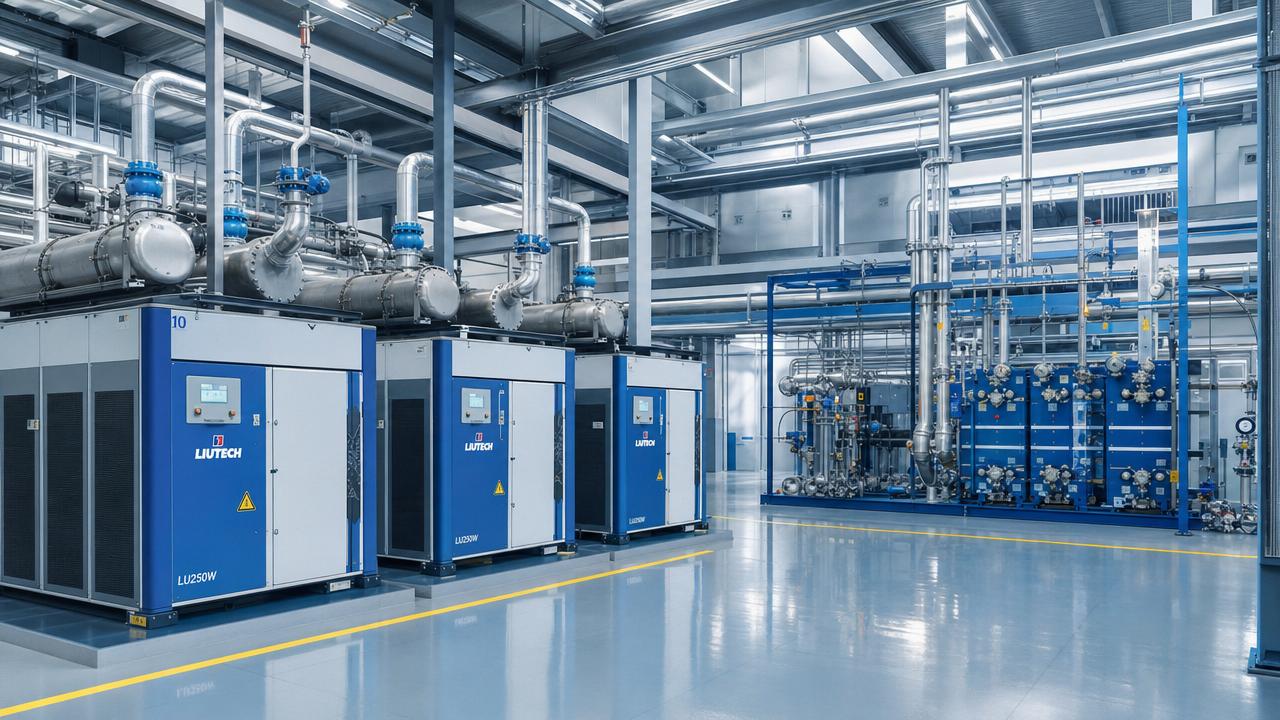
Fixed-speed compressors, load-unload machines, variable-speed units, and sequenced multi-compressor arrangements all respond differently to part-load operation and transient changes.
For technical evaluators, the key question is whether the chosen control strategy can maintain the required pressure band without excessive cycling, overshoot, or unloaded energy waste.
A system with enough total capacity may still deliver unstable output if controls are too slow, dead bands are too wide, or compressor sequencing creates pressure hunting.
Variable-speed compressors can improve stability under fluctuating loads, but they should not be treated as a universal correction for poor storage design or bad network layout.
The best sizing decision usually integrates base-load efficiency, trim response, and receiver volume, rather than maximizing one control technology in isolation.
Air quality requirements can increase effective sizing needs
Air treatment is not separate from capacity planning. If the application needs dry, oil-free, or contaminant-controlled air, those requirements affect usable flow and pressure stability.
Dryers and filters introduce pressure loss, especially as they age. Oil-free systems may have different control and turndown behavior than lubricated systems in the same duty class.
For pharmaceutical, food, electronics, or precision assembly environments, technical evaluators must review quality class and stability together, not as independent specifications.
Systems sized only for flow may fail once treatment stages are included. The resulting pressure shortfall often appears at the most sensitive equipment first.
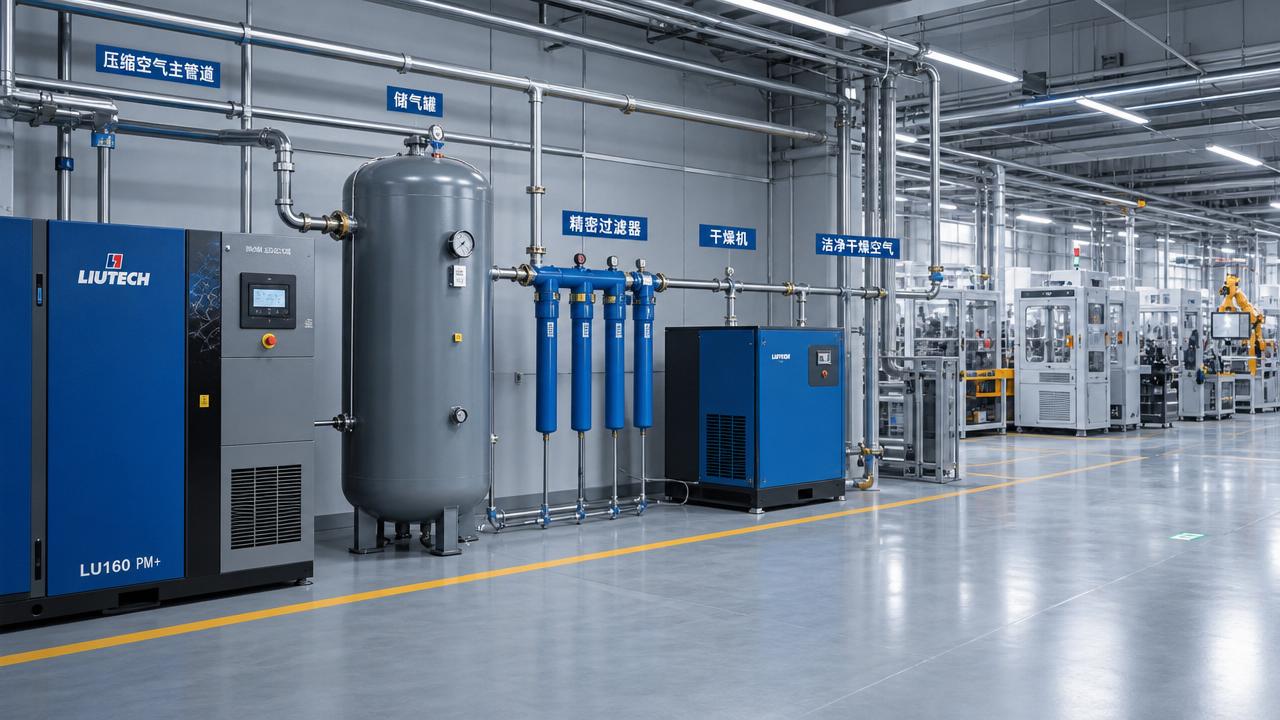
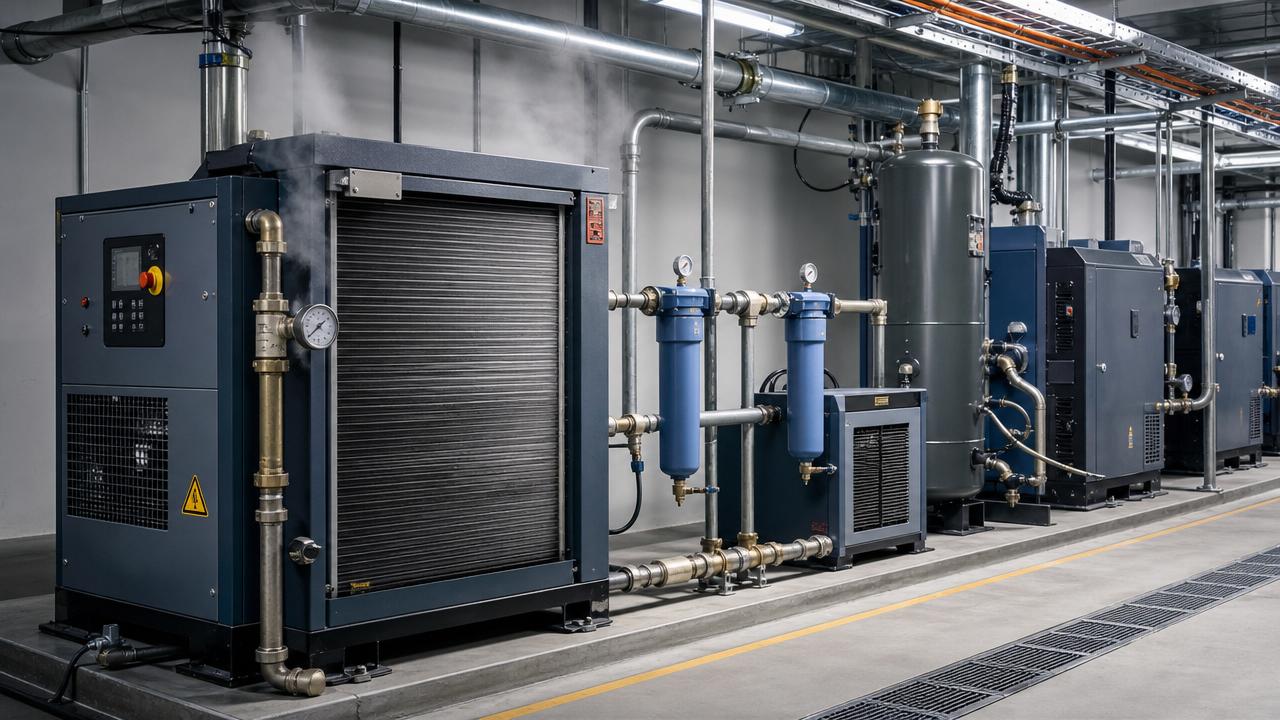
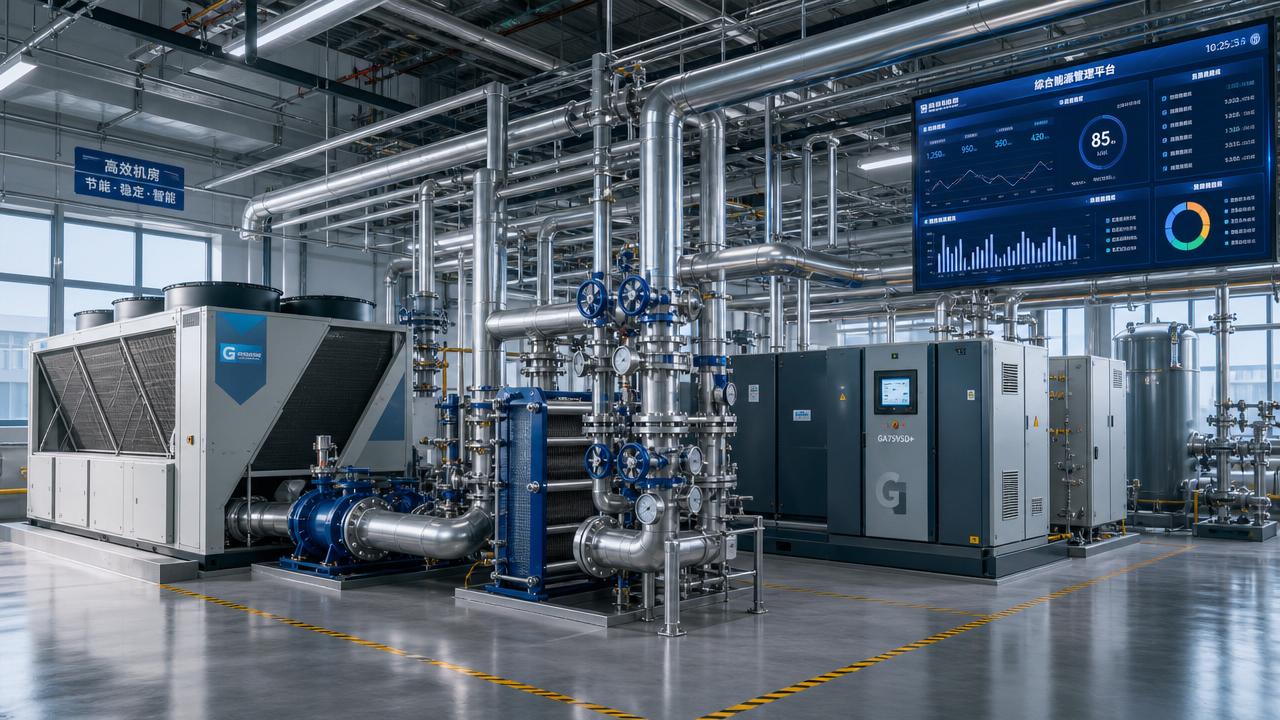
This is why pneumatic power systems should be evaluated as an integrated chain: compression, storage, treatment, distribution, regulation, and end use. Stability depends on the whole path.
Build in margin carefully, not blindly
Safety margin is necessary, but oversizing is not the same as risk control. Too much excess capacity can increase cycling, poor part-load efficiency, and unstable control behavior.
Technical evaluators should distinguish between design margin for uncertainty, growth allowance for future demand, and emergency reserve for redundancy. Each serves a different purpose.
Blindly adding a large percentage to flow demand may create an expensive system that still performs poorly because the real issue was storage, pressure drop, or poor control sequencing.
A better method is to apply margin to identified uncertainties: measurement error, future production expansion, treatment degradation, seasonal temperature effects, and outage scenarios.
This creates a more defensible capital decision and makes vendor comparisons easier, because margin assumptions are visible instead of hidden inside oversized equipment proposals.
Common sizing mistakes that deserve extra scrutiny
Several errors appear repeatedly in procurement reviews. The first is using average consumption instead of simultaneous peak demand when stability is the priority.
The second is specifying compressor discharge pressure without confirming minimum pressure at the most sensitive end-use point. This disconnect causes many false-positive sizing approvals.
Another common mistake is ignoring response time. A compressor may meet the hourly air volume target yet still fail to support fast cycling equipment during short bursts.
Evaluators should also question designs with no local storage near unstable loads, minimal allowance for filter loading, or narrow distribution lines added to legacy systems.
Finally, avoid treating all loads as equally critical. Some applications can accept temporary pressure variation, while others translate small fluctuations directly into scrap, downtime, or safety risk.
A practical evaluation checklist for technical decision-making
When comparing options, start with a documented demand profile by equipment, time, and simultaneity. If this is missing, sizing confidence should be considered low.
Next, verify required pressure at each critical point of use and compare it with expected system pressure under normal, peak, and upset conditions.
Review receiver sizing, location, and expected pressure band. Confirm whether storage is intended to absorb transient events or only provide operational convenience.
Check pressure drop assumptions across piping and treatment. Ask whether calculations reflect fouled conditions, expansion plans, and realistic routing rather than idealized layouts.
Then examine compressor control logic, sequencing, and part-load behavior. Stable output requires a control architecture matched to demand variability, not just total installed horsepower.
Finally, evaluate energy consequences. The best pneumatic power systems are not only stable, but also efficient under the actual duty cycle the plant will run most often.
Conclusion: size for behavior, not just for nameplate numbers
The best way to size pneumatic power systems for stable output is to evaluate the system as a dynamic network, not a static pressure-and-flow calculation.
Technical evaluators should focus on real demand behavior, point-of-use pressure, storage buffering, pressure drop, control response, and air treatment impacts across the operating cycle.
When these factors are reviewed together, it becomes much easier to separate true capacity shortages from design weaknesses in distribution or control.
The result is a more reliable basis for equipment selection, lower instability risk, and better long-term efficiency. In short, stable output comes from system logic, not oversizing alone.
Ready when you are. Send us a message to get started.
Related News
- Carrier Plans $600 Million Manufacturing and Engineering Center in Fort WorthAuthor :

- Semiconductor Thermal Management: Low Vibration Design PrioritiesAuthor :

- Thermal Interface Materials: What Drives Real Thermal OptimizationAuthor :
![]()
- Global Energy Costs in Europe: What Changed in 2026Author :

- Smart Device Thermal Management: Common Failures and FixesAuthor :

- Thermal Efficiency Optimization: 5 Signs Your System Is Losing HeatAuthor :

- How Precision Temperature Control Systems Improve Process StabilityAuthor :

- How Intellectualization Improves Process Visibility in Modern PlantsAuthor :

- Global Energy Costs in 2026: What Rising Prices Mean for Plant PlanningAuthor :

- Carbon Neutrality Roadmaps: Common Gaps in Industrial PlanningAuthor :

- Heat Transfer Basics: What Affects Efficiency in Industrial EquipmentAuthor :

- Industrial Thermal Systems: Common Failure Risks in Continuous OperationAuthor :

- Global Energy Costs: 2026 Risk Signals to WatchAuthor :

- Pneumatic Power Systems: Common Sizing Mistakes to AvoidAuthor :

- How Thermal Power Systems Cut Downtime in 2026Author :

- Clean Energy Technology Trends Reshaping Industry in 2026Author :

- Pneumatic Power Systems: Key Checks Before Equipment SelectionAuthor :

- Compression Technology Mistakes That Raise Maintenance RiskAuthor :

- Clean Energy Technology Risks to Watch in 2026 ProjectsAuthor :

- Smart Thermal Systems: 5 Signals Your Controls Are Wasting HeatAuthor :

- How to Size Pneumatic Power Systems for Stable OutputAuthor :

- Pneumatic Power Systems: Key Safety Risks in Daily OperationAuthor :

- Clean Energy Technology Shifts Reshaping Industrial InvestmentAuthor :

- Intellectualization in Industry: What Delivers Measurable Value?Author :

- Thermal Management Mistakes That Shorten Equipment LifeAuthor :

- Clean Energy Technology Options That Fit Real Manufacturing UpgradesAuthor :

- Energy-Saving Technologies Worth Tracking in 2026Author :