EU Imposes Provisional Anti-Dumping Duties of Up to 51.5% on Chinese Copper Tubes




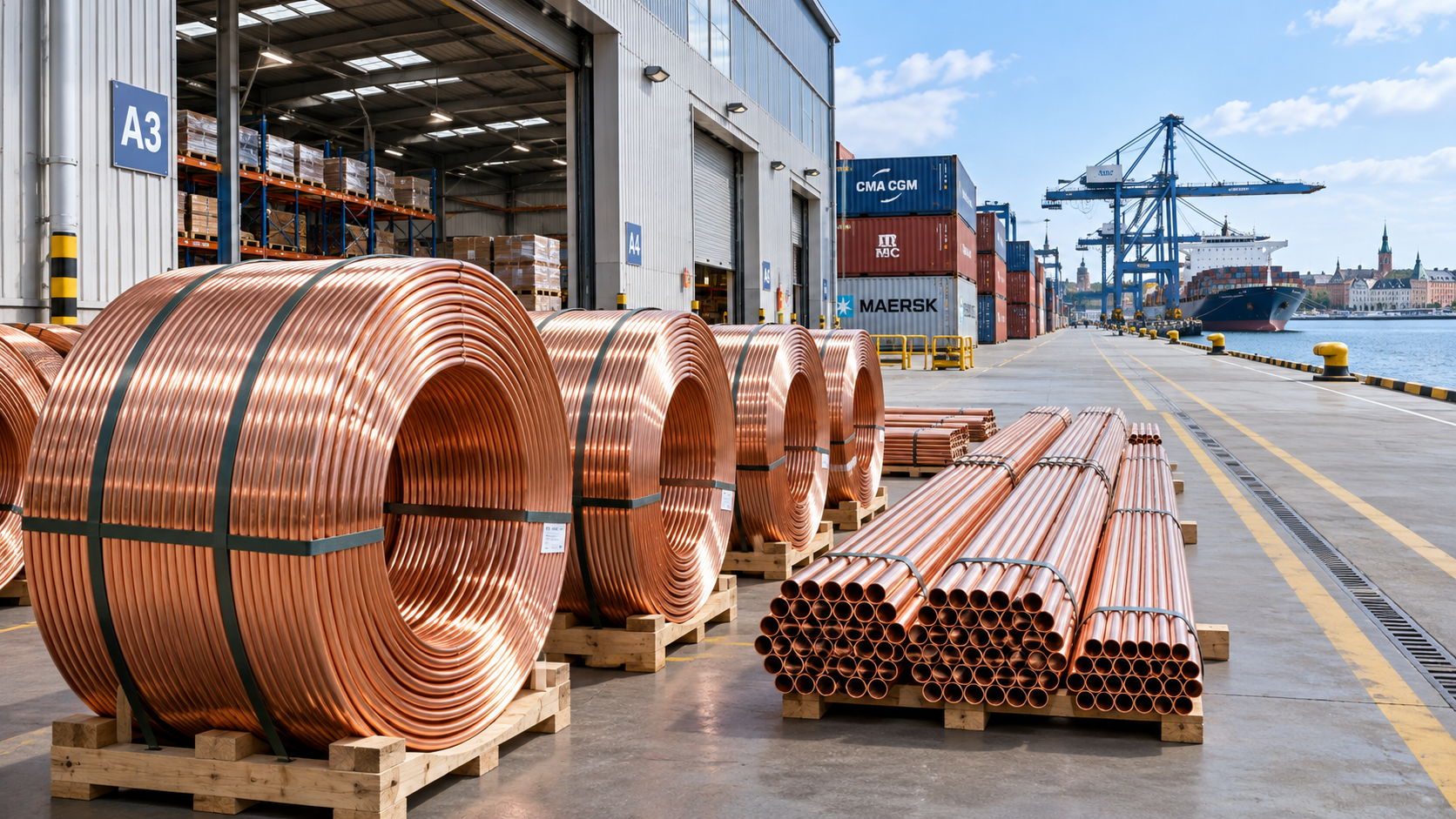
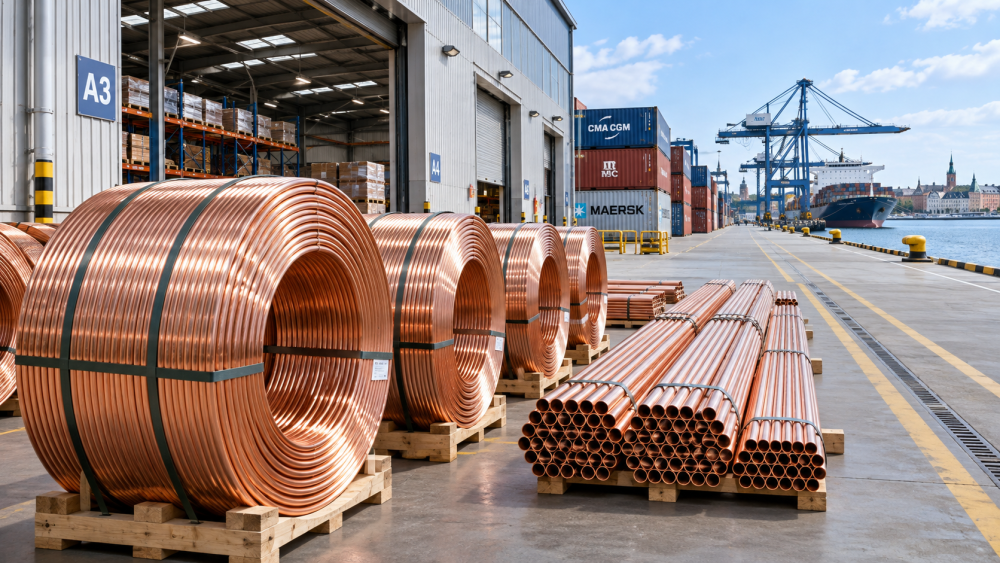
The European Commission has issued Implementing Regulation EU 2026/2497, imposing provisional anti-dumping duties on certain copper tubes originating in China, Mexico, Vietnam and Uzbekistan. The duties on Chinese companies covered by the measure reach as high as 51.5%.
The measure matters beyond copper tube suppliers because the material is used in air conditioners, heat pumps and heat exchangers. For businesses dealing in covered products, the immediate issue is how the additional duty affects the cost of supplying the EU market. For equipment manufacturers, the effect will depend on how much covered tubing they use, where it enters their supply chains and how any additional cost is shared.
What the provisional duty changes
An anti-dumping duty adds a trade cost to products covered by the measure. The reported maximum of 51.5% describes the highest rate for the Chinese companies concerned; it should not be read as a single rate applying to every Chinese supplier or to every copper tube. The measure covers certain products from four countries, and the rate applicable to a particular transaction depends on the relevant provisions of the regulation.
The distinction between the maximum rate and the rate for a specific shipment is central to assessing its commercial significance. A purchaser cannot calculate its exposure from the headline figure alone: the origin and identity of the product, as well as the supplier and applicable rate, all matter. The presence of Mexico, Vietnam and Uzbekistan in the measure also means that the implications are not confined to trade involving China.
The duties are provisional. Their longer-term effect will depend on subsequent decisions and on the terms of any measure that remains in place. The current announcement establishes an additional cost issue for covered trade, but it does not by itself establish the duration of that cost or the final outcome for the products concerned.
How costs could move through the supply chain
The first direct effect falls on transactions involving copper tubes covered by the duties. Where the additional charge applies, the landed cost of those tubes can rise. Whether that increase is borne by an exporter, an importer, a downstream manufacturer or a combination of parties depends on their commercial arrangements and their ability to change prices.
That distinction matters for equipment producers. A higher duty on a tube does not translate automatically into an identical percentage increase in the price of an air conditioner, heat pump or heat exchanger. The tube is one component of a finished product, and the effect on the finished unit depends on the amount used, its cost within the product and the way suppliers and buyers respond.
Some businesses may encounter the issue through direct purchases of covered tubes. Others may feel it indirectly if a component supplier incorporates the additional cost into its own prices. The effect can therefore emerge at different points in a supply chain, even when the final equipment producer does not purchase the imported tube itself.
Existing commercial terms may also influence the timing of any adjustment. If prices for a particular order have already been agreed, the parties' contract terms could determine how an added charge is handled. For new negotiations, the applicable duty may become part of the price discussion from the outset. Neither outcome implies that all suppliers will pass on the full amount or that all buyers will accept it.
Why product coverage matters
The regulation concerns certain copper tubes, so the scope of the measure is as important as the headline rate. Businesses that use copper tubing in cooling and heat-transfer equipment may need to distinguish between products covered by the measure and those outside it. The end use of a tube can help explain its commercial importance, but the product description and other applicable conditions determine whether a particular shipment is subject to the duty.
Origin is another important distinction. The measure names four countries, but that does not mean a tube purchased through a business in one of those countries necessarily has the same treatment as every other tube associated with it. The relevant origin and the terms of the regulation must be considered for the product in question.
For a manufacturer assessing its exposure, the practical question is therefore more specific than whether it uses copper tubes: it is whether the tubes in its supply chain fall within the measure and, if they do, what rate and contractual arrangements apply. This also affects how much of any cost change may reach the price of finished equipment.
Supply decisions and longer-term effects
If the added cost changes the relative price of available tubes, purchasers may reassess their sourcing options. That does not necessarily mean an immediate supplier change. A replacement would need to meet the buyer's product requirements, and a business would have to weigh the price difference against the time and effort involved in changing supply arrangements.
The inclusion of several countries in the measure makes a simple shift between the named origins an incomplete answer. The commercial comparison depends on the applicable rates and the suitability of the products available. A lower quoted tube price alone may not show the full cost to a buyer if duties and other transaction terms differ.
There is also a difference between the effect on imported tubes and the effect on finished refrigeration or heating equipment. The announced measure concerns certain copper tubes; it does not establish a duty on every finished product that contains them. A finished equipment exporter could nevertheless face higher component costs if its supply chain purchases covered tubes and those costs are passed through.
Over a longer period, the effect on supply arrangements will depend on whether the provisional duties continue, how their terms develop and how buyers and suppliers respond. Official regulatory updates will be relevant to those decisions. The immediate issue is narrower: identifying exposure to the covered tubes and understanding where any additional cost would sit in the chain from tube supplier to equipment customer.
Ready when you are. Send us a message to get started.
Related News
- EU Imposes Provisional Anti-Dumping Duties of Up to 51.5% on Chinese Copper TubesAuthor :

- How to evaluate energy-saving technologies for semiconductor plantsAuthor :

- ABB to Acquire German Fan Maker Ziehl-Abegg for $2.65 BillionAuthor :

- How does enclosure design affect heat dissipation in smart devices?Author :

- ABB Announces $2.65 Billion Deal to Acquire EC Fan Maker Ziehl-AbeggAuthor :

- MIIT's Fifth Standards Plan Launches AC Piping Revision to Address Refrigerant LeaksAuthor :

- German Refrigeration Groups Challenge PFAS Study, Urge Application-Based RulesAuthor :

- How to find equipment applications in an industrial knowledge baseAuthor :

- UNEP and U4E Release Sustainable Procurement Guides for Cooling and HeatingAuthor :

- Can skid-mounted thermal integration reduce plant energy use?Author :

- Cybersecurity Firm Detects Login Attempts Targeting Danfoss Refrigeration ControllersAuthor :

- How to choose a cooling solution for a high-power PCBAuthor :

- EU Monitors Cyberattacks on European Supermarket Refrigeration SystemsAuthor :

- How to assess a pure power source manufacturer's voltage stabilityAuthor :

- EHPA Seeks Inclusion of Heat Pumps in €175 Billion EU Research PlanAuthor :

- US to Lift 50% Tariff on Some Canadian Refrigeration EquipmentAuthor :

- Chillventa 2026 Sets Records for Exhibitor and Visitor NumbersAuthor :

- Carrier Plans $600 Million Manufacturing and Engineering Center in Fort WorthAuthor :

- Semiconductor Thermal Management: Low Vibration Design PrioritiesAuthor :

- Thermal Interface Materials: What Drives Real Thermal OptimizationAuthor :
![]()
- Global Energy Costs in Europe: What Changed in 2026Author :

- Smart Device Thermal Management: Common Failures and FixesAuthor :

- Thermal Efficiency Optimization: 5 Signs Your System Is Losing HeatAuthor :

- How Precision Temperature Control Systems Improve Process StabilityAuthor :

- How Intellectualization Improves Process Visibility in Modern PlantsAuthor :

- Global Energy Costs in 2026: What Rising Prices Mean for Plant PlanningAuthor :

- Carbon Neutrality Roadmaps: Common Gaps in Industrial PlanningAuthor :

- Heat Transfer Basics: What Affects Efficiency in Industrial EquipmentAuthor :

- Industrial Thermal Systems: Common Failure Risks in Continuous OperationAuthor :

- Global Energy Costs: 2026 Risk Signals to WatchAuthor :

- Pneumatic Power Systems: Common Sizing Mistakes to AvoidAuthor :

- How Thermal Power Systems Cut Downtime in 2026Author :

- Clean Energy Technology Trends Reshaping Industry in 2026Author :

- Pneumatic Power Systems: Key Checks Before Equipment SelectionAuthor :

- Compression Technology Mistakes That Raise Maintenance RiskAuthor :

- Clean Energy Technology Risks to Watch in 2026 ProjectsAuthor :