Environmentally Friendly Refrigerants: What to Check Before a Cold Storage Retrofit




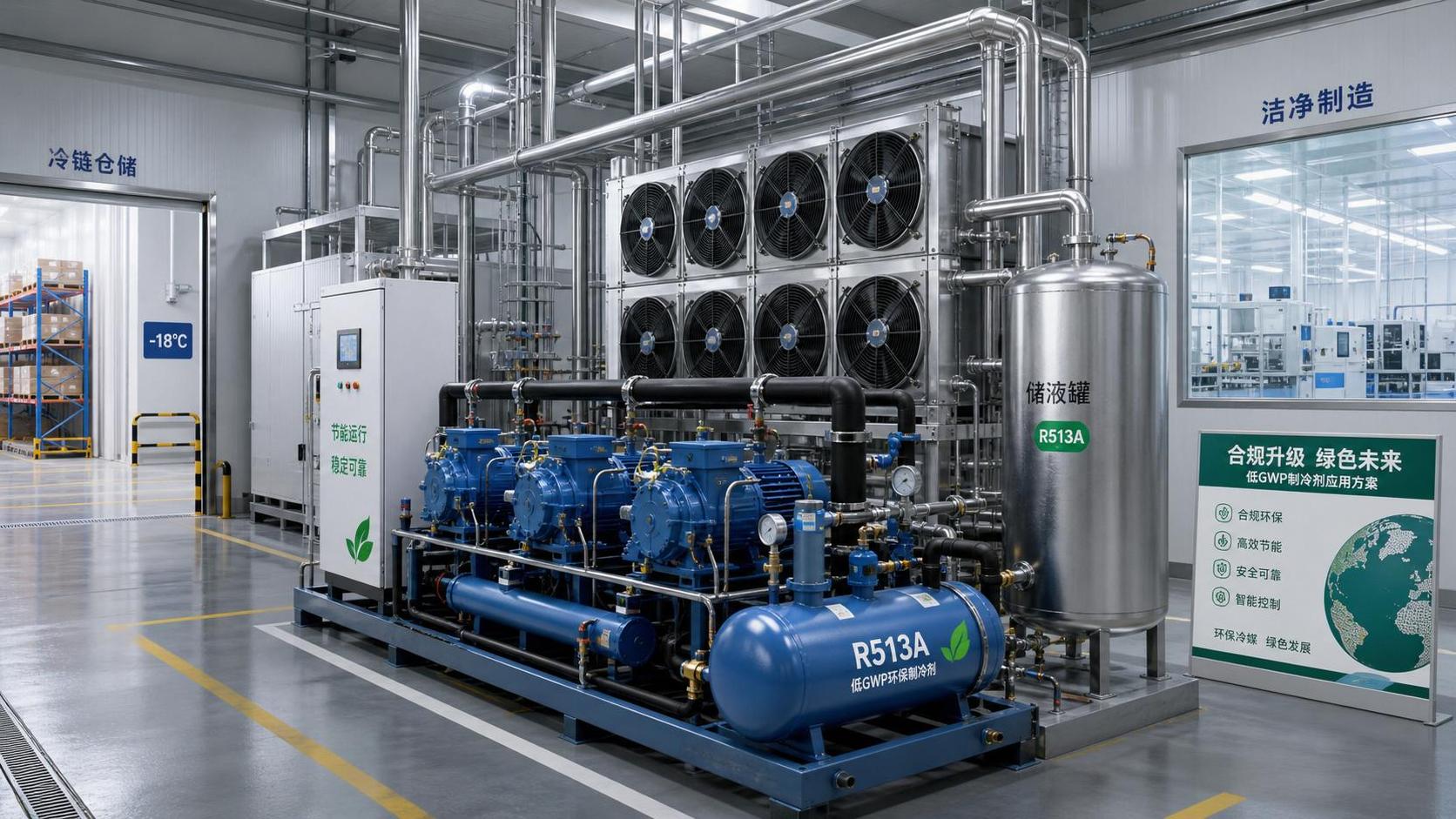
For procurement teams planning a cold storage retrofit, choosing environmentally friendly refrigerants is no longer just a compliance issue—it directly affects lifecycle cost, energy efficiency, supply stability, and future regulatory risk. Before making a decision, buyers should compare refrigerant performance, equipment compatibility, safety class, quota impact, and long-term service support to ensure the upgrade delivers both operational reliability and sustainable value.
In practice, a cold storage upgrade is rarely just a refrigerant swap. It can affect compressor loading, heat exchanger sizing, control logic, leak detection, technician training, insurance review, and future maintenance contracts. For buyers in food, pharmaceutical, logistics, and general industrial applications, the right decision usually depends on 5 core factors: regulatory fit, system compatibility, efficiency profile, safety management, and long-term refrigerant availability.
This article outlines what procurement teams should verify before approving a retrofit project, especially when comparing environmentally friendly refrigerants for medium- and low-temperature cold storage systems operating across 24/7 duty cycles.
Why Refrigerant Selection Has Become a Strategic Procurement Issue
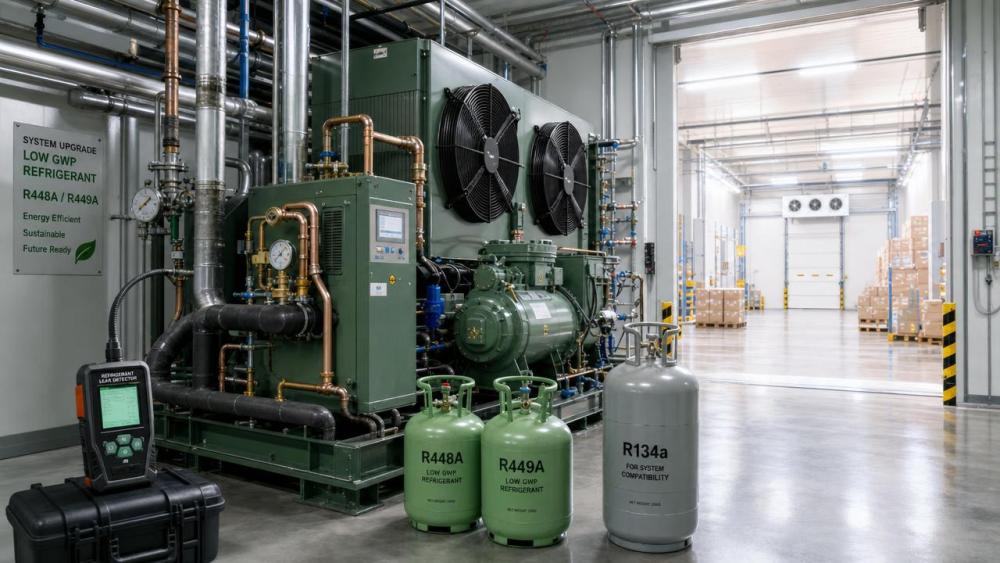
Cold storage owners are under pressure from at least 3 directions at once: tighter environmental regulation, rising electricity costs, and stronger internal sustainability targets. A refrigerant that looks acceptable today may become expensive, restricted, or operationally inconvenient within 2–5 years. That is why environmentally friendly refrigerants should be evaluated as part of total asset strategy, not just as a line-item consumable.
For procurement, the financial impact is broader than the initial conversion budget. Retrofit projects often include refrigerant recovery, oil change, seal replacement, valve adjustments, sensor upgrades, and recommissioning. In some systems, 15%–30% of project cost comes from indirect work rather than the refrigerant itself. Ignoring these elements can distort bid comparisons.
The Regulatory Pressure Behind Retrofit Decisions
Many facilities are moving away from higher-GWP refrigerants because quota management, phasedown schedules, and customer ESG expectations are making long-term sourcing less predictable. Procurement teams should not assume that “available now” means “stable for the next service cycle.” A 7–10 year storage asset needs a refrigerant plan that remains practical through multiple maintenance intervals.
This is especially relevant for operators with 2 or more sites, where standardization affects spare parts, technician familiarity, safety documentation, and emergency response planning. If one site uses a mildly flammable option and another uses a non-flammable blend, training and compliance costs can rise quickly.
What Buyers Must Compare Beyond GWP
GWP matters, but it is only 1 metric. Purchasing teams should also compare suction pressure behavior, discharge temperature, compressor map fit, capacity change, glide characteristics, lubricant requirements, and leak management needs. In retrofit work, a low-GWP option that causes poor pull-down time or unstable evaporator control may increase operational cost despite its environmental advantage.
- Expected storage temperature range, such as -25°C to -18°C or 0°C to 5°C
- Annual runtime, often 4,000–8,500 hours in industrial cold stores
- Compressor age, remaining service life, and OEM compatibility guidance
- Safety classification and site-specific ventilation conditions
- Future service access, including technician availability and leak detection readiness
The 6 Technical Checks Before Approving Environmentally Friendly Refrigerants
A sound procurement process starts with a structured review. Before selecting environmentally friendly refrigerants, buyers should ask the engineering team and suppliers to document 6 technical checks. This reduces the risk of approving a fluid that performs well on paper but creates hidden cost during commissioning or seasonal load changes.
1. System Compatibility
Check whether the candidate refrigerant is compatible with the existing compressor type, elastomers, expansion devices, oil, and pressure components. A retrofit may require POE oil conversion, seal changes, control recalibration, or pressure relief review. In older systems above 8–12 years of service, compatibility risk is usually higher because component tolerances and documentation may be incomplete.
2. Capacity and Efficiency Impact
Not all environmentally friendly refrigerants deliver the same cooling capacity under identical evaporating and condensing conditions. A retrofit candidate may show a 3%–8% efficiency improvement in one application and a 5%–12% capacity penalty in another. Procurement should request comparison points at actual operating conditions, not only nominal catalog values.
3. Safety Class and Site Readiness
Safety classification has direct consequences for plant design and operating procedures. A1, A2L, and natural refrigerant pathways each impose different requirements for ventilation, ignition risk management, gas detection, and technician training. For warehouses with confined machine rooms or high personnel traffic, safety adaptation cost can materially influence the business case.
4. Temperature Glide and Control Stability
Blended refrigerants may introduce glide, which can affect evaporator performance, superheat tuning, and heat exchanger approach temperature. In systems with multiple evaporators or tight product temperature requirements such as ±1°C to ±2°C, this should be reviewed carefully. Stable control is often more valuable than headline efficiency.
5. Refrigerant Availability and Quota Exposure
A technically suitable refrigerant still becomes risky if local supply is volatile or heavily influenced by quota pressure. Procurement teams should ask suppliers about lead time, packaging formats, cylinder return arrangements, and expected service supply over the next 24–36 months. This matters most for multi-site operators that need predictable refill availability.
6. Service Ecosystem and Contractor Readiness
The retrofit is only as reliable as the service ecosystem behind it. Buyers should confirm whether local service partners are trained for the selected refrigerant, whether leak detectors and charging tools are available, and whether commissioning support can be delivered within 48–72 hours if issues arise during startup.
The table below provides a practical procurement view of common evaluation points when screening environmentally friendly refrigerants for cold storage retrofits.
The key lesson is that refrigerant choice should be based on system-level fit, not on a single environmental label. The best procurement outcome usually comes from balancing 4 dimensions at once: compliance, efficiency, safety, and serviceability.
How to Compare Retrofit Options in a Procurement-Ready Framework
A procurement-ready comparison should convert technical complexity into decision criteria that can be scored, reviewed, and approved. Instead of asking only which environmentally friendly refrigerants are available, buyers should ask which options fit the operating envelope, budget cycle, and maintenance model of the facility.
Build a 4-Layer Comparison Model
A useful approach is to score each option across 4 layers: compliance profile, retrofit complexity, operating cost, and service continuity. This helps procurement teams compare unlike-for-like proposals from contractors, OEMs, or refrigerant distributors in a more disciplined way.
- Compliance layer: GWP direction, site safety obligations, documentation burden
- Engineering layer: hardware changes, oil compatibility, controller updates, shutdown window
- Commercial layer: refrigerant cost, labor cost, expected energy effect, spare parts impact
- Operational layer: technician support, leak management, refill access, training needs
Do Not Compare Refrigerant Price in Isolation
A lower per-kilogram price can be misleading if the retrofit requires longer downtime or causes a recurring efficiency penalty. In facilities running 6,000–8,000 hours per year, even a small increase in power consumption can outweigh the initial refrigerant savings within 12–24 months.
The table below shows a practical comparison structure that procurement teams can adapt during tender review or internal capital approval.
This framework helps separate technically attractive options from commercially sustainable ones. For most buyers, the winning retrofit path is the one that protects uptime and future serviceability while still improving environmental performance.
Common Mistakes When Buying Cold Storage Retrofit Solutions
Many retrofit projects run into trouble not because the refrigerant was inherently poor, but because the selection process missed one or two critical checks. Procurement can reduce risk significantly by recognizing the most common mistakes early.
Mistake 1: Treating All Low-GWP Options as Operational Equivalents
Two refrigerants may both be promoted as environmentally friendly refrigerants, yet behave differently in compressor discharge temperature, mass flow, expansion valve response, or seasonal efficiency. Equivalent environmental positioning does not mean equivalent retrofit outcome.
Mistake 2: Underestimating Downtime Cost
In cold chain operations, downtime can cost more than the refrigerant decision itself. If the site handles high-turnover frozen goods or temperature-sensitive products, an extra 24–48 hours of startup delay may create product risk, labor rescheduling, and logistics disruption. Retrofit planning should include a realistic shutdown and contingency schedule.
Mistake 3: Ignoring Technician Capability
A refrigerant strategy is only practical if local contractors can support it. Buyers should verify training records, commissioning experience, and emergency callout readiness. A technically advanced option may become a poor fit if only a limited number of technicians in the region can service it.
Mistake 4: Failing to Align Procurement, Engineering, and EHS
Cold storage retrofit decisions often sit between capital purchasing, plant engineering, and environmental health and safety teams. If one function signs off late, project timing can slip by 2–6 weeks. A coordinated review matrix and approval checklist can prevent last-minute objections.
Implementation Checklist for Buyers and Category Managers
When evaluating environmentally friendly refrigerants, procurement teams should request a documented scope before issuing final approval. This is particularly important for cross-border sourcing, multi-site standardization, or retrofit packages involving compressors, condensers, controls, and service contracts.
Minimum Documentation to Request
- Existing system inventory, including refrigerant charge, compressor type, and operating temperatures
- Proposed refrigerant performance comparison at actual duty points
- List of required hardware, oil, seal, or control changes
- Safety review covering classification, ventilation, and detection needs
- Planned outage duration, commissioning steps, and restart criteria
- Service support plan for the next 12–36 months
Recommended Approval Workflow
A practical workflow typically includes 5 steps: site audit, technical screening, commercial comparison, EHS review, and final supplier commitment. In larger organizations, adding a post-retrofit performance review after the first 30–90 days can help validate expected savings and identify control tuning needs.
For buyers working with intelligence-led sourcing strategies, market visibility also matters. Monitoring changes in refrigerant policy, quota direction, and component supply can improve timing and supplier selection. This is where industry intelligence platforms such as GTC-Matrix can support more informed decisions across industrial cooling, thermal systems, and energy efficiency planning.
The most successful cold storage retrofits are not built around a single “green” label. They are built around fit: fit with the existing plant, fit with safety obligations, fit with the service network, and fit with long-term procurement strategy. For organizations comparing environmentally friendly refrigerants, disciplined review of compatibility, efficiency, safety, quota exposure, and support capability will reduce lifecycle risk and improve investment confidence.
If your team is reviewing refrigerant pathways for upcoming retrofit projects, now is the right time to map technical options against sourcing and operational realities. Contact us to discuss your cold storage application, get a tailored evaluation framework, or learn more solutions for industrial cooling and future-ready thermal system upgrades.
Related News
- EPA Freezes R-410A Quotas, Fast-Tracks R-32Author :Cryogenic Systems Expert

- Low GWP Refrigerants HFO Blends: Key Stability and Safety FactorsAuthor :Cryogenic Systems Expert

- R-32 Price Spike Reshapes Chiller ProcurementAuthor :Cryogenic Systems Expert

- How to Compare Environmentally Friendly Refrigerants by GWP, Safety, and CostAuthor :Cryogenic Systems Expert

- R-454B Export Quota Cut 18% as Lead Times DoubleAuthor :Cryogenic Systems Expert

- Japan Cuts R32 and R290 Import Quotas From July 10Author :Cryogenic Systems Expert

- EPA Cuts R-134a Import Quotas 42% From July 2026Author :Cryogenic Systems Expert
![]()
- Low GWP Refrigerants HFO Blends: Performance and Compliance in 2026Author :Cryogenic Systems Expert

- R-513A Jumps 23% as China Tightens Export QuotasAuthor :Cryogenic Systems Expert

- Environmentally Friendly Refrigerants in 2026: Compliance Risks and Upgrade PrioritiesAuthor :Cryogenic Systems Expert

- Pharmaceutical Temperature Control Systems: Common Compliance RisksAuthor :Cryogenic Systems Expert

- China Tightens Q3 R32 Export QuotasAuthor :Cryogenic Systems Expert

- California EPR Deadline Nears for Refrigeration MakersAuthor :Cryogenic Systems Expert

- Resource Circularity Trends Reshaping Refrigerants and Cooling SystemsAuthor :Cryogenic Systems Expert

- HFCs Filing Rules Enter Full EnforcementAuthor :Cryogenic Systems Expert

- How Environmentally Friendly Refrigerants Affect Chiller ComplianceAuthor :Cryogenic Systems Expert

- EU REACH Tightens Refrigerant Impurity Limits for R134a ExportsAuthor :Cryogenic Systems Expert

- China Seeks Feedback on 2027 Refrigerant QuotasAuthor :Cryogenic Systems Expert

- EU to Ban High-GWP ACs in 2029 as R410A Exits HomesAuthor :Cryogenic Systems Expert

- US, UK Delay HFC Phaseout, Extending R32/R134a Export WindowAuthor :Cryogenic Systems Expert

- EU HFC Cut Tightens by 2029 as Gen-3 Output Falls 10%Author :Cryogenic Systems Expert

- Kuwait Bans HCFC AC Imports as Shift to R32/R290 Speeds UpAuthor :Cryogenic Systems Expert

- Saudi SASO Rules Tighten AC Imports in DecemberAuthor :Cryogenic Systems Expert

- Environmentally Friendly Refrigerants: Compliance, Safety, and Retrofit RisksAuthor :Cryogenic Systems Expert

- SABIC Force Majeure Keeps Chiller Refrigerant Supply TightAuthor :Cryogenic Systems Expert

- SABIC Force Majeure Tightens Refrigerant FeedstocksAuthor :Cryogenic Systems Expert

- UL 60335-2-89 Tightens R290 Leak Test RulesAuthor :Cryogenic Systems Expert
![]()
- UL 60335-2-89 Adds R290 Vacuum Leak TestAuthor :Cryogenic Systems Expert

- Global Refrigerant Price Index Falls 8.3% MoM in MayAuthor :Cryogenic Systems Expert
![]()
- PSA Jurong Island Launches Mandatory Cold-Chain Traceability for RefrigerantsAuthor :Cryogenic Systems Expert
![]()
- 2026 Refrigerants Shift: What Changes for Cold StorageAuthor :Cryogenic Systems Expert

- Shanghai Pudong Pilots E-Labels for Imported CosmeticsAuthor :Cryogenic Systems Expert

- 2026 Refrigerant Shift: Safer Options With Lower Compliance RiskAuthor :Cryogenic Systems Expert

- Vitafoods Europe Highlights Clinical Herb Data, Cold Chain Demand SurgesAuthor :Cryogenic Systems Expert
![]()
- U.S. Treasury Yield Surge Stabilizes Silver, Eases Refrigerants Export PricingAuthor :Cryogenic Systems Expert

- France Allocates €710M to Support War-Impacted Firms on Cold Chain ComplianceAuthor :Cryogenic Systems Expert