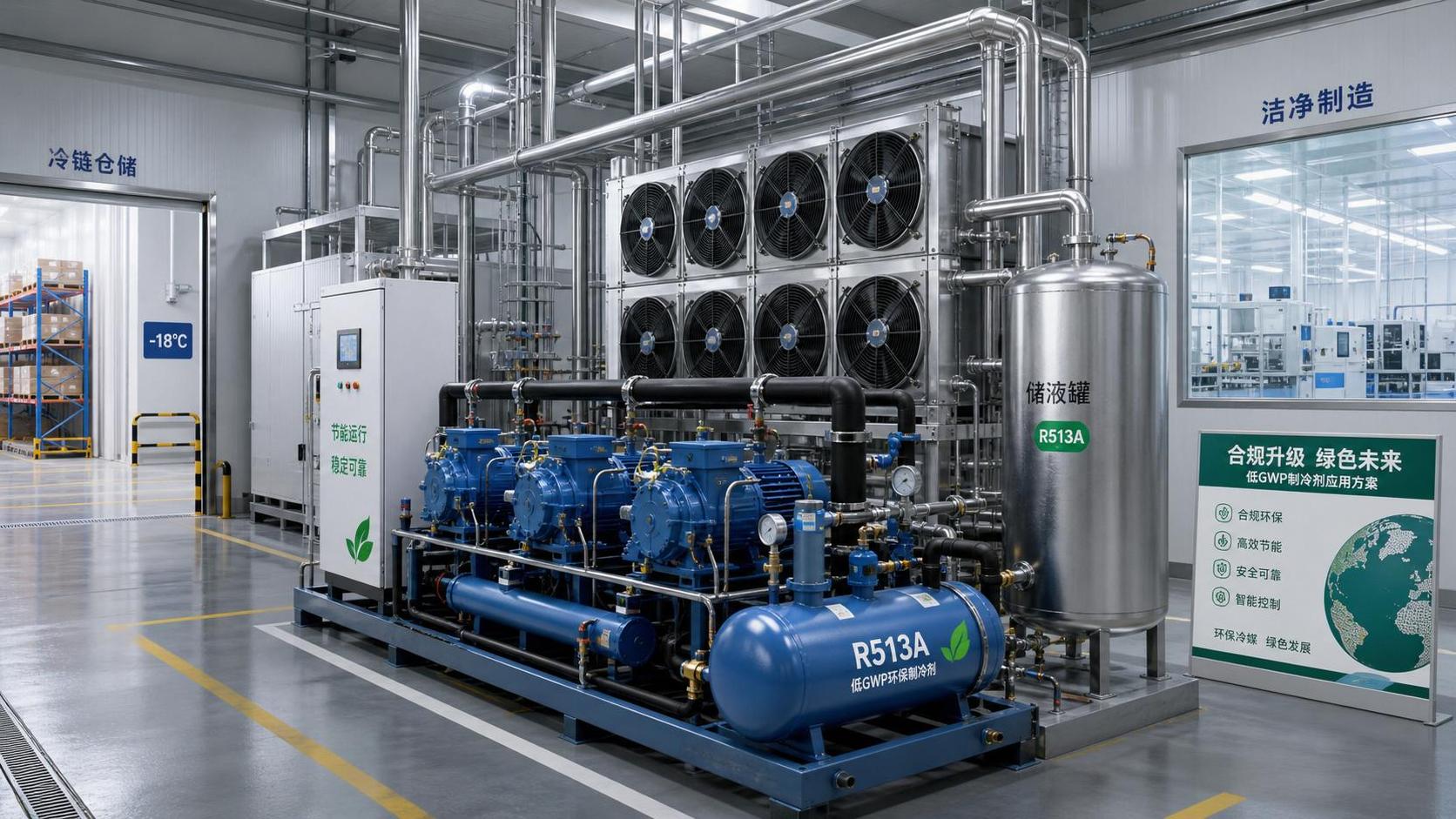
Environmentally Friendly Refrigerants: What Is Changing in 2026




As 2026 approaches, environmentally friendly refrigerants are moving from policy discussions to practical decisions across industry. From quota changes and compliance pressure to efficiency targets and equipment redesign, the refrigerant transition is reshaping cooling, heat exchange, and compressed-system strategies. For researchers and market watchers, understanding what is changing in 2026 is essential to tracking technology direction, regulatory impact, and competitive opportunity.
For industrial cooling stakeholders, 2026 is not a symbolic date. It is a planning threshold that affects refrigerant selection, capital expenditure timing, retrofit feasibility, safety design, and long-term operating cost. In sectors such as pharmaceuticals, semiconductors, food processing, cold storage, and HVAC-linked manufacturing, the move toward environmentally friendly refrigerants is increasingly tied to compliance deadlines and asset risk.
For information researchers, the key question is no longer whether transition will happen, but how fast it will influence procurement models, equipment engineering, and competitive positioning. This is especially relevant where chillers, heat pumps, compressor packages, condensers, and precision temperature-control systems must deliver both energy performance and regulatory resilience over 10–15 year asset lifecycles.
Why 2026 Matters for Environmentally Friendly Refrigerants
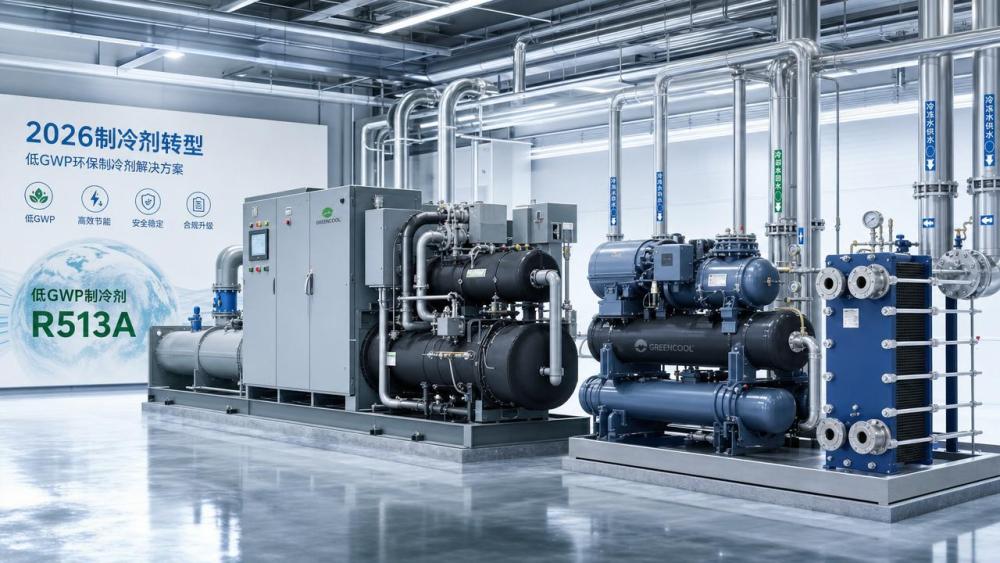
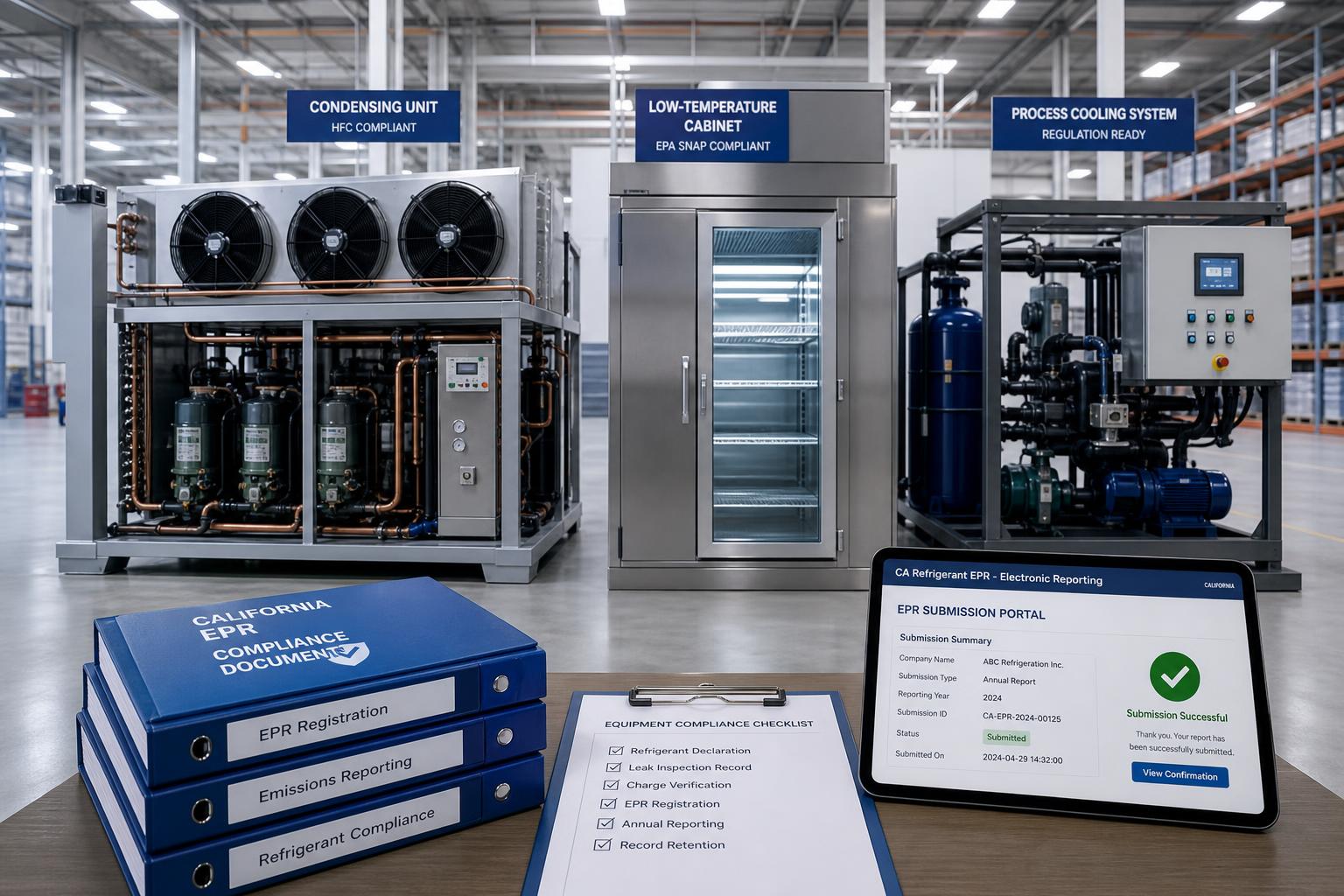
The changes associated with environmentally friendly refrigerants in 2026 are driven by a combination of tighter global hydrofluorocarbon management, rising demand for low-GWP alternatives, and pressure to improve system efficiency. In many markets, quota reductions and refrigerant placement restrictions are making legacy choices less attractive, particularly for new equipment installed from 2026 onward.
What matters most is that refrigerant strategy now affects more than direct emissions. It influences heat exchanger dimensions, compressor discharge temperature, lubrication compatibility, flammability controls, technician training, and spare-parts planning. A refrigerant once viewed as a fluid choice now shapes the full thermodynamic and commercial design of a system.
Three forces accelerating the shift
In practical terms, the 2026 transition is being pushed by at least 3 concurrent forces. First, refrigerant availability is changing as lower-GWP options receive more engineering attention. Second, energy costs remain volatile, making coefficient of performance and seasonal efficiency more important. Third, end users increasingly expect equipment to remain serviceable for 8–12 years without exposure to refrigerant supply instability.
- Quota pressure is reducing confidence in high-GWP refrigerants for medium-term asset planning.
- Carbon reporting is encouraging buyers to compare both direct and indirect emission impact.
- OEM redesign cycles are accelerating around safety standards, charge reduction, and efficiency optimization.
What “environmentally friendly” means in 2026
The term environmentally friendly refrigerants does not point to a single chemistry. In 2026, it usually refers to refrigerants with lower global warming potential, better alignment with regional regulation, and stronger compatibility with high-efficiency system architectures. Depending on application, this may include natural refrigerants, HFO-based blends, or transitional lower-GWP alternatives.
However, low GWP alone is not enough. Industrial buyers also compare toxicity class, flammability category, operating pressure, capacity match, ambient performance, and retrofit complexity. In many projects, a refrigerant with a lower GWP but difficult site adaptation may lose to a balanced option that improves both compliance and uptime.
The comparison below outlines how decision criteria are changing for researchers evaluating environmentally friendly refrigerants across industrial cooling and heat exchange systems.
The main conclusion is that refrigerant choice is moving upstream. It is now a front-end investment decision rather than a late-stage engineering detail. That shift creates new value for technical intelligence platforms and market researchers who can connect policy movement with equipment architecture and end-user demand.
Which Technologies and Applications Will Feel the Biggest Impact
The impact of environmentally friendly refrigerants will not be uniform. Systems with high annual run hours, strict temperature stability, or large refrigerant charges are likely to experience the earliest and most visible changes. In industrial terms, the strongest effects often appear in chillers, process cooling loops, low-temperature storage, heat pumps, and integrated thermal management systems.
High-sensitivity sectors to watch
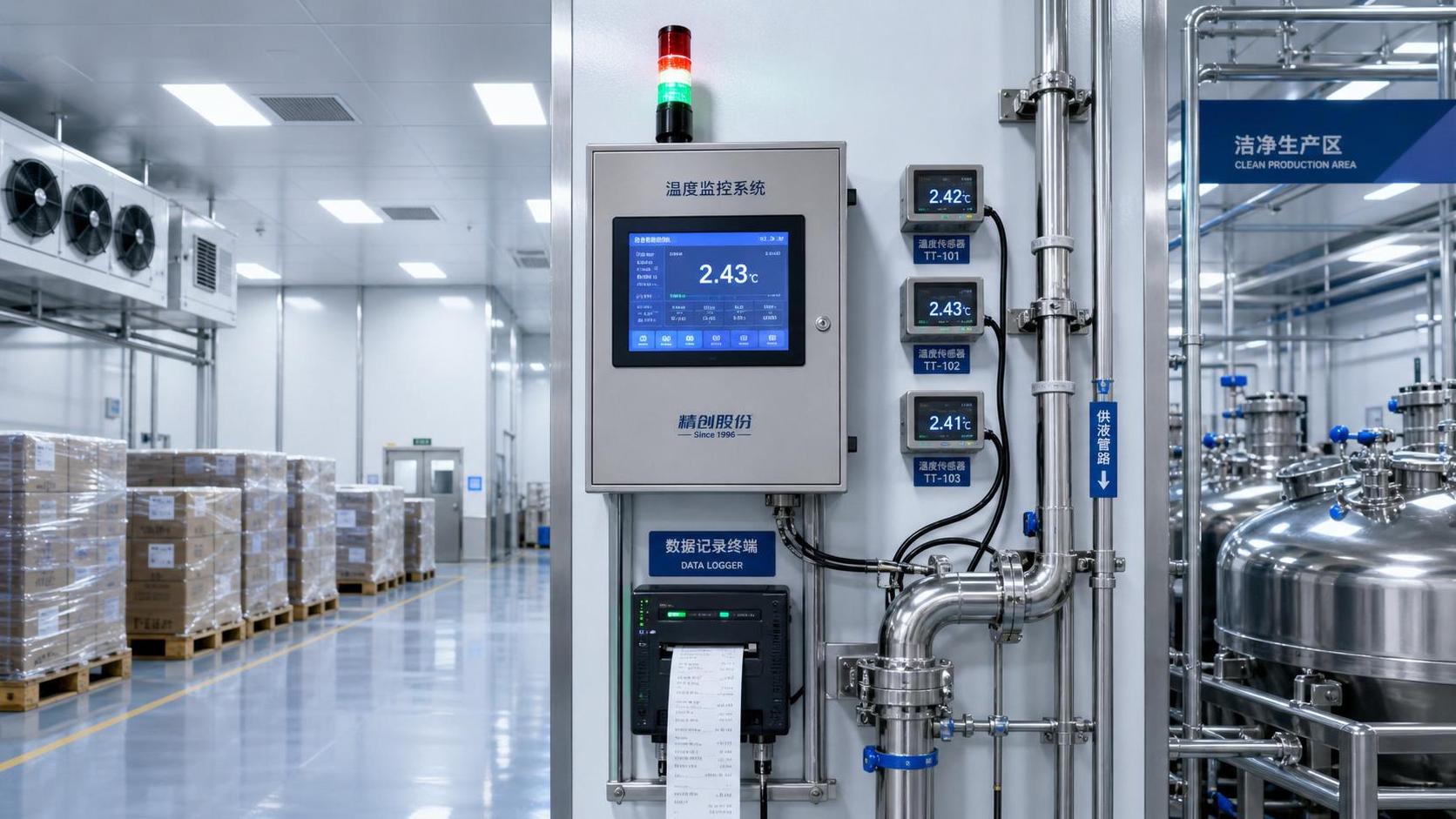
Pharmaceutical and semiconductor facilities are especially sensitive because process tolerance can be narrow, sometimes within ±0.5°C to ±1.0°C. In such environments, refrigerant transition cannot compromise stability, clean utility design, or maintenance windows. Food production and cold chain operators, by contrast, often focus more on lifecycle cost, energy consumption over 24/7 operation, and plant safety.
- Precision manufacturing prioritizes thermal consistency, contamination control, and validated performance.
- Food and beverage facilities prioritize uptime, defrost efficiency, and low-cost operation over multi-shift schedules.
- Cold storage operators prioritize refrigerant charge management, leak detection, and service accessibility.
Compressed-system implications
Although refrigerants are usually discussed in cooling contexts, 2026 changes also affect compressed-air and vacuum-adjacent systems through integrated heat recovery, dryer performance, utility room layouts, and energy planning. In many plants, cooling and compression are no longer isolated utilities. A redesign in one area can change heat rejection loads, ventilation requirements, and electrical demand in another.
For example, facilities adopting oil-free compression or higher-efficiency drying may reassess chilled-water temperature bands such as 7°C/12°C or 10°C/15°C. Once these thermal loops are re-optimized, environmentally friendly refrigerants become part of a broader energy conversion strategy rather than a stand-alone compliance topic.
The following table shows where 2026 refrigerant-related pressure is likely to appear first across typical industrial applications.
A clear pattern emerges: sectors with continuous operation, strict process control, or high-value output are less likely to delay the transition. Their research agenda is expanding from refrigerant substitution to system resilience, safety engineering, and utility integration.
How Buyers and Researchers Should Evaluate Options in 2026
A sound 2026 evaluation framework should compare at least 4 dimensions: regulatory fit, thermodynamic suitability, safety requirements, and service ecosystem readiness. This is especially important because many environmentally friendly refrigerants perform differently depending on ambient design point, compressor type, and evaporating or condensing temperature range.
A practical 5-step review process
- Map the application window, including cooling load, supply temperature, and annual run hours.
- Check local and export-market regulatory exposure for the next 3–5 years.
- Assess whether retrofit, hybrid replacement, or full redesign is more economical.
- Review safety design implications, including ventilation, detection, and training.
- Compare total cost over equipment life, not just the purchase price.
This process helps separate technically possible options from commercially sustainable ones. A retrofit that appears inexpensive in year 1 may create service bottlenecks in year 4 if refrigerant access, technician capability, or spare components become constrained.
Selection criteria that deserve deeper attention
Researchers often focus heavily on nominal capacity and GWP, but 2026 demands a broader lens. For systems above 100 kW, for example, heat exchanger sizing, compressor envelope limits, and discharge temperature control can materially change project economics. For smaller packaged systems in the 5–20 kW range, installation standards and technician familiarity may play an even larger role.
- Does the refrigerant support the required evaporation and condensation temperatures without excessive efficiency loss?
- Will safety classification change room design, piping arrangement, or sensor deployment?
- Is the supply chain mature enough to support service over a 7–10 year maintenance horizon?
- Can the system be optimized with microchannel heat exchangers, variable-speed compression, or lower charge design?
Common mistakes in transition planning
One common error is treating all lower-GWP refrigerants as interchangeable. Another is assuming that a successful pilot in comfort cooling will transfer directly to industrial process cooling. A third mistake is ignoring maintenance capability. In practice, a technically advanced refrigerant strategy can fail if service procedures, leak detection routines, and operator training are not updated in parallel.
A more disciplined approach is to create a shortlist of 2–3 candidate refrigerant pathways and test them against site constraints. This method allows decision-makers to compare performance under realistic load profiles, not just catalog conditions.
What 2026 Means for Equipment Design, Service, and Competitive Strategy
The move toward environmentally friendly refrigerants is also a redesign story. Equipment suppliers are adjusting compressor packages, control logic, condenser geometry, and refrigerant circuit layout to improve efficiency while meeting safety and charge-management requirements. That work is changing product roadmaps across industrial thermal systems.
Design changes likely to accelerate
From 2026 onward, expect more attention to low-charge architectures, enhanced leak monitoring, and application-specific heat exchanger design. In many cases, the use of microchannel or compact heat transfer surfaces can reduce refrigerant volume while preserving heat rejection performance. Variable-speed compression and smarter expansion control are also becoming more important under mixed-load conditions.
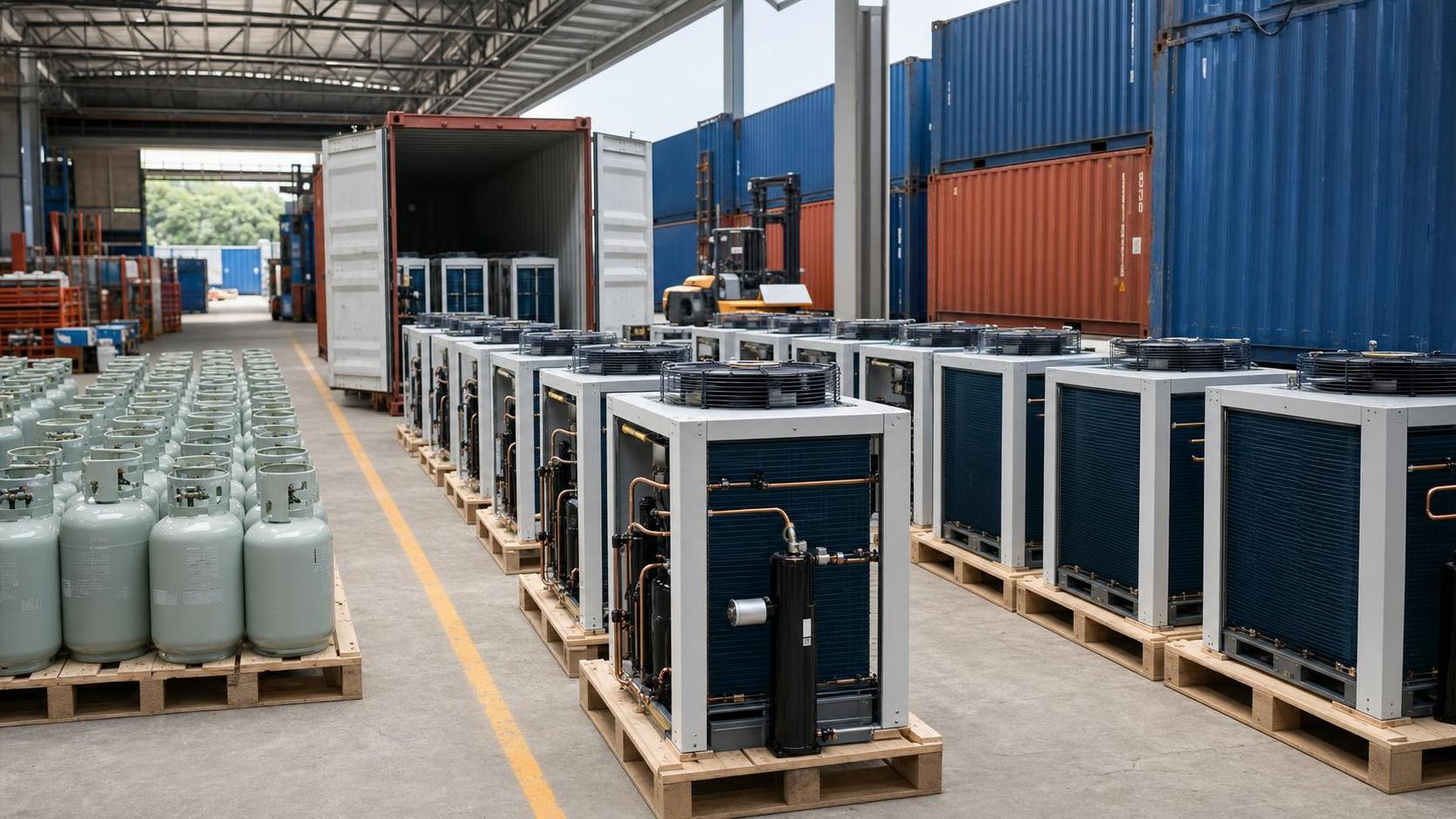
These technical shifts have commercial consequences. Buyers may see longer engineering lead times for non-standard systems, often in the range of 6–12 weeks for design confirmation before manufacturing. At the same time, well-prepared suppliers can use refrigerant transition expertise to create stronger technical differentiation.
Service readiness as a market advantage
In 2026, aftermarket capability may become as important as equipment efficiency. Plants evaluating environmentally friendly refrigerants increasingly ask whether technicians can support commissioning, emergency response, and annual inspection routines under the new refrigerant profile. A fast-growing gap exists between products that are available to buy and solutions that are fully supportable in the field.
For B2B decision-makers, this means supplier evaluation should include not only technology but also documentation quality, training resources, and troubleshooting support. A vendor that can explain 5 maintenance checkpoints, response timing, and spare-parts planning often has an advantage over one that only provides basic performance data.
Questions researchers should keep tracking
- Which refrigerant pathways are being favored in high-purity and high-precision industries?
- How are OEMs balancing lower GWP with flammability management and system compactness?
- What is the expected retrofit versus replacement split in the next 24 months?
- Where are service capability and technician training becoming bottlenecks?
These are not abstract questions. They determine who gains share in green manufacturing, who controls premium thermal applications, and which system architectures become mainstream in the next investment cycle.
As the refrigerant landscape changes, industrial stakeholders need more than lists of approved fluids. They need integrated visibility into policy movement, engineering feasibility, sector demand, and implementation risk. That is where structured intelligence becomes decisive, particularly for companies working across cooling, compressed air, vacuum processes, and heat exchange technologies.
For researchers and market watchers, 2026 is the year to connect refrigerant transition with broader thermal and power-system strategy. Environmentally friendly refrigerants will influence procurement, design, maintenance, and competitive timing across multiple industrial sectors. To explore deeper market signals, compare technology pathways, or identify fit-for-purpose thermal solutions, contact GTC-Matrix, request tailored insight, or learn more about sector-specific intelligence and solution trends today.
Related News
- EU Ends Duty-Free Small Parcels From July 1Author :Cryogenic Systems Expert

- China R410A Export Quotes Rise to RMB 60,000/TonAuthor :Cryogenic Systems Expert

- EU PFAS Curbs Raise Compliance Review for Cooling ExportsAuthor :Cryogenic Systems Expert

- EU PFAS Proposal Puts Refrigerant and Vacuum Exports Under ReviewAuthor :Cryogenic Systems Expert

- EU REACH PFAS Draft Raises New Export ChecksAuthor :Cryogenic Systems Expert

- EU Cuts High-GWP Refrigerant Import Quotas by 35%Author :Cryogenic Systems Expert

- EU Cuts Q4 2026 Quotas for High-GWP RefrigerantsAuthor :Cryogenic Systems Expert

- EU F-Gas Revision Cuts R410A Quotas 40%Author :Cryogenic Systems Expert

- EPA Freezes R-410A Quotas, Fast-Tracks R-32Author :Cryogenic Systems Expert

- Low GWP Refrigerants HFO Blends: Key Stability and Safety FactorsAuthor :Cryogenic Systems Expert

- R-32 Price Spike Reshapes Chiller ProcurementAuthor :Cryogenic Systems Expert

- How to Compare Environmentally Friendly Refrigerants by GWP, Safety, and CostAuthor :Cryogenic Systems Expert

- R-454B Export Quota Cut 18% as Lead Times DoubleAuthor :Cryogenic Systems Expert

- Japan Cuts R32 and R290 Import Quotas From July 10Author :Cryogenic Systems Expert

- EPA Cuts R-134a Import Quotas 42% From July 2026Author :Cryogenic Systems Expert
![]()
- Low GWP Refrigerants HFO Blends: Performance and Compliance in 2026Author :Cryogenic Systems Expert

- R-513A Jumps 23% as China Tightens Export QuotasAuthor :Cryogenic Systems Expert

- Environmentally Friendly Refrigerants in 2026: Compliance Risks and Upgrade PrioritiesAuthor :Cryogenic Systems Expert

- Pharmaceutical Temperature Control Systems: Common Compliance RisksAuthor :Cryogenic Systems Expert

- China Tightens Q3 R32 Export QuotasAuthor :Cryogenic Systems Expert

- California EPR Deadline Nears for Refrigeration MakersAuthor :Cryogenic Systems Expert

- Resource Circularity Trends Reshaping Refrigerants and Cooling SystemsAuthor :Cryogenic Systems Expert

- HFCs Filing Rules Enter Full EnforcementAuthor :Cryogenic Systems Expert

- How Environmentally Friendly Refrigerants Affect Chiller ComplianceAuthor :Cryogenic Systems Expert

- EU REACH Tightens Refrigerant Impurity Limits for R134a ExportsAuthor :Cryogenic Systems Expert

- China Seeks Feedback on 2027 Refrigerant QuotasAuthor :Cryogenic Systems Expert

- EU to Ban High-GWP ACs in 2029 as R410A Exits HomesAuthor :Cryogenic Systems Expert

- US, UK Delay HFC Phaseout, Extending R32/R134a Export WindowAuthor :Cryogenic Systems Expert

- EU HFC Cut Tightens by 2029 as Gen-3 Output Falls 10%Author :Cryogenic Systems Expert

- Kuwait Bans HCFC AC Imports as Shift to R32/R290 Speeds UpAuthor :Cryogenic Systems Expert

- Saudi SASO Rules Tighten AC Imports in DecemberAuthor :Cryogenic Systems Expert

- Environmentally Friendly Refrigerants: Compliance, Safety, and Retrofit RisksAuthor :Cryogenic Systems Expert

- SABIC Force Majeure Keeps Chiller Refrigerant Supply TightAuthor :Cryogenic Systems Expert

- SABIC Force Majeure Tightens Refrigerant FeedstocksAuthor :Cryogenic Systems Expert

- UL 60335-2-89 Tightens R290 Leak Test RulesAuthor :Cryogenic Systems Expert
![]()
- UL 60335-2-89 Adds R290 Vacuum Leak TestAuthor :Cryogenic Systems Expert