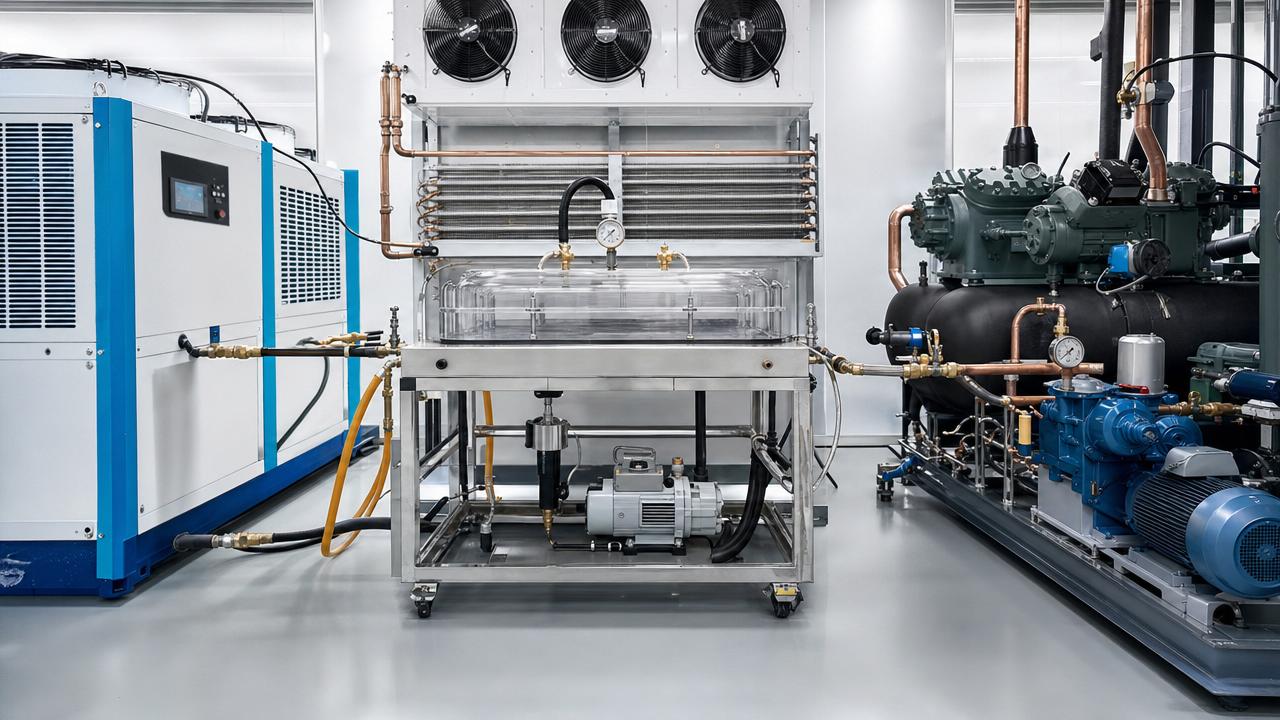




R290 Charge Limit Tightens Globally; China's Industrial Chillers Shift to CO₂




On May 13, 2026, the International Institute of Refrigeration (IIR) released the updated 2026 Global Refrigerant Safety Guidelines, lowering the maximum allowable R290 charge in enclosed industrial chillers from 150 g to 100 g. This revision reflects growing global emphasis on flammability risk mitigation and accelerates industry-wide reassessment of refrigerant selection—particularly for high-capacity cooling applications.
Event Overview
The IIR announced the revised R290 charge limit on May 13, 2026, as part of its biennial update to refrigerant safety guidance. The new threshold applies specifically to sealed industrial chiller systems. Australia’s Australian Refrigeration Council (ARIA) and South Korea’s Korea Certification (KC) body have formally adopted the 100 g limit as a mandatory reference for all new certification applications submitted from Q3 2026 onward.
Industries Affected
Direct trading enterprises: Export-oriented chiller distributors and OEM brand licensors face immediate compliance review for existing R290-based product portfolios destined for ARIA- and KC-regulated markets. Non-compliant units may be rejected at certification stage or require costly redesigns—delaying market entry and increasing technical documentation burden.
Raw material procurement enterprises: Suppliers of R290 refrigerant, lubricants compatible with hydrocarbons, and flame-retardant insulation materials must reassess demand forecasts. While short-term R290 volumes may dip for chiller applications, procurement teams now need parallel capability to source CO₂-grade stainless steel tubing, high-pressure valves, and synthetic POE/ABE oils suited for transcritical CO₂ operation.
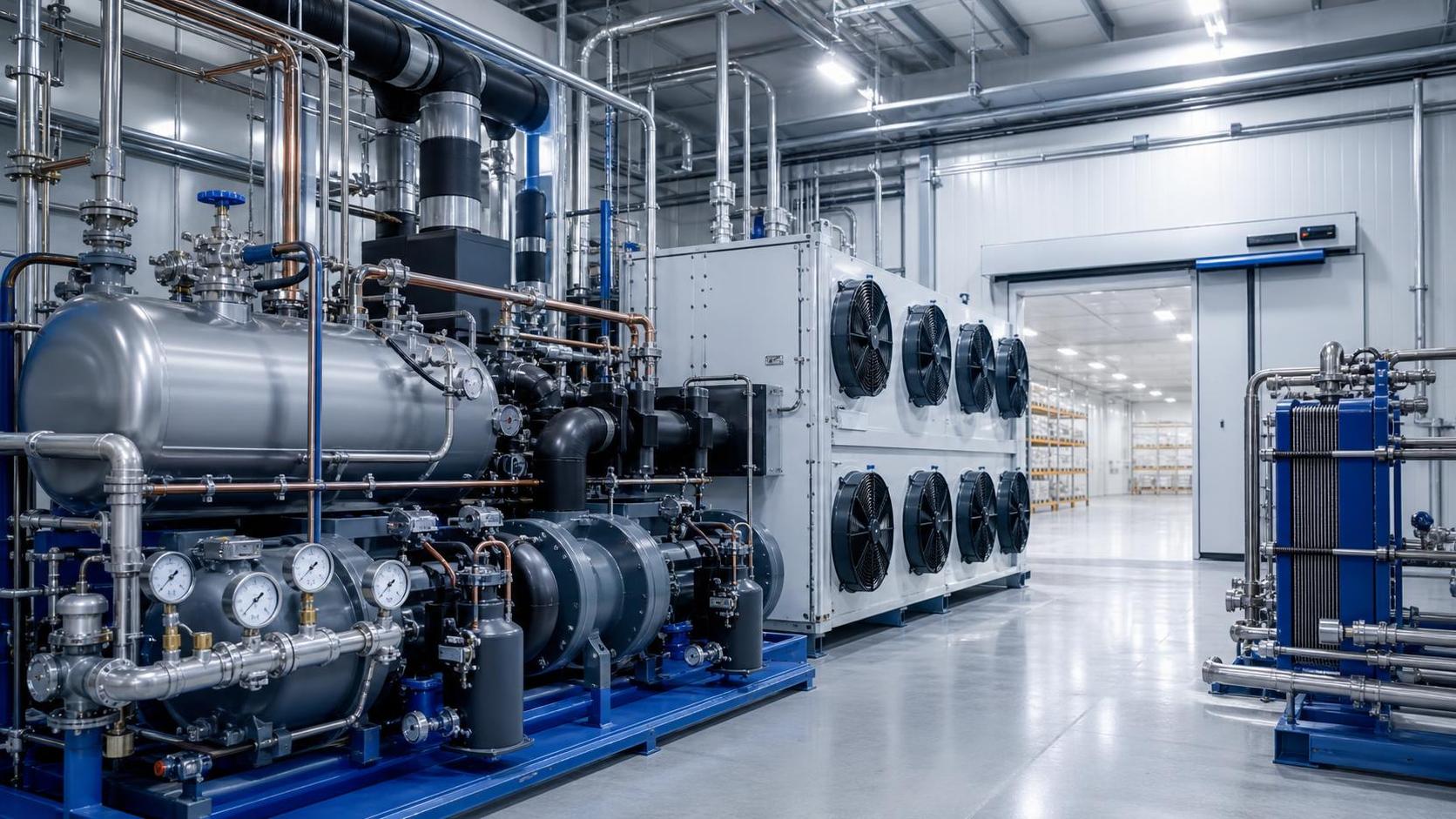
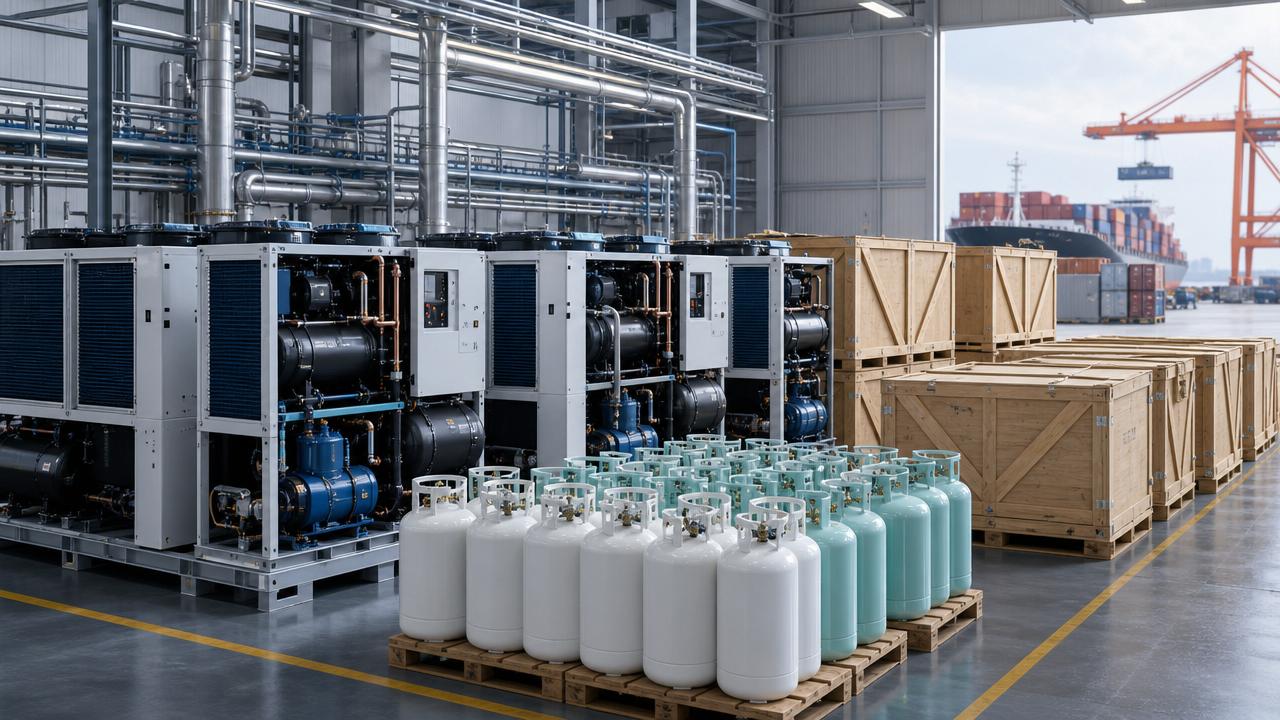
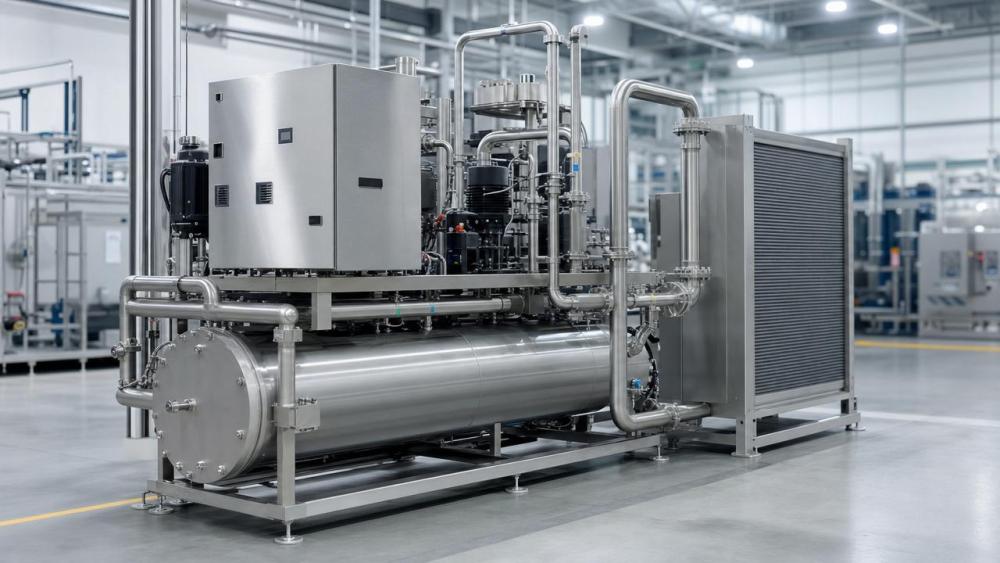
Manufacturing enterprises: Chiller OEMs—especially those serving data centers, pharmaceutical cold storage, and process cooling—are accelerating development of CO₂ transcritical systems. This entails retooling for higher operating pressures (up to 120 bar), integrating dedicated CO₂ compressors, and qualifying microchannel gas coolers. Lead times for new platform validation are extending by 4–6 months versus conventional R290 designs.
Supply chain service enterprises: Third-party testing labs, certification consultants, and logistics providers handling hazardous goods declarations must update internal protocols. Notably, CO₂ transcritical systems require distinct pressure vessel classification, transport labeling (UN 1013), and field commissioning checklists—triggering revisions to service SOPs and technician training modules.
Key Focus Areas & Recommended Actions
Review product certification roadmaps for ARIA/KC jurisdictions
OEMs and exporters should audit all chiller models scheduled for ARIA or KC submission after Q3 2026. Units exceeding 100 g R290 charge require either charge reduction (with performance trade-offs) or full architecture shift to CO₂.
Prioritize CO₂ compressor and gas cooler supplier qualification
Given lead-time constraints and limited global scale-up of CO₂-specific components, manufacturers are advised to initiate dual-sourcing assessments and pre-qualify at least two suppliers per critical component before Q4 2026.
Update technical documentation and field service training
Service manuals, safety warnings, and commissioning procedures for CO₂ systems differ materially from R290—especially regarding high-pressure leak response, oil management, and subcooling control logic. Training rollouts should align with first pilot unit deployments.
Editorial Perspective / Industry Observation
Analysis shows this is not merely a regulatory tightening but a structural pivot: the 100 g R290 cap effectively closes the viability window for medium-to-large industrial chillers using propane-based refrigerants. Observably, CO₂ transcritical adoption is shifting from niche demonstration projects to mainstream engineering requirement—not driven solely by GWP targets, but by harmonized safety governance across key export markets. From an industry perspective, the pace of China’s CO₂ component ecosystem maturation (e.g., high-speed scroll compressors, sintered microchannel heat exchangers) will determine whether domestic manufacturers capture value—or cede system-level design leadership to European and Japanese incumbents.
Conclusion
This update marks a definitive inflection point in industrial refrigeration standards. Rather than representing incremental adjustment, it signals coordinated global alignment on safety thresholds that inherently favor CO₂ in applications above ~200 kW cooling capacity. A rational interpretation is that refrigerant choice is now being governed less by thermodynamic efficiency alone—and more by certifiability, service infrastructure readiness, and cross-border regulatory coherence.
Source Attribution
Primary source: International Institute of Refrigeration (IIR), 2026 Global Refrigerant Safety Guidelines (May 13, 2026 edition). Secondary adoption confirmed via official notices from Australian Refrigeration Council (ARIA Notice #REF-2026-087) and Korea Certification (KC Bulletin KCB-2026-Q2-TR04). Ongoing monitoring recommended for EU F-Gas Regulation Annex IV revisions (expected late 2026) and U.S. EPA SNAP Program updates concerning R290 charge limits in commercial equipment.
Related News
- China R410A Export Quotes Rise to RMB 60,000/TonAuthor :Cryogenic Systems Expert

- EU PFAS Curbs Raise Compliance Review for Cooling ExportsAuthor :Cryogenic Systems Expert

- EU PFAS Proposal Puts Refrigerant and Vacuum Exports Under ReviewAuthor :Cryogenic Systems Expert

- EU REACH PFAS Draft Raises New Export ChecksAuthor :Cryogenic Systems Expert

- EU Cuts High-GWP Refrigerant Import Quotas by 35%Author :Cryogenic Systems Expert

- EU Cuts Q4 2026 Quotas for High-GWP RefrigerantsAuthor :Cryogenic Systems Expert

- EU F-Gas Revision Cuts R410A Quotas 40%Author :Cryogenic Systems Expert

- EPA Freezes R-410A Quotas, Fast-Tracks R-32Author :Cryogenic Systems Expert

- Low GWP Refrigerants HFO Blends: Key Stability and Safety FactorsAuthor :Cryogenic Systems Expert

- R-32 Price Spike Reshapes Chiller ProcurementAuthor :Cryogenic Systems Expert

- How to Compare Environmentally Friendly Refrigerants by GWP, Safety, and CostAuthor :Cryogenic Systems Expert

- R-454B Export Quota Cut 18% as Lead Times DoubleAuthor :Cryogenic Systems Expert

- Japan Cuts R32 and R290 Import Quotas From July 10Author :Cryogenic Systems Expert

- EPA Cuts R-134a Import Quotas 42% From July 2026Author :Cryogenic Systems Expert
![]()
- Low GWP Refrigerants HFO Blends: Performance and Compliance in 2026Author :Cryogenic Systems Expert

- R-513A Jumps 23% as China Tightens Export QuotasAuthor :Cryogenic Systems Expert

- Environmentally Friendly Refrigerants in 2026: Compliance Risks and Upgrade PrioritiesAuthor :Cryogenic Systems Expert

- Pharmaceutical Temperature Control Systems: Common Compliance RisksAuthor :Cryogenic Systems Expert

- China Tightens Q3 R32 Export QuotasAuthor :Cryogenic Systems Expert

- California EPR Deadline Nears for Refrigeration MakersAuthor :Cryogenic Systems Expert

- Resource Circularity Trends Reshaping Refrigerants and Cooling SystemsAuthor :Cryogenic Systems Expert

- HFCs Filing Rules Enter Full EnforcementAuthor :Cryogenic Systems Expert

- How Environmentally Friendly Refrigerants Affect Chiller ComplianceAuthor :Cryogenic Systems Expert

- EU REACH Tightens Refrigerant Impurity Limits for R134a ExportsAuthor :Cryogenic Systems Expert

- China Seeks Feedback on 2027 Refrigerant QuotasAuthor :Cryogenic Systems Expert

- EU to Ban High-GWP ACs in 2029 as R410A Exits HomesAuthor :Cryogenic Systems Expert

- US, UK Delay HFC Phaseout, Extending R32/R134a Export WindowAuthor :Cryogenic Systems Expert

- EU HFC Cut Tightens by 2029 as Gen-3 Output Falls 10%Author :Cryogenic Systems Expert

- Kuwait Bans HCFC AC Imports as Shift to R32/R290 Speeds UpAuthor :Cryogenic Systems Expert

- Saudi SASO Rules Tighten AC Imports in DecemberAuthor :Cryogenic Systems Expert

- Environmentally Friendly Refrigerants: Compliance, Safety, and Retrofit RisksAuthor :Cryogenic Systems Expert

- SABIC Force Majeure Keeps Chiller Refrigerant Supply TightAuthor :Cryogenic Systems Expert

- SABIC Force Majeure Tightens Refrigerant FeedstocksAuthor :Cryogenic Systems Expert

- UL 60335-2-89 Tightens R290 Leak Test RulesAuthor :Cryogenic Systems Expert
![]()
- UL 60335-2-89 Adds R290 Vacuum Leak TestAuthor :Cryogenic Systems Expert

- Global Refrigerant Price Index Falls 8.3% MoM in MayAuthor :Cryogenic Systems Expert
![]()