R32 Refrigerant Supply Tightens Globally; CRPI Up 4.2% in First Week of May




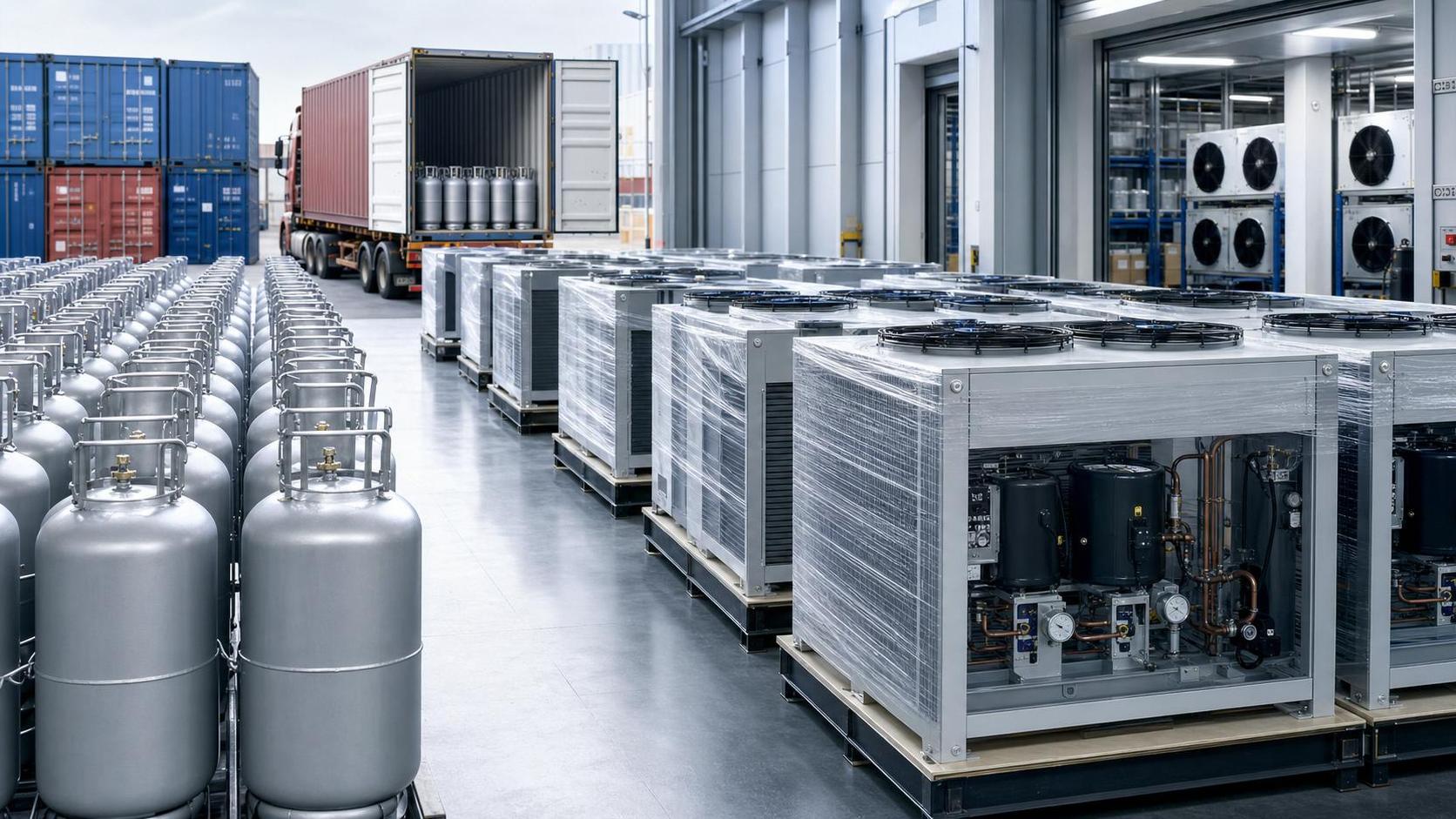
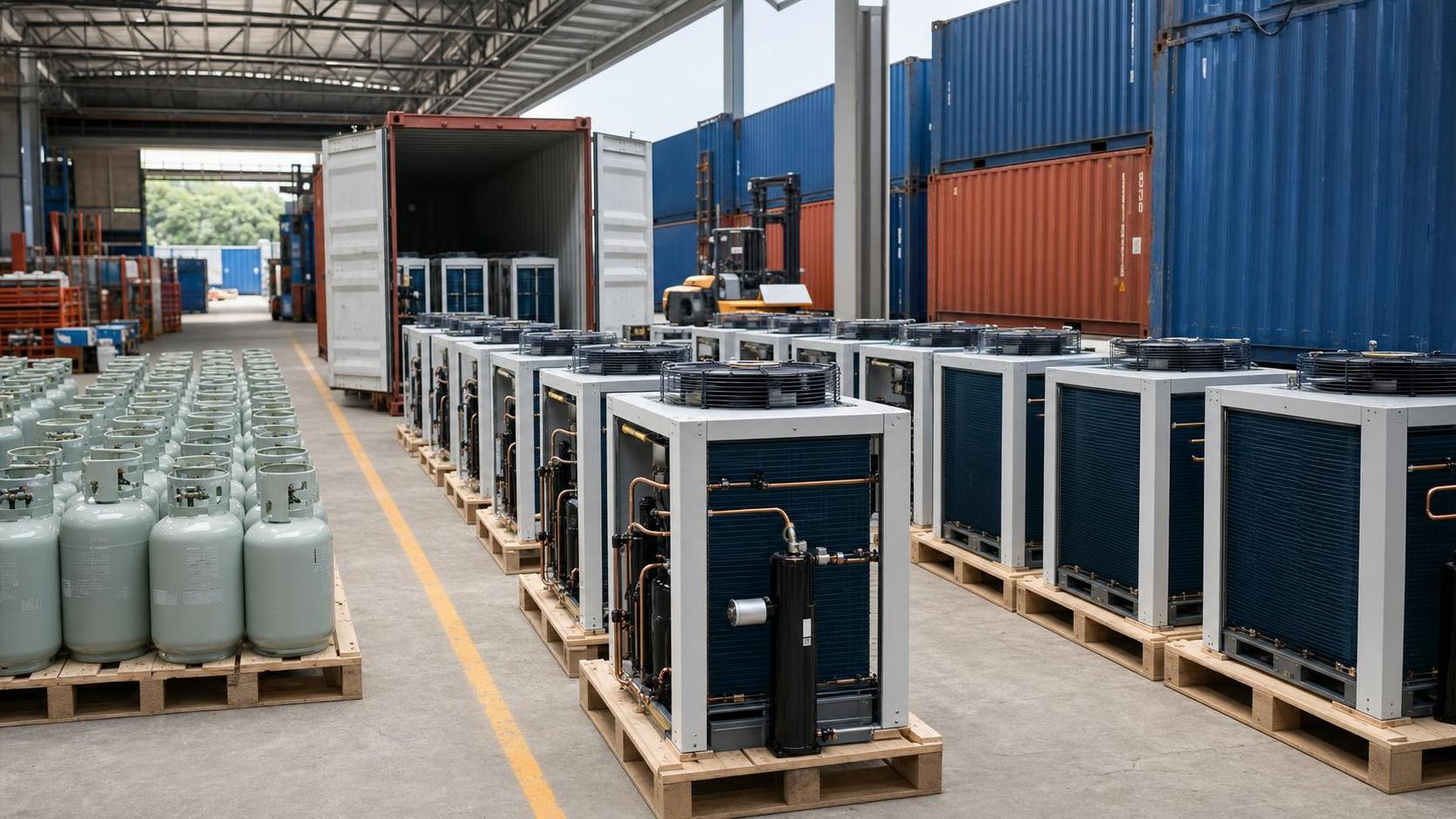
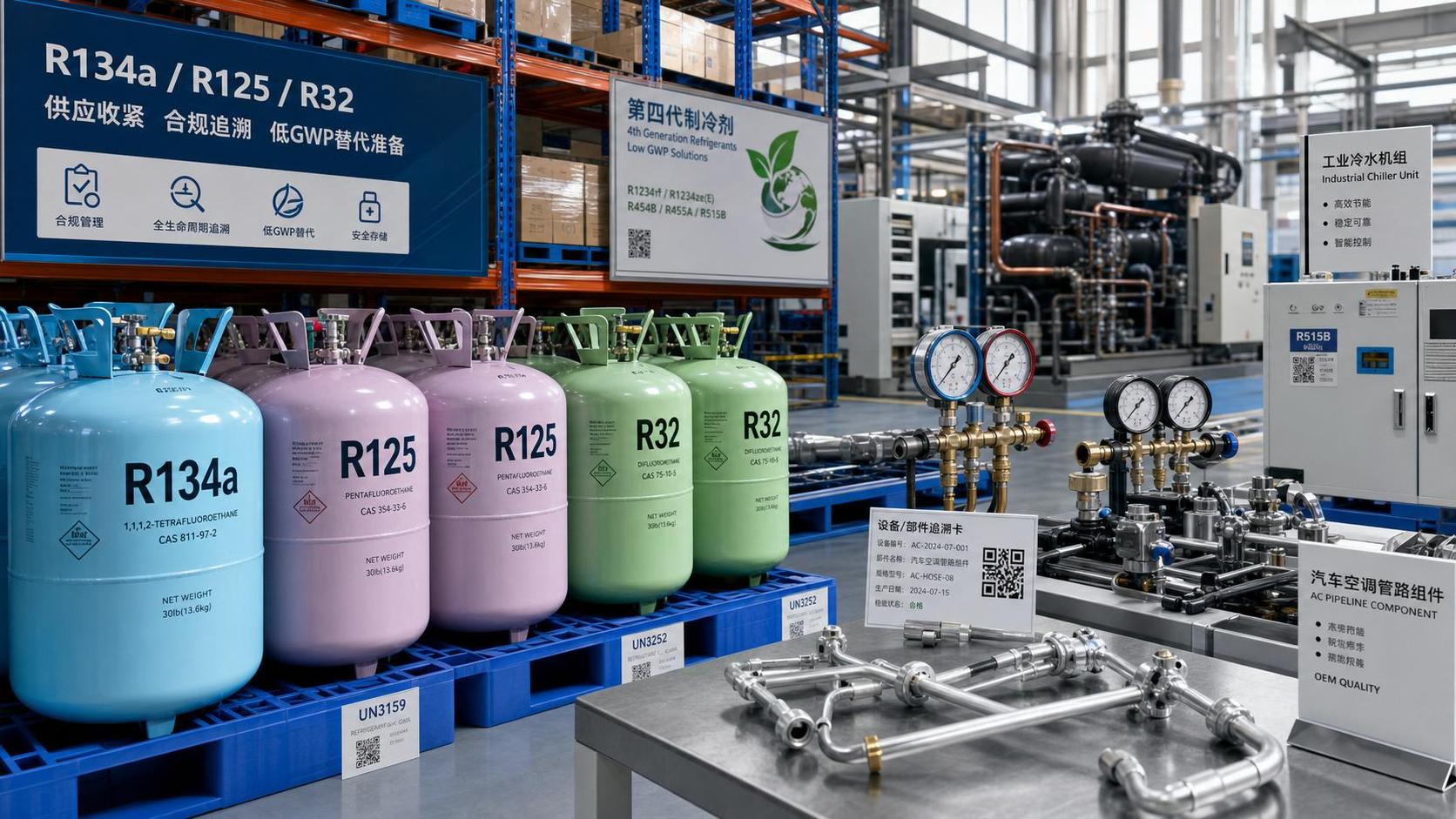
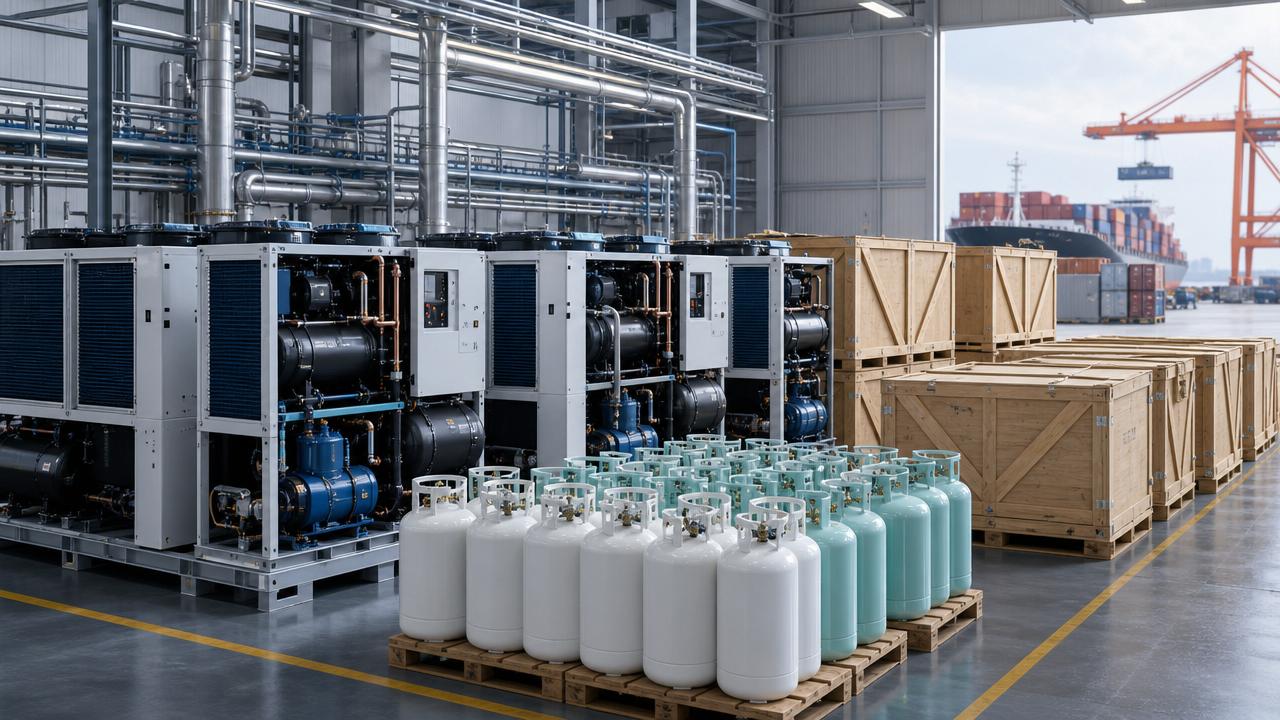
Global supply of R32 refrigerant has tightened significantly, with the Composite Refrigerant Price Index (CRPI) rising 4.2% week-on-week in the first week of May 2026 to USD 28.7/kg for industrial-grade material. This development is especially relevant for manufacturers and exporters of R32-dependent HVAC&R equipment—including wind-cooled screw chillers, commercial water chillers, and heat pump modules—as well as procurement and trading firms serving emerging markets such as the Middle East and Latin America.
Event Overview
The Composite Refrigerant Price Index (CRPI) recorded a 4.2% increase in the first week of May 2026 for industrial-grade R32, reaching USD 28.7/kg. The rise is attributed to two confirmed factors: (1) an early surge in summer demand from India and Southeast Asia, and (2) accelerated shutdowns of 32 small- and medium-scale R32 synthesis facilities in China, driven by the Ministry of Ecology and Environment’s intensified verification campaign targeting HCFCs phase-out compliance.
Impact on Specific Industry Segments
Direct Trading Enterprises
Trading firms handling R32 refrigerant or R32-based blends face compressed margins due to rapid price volatility and reduced spot availability. The tightening supply chain increases lead times and raises hedging complexity—especially for contracts tied to fixed-price bids in ongoing tenders across the Middle East and Latin America.
Raw Material Procurement Entities
Enterprises sourcing R32 as a key input for downstream products—such as refrigerant blends (e.g., R410A), charging kits, or pre-charged components—are encountering higher landed costs and longer order cycles. With 32 domestic synthesis units closed, alternative sourcing channels (e.g., imports or larger integrated producers) are under increased pressure, limiting negotiation leverage.
Equipment Manufacturing Firms
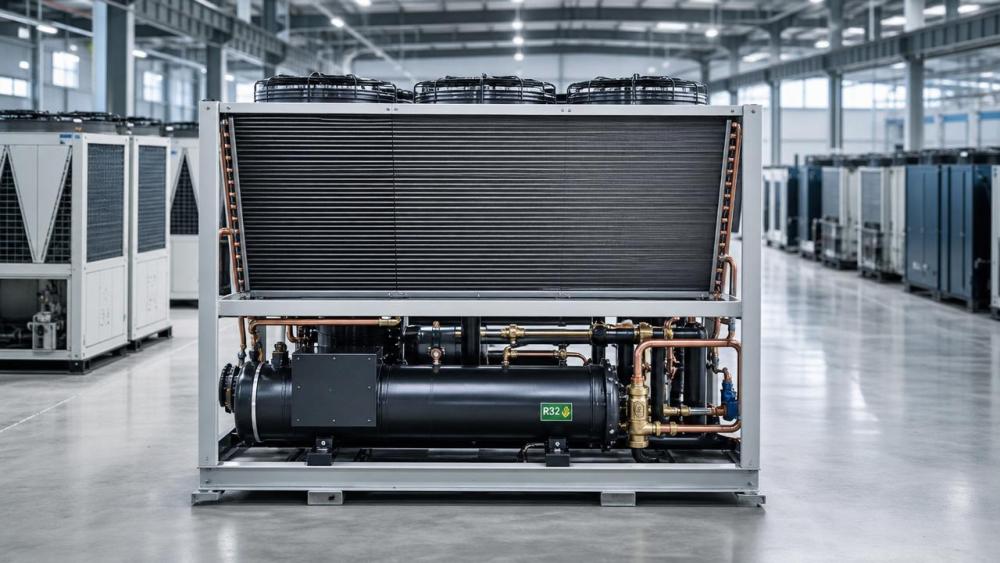
Manufacturers of R32-powered systems—including wind-cooled screw chillers, commercial water chillers, and modular heat pumps—are seeing direct upward pressure on bill-of-materials (BOM) costs. Export quotations submitted for projects in emerging markets may now lack competitiveness if based on prior-month cost assumptions, potentially affecting tender win rates.
Supply Chain & Logistics Service Providers
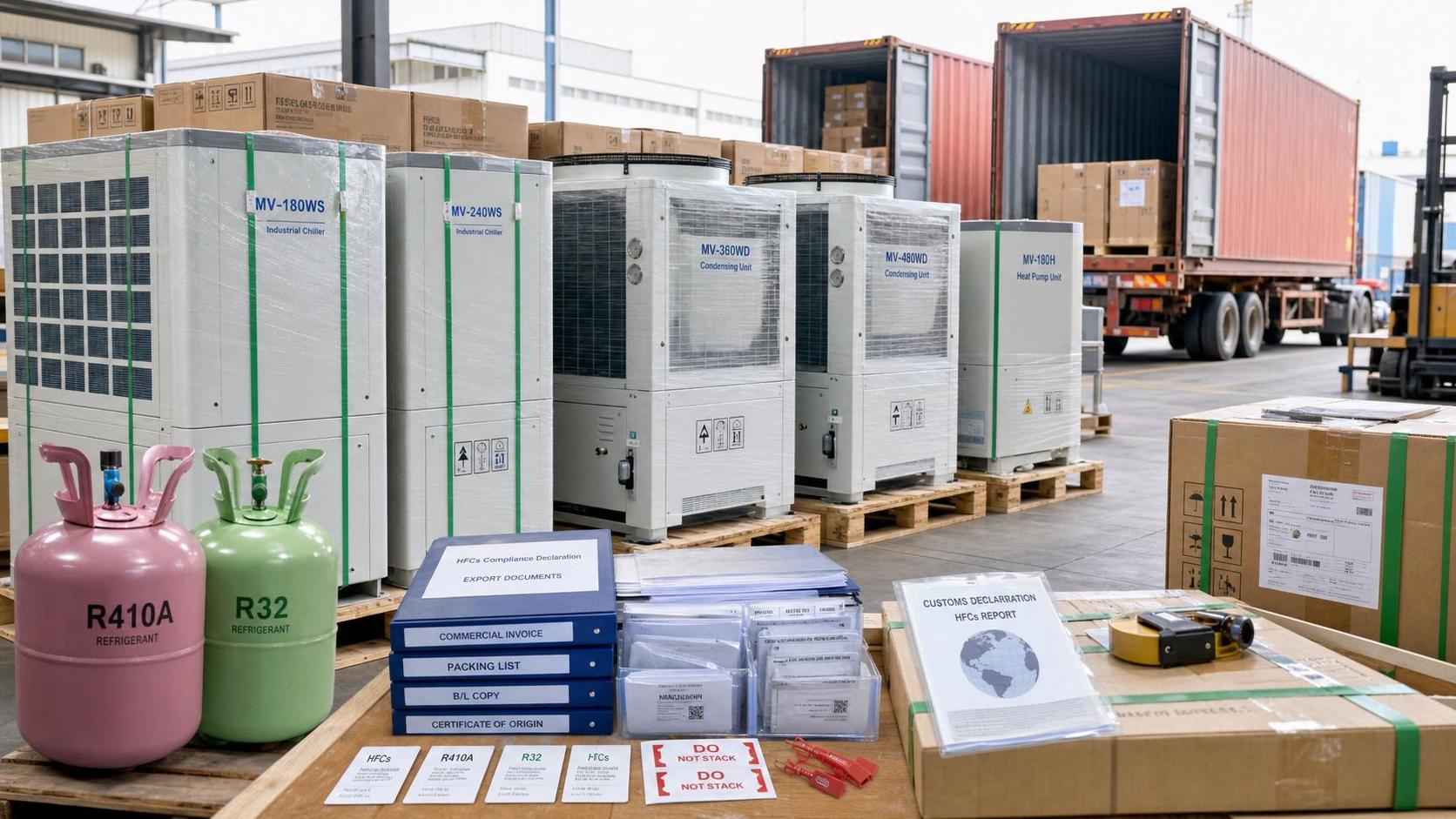
Logistics and customs brokerage firms supporting cross-border movement of R32 or R32-equipped equipment must anticipate tighter regulatory scrutiny—particularly around documentation verifying HCFCs phase-out compliance and refrigerant origin tracing. Delays at ports or during inspections could compound delivery risk amid already constrained inventory buffers.
Key Considerations and Practical Responses
Monitor official policy implementation timelines and scope
While the Chinese Ministry of Ecology and Environment has initiated HCFCs elimination verification, the exact number of affected facilities, regional coverage, and enforcement cadence remain subject to further announcements. Companies should track provincial-level environmental bureau bulletins and MEE technical guidance updates—not just national-level statements—to assess operational exposure.
Reassess pricing models for export tenders in high-risk markets
For projects in the Middle East and Latin America where R32-based equipment is specified, current bid submissions should incorporate at least a 5–7% cost buffer for refrigerant-related line items—and explicitly flag R32 price index linkage clauses where contract terms allow. Avoid fixed-price commitments without indexation safeguards.
Differentiate between policy signaling and actual production impact
The reported closure of 32 synthesis units reflects verified actions—but does not yet confirm permanent capacity loss. Some facilities may resume operations post-compliance upgrades. Therefore, procurement teams should avoid over-indexing on worst-case supply assumptions and instead prioritize real-time supplier capacity audits over secondary market rumors.
Pre-position inventory or secure forward allocations for critical SKUs
For manufacturers with near-term production schedules dependent on R32, securing forward allocations (e.g., Q2–Q3 2026 volumes) from Tier-1 producers—even at premium pricing—is more operationally reliable than relying on spot-market replenishment. Concurrently, review BOM alternatives where technically permissible (e.g., dual-refrigerant system designs), though R32 substitution remains limited in high-efficiency applications.
Editorial Perspective / Industry Observation
Observably, this CRPI uptick signals a structural inflection rather than a transient price spike. The convergence of seasonal demand acceleration and regulatory-driven capacity reduction suggests sustained upward pressure on R32 availability through mid-2026. Analysis shows that while the immediate trigger is regional, the underlying driver—policy-enforced consolidation of fragmented R32 production—is systemic and likely irreversible. From an industry perspective, this is less a short-term procurement challenge and more a catalyst for reassessing refrigerant dependency across product roadmaps and supply chain resilience planning. Current developments warrant continuous tracking—not just for cost implications, but as an indicator of broader fluorocarbon transition pacing in developing economies.
In summary, the May 2026 CRPI increase reflects tightening R32 supply driven by verifiable demand and regulatory action—not speculative market behavior. Its significance lies not in isolated price movement, but in its role as an early marker of shifting production geography, heightened compliance sensitivity, and recalibrated cost structures for R32-integrated HVAC&R systems. It is better understood as a mid-cycle signal of structural adjustment, rather than a short-term anomaly requiring reactive correction alone.
Source: Composite Refrigerant Price Index (CRPI) public data release; official notices from China’s Ministry of Ecology and Environment on HCFCs phase-out verification; verified industry reports on R32 synthesis facility status in China. Note: Ongoing monitoring is recommended for updates on facility restarts, regional import restrictions, and CRPI methodology revisions.
Related News
- EU PFAS Curbs Raise Compliance Review for Cooling ExportsAuthor :Cryogenic Systems Expert

- EU PFAS Proposal Puts Refrigerant and Vacuum Exports Under ReviewAuthor :Cryogenic Systems Expert

- EU REACH PFAS Draft Raises New Export ChecksAuthor :Cryogenic Systems Expert

- EU Cuts High-GWP Refrigerant Import Quotas by 35%Author :Cryogenic Systems Expert

- EU Cuts Q4 2026 Quotas for High-GWP RefrigerantsAuthor :Cryogenic Systems Expert

- EU F-Gas Revision Cuts R410A Quotas 40%Author :Cryogenic Systems Expert

- EPA Freezes R-410A Quotas, Fast-Tracks R-32Author :Cryogenic Systems Expert

- Low GWP Refrigerants HFO Blends: Key Stability and Safety FactorsAuthor :Cryogenic Systems Expert

- R-32 Price Spike Reshapes Chiller ProcurementAuthor :Cryogenic Systems Expert

- How to Compare Environmentally Friendly Refrigerants by GWP, Safety, and CostAuthor :Cryogenic Systems Expert

- R-454B Export Quota Cut 18% as Lead Times DoubleAuthor :Cryogenic Systems Expert

- Japan Cuts R32 and R290 Import Quotas From July 10Author :Cryogenic Systems Expert

- EPA Cuts R-134a Import Quotas 42% From July 2026Author :Cryogenic Systems Expert
![]()
- Low GWP Refrigerants HFO Blends: Performance and Compliance in 2026Author :Cryogenic Systems Expert

- R-513A Jumps 23% as China Tightens Export QuotasAuthor :Cryogenic Systems Expert

- Environmentally Friendly Refrigerants in 2026: Compliance Risks and Upgrade PrioritiesAuthor :Cryogenic Systems Expert

- Pharmaceutical Temperature Control Systems: Common Compliance RisksAuthor :Cryogenic Systems Expert

- China Tightens Q3 R32 Export QuotasAuthor :Cryogenic Systems Expert

- California EPR Deadline Nears for Refrigeration MakersAuthor :Cryogenic Systems Expert

- Resource Circularity Trends Reshaping Refrigerants and Cooling SystemsAuthor :Cryogenic Systems Expert

- HFCs Filing Rules Enter Full EnforcementAuthor :Cryogenic Systems Expert

- How Environmentally Friendly Refrigerants Affect Chiller ComplianceAuthor :Cryogenic Systems Expert

- EU REACH Tightens Refrigerant Impurity Limits for R134a ExportsAuthor :Cryogenic Systems Expert

- China Seeks Feedback on 2027 Refrigerant QuotasAuthor :Cryogenic Systems Expert

- EU to Ban High-GWP ACs in 2029 as R410A Exits HomesAuthor :Cryogenic Systems Expert

- US, UK Delay HFC Phaseout, Extending R32/R134a Export WindowAuthor :Cryogenic Systems Expert

- EU HFC Cut Tightens by 2029 as Gen-3 Output Falls 10%Author :Cryogenic Systems Expert

- Kuwait Bans HCFC AC Imports as Shift to R32/R290 Speeds UpAuthor :Cryogenic Systems Expert

- Saudi SASO Rules Tighten AC Imports in DecemberAuthor :Cryogenic Systems Expert

- Environmentally Friendly Refrigerants: Compliance, Safety, and Retrofit RisksAuthor :Cryogenic Systems Expert

- SABIC Force Majeure Keeps Chiller Refrigerant Supply TightAuthor :Cryogenic Systems Expert

- SABIC Force Majeure Tightens Refrigerant FeedstocksAuthor :Cryogenic Systems Expert

- UL 60335-2-89 Tightens R290 Leak Test RulesAuthor :Cryogenic Systems Expert
![]()
- UL 60335-2-89 Adds R290 Vacuum Leak TestAuthor :Cryogenic Systems Expert

- Global Refrigerant Price Index Falls 8.3% MoM in MayAuthor :Cryogenic Systems Expert
![]()
- PSA Jurong Island Launches Mandatory Cold-Chain Traceability for RefrigerantsAuthor :Cryogenic Systems Expert
![]()