



R32 Global Quotas Tightened; Chinese Industrial Chiller Exports Shift to R290 and CO₂




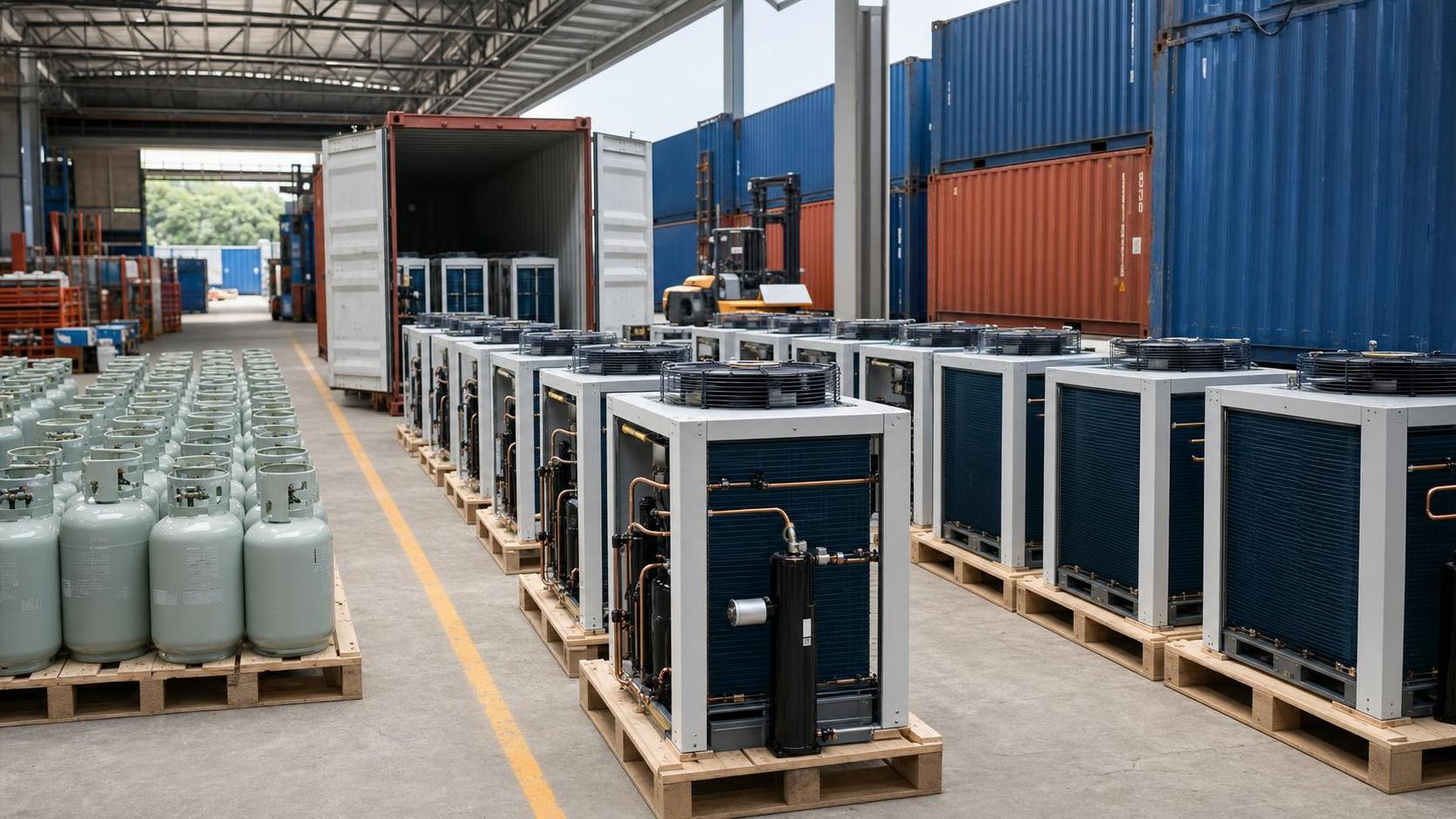
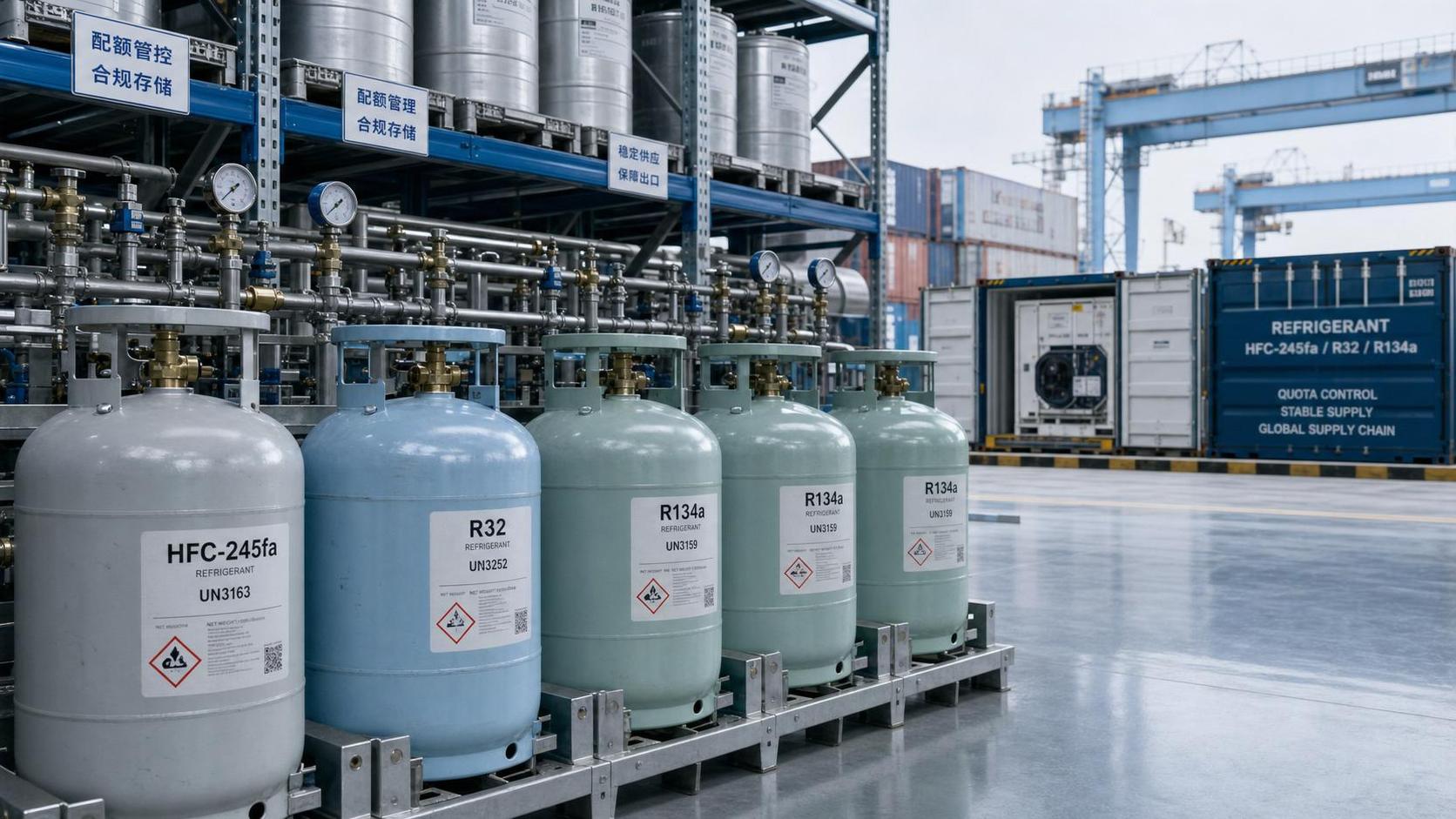
On May 11, the Multilateral Fund Secretariat of the Montreal Protocol announced the 2026 R32 allocation limits — reducing China’s annual R32 allowance for industrial chiller manufacturers by 12.5%. This development directly impacts exporters targeting North America, the EU, and other markets with tightening F-gas regulations, particularly those supplying air-cooled or water-cooled screw chillers, centrifugal chillers, and process cooling systems.
Event Overview
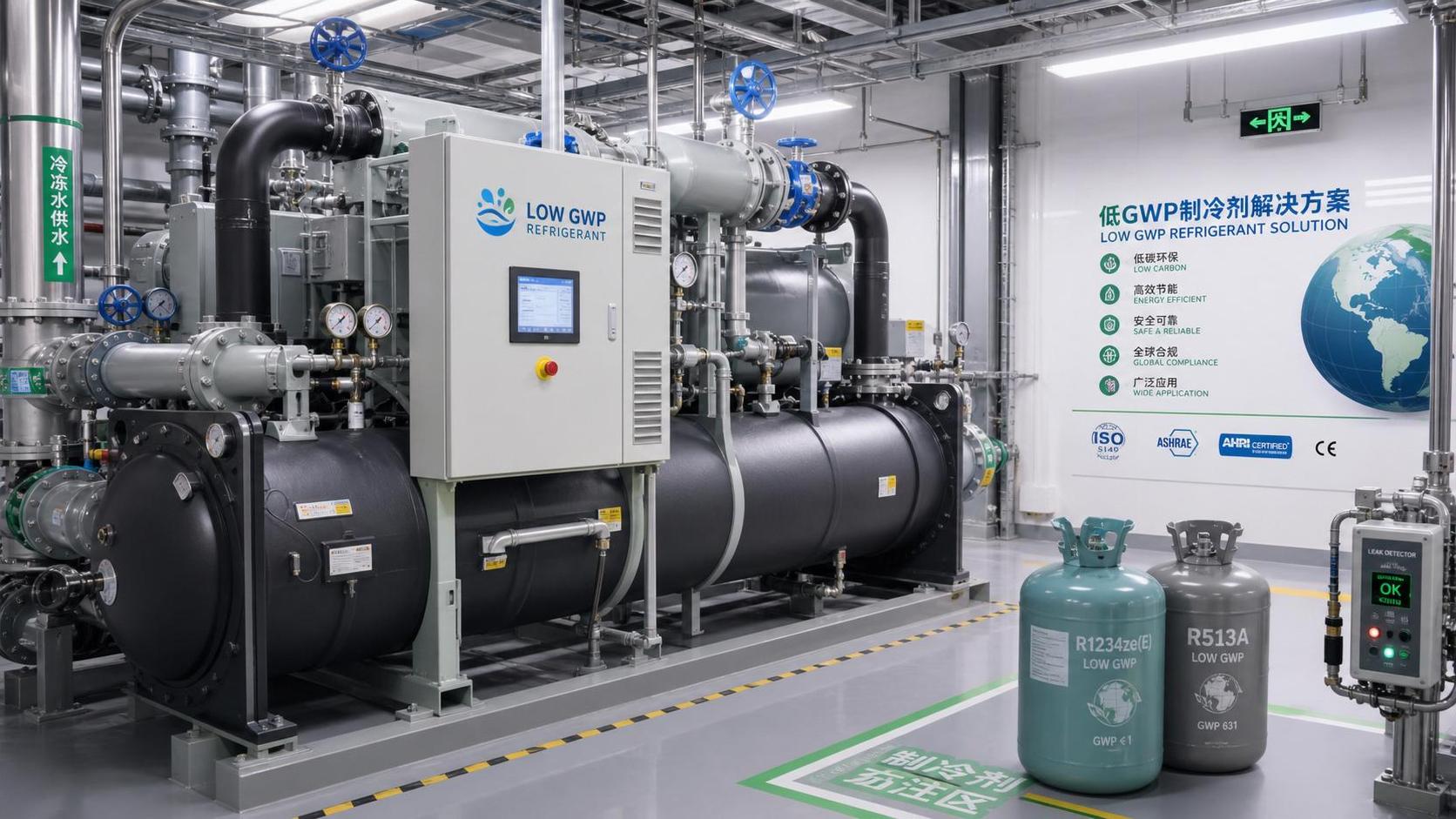
On May 11, the Multilateral Fund Secretariat of the Montreal Protocol published the 2026 R32 consumption quotas. For Chinese manufacturers of industrial chillers, the allocated annual R32 volume was reduced by 12.5% year-on-year. The decision accelerates verification efforts for alternative refrigerant solutions, specifically R290-based microchannel heat exchangers and CO₂ transcritical cycle systems. As of the announcement, three Chinese chiller manufacturers have obtained AHRI certification for zero-GWP complete units eligible for supply to North American and European customers.
Industries Affected
Direct Exporters (Industrial Chiller OEMs)
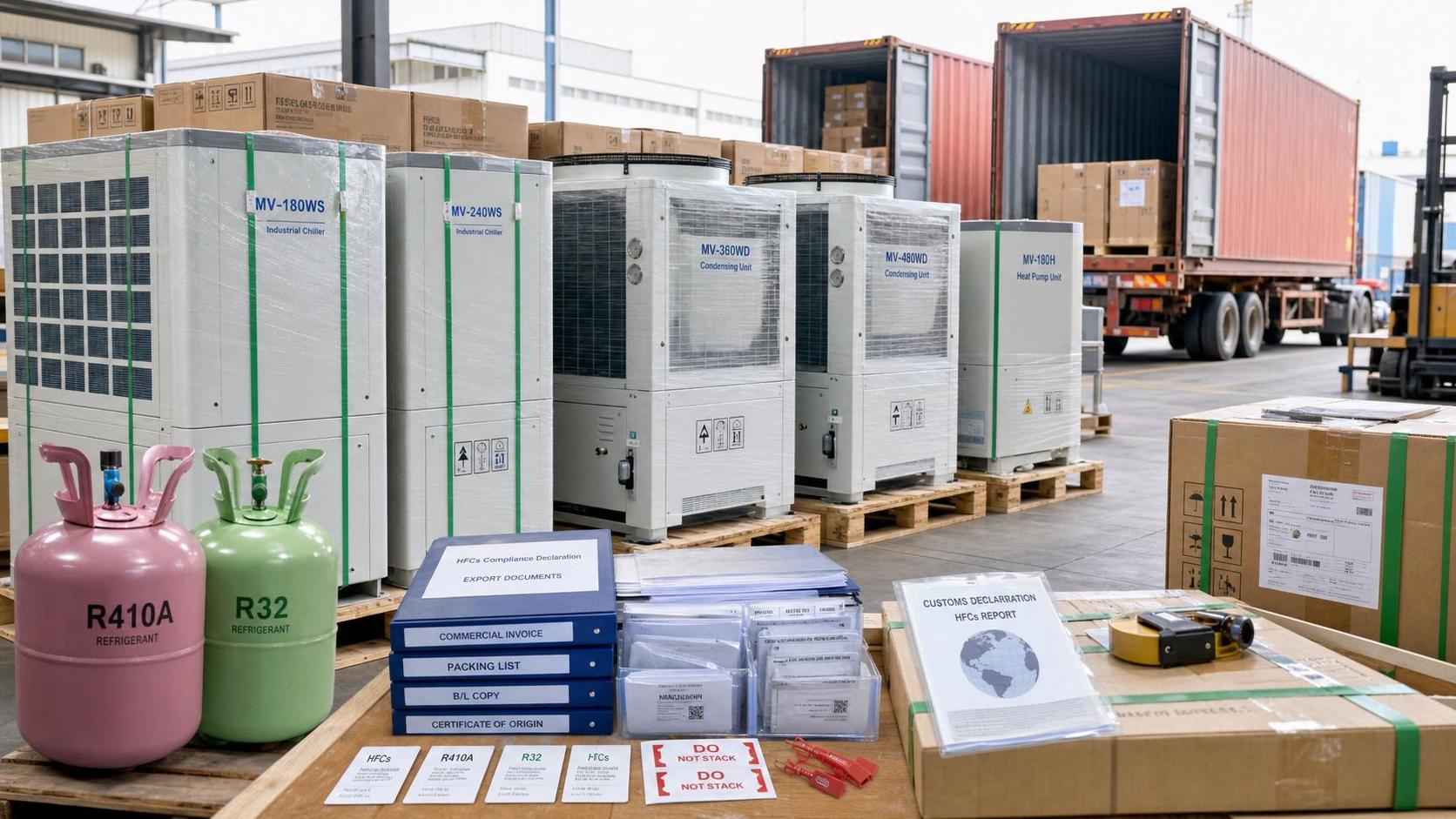
These companies face immediate pressure to meet evolving refrigerant compliance requirements in key export destinations. The quota cut reduces flexibility in R32-based product lines and increases lead time risk for shipments requiring refrigerant charging prior to customs clearance in destination markets.
Refrigerant Procurement & Blending Suppliers
Suppliers serving chiller OEMs may see declining demand for R32 in industrial applications, especially for high-capacity units (>100 kW). Concurrently, demand for certified R290 (with enhanced safety handling protocols) and CO₂ (for transcritical system charge and service) is expected to rise gradually — though not yet at scale.
Component Manufacturers (Heat Exchangers, Compressors, Valves)
Firms producing microchannel condensers, low-charge plate heat exchangers, or CO₂-compatible compressors and expansion devices are positioned for technical alignment with the shift. However, current adoption remains limited to pilot validation — no mass-production ramp has been confirmed.
Aftermarket & Service Providers
Technicians and distributors supporting installed R32 chiller fleets must prepare for diverging service pathways: continued support for legacy units versus emerging training needs for R290 safety standards and CO₂ high-pressure system maintenance.
What Enterprises and Practitioners Should Monitor and Do Now
Track official guidance on 2026–2027 R32 phase-down implementation timelines
The May 11 quota notice reflects a multilateral fund decision — not a national regulation. Domestic enforcement mechanisms, customs verification procedures, and documentation requirements for R32-charged exports remain subject to further clarification from China’s Ministry of Ecology and Environment and General Administration of Customs.
Validate refrigerant compatibility across target markets’ regulatory frameworks
R290 is approved for certain chiller applications under EU F-gas Regulation Annexes but faces charge-size restrictions (e.g., ≤150 g in indoor units). CO₂ transcritical systems are accepted in EU commercial refrigeration but lack harmonized performance standards for industrial chillers. Exporters must confirm per-market eligibility before committing to design changes.
Distinguish between policy signal and operational readiness
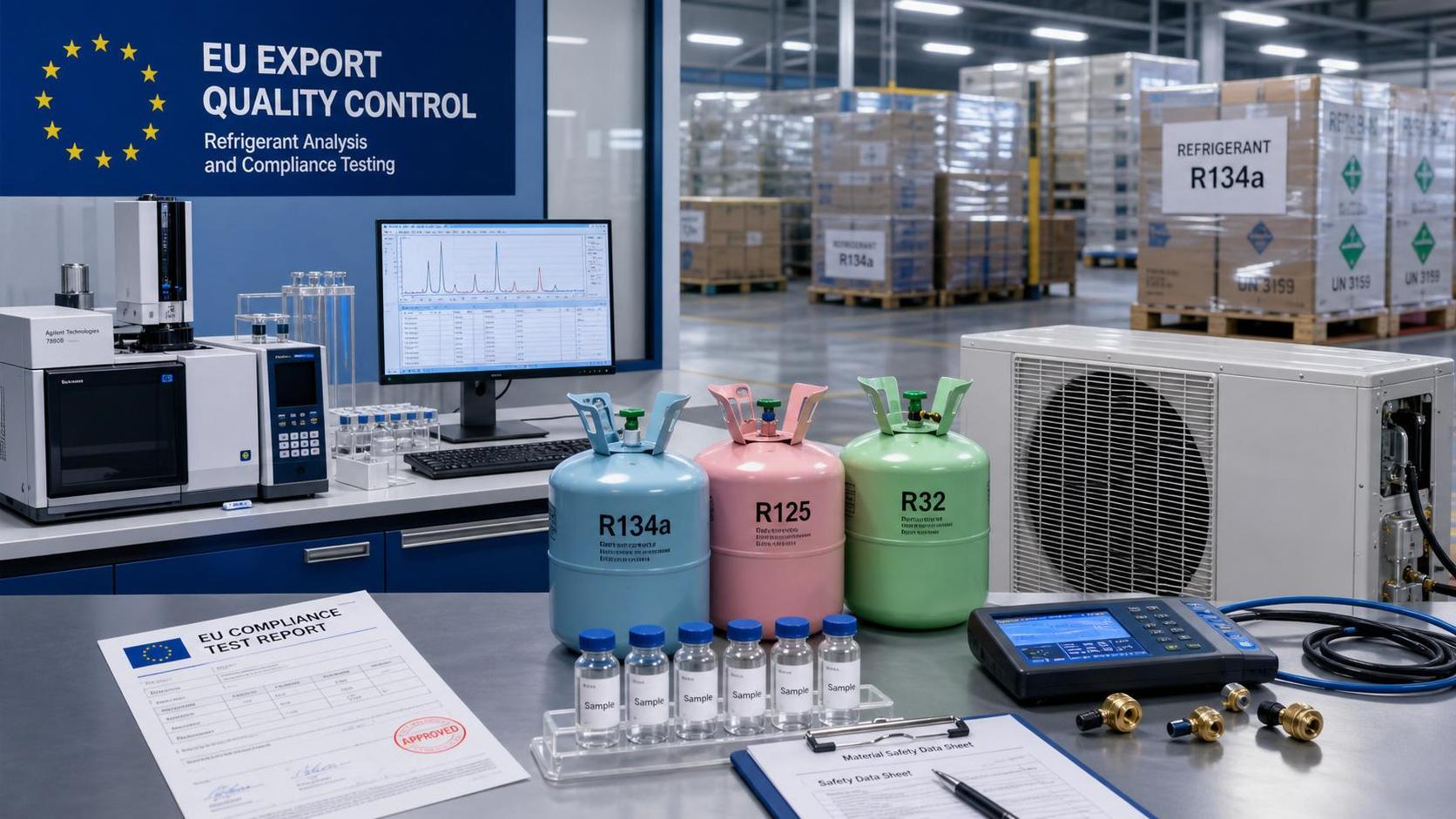
While three manufacturers hold AHRI certification, AHRI Standard 550/590 applies to unit-level performance — not refrigerant safety certification (e.g., UL 60335-2-40 for R290) or regional type-approval (e.g., CE marking under EU CPR). Certification status does not automatically guarantee market access; conformity assessment timelines vary by jurisdiction.
Prepare for component-level qualification and supply chain recalibration
Switching from R32 to R290 or CO₂ requires requalification of lubricants, seals, sensors, and control logic. OEMs should initiate joint testing with compressor and valve suppliers now — especially given longer lead times for CO₂-compatible components and stricter R290 flammability certifications.
Editorial Perspective / Industry Observation
This quota adjustment is best understood as a reinforcing signal — not an isolated event. Analysis shows it aligns with broader trends under the Kigali Amendment’s HFC phase-down schedule and growing buyer-led ESG procurement criteria in Europe and North America. Observably, the 12.5% reduction is modest relative to past cuts but carries outsized weight because it targets industrial chillers — a segment previously granted transitional allowances. From an industry perspective, this marks the point where R32 is no longer treated as a ‘bridge’ refrigerant for high-capacity equipment, but rather as a regulated substance requiring active substitution planning. Current momentum favors technology validation over volume deployment; widespread commercial rollout of R290 or CO₂ chillers remains contingent on safety standard harmonization and field reliability data.
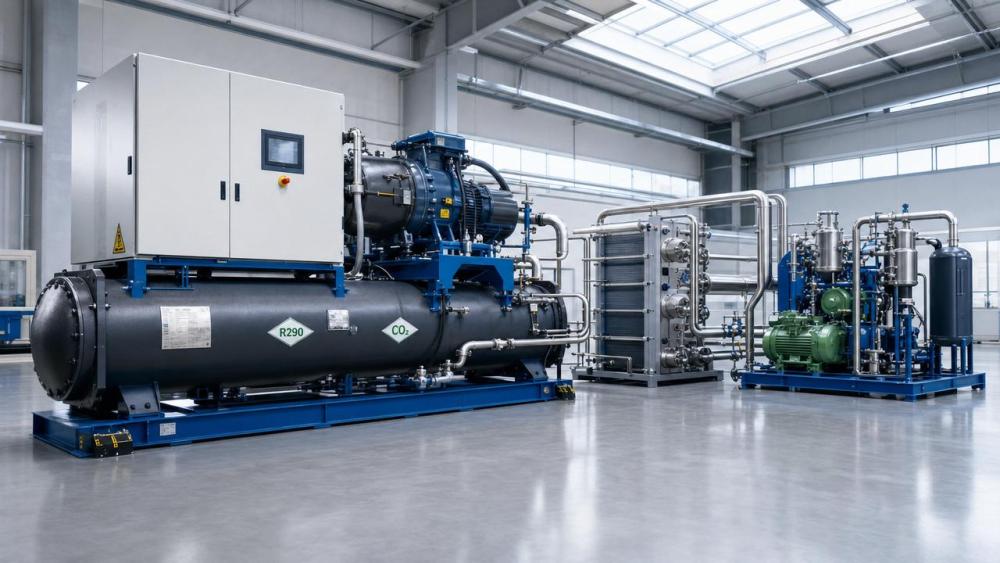
Conclusion: This quota update signals a structural inflection in refrigerant strategy for industrial chiller exporters — shifting focus from incremental optimization of R32 systems toward foundational re-engineering for lower-GWP alternatives. It is not yet a mandate for full transition, but it does mark the end of indefinite deferral. Enterprises are better served treating this as a timeline anchor for internal R&D prioritization, supplier engagement, and regulatory affairs coordination — rather than as an immediate production stoppage trigger.
Source: Multilateral Fund Secretariat of the Montreal Protocol (announcement dated May 11, 2024).
Note: Implementation details — including domestic allocation methodology, customs enforcement protocols, and verification timelines for 2026 shipments — remain pending official communication from Chinese authorities and require ongoing monitoring.
Related News
- EU PFAS Curbs Raise Compliance Review for Cooling ExportsAuthor :Cryogenic Systems Expert

- EU PFAS Proposal Puts Refrigerant and Vacuum Exports Under ReviewAuthor :Cryogenic Systems Expert

- EU REACH PFAS Draft Raises New Export ChecksAuthor :Cryogenic Systems Expert

- EU Cuts High-GWP Refrigerant Import Quotas by 35%Author :Cryogenic Systems Expert

- EU Cuts Q4 2026 Quotas for High-GWP RefrigerantsAuthor :Cryogenic Systems Expert

- EU F-Gas Revision Cuts R410A Quotas 40%Author :Cryogenic Systems Expert

- EPA Freezes R-410A Quotas, Fast-Tracks R-32Author :Cryogenic Systems Expert

- Low GWP Refrigerants HFO Blends: Key Stability and Safety FactorsAuthor :Cryogenic Systems Expert

- R-32 Price Spike Reshapes Chiller ProcurementAuthor :Cryogenic Systems Expert

- How to Compare Environmentally Friendly Refrigerants by GWP, Safety, and CostAuthor :Cryogenic Systems Expert

- R-454B Export Quota Cut 18% as Lead Times DoubleAuthor :Cryogenic Systems Expert

- Japan Cuts R32 and R290 Import Quotas From July 10Author :Cryogenic Systems Expert

- EPA Cuts R-134a Import Quotas 42% From July 2026Author :Cryogenic Systems Expert
![]()
- Low GWP Refrigerants HFO Blends: Performance and Compliance in 2026Author :Cryogenic Systems Expert

- R-513A Jumps 23% as China Tightens Export QuotasAuthor :Cryogenic Systems Expert

- Environmentally Friendly Refrigerants in 2026: Compliance Risks and Upgrade PrioritiesAuthor :Cryogenic Systems Expert

- Pharmaceutical Temperature Control Systems: Common Compliance RisksAuthor :Cryogenic Systems Expert

- China Tightens Q3 R32 Export QuotasAuthor :Cryogenic Systems Expert

- California EPR Deadline Nears for Refrigeration MakersAuthor :Cryogenic Systems Expert

- Resource Circularity Trends Reshaping Refrigerants and Cooling SystemsAuthor :Cryogenic Systems Expert

- HFCs Filing Rules Enter Full EnforcementAuthor :Cryogenic Systems Expert

- How Environmentally Friendly Refrigerants Affect Chiller ComplianceAuthor :Cryogenic Systems Expert

- EU REACH Tightens Refrigerant Impurity Limits for R134a ExportsAuthor :Cryogenic Systems Expert

- China Seeks Feedback on 2027 Refrigerant QuotasAuthor :Cryogenic Systems Expert

- EU to Ban High-GWP ACs in 2029 as R410A Exits HomesAuthor :Cryogenic Systems Expert

- US, UK Delay HFC Phaseout, Extending R32/R134a Export WindowAuthor :Cryogenic Systems Expert

- EU HFC Cut Tightens by 2029 as Gen-3 Output Falls 10%Author :Cryogenic Systems Expert

- Kuwait Bans HCFC AC Imports as Shift to R32/R290 Speeds UpAuthor :Cryogenic Systems Expert

- Saudi SASO Rules Tighten AC Imports in DecemberAuthor :Cryogenic Systems Expert

- Environmentally Friendly Refrigerants: Compliance, Safety, and Retrofit RisksAuthor :Cryogenic Systems Expert

- SABIC Force Majeure Keeps Chiller Refrigerant Supply TightAuthor :Cryogenic Systems Expert

- SABIC Force Majeure Tightens Refrigerant FeedstocksAuthor :Cryogenic Systems Expert

- UL 60335-2-89 Tightens R290 Leak Test RulesAuthor :Cryogenic Systems Expert
![]()
- UL 60335-2-89 Adds R290 Vacuum Leak TestAuthor :Cryogenic Systems Expert

- Global Refrigerant Price Index Falls 8.3% MoM in MayAuthor :Cryogenic Systems Expert
![]()
- PSA Jurong Island Launches Mandatory Cold-Chain Traceability for RefrigerantsAuthor :Cryogenic Systems Expert
![]()