Heat Exchange Choices for Process Cooling




Selecting the right heat exchange solution for process cooling is no longer just an engineering decision—it is a project risk, energy cost, and long-term reliability decision. For project managers overseeing industrial upgrades or new facilities, the choice between plate, shell-and-tube, air-cooled, or hybrid systems can directly affect installation schedules, operating budgets, compliance targets, and production stability. This article outlines the key evaluation factors behind effective process cooling choices, helping decision-makers align thermal performance with lifecycle value and operational resilience.
In many industrial projects, process cooling is treated as a utility package until late-stage design. That approach often creates pressure on equipment layout, piping routes, electrical capacity, commissioning windows, and water management plans. A well-selected heat exchange system can reduce those conflicts before they become costly change orders.
For project managers, the goal is not to choose the largest exchanger or the lowest quoted price. The goal is to define a heat exchange strategy that supports stable production, predictable maintenance, energy efficiency, and future expansion over a 10–20 year asset lifecycle.
Understanding Process Cooling Requirements Before Equipment Selection
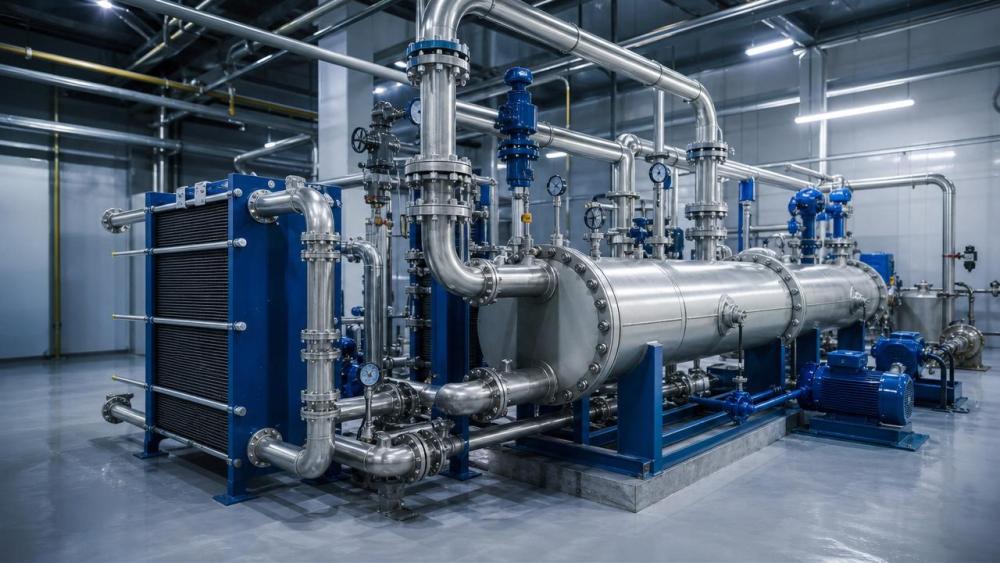
A process cooling decision should begin with the duty profile, not the product catalog. The same 500 kW cooling load can require very different heat exchange equipment depending on fluid properties, temperature approach, fouling risk, and operating hours.
Project teams should first define at least 6 baseline conditions: heat load, inlet temperature, outlet temperature, flow rate, allowable pressure drop, fluid compatibility, and cleaning access. These inputs determine whether compact efficiency, mechanical robustness, or low-water operation should dominate the choice.
Key Thermal Inputs That Shape the Decision
Heat exchange performance depends heavily on the temperature difference between the process side and cooling medium. A small approach temperature, such as 2°C–5°C, may improve process control but usually increases surface area, cost, and sensitivity to fouling.
A wider approach temperature, such as 8°C–12°C, can reduce capital cost, but it may not satisfy high-precision applications in pharmaceuticals, chemicals, food processing, battery materials, or semiconductor support systems.
- Continuous processes often need 24/7 thermal stability with planned maintenance windows every 3–6 months.
- Batch processes may tolerate variable loads but require fast response during peak heating or cooling stages.
- Clean utilities require materials and gaskets compatible with purity, sanitation, or corrosion control targets.
- Outdoor installations must account for seasonal ambient temperature ranges and freeze protection.
Why Early Coordination Reduces Project Risk
A heat exchange package affects more than thermal performance. It influences pump sizing, skid footprint, crane access, drainage, electrical load, noise limits, water treatment, instrumentation, and building ventilation. These interfaces should be reviewed before procurement release.
A practical project review usually takes 2–4 weeks and should involve process engineers, maintenance leaders, procurement, automation specialists, and environmental compliance teams. This coordination helps avoid undersized cooling loops and late redesigns.
Comparing Major Heat Exchange Options for Industrial Cooling
No single heat exchange technology fits every process cooling duty. Plate heat exchangers, shell-and-tube exchangers, air-cooled systems, and hybrid arrangements each provide distinct advantages when matched to the correct operating context.
The following table summarizes common choices for project managers who must balance technical suitability, installation complexity, cleaning demand, and lifecycle cost across different industrial environments.
The key conclusion is that heat exchange choice should be linked to duty risk. Plate units often lead where compact efficiency matters, while shell-and-tube designs remain strong where pressure, contamination, or mechanical durability dominate.
Plate Heat Exchangers: Compact but Specification-Sensitive
Plate heat exchangers are attractive in projects with limited mechanical rooms because they can deliver high thermal transfer in a compact footprint. They are commonly used in chilled water, glycol, and process water loops.
However, project managers should confirm gasket materials, chloride limits, cleaning procedures, and spare plate availability. A low-cost unit can become expensive if gasket degradation occurs every 6–12 months under unsuitable chemistry.
Shell-and-Tube Systems: Durable for Demanding Duties
Shell-and-tube heat exchange systems are often selected for duties involving high pressure, hydrocarbons, aggressive chemicals, steam condensing, or fluids with suspended solids. Their design can support higher mechanical margins.
The trade-off is space and schedule. Depending on materials, size, and inspection requirements, fabrication and delivery may take 8–20 weeks. Tube bundle pull space must also be preserved in the plant layout.
Air-Cooled and Hybrid Systems: Water and Compliance Control
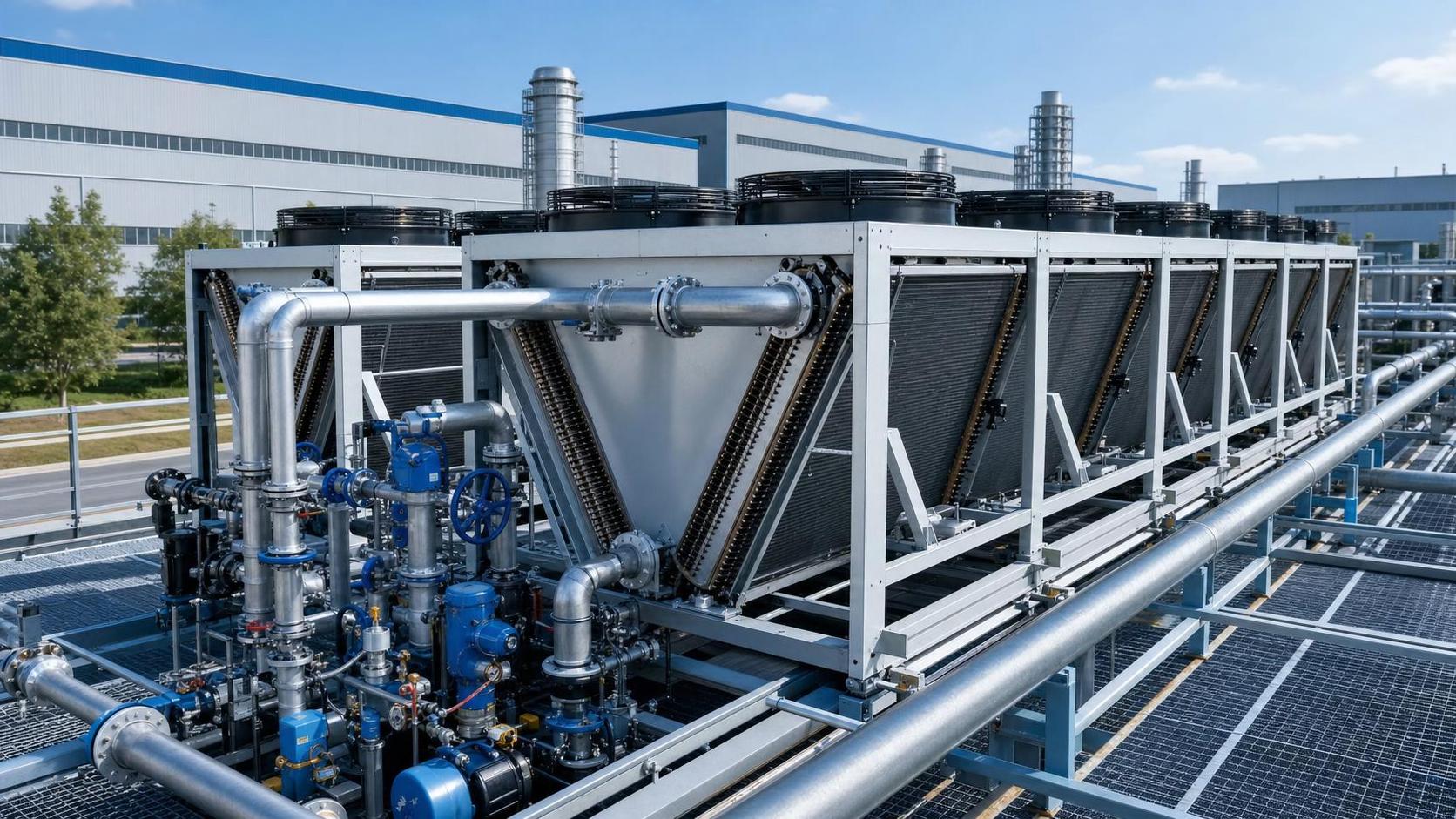
Air-cooled systems reduce dependence on cooling water, which is valuable for plants facing water restrictions, discharge limits, or rising treatment costs. They also simplify some environmental permitting discussions.
The limitation is that ambient temperature drives performance. In hot climates, project teams may need larger surface area, variable-speed fans, or hybrid support to maintain process stability during peak summer days.
Selection Criteria for Project Managers and Engineering Leads
A structured selection model makes heat exchange decisions easier to defend during technical review and budget approval. It also helps procurement compare supplier proposals beyond headline price and nominal capacity.
For most process cooling projects, decision-makers should score options across 5 categories: thermal performance, reliability, maintainability, installation impact, and total cost of ownership. Each category should include measurable acceptance points.
Technical and Commercial Evaluation Matrix
The table below provides a practical evaluation framework. It can be adapted for equipment tenders, internal design reviews, or supplier clarification meetings before final heat exchange selection.
This matrix shifts the conversation from initial purchase price to operating certainty. It also helps identify whether a slightly higher equipment cost can prevent higher energy use, downtime, or retrofit work later.
A 5-Step Selection Workflow
- Define process duty cases, including normal, peak, startup, and cleaning modes.
- Screen heat exchange technologies against fluid chemistry, space, and utilities.
- Request supplier calculations with pressure drop, surface area, and material assumptions.
- Review installation interfaces, including pumps, piping, power, controls, and access.
- Compare lifecycle cost over 5, 10, and 15 years before final approval.
A disciplined workflow helps project teams avoid selecting equipment based only on the most convenient specification sheet. It also creates clearer accountability between engineering, purchasing, and operations.
Lifecycle Cost, Energy Efficiency, and Operational Resilience
The purchase price of a heat exchange unit may represent only a portion of its total lifecycle cost. Pump power, fan energy, cleaning labor, downtime risk, spare parts, water treatment, and inspection requirements often matter more over time.
For a process line operating 6,000–8,000 hours per year, even a small increase in pressure drop or fan load can become a visible energy cost. That is why efficiency should be evaluated at real operating points, not only at design maximum.
Energy and Utility Impacts
Lower approach temperature can improve process cooling quality, but it may require more heat transfer area or higher pumping energy. Conversely, choosing a smaller exchanger may reduce capital cost while increasing pump load for years.
Variable-speed pumps and fans can help when loads fluctuate between 40% and 100%. In many facilities, part-load conditions dominate actual operating hours, making control strategy as important as exchanger surface area.
Maintenance Planning and Reliability
Fouling is one of the most common reasons heat exchange performance declines. Mineral scale, biological growth, oil films, polymer residue, or suspended solids can reduce heat transfer and increase pressure drop within months.
Project managers should require a maintenance concept before purchase. This includes isolation valves, bypass design, clean-in-place options, spare gasket strategy, inspection intervals, and differential pressure alarm settings.
- Install temperature sensors on both sides to detect loss of duty early.
- Track differential pressure weekly or through automated monitoring.
- Plan cleaning based on performance trend, not only calendar intervals.
- Keep critical spares for gaskets, seals, valves, and fan components where applicable.
Resilience for Expansion and Decarbonization
Industrial cooling projects increasingly need flexibility for future production changes. A facility may add 1–3 production lines, change process fluids, or adopt lower-temperature loops for tighter quality control.
Heat exchange systems should be reviewed for modular expansion, additional nozzle capacity, control reserve, and compatibility with energy recovery. Waste heat reuse can also support broader decarbonization plans when temperatures are suitable.
Common Mistakes in Process Cooling Procurement
Many heat exchange problems begin before installation. They emerge from incomplete duty data, unclear responsibility boundaries, or the assumption that all suppliers calculate performance using identical safety margins.
Project managers can reduce procurement risk by addressing 4 recurring mistakes during specification and technical clarification. Each mistake has a direct schedule, cost, or reliability consequence.
Mistake 1: Ignoring Fouling Allowance
A clean-condition calculation may look efficient on paper but fail after several months of operation. If the process fluid is not clean water, fouling allowance and cleaning access should be treated as critical design inputs.
Mistake 2: Selecting Only by Nominal Capacity
Two units rated at 1 MW can behave differently if one requires higher flow, higher pressure drop, or a larger temperature approach. Capacity must be validated against the actual process cooling profile.
Mistake 3: Underestimating Installation Interfaces
A heat exchange skid may require structural supports, lifting clearance, condensate drains, electrical panels, access platforms, and control cables. Missing these details can delay installation by 1–3 weeks.
Mistake 4: Treating Controls as an Afterthought
Stable process cooling depends on valves, sensors, logic, and alarms. A poorly tuned control loop can cause temperature oscillation even when the exchanger itself has sufficient thermal surface.
Procurement Questions to Ask Suppliers
- What assumptions were used for fouling factor, fluid properties, and ambient conditions?
- What is the calculated pressure drop at minimum, normal, and maximum flow?
- Which components require inspection or replacement within the first 12–24 months?
- What instruments are recommended for monitoring thermal performance?
- What installation clearances are required for cleaning, lifting, and maintenance?
How GTC-Matrix Supports Better Heat Exchange Decisions
The Global Thermal & Compression Matrix, or GTC-Matrix, focuses on the industrial systems where thermal management and compression power intersect. This perspective is valuable because process cooling rarely operates in isolation.
Cooling towers, chillers, compressors, vacuum systems, boilers, pumps, and heat exchange equipment all influence energy conversion efficiency. A weak decision in one area can increase the load or instability of another.
Decision Intelligence for Complex Industrial Projects
For project managers, GTC-Matrix provides sector intelligence that connects thermal engineering trends with commercial decision-making. This includes changes in energy pricing, refrigerant policy, oil-free compression adoption, microchannel development, and industrial decarbonization strategies.
Rather than viewing a heat exchange purchase as a single equipment transaction, decision-makers can evaluate how the system affects resilience, operating expenditure, sustainability targets, and long-term competitiveness.
When to Seek a Deeper Review
A deeper review is recommended when the cooling duty exceeds 300 kW, when fluids are corrosive or fouling-prone, when uptime requirements exceed 95%, or when the site faces water, noise, or emissions constraints.
It is also valuable during brownfield upgrades, where existing pumps, piping, control systems, and structural limits may restrict technically attractive options. Early analysis can identify feasible paths before procurement commitments are made.
Turning Heat Exchange Selection into Project Value
Effective process cooling starts with accurate duty definition, disciplined technology comparison, and lifecycle thinking. The best heat exchange solution is the one that fits the process, the site, the maintenance team, and the business case.
Project managers should prioritize measurable criteria: temperature approach, pressure drop, fouling allowance, material compatibility, access requirements, controls integration, delivery schedule, and energy impact over 5–15 years.
GTC-Matrix helps industrial decision-makers interpret these factors with a wider view of thermal efficiency, compression power, and market evolution. That intelligence supports better specifications, stronger supplier discussions, and more resilient cooling infrastructure.
If your team is planning a new facility, utility upgrade, or process cooling retrofit, now is the right time to review your heat exchange choices. Contact us to explore tailored decision support, compare suitable solutions, or learn more about industrial thermal strategies.
Ready when you are. Send us a message to get started.
Related News
- Kentucky Regulators Approve $191 Million Cooling Tower at Mitchell Coal PlantAuthor :Thermodynamics Analyst

- Cooling Tower Market Trends Reshaping Replacement Plans and Capital BudgetsAuthor :Thermodynamics Analyst

- Field-Erected Cooling Tower Market: Why Utility Projects Favor Custom DesignsAuthor :Thermodynamics Analyst

- Evaporative Cooling Tower Market Outlook: Demand Drivers, Risks, and Growth AreasAuthor :Thermodynamics Analyst

- When does an industrial cooling radiator outperform a cooling tower?Author :Thermodynamics Analyst

- EU Cooling Tower Standard EN 13771:2026 Takes EffectAuthor :Thermodynamics Analyst

- EU REACH SVHC Update Triggers Cooling Tower DisclosureAuthor :Thermodynamics Analyst

- SASO Adds Bio-Durability Test for Cooling Tower FillAuthor :Thermodynamics Analyst

- EU REACH Update Bars Phthalates in Cooling Tower PVC FillAuthor :Thermodynamics Analyst

- EU Tightens CE Rules for Cooling Tower Steel PartsAuthor :Thermodynamics Analyst

- Shanghai-Rotterdam Cooling Tower Space TightensAuthor :Thermodynamics Analyst

- Hamburg Port Strike Delays Cooling Tower Parts ClearanceAuthor :Thermodynamics Analyst

- ASHRAE 188-2026 Makes Cooling Tower Microbial Control MandatoryAuthor :Thermodynamics Analyst

- India Enforces BIS IS 17842:2026 for Cooling TowersAuthor :Thermodynamics Analyst

- EU REACH Restricts Zinc Inhibitors in Cooling TowersAuthor :Thermodynamics Analyst

- TUV Rheinland Switches Cooling Tower Labels to IEC 61800-9-2Author :Thermodynamics Analyst

- EU REACH Rule Takes Effect for Cooling Tower CoatingsAuthor :Thermodynamics Analyst

- Vietnam to Require IoT Modules in Imported Cooling TowersAuthor :Thermodynamics Analyst

- How to Compare Industrial Cooling Equipment Dry Coolers for Year-Round EfficiencyAuthor :Thermodynamics Analyst

- SASO Tightens Cooling Tower Import Rules for 2027Author :Thermodynamics Analyst

- REACH SVHC Update Limits Copper Corrosion InhibitorsAuthor :Thermodynamics Analyst

- SASO Starts Cooling Tower Data Rule for CoCAuthor :Thermodynamics Analyst

- Saudi SASO Portal Adds Corrosion Data RuleAuthor :Thermodynamics Analyst

- SASO Adds Corrosion Report Rule for Cooling TowersAuthor :Thermodynamics Analyst

- RDHx Prices Rise as AI Demand Lifts Premium ModelsAuthor :Thermodynamics Analyst

- EU EN 13859-2:2026 Mandates Extreme Humidity Heat-Loss TestsAuthor :Thermodynamics Analyst

- VDE Tightens Cooling Tower Test ScopeAuthor :Thermodynamics Analyst

- SASO Tightens Cooling Tower Test Proof for SaberAuthor :Thermodynamics Analyst

- Saudi SABER Cooling Tower Rule Takes Effect EarlyAuthor :Thermodynamics Analyst

- EU Carbon Labels to Cover Cooling Tower ExportsAuthor :Thermodynamics Analyst

- Saudi SABER Cooling Tower Rule Takes Effect EarlyAuthor :Thermodynamics Analyst

- EU Carbon Label Rule Hits Cooling Tower ExportsAuthor :Thermodynamics Analyst

- Saudi SABER Cooling Tower Rule Adds EN 13859-2 TestAuthor :Thermodynamics Analyst

- Saudi SABER Tightens Cooling Tower Energy Report RulesAuthor :Thermodynamics Analyst

- Saudi SASO Tightens Cooling Tower Efficiency FilingAuthor :Thermodynamics Analyst

- Saudi SABER Tightens Cooling Tower Energy Report ChecksAuthor :Thermodynamics Analyst