REACH SVHC Update Limits Copper Corrosion Inhibitors




On June 29, 2026, the latest REACH SVHC candidate list update brought a direct compliance change for cooling tower exports to the EU: Cu-DEDTC, a substance used in closed-loop circulating water corrosion inhibitor formulations, was added to the candidate list. Because notification duties and downstream safe-use guidance will apply from January 2027 when the substance is present at concentrations of 0.1% or above in imported equipment or chemical products, the development is relevant not only to chemical suppliers but also to cooling tower manufacturers, export teams, compliance staff, and technical documentation workflows.
What the June 2026 listing changes
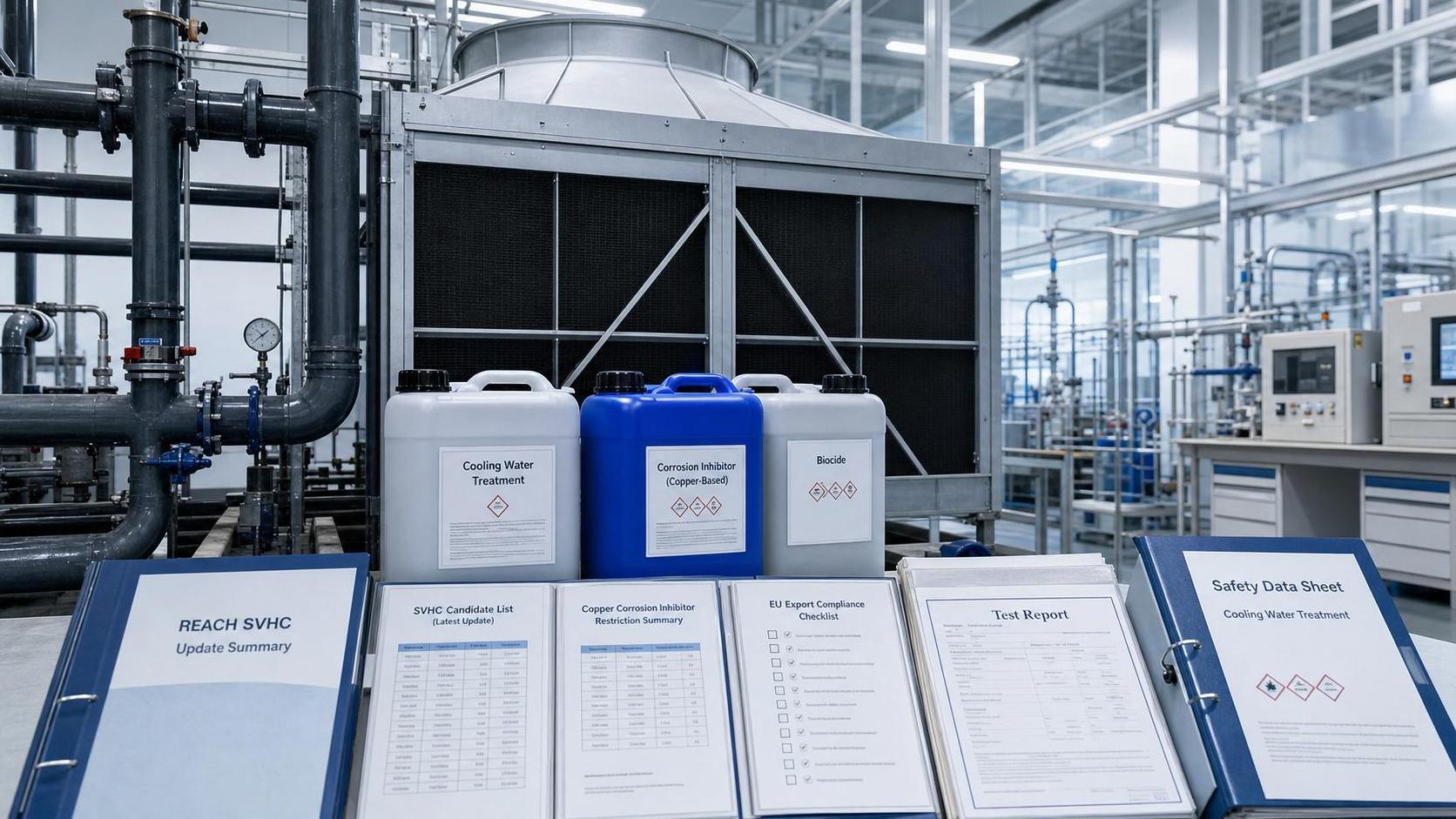
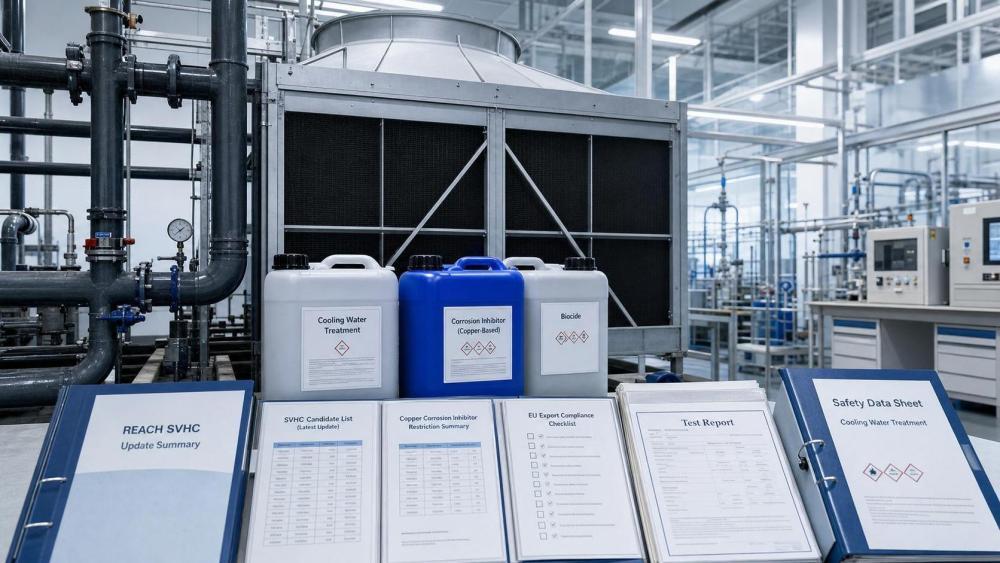
According to the provided event summary, the European Chemicals Agency (ECHA) formally added copper diethyldithiocarbamate (Cu-DEDTC) to the SVHC candidate list on June 29, 2026. The substance is widely used in corrosion inhibitor formulations for closed cooling tower circulating water systems.
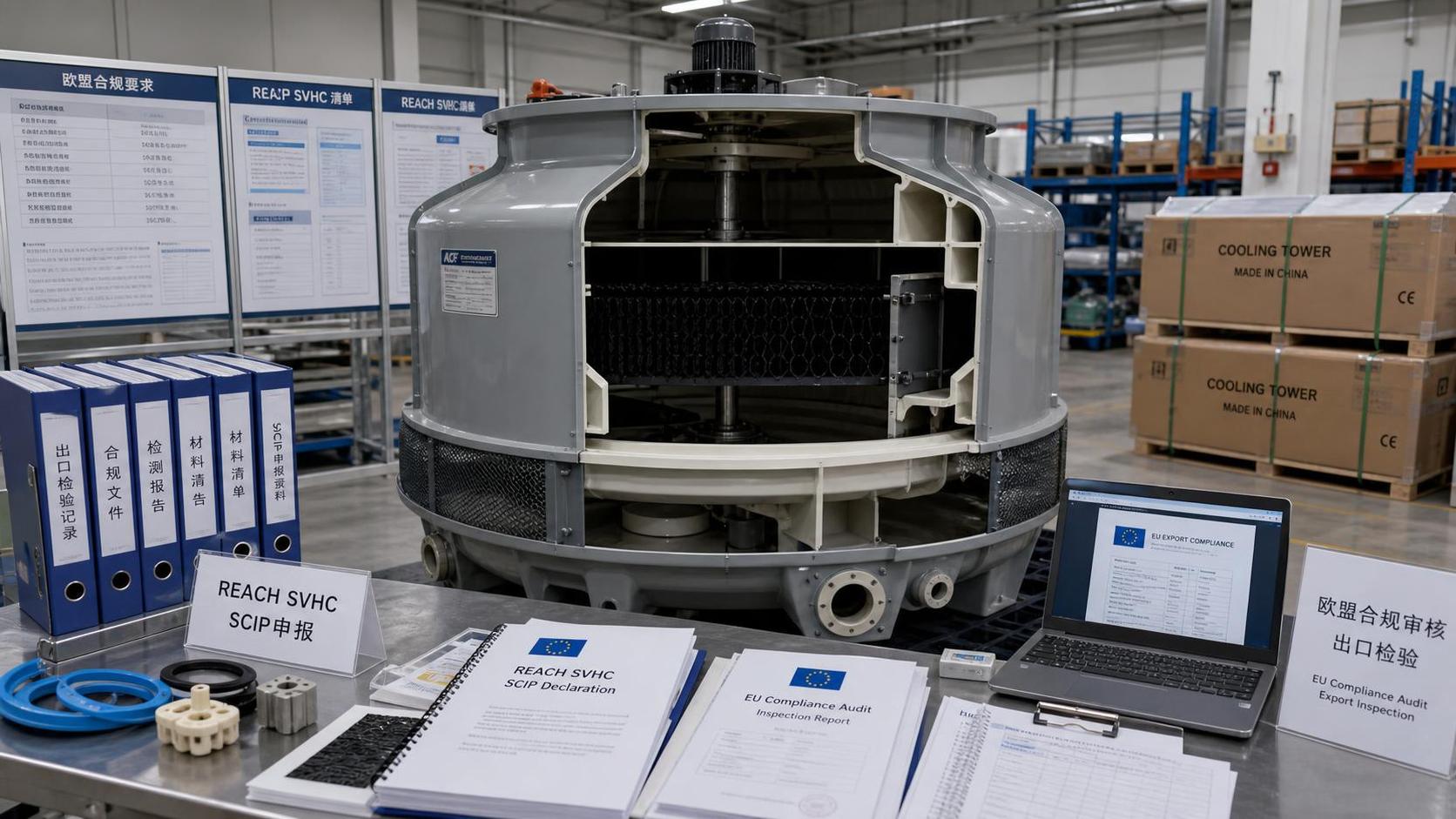
From January 2027, imported equipment or chemical products containing this substance at concentrations of 0.1% or higher must fulfill notification obligations and provide safe-use guidance to downstream users. The provided information also states that this change directly affects the pace of compliance document preparation, formulation adjustment, and CE technical file updates for Chinese cooling tower manufacturers exporting to the EU.
Where the compliance pressure is likely to appear first
Exported equipment with embedded chemical exposure points
From an industry perspective, cooling tower manufacturers shipping to the EU are likely to face the most immediate pressure where equipment scope and chemical content intersect. The issue is not limited to standalone treatment chemicals; it also touches imported equipment if the listed substance is present at or above the stated threshold. What deserves closer attention is the need to review product composition records, export declarations, and technical documentation before shipment timing becomes compressed.
Suppliers of water treatment formulations
Businesses supplying corrosion inhibitor formulations may be affected through material disclosure, formulation review, and downstream communication duties. Analysis shows that procurement and formulation teams will need to pay closer attention to whether Cu-DEDTC remains in use, how concentration is identified, and whether supporting safe-use information is ready for customers whose own exports or distribution activities depend on those documents.
Compliance, certification, and document-control functions
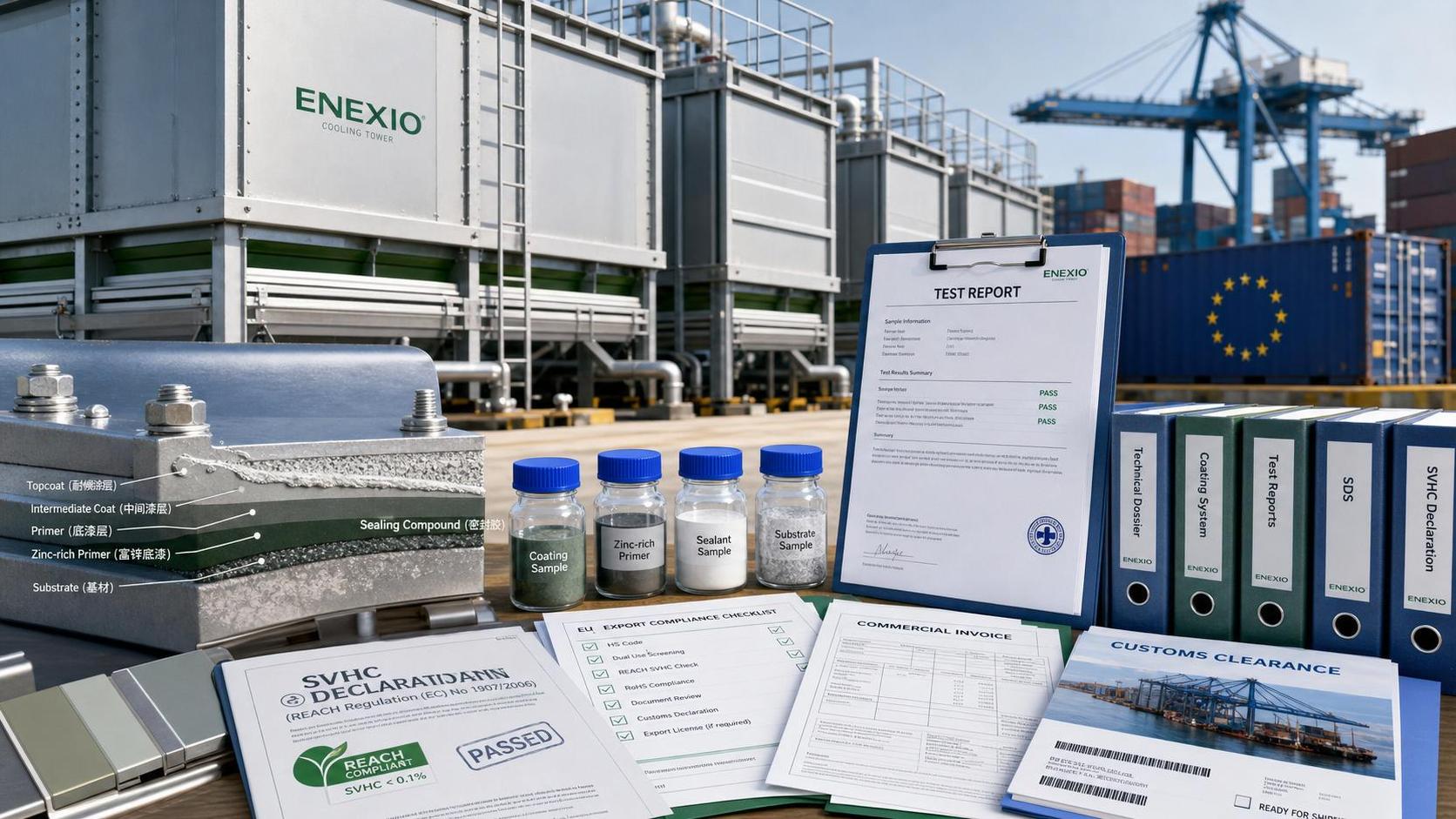
For companies managing CE-related files and export compliance records, the listing creates a document update issue as much as a chemical control issue. Observably, teams responsible for declarations, technical files, and customer-facing compliance packets may need to align substance information, usage guidance, and version control more tightly, especially where EU-bound product documentation is prepared in parallel with commercial delivery schedules.
Downstream buyers and service-side participants
Procurement parties, distributors, and after-sales service providers may also be affected because safe-use guidance must move downstream once the threshold condition is met. In practical terms, this can influence supplier selection, incoming document checks, product handover materials, and traceability expectations during delivery and service support.
Practical points companies should track now
Check whether affected formulations sit inside export scope
Analysis shows that the first practical step is to identify whether Cu-DEDTC appears in products, systems, or supporting chemical packages tied to EU exports, and whether the 0.1% threshold may be relevant. This is a screening task, not yet proof of non-compliance or compliance by itself, but it determines where document and formulation review should begin.
Prepare document updates before the 2027 trigger date
What deserves closer attention is the preparation cycle for compliance files. The provided event summary specifically points to compliance document preparation and CE technical file updates, so exporters should monitor whether existing technical documents, safety communication materials, and customer submission packs remain aligned once the new SVHC status is taken into account.
Watch formulation decisions and supplier confirmations
Where Cu-DEDTC is used in corrosion inhibitor formulations, procurement and engineering teams should pay attention to supplier disclosures and any planned formulation adjustments. The provided information does not confirm how suppliers will respond, so this remains an area to monitor rather than a settled market outcome.
Follow execution language and customer document requests
Observably, another point worth tracking is how compliance expectations are reflected in downstream requests, bid documents, and delivery paperwork. The event summary confirms the notification obligation and the requirement to provide safe-use guidance, but the operational interpretation in customer-facing documentation may still require continued attention.
Why this should be read as an execution signal
Analysis shows that this development is better understood as a concrete compliance signal rather than a distant policy discussion. The listing date is confirmed, the substance and threshold are identified, and the January 2027 duty point is already defined in the provided information. At the same time, it is not yet a complete picture of market execution, because actual implementation pressure will depend on how exporters, suppliers, and downstream customers translate the new status into formulation choices and document controls.
What this means for the market at this stage
At this stage, the update is most appropriately understood as an already landed rule change with near-term operational consequences for EU-bound cooling tower business involving relevant corrosion inhibitor use. The immediate significance lies less in broad market prediction and more in readiness: substance screening, documentation discipline, supplier coordination, and timing of file updates are now the practical areas to watch.
Basis of this article and points still to verify
This article is based on the user-provided news title, event date, and event summary. For developments of this kind, relevant source types commonly include official notices, regulatory agency releases, customs or trade authority information, industry association updates, standards organization documents, and reporting by established professional media. A specific official source link was not provided in the input, so the exact source document should still be verified on an ongoing basis. Further observation is also needed on detailed implementation language, certification handling approaches, bid document changes, market feedback, and how companies ultimately execute related compliance adjustments.
Related News
- Cooling Tower Market Trends Reshaping Replacement Plans and Capital BudgetsAuthor :Thermodynamics Analyst

- Field-Erected Cooling Tower Market: Why Utility Projects Favor Custom DesignsAuthor :Thermodynamics Analyst

- Evaporative Cooling Tower Market Outlook: Demand Drivers, Risks, and Growth AreasAuthor :Thermodynamics Analyst

- When does an industrial cooling radiator outperform a cooling tower?Author :Thermodynamics Analyst

- EU Cooling Tower Standard EN 13771:2026 Takes EffectAuthor :Thermodynamics Analyst

- EU REACH SVHC Update Triggers Cooling Tower DisclosureAuthor :Thermodynamics Analyst

- SASO Adds Bio-Durability Test for Cooling Tower FillAuthor :Thermodynamics Analyst

- EU REACH Update Bars Phthalates in Cooling Tower PVC FillAuthor :Thermodynamics Analyst

- EU Tightens CE Rules for Cooling Tower Steel PartsAuthor :Thermodynamics Analyst

- Shanghai-Rotterdam Cooling Tower Space TightensAuthor :Thermodynamics Analyst

- Hamburg Port Strike Delays Cooling Tower Parts ClearanceAuthor :Thermodynamics Analyst

- ASHRAE 188-2026 Makes Cooling Tower Microbial Control MandatoryAuthor :Thermodynamics Analyst

- India Enforces BIS IS 17842:2026 for Cooling TowersAuthor :Thermodynamics Analyst

- EU REACH Restricts Zinc Inhibitors in Cooling TowersAuthor :Thermodynamics Analyst

- TUV Rheinland Switches Cooling Tower Labels to IEC 61800-9-2Author :Thermodynamics Analyst

- EU REACH Rule Takes Effect for Cooling Tower CoatingsAuthor :Thermodynamics Analyst

- Vietnam to Require IoT Modules in Imported Cooling TowersAuthor :Thermodynamics Analyst

- How to Compare Industrial Cooling Equipment Dry Coolers for Year-Round EfficiencyAuthor :Thermodynamics Analyst

- SASO Tightens Cooling Tower Import Rules for 2027Author :Thermodynamics Analyst

- REACH SVHC Update Limits Copper Corrosion InhibitorsAuthor :Thermodynamics Analyst

- SASO Starts Cooling Tower Data Rule for CoCAuthor :Thermodynamics Analyst

- Saudi SASO Portal Adds Corrosion Data RuleAuthor :Thermodynamics Analyst

- SASO Adds Corrosion Report Rule for Cooling TowersAuthor :Thermodynamics Analyst

- RDHx Prices Rise as AI Demand Lifts Premium ModelsAuthor :Thermodynamics Analyst

- EU EN 13859-2:2026 Mandates Extreme Humidity Heat-Loss TestsAuthor :Thermodynamics Analyst

- VDE Tightens Cooling Tower Test ScopeAuthor :Thermodynamics Analyst

- SASO Tightens Cooling Tower Test Proof for SaberAuthor :Thermodynamics Analyst

- Saudi SABER Cooling Tower Rule Takes Effect EarlyAuthor :Thermodynamics Analyst

- EU Carbon Labels to Cover Cooling Tower ExportsAuthor :Thermodynamics Analyst

- Saudi SABER Cooling Tower Rule Takes Effect EarlyAuthor :Thermodynamics Analyst

- EU Carbon Label Rule Hits Cooling Tower ExportsAuthor :Thermodynamics Analyst

- Saudi SABER Cooling Tower Rule Adds EN 13859-2 TestAuthor :Thermodynamics Analyst

- Saudi SABER Tightens Cooling Tower Energy Report RulesAuthor :Thermodynamics Analyst

- Saudi SASO Tightens Cooling Tower Efficiency FilingAuthor :Thermodynamics Analyst

- Saudi SABER Tightens Cooling Tower Energy Report ChecksAuthor :Thermodynamics Analyst

- Thermal Management Problems That Cause Equipment DowntimeAuthor :Thermodynamics Analyst