Hamburg Port Strike Delays Cooling Tower Parts Clearance




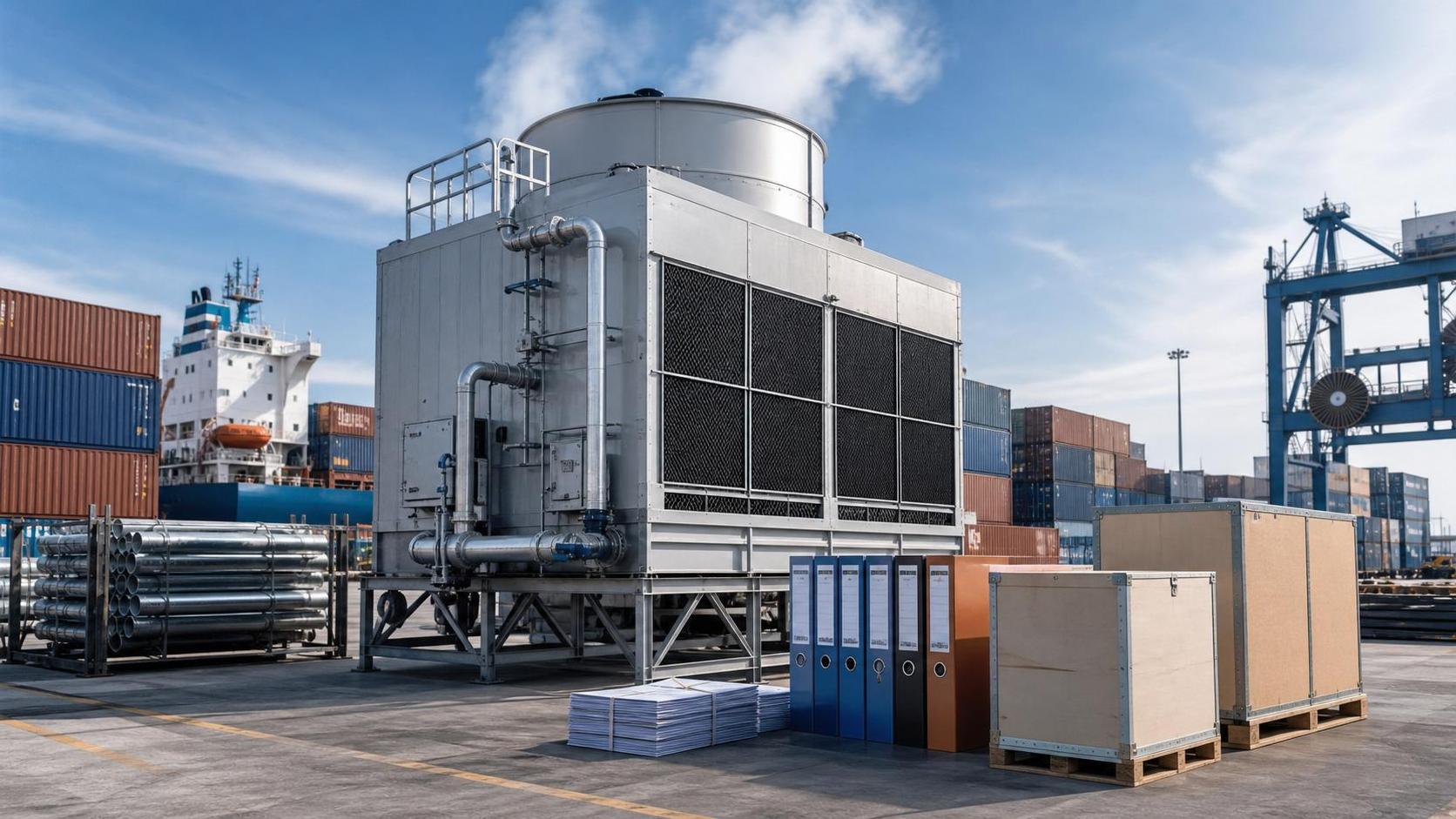
From July 10, 2026, a new round of strike action launched by Maritime Union Germany has extended customs clearance for core cooling tower components at the Port of Hamburg to 12 working days. For the market, this is not only a port operations update: it directly affects Q3 delivery timing for European distributors and raises immediate concerns for buyers and operators that rely on urgent spare parts, particularly in the food processing and pharmaceutical sectors.
What Has Been Confirmed So Far
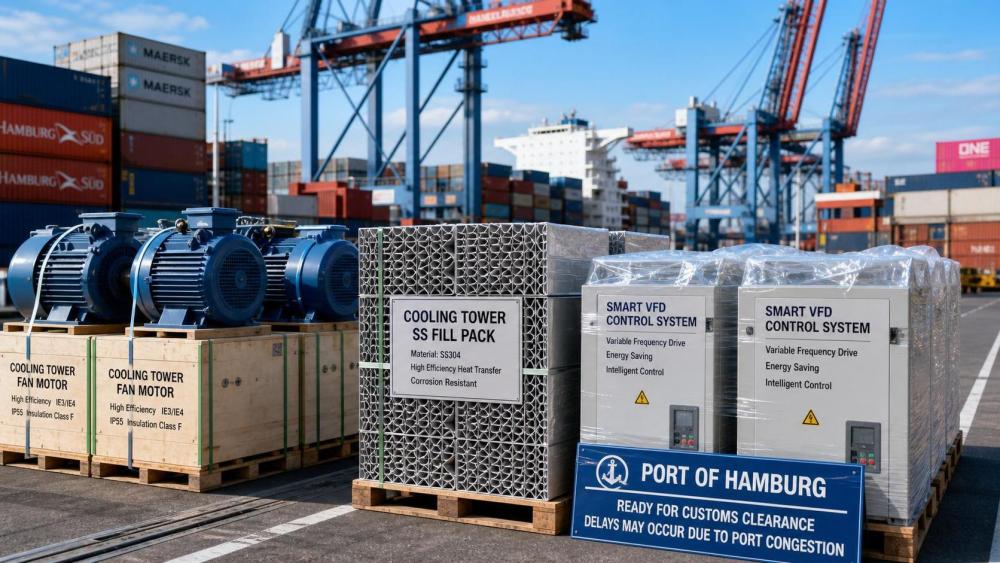
The confirmed information is limited but commercially important. Starting on July 10, 2026, Maritime Union Germany began a new strike action affecting the Port of Hamburg. As a result, customs clearance processing for key cooling tower parts has been extended to 12 working days.
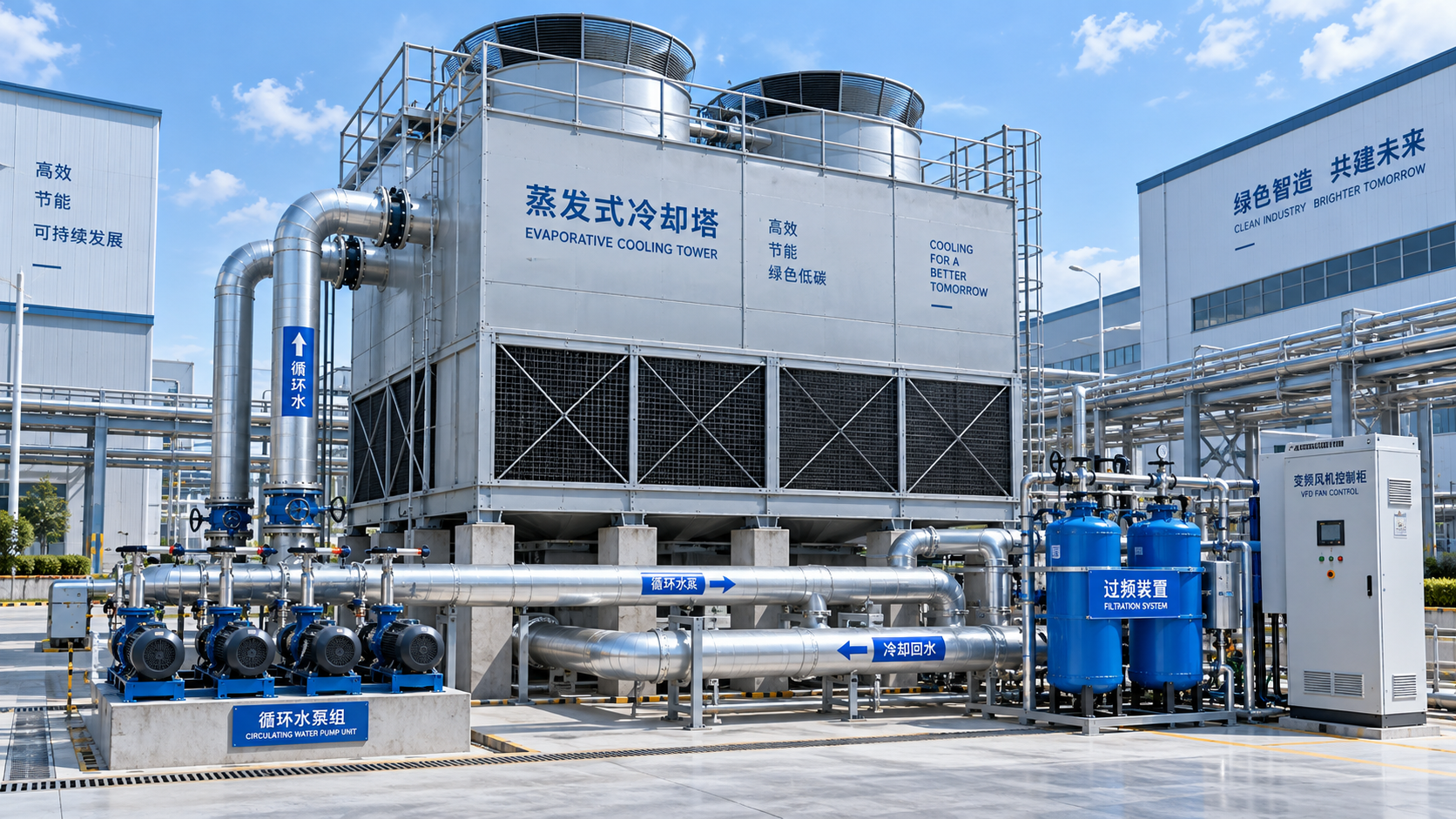
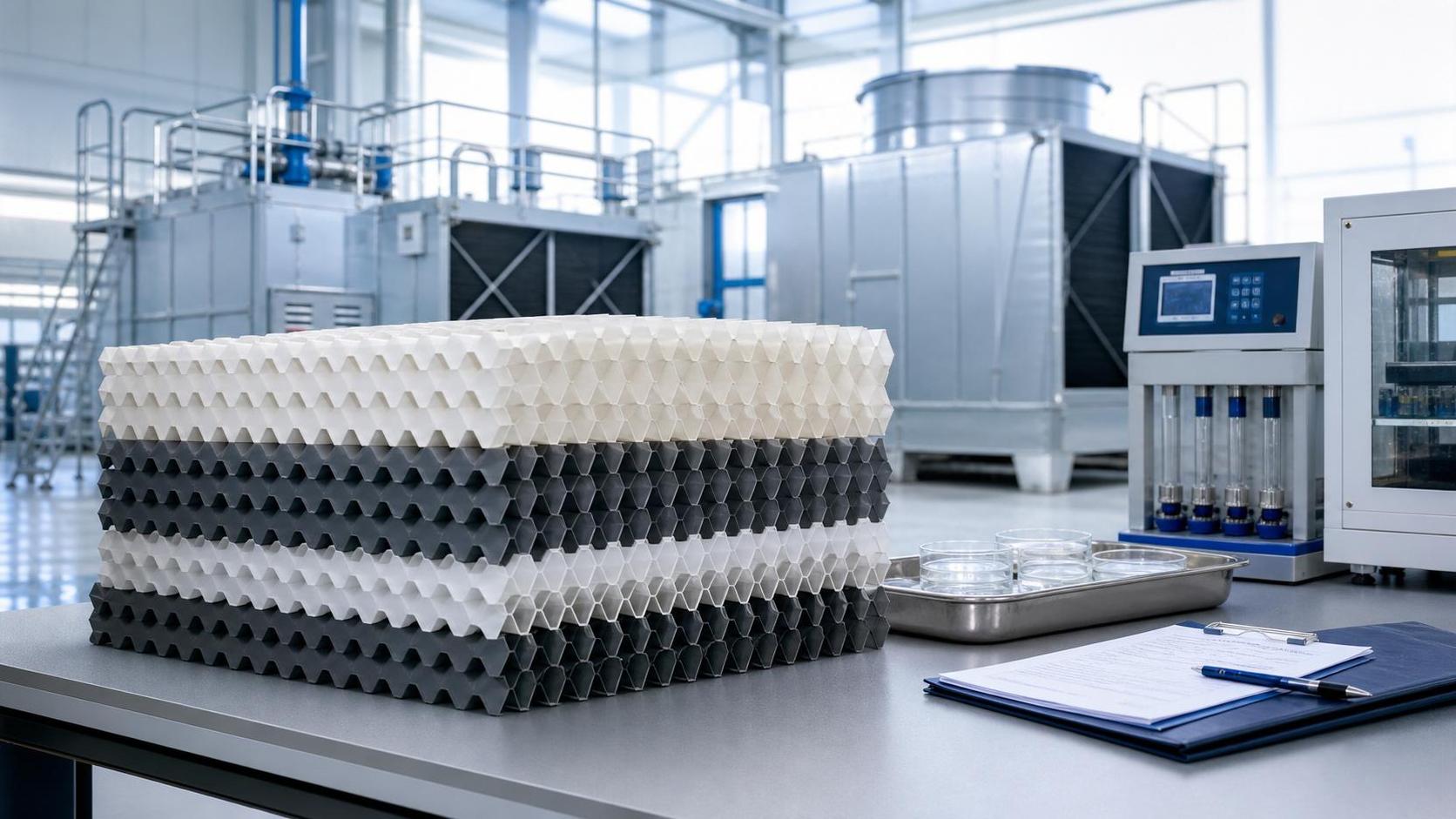
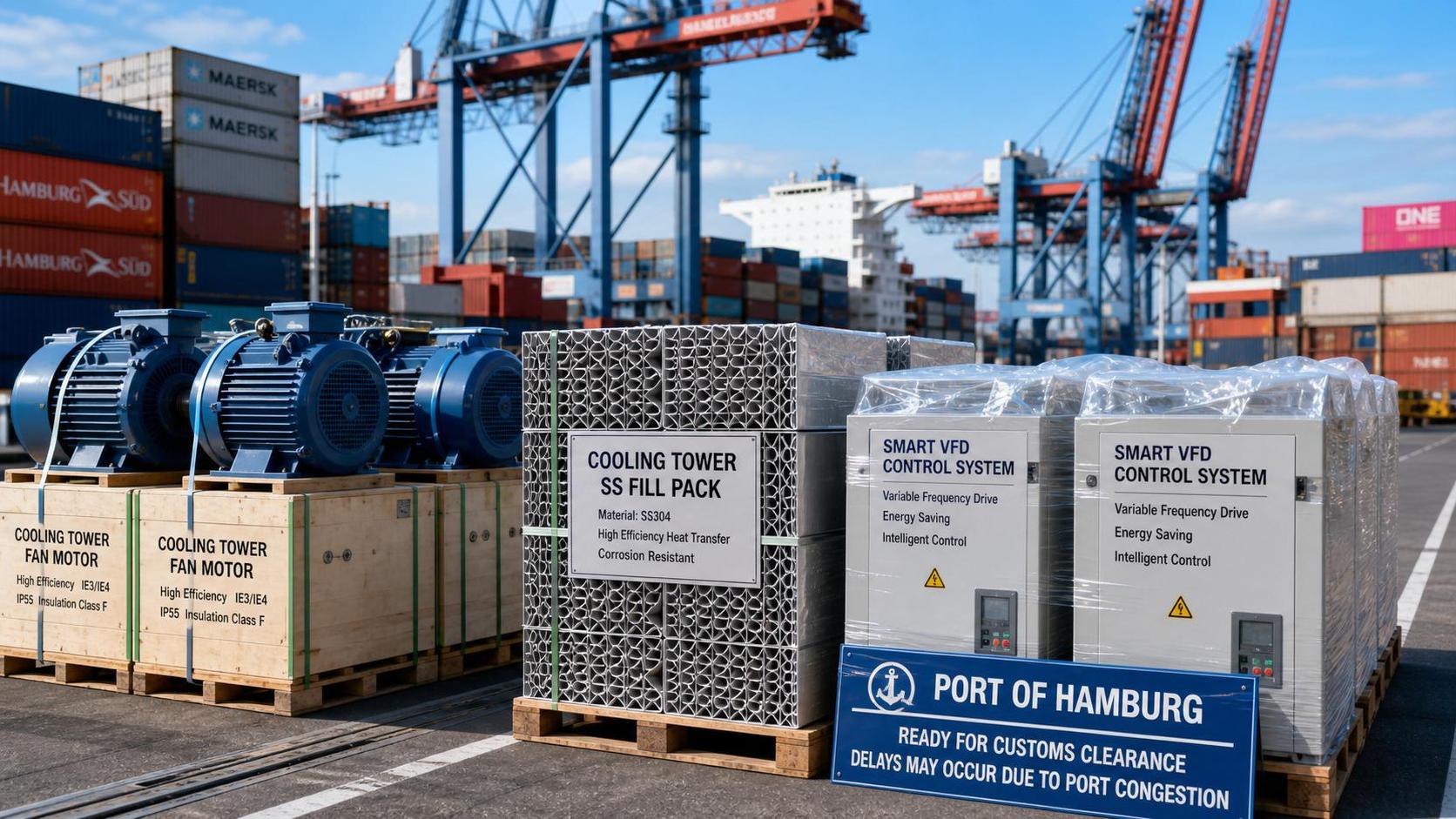
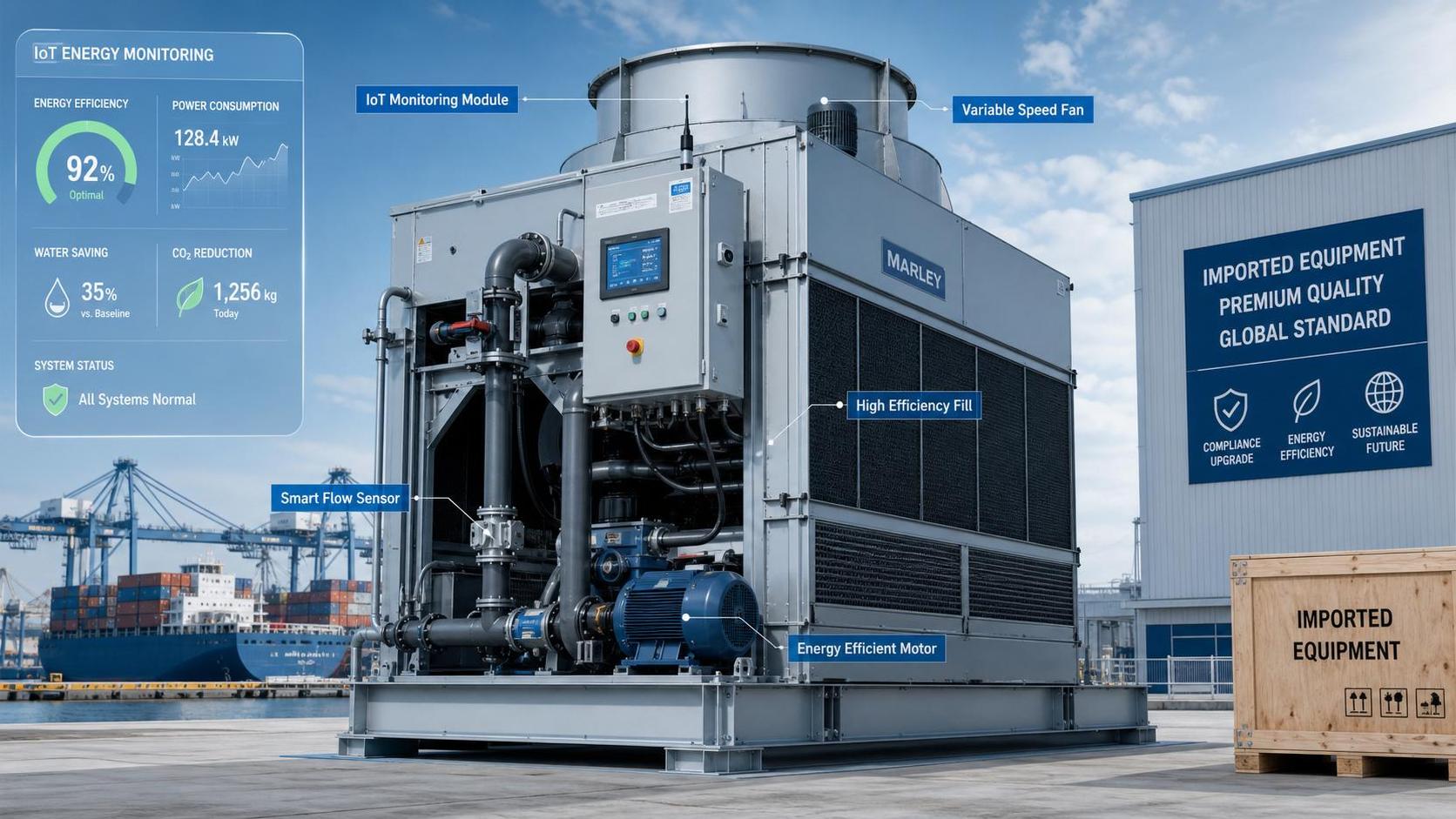
The components specifically referenced are fan motors, stainless steel fill media, and intelligent variable-frequency controllers. The disruption has already been described as affecting the Q3 order delivery rhythm of European distributors, with particular pressure on urgent spare-parts demand for cooling towers serving food processing and pharmaceutical customers.
Where the Pressure Is Likely to Be Felt First
Distributors facing Q3 delivery timing risk
From an industry perspective, distributors are one of the first groups likely to feel the impact because the confirmed disruption is tied directly to Q3 order fulfillment rhythm. The main pressure point is delivery scheduling: even where demand remains unchanged, longer customs processing can affect promised shipment windows, stock allocation, and customer order sequencing.
What deserves closer attention is whether the delay remains concentrated in urgent parts movement or starts to affect broader replenishment planning for cooling tower-related inventory.
End users with urgent maintenance demand
Food processing and pharmaceutical customers are specifically identified in the provided information, which suggests a practical operational concern rather than a purely administrative one. Where urgent spare parts are involved, longer customs timelines can matter most at the maintenance and service stage, especially when replacement timing is more critical than routine procurement.
Analysis shows that these users should focus less on headline disruption and more on whether specific required parts, such as motors, fill media, or control components, can still be secured within operationally acceptable lead times.
Supply chain and service teams under response pressure
Service providers, logistics coordinators, and procurement teams may also face secondary impact because customs delay changes the reliability of planned handover dates. Even without adding unverified assumptions about transport conditions, the confirmed 12-working-day clearance extension is enough to create a need for tighter coordination around documentation, delivery promises, and parts prioritization.
Observably, the business risk here is less about a single delayed shipment and more about how repeated delays can complicate customer communication and service response planning.
Practical Issues Companies Should Track Now
Monitor whether official wording or handling conditions change
Companies with exposure to cooling tower parts moving through Hamburg should closely watch for any updated official statements, operational notices, or handling changes linked to the strike. The current confirmed point is the 12-working-day customs delay; whether that remains stable or is adjusted is a separate matter that still requires verification.
Prioritize the affected component categories
The most relevant categories in this case are already clear: fan motors, stainless steel fill media, and intelligent variable-frequency controllers. For businesses managing orders or service support, the practical priority is to identify whether these items are tied to active Q3 commitments, urgent spare-parts requests, or time-sensitive maintenance schedules.
Separate port disruption facts from customer delivery assumptions
One operational mistake in situations like this is to treat a customs delay as identical to a final delivery outcome. Analysis shows those are related but not identical. Businesses should distinguish between what is confirmed at the port level and what can actually be promised at the order, installation, or maintenance level before communicating revised timelines to customers.
Review documentation and communication discipline
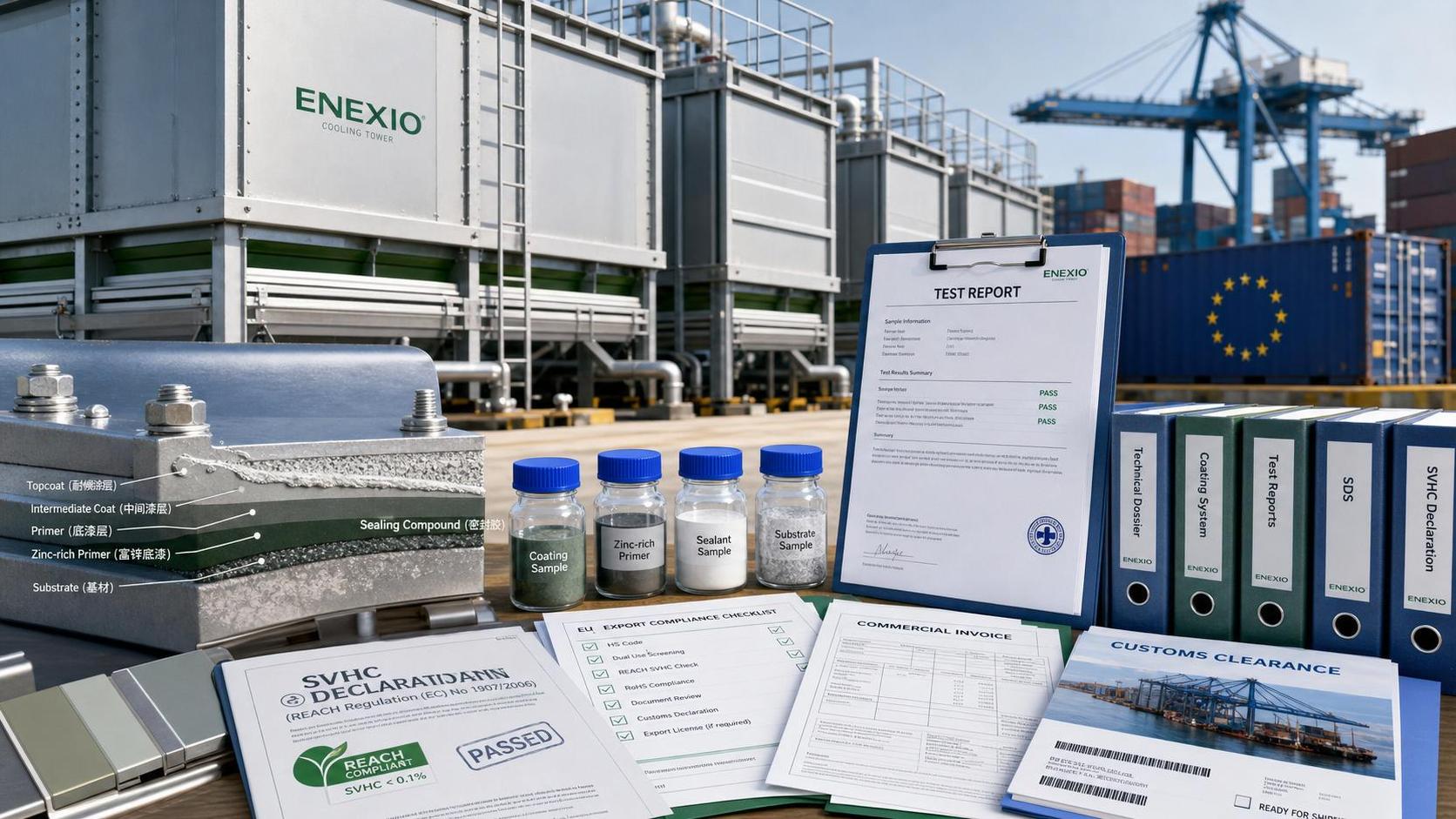
Given that the disruption is explicitly connected to customs processing time, documentation readiness and communication discipline become more important. Procurement teams, distributors, and service coordinators should review shipment paperwork status, contractual delivery commitments, and customer-facing update routines so that avoidable delay is not added on top of the confirmed port-side slowdown.
Why This Matters Beyond a Single Port Update
Analysis shows that this development is best understood, for now, as a targeted supply-chain disruption with immediate commercial implications rather than a fully formed long-term market shift. The reason it deserves continued attention is that the affected goods are not generic cargo in this context; they are specific cooling tower components tied to replacement demand and Q3 delivery execution.
It is more appropriate to understand this as an industry signal that timing risk can quickly become a service and maintenance issue when port disruption intersects with specialized equipment supply. At the same time, the currently available information is still too narrow to support broader conclusions beyond the confirmed customs delay and the identified impact areas.
How the Market May Need to Read This Event
The current significance of this update lies in its concentration: one strike action, one major port, a defined customs delay, and a clear connection to cooling tower component movement. For distributors, procurement teams, and end users in food processing and pharmaceuticals, the issue is not abstract market sentiment but near-term execution risk around parts availability and delivery timing.
A neutral reading at this stage is that the event should be treated as a short-term operational disruption with the potential to become a wider planning issue if delays persist or broaden. That means the market should continue to monitor it closely, but without overstating conclusions that are not yet supported by the confirmed facts.
Basis of This Article and Ongoing Verification
This article is based on the user-provided news title, event date, and event summary. The confirmed input consists of the July 10, 2026 timing, the new strike action by Maritime Union Germany, the extension of customs clearance at the Port of Hamburg to 12 working days for key cooling tower components, and the stated impact on European distributors' Q3 delivery rhythm and urgent spare-parts demand in food processing and pharmaceuticals.
For this type of industry update, commonly relevant source categories may include official port notices, company statements, industry association information, and reporting by authoritative media or trade publications. However, no specific official source link was provided in the input, so the underlying details still require continued verification. The main follow-up points to watch are whether the clearance delay changes, whether official handling guidance is updated, and whether the disruption remains concentrated in urgent cooling tower spare parts demand.
Ready when you are. Send us a message to get started.
Related News
- Kentucky Regulators Approve $191 Million Cooling Tower at Mitchell Coal PlantAuthor :Thermodynamics Analyst

- Cooling Tower Market Trends Reshaping Replacement Plans and Capital BudgetsAuthor :Thermodynamics Analyst

- Field-Erected Cooling Tower Market: Why Utility Projects Favor Custom DesignsAuthor :Thermodynamics Analyst

- Evaporative Cooling Tower Market Outlook: Demand Drivers, Risks, and Growth AreasAuthor :Thermodynamics Analyst

- When does an industrial cooling radiator outperform a cooling tower?Author :Thermodynamics Analyst

- EU Cooling Tower Standard EN 13771:2026 Takes EffectAuthor :Thermodynamics Analyst

- EU REACH SVHC Update Triggers Cooling Tower DisclosureAuthor :Thermodynamics Analyst

- SASO Adds Bio-Durability Test for Cooling Tower FillAuthor :Thermodynamics Analyst

- EU REACH Update Bars Phthalates in Cooling Tower PVC FillAuthor :Thermodynamics Analyst

- EU Tightens CE Rules for Cooling Tower Steel PartsAuthor :Thermodynamics Analyst

- Shanghai-Rotterdam Cooling Tower Space TightensAuthor :Thermodynamics Analyst

- Hamburg Port Strike Delays Cooling Tower Parts ClearanceAuthor :Thermodynamics Analyst

- ASHRAE 188-2026 Makes Cooling Tower Microbial Control MandatoryAuthor :Thermodynamics Analyst

- India Enforces BIS IS 17842:2026 for Cooling TowersAuthor :Thermodynamics Analyst

- EU REACH Restricts Zinc Inhibitors in Cooling TowersAuthor :Thermodynamics Analyst

- TUV Rheinland Switches Cooling Tower Labels to IEC 61800-9-2Author :Thermodynamics Analyst

- EU REACH Rule Takes Effect for Cooling Tower CoatingsAuthor :Thermodynamics Analyst

- Vietnam to Require IoT Modules in Imported Cooling TowersAuthor :Thermodynamics Analyst

- How to Compare Industrial Cooling Equipment Dry Coolers for Year-Round EfficiencyAuthor :Thermodynamics Analyst

- SASO Tightens Cooling Tower Import Rules for 2027Author :Thermodynamics Analyst

- REACH SVHC Update Limits Copper Corrosion InhibitorsAuthor :Thermodynamics Analyst

- SASO Starts Cooling Tower Data Rule for CoCAuthor :Thermodynamics Analyst

- Saudi SASO Portal Adds Corrosion Data RuleAuthor :Thermodynamics Analyst

- SASO Adds Corrosion Report Rule for Cooling TowersAuthor :Thermodynamics Analyst

- RDHx Prices Rise as AI Demand Lifts Premium ModelsAuthor :Thermodynamics Analyst

- EU EN 13859-2:2026 Mandates Extreme Humidity Heat-Loss TestsAuthor :Thermodynamics Analyst

- VDE Tightens Cooling Tower Test ScopeAuthor :Thermodynamics Analyst

- SASO Tightens Cooling Tower Test Proof for SaberAuthor :Thermodynamics Analyst

- Saudi SABER Cooling Tower Rule Takes Effect EarlyAuthor :Thermodynamics Analyst

- EU Carbon Labels to Cover Cooling Tower ExportsAuthor :Thermodynamics Analyst

- Saudi SABER Cooling Tower Rule Takes Effect EarlyAuthor :Thermodynamics Analyst

- EU Carbon Label Rule Hits Cooling Tower ExportsAuthor :Thermodynamics Analyst

- Saudi SABER Cooling Tower Rule Adds EN 13859-2 TestAuthor :Thermodynamics Analyst

- Saudi SABER Tightens Cooling Tower Energy Report RulesAuthor :Thermodynamics Analyst

- Saudi SASO Tightens Cooling Tower Efficiency FilingAuthor :Thermodynamics Analyst

- Saudi SABER Tightens Cooling Tower Energy Report ChecksAuthor :Thermodynamics Analyst