India Enforces BIS IS 17842:2026 for Cooling Towers




India’s cooling tower import rules tightened on July 15, 2026, when BIS enforcement of IS 17842:2026 took effect for imported industrial cooling towers. The change matters for exporters, importers, manufacturers, certification teams, and customs-facing supply chain functions because market access now depends on meeting both energy efficiency and safety certification requirements, with non-compliant products subject to customs rejection.
What the BIS update confirms
According to the provided information, the Bureau of Indian Standards (BIS) issued a notice on July 7, 2026 revising the scope of mandatory certification for cooling towers. Under the new standard IS 17842:2026, enforcement began on July 15, 2026.
The confirmed requirement is that all imported industrial cooling towers must obtain BIS certification covering both energy efficiency and safety. Products without certification will be refused by customs.
The same standard also introduces two specific technical thresholds: a water consumption limit of no more than 0.8% evaporation loss rate, and a noise classification requirement of no more than 85 dB(A). The provided information further states that these changes directly affect type testing, nameplate marking, and technical document preparation for Chinese cooling tower exporters.
Where the immediate pressure is likely to appear
Export-facing manufacturers will feel it first
From an industry perspective, manufacturers supplying the Indian market are likely to be affected most directly because certification is now tied to import clearance. The main pressure points are likely to appear in product testing, technical parameter confirmation, and the alignment of product labels and supporting documents with the new standard requirements.
Trading companies face higher document and delivery risk
Direct trade companies may be affected because customs rejection is tied to certification status. In practice, the business impact is likely to concentrate in shipment planning, contract execution, and document readiness. What deserves closer attention is whether a product intended for India can be supported by complete certification-related files before dispatch.
Import and customs coordination becomes more sensitive
Supply chain service providers, import coordinators, and customs-facing teams may also face tighter execution requirements. Analysis shows that once compliance becomes a condition for entry, any mismatch between certification status, product identification, and shipment paperwork can become a practical delivery issue rather than only a technical issue.
Buyers will need clearer compliance confirmation
For procurement teams and end users purchasing imported industrial cooling towers for the Indian market, the update raises the importance of confirming whether a supplier is prepared for the BIS energy efficiency and safety framework. The immediate concern is less about general product selection and more about whether the ordered equipment can be accepted at the border and supported with compliant markings and technical files.
What companies should check now
Separate confirmed rules from internal assumptions
The confirmed facts are the effective date, the mandatory BIS certification requirement, the customs consequence for uncertified imports, and the newly introduced water and noise thresholds. Companies should avoid treating unverified interpretations as settled requirements and keep their internal compliance review anchored to the officially described scope in the provided information.
Review testing and technical file readiness
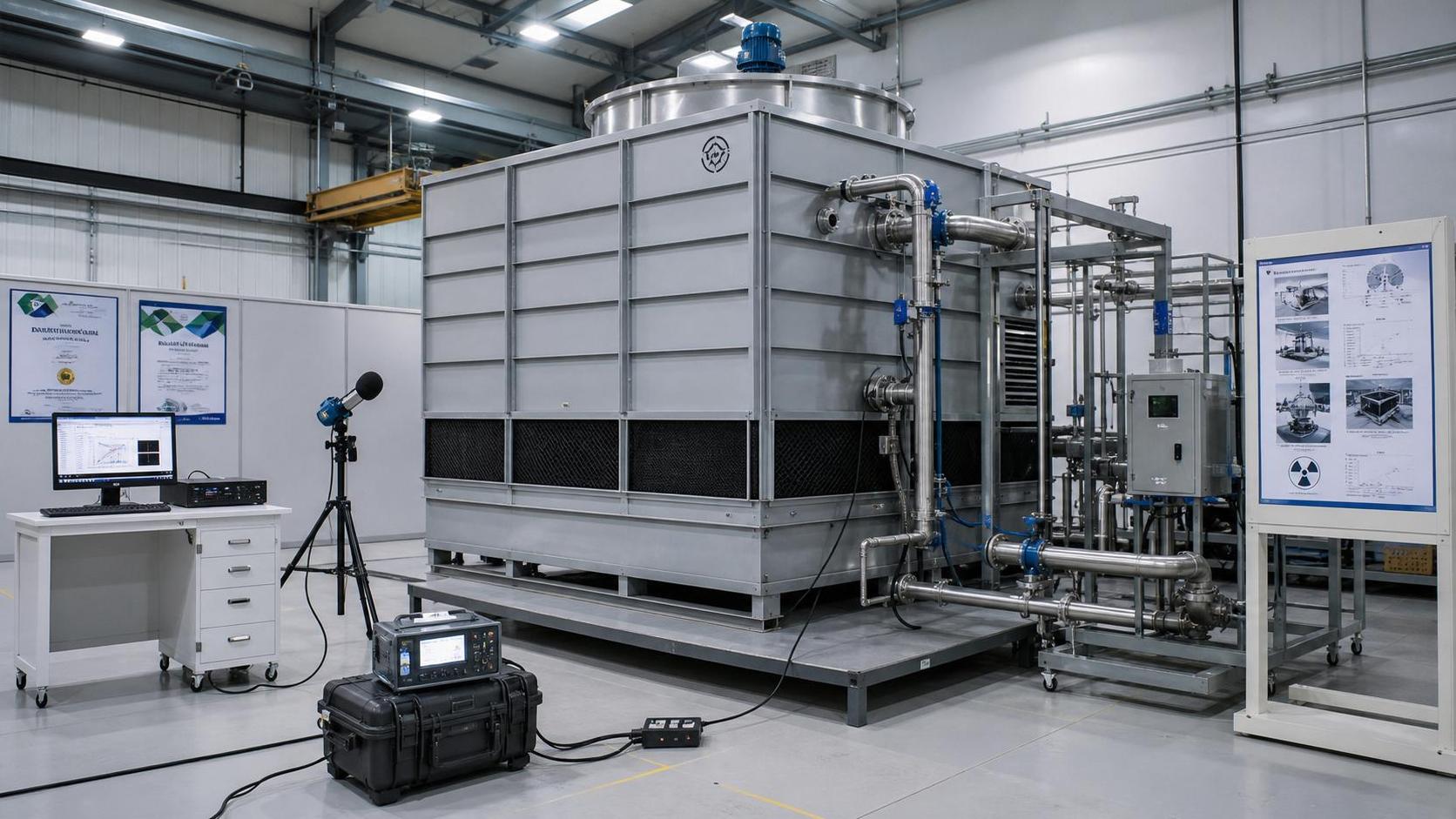
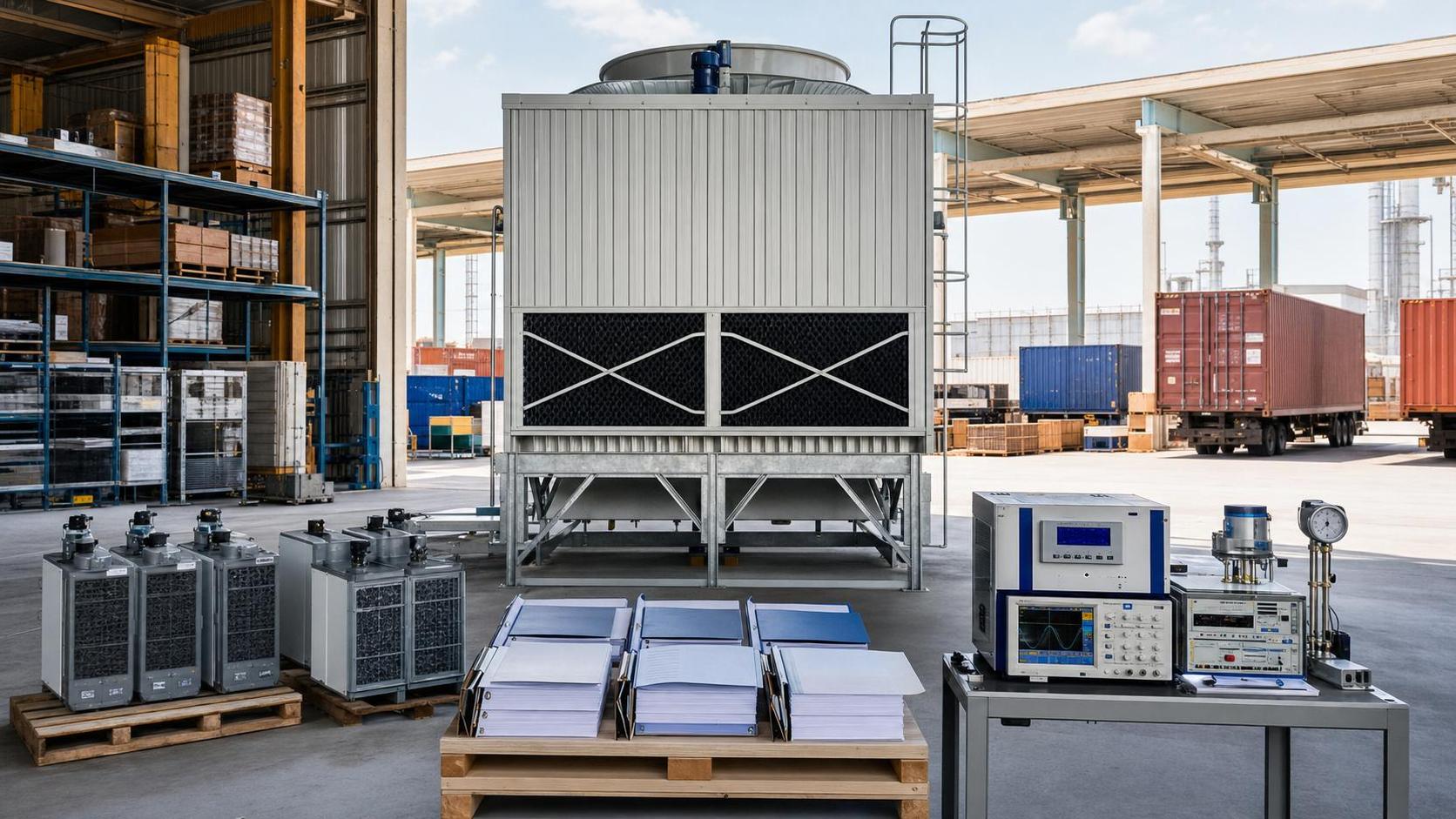
The provided information specifically highlights type testing and technical document preparation. That makes testing readiness a practical priority. Companies involved in exports to India should check whether their existing technical files, performance data, and product specifications are organized in a way that supports BIS-related review under IS 17842:2026.
Check nameplate and product identification details
Nameplate marking is explicitly identified as an affected area. This means businesses should pay attention to whether product identification, technical ratings, and accompanying documentation are consistent with the certification path required for imported industrial cooling towers under the new rule.
Prepare for shipment and customer communication delays
Observably, the rule change creates a practical distinction between regulatory publication and shipment execution. Even when the policy direction is clear, the operational challenge often sits in delivery timing, customs handling, and buyer communication. Companies should therefore pay close attention to order scheduling, document completeness, and customer-facing explanations for any compliance-related lead time changes.
Why this matters beyond a single filing step
Analysis shows that this development should not be read only as a paperwork adjustment. The introduction of explicit limits for water consumption and noise suggests that compliance expectations are being tied more closely to measurable product performance, not only market-entry formality. At the same time, it is more appropriate to understand this as an implemented regulatory change with ongoing practical implications, rather than as a fully settled long-term trend with all downstream effects already visible.
What deserves closer attention is how quickly affected businesses can translate the rule into testing, labeling, and shipment execution. The immediate outcome is already clear for uncertified imports, but the broader commercial effect still depends on how companies adapt their compliance workflows.
How this update is best understood now
At this stage, the BIS move is best understood as a live compliance change with direct short-term consequences for access to the Indian market for imported industrial cooling towers. It also carries a longer-term signal that technical entry requirements may be evaluated more closely through performance-based criteria such as water use and noise. A balanced reading is that the rule is already operational, while its wider supply chain impact still needs continued observation.
Basis of this article
This article is based on the user-provided news title, event date, and event summary concerning BIS enforcement of IS 17842:2026 for imported industrial cooling towers in India. The specific official source link was not provided in the input, so the underlying official notice and any subsequent clarifications still require ongoing verification.
For this type of industry update, relevant source categories typically include official notices, company announcements, industry association information, authoritative media coverage, and standard-setting organization documents. Continued attention should be given to any later official wording, implementation clarifications, and compliance documentation expectations related to certification, labeling, and technical files.
Ready when you are. Send us a message to get started.
Related News
- Kentucky Regulators Approve $191 Million Cooling Tower at Mitchell Coal PlantAuthor :Thermodynamics Analyst

- Cooling Tower Market Trends Reshaping Replacement Plans and Capital BudgetsAuthor :Thermodynamics Analyst

- Field-Erected Cooling Tower Market: Why Utility Projects Favor Custom DesignsAuthor :Thermodynamics Analyst

- Evaporative Cooling Tower Market Outlook: Demand Drivers, Risks, and Growth AreasAuthor :Thermodynamics Analyst

- When does an industrial cooling radiator outperform a cooling tower?Author :Thermodynamics Analyst

- EU Cooling Tower Standard EN 13771:2026 Takes EffectAuthor :Thermodynamics Analyst

- EU REACH SVHC Update Triggers Cooling Tower DisclosureAuthor :Thermodynamics Analyst

- SASO Adds Bio-Durability Test for Cooling Tower FillAuthor :Thermodynamics Analyst

- EU REACH Update Bars Phthalates in Cooling Tower PVC FillAuthor :Thermodynamics Analyst

- EU Tightens CE Rules for Cooling Tower Steel PartsAuthor :Thermodynamics Analyst

- Shanghai-Rotterdam Cooling Tower Space TightensAuthor :Thermodynamics Analyst

- Hamburg Port Strike Delays Cooling Tower Parts ClearanceAuthor :Thermodynamics Analyst

- ASHRAE 188-2026 Makes Cooling Tower Microbial Control MandatoryAuthor :Thermodynamics Analyst

- India Enforces BIS IS 17842:2026 for Cooling TowersAuthor :Thermodynamics Analyst

- EU REACH Restricts Zinc Inhibitors in Cooling TowersAuthor :Thermodynamics Analyst

- TUV Rheinland Switches Cooling Tower Labels to IEC 61800-9-2Author :Thermodynamics Analyst

- EU REACH Rule Takes Effect for Cooling Tower CoatingsAuthor :Thermodynamics Analyst

- Vietnam to Require IoT Modules in Imported Cooling TowersAuthor :Thermodynamics Analyst

- How to Compare Industrial Cooling Equipment Dry Coolers for Year-Round EfficiencyAuthor :Thermodynamics Analyst

- SASO Tightens Cooling Tower Import Rules for 2027Author :Thermodynamics Analyst

- REACH SVHC Update Limits Copper Corrosion InhibitorsAuthor :Thermodynamics Analyst

- SASO Starts Cooling Tower Data Rule for CoCAuthor :Thermodynamics Analyst

- Saudi SASO Portal Adds Corrosion Data RuleAuthor :Thermodynamics Analyst

- SASO Adds Corrosion Report Rule for Cooling TowersAuthor :Thermodynamics Analyst

- RDHx Prices Rise as AI Demand Lifts Premium ModelsAuthor :Thermodynamics Analyst

- EU EN 13859-2:2026 Mandates Extreme Humidity Heat-Loss TestsAuthor :Thermodynamics Analyst

- VDE Tightens Cooling Tower Test ScopeAuthor :Thermodynamics Analyst

- SASO Tightens Cooling Tower Test Proof for SaberAuthor :Thermodynamics Analyst

- Saudi SABER Cooling Tower Rule Takes Effect EarlyAuthor :Thermodynamics Analyst

- EU Carbon Labels to Cover Cooling Tower ExportsAuthor :Thermodynamics Analyst

- Saudi SABER Cooling Tower Rule Takes Effect EarlyAuthor :Thermodynamics Analyst

- EU Carbon Label Rule Hits Cooling Tower ExportsAuthor :Thermodynamics Analyst

- Saudi SABER Cooling Tower Rule Adds EN 13859-2 TestAuthor :Thermodynamics Analyst

- Saudi SABER Tightens Cooling Tower Energy Report RulesAuthor :Thermodynamics Analyst

- Saudi SASO Tightens Cooling Tower Efficiency FilingAuthor :Thermodynamics Analyst

- Saudi SABER Tightens Cooling Tower Energy Report ChecksAuthor :Thermodynamics Analyst