EU REACH Update Bars Phthalates in Cooling Tower PVC Fill




On July 13, 2026, the European Commission brought into force Regulation (EU) 2026/1208 under REACH Annex XVII, adding DEHP and three other plasticizers to the restricted substances list for PVC fill used in cooling towers. From that date, affected products may no longer be placed on the EU market. For the industry, the significance is not limited to a material substitution issue: the restriction also reaches imported cooling tower components and places practical compliance pressure on fill suppliers, OEMs, and downstream distributors that share responsibility across sourcing, product documentation, and market placement.
What the rule change confirms
The confirmed facts are limited but commercially important. Regulation (EU) 2026/1208 took effect on July 13, 2026. Under this change to REACH Annex XVII, DEHP and three other plasticizers were added to the list of substances banned for cooling tower PVC fill. The restriction applies immediately to products placed on the EU market. It also applies to imported cooling tower components, which means the compliance scope is not confined to locally produced items. The event summary further indicates that compliance responsibility is relevant across the supply chain, including fill suppliers, complete-unit OEMs, and end distributors.
Where the pressure is likely to appear first
Material sourcing and component supply
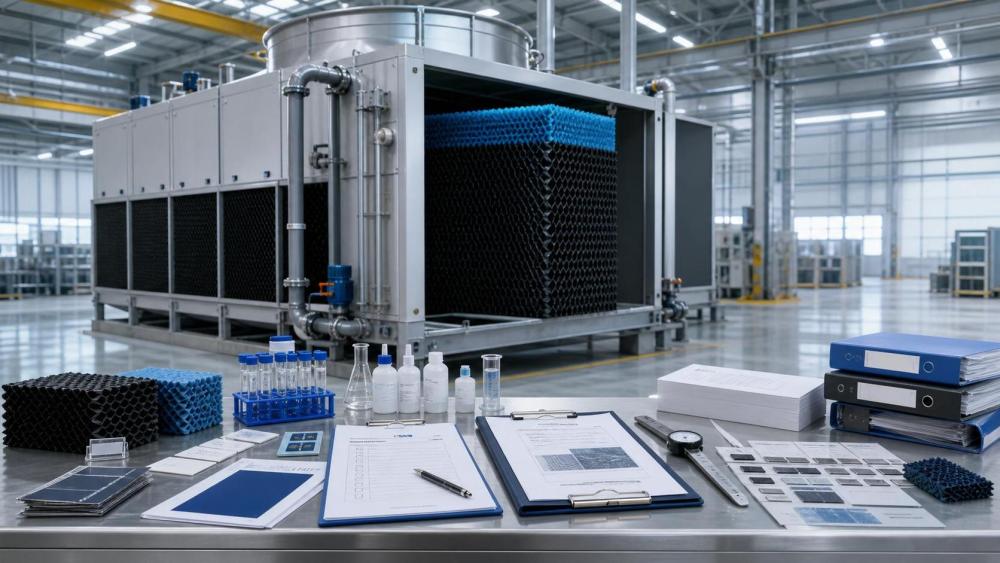
From an industry perspective, suppliers of PVC fill are the first group likely to feel the direct effect of the restriction because the regulated material sits at the component level. The immediate business impact is likely to center on formulation review, procurement screening, and the ability to support downstream customers with compliant material declarations and technical documentation. What deserves closer attention is whether existing supply arrangements, stocked materials, and pending orders are aligned with the new market access condition from the effective date.
OEM product assembly and export readiness
For cooling tower OEMs, the issue is broader than a single purchased input. Because the restriction applies to imported components as well, OEMs shipping complete systems or subassemblies into the EU market may need to review whether the PVC fill inside those products creates a compliance exposure for the entire delivery. Analysis shows that this can affect specification alignment, supplier qualification, internal compliance checks, and the completeness of files used to support market placement.
Distribution and market placement responsibilities
Distributors and other downstream market participants are also exposed because the event summary explicitly points to shared compliance responsibility. In practice, their concern is likely to focus on whether the products they place on the EU market are supported by adequate upstream declarations and traceable product information. Observably, this is less about redesign and more about document control, supplier confirmation, and the ability to identify which product configurations may fall within the restriction.
What companies should review now
Check compliance files against the restricted use
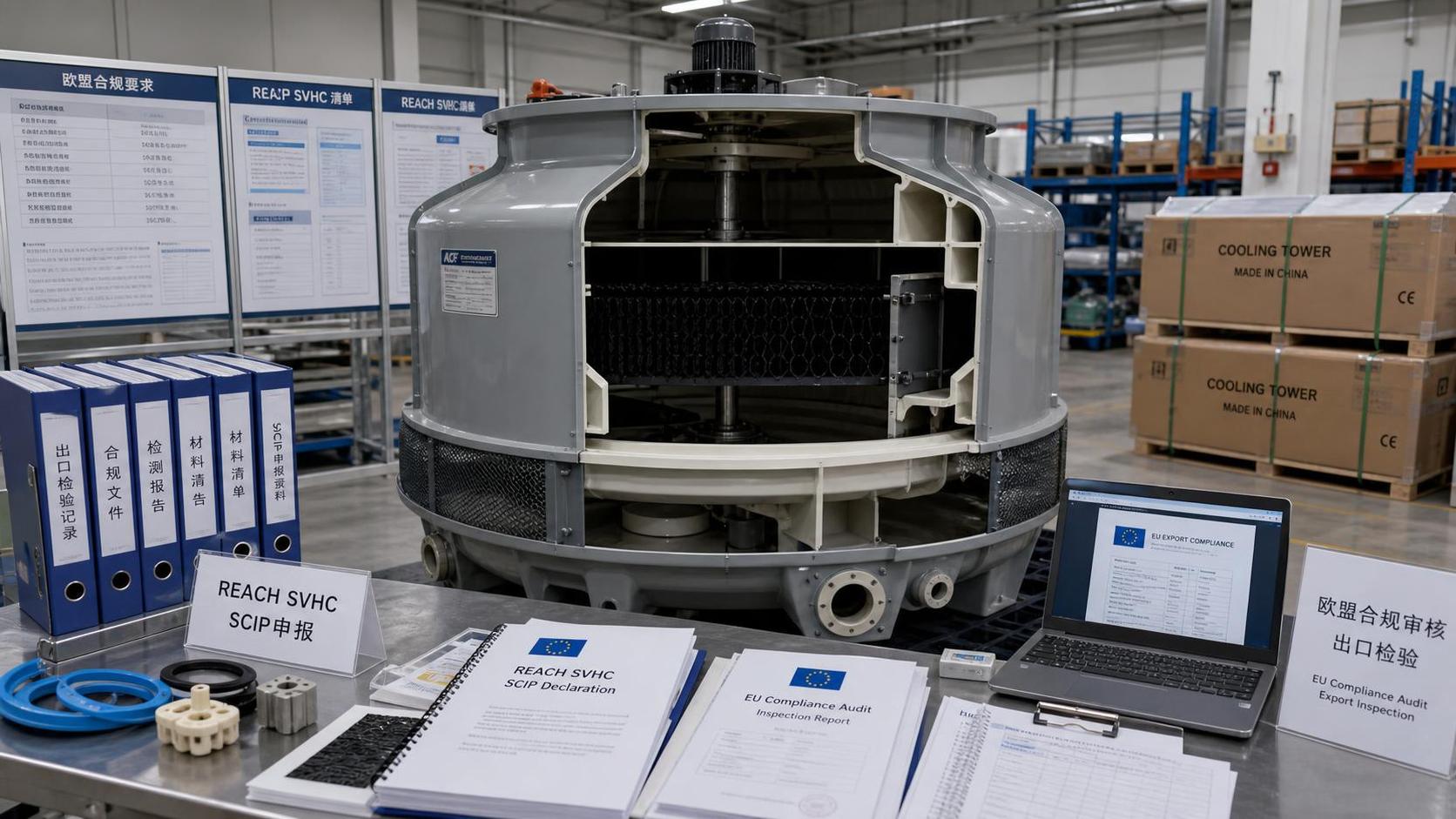
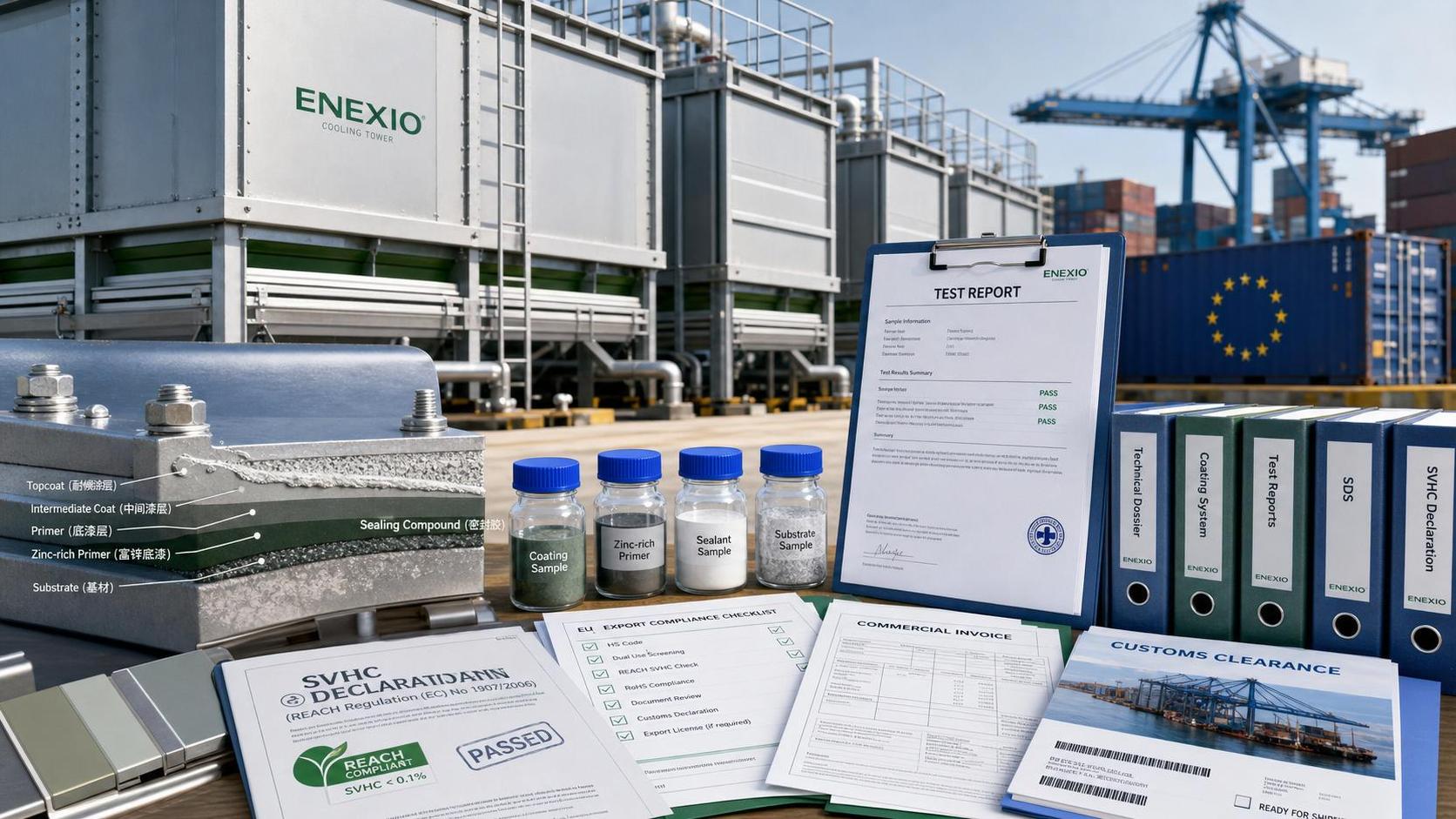
Analysis shows that companies involved in EU-bound cooling tower business should first verify whether their existing compliance files clearly address PVC fill content in relation to the newly restricted plasticizers. Where documentation is incomplete, the immediate priority is not to assume compliance but to identify the gap and determine which internal or supplier records need updating.
Reassess purchasing and supplier confirmation
What deserves closer attention is the purchasing side of the chain. Buyers and sourcing teams may need to revisit supplier confirmations, material declarations, and technical specifications tied to cooling tower fill and related components. Because the summary does not provide detailed enforcement mechanics, it is more appropriate to treat this as a prompt to tighten supplier validation rather than as proof that a uniform market practice has already formed.
Review delivery, bid, and contract documentation
For exporters, OEMs, and distributors, another practical point is whether bid documents, product specifications, delivery files, or customer-facing technical records still describe products in a way that could create compliance ambiguity. Observably, even where the product design is being updated, misalignment in paperwork can still affect acceptance, shipment readiness, or downstream resale confidence.
Monitor how the rule is reflected in execution
The input does not provide detailed official wording on implementation practice beyond the restriction itself. For that reason, companies should keep watching how the rule is reflected in compliance review language, technical documentation expectations, procurement requirements, and market-side interpretation. This remains a monitoring priority rather than a settled operational conclusion.
How this development is best understood at this stage
Analysis shows that this is best understood as an already effective market access change rather than a distant policy signal. The effective date and immediate restriction on placing affected products on the EU market make it relevant for current transactions and product files. At the same time, observably, the operational meaning for documentation standards, customer requests, and supply-chain evidence may still develop through implementation practice. That is why the event deserves attention both as a rule that has landed and as a trigger for continued compliance observation.
Why the market will keep watching this change
From an industry perspective, the importance of this update lies in the way a material restriction can move beyond the component itself and reshape responsibility across sourcing, assembly, and distribution. The present information supports a cautious conclusion: this is not merely a technical materials note, but a compliance requirement with direct relevance to EU market placement for cooling tower-related products. It is more appropriate to understand the development as a live compliance threshold that companies should respond to now while still watching for further clarification in market practice.
Basis of this article and points that still require verification
This article is based on the user-provided news title, event date, and event summary. For events of this type, source verification would typically involve official regulatory notices, publications from supervisory or regulatory authorities, customs or trade administration information, industry association updates, standards-related documents, and reporting by established professional media. No specific official source link was provided in the input, so the exact official link remains to be verified on an ongoing basis. Further observation is still needed regarding detailed implementation language, compliance interpretation, procurement document changes, tender specification updates, industry feedback, and how companies execute the requirement in practice.
Ready when you are. Send us a message to get started.
Related News
- Kentucky Regulators Approve $191 Million Cooling Tower at Mitchell Coal PlantAuthor :Thermodynamics Analyst

- Cooling Tower Market Trends Reshaping Replacement Plans and Capital BudgetsAuthor :Thermodynamics Analyst

- Field-Erected Cooling Tower Market: Why Utility Projects Favor Custom DesignsAuthor :Thermodynamics Analyst

- Evaporative Cooling Tower Market Outlook: Demand Drivers, Risks, and Growth AreasAuthor :Thermodynamics Analyst

- When does an industrial cooling radiator outperform a cooling tower?Author :Thermodynamics Analyst

- EU Cooling Tower Standard EN 13771:2026 Takes EffectAuthor :Thermodynamics Analyst

- EU REACH SVHC Update Triggers Cooling Tower DisclosureAuthor :Thermodynamics Analyst

- SASO Adds Bio-Durability Test for Cooling Tower FillAuthor :Thermodynamics Analyst

- EU REACH Update Bars Phthalates in Cooling Tower PVC FillAuthor :Thermodynamics Analyst

- EU Tightens CE Rules for Cooling Tower Steel PartsAuthor :Thermodynamics Analyst

- Shanghai-Rotterdam Cooling Tower Space TightensAuthor :Thermodynamics Analyst

- Hamburg Port Strike Delays Cooling Tower Parts ClearanceAuthor :Thermodynamics Analyst

- ASHRAE 188-2026 Makes Cooling Tower Microbial Control MandatoryAuthor :Thermodynamics Analyst

- India Enforces BIS IS 17842:2026 for Cooling TowersAuthor :Thermodynamics Analyst

- EU REACH Restricts Zinc Inhibitors in Cooling TowersAuthor :Thermodynamics Analyst

- TUV Rheinland Switches Cooling Tower Labels to IEC 61800-9-2Author :Thermodynamics Analyst

- EU REACH Rule Takes Effect for Cooling Tower CoatingsAuthor :Thermodynamics Analyst

- Vietnam to Require IoT Modules in Imported Cooling TowersAuthor :Thermodynamics Analyst

- How to Compare Industrial Cooling Equipment Dry Coolers for Year-Round EfficiencyAuthor :Thermodynamics Analyst

- SASO Tightens Cooling Tower Import Rules for 2027Author :Thermodynamics Analyst

- REACH SVHC Update Limits Copper Corrosion InhibitorsAuthor :Thermodynamics Analyst

- SASO Starts Cooling Tower Data Rule for CoCAuthor :Thermodynamics Analyst

- Saudi SASO Portal Adds Corrosion Data RuleAuthor :Thermodynamics Analyst

- SASO Adds Corrosion Report Rule for Cooling TowersAuthor :Thermodynamics Analyst

- RDHx Prices Rise as AI Demand Lifts Premium ModelsAuthor :Thermodynamics Analyst

- EU EN 13859-2:2026 Mandates Extreme Humidity Heat-Loss TestsAuthor :Thermodynamics Analyst

- VDE Tightens Cooling Tower Test ScopeAuthor :Thermodynamics Analyst

- SASO Tightens Cooling Tower Test Proof for SaberAuthor :Thermodynamics Analyst

- Saudi SABER Cooling Tower Rule Takes Effect EarlyAuthor :Thermodynamics Analyst

- EU Carbon Labels to Cover Cooling Tower ExportsAuthor :Thermodynamics Analyst

- Saudi SABER Cooling Tower Rule Takes Effect EarlyAuthor :Thermodynamics Analyst

- EU Carbon Label Rule Hits Cooling Tower ExportsAuthor :Thermodynamics Analyst

- Saudi SABER Cooling Tower Rule Adds EN 13859-2 TestAuthor :Thermodynamics Analyst

- Saudi SABER Tightens Cooling Tower Energy Report RulesAuthor :Thermodynamics Analyst

- Saudi SASO Tightens Cooling Tower Efficiency FilingAuthor :Thermodynamics Analyst

- Saudi SABER Tightens Cooling Tower Energy Report ChecksAuthor :Thermodynamics Analyst