Industrial Cooling Costs: Where Systems Lose Efficiency First




Industrial Cooling Costs: Where Systems Lose Efficiency First
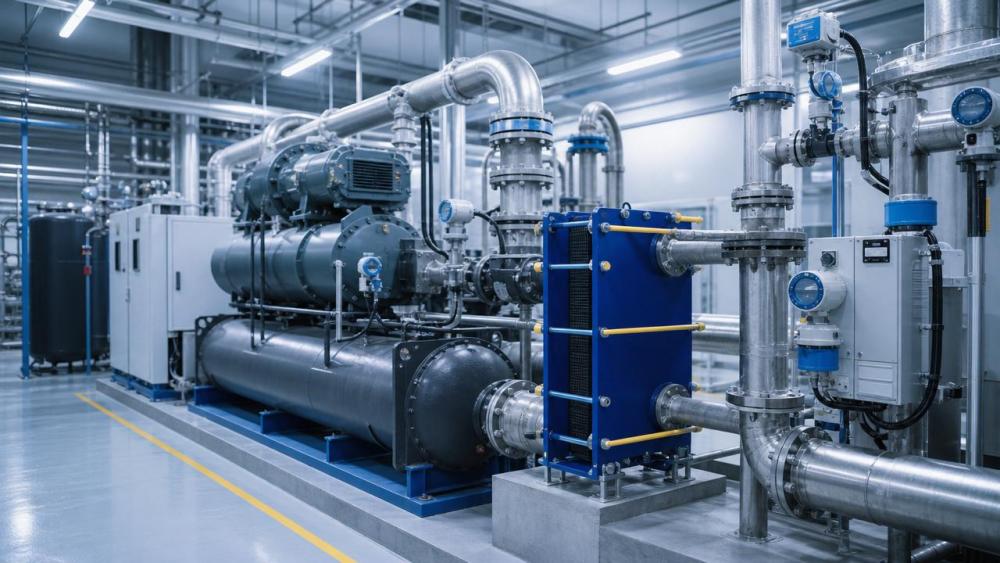
Industrial cooling costs rarely spike overnight.
They usually begin with small losses that look harmless at first.
A compressor runs longer.
A heat exchanger fouls slightly.
A control sequence drifts away from real load.
In procurement terms, that is where margin starts leaking.
Industrial cooling performance is not only a technical matter.
It directly shapes electricity spending, maintenance exposure, uptime risk, and asset payback.
That is why early efficiency loss deserves attention before major failures appear.
From a cost-control view, the first weak points are often the most profitable to fix.
Why Early Efficiency Loss Matters More Than Big Breakdowns
Major equipment failure gets immediate attention because it is visible.
Early-stage industrial cooling losses are harder to notice.
They accumulate quietly through higher energy draw and lower thermal transfer.
That makes them dangerous from a budget perspective.
A system can remain operational while becoming steadily more expensive.
In actual purchasing decisions, this changes the evaluation model.
Lowest upfront price does not protect against rising industrial cooling costs.
The better question is where efficiency usually declines first.
Once those points are visible, procurement becomes more precise and less reactive.
The First Place Industrial Cooling Efficiency Slips: Compressors
Compressors are often the first source of hidden industrial cooling losses.
They carry a large share of total energy demand.
Even small operating inefficiencies have a noticeable cost effect.
The earliest warning sign is often extended run time at partial load.
This can come from oversized design, unstable demand, or weak control logic.
Another common issue is declining compression efficiency.
Wear, leakage, oil contamination, or poor refrigerant conditions can all contribute.
The result is simple.
The compressor consumes more power to deliver the same cooling output.
For cost-sensitive operations, that directly lifts unit production cost.
When comparing industrial cooling options, pay close attention to:
- Part-load efficiency, not just rated efficiency
- Control range under variable production demand
- Compressor service intervals and contamination tolerance
- Energy performance data under site-specific temperatures
Heat Exchangers Lose Value Early, Often Without Obvious Failure
Heat exchangers are another early source of industrial cooling cost inflation.
They rarely fail dramatically in the beginning.
Instead, they lose thermal effectiveness step by step.
Fouling is one of the biggest reasons.
Scale, oil residue, dust, and water quality issues reduce heat transfer surfaces.
That forces the industrial cooling system to work harder.
Pressure drop can also rise as deposits build up.
Then pumps and fans consume extra power as well.
This creates a double penalty.
Cooling output falls while operating expense climbs.
From a procurement angle, exchanger design matters more than many teams expect.
Microchannel and compact designs may improve efficiency.
However, maintainability and cleaning access must also be evaluated.
A highly efficient exchanger that is hard to maintain can raise industrial cooling costs later.
Questions That Prevent Expensive Surprises
- How quickly does performance degrade under local water or air conditions?
- What cleaning method is required, and how often?
- Does the supplier provide field data on fouling resistance?
- What is the cost of downtime during exchanger service?
Controls and Sensors Often Create Invisible Industrial Cooling Waste
More obvious hardware gets attention first.
Yet controls and sensors often create the earliest invisible losses.
A well-built industrial cooling system can still waste energy with poor control tuning.
Typical problems include bad sensor calibration, fixed setpoints, and unnecessary safety margins.
These issues may look minor during inspection.
Financially, they are not minor at all.
A temperature setpoint that is lower than necessary adds continuous energy demand.
Cycling caused by weak sequencing also shortens component life.
This means industrial cooling costs rise twice.
Energy expense increases, and maintenance arrives earlier.
For procurement reviews, software capability should be treated as a cost lever.
A lower-priced system without strong controls can become the more expensive choice.
Maintenance Gaps Turn Small Losses Into Long-Term Cost Pressure
Maintenance is where many industrial cooling strategies succeed or fail.
The first losses are often not caused by bad equipment.
They come from delayed maintenance, weak inspection routines, or missing performance baselines.
Filters clog.
Fans drift from design speed.
Valves stop responding accurately.
Each issue looks manageable in isolation.
Together, they increase industrial cooling costs month after month.
This is why service structure should be part of any sourcing decision.
In practical business terms, the maintenance model affects total cost of ownership more than brochure efficiency.
Reliable suppliers support performance tracking, spare parts planning, and response speed.
That support reduces hidden industrial cooling risk before it becomes a capital request.
Maintenance Signals Worth Checking Early
- Rising energy use without higher production output
- Longer run hours for the same thermal load
- More frequent alarms that do not trigger shutdowns
- Repeated manual setpoint changes by operators
- Increasing service visits for minor corrective work
How to Evaluate Industrial Cooling Purchases With Cost Discipline
The key procurement mistake is focusing only on purchase price.
Industrial cooling decisions should compare cost behavior over time.
That starts by testing where efficiency is most likely to erode first.
A stronger evaluation framework usually includes five points.
- Review part-load performance under actual operating patterns.
- Examine exchanger fouling tolerance and cleaning practicality.
- Check controls, sensor strategy, and remote monitoring capability.
- Compare maintenance support, spare parts access, and response commitments.
- Model total ownership cost against expected energy prices.
This approach is especially useful in sectors needing stable temperature control.
Pharmaceutical, semiconductor, food, and precision manufacturing operations feel these losses quickly.
In these settings, industrial cooling efficiency is closely tied to product quality and production continuity.
A Smarter Cost View Starts With the First Loss Point
Industrial cooling costs become easier to manage when the first loss points are clear.
Compressors, heat exchangers, controls, and maintenance routines usually show problems before full failure.
That is the practical window where better decisions create the best return.
For organizations comparing industrial cooling options, the goal is not just buying capacity.
The goal is buying stable efficiency.
That means asking where systems weaken first, how fast costs rise, and which supplier can support long-term performance.
This is also where insight platforms such as GTC-Matrix add value.
Better intelligence connects technical detail with financial discipline.
And in industrial cooling, that connection often determines whether cost stays controlled or quietly compounds.
Start with the earliest efficiency loss, and the entire purchasing decision becomes sharper.
Ready when you are. Send us a message to get started.
Related News
- Kentucky Regulators Approve $191 Million Cooling Tower at Mitchell Coal PlantAuthor :Thermodynamics Analyst

- Cooling Tower Market Trends Reshaping Replacement Plans and Capital BudgetsAuthor :Thermodynamics Analyst

- Field-Erected Cooling Tower Market: Why Utility Projects Favor Custom DesignsAuthor :Thermodynamics Analyst

- Evaporative Cooling Tower Market Outlook: Demand Drivers, Risks, and Growth AreasAuthor :Thermodynamics Analyst

- When does an industrial cooling radiator outperform a cooling tower?Author :Thermodynamics Analyst

- EU Cooling Tower Standard EN 13771:2026 Takes EffectAuthor :Thermodynamics Analyst

- EU REACH SVHC Update Triggers Cooling Tower DisclosureAuthor :Thermodynamics Analyst

- SASO Adds Bio-Durability Test for Cooling Tower FillAuthor :Thermodynamics Analyst

- EU REACH Update Bars Phthalates in Cooling Tower PVC FillAuthor :Thermodynamics Analyst

- EU Tightens CE Rules for Cooling Tower Steel PartsAuthor :Thermodynamics Analyst

- Shanghai-Rotterdam Cooling Tower Space TightensAuthor :Thermodynamics Analyst

- Hamburg Port Strike Delays Cooling Tower Parts ClearanceAuthor :Thermodynamics Analyst

- ASHRAE 188-2026 Makes Cooling Tower Microbial Control MandatoryAuthor :Thermodynamics Analyst

- India Enforces BIS IS 17842:2026 for Cooling TowersAuthor :Thermodynamics Analyst

- EU REACH Restricts Zinc Inhibitors in Cooling TowersAuthor :Thermodynamics Analyst

- TUV Rheinland Switches Cooling Tower Labels to IEC 61800-9-2Author :Thermodynamics Analyst

- EU REACH Rule Takes Effect for Cooling Tower CoatingsAuthor :Thermodynamics Analyst

- Vietnam to Require IoT Modules in Imported Cooling TowersAuthor :Thermodynamics Analyst

- How to Compare Industrial Cooling Equipment Dry Coolers for Year-Round EfficiencyAuthor :Thermodynamics Analyst

- SASO Tightens Cooling Tower Import Rules for 2027Author :Thermodynamics Analyst

- REACH SVHC Update Limits Copper Corrosion InhibitorsAuthor :Thermodynamics Analyst

- SASO Starts Cooling Tower Data Rule for CoCAuthor :Thermodynamics Analyst

- Saudi SASO Portal Adds Corrosion Data RuleAuthor :Thermodynamics Analyst

- SASO Adds Corrosion Report Rule for Cooling TowersAuthor :Thermodynamics Analyst

- RDHx Prices Rise as AI Demand Lifts Premium ModelsAuthor :Thermodynamics Analyst

- EU EN 13859-2:2026 Mandates Extreme Humidity Heat-Loss TestsAuthor :Thermodynamics Analyst

- VDE Tightens Cooling Tower Test ScopeAuthor :Thermodynamics Analyst

- SASO Tightens Cooling Tower Test Proof for SaberAuthor :Thermodynamics Analyst

- Saudi SABER Cooling Tower Rule Takes Effect EarlyAuthor :Thermodynamics Analyst

- EU Carbon Labels to Cover Cooling Tower ExportsAuthor :Thermodynamics Analyst

- Saudi SABER Cooling Tower Rule Takes Effect EarlyAuthor :Thermodynamics Analyst

- EU Carbon Label Rule Hits Cooling Tower ExportsAuthor :Thermodynamics Analyst

- Saudi SABER Cooling Tower Rule Adds EN 13859-2 TestAuthor :Thermodynamics Analyst

- Saudi SABER Tightens Cooling Tower Energy Report RulesAuthor :Thermodynamics Analyst

- Saudi SASO Tightens Cooling Tower Efficiency FilingAuthor :Thermodynamics Analyst

- Saudi SABER Tightens Cooling Tower Energy Report ChecksAuthor :Thermodynamics Analyst