Thermal Management Problems That Cause Equipment Downtime




Thermal Management Problems That Cause Equipment Downtime
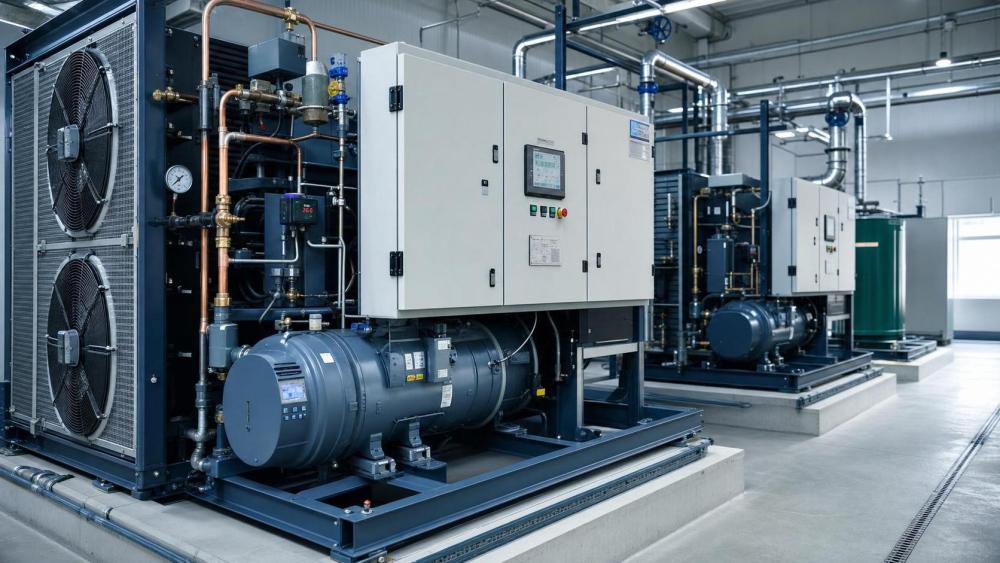
Unexpected shutdowns rarely start as major failures.
More often, they begin with small thermal management issues that go unnoticed.
A few extra degrees, weak airflow, or unstable cooling can push equipment beyond safe operating limits.
Once that happens, downtime follows fast.
In real operating environments, thermal management is not only about temperature control.
It affects lubrication, electrical stability, component life, and process consistency.
That is why thermal management should be treated as a reliability issue, not only a cooling issue.
This matters even more in facilities using compressors, vacuum systems, heat exchangers, and sensitive control cabinets.
Each system depends on steady heat removal to keep production moving.
The good news is that most thermal management failures leave clues early.
When those clues are recognized in time, many shutdowns can be prevented with practical maintenance action.
Why thermal management failures stop equipment so quickly
Heat builds stress across the whole machine.
Motors draw more current, bearings lose lubricant performance, and electronics become unstable.
Seals harden faster, hoses weaken, and sensors start drifting.
This chain reaction is why poor thermal management often causes both sudden trips and hidden long-term damage.
In many plants, a shutdown alarm points to overtemperature.
But the real cause may be much earlier in the heat path.
Blocked intake filters, fouled coils, scaling, fan failure, or poor coolant circulation are common starting points.
Common thermal management problems behind downtime
1. Blocked airflow and dirty cooling surfaces
This is one of the most frequent thermal management problems in the field.
Dust, lint, oil mist, and packaging debris slowly reduce airflow.
At the same time, heat exchanger fins lose heat transfer efficiency.
The result is rising discharge temperature, unstable cabinet cooling, and higher thermal load on internal parts.
- Warning signs include hot spots, fan noise, dust buildup, and repeated temperature alarms.
- Pressure drop across filters is another useful indicator.
- Cleaning intervals should match site conditions, not only the manual.
2. Coolant flow restrictions and unstable circulation
Good thermal management depends on steady coolant movement.
When pumps wear out, valves stick, or strainers clog, heat cannot leave the system efficiently.
A machine may look normal at startup but overheat under load.
That load-related pattern often points to circulation problems.
- Check flow rate, pump current, differential temperature, and valve response.
- Listen for cavitation or irregular pump noise.
- Look for collapsed hoses or partially closed manual valves.
3. Fouling, scale, and poor heat transfer
Heat transfer surfaces fail gradually, which makes this issue easy to miss.
Water-side scale, oil contamination, and process residue create an insulating layer.
Even a thin layer can sharply reduce thermal management performance.
That means compressors run hotter, chillers work harder, and heat exchangers miss design capacity.
From a maintenance view, trending approach temperature is often more useful than waiting for a fault.
4. Fan, blower, or ventilation failure
A failed fan can shut down equipment surprisingly fast.
This is especially true in electrical cabinets, VFD enclosures, and air-cooled packages.
Sometimes the fan motor still runs, but damaged blades or loose belts reduce airflow.
So a quick visual check is not enough.
- Verify rotation direction, airflow volume, and vibration levels.
- Inspect louvers and vents for blockage.
- Compare cabinet temperature at different heights to spot uneven cooling.
5. Sensor drift and false temperature confidence
Not every thermal management problem is mechanical.
Sometimes the cooling system is underperforming, but sensors fail to show it accurately.
A drifting RTD, damaged thermocouple, or poor calibration can mislead troubleshooting.
That creates a dangerous gap between actual heat load and displayed temperature.
Cross-checking with handheld instruments often reveals the problem faster than replacing parts at random.
How to diagnose thermal management issues more effectively
A reliable diagnosis starts with the full heat path.
Follow heat from the source, through transfer surfaces, and out to ambient conditions.
This prevents narrow troubleshooting and helps locate the real thermal management bottleneck.
- Confirm the alarm history and load condition during shutdown.
- Check ambient temperature, airflow path, and cooling water condition.
- Measure inlet and outlet temperatures across key components.
- Review pressure drop, flow rate, and fan or pump operation.
- Validate sensor readings against an independent instrument.
This method works well because most thermal management failures affect more than one parameter.
Looking at temperature alone can hide the actual cause.
A practical inspection checklist for reducing downtime
Simple routines often prevent the most expensive thermal management failures.
The key is to make inspections repeatable and easy to compare over time.
- Inspect air filters, fins, vents, and cabinet openings every service cycle.
- Trend coolant temperature, flow stability, and approach temperature.
- Check fan bearings, belts, blades, and motor current.
- Monitor pump noise, seal leakage, and suction condition.
- Review sensor calibration and compare with portable reference tools.
- Record ambient conditions during each overheating event.
These checks are basic, but they create strong thermal management visibility.
That visibility makes future shutdowns easier to predict and faster to fix.
Where thermal management risk is increasing
Recent operating trends are making thermal management more demanding.
Plants are running equipment harder, shrinking maintenance windows, and pushing for better energy efficiency.
At the same time, ambient temperatures are less predictable in many regions.
That combination raises the risk of hidden thermal management weakness.
Systems that once had enough cooling margin may now operate close to the limit.
In practice, this means routine cleaning and monitoring now deliver even greater value than before.
Using better intelligence to improve thermal management decisions
Good maintenance depends on good information.
When service teams understand broader shifts in cooling, compressed air, vacuum, and heat exchange technology, decisions improve.
That is where GTC-Matrix adds value.
By tracking energy cost changes, refrigerant policy, oil-free compression trends, and heat exchanger evolution, the platform supports stronger thermal management planning.
It helps connect field symptoms with larger technology and operating patterns.
That kind of intelligence is useful when deciding whether a recurring overheating issue needs cleaning, redesign, or equipment upgrade.
Final takeaway
Most equipment downtime linked to heat is preventable.
The biggest thermal management problems usually start small, then grow under load.
Blocked airflow, poor coolant circulation, fouled surfaces, failed fans, and bad sensor data are the usual suspects.
The practical response is also straightforward.
Inspect the heat path, trend key data, act on early warning signs, and adjust maintenance frequency to real operating conditions.
Better thermal management protects uptime, lowers repair cost, and improves equipment life.
If overheating events are becoming more frequent, now is the right time to review the cooling system before the next shutdown makes that decision for you.
Related News
- When does an industrial cooling radiator outperform a cooling tower?Author :Thermodynamics Analyst

- EU Cooling Tower Standard EN 13771:2026 Takes EffectAuthor :Thermodynamics Analyst

- EU REACH SVHC Update Triggers Cooling Tower DisclosureAuthor :Thermodynamics Analyst

- SASO Adds Bio-Durability Test for Cooling Tower FillAuthor :Thermodynamics Analyst

- EU REACH Update Bars Phthalates in Cooling Tower PVC FillAuthor :Thermodynamics Analyst

- EU Tightens CE Rules for Cooling Tower Steel PartsAuthor :Thermodynamics Analyst

- Shanghai-Rotterdam Cooling Tower Space TightensAuthor :Thermodynamics Analyst

- Hamburg Port Strike Delays Cooling Tower Parts ClearanceAuthor :Thermodynamics Analyst

- ASHRAE 188-2026 Makes Cooling Tower Microbial Control MandatoryAuthor :Thermodynamics Analyst

- India Enforces BIS IS 17842:2026 for Cooling TowersAuthor :Thermodynamics Analyst

- EU REACH Restricts Zinc Inhibitors in Cooling TowersAuthor :Thermodynamics Analyst

- TUV Rheinland Switches Cooling Tower Labels to IEC 61800-9-2Author :Thermodynamics Analyst

- EU REACH Rule Takes Effect for Cooling Tower CoatingsAuthor :Thermodynamics Analyst

- Vietnam to Require IoT Modules in Imported Cooling TowersAuthor :Thermodynamics Analyst

- How to Compare Industrial Cooling Equipment Dry Coolers for Year-Round EfficiencyAuthor :Thermodynamics Analyst

- SASO Tightens Cooling Tower Import Rules for 2027Author :Thermodynamics Analyst

- REACH SVHC Update Limits Copper Corrosion InhibitorsAuthor :Thermodynamics Analyst

- SASO Starts Cooling Tower Data Rule for CoCAuthor :Thermodynamics Analyst

- Saudi SASO Portal Adds Corrosion Data RuleAuthor :Thermodynamics Analyst

- SASO Adds Corrosion Report Rule for Cooling TowersAuthor :Thermodynamics Analyst

- RDHx Prices Rise as AI Demand Lifts Premium ModelsAuthor :Thermodynamics Analyst

- EU EN 13859-2:2026 Mandates Extreme Humidity Heat-Loss TestsAuthor :Thermodynamics Analyst

- VDE Tightens Cooling Tower Test ScopeAuthor :Thermodynamics Analyst

- SASO Tightens Cooling Tower Test Proof for SaberAuthor :Thermodynamics Analyst

- Saudi SABER Cooling Tower Rule Takes Effect EarlyAuthor :Thermodynamics Analyst

- EU Carbon Labels to Cover Cooling Tower ExportsAuthor :Thermodynamics Analyst

- Saudi SABER Cooling Tower Rule Takes Effect EarlyAuthor :Thermodynamics Analyst

- EU Carbon Label Rule Hits Cooling Tower ExportsAuthor :Thermodynamics Analyst

- Saudi SABER Cooling Tower Rule Adds EN 13859-2 TestAuthor :Thermodynamics Analyst

- Saudi SABER Tightens Cooling Tower Energy Report RulesAuthor :Thermodynamics Analyst

- Saudi SASO Tightens Cooling Tower Efficiency FilingAuthor :Thermodynamics Analyst

- Saudi SABER Tightens Cooling Tower Energy Report ChecksAuthor :Thermodynamics Analyst

- Thermal Management Problems That Cause Equipment DowntimeAuthor :Thermodynamics Analyst

- Saudi Rule Requires Local Certification for Imported Cooling TowersAuthor :Thermodynamics Analyst

- EU Law Tightens Cooling Imports for Data CentersAuthor :Thermodynamics Analyst

- India Extends FRP Duty Relief for Cooling TowersAuthor :Thermodynamics Analyst