Industrial Compressor Selection: Matching Flow, Pressure, and Duty Cycle




A compressor can meet its nameplate pressure and still be the wrong machine for the job. The usual cause is a mismatch between the compressor’s delivered air, the real pressure requirement at the point of use, and the way the plant consumes air over time. For technical evaluators, the challenge is less about choosing the largest available unit than about defining a duty profile that remains stable during production peaks, maintenance periods, seasonal temperature changes, and future line modifications.
Flow, pressure, and duty cycle are closely connected. Raising pressure generally increases energy demand and can reduce effective capacity. Underestimating intermittent demand can lead to frequent starts, overheating, or inadequate receiver capacity. Specifying continuous operation for a lightly used service, on the other hand, may add capital cost and maintenance complexity without producing a meaningful operational benefit.
Start with demand at the point of use
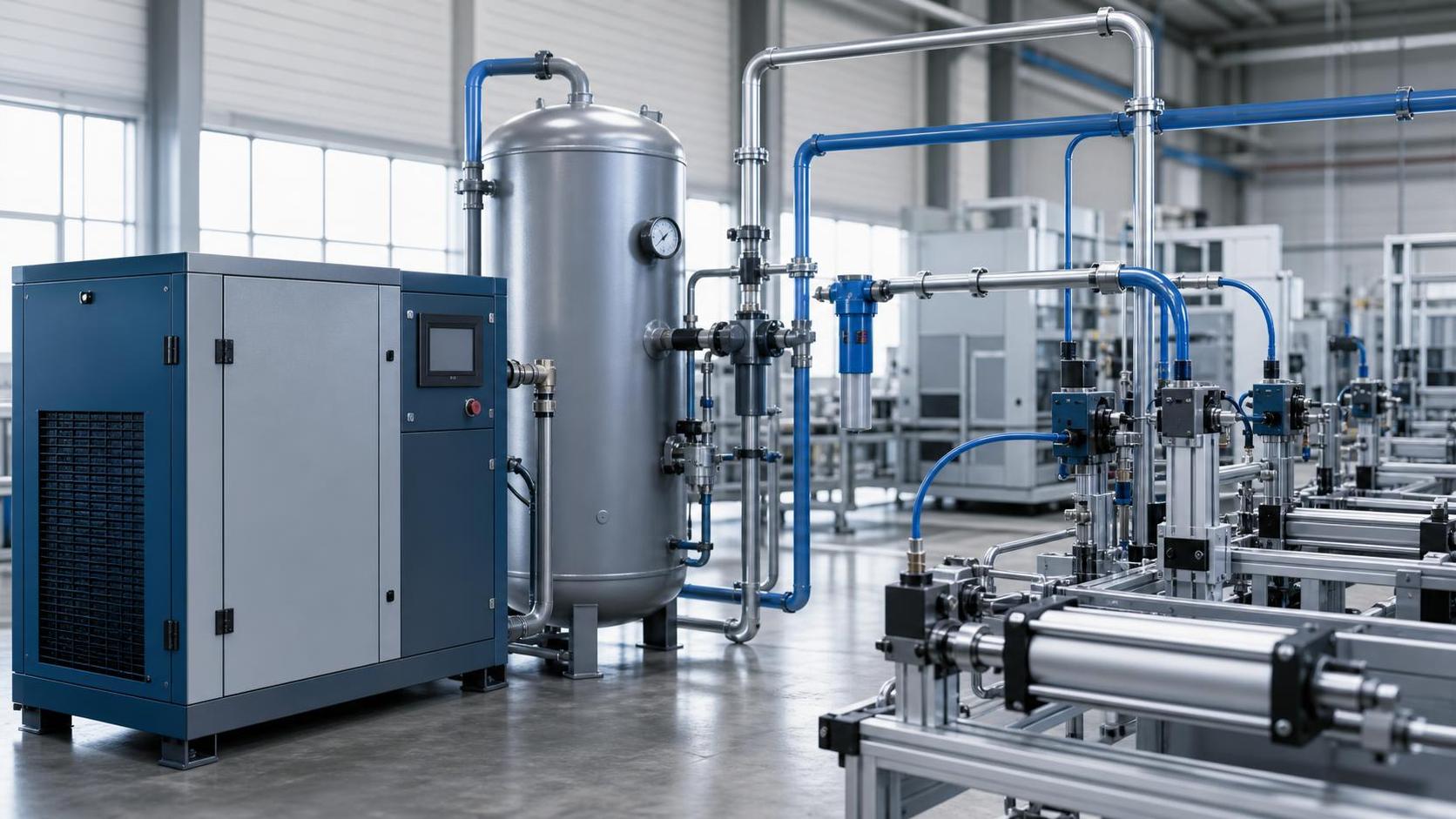
Selection should begin with the equipment that uses compressed air, not with the compressor room. Pneumatic cylinders, air tools, control valves, packaging equipment, purge systems, instrument air networks, and process applications may all have different pressure and flow requirements. The relevant question is the air volume required at the actual operating pressure, including the effect of piping losses, filters, dryers, regulators, and fittings.
Air demand should be recorded as a time-based profile whenever possible. A single average flow figure may conceal short, high-demand events that determine whether the system performs reliably. For example, a production line may consume modest airflow for most of a shift but require a significant short-duration burst when several actuators cycle together. A compressor sized only for the average load may allow system pressure to collapse during those events.
Technical teams can separate demand into three practical categories:
- Base load: relatively steady air consumption that persists during normal operating hours.
- Variable load: demand that rises and falls with production rate, product mix, or shift activity.
- Peak or intermittent load: short events such as blow-off, cleaning, batch transfer, valve actuation, or simultaneous machine starts.
Each category affects the preferred compressor arrangement. A stable base load may suit a fixed-speed machine operating near its efficient range. Wide variation may justify a variable-speed unit, staged capacity, or a combination of machines. Short peaks often call for adequate receiver storage rather than a larger compressor that will spend most of its time lightly loaded.
Flow is more than a catalog capacity figure
Compressor capacity is commonly expressed as free air delivery, usually in cubic feet per minute or cubic meters per minute. Evaluators should confirm the reference conditions behind any capacity figure. Intake temperature, ambient pressure, humidity, and the stated discharge pressure can all influence delivered volume. Comparing quoted capacities without checking these conditions can create a misleading basis for procurement.
In a practical assessment, calculate the required flow from measured consumption where possible. If direct measurement is unavailable, estimate demand from equipment specifications, cylinder volumes, cycle frequency, leakage allowance, and expected simultaneous operation. The estimate should then be tested against real production behavior. Equipment rarely operates in perfectly synchronized patterns, but neither does it remain permanently staggered.
Leakage deserves separate attention. A system with poor distribution integrity may show high compressor run hours that are mistakenly treated as productive demand. Leaks through couplings, drain valves, worn hoses, and unattended branches can be substantial over long operating periods. Selecting a new compressor to serve uncorrected leakage can lock unnecessary energy use into the system for years.
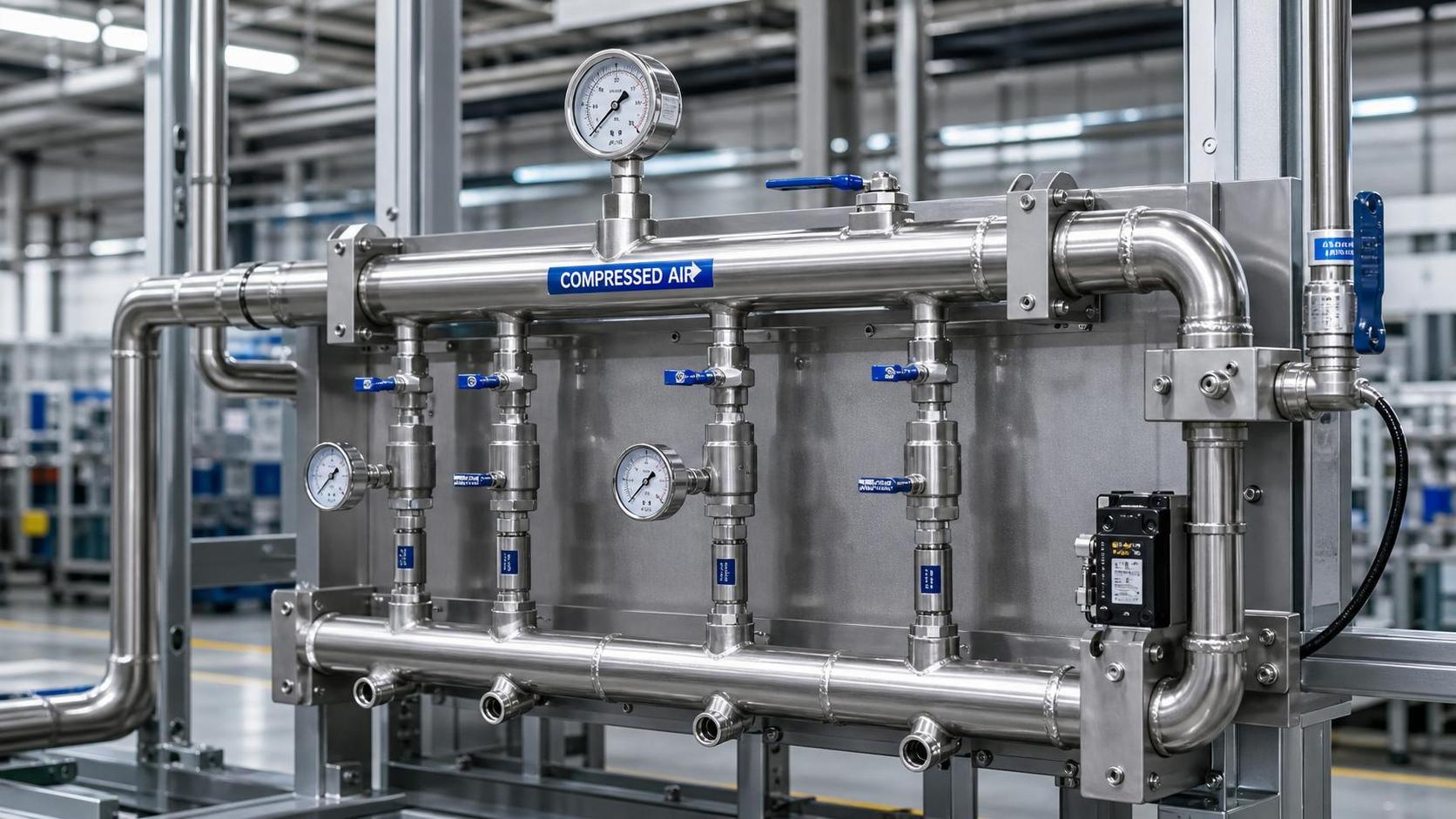
The distribution network also changes the usable flow. Undersized pipe, sharp changes in direction, restrictive filters, partially closed valves, and long flexible hoses add pressure drop. If users need a specified pressure at remote equipment, the compressor discharge pressure must account for those losses. That calculation should be based on a maintained system condition, not the pressure drop of a newly installed filter element.
Pressure should be specified as a range, not simply a maximum
Many compressor purchases are driven by the highest pressure stated on a machine specification. That approach can lead to a system designed around a single exceptional user rather than normal plant demand. A better starting point is the minimum stable pressure required at each critical point of use, followed by a review of the pressure drop between compressor discharge and that point.
Pressure requirements may differ sharply within one facility. General workshop tools may operate satisfactorily at one level, while instrumentation, packaging equipment, or a specialized process may require tighter control. When one small application needs significantly higher pressure than the rest of the network, supplying the entire plant at that level may be inefficient. A localized booster, separate pressure zone, or redesign of the high-pressure application can be considered where operating conditions justify it.
Pressure stability matters as much as the nominal setpoint. Rapid pressure swings can affect pneumatic positioning, inconsistent tool performance, process repeatability, and compressor control behavior. Receiver sizing, controller settings, pipe volume, and the response time of demand all influence stability. A system that cycles between wide pressure limits may appear adequate on a gauge while creating inconsistent conditions at the production equipment.
For an informed industrial compressor selection review, the technical file should identify the required pressure at the use point, the estimated distribution loss, the intended compressor discharge range, and the maximum acceptable pressure variation during peak demand. This establishes a clearer basis for comparing equipment than a broad statement such as “high-pressure air required.”
Duty cycle determines whether the compressor can live with the workload
Duty cycle describes how long a compressor runs and how heavily it is loaded over a defined period. It is particularly important when comparing screw and piston designs. A machine may have adequate nominal flow but still be unsuitable if its thermal design, lubrication arrangement, control method, or motor starting pattern does not match the expected operating schedule.
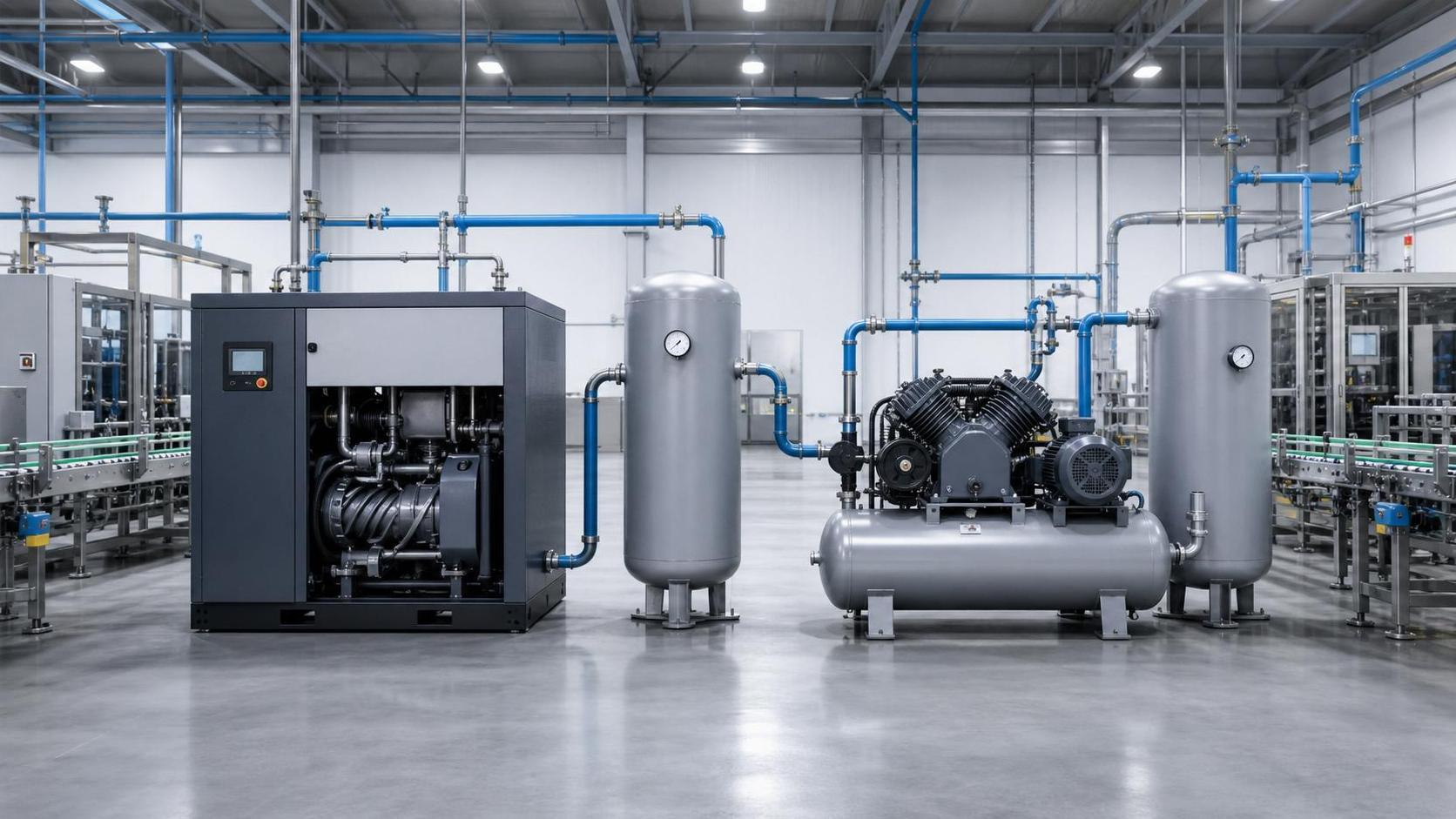
Piston compressors are often considered for intermittent services, smaller air requirements, maintenance tasks, and applications where air use occurs in identifiable bursts. Their practical suitability depends on the specific model, cooling arrangement, operating pressure, and permitted run time. If an intermittent-duty piston unit is required to run for prolonged periods because demand was underestimated, elevated discharge temperatures, accelerated wear, and frequent protective shutdowns may follow.
Rotary screw compressors are commonly evaluated where demand is sustained, production hours are long, or stable output is needed over a wider operating window. They are not automatically the best choice for every facility. A lightly loaded screw compressor with poor control matching may spend substantial time operating inefficiently at low demand. The decision should consider annual operating hours, load profile, control strategy, service capability, and the consequences of unplanned downtime.
Duty cycle should be evaluated over the actual shift pattern, not just during a short production observation. A compressor room may face very different loads during startup, cleaning, night operation, weekend standby, or compressed-air drying regeneration. Where multiple shifts are planned, maintenance windows and redundancy requirements become part of the capacity calculation.
Check the interaction between storage and compressor controls
Air receivers are sometimes treated as simple accessories, yet they can materially affect system behavior. Storage helps absorb short peaks, reduces rapid cycling, supports stable pressure, and gives a compressor more time to respond to changing demand. It does not create capacity; it shifts when the compressor must supply that capacity. If peak events are frequent or sustained, a receiver alone cannot compensate for an undersized machine.
Control philosophy should be reviewed alongside storage. Common approaches include start-stop control, load-unload control, variable-speed operation, and coordinated sequencing of multiple compressors. The appropriate method depends on demand variability and the number of machines. A facility with a stable base load and occasional peaks may use a different arrangement from one with constantly fluctuating process consumption.
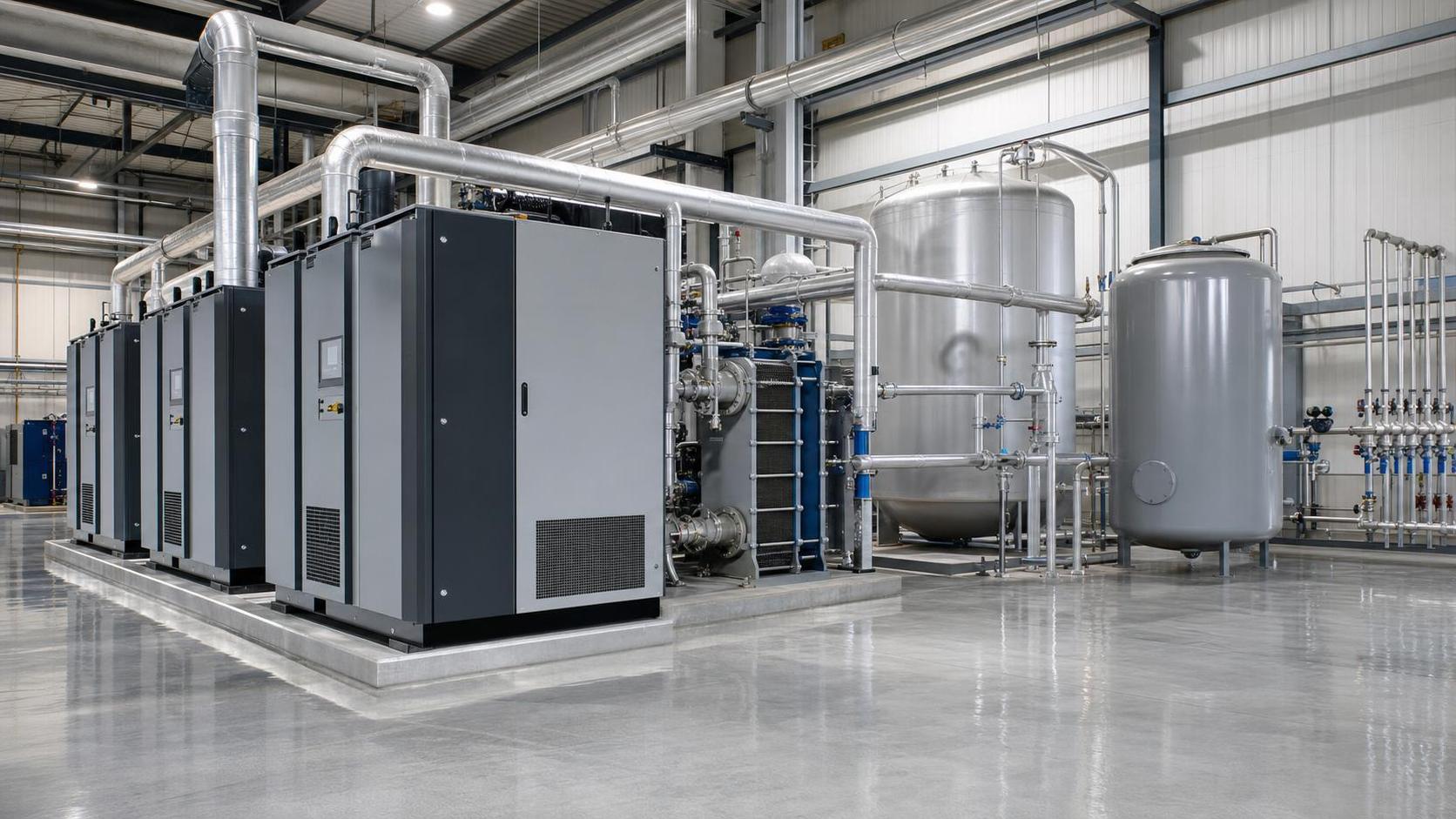
For multi-compressor installations, sequencing deserves particular scrutiny. Two machines with similar nominal output may not operate efficiently if their pressure bands overlap poorly or if one unit repeatedly unloads while another cycles. Controls should be configured around the expected load hierarchy, with a clear plan for lead-lag rotation, maintenance operation, and failure response.
Air quality requirements can alter the compressor decision
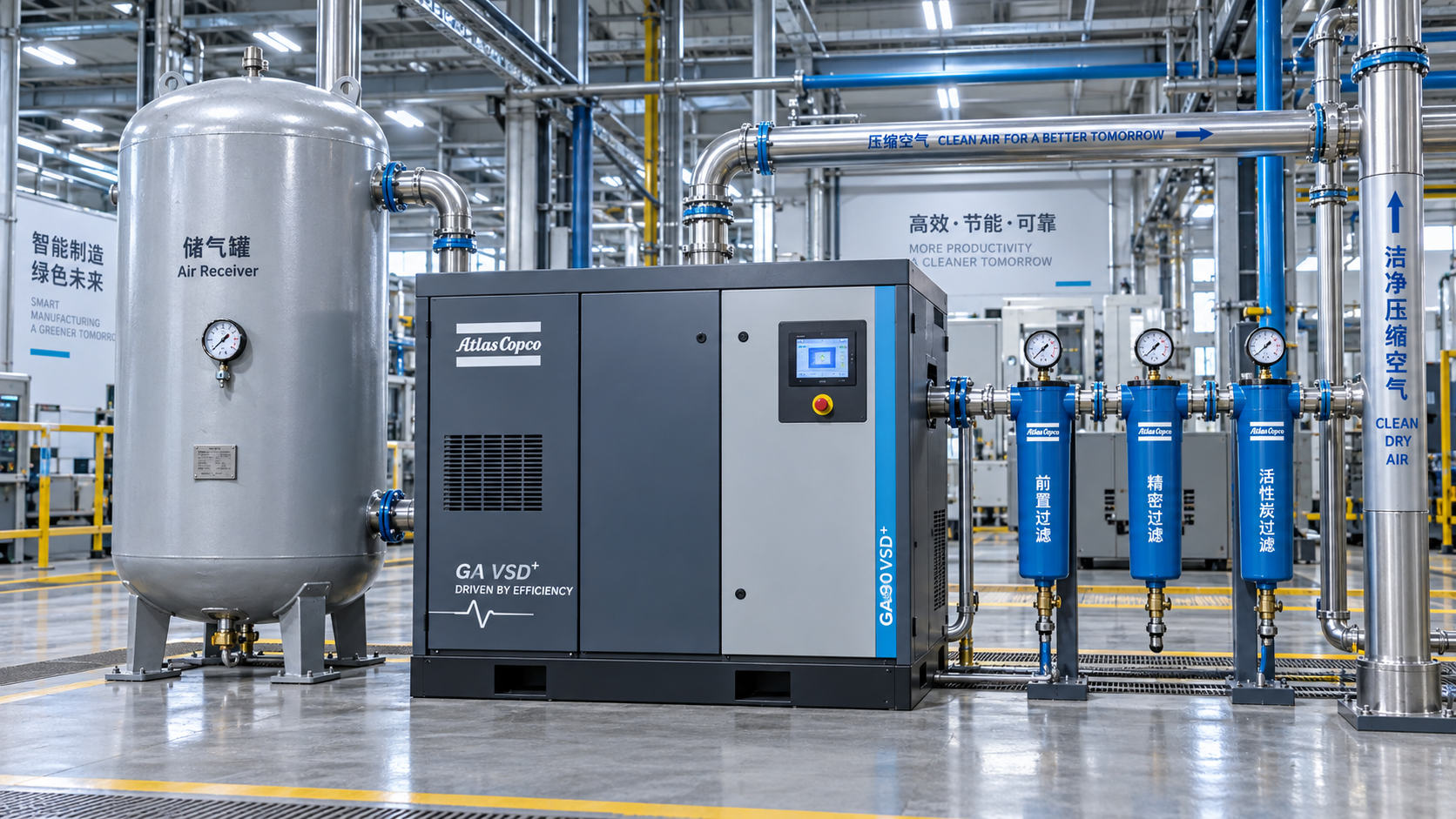
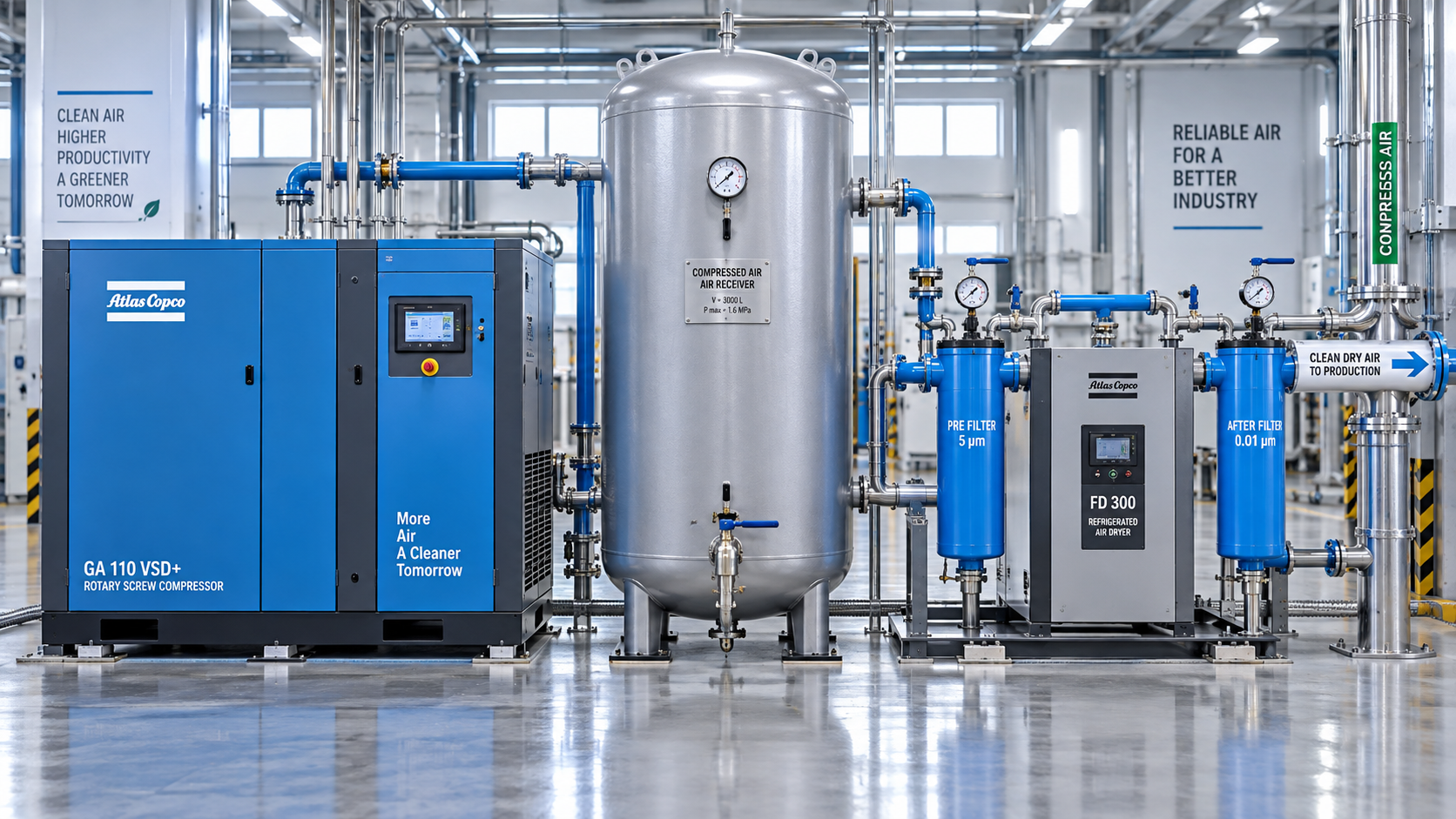
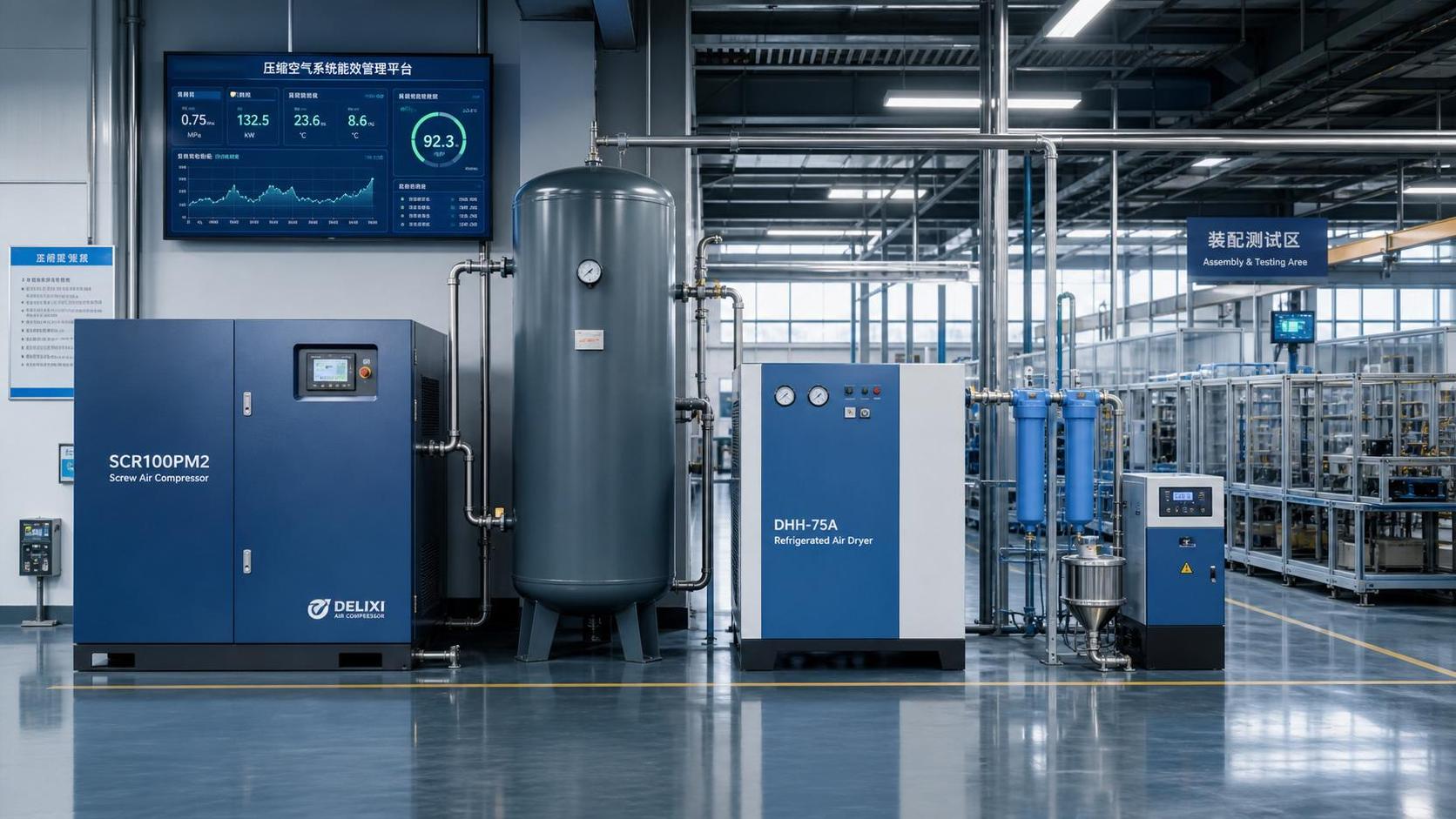
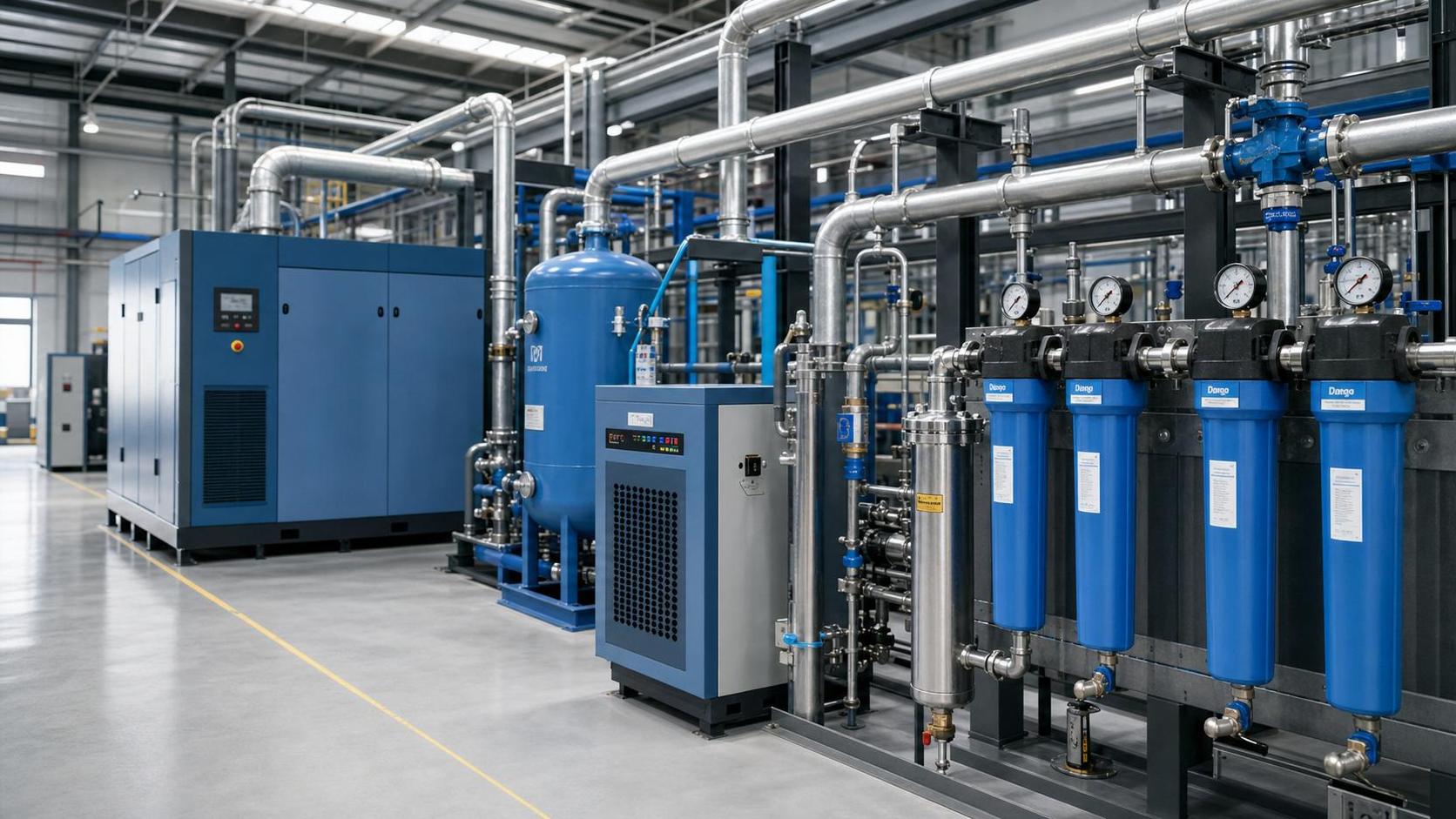
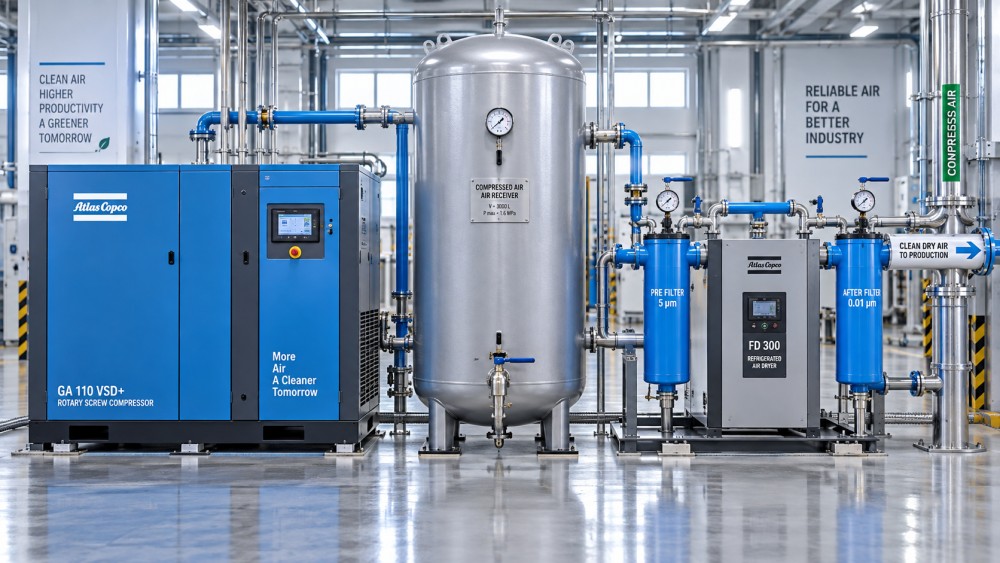
Flow and pressure are not the only variables. The quality of compressed air must fit the application. Water, oil aerosol, solid particles, and microbial concerns can affect product quality, instrumentation reliability, surface finishing, and downstream equipment life. A compressor should be assessed as part of an air system that may include aftercoolers, separators, filters, dryers, drains, condensate management, and monitoring points.
Dryer selection must match the environment and process requirement. Refrigerated dryers may be suitable for many general industrial applications, while lower dew point requirements can call for desiccant drying. The pressure drop through treatment equipment must be included in the system pressure calculation. Drain performance also matters: accumulated condensate can reduce vessel volume, damage components, and create corrosion risks in the distribution network.
Where oil-sensitive processes are involved, the evaluation should define the permitted air quality rather than relying on broad labels. Oil-free compression, filtration arrangements, maintenance practices, and the risk of contamination introduced downstream are separate matters. A technically sound specification identifies the required air condition at the point of use and the verification method during commissioning.
Procurement documents should expose assumptions
Many selection problems originate in incomplete purchase specifications. A useful request for quotation should define the expected flow range, required delivery pressure, operating hours, ambient conditions, elevation where relevant, available electrical supply, installation space, ventilation constraints, air quality needs, and acceptable noise or heat-release conditions. It should also state whether the compressor will serve a single machine, a local cell, or a shared plant network.
Buyers should request clear information on delivered capacity at the stated pressure, motor rating, control range, cooling method, receiver configuration, maintenance access, consumable intervals, and protection functions. These documents do not replace site evaluation, but they make technical comparisons more transparent. If suppliers provide different assumptions, the proposals should be normalized before price comparison.
Acceptance planning should include more than a brief no-load run. Commissioning checks can cover direction of rotation where applicable, pressure control response, condensate drainage, vibration, temperature behavior, air leaks, pressure drop across treatment equipment, and performance under representative load. In critical applications, recording system pressure during actual production cycles provides better evidence than relying on static readings.
A practical decision sequence
A disciplined assessment usually follows a simple order: establish real demand, identify the pressure needed at the point of use, quantify network losses, define the duty profile, then evaluate compressor type and controls. Air treatment, storage, room conditions, maintenance access, and expansion plans should be considered before the specification is finalized.
The key judgment is whether the selected system can deliver the required air under normal and peak conditions without spending most of its operating life in an unsuitable control mode. Matching flow, pressure, and duty cycle turns compressor procurement from a catalog comparison into an operating-risk decision grounded in the conditions the equipment will actually face.
Related News
- How Should Energy Management Systems Handle Compressor Load Changes?Author :Pneumatic Power Engineer

- Which Maintenance Issues Reduce Air Compressor Efficiency?Author :Pneumatic Power Engineer

- How Much Energy Can Variable-Speed Screw Compressors Save?Author :Pneumatic Power Engineer

- Industrial Compressor Selection: Matching Flow, Pressure, and Duty CycleAuthor :Pneumatic Power Engineer

- China Expands Cross-Border RMB and FX Cash Pooling NationwideAuthor :Pneumatic Power Engineer

- How to Size Air Compressor Systems for Pneumatics by Flow and Pressure DemandAuthor :Pneumatic Power Engineer

- How Energy Recovery Systems for Compressors Cut Power CostsAuthor :Pneumatic Power Engineer

- How to Evaluate Screw Compressors in Industrial Refrigeration EquipmentAuthor :Pneumatic Power Engineer

- India Makes BIS Certification Mandatory for Screw CompressorsAuthor :Pneumatic Power Engineer

- China Tightens Export Filing for Screw CompressorsAuthor :Pneumatic Power Engineer

- SABIC Sets IoT Interface Rule for Screw CompressorsAuthor :Pneumatic Power Engineer

- Industrial Heat Recovery Systems for Compressors: When Do Energy Savings Pay Back?Author :Pneumatic Power Engineer

- EU Tightens REACH Limit for Screw Compressor LubricantsAuthor :Pneumatic Power Engineer

- EU Opens China Screw Compressor Review With Carbon RuleAuthor :Pneumatic Power Engineer

- DOE Mandates AHRI 1000-2026 for Screw CompressorsAuthor :Pneumatic Power Engineer

- VDMA Filing Signals EU Risk for Chinese Oil Screw CompressorsAuthor :Pneumatic Power Engineer
![]()
- Screw vs Piston Air Compressors for Stable Plant OutputAuthor :Pneumatic Power Engineer

- Saudi SASO Tightens Refrigerant Limits in IEC 60335-2-40:2026Author :Pneumatic Power Engineer

- IIR Warns of 18-Week Lead Times for Screw CompressorsAuthor :Pneumatic Power Engineer

- Welded Compressed Air Manifold Selection Guide for Pressure Stability and LeaksAuthor :Pneumatic Power Engineer

- India BIS Rule Adds IS 16830 Requirement for Imported Screw CompressorsAuthor :Pneumatic Power Engineer

- What to Check Before Choosing a Compressed Air FactoryAuthor :Pneumatic Power Engineer

- China Tightens Export Checks on Screw CompressorsAuthor :Pneumatic Power Engineer

- Screw Compressor Lead Times Reach 22 WeeksAuthor :Pneumatic Power Engineer

- Vietnam Requires QR Labels on Imported Screw CompressorsAuthor :Pneumatic Power Engineer

- Compressed Air Technologies Filtration: How to Reduce Pressure Drop and Energy LossAuthor :Pneumatic Power Engineer

- STSPIN830 Lead Time Tops 32 Weeks in Screw CompressorsAuthor :Pneumatic Power Engineer

- IGBT Shortage Extends Screw Compressor Lead TimesAuthor :Pneumatic Power Engineer

- Compressed Air Systems: 7 Hidden Costs That Raise Total Operating ExpenseAuthor :Pneumatic Power Engineer

- Compressed Air Efficiency: 7 Hidden Losses That Raise Operating CostsAuthor :Pneumatic Power Engineer

- How to Compare Screw vs Oil-Free Air Compression SystemsAuthor :Pneumatic Power Engineer

- Compressed Air Leaks: What They Really Cost in Daily OperationsAuthor :Pneumatic Power Engineer

- DOE Moves Up R449A Chiller Deadline to March 2027Author :Pneumatic Power Engineer

- How Compression Technology Cuts Energy Use in Modern PlantsAuthor :Pneumatic Power Engineer

- EU Adds GB 18613-2025 to Import Energy ChecksAuthor :Pneumatic Power Engineer

- EU CE Rule Adds SRA for R290 Compressor ImportsAuthor :Pneumatic Power Engineer