How Much Energy Can Variable-Speed Screw Compressors Save?




When a plant’s compressed-air demand rises and falls through the day, a fixed-speed screw compressor may continue drawing nearly the same electrical power even while the air requirement has dropped. This often appears as a stable electricity bill, elevated system pressure during quiet periods, frequent unload operation, or operators opening drains and valves simply to keep the compressor from cycling poorly.
How much energy can variable-speed screw compressors save? The practical answer is: savings can be substantial when demand is genuinely variable, but no single percentage applies to every site. A variable-speed drive (VSD) compressor saves energy by reducing motor speed and air output as demand falls, rather than repeatedly running at full speed and unloading. The actual result depends on the demand profile, pressure settings, leakage level, control arrangement, and whether the compressor is correctly sized. In a facility with a long, steady base load, savings may be limited. In one with wide and frequent demand swings, the difference can be significant.
The saving comes from avoiding unloaded power
A fixed-speed rotary screw compressor has a preferred operating point near full load. When the plant needs less air than the compressor produces, the machine must control output by loading and unloading, modulating the inlet, or cycling. These methods reduce delivered air, but they do not reduce electrical input in the same proportion. During unloaded operation, the compressor can still consume a meaningful share of its full-load power while producing little or no useful compressed air.
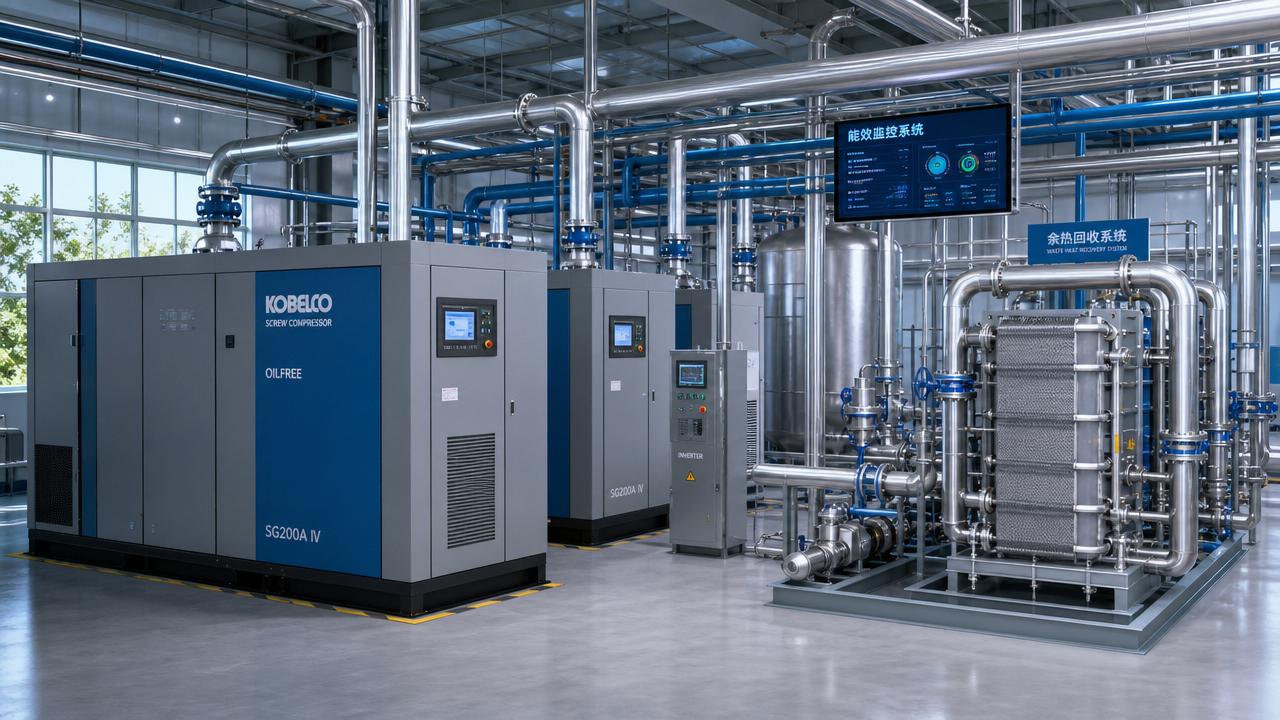
A variable-speed screw compressor changes the rotational speed of the air end and motor. As the required flow declines, the machine can reduce output more closely to the plant’s real consumption. The point is not that the motor uses no power at lower speed; it is that the system avoids a large amount of power that would otherwise be spent maintaining output that nobody needs.
That distinction matters during production changeovers, shift changes, machine standby, intermittent packaging lines, batch processes, variable pneumatic conveying, and facilities where several departments use air at different times. A compressor room can look busy even when useful air demand is low. The energy opportunity lies in separating actual demand from wasted delivery, leakage, and inefficient control behavior.
Start with the demand pattern, not the compressor nameplate
The most reliable way to estimate possible savings is to examine how compressed-air flow and pressure behave over time. A nameplate comparison between a fixed-speed and a variable-speed model is not enough. Two sites with identical installed motor power can have very different results because one may run close to full capacity all day while the other may spend much of its operating time at partial load.
Before estimating a replacement or retrofit, collect information over a representative operating period. The period should include normal production, lower-demand periods, and any known peaks. A short snapshot taken during a single busy hour can make a variable-demand system look falsely steady.
- Record compressor power draw, ideally in kilowatts, at regular intervals.
- Record air flow where metering is available, preferably at the compressor discharge and at major demand zones.
- Track pressure at the compressor room and at the critical point of use.
- Note load/unload hours, starts, stops, and time spent in modulation.
- Identify shift schedules, seasonal equipment, batch cycles, and planned idle periods.
- Measure or estimate leakage after production equipment is shut down.
A useful question is not simply, “How much air does the plant use?” It is, “How much air does the plant need at each moment, and at what minimum pressure?” A VSD compressor is generally most valuable where that answer changes often.
A simple way to frame the calculation
Annual energy use is based on electrical input over time:
Annual compressor energy = average electrical demand (kW) × operating hours per year
The potential saving is the difference between the current system’s measured energy use and the estimated energy use after the control strategy changes:
Potential energy reduction = current annual kWh − projected annual kWh
To turn that into cost, multiply the avoided kilowatt-hours by the applicable electricity rate. Facilities with demand charges should also examine whether compressor operation contributes to peak electrical demand, because a lower annual kWh figure does not automatically capture every utility-cost effect.
For an initial estimate, divide the operating profile into load bands rather than relying on one average number. For example, identify how many hours the system operates near high demand, mid-range demand, low demand, and idle demand. Then compare the expected power draw of the existing compressor and the proposed VSD arrangement at each band. Manufacturer performance curves can support this exercise, but they should be assessed at the required operating pressure and air quality configuration, not just at a favorable catalog condition.
Pressure control can change the result as much as speed control
Many compressed-air systems run at a higher pressure than the end uses actually require. This can happen because of pressure drop through undersized piping, clogged filters, poorly arranged dryers, long distribution runs, or a control band that is wider than necessary. Raising compressor discharge pressure to compensate for a local restriction makes the entire system consume more energy.
A VSD compressor can often hold pressure within a narrower band than a basic load/unload machine. That can reduce the need for excessive pressure headroom, especially where the existing system repeatedly climbs to a high setpoint before unloading and then falls until the compressor reloads. However, a tighter control band is only useful when the compressor, storage, distribution network, and downstream processes are configured to work together.
Do not assume that a lower pressure setpoint is always safe. Confirm the pressure needed at the most demanding point of use while filters are in normal service condition and production is at a realistic peak. A pressure target that works in an empty plant may cause machine faults during full operation.
Where variable-speed compressors are a strong fit
A VSD screw compressor is often well suited to systems with one or more of the following conditions:
- Air demand changes materially between shifts, products, departments, or production stages.
- The existing compressor spends extended periods unloading or modulating.
- Pressure varies widely despite a relatively stable required point-of-use pressure.
- A single compressor must serve both a continuous base load and irregular trim demand.
- The facility needs more stable pressure for sensitive pneumatic equipment.
- Expansion has made the original compressor selection oversized for typical operation.
One common arrangement uses a fixed-speed compressor for the stable base load and a variable-speed unit as the trim compressor. The fixed-speed machine handles the portion of demand that remains present for long periods, where it can operate near an efficient loaded condition. The VSD unit then follows the changing portion of the demand. This can be more effective than expecting one large VSD machine to cover every operating condition.
Where multiple compressors are installed, the control sequence is crucial. A VSD unit should not be forced to operate at an inefficient extreme while several fixed-speed machines cycle around it. The control logic needs clear pressure bands, sensible compressor priorities, adequate storage, and a defined response to low-demand operation.
Conditions that can reduce or erase the expected savings
Variable speed is not a cure for every compressed-air problem. Selecting a VSD compressor before diagnosing the system can lock in unnecessary capacity and make a weak distribution network look more sophisticated than it is.
Leaks are still demand
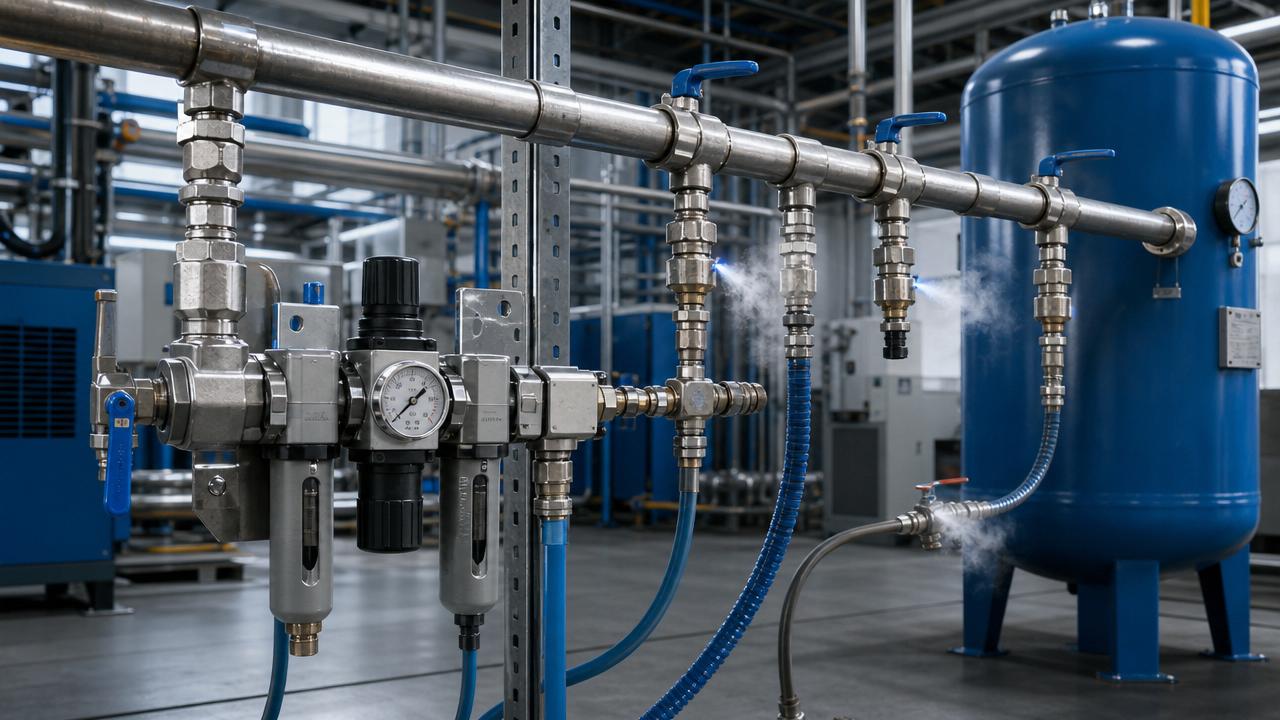
A leak does not become efficient because a VSD compressor supplies it at a lower speed. The compressor may use less power than a fixed-speed machine would, but energy is still being used to produce air that performs no work. Leak repair is especially important where the plant runs with low legitimate demand outside production hours. In that situation, a leak survey and isolation strategy may change the compressor sizing decision.
Oversizing pushes the machine into an unfavorable range
Variable-speed compressors have a usable operating range, not an unlimited one. An oversized machine may spend too much time near its minimum speed, where turndown limits, internal losses, or control behavior may reduce the expected benefit. Correct capacity selection should be based on measured demand after obvious leaks and inappropriate uses have been addressed.
Demand spikes may need storage, not more compressor capacity
Short bursts of high air use can cause pressure drops that lead operators to choose a larger compressor or increase pressure setpoints. Often, appropriately located receiver capacity can handle a brief peak while the compressor recovers at a controlled rate. Storage is not a substitute for inadequate sustained capacity, but it can prevent momentary events from dictating the size of the entire compressor system.
Heat, air quality equipment, and maintenance influence real power
Ambient temperature, ventilation, inlet conditions, dryer pressure drop, filter condition, lubricant state, and air-end maintenance all affect actual performance. A VSD system should be evaluated as part of the compressed-air package, including aftercooling, drying, filtration, drains, piping, and controls. A pressure drop introduced downstream can quietly offset gains made in the compressor room.
A practical evaluation sequence before buying or retrofitting
- Define the required air quality and minimum point-of-use pressure. Do not size from compressor discharge pressure alone.
- Measure the existing profile. Capture power, pressure, flow where possible, and operating state across representative conditions.
- Separate legitimate demand from waste. Investigate leakage, inappropriate open blowing, permanently open drains, and equipment left pressurized during idle periods.
- Review the current control method. Determine whether a fixed-speed compressor is unloading, modulating, short-cycling, or operating against other compressors.
- Test pressure reduction carefully. Reduce pressure in controlled increments while confirming performance at critical users.
- Compare system configurations at part load. Review fixed-speed-only, VSD-only, and base-load-plus-trim arrangements using the measured profile.
- Include lifecycle factors. Consider maintenance access, redundancy needs, ventilation, service intervals, control integration, and expected operating hours alongside energy use.
The most credible savings estimate is therefore a profile-based calculation, not a generic claim. A compressor that looks efficient on a brochure can be a poor match for a steady high-load process, while a properly sized VSD unit can materially reduce waste in a fluctuating system. The deciding factor is how closely the compressor’s delivered air and electrical input can follow the facility’s real requirement without relying on excess pressure, unloading, or continuous leakage.
Related News
- How Much Energy Can Variable-Speed Screw Compressors Save?Author :Pneumatic Power Engineer

- China Expands Cross-Border RMB and FX Cash Pooling NationwideAuthor :Pneumatic Power Engineer

- How to Size Air Compressor Systems for Pneumatics by Flow and Pressure DemandAuthor :Pneumatic Power Engineer

- How Energy Recovery Systems for Compressors Cut Power CostsAuthor :Pneumatic Power Engineer

- How to Evaluate Screw Compressors in Industrial Refrigeration EquipmentAuthor :Pneumatic Power Engineer

- India Makes BIS Certification Mandatory for Screw CompressorsAuthor :Pneumatic Power Engineer

- China Tightens Export Filing for Screw CompressorsAuthor :Pneumatic Power Engineer

- SABIC Sets IoT Interface Rule for Screw CompressorsAuthor :Pneumatic Power Engineer

- Industrial Heat Recovery Systems for Compressors: When Do Energy Savings Pay Back?Author :Pneumatic Power Engineer

- EU Tightens REACH Limit for Screw Compressor LubricantsAuthor :Pneumatic Power Engineer

- EU Opens China Screw Compressor Review With Carbon RuleAuthor :Pneumatic Power Engineer

- DOE Mandates AHRI 1000-2026 for Screw CompressorsAuthor :Pneumatic Power Engineer

- VDMA Filing Signals EU Risk for Chinese Oil Screw CompressorsAuthor :Pneumatic Power Engineer
![]()
- Screw vs Piston Air Compressors for Stable Plant OutputAuthor :Pneumatic Power Engineer

- Saudi SASO Tightens Refrigerant Limits in IEC 60335-2-40:2026Author :Pneumatic Power Engineer

- IIR Warns of 18-Week Lead Times for Screw CompressorsAuthor :Pneumatic Power Engineer

- Welded Compressed Air Manifold Selection Guide for Pressure Stability and LeaksAuthor :Pneumatic Power Engineer

- India BIS Rule Adds IS 16830 Requirement for Imported Screw CompressorsAuthor :Pneumatic Power Engineer

- What to Check Before Choosing a Compressed Air FactoryAuthor :Pneumatic Power Engineer

- China Tightens Export Checks on Screw CompressorsAuthor :Pneumatic Power Engineer

- Screw Compressor Lead Times Reach 22 WeeksAuthor :Pneumatic Power Engineer

- Vietnam Requires QR Labels on Imported Screw CompressorsAuthor :Pneumatic Power Engineer

- Compressed Air Technologies Filtration: How to Reduce Pressure Drop and Energy LossAuthor :Pneumatic Power Engineer

- STSPIN830 Lead Time Tops 32 Weeks in Screw CompressorsAuthor :Pneumatic Power Engineer

- IGBT Shortage Extends Screw Compressor Lead TimesAuthor :Pneumatic Power Engineer

- Compressed Air Systems: 7 Hidden Costs That Raise Total Operating ExpenseAuthor :Pneumatic Power Engineer

- Compressed Air Efficiency: 7 Hidden Losses That Raise Operating CostsAuthor :Pneumatic Power Engineer

- How to Compare Screw vs Oil-Free Air Compression SystemsAuthor :Pneumatic Power Engineer

- Compressed Air Leaks: What They Really Cost in Daily OperationsAuthor :Pneumatic Power Engineer

- DOE Moves Up R449A Chiller Deadline to March 2027Author :Pneumatic Power Engineer

- How Compression Technology Cuts Energy Use in Modern PlantsAuthor :Pneumatic Power Engineer

- EU Adds GB 18613-2025 to Import Energy ChecksAuthor :Pneumatic Power Engineer

- EU CE Rule Adds SRA for R290 Compressor ImportsAuthor :Pneumatic Power Engineer

- Compressed Air Leaks: Hidden Costs and Practical Ways to Reduce LossesAuthor :Pneumatic Power Engineer

- Kunming Sourcing Festival Adds Thermal & Compression HubAuthor :Pneumatic Power Engineer

- Compressed Air Efficiency: Where Energy Losses Usually StartAuthor :Pneumatic Power Engineer