U.S. Proposes 12.5% Duty on China Cooling Towers




On June 4, 2026, the Office of the United States Trade Representative (USTR) released a proposed list that would add a 12.5% tariff to Mechanical Draft Cooling Towers originating in China. For manufacturers, exporters, buyers, and supply-chain partners tied to U.S.-bound cooling tower business, the key issue is not only the proposed duty itself, but also the narrow exemption route tied to non-metal composite housings and a U.S. final assembly threshold. This makes the development worth close attention because it points directly to product configuration, assembly location, and export model choices.
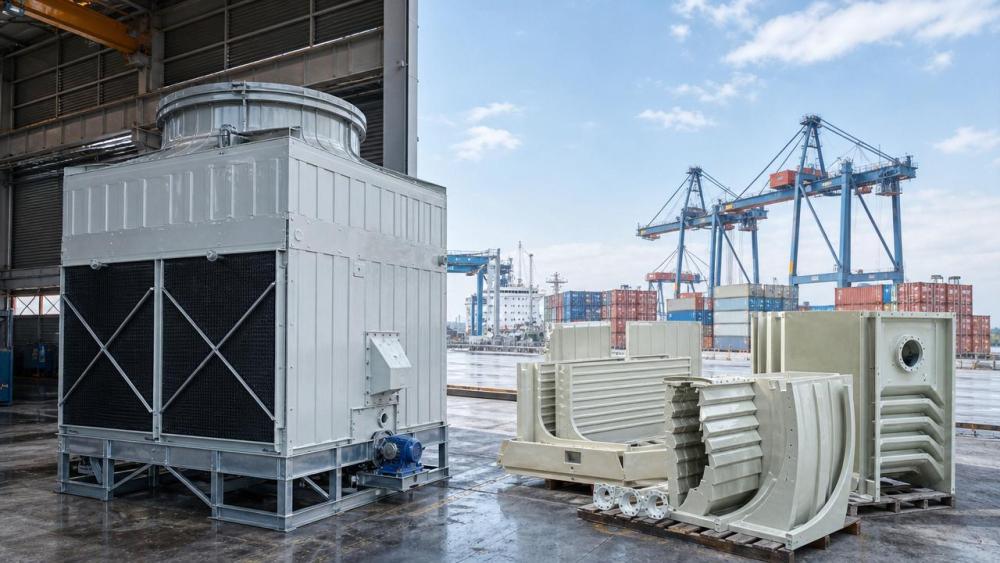
What the proposed measure says so far
According to the information provided, USTR issued the proposed list on June 4, 2026, targeting Mechanical Draft Cooling Towers made in China with an additional 12.5% tariff.
The only stated exemption path is limited to products whose full unit housing uses non-metal composite materials, such as FRP, and whose final assembly in the United States achieves at least 35% value added.
The same information indicates that this condition is expected to push Chinese exporters toward a model combining modular exports with overseas localized final assembly cooperation.
Where the pressure may appear across the business chain
Exporters will have to reassess shipment form and product definition
From an industry perspective, direct trading companies and export-oriented manufacturers may be affected first because the proposed measure is tied not just to origin, but also to product structure and where final assembly takes place. The immediate business impact may center on whether current complete-unit export arrangements remain workable for U.S.-bound orders and whether modular shipment structures become more relevant.
Manufacturing teams may face new emphasis on housing material choices
Analysis shows that production-side companies should pay close attention to the exemption condition linked to non-metal composite housings. This does not automatically mean an industry-wide material shift, but it does mean that for U.S.-related business, housing material may become a more important commercial and compliance variable than before.
U.S.-linked assembly and service partners may become more central
Observably, the requirement for at least 35% value added in final U.S. assembly brings local assembly capability into the discussion. This may affect partners involved in final assembly, project delivery, and related coordination, because execution details could matter as much as manufacturing origin in determining whether the exemption path is available.
Buyers and procurement teams may need to revisit delivery assumptions
For procurement-side participants, the impact may appear in quotation structure, sourcing models, delivery planning, and supplier communication. What deserves closer attention is whether a supplier can clearly explain its product housing configuration and assembly arrangement, especially for projects where landed cost and compliance conditions are closely linked.
Practical issues companies should track now
Watch how the official wording develops
Analysis shows that this is a proposed list, so companies should distinguish between the current policy signal and final implementation details. The precise wording around product scope, exemption conditions, and how value-added calculations are interpreted could materially affect business decisions.
Check whether U.S.-bound products fit the exemption path
For companies already serving the U.S. market, a practical priority is to review whether relevant Mechanical Draft Cooling Towers use non-metal composite housings and whether their current delivery model could support a compliant U.S. final assembly process with the required value-added threshold.
Prepare documentation and communication around assembly value
Observably, the stated 35% U.S. value-added requirement makes documentation readiness important. Companies may need to pay closer attention to assembly process design, supplier coordination, and customer-facing explanations, so that commercial discussions do not get ahead of what can actually be documented and executed.
Separate policy direction from operational readiness
What deserves closer attention is the gap between recognizing the direction of the measure and being ready to operate under it. A modular export plus localized final assembly approach may sound clear at a strategic level, but in practice it touches product breakdown, partner selection, delivery sequencing, and contract communication. These are operational issues, not just policy-reading exercises.
Why this looks like more than a simple tariff notice
As an observation, this development is better understood as both a near-term trade policy change and a longer-term supply-chain signal. The proposed additional tariff matters on its own, but the exemption design matters just as much because it effectively links market access conditions to material choice and local assembly content.
Analysis shows that the policy signal is unusually specific: it does not simply raise cost pressure; it also indicates which configuration and fulfillment path may remain more workable. For that reason, the industry may need to watch not only tariff outcomes but also whether business models begin shifting toward modular exports and U.S.-side assembly cooperation.
At the same time, it is still more appropriate to understand this as a developing industry dynamic rather than a fully settled outcome, because the information provided refers to a proposed list rather than a completed final rule.
How the industry may best read this stage
In practical terms, this development suggests that cooling tower trade with the U.S. may face a more conditional structure, where product material design and assembly geography become commercially significant. For companies in the relevant chain, the immediate importance lies in reviewing exposure, delivery models, and partner readiness rather than assuming a uniform impact across all business.
It is more appropriate to understand the news as a policy signal with operational implications: strong enough to trigger planning, but still requiring continued verification before firms treat it as a fully settled market condition.
Basis of this article and what still needs verification
This article is based on the user-provided news title, event date, and event summary. The confirmed information used here is limited to the June 4, 2026 proposed USTR list, the proposed 12.5% additional tariff on China-origin Mechanical Draft Cooling Towers, and the stated exemption path requiring non-metal composite housing and at least 35% value added from final assembly in the United States.
For this type of industry update, commonly relevant source categories may include official government notices, company disclosures, industry association updates, authoritative media reporting, and standards-related documents. A specific official source link was not provided in the input, so further verification remains necessary. Continued attention should focus on any later official wording, scope clarification, and implementation details related to exemption conditions and value-added interpretation.
Ready when you are. Send us a message to get started.
Related News
- Kentucky Regulators Approve $191 Million Cooling Tower at Mitchell Coal PlantAuthor :Thermodynamics Analyst

- Cooling Tower Market Trends Reshaping Replacement Plans and Capital BudgetsAuthor :Thermodynamics Analyst

- Field-Erected Cooling Tower Market: Why Utility Projects Favor Custom DesignsAuthor :Thermodynamics Analyst

- Evaporative Cooling Tower Market Outlook: Demand Drivers, Risks, and Growth AreasAuthor :Thermodynamics Analyst

- When does an industrial cooling radiator outperform a cooling tower?Author :Thermodynamics Analyst

- EU Cooling Tower Standard EN 13771:2026 Takes EffectAuthor :Thermodynamics Analyst

- EU REACH SVHC Update Triggers Cooling Tower DisclosureAuthor :Thermodynamics Analyst

- SASO Adds Bio-Durability Test for Cooling Tower FillAuthor :Thermodynamics Analyst

- EU REACH Update Bars Phthalates in Cooling Tower PVC FillAuthor :Thermodynamics Analyst

- EU Tightens CE Rules for Cooling Tower Steel PartsAuthor :Thermodynamics Analyst

- Shanghai-Rotterdam Cooling Tower Space TightensAuthor :Thermodynamics Analyst

- Hamburg Port Strike Delays Cooling Tower Parts ClearanceAuthor :Thermodynamics Analyst

- ASHRAE 188-2026 Makes Cooling Tower Microbial Control MandatoryAuthor :Thermodynamics Analyst

- India Enforces BIS IS 17842:2026 for Cooling TowersAuthor :Thermodynamics Analyst

- EU REACH Restricts Zinc Inhibitors in Cooling TowersAuthor :Thermodynamics Analyst

- TUV Rheinland Switches Cooling Tower Labels to IEC 61800-9-2Author :Thermodynamics Analyst

- EU REACH Rule Takes Effect for Cooling Tower CoatingsAuthor :Thermodynamics Analyst

- Vietnam to Require IoT Modules in Imported Cooling TowersAuthor :Thermodynamics Analyst

- How to Compare Industrial Cooling Equipment Dry Coolers for Year-Round EfficiencyAuthor :Thermodynamics Analyst

- SASO Tightens Cooling Tower Import Rules for 2027Author :Thermodynamics Analyst

- REACH SVHC Update Limits Copper Corrosion InhibitorsAuthor :Thermodynamics Analyst

- SASO Starts Cooling Tower Data Rule for CoCAuthor :Thermodynamics Analyst

- Saudi SASO Portal Adds Corrosion Data RuleAuthor :Thermodynamics Analyst

- SASO Adds Corrosion Report Rule for Cooling TowersAuthor :Thermodynamics Analyst

- RDHx Prices Rise as AI Demand Lifts Premium ModelsAuthor :Thermodynamics Analyst

- EU EN 13859-2:2026 Mandates Extreme Humidity Heat-Loss TestsAuthor :Thermodynamics Analyst

- VDE Tightens Cooling Tower Test ScopeAuthor :Thermodynamics Analyst

- SASO Tightens Cooling Tower Test Proof for SaberAuthor :Thermodynamics Analyst

- Saudi SABER Cooling Tower Rule Takes Effect EarlyAuthor :Thermodynamics Analyst

- EU Carbon Labels to Cover Cooling Tower ExportsAuthor :Thermodynamics Analyst

- Saudi SABER Cooling Tower Rule Takes Effect EarlyAuthor :Thermodynamics Analyst

- EU Carbon Label Rule Hits Cooling Tower ExportsAuthor :Thermodynamics Analyst

- Saudi SABER Cooling Tower Rule Adds EN 13859-2 TestAuthor :Thermodynamics Analyst

- Saudi SABER Tightens Cooling Tower Energy Report RulesAuthor :Thermodynamics Analyst

- Saudi SASO Tightens Cooling Tower Efficiency FilingAuthor :Thermodynamics Analyst

- Saudi SABER Tightens Cooling Tower Energy Report ChecksAuthor :Thermodynamics Analyst