Cooling Tower Market Trends Reshaping Replacement Plans and Capital Budgets




Cooling Tower Market Trends Reshaping Replacement Plans and Capital Budgets
The cooling tower market is changing the way industrial operators think about replacement cycles. For years, many facilities treated a tower as a durable but largely passive utility asset: maintain the fan, replace fill when it degrades, repair the basin, and postpone major capital spending until failure becomes impossible to ignore. That approach is becoming harder to defend.
Aging equipment is only one part of the pressure. Water availability, site permitting, chemical treatment costs, process temperature requirements, energy performance targets, and more demanding uptime expectations are now tied together. A cooling tower decision can affect chiller capacity, compressor reliability, production yield, heat-exchanger fouling, and the practical ability to expand a plant without building an entirely new utility system.
For capital planners, the question is no longer simply whether an old tower can run for another season. The more useful question is whether the existing heat-rejection system still fits the operating profile the site expects over the next five to ten years. In many cases, replacement planning is moving from reactive maintenance into a broader energy, water, and operational-risk discussion.
The Market Is Moving Beyond “Replace Like for Like”
The traditional replacement logic was straightforward: match the existing tower footprint, nominal thermal capacity, piping connections, and electrical arrangement as closely as possible. It remains a sensible route when a process load is stable and the existing design basis is still valid. But many sites no longer operate under those conditions.
Production lines may run longer hours, ambient conditions may be more difficult during peak periods, and process equipment may have been added incrementally without a full review of the cooling-water loop. A tower that appears adequately sized on paper can still be the constraint that causes elevated condenser-water temperatures, reduced chiller efficiency, compressor trips, or unstable process control on hot days.
This is why market demand is increasingly favoring system-level evaluation. Buyers are asking not only about tower tonnage or fan horsepower, but also about approach temperature, wet-bulb design conditions, turndown behavior, drift performance, water chemistry tolerance, access for maintenance, and controls integration. The cooling tower market is becoming more technical because operating conditions have become less forgiving.
That does not mean every aging unit needs an advanced replacement. In some plants, a targeted refurbishment—new fill, drift eliminators, nozzles, fan components, or basin repairs—still delivers the most rational return. The point is that a refurbishment should be chosen after confirming that the tower’s thermal design, structural condition, and water-management strategy remain appropriate. A repair that merely restores an outdated constraint can consume capital without reducing the underlying risk.
Water Has Become a Board-Level Operating Issue
Water is reshaping replacement plans more visibly than it did a decade ago. Open recirculating cooling systems depend on controlled evaporation, blowdown, makeup-water quality, and chemical treatment. Where water costs rise, discharge rules tighten, or supply reliability becomes uncertain, cooling towers stop being a background utility and become part of a facility’s resource-risk profile.
An industrial site may be able to tolerate an older tower mechanically, yet still struggle with the cost and complexity of operating it. Persistent leaks, poor distribution, damaged fill, excessive drift, or weak control over cycles of concentration can have consequences beyond maintenance expense. They can increase makeup demand, accelerate scaling and corrosion in connected equipment, and complicate environmental reporting.
The right response is not automatically to move away from evaporative cooling. Air-cooled and hybrid alternatives may reduce water dependence, but they introduce other trade-offs, including electrical demand, space requirements, noise considerations, and reduced thermal performance during high ambient temperatures. In warm climates or high-load industrial processes, evaporative heat rejection often remains technically compelling. The real planning task is to understand which resource constraint is most expensive or operationally sensitive at a particular site.
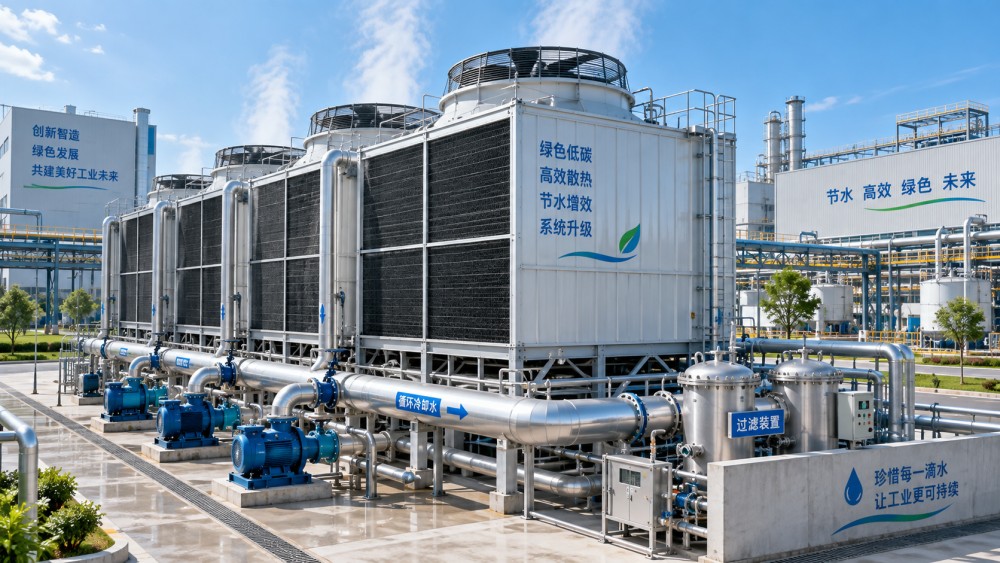
Replacement projects increasingly include questions that used to sit outside the tower package: Can reclaimed water be used safely? Is additional filtration required? What changes are needed to side-stream filtration, dosing, conductivity control, or basin cleaning procedures? Can a hybrid operating mode reduce water use during favorable weather? These are not minor accessories. They influence whether projected lifecycle benefits will actually be achieved after commissioning.
Efficiency Is Being Evaluated as a System, Not a Fan-Motor Specification
Energy efficiency remains a major driver in the cooling tower market, but the conversation is maturing. Procurement teams sometimes focus narrowly on fan motor power because it is easy to compare in a quotation. Fan energy matters, particularly where towers operate continuously or where variable-speed control can follow changing load and weather conditions. Yet fan power alone does not define the value of a cooling tower upgrade.
A lower leaving-water temperature can improve the operating conditions of chillers, refrigeration systems, air compressors with cooling requirements, and process heat exchangers. At the same time, chasing the lowest possible cold-water temperature may require fan operation that is not economically justified at a given load. Good control logic finds a working balance rather than treating thermal performance as an isolated maximum-value target.
This is especially relevant in facilities with fluctuating production. Semiconductor, pharmaceutical, food, chemical, and data-intensive operations can have very different load patterns and tolerance for temperature variation. Some need highly stable cooling-water conditions; others can accept a wider range if it reduces energy use. A tower selected only for peak design capacity may perform poorly from a cost perspective during the far more common part-load hours.
A useful capital review should therefore examine the entire heat-rejection chain: process heat load, plate or shell-and-tube exchanger condition, pumping arrangement, condenser performance where applicable, control valves, water quality, and the tower itself. GTC-Matrix follows this broader thermal perspective because industrial cooling is rarely a standalone asset class. It sits beside compressed-air systems, vacuum processes, heat exchangers, boilers, and refrigeration equipment that share the same energy and reliability pressures.
Aging Assets Are Creating a Different Kind of Replacement Risk
The oldest towers often create uncertainty in ways that do not show up in a basic maintenance budget. Structural members may be difficult to inspect thoroughly. Legacy materials can complicate repair choices. Original components may no longer be readily available, and repeated modifications over many years can leave a system with undocumented electrical, mechanical, or piping changes.
The risk is not limited to dramatic failure. More often, it is gradual performance erosion: uneven water distribution, deteriorated fill, fan imbalance, vibration, basin leakage, blocked louvers, or a loss of thermal capacity that operators compensate for by running equipment harder. Those workarounds may become normal until a heat wave, production surge, or unplanned outage exposes how little operating margin remains.
Capital budgets should distinguish between visible maintenance needs and latent replacement risk. A tower with manageable repair costs may still merit replacement if downtime would disrupt a critical process, if safe access is poor, or if the plant cannot isolate one cell without sacrificing production. Conversely, a structurally sound modular tower with redundancy may justify staged refurbishment. The answer depends on operational consequences, not asset age alone.
Signals that deserve an earlier engineering review
- Warm-weather operating problems that are addressed by temporary fan overrides or production restrictions.
- Increasing treatment effort, unexplained makeup-water use, or recurring fouling in downstream heat exchangers.
- Repeated vibration, gearbox, shaft, fan, or structural repairs with no clear long-term correction.
- New process equipment that has been connected to a loop designed for a smaller or different load.
- Limited spare capacity during maintenance, particularly where cooling supports continuous production.
- A planned expansion, electrification project, or chiller replacement that changes the heat-rejection profile.
Capital Planning Is Shifting Toward Phased Decisions
One reason cooling tower projects are frequently delayed is that they compete with visible production investments. A tower replacement may not generate new revenue directly, so it is easy to defer. The flaw in that logic is that thermal infrastructure often determines whether other investments can run reliably at their intended output.
More operators are responding with phased capital plans. Instead of waiting for a complete failure or funding a large site-wide replacement in one approval cycle, they define a sequence: inspect and test existing assets, remove immediate safety or reliability issues, install monitoring where gaps exist, replace the highest-risk cell or module, then align subsequent upgrades with shutdown windows and expansion plans.
This approach works best when the first assessment is honest about the future load. A replacement sized strictly around current average conditions may become undersized as soon as a new line, higher-density process, or additional refrigeration load arrives. On the other hand, excessive oversizing can add avoidable first cost and lead to inefficient low-load operation if controls are poorly configured.
Decision-makers should ask suppliers and engineering teams to state their assumptions clearly: design wet-bulb condition, entering and leaving water temperatures, flow range, redundancy philosophy, water-quality assumptions, noise limits, electrical constraints, and required maintenance access. If these inputs are vague, comparisons between bids can be misleading even when the equipment descriptions appear similar.
Digital Monitoring Is Influencing What Buyers Consider “Replaceable”
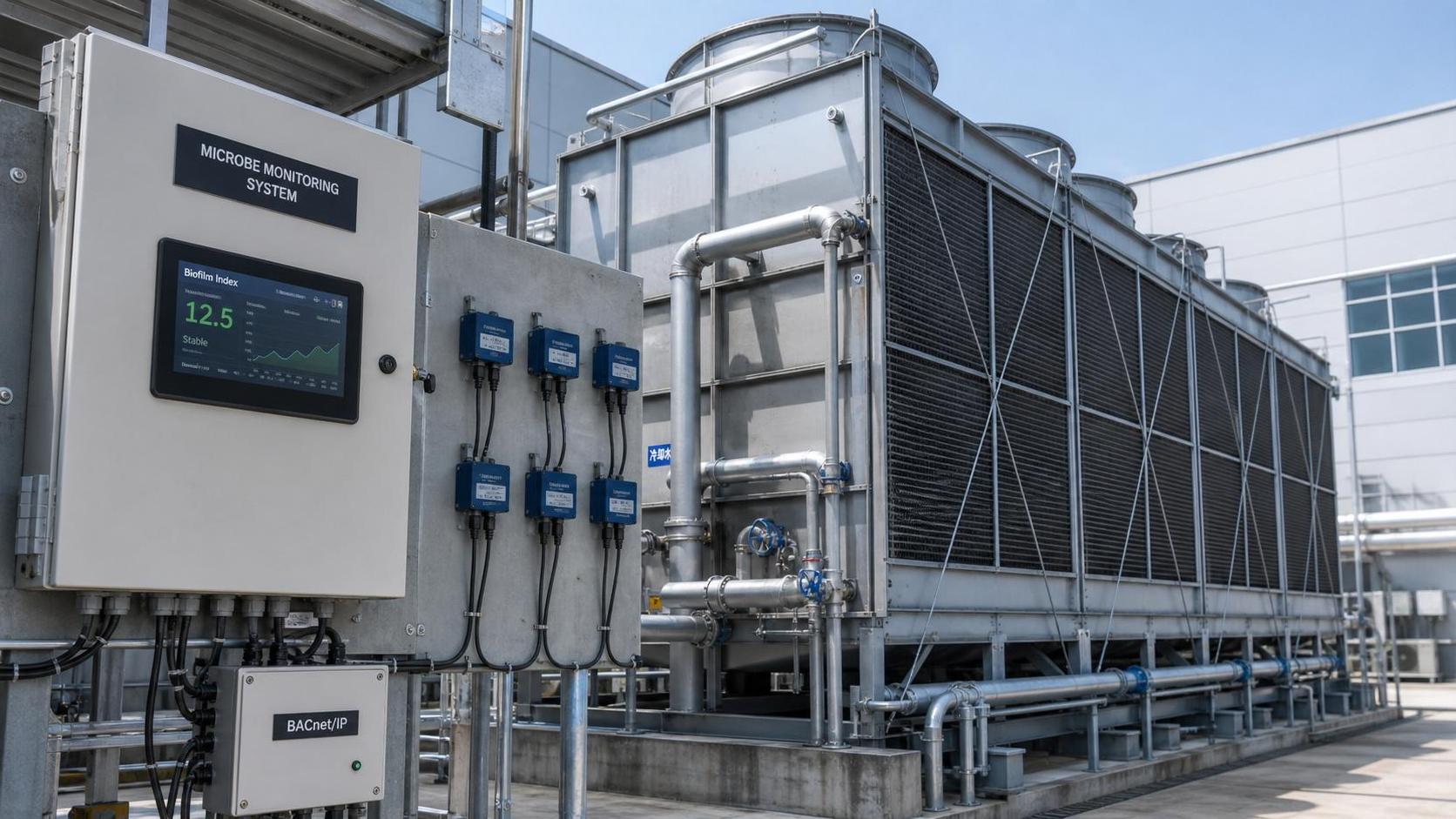
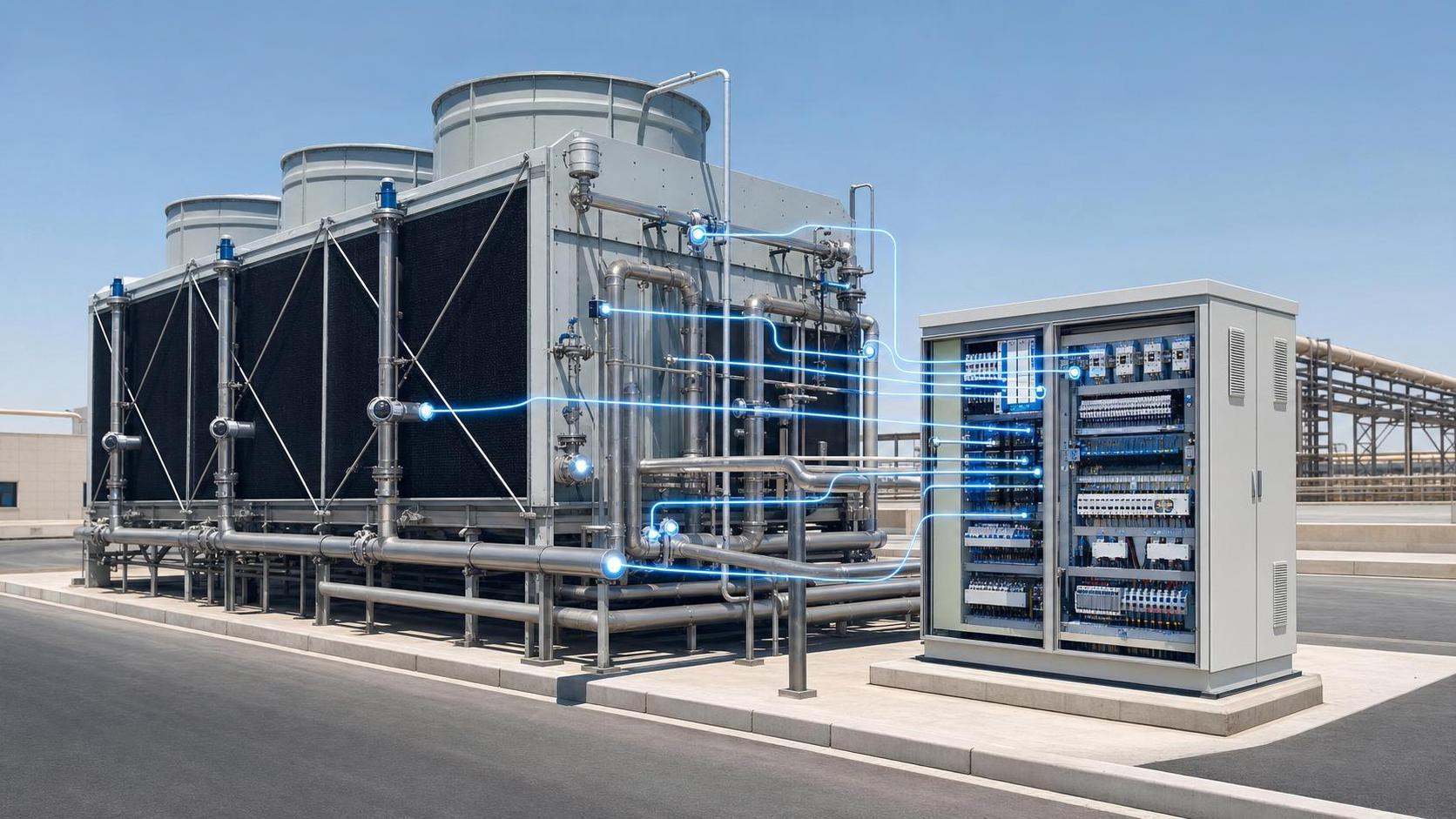
Condition monitoring and connected controls are also changing the replacement conversation. Facilities now have more opportunity to observe fan status, vibration trends, conductivity, basin level, water temperatures, motor load, and operating hours. The value is not in collecting every available signal. It is in identifying the signals that show a loss of thermal margin before operations are affected.
For a multi-cell installation, basic visibility can reveal whether one cell is carrying disproportionate load, whether a fan is consuming more power than comparable units, or whether water temperatures are drifting from expected seasonal patterns. That information can support maintenance decisions, but it also strengthens capital justification. It turns a replacement request from “the tower is old” into a more defensible explanation of performance exposure and future operating cost.
Still, digital capability should not be treated as a substitute for inspection. Sensors do not resolve corroded structure, degraded fill, blocked nozzles, poor drift control, or unsafe access platforms. They help a site prioritize attention; they do not remove the need for practical mechanical judgment.
What the Cooling Tower Market Means for Industrial Leaders
The cooling tower market is likely to remain shaped by the same connected forces: tighter water stewardship, pressure to manage energy use, aging installed assets, more variable operating loads, and a stronger focus on resilience. The most durable replacement decisions will not come from selecting the lowest initial price or the most elaborate specification. They will come from matching the system to the site’s actual thermal duty, maintenance capacity, water constraints, and tolerance for downtime.
For industrial leaders, the practical next step is to bring cooling towers into the same planning conversation as compressors, heat exchangers, refrigeration equipment, and process expansion. GTC-Matrix’s focus on thermal systems and compression power reflects a simple operational reality: heat rejection is connected to every part of the energy conversion chain. A tower replacement deserves scrutiny not because it is fashionable capital spending, but because the wrong decision can limit plant performance for years after the purchase order is closed.
Related News
- Cooling Tower Market Trends Reshaping Replacement Plans and Capital BudgetsAuthor :Thermodynamics Analyst

- Field-Erected Cooling Tower Market: Why Utility Projects Favor Custom DesignsAuthor :Thermodynamics Analyst

- Evaporative Cooling Tower Market Outlook: Demand Drivers, Risks, and Growth AreasAuthor :Thermodynamics Analyst

- When does an industrial cooling radiator outperform a cooling tower?Author :Thermodynamics Analyst

- EU Cooling Tower Standard EN 13771:2026 Takes EffectAuthor :Thermodynamics Analyst

- EU REACH SVHC Update Triggers Cooling Tower DisclosureAuthor :Thermodynamics Analyst

- SASO Adds Bio-Durability Test for Cooling Tower FillAuthor :Thermodynamics Analyst

- EU REACH Update Bars Phthalates in Cooling Tower PVC FillAuthor :Thermodynamics Analyst

- EU Tightens CE Rules for Cooling Tower Steel PartsAuthor :Thermodynamics Analyst

- Shanghai-Rotterdam Cooling Tower Space TightensAuthor :Thermodynamics Analyst

- Hamburg Port Strike Delays Cooling Tower Parts ClearanceAuthor :Thermodynamics Analyst

- ASHRAE 188-2026 Makes Cooling Tower Microbial Control MandatoryAuthor :Thermodynamics Analyst

- India Enforces BIS IS 17842:2026 for Cooling TowersAuthor :Thermodynamics Analyst

- EU REACH Restricts Zinc Inhibitors in Cooling TowersAuthor :Thermodynamics Analyst

- TUV Rheinland Switches Cooling Tower Labels to IEC 61800-9-2Author :Thermodynamics Analyst

- EU REACH Rule Takes Effect for Cooling Tower CoatingsAuthor :Thermodynamics Analyst

- Vietnam to Require IoT Modules in Imported Cooling TowersAuthor :Thermodynamics Analyst

- How to Compare Industrial Cooling Equipment Dry Coolers for Year-Round EfficiencyAuthor :Thermodynamics Analyst

- SASO Tightens Cooling Tower Import Rules for 2027Author :Thermodynamics Analyst

- REACH SVHC Update Limits Copper Corrosion InhibitorsAuthor :Thermodynamics Analyst

- SASO Starts Cooling Tower Data Rule for CoCAuthor :Thermodynamics Analyst

- Saudi SASO Portal Adds Corrosion Data RuleAuthor :Thermodynamics Analyst

- SASO Adds Corrosion Report Rule for Cooling TowersAuthor :Thermodynamics Analyst

- RDHx Prices Rise as AI Demand Lifts Premium ModelsAuthor :Thermodynamics Analyst

- EU EN 13859-2:2026 Mandates Extreme Humidity Heat-Loss TestsAuthor :Thermodynamics Analyst

- VDE Tightens Cooling Tower Test ScopeAuthor :Thermodynamics Analyst

- SASO Tightens Cooling Tower Test Proof for SaberAuthor :Thermodynamics Analyst

- Saudi SABER Cooling Tower Rule Takes Effect EarlyAuthor :Thermodynamics Analyst

- EU Carbon Labels to Cover Cooling Tower ExportsAuthor :Thermodynamics Analyst

- Saudi SABER Cooling Tower Rule Takes Effect EarlyAuthor :Thermodynamics Analyst

- EU Carbon Label Rule Hits Cooling Tower ExportsAuthor :Thermodynamics Analyst

- Saudi SABER Cooling Tower Rule Adds EN 13859-2 TestAuthor :Thermodynamics Analyst

- Saudi SABER Tightens Cooling Tower Energy Report RulesAuthor :Thermodynamics Analyst

- Saudi SASO Tightens Cooling Tower Efficiency FilingAuthor :Thermodynamics Analyst

- Saudi SABER Tightens Cooling Tower Energy Report ChecksAuthor :Thermodynamics Analyst

- Thermal Management Problems That Cause Equipment DowntimeAuthor :Thermodynamics Analyst