



Field-Erected Cooling Tower Market: Why Utility Projects Favor Custom Designs




Utility cooling projects do not select field-erected towers simply because they require large heat-rejection capacity. The stronger reason is that a utility plant’s cooling duty is inseparable from its site: ambient wet-bulb conditions, circulating-water chemistry, plot constraints, outage philosophy, seismic and wind exposure, plume limits, and the expected operating profile all shape the final solution. A standardized packaged unit can be appropriate for a defined and modest duty. Once the thermal system becomes central to plant availability, however, custom field erection often provides a more controllable route to performance, maintainability, and lifecycle risk management.
This distinction is shaping how the field erected cooling tower market is evaluated. The relevant market signal is not merely a preference for larger towers. It is a shift toward project-specific engineering where thermal performance guarantees, civil interfaces, water-management requirements, and long-term operating obligations must be reconciled before equipment is released for manufacture.
Why utility cooling duty resists standardization
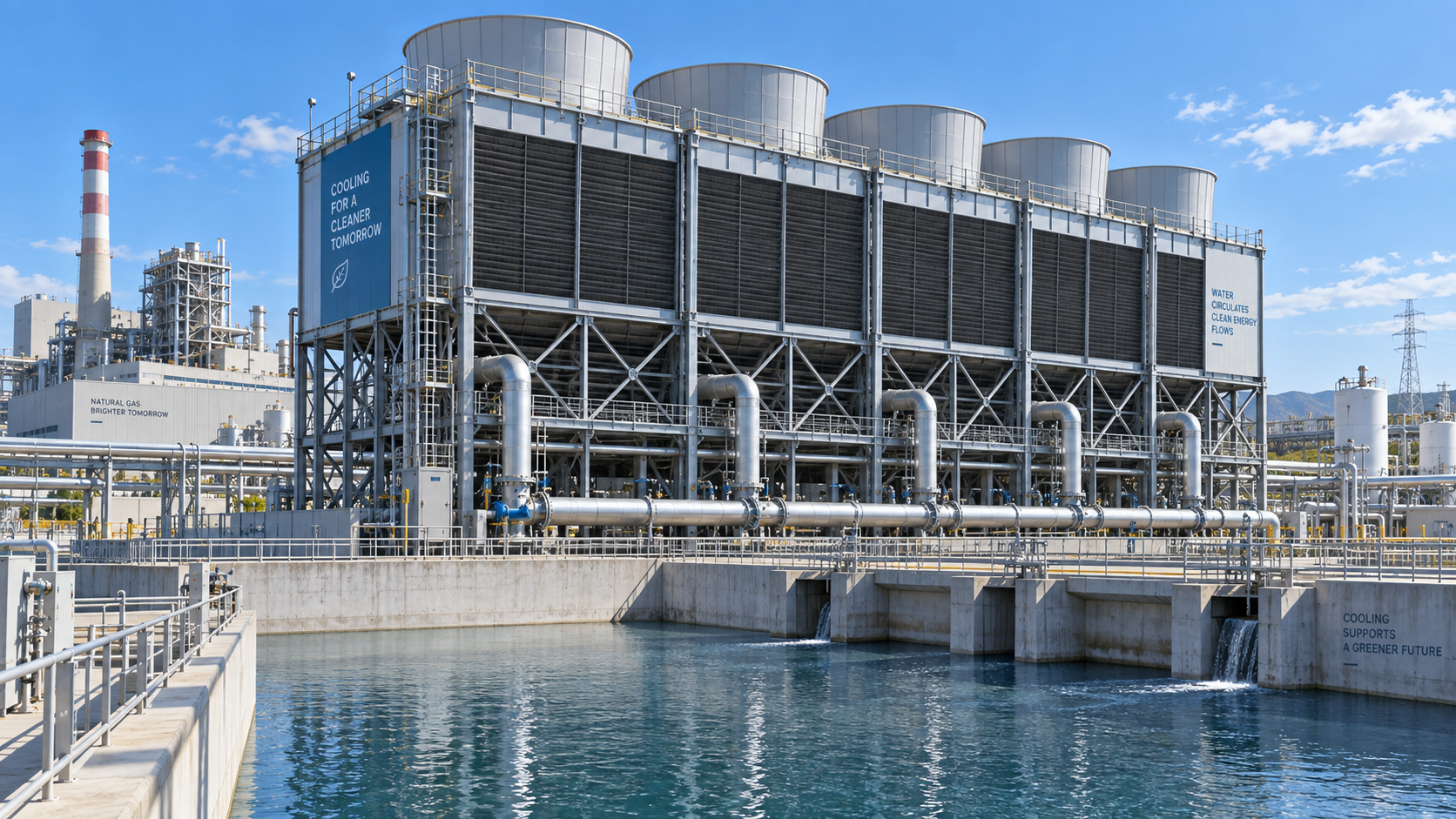
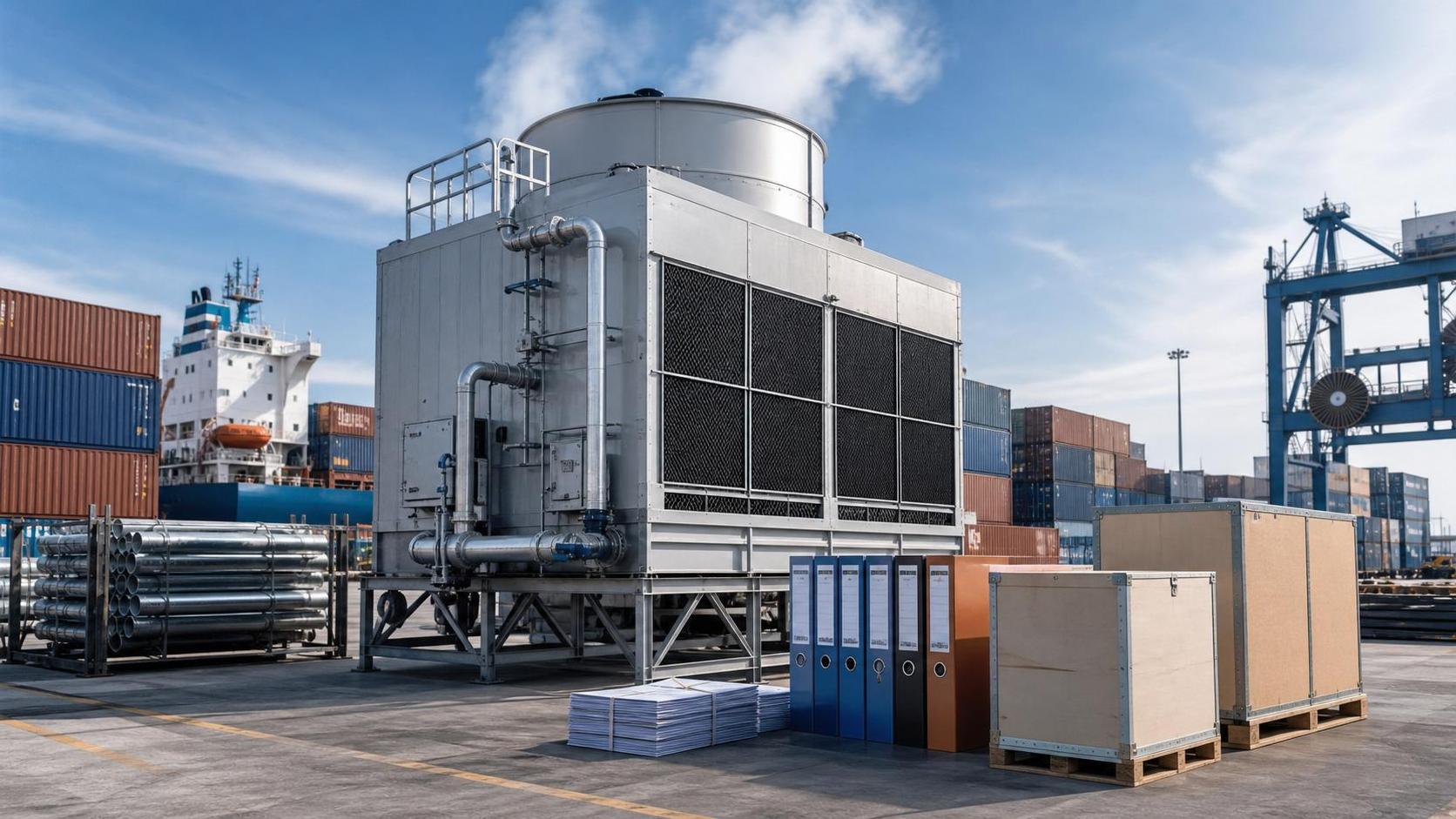
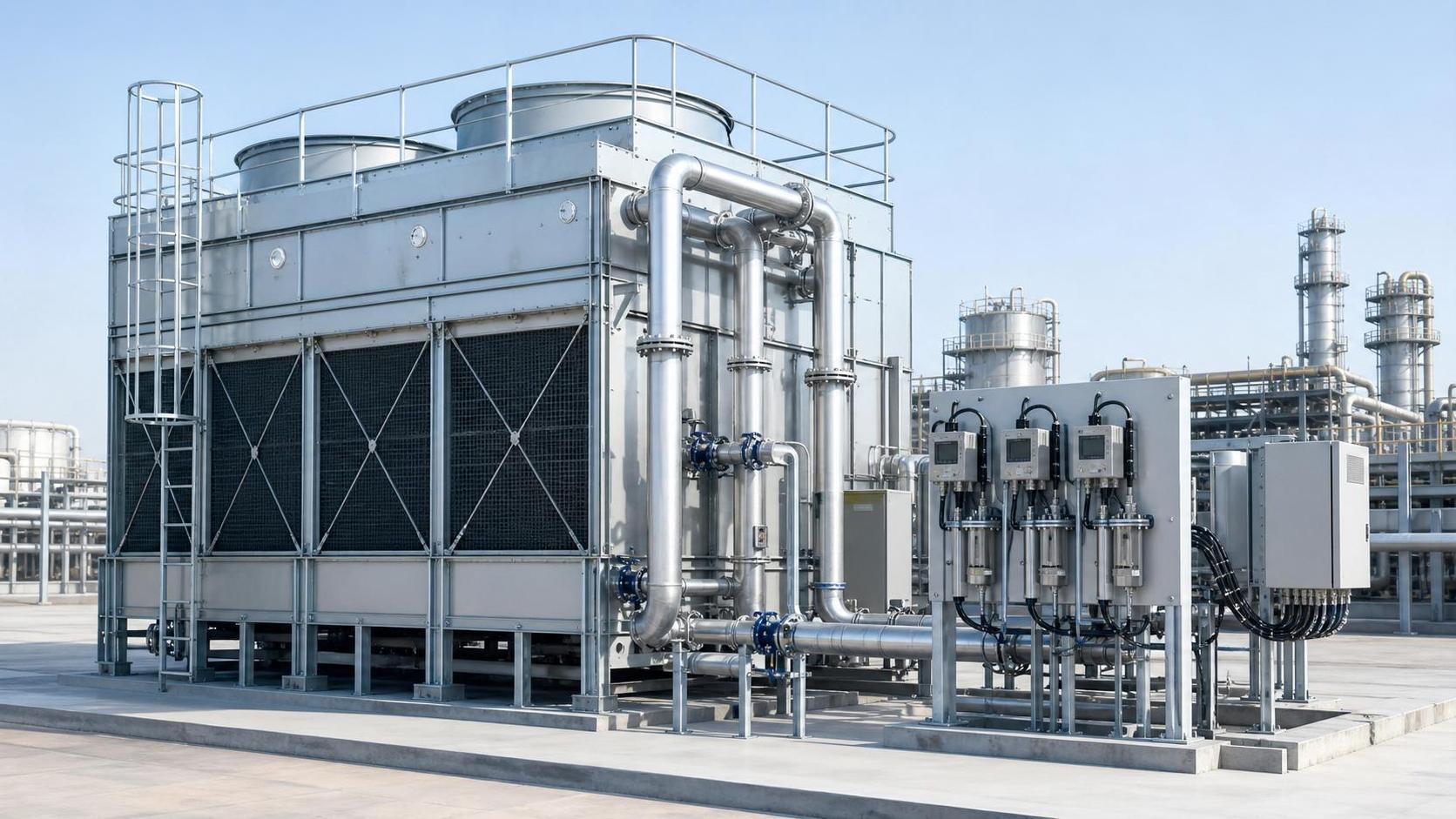
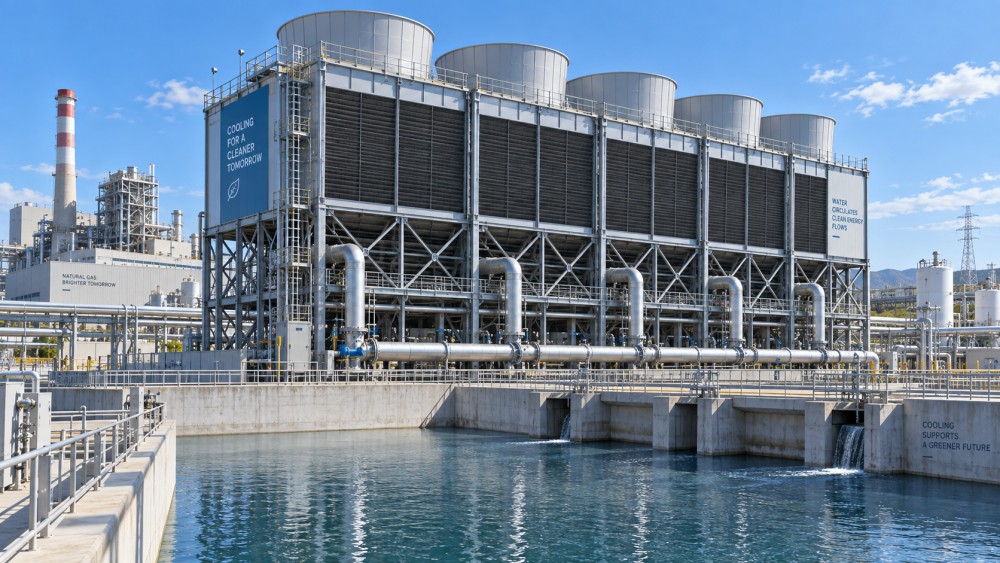
A field-erected cooling tower is assembled at the project site from structural, mechanical, hydraulic, and heat-transfer components designed around the required duty. Its value lies in the ability to adjust the tower cell arrangement, plan area, height, fan selection, fill type, drift-control equipment, basin configuration, access provisions, and structural design to the installation environment.
Utilities face a different set of constraints from many commercial and light-industrial applications. A few degrees of additional cold-water temperature can affect condenser backpressure, steam-cycle efficiency, auxiliary load, or the stable operating margin of downstream equipment. At the same time, cooling duty may vary materially between seasonal peaks, part-load operation, startup, and contingencies such as a cell or fan being unavailable. A tower sized only for a nameplate thermal load, without a credible operating envelope, can become a plant constraint rather than a supporting asset.
The key variables are connected:
- Range defines the difference between hot-water and cold-water temperatures.
- Approach is the difference between cold-water temperature and entering air wet-bulb temperature.
- Wet-bulb temperature establishes the atmospheric limit that governs evaporative cooling performance.
- Water flow and heat load determine the total heat the tower must reject.
A narrow approach may improve process or cycle performance, but it increases tower size, fan power, or both. Conversely, accepting a warmer cold-water temperature can reduce initial tower requirements but shift penalties elsewhere in the plant. This is why a cooling tower cannot be assessed as an isolated equipment package. The economic decision depends on the system-level relationship between cooling performance, power generation or process output, water use, and availability.
Custom design is often a risk-control mechanism
The phrase “custom design” can suggest unnecessary engineering complexity. In utility work, it is better understood as controlled adaptation to known project risks. The practical question is not whether every component must be unique. It is whether the baseline design can accommodate the site and duty without transferring unresolved constraints into construction or operation.
Consider water availability. A project supplied by water with high suspended solids, scaling tendency, biological risk, or restricted blowdown disposal cannot treat water chemistry as a commissioning-stage detail. It influences fill selection, basin geometry, filtration strategy, nozzle design, materials, access for cleaning, and the acceptable cycles of concentration. A tower that performs well with relatively clean make-up water may suffer distribution blockage, fouling, or accelerated degradation under a different water regime.
Climate exposure creates a similar need for design specificity. In cold climates, freeze protection can affect piping arrangements, basin heating, fan-control logic, louvers, and winter operating procedures. In high-wind or cyclone-prone locations, structural loading, cladding details, anchorage, and erection sequencing require close coordination with civil engineering. In seismic zones, the tower structure, distribution system, piping flexibility, and basin interfaces must be designed as an integrated system rather than reviewed as separate packages.
Plume control is another example. Visible plume is not always a technical problem, but it can become an operational or permitting issue where roads, residential areas, electrical infrastructure, or aircraft visibility are affected. Hybrid or plume-abatement arrangements may be justified in certain locations, yet they introduce additional heat-exchange surfaces, controls, capital cost, and maintenance requirements. A generic tower specification that adds “plume abatement if required” leaves too much engineering definition unresolved.
What is changing in project evaluation
Field-erected towers have traditionally been associated with large thermal power stations, refineries, petrochemical facilities, and heavy industrial sites. The more important current direction is not a universal replacement of packaged cooling equipment. It is the widening range of projects where thermal-system decisions are being reviewed through lifecycle exposure rather than purchase price alone.
Several project conditions are reinforcing this approach. Utility assets are expected to operate flexibly rather than at one stable design point. Water constraints are receiving greater scrutiny in locations where withdrawal, discharge, or treatment capacity affects permitting and operating continuity. Environmental performance requirements can include drift control, noise limits, visible plume management, and chemical discharge obligations. At the same time, owners are less willing to accept a design boundary between the cooling tower supplier and the rest of the plant that obscures responsibility for final performance.
These forces favor equipment scopes with clearer interfaces and stronger design integration. They do not automatically favor the largest or most elaborate cooling tower. A field-erected solution becomes compelling when the benefits of site-specific geometry, redundancy, materials selection, or control strategy outweigh the additional engineering and site-construction exposure.
That qualification matters. For a project with a well-defined duty, limited footprint, accessible maintenance conditions, and no unusual environmental or structural constraints, modular factory-built equipment may remain the more efficient choice. The field erected cooling tower market should therefore be viewed as a market for complex duty resolution, not as a simple indicator that customization is always superior.
The design basis is more valuable than an early equipment quote
Many cooling-tower procurement difficulties begin when a request for quotation is issued before the thermal and site design basis is sufficiently mature. Suppliers then price different assumptions, and apparently comparable proposals conceal major differences in scope. One bid may be based on clean-tube condenser performance at a design wet-bulb condition, while another assumes a different water flow, fouling allowance, number of operating cells, or fan availability. The lowest evaluated price can then reflect a narrower interpretation rather than a better technical solution.
A robust design basis should identify the operating cases that matter, not only the nominal condition. These commonly include maximum ambient wet-bulb duty, normal operation, low-load operation, startup or shutdown modes, and degraded operation with equipment unavailable. It should also establish the required cold-water temperature at the point that matters to the plant, accounting for piping losses and basin conditions rather than treating tower outlet temperature as the only performance reference.
The following areas deserve particular attention before commercial comparison:
- Thermal guarantee conditions: wet-bulb basis, heat load, water flow, range, approach, test method, and allowable tolerances.
- Redundancy philosophy: whether the plant must meet duty with one fan, gearbox, cell, or electrical feeder unavailable.
- Water-quality envelope: make-up composition, suspended solids, treatment assumptions, blowdown limits, and expected cycles of concentration.
- Mechanical configuration: induced- or forced-draft arrangement, fan diameter and drive type, fill configuration, drift eliminator performance, and distribution-system accessibility.
- Site loads: wind, seismic, snow, corrosion category, elevation, and ambient temperature extremes.
- Interface boundaries: basin civil works, incoming piping, electrical supply, controls integration, fire protection, drainage, and erection facilities.
None of these points is administrative detail. Each can alter tower dimensions, steel tonnage, component selection, construction duration, and the party responsible when duty is not achieved.
Availability is designed through maintainability, not only redundancy
Utility specifications often state an availability target and then translate it directly into spare cells or spare fans. Redundancy is important, but it does not solve all availability risks. A tower can have nominal spare capacity while remaining difficult to inspect, clean, isolate, or repair during operation.
Maintainability depends on the physical design. Access to distribution basins, nozzles, fill support systems, fan stacks, drives, gearboxes, motors, and drift eliminators should be reviewed as part of the layout, not left to vendor standard practice. The ability to isolate a cell hydraulically, drain it safely, and return it to service without disturbing adjacent cells has direct implications for outage planning. Hoisting routes and removal paths for heavy rotating equipment also deserve early review. A technically sound fan assembly becomes a maintenance liability if replacement requires extensive temporary works or a long plant outage.
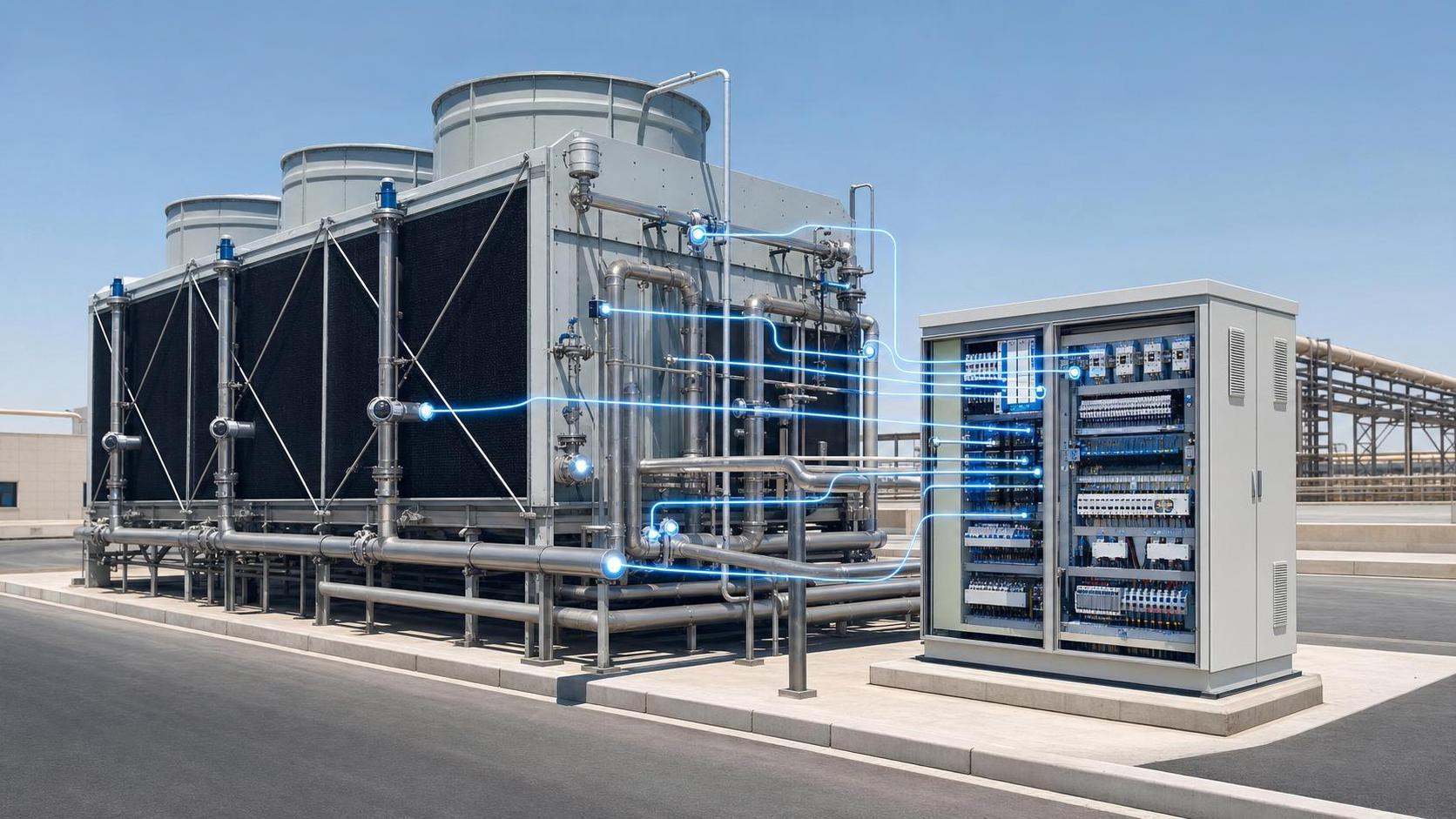
Controls need the same discipline. Variable-frequency drives, fan sequencing, vibration monitoring, basin level control, freeze protection, and water-treatment interlocks can improve operating flexibility, but only when their failure modes and fallback logic are understood. A control scheme that minimizes fan energy at favorable ambient conditions should not compromise thermal stability during rapid load changes or reduce operator visibility during abnormal conditions.
Construction risk is part of the equipment decision
Field erection provides adaptability, but it also moves a significant portion of delivery risk to the site. Civil foundations must meet dimensional and loading requirements. Major components must arrive in a sequence compatible with erection logic. Site labor capability, lifting plans, weather exposure, storage conditions, and quality inspection all influence the final outcome.
For this reason, schedule assessment should separate engineering lead time, procurement of long-lead components, civil readiness, structural erection, mechanical installation, electrical and controls work, wet commissioning, and performance testing. A tower may appear early in a project schedule because it is visible above grade, yet its successful completion depends on interfaces that begin much earlier: basin design, piping routing, electrical-room readiness, water treatment, and access planning.
Material selection also requires a lifecycle view. Structural timber, reinforced concrete, galvanized steel, stainless steel, fiberglass-reinforced plastic, and engineered plastics may each have a place depending on corrosion exposure, water chemistry, fire requirements, structural loads, local construction practices, and maintenance strategy. No material is inherently “best” outside its service environment. The relevant assessment is how the material system, coatings, fasteners, connectors, and replaceable internals will behave together over the intended operating period.
Performance guarantees must be testable and contractually aligned
Cooling tower guarantees can become contentious when the contract language does not distinguish between tower performance and plant performance. The tower supplier controls the cooling equipment within a defined boundary; the plant’s observed cold-water temperature may also be influenced by piping heat gain, recirculation, condenser condition, water flow deviations, air ingress, instrumentation accuracy, or atmospheric conditions that differ from the agreed test basis.
A credible guarantee therefore needs an agreed performance-test framework, calibrated instrumentation requirements, correction procedures, and a clear definition of what happens if test conditions cannot be reached during the commissioning window. Industry test methods are commonly referenced for this purpose, including standards and guidance issued by the Cooling Technology Institute where applicable. Referencing a standard is not enough if the project specification leaves the guaranteed duty, measurement locations, corrections, and acceptance remedy undefined.
It is equally important to establish whether the supplier’s obligation includes fan power, drift performance, sound levels, vibration limits, materials compliance, and water distribution uniformity. These are not interchangeable with thermal capacity. A tower can meet cold-water temperature while imposing higher auxiliary power, creating unacceptable noise, or generating drift beyond the project’s environmental assumptions.
Where the market pressure will remain concentrated
The most durable demand logic for field-erected designs is concentrated in projects where cooling performance cannot be separated from plant reliability and site constraints. Large heat loads alone do not determine that outcome. The stronger indicators are constrained water management, demanding availability requirements, difficult climate exposure, limited plot flexibility, tightly defined environmental conditions, and a duty profile that cannot be represented by one simple design point.
For project development, the practical implication is clear: cooling-tower strategy should be fixed early enough to influence plant layout, civil design, electrical distribution, water-treatment scope, and operating philosophy. Treating it as a late mechanical package can create expensive changes after major interfaces have already been committed.
Custom field erection is most valuable when it converts unavoidable site complexity into an explicit, testable design. It is least valuable when customization is used to compensate for an immature process basis or unclear project responsibility. The quality of the owner’s thermal data, interface definition, and lifecycle assumptions will ultimately determine whether a field-erected tower becomes a reliability asset or simply a larger procurement package.
Related News
- Field-Erected Cooling Tower Market: Why Utility Projects Favor Custom DesignsAuthor :Thermodynamics Analyst

- Evaporative Cooling Tower Market Outlook: Demand Drivers, Risks, and Growth AreasAuthor :Thermodynamics Analyst

- When does an industrial cooling radiator outperform a cooling tower?Author :Thermodynamics Analyst

- EU Cooling Tower Standard EN 13771:2026 Takes EffectAuthor :Thermodynamics Analyst

- EU REACH SVHC Update Triggers Cooling Tower DisclosureAuthor :Thermodynamics Analyst

- SASO Adds Bio-Durability Test for Cooling Tower FillAuthor :Thermodynamics Analyst

- EU REACH Update Bars Phthalates in Cooling Tower PVC FillAuthor :Thermodynamics Analyst

- EU Tightens CE Rules for Cooling Tower Steel PartsAuthor :Thermodynamics Analyst

- Shanghai-Rotterdam Cooling Tower Space TightensAuthor :Thermodynamics Analyst

- Hamburg Port Strike Delays Cooling Tower Parts ClearanceAuthor :Thermodynamics Analyst

- ASHRAE 188-2026 Makes Cooling Tower Microbial Control MandatoryAuthor :Thermodynamics Analyst

- India Enforces BIS IS 17842:2026 for Cooling TowersAuthor :Thermodynamics Analyst

- EU REACH Restricts Zinc Inhibitors in Cooling TowersAuthor :Thermodynamics Analyst

- TUV Rheinland Switches Cooling Tower Labels to IEC 61800-9-2Author :Thermodynamics Analyst

- EU REACH Rule Takes Effect for Cooling Tower CoatingsAuthor :Thermodynamics Analyst

- Vietnam to Require IoT Modules in Imported Cooling TowersAuthor :Thermodynamics Analyst

- How to Compare Industrial Cooling Equipment Dry Coolers for Year-Round EfficiencyAuthor :Thermodynamics Analyst

- SASO Tightens Cooling Tower Import Rules for 2027Author :Thermodynamics Analyst

- REACH SVHC Update Limits Copper Corrosion InhibitorsAuthor :Thermodynamics Analyst

- SASO Starts Cooling Tower Data Rule for CoCAuthor :Thermodynamics Analyst

- Saudi SASO Portal Adds Corrosion Data RuleAuthor :Thermodynamics Analyst

- SASO Adds Corrosion Report Rule for Cooling TowersAuthor :Thermodynamics Analyst

- RDHx Prices Rise as AI Demand Lifts Premium ModelsAuthor :Thermodynamics Analyst

- EU EN 13859-2:2026 Mandates Extreme Humidity Heat-Loss TestsAuthor :Thermodynamics Analyst

- VDE Tightens Cooling Tower Test ScopeAuthor :Thermodynamics Analyst

- SASO Tightens Cooling Tower Test Proof for SaberAuthor :Thermodynamics Analyst

- Saudi SABER Cooling Tower Rule Takes Effect EarlyAuthor :Thermodynamics Analyst

- EU Carbon Labels to Cover Cooling Tower ExportsAuthor :Thermodynamics Analyst

- Saudi SABER Cooling Tower Rule Takes Effect EarlyAuthor :Thermodynamics Analyst

- EU Carbon Label Rule Hits Cooling Tower ExportsAuthor :Thermodynamics Analyst

- Saudi SABER Cooling Tower Rule Adds EN 13859-2 TestAuthor :Thermodynamics Analyst

- Saudi SABER Tightens Cooling Tower Energy Report RulesAuthor :Thermodynamics Analyst

- Saudi SASO Tightens Cooling Tower Efficiency FilingAuthor :Thermodynamics Analyst

- Saudi SABER Tightens Cooling Tower Energy Report ChecksAuthor :Thermodynamics Analyst

- Thermal Management Problems That Cause Equipment DowntimeAuthor :Thermodynamics Analyst

- Saudi Rule Requires Local Certification for Imported Cooling TowersAuthor :Thermodynamics Analyst