Evaporative Cooling Tower Market Outlook: Demand Drivers, Risks, and Growth Areas




Evaporative Cooling Tower Market Outlook: Demand Drivers, Risks, and Growth Areas
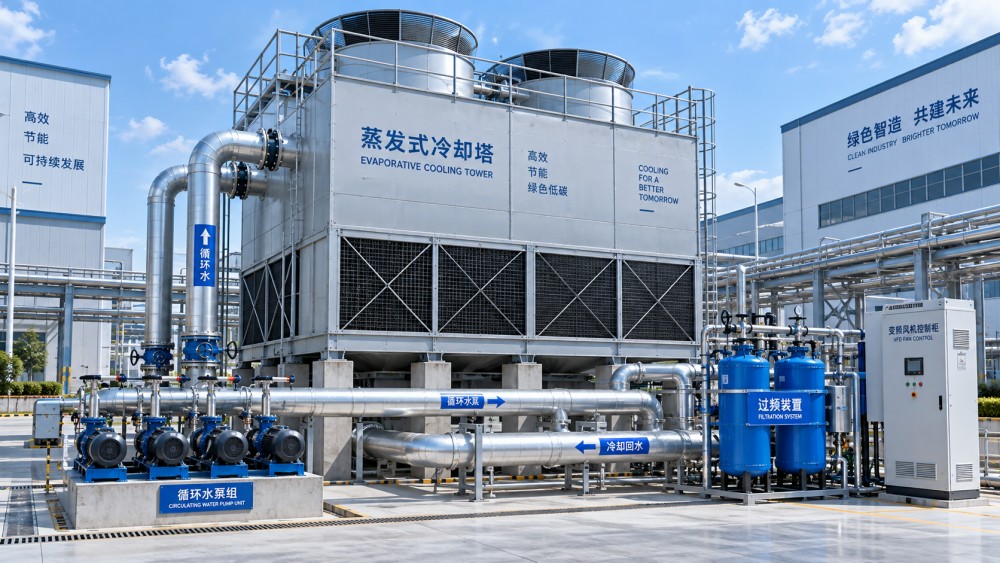
The evaporative cooling tower market is gaining momentum because industrial operators are under pressure from several directions at once: energy costs remain volatile, process loads are becoming less forgiving, and capital projects are increasingly judged against water, carbon, and operating-resilience targets. Cooling towers are not a new technology, but the buying logic around them is changing. A unit once selected mainly on thermal duty and first cost is now evaluated as part of a wider cooling-water system, often alongside pumps, filtration, controls, heat exchangers, water-treatment programs, and site-level energy management.
For channel partners, this matters. The strongest opportunities are rarely found by simply moving more standard cells. They come from recognizing where customers are facing a genuine operating constraint: a chiller plant losing capacity during hot weather, a production line limited by rising condenser-water temperature, a data facility requiring more predictable heat rejection, or an aging industrial tower whose maintenance burden has become difficult to defend. The market is expanding in practical pockets, but it also carries risks that distributors and agents need to qualify early.
Why demand is becoming more project-specific
Evaporative cooling remains attractive because it can reject heat close to the ambient wet-bulb temperature, rather than relying only on dry-bulb conditions. In the right climate and operating envelope, that gives it a strong position in industrial heat rejection and water-cooled HVAC systems. Yet the phrase “the right climate” deserves more attention than it often receives in early conversations. A tower that looks compelling on a generic heat-load sheet may become less attractive when water restrictions, poor incoming-water quality, plume concerns, corrosion exposure, or limited maintenance access are added to the picture.
This is why market demand is separating into different decision paths. Manufacturing customers may be driven by stable process temperature and uptime. Commercial HVAC owners may focus on seasonal efficiency and replacement logistics. Data-center projects often place more weight on redundancy, control integration, water strategy, and the consequences of a heat-rejection failure. Power-intensive sites, including facilities supporting electrified production or high-density computing, may need to compare evaporative, hybrid, and dry cooling options rather than treating one technology as an automatic default.
The practical implication for the evaporative cooling tower market is that demand is not just volume-led. It is increasingly shaped by system design choices. A distributor that can read a basic heat-balance discussion, ask about approach temperature, understand the difference between peak duty and annual operating profile, and identify the role of plate-and-frame or shell-and-tube heat exchangers is in a better position than one selling the tower as an isolated piece of equipment.
The major drivers behind new investment
Energy remains the most consistent commercial driver. Many operators are examining the entire cooling loop because fan power, pump power, chiller lift, condenser-water temperature, and control sequencing all interact. A tower retrofit may be considered when existing equipment cannot maintain design conditions, when fan assemblies are aging, or when a broader plant upgrade requires better coordination between heat rejection and refrigeration or process cooling.
That does not mean every replacement should be framed as an energy-saving project. In many older installations, the immediate issue is reliability: leaking basins, degraded fill, vibration, gearbox or motor concerns, structural corrosion, drift losses, or inconsistent water distribution. These are operational problems first. Energy performance becomes part of the justification once the site compares repair cost, downtime exposure, and the useful life remaining in the existing asset.
Industrial expansion also supports demand. Food and beverage processing, pharmaceuticals, chemicals, plastics, metalworking, district cooling, and general manufacturing all use thermal systems where a dependable cooling-water circuit can affect output quality or line availability. Semiconductor-related facilities are another area to watch, although their requirements vary greatly by process and site design. The common thread is not a single tower configuration; it is the growing value of controlled thermal conditions in production environments where variation can be expensive.
Data infrastructure is often discussed as a growth engine, but channel partners should avoid treating it as a simple high-volume replacement market. Cooling architecture differs significantly between facilities. Some sites prioritize water-cooled chilled-water systems, while others employ air-side strategies, liquid cooling loops, hybrid equipment, or combinations of these approaches. The real opening may be in auxiliary heat rejection, water treatment, monitoring, basin management, spare parts, and service readiness—not necessarily the original tower package alone.
What buyers are asking for beyond thermal capacity
A recurring shift in buying behavior is the move from nominal capacity discussions toward operating risk. Customers want to know how the system behaves during heat waves, how quickly parts can be supplied, whether the tower can be inspected safely, and what happens if one fan, drive, or cell is unavailable. In established facilities, access constraints can be decisive. A replacement that is technically suitable but impossible to install within a shutdown window will struggle to win approval.
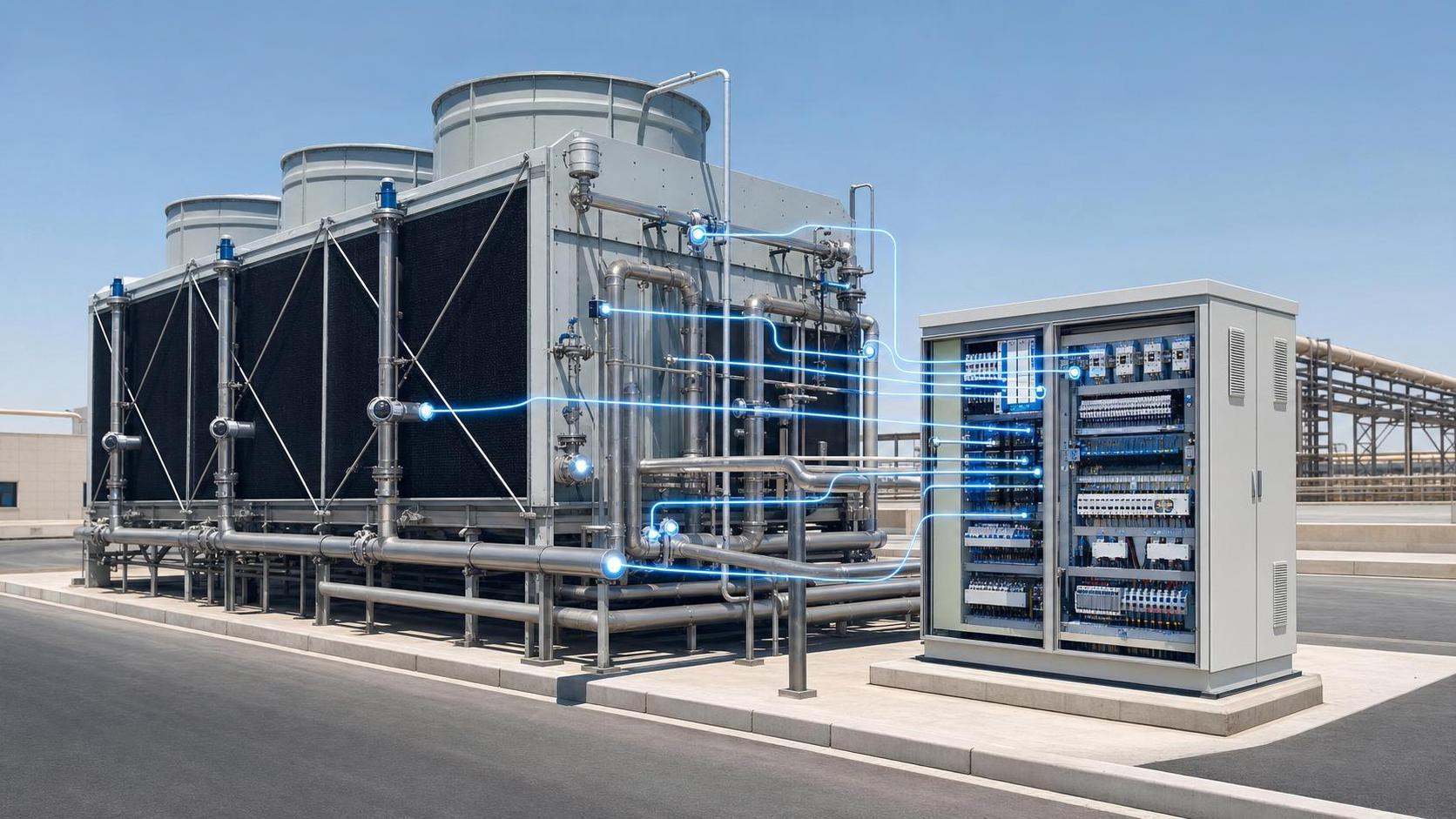
Controls are also receiving more attention. Variable-speed fans, basin heaters where relevant, conductivity management, remote alarms, vibration monitoring, and interface capability with a building or plant management system are becoming more common points of discussion. None of these features eliminates the need for good operation and maintenance. They do, however, allow operators to see problems earlier and avoid running the system at fixed settings when the load or ambient conditions do not require it.
Materials selection is another area where a channel partner can add real value. The right choice depends on local climate, circulating-water chemistry, airborne contaminants, cleaning practices, and expected service life. It is risky to make broad claims that one construction material is always superior. Stainless steel, coated steel, fiberglass-reinforced components, and engineered plastics each have roles, but selection should follow the site conditions and the manufacturer’s documented limits. Corrosion that appears after installation is often blamed on equipment quality even when the real cause is unsuitable water chemistry or an overlooked environmental exposure.
Water is the market’s biggest opportunity—and its biggest qualification issue
Water availability is reshaping cooling-tower decisions in many regions. Evaporative systems consume water through evaporation, blowdown, drift, and maintenance-related losses. The actual operating profile depends on heat load, climate, cycles of concentration, makeup-water quality, treatment strategy, and local requirements. It should never be reduced to a universal rule of thumb without reviewing the project.
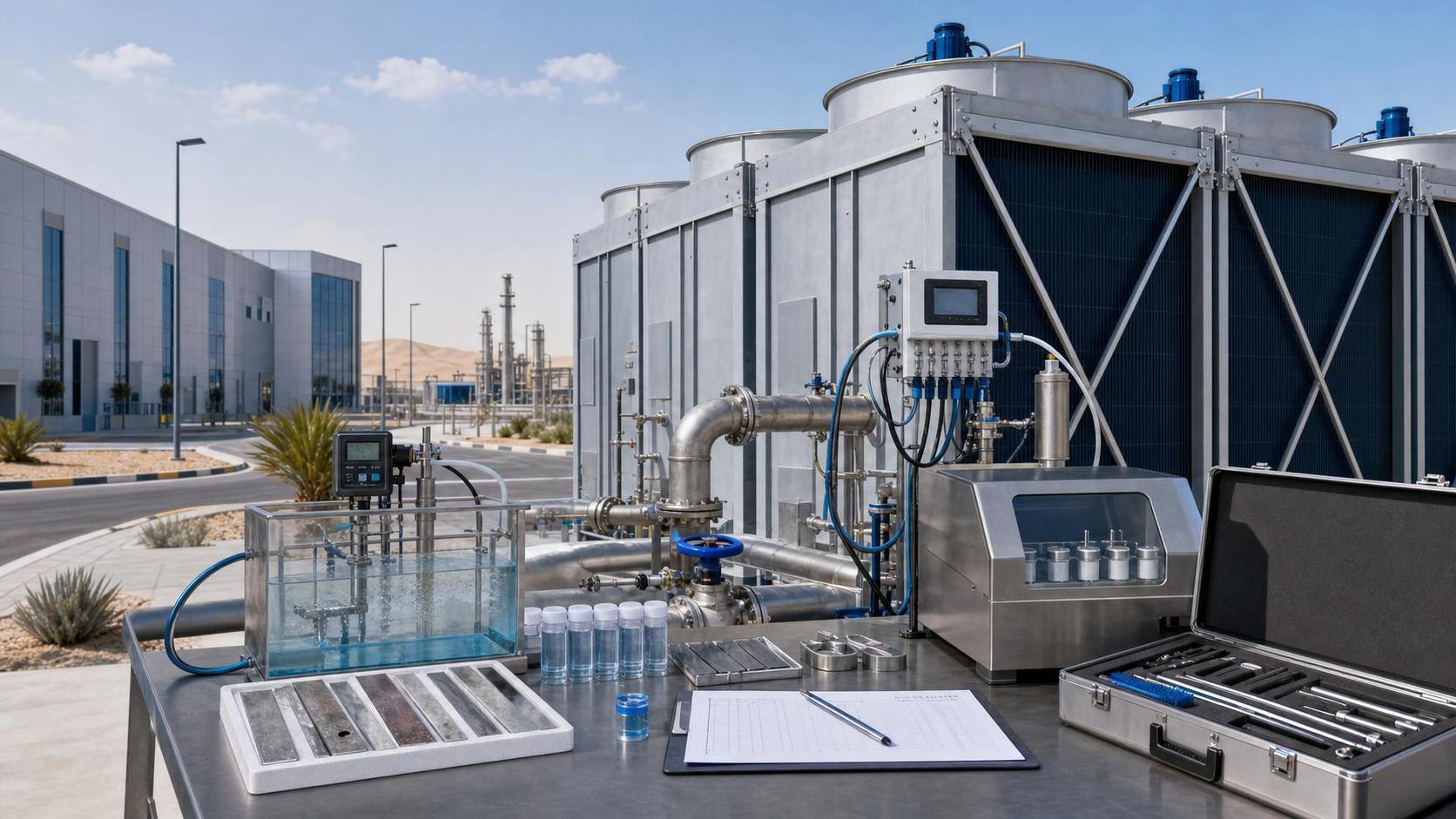
For some facilities, the answer is better water management rather than abandoning evaporative cooling. Options may include improved filtration, side-stream treatment, more disciplined conductivity control, reuse of suitable site water where permitted and technically appropriate, or a revised system layout that separates sensitive process loops from cooling-tower water. For other locations, water scarcity or discharge constraints can push the buyer toward hybrid or dry alternatives, even if their energy profile differs.
This is a point where inexperienced sales conversations can go wrong. Promising low water use without discussing blowdown, treatment, local discharge rules, and seasonal conditions creates a credibility problem later. A better approach is to ask what water the site can actually use, what it costs, what treatment infrastructure already exists, and who is responsible for maintaining it. The cooling tower is only as reliable as the water-management discipline around it.
Risks that can slow the evaporative cooling tower market
The market outlook is positive in many industrial applications, but the risks are concrete. Water restrictions, drought conditions, and higher utility charges can alter project economics. Local public-health expectations may require more rigorous operating procedures and documentation, particularly where aerosol control and water hygiene are concerned. Requirements vary by jurisdiction, so distributors should avoid offering compliance assurances unless they have reviewed the applicable local rules and the equipment documentation.
Maintenance capability is an equally important constraint. Cooling towers are sometimes sold into sites that have limited mechanical staffing or an outsourced service model with unclear responsibilities. Over time, neglected cleaning, weak treatment control, damaged drift eliminators, scaling, biological growth, or failed components can undermine both heat transfer and site confidence. A lower initial purchase price does not compensate for a design that the customer cannot realistically maintain.
Supply-chain decisions also deserve scrutiny. Replacement projects often depend on a narrow shutdown window. Before committing to a specification, channel partners should clarify fabrication lead times, site assembly requirements, freight dimensions, crane access, electrical compatibility, spare-part availability, and whether the existing basin, piping, and structural supports can be retained. The field discovery work is not glamorous, but it prevents costly surprises.
Where distributors and agents can find stronger margins
The most defensible channel position is usually built around technical scope, not equipment resale alone. Retrofit work can involve fan and motor upgrades, fill replacement, nozzles, drift eliminators, controls, basin refurbishment, vibration monitoring, filtration packages, and water-treatment coordination. These opportunities are often triggered by a performance complaint rather than a formal capital plan. A customer may say, “The chiller cannot hold setpoint in summer,” when the underlying issue is tower airflow, fouled fill, poor water distribution, or a mismatch between current load and original design.
Service-oriented packages can also create recurring revenue if they are structured carefully. Seasonal inspection, startup support, cleaning coordination, performance review, critical-spares planning, and operator training are valuable because they address the operational gap that many owners underestimate. They should not be offered as generic add-ons. The scope needs to reflect who owns water treatment, who handles microbiological monitoring where required, and what equipment access is available.
There is also room for distributors to become better system interpreters. GTC-Matrix tracks industrial cooling alongside compressed air, vacuum processes, heat exchange technologies, and wider energy-conversion trends because these systems rarely operate in isolation. A plant’s cooling load may change after a compressor upgrade, a heat-recovery project, a new process line, or a shift in refrigerant strategy. Seeing those connections helps channel partners identify demand earlier, before a tower purchase becomes an urgent replacement order.
A practical qualification framework before quoting
A useful first conversation should establish more than tonnage or nominal capacity. Ask for the required heat rejection, hot- and cold-water temperatures, design wet-bulb condition, flow rate, hours of operation, site elevation if relevant, water source, water-treatment practice, available footprint, noise limitations, and planned redundancy. Then ask the questions that reveal project risk: Is this a new facility or a live replacement? Can the process tolerate outage time? Is the existing pump head adequate? What has failed on the current equipment? Is the reported thermal problem present all year, or only during peak ambient conditions?
That information supports a more honest choice between evaporative, hybrid, and dry approaches. It may also reveal that a tower replacement is not the first corrective action. In some cases, cleaning, balancing, water-treatment improvement, control adjustments, or a heat-exchanger review should come before a major equipment decision. This can feel counterintuitive to a sales organization, but it builds trust and improves the chance that the final project performs as expected.
The near-term outlook
The evaporative cooling tower market should continue to benefit from industrial modernization, cooling-system retrofits, higher sensitivity to energy performance, and the expansion of heat-intensive facilities. Growth will not be uniform. Regions with water constraints, strict local operating expectations, or limited service capability will demand more careful solutions. Meanwhile, established industrial markets may offer their best opportunities through refurbishment, controls, maintenance, and system optimization rather than entirely new installations.
For distributors and agents, the key is to qualify the cooling-water system before recommending the tower. The winning projects will be the ones where thermal duty, water reality, maintenance practice, installation constraints, and commercial timing have all been addressed together. In industrial cooling, a well-specified tower is valuable; a well-understood system is far more valuable.
Related News
- Field-Erected Cooling Tower Market: Why Utility Projects Favor Custom DesignsAuthor :Thermodynamics Analyst

- Evaporative Cooling Tower Market Outlook: Demand Drivers, Risks, and Growth AreasAuthor :Thermodynamics Analyst

- When does an industrial cooling radiator outperform a cooling tower?Author :Thermodynamics Analyst

- EU Cooling Tower Standard EN 13771:2026 Takes EffectAuthor :Thermodynamics Analyst

- EU REACH SVHC Update Triggers Cooling Tower DisclosureAuthor :Thermodynamics Analyst

- SASO Adds Bio-Durability Test for Cooling Tower FillAuthor :Thermodynamics Analyst

- EU REACH Update Bars Phthalates in Cooling Tower PVC FillAuthor :Thermodynamics Analyst

- EU Tightens CE Rules for Cooling Tower Steel PartsAuthor :Thermodynamics Analyst

- Shanghai-Rotterdam Cooling Tower Space TightensAuthor :Thermodynamics Analyst

- Hamburg Port Strike Delays Cooling Tower Parts ClearanceAuthor :Thermodynamics Analyst

- ASHRAE 188-2026 Makes Cooling Tower Microbial Control MandatoryAuthor :Thermodynamics Analyst

- India Enforces BIS IS 17842:2026 for Cooling TowersAuthor :Thermodynamics Analyst

- EU REACH Restricts Zinc Inhibitors in Cooling TowersAuthor :Thermodynamics Analyst

- TUV Rheinland Switches Cooling Tower Labels to IEC 61800-9-2Author :Thermodynamics Analyst

- EU REACH Rule Takes Effect for Cooling Tower CoatingsAuthor :Thermodynamics Analyst

- Vietnam to Require IoT Modules in Imported Cooling TowersAuthor :Thermodynamics Analyst

- How to Compare Industrial Cooling Equipment Dry Coolers for Year-Round EfficiencyAuthor :Thermodynamics Analyst

- SASO Tightens Cooling Tower Import Rules for 2027Author :Thermodynamics Analyst

- REACH SVHC Update Limits Copper Corrosion InhibitorsAuthor :Thermodynamics Analyst

- SASO Starts Cooling Tower Data Rule for CoCAuthor :Thermodynamics Analyst

- Saudi SASO Portal Adds Corrosion Data RuleAuthor :Thermodynamics Analyst

- SASO Adds Corrosion Report Rule for Cooling TowersAuthor :Thermodynamics Analyst

- RDHx Prices Rise as AI Demand Lifts Premium ModelsAuthor :Thermodynamics Analyst

- EU EN 13859-2:2026 Mandates Extreme Humidity Heat-Loss TestsAuthor :Thermodynamics Analyst

- VDE Tightens Cooling Tower Test ScopeAuthor :Thermodynamics Analyst

- SASO Tightens Cooling Tower Test Proof for SaberAuthor :Thermodynamics Analyst

- Saudi SABER Cooling Tower Rule Takes Effect EarlyAuthor :Thermodynamics Analyst

- EU Carbon Labels to Cover Cooling Tower ExportsAuthor :Thermodynamics Analyst

- Saudi SABER Cooling Tower Rule Takes Effect EarlyAuthor :Thermodynamics Analyst

- EU Carbon Label Rule Hits Cooling Tower ExportsAuthor :Thermodynamics Analyst

- Saudi SABER Cooling Tower Rule Adds EN 13859-2 TestAuthor :Thermodynamics Analyst

- Saudi SABER Tightens Cooling Tower Energy Report RulesAuthor :Thermodynamics Analyst

- Saudi SASO Tightens Cooling Tower Efficiency FilingAuthor :Thermodynamics Analyst

- Saudi SABER Tightens Cooling Tower Energy Report ChecksAuthor :Thermodynamics Analyst

- Thermal Management Problems That Cause Equipment DowntimeAuthor :Thermodynamics Analyst

- Saudi Rule Requires Local Certification for Imported Cooling TowersAuthor :Thermodynamics Analyst